Humans have been using resources of mother earth without any regard for future generations, and along the way, have also contaminated mother earth. Continuing this trend has impacted the earth both above and below the ground surface (i.e. within the atmosphere and soil, respectively). This prompted the topic of sustainability — that is modifying the trend of human activities, and in turn, the approach and impacts on the planet earth and its resources in a way that can preserve them for future generations. Long before the topic of sustainability became the focus of attention by other engineering and science fields, geoenvironmental engineers inherently focused on and implicitly discussed the topic of sustainability. The appearance of the engineering field of environmental geotechnics (otherwise known as geoenvironmental engineering) is a reaction by geotechnical and environmental engineers to this abusive trend. This journal issue is focused on three themes, (I) first various geotechnical impacts of climate change, such as the impact on permafrost, then (II) remediation of contaminated soils and groundwater due to unsustainable human activities such as mining, and finally (III) finding innovative sustainable solutions for the traditional and emerging problems.
I- Geotechnical Aspects of Climate Change
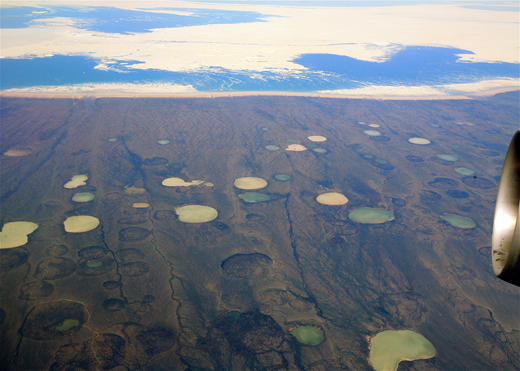
Cold region infrastructure such as those in Siberia, Canada, and northern Europe has been designed based on the historical conditions of the permafrost underlying them. The current unprecedented temperature changes due to climate change are vastly different from the historic data. Hence, the sustainable maintenance of existing and design of new infrastructure requires long-term monitoring of the new trends in the temperature and their impact on permafrost properties.
In the first article of this issue, the impact of climate change on the permafrost and its degradation is studied. To better understand this process, Kurz et al. (2020) performed field monitoring of ground temperatures, lateral and vertical deformations, and groundwater pressures under a road embankment in northern Manitoba, Canada for a period over 6 years. They used serial coupling of thermal and stress-deformation modeling to investigate this phenomenon. The new temperature change trends have pushed the boundaries of validated numerical models and the data generated by researchers, such as those used by the authors. Therefore, new long-term field data are needed for the calibration of the existing numerical models and those developed in the future. The result of their study confirms the localised presence of permafrost under the center of the above-mentioned road embankment, which plays an important role in the ground thermal regime, pore-water pressure, and deformations needed for the maintenance of the infrastructure under these new climate conditions.
II- Remediation
Soil contamination is an environmental concern primarily due to its health risks caused by direct contact with the contaminated soil or the secondary contamination of groundwater. Groundwater contamination, especially by heavy metals, has become a widespread problem in need of urgent attention from various federal and state agencies (Farid et al., 2019).
Contamination by heavy metals (e.g. Arsenic or Chromium) has affected public health across the globe. Arsenic is a toxic heavy metal that naturally exists within various geological layers (e.g. in Bangladesh and Canada) and, if exposed, can contaminate groundwater. Arsenic contamination of soil and groundwater can also be caused by human activities such as mining, smelting, pesticide use, coal combustion, wood treatment and industrial pollution. Mining is not only unsustainable due to the limited availability of mineral resources, but it also generates tailings containing highly toxic matter such as Arsenic, which makes its removal a necessity. Numerous methods have been developed to treat mine tailings contaminated with heavy metals. Although successful, most of these methods are costly, time-consuming or require land space, which makes them environmentally unfriendly. For example, metal extraction requires the use of strong inorganic acids and chelating compounds, which can endanger or even destroy most soil microorganisms, flora and fauna. There is an urgent need to find a sustainable and environmentally friendly solution to remove Arsenic from mine tailings. In addition, the efficiency, advantages, and disadvantages of these existing and new methods need to be fully understood.
In the second article in this issue, by Arab and Mulligan (2020), the removal of Arsenic from mine tailings is studied. Specifically, they studied the efficiency of using sophorolipids, at different concentrations and pH levels and temperatures, to remove arsenic and other heavy metals from mine tailings. Arab and Mulligan (2020) used sequential extraction to understand sophorolipids’ effect on Arsenic speciation. They also used sequential extraction to study the effectiveness of sophorolipids on different fractions of the specimens to understand the effectiveness of their use for Arsenic removal at various concentrations, temperatures and pH levels. Their proposed method needs to be supplemented with a method for biosurfactant recovery from the effluent. However, reduced, the achieved level of Arsenic was still higher than those acceptable by standard, which emphasizes on the need for more research.
III- Sustainable Solutions to Traditional and Emerging Problems
Soil is a building material almost freely available at all sites, which has been used for structural or containment purposes as it exists or, as needed in most cases, after improvement. Natural soils’ hydromechanical properties might not make them readily suitable for geotechnical (construction) and geoenvironmental (e.g. containment) applications, which would make ground improvement a necessity. The use of stabilizing agents that improve the strength of soils, making them a popular ground improvement tool. Several stabilizing agents such as cement and lime have been used for ground improvement. To promote the sustainable practice of recycling as well as ground improvement, considerable research and resources have been invested in using recycled material for ground improvement. Thus, recycling by-products, such as fly ash, via their use for ground improvement has become very popular. Recycling by-products, such as fly ash, as additives for ground improvement, requires understanding their hydro-thermo-mechano-chemical and biological behavior, and properties of the soil to be improved. Unamended class-F fly ash may not be used alone and as a construction material due to its low self-cementing properties and may require amendment with lime. In the third article of this issue, Pani and Singh (2020) studied the compaction characteristics, strength properties and microstructure of lime-amended fly ash with varying lime content for ground improvement. They studied the effect of increasing lime content, curing temperature and curing age on the microstructure, the formation type, hydration products’ amount, and the strength of lime-treated fly ash.
The construction industry is a large fraction of the US and the global economy, and has a large environmental footprint. Hence, finding innovative sustainable and environmental methods is of essential importance to the preservation of the environment. Native or traditional construction methods can sometimes be modified into very environmentally friendly solutions. An example is cob, a vernacular earth-building technique, which can benefit from a better characterization of cob samples. Vinceslas et al. (2020) attempted to develop a new laboratory cob characterization method. They modified the traditional method of cob building by replacing traditionally popular cardboard with plastic and geotextile. They also developed a method to predict cob’s mechanical properties.
The use of green energy sources and energy conservation are among important sustainable strategies to preserve the environment and its resources for future generations. One of the main reasons green energy sources have traditionally been less popular than fossil fuels is the discontinuity and uncertainty in their availability (e.g. weather-dependent availability of solar and wind energy) and, in turn, the mismatch between peaks of energy demand and green-energy supply. Large storage capacity is a simple solution to alleviate this mismatch. Unlike batteries, the large capacity of energy storage within the soil (energy geo-storage — i.e., using soil as an energy source or sink) is an environmentally friendly storage solution. If successful, energy geo-storage can become an emerging alternative to help with the reduction of fossil-fuel consumption to heat and cool buildings. In Europe, as well as around the world, a lot of research is underway seeking methods to exchange heat with the ground and provide thermal energy for the heating and cooling of buildings. Energy piles have been used as a new phenomenon to combine ground-sourced heating and cooling, ground source heat pump (GSHP), systems with the building’s foundation. In recent history, heat exchange within the soil had been accomplished by horizontal heating and cooling beds, or heat sinks outside of the building footprint (Brandl, 2009). The use of GSHP requires less energy but is less popular in the US due to its high installation costs. Energy/thermopiles are more advantageous due to their lower installation and space costs, as well as serving the dual purpose of supporting the structure and as a heat-exchange medium. Adverse effects may arise from the cyclic thermal loading of the pile and soil. Moreover, in fine-grained soils such as clay, in addition to the temperature-dependent shear strength, the thermal cyclic loading can cause cyclic variations of the excess pore-water pressure, resulting in variation of the effective stress, shear strength and volume changes that can reach a state of thermo-elasticity after the first few cycles (Farid et al., 2019). Researchers have developed numerical models to investigate the impact of cyclic thermal loading on thermopiles’ bearing capacity, which requires validation against field measurements (Farid et al., 2019). In the last article of this journal issue, de Santayana et al. (2020) instrumented a full-scale experimental pre-cast energy pile, driven into deltaic deposits in Valencia, Italy, under the simultaneous action of mechanical and thermal (summer cooling) loads. Further research is still needed to fully understand the thermomechanical behavior of energy piles in order to formalize design guidelines for assuring serviceability limit states of energy piles.
It is clear from the articles within this issue of the journal and other recent research that sustainability is a vast topic requiring comprehensive multidisciplinary investigation. Several single- and multidisciplinary-research projects are currently investigated, and this journal issue is a good overview of the state of the art. There remains a vast need for further research into the above-mentioned topics. We hope you find the articles within this issue of Environmental Geotechnics interesting and educational.