

Tribute to a titan of geotechnical engineering
It is with immense pride, deep admiration, and profound sorrow that I pay tribute to my dearest friend, Yudhbir—as I fondly called him. He was more than a colleague; he was my comrade-in-arms, a fellow traveler who exemplified unwavering integrity and a steadfast commitment to ethical professionalism. Together, we embarked on an exciting six-decade long professional journey. His contributions to Geotechnical Engineering in India were transformative and impactful. He emerged on the national scene at a time when Geotechnical Engineering in the country was still taking shape and departed for his heavenly abode on March 16, 2025, at a time when we are all able to see his footprints for his countless students and the future generations to follow. He will be remembered not just for the weight of his achievements but, more importantly, for his unparalleled scholarship, unwavering integrity, and relentless pursuit of knowledge. His legacy will endure, inspiring generations to come.
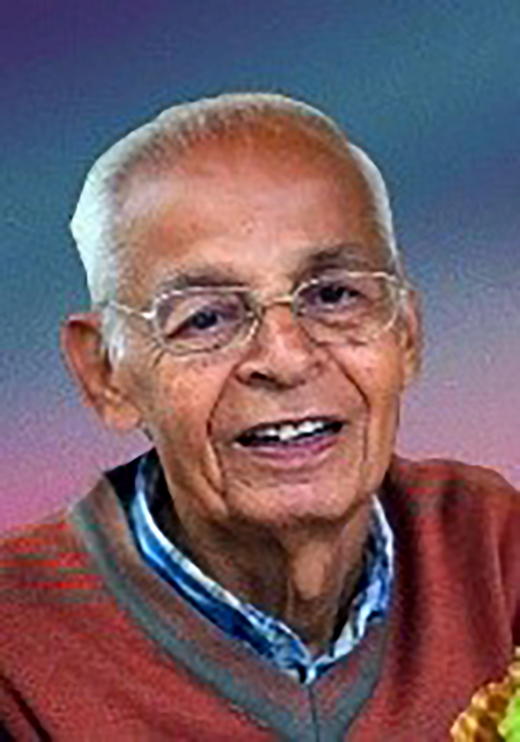
Professor Yudhbir
August 1, 1936 – March 16, 2025
A distinguished academic and professional journey
Born on August 1, 1936, in the small village of Mirthal, Punjab, Yudhbir displayed brilliance from an early age. After completing his schooling at DAV Jalandhar, he earned a Bachelor's degree in Civil Engineering from Punjab Engineering College, Chandigarh, in 1960. Our paths first crossed in 1962 at the Indian Institute of Technology, Bombay, where we both pursued and earned our M.Tech. in Soil Engineering in 1964. From that moment on, our bond remained unbroken, rekindling after every brief or prolonged separation—until his final breath. Our conversations were always profound, often revolving around the ways and means to counter and bridge the widening gap between scientific rigor and the complacency creeping into geotechnical engineering practice in India, at the time. We frequently lamented the growing dependence on quick-fix solutions, driven by the allure of new technology, without open scientific discourse and due diligence, often compromising professional integrity. This is the reason why his unwavering commitment to intellectual honesty and his relentless pursuit of excellence continue to inspire.
Yudhbir’s contributions to geotechnical engineering were both profound and transformative-holistically embracing both- theory and practice. His studies covered diverse aspects of soil and rock behaviour, earth and rockfill dams, foundation engineering, slope stability, landslide risk mitigation, and critical infrastructure safety. He played a pivotal role as a geotechnical expert on several major developmental projects related to roads, railways, thermal energy, hydro-power, and human habitat, ensuring that sound geotechnical principles and practices get seamlessly integrated into national infrastructure planning and development.
The academic journey of Yudhbir led him to Cornell University, USA, while mine took me to Imperial College, London—a divergence that only deepened our intellectual camaraderie. This because his mentor, Professor D.J. Henkel, and mine, Professor A.W. Bishop, were both trailblazer colleagues at the Imperial College, best known for advancing the principle of effective stress and astutely tapping of its power and potential, which remains the cornerstone of modern soil mechanics and geotechnical engineering. During his doctoral research, in 1966, under the guidance of Professor D J Henkel, Yudhbir studied the stability of slopes in the Siwalik Rocks in India and the findings of which, published in the proceedings of the first International Congress on Rock Mechanics held in Lisbon, were significant.
After earning his Ph.D. in Geotechnical Engineering in 1969, Yudhbir briefly worked with Woodward-Clyde and Associates, California, before returning to India in 1970 to join IIT Kanpur, which became his karma Bhumi for over 27 years. This was the most productive phase of his career, during which he made ground-breaking contributions as a researcher, educator, and consultant, focusing on in-depth studies to address some of the less appreciated fundamental geotechnical concerns often overlooked in engineering practice.
At IIT Kanpur, he mentored several researchers many of whom such as Dr P.K. Basudhar, Dr K. S. Rao and Dr D. N. Singh are living examples of his legacy. Dr A. Varadarajan (early 1970 s) studied the effect of over consolidation and stress paths on the shear characteristics of saturated clays under the guidance of Dr Yudhbir and they jointly published the findings in the Japanese Journal of Soils and Foundation in 1974. This piece of research was a natural extension of the work of Yudhbir’s mentor, Dr D J Henkel, published in Geotechnique in 1956 and of Yudhbir’s own Ph.D. research at the Cornell University, USA. Under Yudhbir’s guidance, S.K. Mathur (mid-1970 s) investigated the stress-strain-time behaviour of anisotropically consolidated marine clays under various stress-paths and K.K. Jain (late 1970 s) explored stress-path-dependent deformation of K-consolidated soft clays. Essentially, Yudhbir’s fundamental research extended across a wide spectrum of geomaterials, including marine clays, alluvial deposits, sands, silts, compacted soils, and clay shales-all aiming at scientific understanding of soil behaviour under complex stress path conditions.
Building taller on his doctoral research on the engineering behaviour of over-consolidated clays and clay shales, particularly their long-term stability, Yudhbir made significant contributions to landslide research in India. When foundation safety of the Beas Dam in India surfaced as a cause of concern due to the presence of shear zones, jointly with Varadarajan, he studied the influence of shear zones on the mechanism of stability of its foundations and published the findings in the Journal of Engineering Geology, Elsevier, 1975. His findings on the rebound characteristics of over-consolidated clays and clay shales of the Upper Siwalik were presented at the third International Symposium on Landslides held in New Delhi in 1980.
Yudhbir’s ceaseless effort to always aim at the state-of-the-art level was obvious from his keynote addresses at the national and international meetings. His keynote address delivered at the International Conference on Landslides, Slope Stability, and Safety of Infrastructures held in Kuala Lumpur in 1994, serves as an example. As his global engagements further broadened his scholarship—he served as a Visiting Research Scientist at MIT (1975), a Professor at AIT Bangkok (1981–1983), a Visiting Scholar at RPI, Troy, NY (1986), and later as a faculty member at AIT Bangkok. In 1995, he took on the role of Vice President at Moh and Associates, Bangkok, where he played a pivotal role in major infrastructure projects, leaving an indelible mark on the profession.
Yudhbir was an outstanding academician, having published over 100 technical papers, co-edited four books, and supervised nine Ph.D. and 47 M.Tech. theses. His work shaped generations of engineers, researchers, and policymakers. His legacy extends far beyond his academic and professional achievements—it lives on in the ethical standards he upheld, the students he mentored, and the scientific rigor he championed.
Contributions to engineering and society
A Life Fellow of the Indian Geotechnical Society and a Visiting Fellow at the Wadia Institute of Himalayan Geology, Yudhbir was deeply committed to elevating quality and respect geotechnical investigations by building state- of -the-art institutional capacities in India. Together, we worked tirelessly to bridge the gap between the routine soil investigation practices and scientifically tailored site-specific investigations with advocacy and raising demand for integration of scientifically conducted geotechnical investigations with engineering designs and construction practices.
Among Yudhbir’s most defining qualities was his keen understanding of the intricate nexus between Engineering Geology, Soil Mechanics, and Geotechnical Engineering, a perspective that set him apart as a scholar and practitioner. His expertise was sought at the highest levels—he served on multiple government committees, including the Project Management Committee of the Jai Vigyan Mission. His leadership extended beyond national boundaries, with his tenure as Vice President for Asia (1984–88) of the Association of Geosciences for International Development, in both the ISSMGE and AGID earning him international recognition for his efforts in advancing geotechnical engineering worldwide.
Shaping national policies and scientific research
A steadfast champion of landslide risk mitigation, Yudhbir played a pivotal role towards shaping national policies and advancing scientific research on landslide studies. His proactive leadership as Chair of the DST Expert Committee on Landslide Hazard Mitigation was instrumental in apt utilisation of crucial government funding for projects of national significance, aiming at culture of safety in hill area development. As the Core committee members of the National Disaster Management Authority (NDMA), we jointly contributed to the drafting of National Guidelines on Management of Landslides and Snow Avalanches published by NDMA in 2009. He was also part of the peer committee to review the Monograph on Lessons from the Malpa Landslide Tragedies of 1998 and 2017, published jointly by the Indian National Academy of Engineering and CSIR-NISCAIR in 2018.
Yudhbir’s expertise extended beyond policy, influencing infrastructure projects such as the Pipalkoti Vishnugad Hydroelectric Project (World Bank-funded) and rehabilitation initiatives under the World Bank’s Environmental and Social Mitigation Project (ESMP) for Coal India Limited. He co-authored chapters in the UNDRO Geneva Manual and the Handbook on Education for Natural Disaster Reduction and made significant contribution towards drafting of key recommendations arising from the PIARC G2 Seminar held in New Delhi in 1997.
Yudhbir was a staunch critic of complacency in drafting Codes of Practice in Soil Mechanics and Geotechnical Engineering, often arising from mismatch between the thematic state-of-the-art and endorsement of the ongoing engineering practices without thorough questioning and censorship. In a personal communication to me, he cited Professor Evert Hoek, who once remarked, “I do not use nor recommend the Romana-type approach to slope stability in rock masses—it is far too complex a process and reducing it to a simplistic approach trivializes it”. Yudhbir echoed this sentiment and wrote to me: “Let us see if we can together persuade BIS to rewrite such codes. A simple review of the current state of affairs should be enough to make us sit up and take notice. This situation will persist as long as such attitudes and practices are allowed to prevail. I alone cannot fight this neglect, and that is why I choose to step back—but I am always ready to listen to friends like you”.
A legacy of integrity and excellence
What distinguished Yudhbir from others was not just his technical brilliance but his unwavering commitment to professional ethics. He remained steadfast in his principles, never seeking personal recognition or accolades. I approached him a number of times with my desire to see him nominated for fellowships, recognitions and awards but he remained unimpressed.
As I express my thoughts, I am inundated with a number of messages from his colleagues, students and admirers coming in from all directions. The entire geotechnical community mourns the loss of Professor Yudhbir, a distinguished scholar, mentor, and visionary whose contributions to Geotechnical Engineering have left an enduring legacy. Renowned for his exceptional teaching at IIT Kanpur and IIT Delhi, he simplified complex concepts with remarkable clarity, shaping generations of Geotechnical engineers. A man of integrity and dedication, he remained committed to academia, steering clear of politics and focusing on intellectual growth. His profound impact, both as a researcher and mentor, will be remembered by his students, colleagues, and the geotechnical fraternity worldwide.
As I bid farewell to a very dear friend and colleague, I take solace in knowing that his life was one of immense contribution, integrity, and unwavering dedication. The geotechnical engineering community has lost a giant, but his ideas and values will endure for generations to come.
Rest in peace, dear Yudhbir. Your legacy will never be forgotten.
R. K. BhandariA Fellow Traveler as a Geotechnical Engineer
Yudhbir had been our colleague, friend and sounding board for nearly 30 years at IITK. I always wondered why he chose IITK after his Ph.D. instead of returning to IITD from where he went to US to pursue his doctorate. But that was a blessing for us at IITK. With Kameswara Rao we three nurtured, built and established Geotechnical Engineering academically and professionally and got recognized as such nationally and internationally. Scores of students and research scholars were part of this endeavour. Yudhbir had been the driving force in this regard with his vision and persuasion powers. Yudhbir had uncanny ability to understand soil in all its facets. His insight in to soils strength and its correlations with several other parameters including consistency limits is phenomenal. Whether it was Bangkok clay or Paravur clay which he managed to get to IIT Kanpur from Kerala, a great achievement in itself. Yudhbir would rattle their uniqueness. A true disciple of Henkel, a pioneer of shear strength and testing with Bishop, he carried the tradition of proper testing and interpretation of soils especially shear strength. Give him raw data and he would come out with a trend and a new way of understanding the material. The other strong felicity of Yudhbir has been the ‘stability of slopes’. Only he could give the course on Earth dams and Slope Stability at graduate level with perfection. He did contribute to several other topics in Geotechnical Practice. Yudhbir is not a prolific writer of professional papers but the ones he wrote are classic and landmarks such as the Keynote at the Asian Conference at Bangkok or the general Report at the Rio ISSMGE conference. Yudhbir had been a part of my professional journey and it is those years of travel I cherish. So many thoughts and feelings come tumbling down that it had become difficult to cull or sort them in to clear or sequential events. He had been a rebel and a fighter all his life for the good of the profession, the Institute and the society. He reflected his spirit even in the last part of the recent journey. While Geotechnical Engineering has lost a great personality who shaped its course for more than 30 years, he left it with such beacons that future generations would always remember him for what he was, what he stood for and what he left for posterity. Even though he may not be with us physically, he will always be with us in cherished memories. It is the way of Life that our stay on this Planet is always finite but people like Yudhbir have a way of illuminating our lives.
M. R. Madhav, IIT Kanpur
Dr Yudhbir is no more but will be remembered by his family and friends. Condolences to extended family and friends. I knew of him for many years and of his work and contributions. In particular, my friend Dr Raj Bhandari (Dr R K Bhandari) mentioned Dr Yudhbir often with appreciation of his many contributions and scholarly work.
Robin Chowdhury, Univ. of Wollongong
Only Nothing will come out of Nothing … these words keep ringing in my ears since 1988, when I completed my M.Tech. under supervision of this personality, who was extremely intriguing for many. I am blessed to be more or less part of his last journey. Gurus like him never disappear, they will continue to live in our hearts. I wish we could have continued our discussions on The End of History Illusion by Jordi Quoidbach et al. who assessed the personalities, values, and preferences of several thousands of people ranging in age from 18 to 68.
Devendra Narain Singh (DNS), IIT Bombay
With profound sorrow, we mourn the passing away of Professor Yudhbir, an esteemed scholar, an exceptional mentor, a great philosopher, and a guiding force in Geotechnical Engineering. His contributions have left an indelible mark on countless students, colleagues, practitioners, and the broader academic and engineering community. His tenure at IIT Kanpur was marked by an unwavering commitment to academic excellence. His innovative teaching methods and profound insights into soil mechanics, slope stability, and foundation engineering shaped generations of engineers and researchers. His lectures were often accompanied by his signature chalk illustrations, simplifying complex geotechnical concepts and making learning a deeply engaging and enlightening experience. He taught us the engineering treatise of slope stability while I was at IIT Kanpur (1987). He was a teacher of the rarest kind, who used to explain using his conscious mind and heart using the simplest form of his Chalk art on the blackboard. His meticulous research on shear strength characterisation and experimental validation was pioneering, setting new benchmarks in the field.
Chandan Ghosh, NIDM, New Delhi
I am deeply grieved by the passing of Prof. Yudhbir. My memory goes back to 1970 when I joined IIT Kanpur. His innovative teaching methods left a lasting impression, which I tried to imbibe when started my teaching career. A pioneer in Geotechnical engineering, he contributed significantly to fundamentals of soil behaviour, material characterisation, landslides and fly ash utilisation. His guidance shaped research on soil liquefaction-resistant railway tracks and landslide prevention. He will live in the hearts of students, friends, and colleagues as a great teacher and researcher.
Prabir Kumar Basudhar, IIT Kanpur
Professor Yudhbir taught me two courses, and his teaching was the best I have ever experienced. His stature was as compassionate as his presence, making my stay at Kanpur truly enlightening. His classroom teachings were truly impressive.
C. R. Patra, NIT Rourkela
Prof Yudhbir was an eminent teacher and an excellent research warrior. He was very particular about every detail in research and scholarly contributions. We collaborated on several projects, and his observations and approach were always thorough. Losing him is losing a good friend and colleague.
N. S. V. K. Rao, IIT Kanpur
My association with Prof Yudhbir began in 1972, when I joined IIT Kanpur as an M.Tech. student. He was an excellent teacher and inspired many of us to excel beyond just soil mechanics. He was a fatherly figure for us to seek advice on various issues. His international recognition and vast contacts helped many of us shape our careers. His deep understanding of the soil and rock behaviour and the physics of natural slopes benefited generations of students.
Sarvesh Chandra, IIT Kanpur
I am deeply saddened by the passing away of my beloved teacher and exceptional mentor. His expertise in the field of seepage related issues in earthen dams and embankments was unparalleled and made him a core researcher in the field.
Jyant Kumar, IISc Bangalore
Prof Yudhbir was a titan in his field—a quiet architect of minds, a guardian of rigor, and a compassionate mentor. He wore his expertise lightly, but carried his compassion like a torch. In his cluttered office, amid towers of books and half-finished manuscripts, he taught me that true scholarship is not just about precision—it’s about patience. When I struggled with research, he never handed me answers. Instead, he looked at me kindly with a mild smile as usual and ask, ‘What’s the question you’re not letting yourself ask’? His legacy lives on in every student and colleague he inspired.
Rahim Abedinzadeh, Sweden
Deeply saddened to know the sudden demise of Prof. Yudhbir. As his student from 1981 to 1985, I feel his absence deeply. His deep love for students and dedication to teaching were truly immeasurable.
S K D Majumdar, Durgapur Steel Plant
I consider myself fortunate to have been guided by Prof. Yudhbir during my PhD (1991–1997). His mastery of the subject, clear focus on fundamentals, and ability to connect theory with practical applications made him a truly outstanding teacher. His meticulous research approach instilled in me the importance of accuracy and integrity.
Jimmy Thomas, Consulting Geotechnical Engineer, Kochi
The day was of July 1970. I imagine my first year beginning of professional courses (4th year of B.Tech.) absorbed in reading something on a notice board in the department of Civil Engineering IIT, Kanpur. Felt a light touch on my back. I turned around and discovered that the hand that had touched me belongs to a handsome, smart middle-aged man. The man asks, “How are you Young man?” The boy, still recovering from the surprise, just manages to say “Fine sir”. And soon the man starts walking away to climb the staircase. I was the B.Tech student, and the man who had touched me was Dr. Yudhbir. At IIT/K his lectures were quite comprehensive & in very easy, sweet language making the subject interesting. He himself was a lesson in precision in the use of language and clear thinking. His knowledge went far beyond Soil Mechanics. His way of looking at his subject was not based only on text book definitions. Prof. Yudhbir was a perfect synthesis of Science and Technology, which he had cultivated throughout his life. It reflected his originality and breadth of vision in his assignments, which he inculcated through reading, experiments, interactions etc. He had an extremely good command over the English language and he wrote many accurate, unambiguous and elegant articles. He could have written books on a variety of his subjects, but, as I know, did not write even one. If he had chosen to write a textbook of Soil Mechanics, he could have easily given the world an Indian book on the subject. He was having personal attention on his students- be it their studies or their personal difficulty. We, a group of 4 B.Tech students, had a big engineering project (Design of Girija Barrage) in the final year which extended to the hot summer of Kanpur. He noticed our situation & very kindly arranged us a cool cabin in the library premises. He had been Visiting Faculty of many renowned international Universities, members of many High Level Technical Committees. Until his last days, he was associated with the Wadia Institute of Himalayan Geology, Dehradun. He travelled vastly in India & other countries for his studies, researches, lectures, consultations etc. Dr. Yudhbir, continues to be remembered with great reverence by me & all his students, his friends, colleagues, neighbors all their life. May his soul be rest at peace in a place full of love and happiness.
Suman Prakash, UJVN Ltd., Dehradun
My very first meeting with him since 1994 made me his “Fan” forever due to his straightforwardness in expressing his thoughts very clearly and honestly without deflecting from his inherent humbleness. My association, since then, was more like a student and a mentor. Let me tell you that, instead of me asking him for help in my professional work area which he was aware of, he would come up with new ideas for discussion and provide me the answers based on the most up-to-date knowledge online and/or offline whenever we met. I remember his deep association with DST as a chairman of one of the committees to evaluate R&D proposals in the field of disaster, particularly on landslides. His critical reviews and pinpointed queries mostly with a smile would, many a times, flabbergast best of the experts about his depth of “practical knowledge and uncompromising approach” however, without letting anybody feel unhappy rather he would himself come into rescue and offer help to prepare a good proposal. I was one of those who benefitted from his critical reviews of my work, guidance, and support. However, to satisfy him was not an easy task as his goal has always been to deliver high-quality and meaningful outcomes which are applicable on the ground instead of only in the reports and articles. I recollect a few of the field tours with him in the Himalayan terrain including the one on NH58 from Rishikesh to Badrinath where I studied some of the critical landslides with financial support of DST during his chairmanship. Being a geologist myself, I was taken aback, by his knowledge and curiosity of geomorphological features and geological structures related to the occurrence of landslides in Himalayan terrain which most of the engineers, in India, generally ignore. Gradually engaged with intense discussion, the “unavoidable practice” of onsite characterisation of vulnerable slopes was the highlight of the convergence of our thoughts and another learning lesson for me. Every such field tour with him added to my understanding and knowledge about the natural laws of the terrain and consequences of disobeying them. He always advocated for finding the root cause of the problem rather than just addressing it superficially. This was just a glimpse of store of memories I have of him. Lately, in spite of not so good health, his spirit was still high as before. He was still extremely concerned about the repeated incidences of disastrous events of landslides on highways and often called me to discuss the issues with an underlined advice to proactively participate in highlighting the issues with the concerned departments. He would not leave there and as a further follow up enquire whether the issue was raised with them or not. I highly respect his self-esteem and desire to contribute to the profession even in the last days of his life. In true sense, he was a finest professional with incomparable expertise, integrity, ethical values, and dedication. I am sure that his exceptional professional legacy will continue to inspire trust, respect, and confidence in younger professionals, academician, researchers and scientists.
Kishor Kumar, CRRI, New Delhi
I met Prof. Yudhbir in 2006 as a colleague. Our discussions on field testing and geotechnical research were always engaging. His down-to-earth nature and depth of knowledge made him a remarkable mentor. He pioneered characterization of pond ash and its utilization as a geomaterial. I’ll miss the debates that we used to have.
N. R. Patra, IIT Kanpur
I am deeply saddened by the loss of Prof Yudhbir, a true mentor and guide. His contributions to Geotechnical Engineering are immense. As an M.Tech. student in 1979, I still remember his novel and lucid teaching on the famous Beas dam stability analysis, an area where he was a pioneering consultant. His inspiration led me to pursue a PhD and a career in academia.
K S Rao, IIT Delhi
Yudhbir sir use to quote the phrase “when the student is ready the teacher appears” and he did appear every time I had a genuine quest. As a committed professional, he believed in observations and simplified back of the envelop analysis in geotechnical engineering. Every interaction with him added to my knowledge. I would remain indebted to him for the in-field learnings he imparted.
Ashish D Gharpure, Genstru Consultants Pvt Ltd., Pune
Heartfelt deep Condolences to Prof Yudhbir's family. I was fortunate to interact with Prof Yudhbir, while I was at CSIR-CRRI, New Delhi, during 1992–94, where he served as the research council member. The geotechnical fraternity has lost a true champion.
B. V. S. Viswanadham, IIT Bombay
Professor Yudhbir was my master's degree supervisor, and his passion for geotechnical engineering was unparalleled. He lived and breathed the subject, dedicating his life to advancing knowledge in the field. It was under his guidance that I developed a deep appreciation for geotechnical engineering. Recognising my work, he encouraged me to pursue a PhD and personally recommended me for admission to the University of British Columbia, a gesture that changed the course of my life. Today at 63, I continue to work as a geotechnical engineer, carrying forward the values and principles he instilled in me. Whenever a genuine geotechnical engineer seeks my expertise and asks for A, I make sure to provide not just A but also B, and in some cases, even C. This approach reflects the generosity and commitment to knowledge-sharing that he exemplified. In this way, I honour his mentorship and the invaluable support he extended to me, ensuring that his legacy of dedication and generosity lives on. As his immediate family grapples with his demise, Professor Yudhbir's extended geotechnical family would like to keep them in our thoughts and cherish his memory.
Joyis Thomas, Worley Pty Ltd., Perth
Prof. Yudhbir was a perfectionist and a master craftsman in the field of geotechnical engineering. The discussions with him always result in one or two sentences to remember for the entire professional life. His basic ideology was What you do is not important but how you do is more important. He taught us how to derive pleasure out of research, and not through only mundane publications. He will always remain a teacher, who emphasized on to come out of rat-race and do something meaningful. It is hard to believe that until very recently, he had been following the articles published by Science and Nature, a rare but worth mentioning fact.
Sarat Kumar Das, IIT (ISM) Dhanbad
By God’s grace, in 1985, one fine morning in April, I happened to be seated in a small room in the Department of Civil Engineering, IIT Kanpur, facing an expert panel constituted for the selection of candidates for its Ph.D. programme in the field of Geotechnical Engineering. After my interview was over, as I came out and eagerly waited outside for the outcome, one of the senior experts came out all smiles to greet and shake hands with me, saying, “So Gautam, we look forward to your joining in July, you will get the official intimation in due course.” On being asked, a staff member standing nearby told me, “Oh, you don’t know him? He is none other than Dr. Yudhbir for you.” That was the first occasion I was introduced to him, which brought me to reflect, “So then he is Professor Yudhbir, about whom Professor S.P. Brahma at B.E. College, Shibpur (my parent institute), had told me before”. Such was the trend of cordial student-teacher relationships and the congenial atmosphere established by great teachers like him. He would say, “Look, Gautam, focus your attention on the questions that have remained unanswered”, an advice that always worked like a magic for me. He would enjoy sharing his class experiences with his colleagues in the same field of specialization, whose classrooms were located in the same faculty building as his own. He would also share his experiences on the topic he had delivered in a particular lecture, including the students’ responses in class. Like all good things, his days at IIT Kanpur eventually came to an end in 1996. On that occasion, as per tradition in the Civil Engineering Department of IIT Kanpur, he delivered a lecture on “Geomorphology of sand” – a research topic close to his heart. That time I could see that his health had broken down, but not his spirit. Nor did his bold academic voice ever show any sign of sinking, as was evident from his vibrant participation in an animated seminar arranged by the Geotech section of the Civil Engineering department on the previous evening and attended by Professor Madhav, Professor Basudhar, Professor Sarvesh Chandra, among others. The memory of that unforgettable evening show remained fresh in many minds and instigated one certain D.N. Singh to reflect as follows: “Dear Gautam da, since then nothing has changed (in Professor Yudhbir)”. But then, things will inevitably be changed forever since March 2025… .
Gautam Bhattacharya, IIEST, Shibpur, Kolkata

