

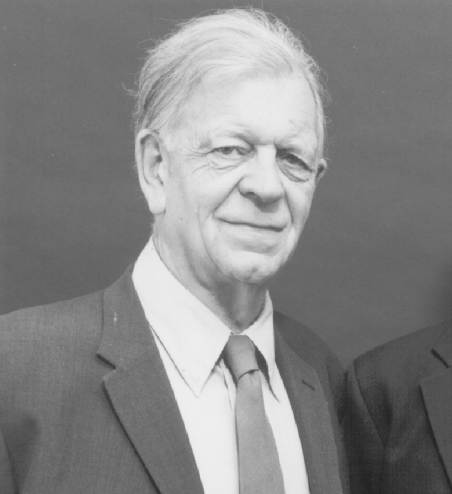
Professor Sir Alec Westley Skempton died on 9 August 2001, full of years and honours, active to the end. He was a legend in his own time, one of the founding fathers of our discipline of soil mechanics.
Skempton was an unusual man. A single-minded academic, who considered research to be his first priority, but whose approach required a close association with practical engineering. A polymath, whose multiple interests reinforced and refreshed each other over a long and active career. An engineer, who never claimed to be clever, but who had a notable habit of being right. A teacher who debated with those junior to himself as an equal, but who could, and did, give a hard time to anyone, however senior, who had not prepared their arguments adequately. A scholar, whose own working habits were meticulous, and who expected others to do likewise, accepting nothing until he had assembled, plotted and analysed the data himself. A man who formed his own conclusions and wrote them down in his own elegant and much honed prose. An academic who would leave an old idea for a new one with alacrity and enthusiasm, as long as he had satisfied himself that the new was an improvement. A lecturer who prepared his presentations meticulously but who never used notes, infecting his audience with his own enthusiasm. A man who, throughout his life, was known by his wife Nancy, his family, by those who knew him (and many who did not), as Skem. He was knighted in the Millennium Honours list, which gave both him and his many friends much pleasure. He said: ‘Mind, you are still to call me Skem’.
Alec Westley Skempton was born on 4 June 1914, in Northampton, the only child of Alec and Beatrice Skempton. He attended Waynflete House Preparatory School, Northampton, and, from 1928, Northampton Grammar School. He became an undergraduate in the Department of Civil Engineering at Imperial College in 1932, graduating with First Class honours in 1935.
By his third year at Imperial, Skempton had already decided to make his life in research. He particularly enjoyed geology, but, encouraged by Professor Sutton Pippard, then Head of the Civil Engineering Department, whom Skempton was subsequently to succeed, he remained at Imperial to carry out research on reinforced concrete. His research topic had been suggested by Glanville, then Director of the Building Research Station (BRS), and it was this connection that led to his move to BRS, where in 1936 he was offered a post. The opportunity to do research with a salary was then rare, and he cut short his studies at Imperial, took a Master of Science degree, and moved to BRS.
It was at BRS that his interest in geology was to develop into a life's work in the then evolving subject of soil mechanics. A soil physics section had been formed at BRS in 1933, led by Dr Leonard Cooling, but by 1935 the section had changed its name to Soil Mechanics. Within months of arriving at BRS, Skempton abandoned his studies of concrete and in January 1937 joined the soil mechanics section, where he worked for the next ten years.
Skempton returned to Imperial College in 1947 as Reader in Soil Mechanics at the invitation of Sutton Pippard, where he was to remain for the rest of his life. Though he did not complete his research for a PhD, in 1949 he was awarded the higher doctorate of DSc from the University of London. He became Professor of Soil Mechanics in 1955, and took the title of Professor of Civil Engineering on becoming Head of the Department of Civil Engineering in 1957, a title he held until his retirement, at the age of 67 (at that time London University Professors could, if they wished, delay retirement for two years beyond the usual age of 65). On retirement he became Professor Emeritus and a Senior Research Fellow of Imperial College, working almost daily in the Civil Engineering Department until only three or four months before his death. A few days before he died he was correcting proofs of a ‘Biographical Dictionary’ of early civil engineers, the writing and editing of which had occupied him for much of the last five years of his life. Though he did not live to see its final publication, he had the satisfaction of knowing that this major work was all but complete.
In 1940, Skempton married Mary (Nancy) Wood, a graduate of the Royal College of Arts, and she was to be his constant companion and supporter until her death in 1993. Nancy was a fine bookbinder, binding, amongst other items, many of Skempton's reports. Her particular expertise, however, was wood engraving, and in 1989, Skempton in an affectionate tribute to Nancy, selected some 44 of these, wrote an accompanying biography, and published privately the resulting handsome volume, finely bound and printed on hand-made paper. When the journal Géotechnique was established in 1948, an event with which Skempton (with Glossop, Golder, Cooling and Ward) was closely associated, it was Nancy who designed the front cover, using the colophon from Coulomb's classic eighteenth century paper on earth pressure that is still used.
Honours were many: elected a Fellow of the Royal Society in 1961, he became a Founder Fellow of the Royal Academy of Engineering and was elected a Foreign Associate of the National Academy of Engineering (USA), both in 1976, and became an Honorary Member of the Royal Irish Academy (1990). He was the second President of the International Society of Soil Mechanics and Foundation Engineering (1957–61), in succession to Karl Terzaghi. He gave the (then) British Geotechnical Society's Fourth Rankine Lecture (1964). His range of interests was reflected in the variety of institutions who gave him medals and awards: the Ewing Gold Medal of the Institution of Civil Engineers (1968), the Lyell Medal of the Geological Society of London (1972), the Dickinson Medal of the Newcomen Society (1974), the Karl Terzaghi Award of the American Society of Civil Engineers and the Gold Medal of the Institution of Structural Engineers (both 1981). Honorary Doctorates of Science were awarded by the Universities of Durham (1968), Aston (1980) and Chalmers University, Sweden (1982). His ultimate accolade was the knighthood he received in January 2000.
Skempton tried to avoid committees in which he did not have an immediate and direct interest, but he served as Vice-President of The Institution of Civil Engineers (1974–1976) and President of the Newcomen Society (1977–1979). Also, among others, he was a member of the Cathedrals Advisory Board (1964–1970) and a member of the Natural Environmental Research Council (1973–1976). A regular visiting and guest lecturer, he was special lecturer at the Architectural Association (1948–1957), visiting lecturer at Cambridge University School of Architecture, and Hitchcock Foundation Professor, University of California (1976). Internationally he was known not just as the second President of the International Society, giving his presidential address in Paris in 1961, but as a regular presenter of State-of-the-Art (Mexico 1969), and invited lectures at European and International conferences (Oslo 1967; Tokyo 1977; Brighton 1979; San Francisco 1985).
As an undergraduate at Imperial College, Skempton had found time for matters other than academic: in his final year (1935–36) he was Vice-President of the City & Guilds (a constituent college of Imperial) Student Union, and captain of both City & Guilds and the Imperial College rugby 1st XVs. This was possible since one team played on Wednesdays, the other on Saturdays! An interest in sport, particularly rugby and cricket, remained with him all his life. He was always ready to discuss the latest England rugby match, and was always keen to know the latest cricket test match scores, even in recent years when England's performances were often rather disappointing. He and Nancy were expert croquet players and active members of the Hurlingham Club for many years.
His great love outside engineering was classical music. He became a competent flautist in adult life to enhance this enjoyment, though he also had a broad interest in the arts, particularly painting. He had a particular fondness for 18th century music, and, being attracted by compositions for the flute by the Loeillets, a French family of composers, researched and then published (1962) an article on their work.
SOIL MECHANICS CONTRIBUTIONS
Skempton had been a member of the Soil Mechanics Group at BRS for only a few months when the Chingford Dam in the Lea valley, Essex, which was then under construction, collapsed. Similar dams in the Lea valley had previously been constructed quite safely, so the reason for the collapse was not immediately apparent. The BRS were asked to advise, and the young Skempton quickly came to the conclusion that the problem was the incomplete consolidation of the alluvial clay foundations, the earlier dams having been constructed more slowly than was the case with the mechanised plant used at Chingford. Terzaghi was brought in by the contractor to confirm the diagnosis, leading to a long association between Terzaghi and the BRS group.
Skempton remained at BRS until 1947. This was an exciting period, which set the style of his research. There were many questions to be solved, posed by real engineering problems, and he set about researching these, using the case studies brought to BRS to carry out the appropriate investigation, and then wrote up the results as an illuminating case study. He was to follow this pattern through the whole of his career. Though he supervised research students who themselves were scholarship holders, he only ever held one research grant, and that a comparatively trivial one he obtained many years later to drill a borehole to establish the geological succession at Swindon, Wiltshire, where he was advising on two old landslides reactivated by the construction of the M4 Motorway.
The 2nd International Conference at Rotterdam in 1948, showed how successfully the BRS group, and Skempton in particular, had profited by Terzaghi's lead. In 1948 Skempton was author or part author of no less than ten papers, seven of them published in the conference proceedings, and two in the first two numbers of Géotechnique, which was established in that year. This was the period of analyses in terms of total stresses, particularly of short-term failures of slopes and foundations, and the measurement of the undrained strength of soft clays to apply to these problems. From this period comes some of his earlier work on the classification and inter-relationships between soil properties, appropriately the very first paper in the first number of Géotechnique, on the geotechnical properties of post-glacial clays. At this time it was not recognised that geologically normally consolidated clays exhibited an increasing strength with depth, the major message of this paper, since the available sampling methods often caused so much disturbance that the phenomenon was not detected. This work led to the then surprising conclusion that Su would normalise with σ′V, so that c/p (to use Skempton's terminology) was constant with depth for such clays, and in turn could often be correlated with plasticity index.
The in situ consolidation of natural clays was a theme that he returned to with increasing effect. Initially he had investigated the laboratory consolidation behaviour of London Clay (1942), then in a paper (1944) delivered at the Geological Society he looked more generally at a range of different clays. This line of work culminated in the influential paper, again delivered at the Geological Society (1970), on the geological compaction of natural clays, which was undoubtedly one of his major contributions.
Until about the time of the Zurich Conference in 1953 all Skempton's work on the subject of slope stability (as was true generally at this time) had been carried out in terms of total stress. While at the Zurich conference he resolved to apply the principle of effective stress to the study of clay slopes, and the paper on the Jackfield landslide (1954) was the first result of this, though due to an overestimate of the likely pore pressures in the landslide the strength parameters were also overestimated.
The residual strength of clays and its importance in controlling the behaviour of reactivated landslides is the topic with which Skempton will always be associated; this was the subject of the 4th Rankine Lecture (1964). In this he reassessed the analysis of Jackfield and other landslides, and demonstrated that the residual strength was a fundamental property, dependent, inter alia, on the mineralogy of the soil. Though ideas on residual strength have developed, with further contributions from Skempton himself, this lecture was undoubtedly Skempton's most important single contribution to soil mechanics. Most of those attending the lecture would have been very surprised to learn that he had completely revised his ideas and rewritten the text in the two or three weeks before delivering it.
Quite apart from the 4th Rankine Lecture, the late 1950s and early 1960s proved to be golden years. One influential paper followed another. Consulting work resulted in the paper on the allowable settlements of buildings (1956), which is still widely used, as is the pragmatic ‘α-method’ (1959) for the design of bored piles in London Clay, and for which he was awarded the 1959 British Soil Mechanics Society Prize (later the Geotechnical Society Prize). His very perceptive assessment of horizontal stresses in the London Clay (1961) generated an appreciative discussion from Terzaghi; he published an important analysis of effective stresses in soils and rocks (1960), his A and B pore pressure coefficients (1954; 1960) are still widely taught and used. His work with Sowa (1963) was one of the first to examine the effects of stress relief on the stress–strain–strength behaviour of clays, and can still be read with benefit. This series of papers is perhaps the most influential ever published in the subject of soil mechanics by an individual.
HISTORY OF CIVIL ENGINEERING
For many years Skempton gave lectures at Imperial College on the history of civil engineering. Though intended for undergraduate students, their fame spread and they were avidly attended by post-graduate students, sufficient seating often being a problem. Indeed, for many years the first question asked by alumni was: ‘Is Skempton still giving his history lectures?’
In the field of the history of engineering Skempton's corpus of work has almost single-handedly transformed the subject from that of the enthusiastic amateur historian, largely focused on steam engine technology, to a rigorous academic discipline, challenging earlier assumptions. His characteristic approach is typified by his first historical paper (1946), to the Newcomen Society, reviewing the work of Alexander Collin, who carried out systematic investigations of clay slips in the 1830s.
While he always retained his enthusiasm for historical geotechnical case studies, his major historical contribution was the study of the work of early civil engineers, especially those of the eighteenth century, whose achievements had been ignored by previous historians. His works on John Smeaton (1981), which re-evaluate the career of the founder of civil engineering, and on Smeaton's contemporary, John Grundy (1983), and pupil William Jessop (1979), are of particular significance. His bibliography of early civil engineering literature (1996) is definitive.
Skempton's interest in historical developments in geotechnical engineering could lead him in unexpected directions. Nineteenth century reports of an 18th century example of a ‘floating’ foundation at Albion Mills led him to the revelation that the building and its foundation were designed, not by the well-known civil engineer John Rennie as had been thought, but by Samuel Wyatt, variously architect, builder and engineer. The discovery of a previously unknown and very early (1804) cast iron bridge at Culford, Suffolk, to Wyatt's design, inspired Skempton to give his last lecture, to the Institution of Structural Engineers' History Group, in 1999. He published a key paper (1962) on the development of Portland cements describing the evolution of the material from the 1840s to 1880s.
Much of his historical output is of considerable value to practising engineers and architects. His work on the development of metal-framed structures, in part inspired by dissatisfaction with existing accounts, established an accurate chronology and remains central to any current research on the subject. Two papers (1979; 1982) on the construction of the early nineteenth century docks in the Port of London, were written as the redevelopment of Docklands was about to commence, conveniently providing a source of reference for engineers unfamiliar with the engineering practice of the time.
In 1993 the 150th anniversary of the completion of Marc Brunel's Thames Tunnel coincided with London Transport's interest in upgrading the East London line of which it forms part. Consultancy work arising from this provided an opportunity to review Brunel's achievement in the light of the geology of the site (1994). He described this work in a lecture at the Institution of Civil Engineers marking his eightieth birthday. That evening will live long in the memory of those privileged to attend.
When he retired Skempton had begun to work on a history of soil mechanics, which, as it evolved, characteristically became a series of case studies. Unfortunately he was unable to complete this, although his approach is reflected in the Thames Tunnel paper and in his article (1995) on railway cuttings and embankments, the first authoritative paper on this key aspect of railway construction.
Most recently Skempton contributed extensively to a Biographical Dictionary of Civil Engineers in Great Britain and Ireland during 1500–1830, soon to be published. He was chairman of the editorial panel for the project. This considerable volume, in many ways a culmination of his historical work, will reveal for the first time the scale of civil engineering enterprise in the British Isles before the railway era. He had already begun work on his next project, an article on the construction of the London Birmingham Railway for a projected biographical study of Robert Stephenson.
As might be expected, Skempton had a fine collection of historical documents, mainly books relating to the development of soil mechanics, and early engineering reports. The books, which form the ‘Skempton Collection’, were presented by him to the Imperial College Civil Engineering Department's History Collection in 1981. With characteristic thoroughness he prepared a catalogue of this collection: with erudite annotations and well-chosen figures, it is an engrossing read and an important historical document in its own right.
CONSULTING WORK
Throughout his career Skempton's advice was widely sought, and, as already seen, it frequently stimulated his research. He was involved with a number of embankment dams, including Chingford (as already mentioned), Chew Stoke, for which, with Bishop and Gibson, he designed an array of sand-drains to accelerate consolidation of the weak alluvial foundations, the first such in the UK. For very many years he was retained as consultant by the consulting engineers Binnie and Partners (now Binnie Black & Veatch), his first commission from them being Usk Dam (1951), with which Bishop and Penman were also involved. However, perhaps the most important of the many Binnie schemes with which he was involved was Mangla Dam in Pakistan (1958–67), where his recognition of sheared zones in the Siwalik Series, which formed the dam foundations, was crucial to its safe construction. In 1991–96 he was involved with the Ghazi Barrage, on the River Indus, where there were considerable questions regarding the cut-off through open-work gravels whose susceptibility to piping was known to be a potential problem. This was researched as meticulously as ever, resulting in his final paper for Géotechnique (1994). Again with Binnie, he was involved with the proposed Kalabagh Dam; this led to his paper on the Standard Penetration Test (1986). The Mangla Dam was also the subject of his final commission from Binnie, earlier this year, to evaluate proposals to raise the crest of the dam by about 12 m.
In more recent years his most prestigious project was the review (with Vaughan) of the failure of Carsington Dam, Derbyshire, which collapsed in 1984, his studies of which were published in a series of papers (1985; 1991).
Work on building foundations included Waterloo Bridge, London (1938–39), the Tower of Pisa, Italy (1965–67), and reviews of the foundations of both St Paul's Cathedral, London (1970–72) and Salisbury Cathedral (1982). The latter, founded on a relatively thin gravel stratum overlying chalk, led to research on bearing capacity of granular soils, which remains unpublished.
Landslides and slope stability problems with which he was involved included riverbanks in the Fenland (1944), Avon Gorge (1957–58), and particularly Walton's Wood landslide (1962–63) on the M6 Motorway, the investigations of which led to the appreciation of the role of residual strength (1972). Other large landslides on which his advice was sought included Sevenoaks (1965–67), subsequently published (1976) as one of a series of papers presented at a Royal Society Discussion Meeting on the subject of valley slopes, which Skempton organised. This paper is of particular interest as it demonstrates so well his considerable understanding of Quaternary geology.
Skempton leaves two daughters, Judith and Katherine, five grandchildren and his partner Beverley Beattie. A biography of his life, written by Judith, with contributions from many of his friends, is soon to be published.

