

The 39th Rankine Lecture of the British Geotechnical Society was given by Professor Serge Leroueil at Imperial College, London on 17 March 1999. The following introduction was given by Dr D. W. Hight, Geotechnical Counsulting Group.
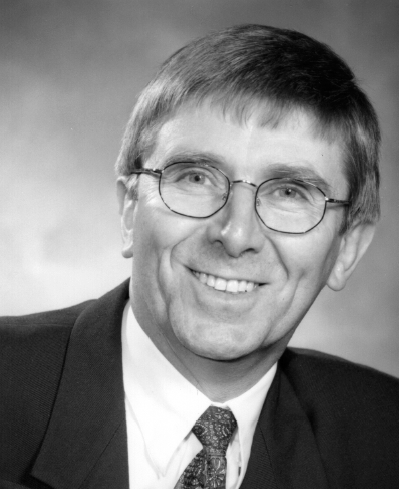
It is a particular pleasure for me to introduce my friend, Professor Serge Leroueil, the British Geotechnical Society's 39th Rankine Lecturer.
Serge Leroueil was born in Cersay, in France in 1948. He obtained his degree in Civil Engineering from Lyon. In 1970, he decided to go to Laval University in Quebec for one year to obtain an MSc in Geotechnique. Twenty nine years later he is still there. This is the only example I can find of Serge's organisational and planning skills letting him down.
Why, you may ask, did he stay? It certainly wasn't for the Quebec winters. I would guess it was the stimulating company he joined at Laval: Pierre La Rochelle, Francois Tavenas and Marius Roy. Members of this foursome combined to produce over 40 quality papers between 1977 and 1987. Over this time, Serge became known for his work on embankments, on soft clay, on yielding, compressibility and permeability, and on the behaviour of structured soils in general.
It amuses me that the idea of structure in soft clays was so obvious to Serge and his colleagues that the first paper they wrote, to ASCE in 1979, was actually about destructuring—no wonder it was lost on us. In fact, it was not until Serge's seminal paper with Peter Vaughan, entitled: ‘The congruent effects of structure on the behaviour of natural soils’, appearing in the vintage September 1990 issue of Géotechnique, that the message about structure began to get across. I like to feel that I played a small part in that paper. I was aware of Serge's ideas, through my many contacts with him. I thought I understood Peter Vaughan's ideas from his lectures in the bar, which was no mean achievement, and I suggested that Peter should swap his ideas with Serge. The result was the paper whose title I still don't understand.
It is interesting how, in the late 1970s and early 1980s, the structured clays of Eastern Canada were the odd ones out, the exceptions to the rule. However, as the ideas from Laval and Sherbrooke Universities spread, particularly on improving sampling methods, we now find that it is the unstructured clays which are the exception. It has not been an easy case to win and Serge has often come under attack from protagonists of, for example, the Shansep approach.
However, fighting for his corner, is one of Serge's qualities. His public debates with Professor Mesri on Theory A versus Theory B for consolidation and creep are an example of this. It is his work on consolidation and rate effects, combining elegant laboratory studies and incisive analysis of field measurements, that have demonstrated admirably his qualities as a researcher.
Serge's achievements in the research field have been recognised by our own Institution, who have awarded him the Telford Premium on two occasions:
In 1985, for his paper on stress-strain-strain rate relation for the compressibility of sensitive natural clays, and
In 1990, for his paper with Peter Vaughan.
The thoroughness of his work and the clarity of his presentations, both spoken and written, mean that Serge has been in great demand as a keynote lecturer, general reporter, panellist and preparer of states of the art. His contributions include the 10th Canadian Geotechnical Colloquium in 1988 on consolidation, his report with Francois Tavenas in 1987 in Mexico on laboratory and in situ stress-strain time behaviour of soft clays, his report at Geo-Coast 1991 in Yokohama, on the investigation of soft soils, in 1996 his report to the ASCE Convention on ‘the importance of strain rate and temperature in geotechnical engineering’ and his 1997 review ‘ Critical state soil mechanics and the behaviour of real soils’, to mention but a few.
Not only does he find time to teach, research and prepare state of the art and general reports, but he is an active consultant, advising on the settlement issues related to an artificial island in Japan, the performance of dams, and the investigation of landslides. He also writes books and was lead author of an excellent book on Embankments on Soft Clay.
Talking of books, Serge and I, with two others, have had plans to write a book on soil behaviour since 1988. So far, it's been the excuse for two excellent holidays together, and I think we are up to version four of the contents list!
Anybody who works so conscientiously and prepares so thoroughly, and anybody who has prepared a Rankine Lecture, will know how vital is the support of one's partner. Serge has had that support from his wife, Francoise, and his son, Vianney, who are here tonight. As Serge said to me, his debt to them has soared over the last year.
Professor Leroueil's research interests continue to expand. He has brought temperature effects into the elegant framework for soil behaviour, which he first introduced in 1977. More recently, he has used this framework to contribute to an understanding of the behaviour of unsaturated soils. We will hear tonight of yet another of his interests: cuts and natural slopes. It really does give me the greatest pleasure, on behalf of the British Geotechnical Society, to invite Professor Serge Leroueil to deliver the 39th Rankine Lecture.

