

The 43rd Rankine Lecture of the British Geotechnical Association was given by Professor Mark Randolph at Imperial College, London on 19 March 2003. The following introduction was given by Professor Robert Mair of Cambridge University.
It is a great pleasure to introduce our Rankine Lecturer, Professor Mark Randolph.
Mark was born in Sherborne, Dorset, in 1951, and later went to Oxford University where he read Engineering Science. He excelled at Oxford, gaining a First and winning many prizes, and on graduation in 1973 he joined the Building Research Establishment. At the BRE Mark began by working with Dr Arthur Marsland on the stability of Thames flood embankments. Even at this early stage in his career, he produced some new interpretations of the Menard pressuremeter test that are still often referred to (and are widely known as the Marsland and Randolph method).
While working at the BRE, he registered for a PhD at Cambridge University, with Dr Peter Wroth as his supervisor. This was the beginning of Mark's lifelong involvement with piled foundations. Working with Peter Wroth, he developed analytical solutions for the axial response of piles. This work resulted in the production of simple algebraic expressions for a very complex set of problems, by means of elegant simplifying assumptions. This led to Mark developing the computer code PIGLET, for analysis of pile groups, which is widely used internationally by practising engineers.
Moving to Cambridge in 1977, first as a Research Fellow of St John's College and then as a University Lecturer, he had an extremely fruitful eight-year period, producing seminal theoretical studies of the effects of pile installation in clay – these ultimately leading to the important API framework for estimating the capacity of driven piles in clay. At this time in Cambridge he developed close connections with many of the major international oil companies, and worked with them on improving analytical methods for use in the design of offshore piled foundations.
In 1986, Mark decided that he did not relish staying longer in the damp fens of Cambridgeshire, and so he looked elsewhere – and found the perfect climate in Perth, Western Australia. From punting in the rain in Cambridge to surfing in constant sunshine in Australia – this was all too tempting. Mark moved to the University of Western Australia as Senior Lecturer, and within a short period become Professor of Civil Engineering.
At Perth, his career really took off. He built up an extremely active research group in Geomechanics, with a total complement of around 40, many of whom came from different parts of the world. Mark persuaded the Australian Research Council to fund the Special Research Centre on Offshore Foundation Systems, which he directs – this has been a highly successful platform from which he has pioneered many innovative research projects. Having experienced working with the centrifuge at Cambridge, he established the only geotechnical centrifuge facility in Australia. Not satisfied with one centrifuge, he commissioned a second one – of novel drum design ideal for offshore applications.
Mark's main research interests have been offshore foundation systems with particular emphasis on calcareous soils, and novel approaches such as grouted driven piles, suction caissons and different forms of anchoring. He also of course has a major interest in piled foundations – the subject of his lecture this evening – including the dynamics of pile driving and the behaviour of piled rafts. The well-known book Piling Engineering that he co-authored is now in its 2nd edition and is widely used by practising engineers.
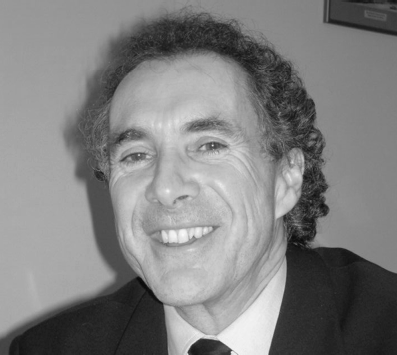
A strong feature of all of Mark's research, dating right back to his time spent at Cambridge, is his close collaboration with industry – particularly the offshore industry. His work has been a balanced mix of fundamental and applied research, through an impressive combination of research council grants, industry-funded contract research and consultancy – the consulting work being through a small specialist company Advanced Geomechanics, of which he is a founding Director.
As well as publishing a very large number of papers, Mark has lectured in many parts of the world and has been the recipient of many awards and honours. From 1997 until 2001 he served as Vice-President of the ISSMGE, representing Australasia. In 2000, he was elected to the Australian Academy of Science and in 2002 a Fellow of the Royal Academy of Engineering.
The outdoor life in Perth clearly suits Mark. He and his wife Cherry, whom Mark met while they were both at Oxford – and whom we are pleased to welcome this evening – together built a house in the middle of the bush in Margaret River, several hundred kilometres south of Perth. Mark, as the engineer of course, did much of the design – no doubt optimising the foundations – and Cherry (a systems analyst at the University of Western Australia) was the project manager. Anyone who has been fortunate enough to visit their house can understand only too well how the wines, sunshine and kangaroos of Margaret River lured Mark and Cherry away from the Greene King beer and climate of Cambridge.
The hallmark of Mark Randolph's style is his ability to focus on developing simplified models of analysis that are suitable for application to practical problems – those models having a sound theoretical basis and reflecting the key physical mechanisms. He is always aware of the realities – the differences between theory and practice – and has displayed consummate skill in adapting his simplified models to account for actual behaviour based on field observations. This is the subject of his lecture this evening, and we look forward to this with great anticipation.
I am very pleased, on behalf of the British Geotechnical Association, to invite Professor Mark Randolph to deliver the 43rd Rankine Lecture.

