

David Henkel's contribution to the world of geotechnics is remembered by many who have benefited from his research, his teaching and his inspiration as both supportive friend and exacting colleague. His Rankine Lecture, published in Géotechnique in 1982, epitomised his approach to work and life: get the facts clear—all of them—then work methodically and rigorously to clear conclusions.
David John Henkel was born in Salisbury, Southern Rhodesia (now Zimbabwe), in 1921. During his childhood, the family moved to Pietermaritzburg in South Africa, and David obtained a B Sc degree at the University of Natal in 1941. During the Second World War David served in the Royal Corps of Signals, where he began to notice the power of aerial photography for studying land forms and geology—an expertise that featured strongly in his later teaching and consulting. Following this he was appointed Head of the Soil Mechanics section of the National Building Institute in Pretoria, where he worked on the problem of expansive clay soils and the structural damage caused to houses by inadequate foundations.
In 1949 David joined the team being established at Imperial College by Professor Skempton, where he stayed for 14 singularly productive and influential years. In London he met his first wife, Margaret. David and Margaret married in 1951 and had three children—John, Katy and Anne.
In the early 1950s David played a major part in developing with Professor Bishop the triaxial test and collaborating on the classic book The measurement of soil properties in the triaxial test, which became a standard reference. He took a key role in directing and interpreting the remarkable series of tests on Weald Clay and London Clay, conducted by a sequence of research students. These tests provided the first comprehensive and consistent set of high-quality data of the effective stress–strain properties of clay. They set the standard for the conduct of experimental research, and they have been an invaluable data bank ever since. Regarding the interpretation of these data, he was involved with Drucker and Gibson in the first serious attempts to apply plasticity theory to the stress–strain behaviour of clays. David made a major contribution to the teaching of the one-year course in soil mechanics at postgraduate level, which developed at that time at Imperial College. Reflecting his great interest in geology, he instituted field trips to study geological problems, and also arranged visits to construction sites. These are remembered as very enjoyable social occasions, as well as being very educational.
At the same time that this basic research was being undertaken at Imperial College, the staff there were providing important advice to consulting civil engineers on difficult design and failure situations, which led to some significant developments. One notable achievement was the work that Henkel did in conjunction with Skempton on the back-analysis of landslips in overconsolidated clays, which showed conclusively that the failures could only be explained rationally in terms of effective stresses, and by taking the long-term value of the cohesive component of strength as zero.
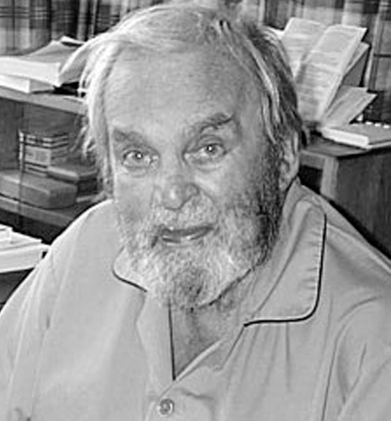
David was keen to share his expertise internationally, and in 1963 he accepted the appointment of Professor of Soil Mechanics at the new Indian Institute of Technology in New Delhi, moving two years later to Cornell University as Professor of Civil Engineering and Head of the Department of Geotechnical Engineering. During this period he undertook research into submarine landslides in the Gulf of Mexico. While at Cornell, he helped organise a specialty conference on earth pressures, which is remembered today for its fundamental contributions to theory and practice. He wrote important papers on soil stress states, and proposed base stability numbers for the design of deep excavations in clay that are found in many textbooks. He was very popular with undergraduates, and was always available to discuss technical matters and help with career and personal matters.
In 1967 Hurricane Camille devastated the offshore industry in the Gulf of Mexico by inducing massive submarine landslides, causing the failure of several offshore production platforms. Shortly afterwards, a representative of Shell Oil Company appeared at Cornell to ask David for insight into the cause and mechanics of the slope instability; it was clear that the Terzaghi wisdom on the subject was at least incomplete and perhaps incorrect because it did not account for the ‘submarine’ environment. As was his wont whenever he encountered an unusual and difficult engineering problem, David retired to his home for two days. He returned to his office bearing an analytical solution that indicated that failure occurred in response to the unbalanced forces produced in the marine environment by wave action. The solution was, at that point, simple and intuitively correct, and was immediately adopted and expanded by the offshore industry. It remains the basis for the solution of all slope stability problems in the offshore environment.
David returned to London in 1970 to lead the geotechnical group in Ove Arup & Partners, becoming a Director of the firm in 1977. He continued to be a forceful educator throughout his 16 years at Arup, instilling into a whole generation of engineers his rigorous approach to identifying all the relevant facts drawn from whatever source or discipline, making simple drawings and using painstaking logic to arrive at clear decisions. Colleagues who went through the bracing experience of being ‘Henkelled’ were always grateful for it, and often puzzled that their complex problem had been reduced to such simplicity. He had great strength in the mathematics of fundamental soil mechanics, and deep understanding of real soil behaviour, including soil chemistry. Alongside this, his geological knowledge and understanding were equally important, and he took a lead in the use of aerial photography in order to gain geomorphological appreciation of project sites. He had a leading role in projects around the world, including the Barbican Arts Centre and British Library in London, Centre Pompidou in Paris, and Das Island and Dubai Dry Dock in the Middle East. He led research into pile behaviour and design for the North Sea, for the Marine Technology Support Unit, and he spent much time in Hong Kong, working on the deep excavations for the Mass Transit Railway and studying pore suctions in the Mid Levels Slopes and the effect on these of heavy rain.
David was editor of Géotechnique from 1975 to 1978. In 1982 he presented his Rankine Lecture on ‘Geology, geomorphology and geotechnics’, using the occasion to emphasise his passion for the inter-reliance of these disciplines. Some of the present text has been drawn from the introduction on that occasion by his friend Professor Peter Wroth. He was elected a Fellow of the Institution of Civil Engineers in 1983, and Fellow of the Royal Academy of Engineering in 1986.
David's first wife, Margaret, died in 1974. He subsequently met Iris, and they were married in 1979. He retired from full-time employment in 1986, and, in addition to carrying on some consultancy work on projects such as the Channel Tunnel Rail Link, he was able to enjoy with Iris the beauties of France and rural England and to develop his culinary skills and appreciation of wines and music. Always practical, he enjoyed using his lathe to make ornaments and toys for friends. Visitors to David and Iris would benefit from their great hospitality and generosity, and would often eat in the surprising tranquillity of the garden at their home.
In the world of engineering, David's legacy can be found in the expertise of the students and colleagues he inspired, throughout the world. He is remembered with great affection, and our thoughts are with his wife, Iris, and his children and grandchildren.

