


This study focused on the professional reintegration of crisis service personnel after deployment, comparing military and non-governmental organization (NGO) workers. While research has primarily focused on the individual and interpersonal challenges of reintegration, less is known about the professional dimension. Using Organizational Support Theory (OST), this study investigates the ways in which workplace relationships, HR procedures and perceived organizational justice affect the reintegration of both military and NGO personnel. By examining the relationship between perceived colleague support (PCS) and perceived organizational support (POS), it further expands on OST.
A mixed-method approach was employed, combining questionnaires and interviews with 30 crisis service employees (military and NGO) after returning from deployment. To investigate organizational support sources in the context of the professional reintegration process, a thematic analysis was carried out.
While levels of PCS varied substantially, all participants reported low POS. This was attributed to perceived gaps in organizational justice and inadequate HR practices. Supervisor support did not make up for the overall poor POS, even though it had a trickle-down effect. Military and NGO personnel share common expectations toward HR but require tailored reintegration strategies due to professional differences.
This study extends OST by examining the relationship between POS and PCS, emphasizing dual reintegration experiences and incorporating NGO personnel into reintegration studies. Findings offer practical insights for leaders, HR professionals and policymakers to enhance reintegration support.
1. Introduction
In an increasingly unstable world, crisis service personnel, including military and non-governmental organization (NGO) workers, are being deployed more frequently and for longer durations to crisis-affected regions (e.g. EEAS, 2025). These deployments place them in high-intensity, disaster-stricken and conflict-heavy environments where they provide emergency relief, healthcare and security under extreme conditions, often requiring them to be available 24/7 (Alexander and Klein, 2009). The military often provides security and logistical support, while NGOs focus on humanitarian aid and community assistance. Deployment represents one phase of the broader deployment cycle, which also includes pre-deployment preparation and post-deployment return (Pincus et al., 2001). Coming home initiates the next phase of this cycle, requiring individuals to step away from the tightly structured, high-intensity routines and close interpersonal bonds developed during deployment (Hooft, 2024). This transition marks the beginning of a significant challenge: reintegration.
Reintegration is a complex and multidimensional process requiring individuals to readjust not only to their community and social life but also to their professional environments (Blais et al., 2009; Blankenship et al., 2023; Elnitsky et al., 2017a, b; Hall, 2008; Larsson et al., 2024; Lubens and Bruckner, 2018; Pincus et al., 2001; Szkudlarek, 2010; Tanner and Dupont, 2015). The contrast between operational and home environments can lead to reverse culture shock, making it difficult to adapt to community, routines, societal norms and workplace expectations (Blais et al., 2009; Boermans et al., 2014; Drodge and Roy-Cyr, 2003; Gaw, 2000; Hooft, 2024; Presbitero, 2016). This transition can impact resilience, motivation and well-being, ultimately affecting both individual performance and the overall effectiveness of their organization (Adler and Saboe, 2017; Berry, 2017; Berry and Sam, 2016; Hall, 2008; Pincus et al., 2001).
Although there is extensive research on the professional repatriation of expatriates, crisis service personnel face unique challenges that warrant separate consideration (Chiang et al., 2018; Glorieux et al., 2023; Knocke and Schuster, 2017). Military personnel may struggle with the shift from high-intensity operations to structured, predictable work environments, while NGO workers often face career instability, difficulties leveraging field experience and inconsistent institutional support (Albuquerque et al., 2018; Cornish et al., 2014; Sultana et al., 2022). While existing research among these populations has explored personal and interpersonal reintegration – examining psychological well-being, family dynamics and social support – professional reintegration remains underexplored, limiting our understanding of its challenges and impact (e.g. Blais et al., 2009; Elnitsky et al., 2017a, b; Gil-Rivas et al., 2017; Glorieux et al., 2023; Vélez-Agosto et al., 2017). Returning to work after deployment presents unique challenges, such as adapting to organizational structures, redefining professional identities and translating field experiences into meaningful career advancements (Blais et al., 2009; Elnitsky et al., 2017a, b; Glorieux et al., 2023; Lubens and Bruckner, 2018; Wooten, 2013). A deeper understanding of the professional reintegration of crisis workers is critical, as it influences long-term career sustainability, job satisfaction and well-being (Adler et al., 2008, 2022; Adrian et al., 2018; Gutierrez and Adler, 2022; Kelley et al.,2014). Specifically, more research is needed to examine the role of organizational support sources in facilitating successful reintegration.
Much of the existing literature focuses on the negative outcomes of reintegration, reinforcing the misconception that it is solely about overcoming challenges like depression, anxiety, substance abuse or post-traumatic stress (Blais et al., 2009; Elnitsky et al., 2017a, b; Gutierrez and Adler, 2022; Lubens and Bruckner, 2018; McCreary et al., 2014; Newby et al., 2005). This leaves a gap in understanding factors that contribute to positive reintegration (Blais et al., 2009; Boermans et al., 2012; McCreary et al., 2014; Newby et al., 2005). However, research increasingly shows reintegration is a dual process with both positive and negative experiences (e.g. Clark et al., 2018; Elnitsky et al., 2017a, b; Glorieux et al., 2023; O’Neal et al., 2018; O’Neal and Lavner, 2022). The WHO defines mental health as more than the mere absence of mental illnesses, it also includes the ability to cope with the stresses of daily life (WHO, 2022). Therefore, identifying factors that facilitate positive reintegration is equally critical to developing effective support strategies.
1.1 Crisis service personnel: military and NGO
Our study examines the professional reintegration of two distinct yet interconnected groups: military personnel and NGO workers. While the literature has explored the differences in their roles, objectives and potential collaboration, there is broad agreement that both groups often operate in similar crisis environments, under comparable conditions (e.g. Bollen and Kalkman, 2022, Finegan, 2014; Kalkman, 2020; Winslow, 2002). However, research has predominantly focused on military personnel, leaving the experiences of NGO workers underexplored (Chiang et al., 2018; Drodge and Roy-Cyr, 2003; Szkudlarek, 2010; Tanner and Dupont, 2015). It remains unclear whether findings from the military are generalizable to NGO workers. Further, few studies compare the two groups, missing an opportunity to examine their shared and divergent challenges and how organizational structures either support or hinder reintegration. For example, military personnel often return to a structured institutional setting with financial incentives, while NGO workers face more varied reintegration experiences based on their contractual arrangements (Dolan, 2003; Finegan, 2014; Wilén and Heinecken, 2017; Winslow, 2002). Some authors suggest that non-voluntary deployments lead to higher expectations for organizational support compared to voluntary deployments, where intrinsic motivation may play a larger role (Wilén and Heinecken, 2017). Thus, understanding the similarities and differences between military and NGO workers is essential for developing tailored HR strategies to effectively support reintegration.
Both groups function as sojourners, taking on temporary roles in diverse locations with the goal of achieving long-term improvements in countries affected by war, poverty or disaster (Alonso and Glennie, 2015; Berry, 2017). While their roles and objectives can differ, they share a commitment to peace and stability even in challenging environments marked by risks to safety and health. They are able to make critical decisions under pressure in demanding environments. Both groups also face frustrations from political decisions that complicate or hinder their work effectiveness (Bell et al., 2013, 2019; Bollen and Kalkman, 2022; Colli and Reykers, 2023; Kalkman, 2020; Winslow, 2002).
Despite these commonalities, NGOs and the military differ in structure and mindset. NGOs prioritize neutrality and impartiality, fostering trust and safety (Dolan, 2003; Finegan, 2014). They tend to operate in small, decentralized teams, often employing younger female professionals (Winslow, 2002). Many NGOs have local knowledge, allowing for greater cultural integration, maintain long-term commitments, employ local staff and adapt strategies to local needs (Bell et al., 2019; Kalkman, 2020; Suparamaniam and Dekker, 2003; Szkudlarek, 2010; Winslow, 2002). As a result, NGO employees may develop unique attitudes toward their work when returning from deployment shaped by their experiences and level of cultural integration. In contrast, military personnel operate within centralized, hierarchical bureaucracies, where deployments are politically driven and follow rigid structures (Dolan, 2003; Finegan, 2014). These bureaucratic processes can slow deployment, affect perceived neutrality and limit direct community engagement (Dolan, 2003; Finegan, 2014). Their primary objective is mission completion, often prioritizing short-term interventions over long-term development (Bell et al., 2019; Dolan, 2003; Finegan, 2014). While the military’s role has expanded to include humanitarian assistance and civilian protection, strict protocols and security concerns often restrict their interaction with local populations, sometimes fostering mistrust (Bell et al., 2019; Kalkman, 2020; Winslow, 2002). The current study focuses on the shared experiences while highlighting key differences relevant to understanding their professional reintegration process.
To analyse professional reintegration, we apply Organizational Support Theory (OST), which emphasizes the role of perceived organizational support (POS) in shaping employees’ experiences, resilience and well-being (Eisenberger et al., 1986; Rhoades and Eisenberger, 2002). OST suggests that employees who feel supported by their organization experience smoother transitions, reduced stress and increased commitment (Barnes et al., 2013; Gutierrez and Adler, 2022; Kelley et al., 2014). While OST traditionally focuses on formal and organized institutional support, we extend this framework by incorporating the role of colleague support, which is less formal and naturally occurring, recognizing that peer relationships play a crucial role in the reintegration experience (Caesens et al., 2020). This theoretical lens allows us to examine how different sources of support and organizational structures influence reintegration outcomes (Ng and Sorensen, 2008). This study makes three key contributions: (1) expands reintegration research by including NGO personnel alongside military personnel, providing a comparative perspective; (2) shifts the focus to professional reintegration, an underexplored dimension of the broader reintegration process, highlighting its critical role in long-term career sustainability; and (3) applies OST to crisis service personnel, examining how different forms of support influence reintegration experiences. The paper is structured as follows: We begin with a review of the existing literature on OST, highlighting research gaps. We then outline our mixed-methods approach, present findings and discuss key implications for research, policy and practice.
1.2 Organizational support theory
Research suggests that crisis service personnel may experience social support differently than the general workforce (Britt et al., 2021; Grover et al., 2024; Straud et al., 2025). In crisis service environments, such as the military and NGOs, a strong professional identity is often established early, through training, including specific socialization processes, shared mission values and collective experiences in high-stress environments (Barnes et al., 2013; Gutierrez and Adler, 2022; Kalkman, 2023; Kelley et al., 2014). OST is particularly applicable in this context, as it focuses on how employees perceive the extent to which their organization values their contributions and cares about their well-being (Eisenberger et al., 1986, p. 501). This perception is shaped by personification, where employees attribute human-like qualities to the organization, often perceiving actions by supervisors or managers as reflective of the organization itself (Caesens and Stinglhamber, 2024; Eisenberger and Stinglhamber, 2011; Caesens and Stinglhamber, 2020). It reinforces the idea that the organization embodies a supportive figure (Barnes et al., 2013; Gutierrez and Adler, 2022; Kalkman, 2023; Kelley et al., 2014). The culture of crisis service work heightens the relevance of perceived organizational support, particularly because personnel invest significant time, energy and personal sacrifice into their roles—especially during the demanding deployment cycle. According to OST, such investment increases expectations of organizational reciprocity: the belief that employees who go above and beyond will have their efforts recognized and valued (Caesens and Stinglhamber, 2024; Eisenberger and Stinglhamber, 2011; Kurtessis et al., 2017). Perceptions of support can shift throughout the deployment cycle (Barnes et al., 2013), making consistent and visible support especially important. During reintegration, POS has been linked to lower stress, greater organizational loyalty, better performance and improved adjustment – all of which are essential for successful reintegration (Adrian et al., 2018; Barnes et al., 2013; Gutierrez and Adler, 2022; Kelley et al., 2014). Conversely, higher stress is linked to poorer perceptions of organizational support (Barnes et al., 2013). Finally, a supportive organizational environment can also reduce stigma and encourage help-seeking—an especially critical factor in crisis service organizations, where exposure to trauma and operational stress is common (Barnes et al., 2013; Kelley et al., 2014).
OST is grounded in two theories to explain how different antecedents contribute to several positive organizational outcomes. Firstly, social exchange theory suggests that employees feel a sense of obligation to reciprocate the support they receive from their organization due to the norm of reciprocity (Blau, 1964; Caesens and Stinglhamber, 2024; Eisenberger and Stinglhamber, 2011; Gouldner, 1960; Kurtessis et al., 2017). Put simply, commitment is reciprocal: employees assess how committed the organization is to them and, in turn, match that level of commitment back to the organization to reach specific objectives (Caesens and Stinglhamber, 2024; Eisenberger et al., 1986; Eisenberger and Stinglhamber, 2011; Kurtessis et al., 2017). The second theory is self-enhancement, which emphasizes that POS helps fulfil social-emotional needs (approval, esteem, affiliation and emotional support) which develops a positive identification with the organization (Caesens et al., 2017; Eisenberger et al., 2020; Eisenberger and Stinglhamber, 2011; Kurtessis et al., 2017; Rhoades and Eisenberger, 2002). Together, these mechanisms explain why POS leads to beneficial outcomes, as employees exchange effort for both material rewards and socioemotional benefits like approval and care (e.g. Eisenberger et al., 1986; Kurtessis et al., 2017; Stinglhamber et al., 2020).
High POS leads to a range of positive outcomes for employees, which can be categorized into three main areas. First employees’ subjective well-being, where POS contributes to greater job satisfaction and lower levels of burnout. Secondly, a positive orientation toward the organization and their roles, reflected in stronger affective commitment, greater identification with the organization and heightened work engagement. Thirdly, favourable workplace behaviours, including improved performance and reduced rates of absenteeism and turnover. These outcomes underscore the value of POS in fostering both individual and organizational success (Caesens and Stinglhamber, 2024; Eisenberger and Stinglhamber, 2011; Kurtessis et al., 2017; Rhoades and Eisenberger, 2002).
1.3 Organizational support systems in professional reintegration
POS is shaped by three primary antecedents: perceived organizational justice, treatment by organizational members and human resource practices (Caesens and Stinglhamber, 2024; Kurtessis et al., 2017; Rhoades and Eisenberger, 2002; Stinglhamber et al., 2020). We assume that these antecedents are especially relevant in crisis service environments, where the nature of the work and the stressors associated with deployments create unique reintegration challenges.
Perceived organizational justice
Organizational justice is commonly studied in relation to decision-making processes (Colquitt, 2001; Eisenberger et al., 2020; Kurtessis et al., 2017), but it is also crucial to understand how these forms of justice affect the reintegration process. Perceived organizational justice becomes particularly important when employees experience uncertainty, as they focus more on justice-related events and their relationship with their employer to determine how much to invest in the organization. These perceptions of organizational justice in turn shape workplace attitudes, behaviours and beliefs (Colquitt and Zipay, 2015). Thus organizational justice is socially constructed by the perceptions of the employees (Colquitt et al., 2001). There are four forms of perceived organizational justice: distributive, procedural, informational and interpersonal justice (Colquitt, 2001; Colquitt et al., 2001, 2013). Distributive justice refers to the perceived fairness of how outcomes or resources are allocated, influencing personal evaluations. Procedural justice concerns the fairness of the processes used to make decisions about resource distribution, influencing system evaluations (Colquitt, 2001). Key elements of procedural justice include transparency, consistency and impartiality, all of which enhance POS (Eisenberger et al., 2020). Interpersonal justice concerns how employees are treated on a personal level, emphasizing respect, care and dignity (Colquitt, 2001; Eisenberger et al., 2020). Informational justice refers to the fairness of explanations given for decisions regarding procedures and outcome distribution. It includes the clarity, transparency and adequacy of communication, as well as employees’ access to relevant information. It provides the necessary context to assess the fairness of organizational processes (Colquitt et al., 2001).
Among these, procedural justice is often the strongest predictor of POS, as fair processes foster a sense of support (Colquitt, 2001; Kurtessis et al., 2017; Rhoades and Eisenberger, 2002). Procedural and informational justice also foster employees’ sense of voice and well-being, enhancing perceptions of fairness and support (Rhoades and Eisenberger, 2002). Research shows that higher procedural justice during deployment reduces PTSD risk (Elrond et al., 2018), while overall organizational justice perceptions are linked to lower post-deployment depression (Lang et al., 2011). Understanding how different forms of justice influence reintegration can help organizations foster supportive environments that ease employees’ transition back to work. Colquitt et al. (2001) also emphasize the importance of examining multiple dimensions of justice within a single study.
Organizational members
Social support refers to psychological or material resources offered to an employee through their social relationships and can vary in terms of form, type and source (Jolly et al., 2021). These types of support (supervisors and colleagues) can positively impact employee attitudes, behaviours and well-being (Caesens et al., 2014; Eisenberger and Stinglhamber, 2011) or acts as a buffer between stressors and employee’s perception of stress (Jolly et al., 2021). Before exploring the role of support by various organizational members, it is essential to address two phenomena. Firstly, building on the perspective of Stinglhamber et al. (2020), POS requires examining the broader social environment within the professional setting including supervisors and colleagues. Understanding this environment and the interactions that take place is key to understanding how POS influences employee attitudes and behaviours (Kurtessis et al., 2017; Stinglhamber et al., 2020; Vardaman et al., 2016; Zagenczyk et al., 2010). For instance, research argues that employees’ job attitudes are shaped by social information processing, meaning employees interpret the attitudes and behaviours of organizational members (colleagues) to form their own perspectives on organizational support (Caesens and Stinglhamber, 2024; Eisenberger et al., 2020; Salancik and Pfeffer, 1978). Secondly, previous studies have sometimes extended the OST to explore the roles of other social support sources such as supervisors and colleague support on organizational outcomes (Eisenberger and Stinglhamber, 2011; Eisenberger et al., 2002). However, research has largely examined these influences in isolation, leaving gaps in understanding how these support sources interact, particularly in the case of perceived colleague support (PCS) (Caesens et al., 2020; Ng and Sorensen, 2008). As a result, the combined effects of these forms of support, as well as their configurations within the workplace, remain insufficiently explored, limiting our understanding of their impact on employees’ well-being, attitudes and behaviours.
Colleagues: In the context of reintegration, colleagues can be divided into two groups: those from the deployment unit and those back home. At home, the employee is embedded in a team with a set of colleagues that is relatively stable over time, which may include colleagues with or without deployment experience. During deployment, the employee is embedded in a team that may or may not be composed of the same colleagues as at home. Indeed, the deployment unit may consist of familiar colleagues from back home or new ones from various national or international backgrounds. Their understanding of the deployed individual’s work and stressors enables meaningful support, contributing to greater resilience and morale (Currie et al., 2011; Gil-Rivas et al., 2017; Laffaye et al., 2008; Maguen and Litz, 2006; Straud et al., 2025; Williams et al., 2016). However, the disbandment of the deployment unit post–mission often results in a loss of immediate support access (McAdams et al., 2018; Sorsdahl, 2010). Conversely, individuals who return to non-deployed colleagues, may experience an abrupt return to work without the anticipated support or recognition (Dexter, 2020; Sullivan-Kwantes et al., 2005; Thompson and Gignac, 2002). Despite these challenges, when colleagues actively listen to the returning employee’s stories with empathy and interest, it fosters feelings of being valued, trusted and satisfied (Currie et al., 2011; Verey and Smith, 2012). Such supportive interactions also provide opportunities for employees to reflect on and share their experiences, implement newly acquired practices and enhance their overall well-being (Currie et al., 2011; Verey and Smith, 2012). While these benefits are significant, Kurtessis et al. (2017) argue that supportive behaviour from supervisors may be more closely related to POS than supportive behaviour of colleagues as supervisors are perceived as more representative of the organization compared to colleagues.
Next to the perception of colleague support, we argue that the shift in social environment from deployment to the home work environment can greatly affect how employees perceive organizational support and adjust post-deployment. Especially since a recent study demonstrates that the POS of close colleagues positively influences the employees’ POS, leading to benefits such as increased job satisfaction and greater organizational citizenship behaviours (Stinglhamber et al., 2020). In this sense, POS is not just an individual perception but a social process, shaped by the information and cues employees gather from their work environment, particularly their colleagues, to define their own attitudes and behaviours (Kurtessis et al., 2017; Salancik and Pfeffer, 1978; Stinglhamber et al., 2020; Vardaman et al., 2016; Zagenczyk et al., 2010). This social process is particularly critical in work environments where employees may have limited avenues to voice concerns (Stinglhamber et al., 2020; Zagenczyk et al., 2010). Thus, in reintegration contexts, this social element of POS can facilitate smoother transitions as returning employees rely on the positive cues of their colleagues to reaffirm their own sense of support. For example, the impact of (un)favourable treatment on POS is stronger when the unit perceives the treatment as more representing the organization (Eisenberger et al., 2020).
Supervisors: OST suggests that employees often view their supervisors as representatives of the organization, as they are responsible for directing and evaluating their performance (Eisenberger et al., 2020; Rhoades and Eisenberger, 2002). POS tends to be stronger among employees who view their supervisor as a significant embodiment of the organization (e.g Eisenberger et al., 2020), a dynamic that is particularly common in crisis service organizations. Research supports this view, showing that positive leadership behaviours—such as high leader-member exchange, perceived supervisor support and transformational leadership—are positively associated with POS, whereas abusive supervision negatively impacts POS (Agarwal et al., 2020; Kurtessis et al., 2017). Thus, supportive supervisors play an essential role in reintegration, particularly in managing critical incidents, setting workplace expectations and addressing psychological concerns among team members (Adrian et al., 2018; Adler et al., 2008, 2022; Gonzalez-Morales et al., 2018; Kozlowski et al., 2009). However, supervisors may find it challenging to provide adequate support if they have not shared similar deployment experiences with the employee or if they lack deployment experience themselves (Adler et al., 2008; Dexter, 2020).
Additionally, the “trickle-down” effect of POS suggests that when supervisors receive favourable treatment from the organization, it enhances their treatment of their employees, which in turn positively impacts employees’ POS (Eisenberger et al., 2020; Masterson, 2001). A recent study found that supervisors’ own POS is more influenced by the belief in the organization’s preference for supportive behaviour than their sense of obligation (Frear et al., 2017). Hence, POS at one level of the organization can influence lower levels (Caesens and Stinglhamber, 2024; Eisenberger and Stinglhamber, 2011).
Human resource practices
Employees trade their efforts and dedication to their organization during a deployment and in return they expect tangible outcomes such as a pay increase or socioemotional benefits such as approval (Eisenberger et al., 1986). Especially since employees believe that organizations have significant control of their HR practices (Eisenberger et al., 1997). OST suggests that positive HR practices—such as providing development opportunities, ensuring job security and granting job autonomy—as well as rewards like promotions and enriched roles, communicate the organization’s appreciation and commitment to its employees (Eisenberger et al., 1986, 2020; Eisenberger and Stinglhamber, 2011; Kurtessis et al., 2017; Rhoades and Eisenberger, 2002). A recent OST meta-analysis highlights development opportunities as essential for supporting employees’ professional goals (Kurtessis et al., 2017). High levels of POS, especially regarding employees’ contributions and well-being, have been associated with improved mental health outcomes and reduced mental health stigma (Kelley et al., 2014). Additionally, when employees receive benefits tailored to their specific needs especially regarding their well-being, it fosters a sense of obligation to reciprocate (Gouldner, 1960). Conversely, when organizations fail to acknowledge employees’ efforts or experiences, neglect support needs or overlook them during promotion decisions, employees may perceive a lack of support, potentially impacting both their engagement and well-being (Albuquerque et al., 2018; Castro et al., 2015; Cornish et al., 2014).
Research suggests that there are three factors that could negatively influence the level of POS within human resource practices (Barnes et al., 2013; Caesens and Stinglhamber, 2024; Kelley et al., 2014). Firstly, POS is heavily influenced by employees’ understanding of the reasons behind the treatment they receive (Caesens and Stinglhamber, 2024; Kurtessis et al., 2017). For organizational support to be impactful, employees must perceive it as discretionary—that is, provided out of the organization’s genuine intent—rather than as a requirement driven by external factors such as laws or government mandates. In essence, employees evaluate whether the organization wants to provide support or merely needs to do so (Eisenberger et al., 1997, 2020). Secondly, a negativity bias can also occur, where employees experiencing distress may interpret organizational support less positively due to their symptoms rather than the actual level of support available. Those needing support the most may be less able to recognize it, with their scepticism undermining POS perceptions (Barnes et al., 2013). Interventions that address this bias, such as training supervisors and employees to recognize signs of distress or declining morale, can help to identify personal distress or decreasing POS (Barnes et al., 2013). Thirdly, employees may perceive stigma around seeking mental health, meaning negative perceptions or bias against those who have mental health issues or seek treatment (Acosta, 2014). This stigma can come from the judgment of colleagues and supervisors (public stigma) or from internalizing these beliefs (self-stigma), which can reduce employee’s sense of self-efficacy in coping with mental health issues and trust in receiving mental health support (Adler et al., 2022; Britt et al., 2016; Britt and McFadden, 2012; Brown and Bruce, 2016; Campbell et al., 2023; Gutierrez and Adler, 2022; Hoge et al., 2006; Kelley et al., 2014; Skopp et al., 2012). The perceived stigma often reflects the overall support level within the organizational culture and can prevent employees from seeking psychological help (Britt and McFadden, 2012; Kelley et al., 2014). A positive POS can cultivate a supportive environment where employees and supervisors feel safe seeking help without fear, encouraging use of organizational resources to support well-being and maintain their contributions to the organization (Kelley et al., 2014). This safe space can reduce the perceived stigma, increase the level of trust, improve outcomes and identify those needing additional support (Barnes et al., 2013; Caesens and Stinglhamber, 2024).
In conclusion, OST offers a valuable framework for addressing key research gaps identified in the introduction, specifically the limited exploration of professional reintegration, positive reintegration experiences and the unique experiences of NGO and military personnel. Despite extensive research on OST, two limitations persist. Firstly, the role of POS in the reintegration process of crisis service employees has not been sufficiently explored (Barnes et al., 2013; Kelley et al., 2014). While some studies link POS to positive mental health outcomes in military settings (Frone and Blais, 2019; Gillet et al., 2017; Thomas et al., 2019), there is limited understanding of how its antecedents—organizational justice, support from organizational members and HR practices—shape reintegration experiences and needs. Secondly, the relationship between PCS and POS remains unclear (Caesens et al., 2020). Although colleague support is crucial to reintegration (Currie et al., 2011; Verey and Smith, 2012), its interaction with POS is not well understood (Caesens et al., 2020; Ng and Sorensen, 2008). It remains unclear whether PCS functions as part of the broader antecedent of support from organizational members, like supervisor support or if it should be considered a distinct construct. Addressing these research gaps is essential for designing effective support systems that enhance resilience, improve performance, foster mental health and help organizations fulfil their moral and legal obligations to employee well-being. This study aims to address these gaps by employing a questionnaire and interviews to examine the reintegration experiences of personnel returning from extended crisis deployments of over three months, with an overarching focus on identifying differences between military and NGO personnel. Additionally, we explore both positive and negative reintegration experiences to provide a comprehensive understanding. The research is guided by the following questions.
How do crisis service employees (military and NGO) perceive organizational justice during reintegration and what are their needs in this regard?
How do crisis service employees (military and NGO) perceive support from supervisors and colleagues and how does this relate to professional reintegration?
What is the relationship between POS and PCS?
How do human resource practices shape crisis service employees (military and NGO)’ reintegration process and what improvements can be made?
2. Method
We interviewed two different categories of crisis services employees: military service members and non-governmental employees. To explore the reintegration process in depth, we used an embedded mixed method (Creswell and Plano Clark, 2017; Creswell et al., 2003). While the qualitative data took precedence, as it allowed us to delve into the personal nuanced experiences of the participants, the quantitative data played a complementary secondary role. The questionnaire was used as an introduction to the interview, helping participants reflect on their experiences before engaging in the interview. Additionally, it aided the interpretation of qualitative findings by offering a broader perspective on trends in the different reintegration experiences. For instance, it enabled us to define clusters, which in turn contributed to the interpretation of the narrative content. Thus the role of the quantitative data was to identify patterns of reintegration rather than making broad generalizations. The synthesis of the two parts of the study was undertaken at the time of the analysis and interpretation of the results. The following subsections describe the data collection for the two parts of our study.
2.1 Participants
All participants (N = 30) had the Belgian nationality. The data, both quantitative and qualitative, were collected between March 2022 and April 2023. They were on average 42 years old (SD = 12.63) and predominantly male (70%). The age range varied from 24 to 73 years, with 43.3% falling within the 30–39 age group. Sixty percent were employed by the Belgian military, while 40% worked for an NGO. Among the NGO participants, all worked in the medical field, providing either medical or logistical support. For instance, 67% were employed by Doctors Without Borders. Regarding relationship status, 42% of NGO participants were single, 8% married, 17% legally cohabiting and 33% de facto cohabiting. For the military, the figures were 22%, 61%, 11% and 6% respectively. Additionally, 78% of military and 25% of NGO participants had children, with an average of 2 children per participant (range = 1–4). Regarding education, a significant proportion had a professional bachelor’s (MIL = 11%; NGO = 33%) or academic master’s (MIL = 44%; NGO = 67%), while 39% of military participants had a high school degree.
On average, military personnel served 17.86 years (SD = 13.67), with around 5.77 deployments (SD = 4.21; range = 1–17), the last deployment occurring approximately 4.25 years ago (SD = 5.86; range = 1–11). NGO personnel had an average of 7.60 years of service (SD = 13.86), with around 6.73 deployments (SD = 4.02; range = 2–20), the last deployment around 2.28 years ago (SD = 2.50; range = 1–9). For the majority of both categories, the last deployment was within the past two years (MIL = 61%; NGO = 75%). Deployment frequencies varied: 42% of NGO participants had 3–5 and 50% had over six deployments, while for military personnel, it was 22% (1–2), 39% (3–5) and 39% (over six). Deployments primarily occurred in Central Africa, the Middle East and Eastern Europe, lasting from two months to over nine months. A detailed overview of these demographic variables for each crisis service sector is provided in appendix (Table A1).
2.2 Instruments
The qualitative part aimed to explore the reintegration experiences and perceptions of crisis service personnel returning from deployment within the past decade. Semi-structured interviews were conducted to delve into their experiences upon returning home, addressing various challenges, factors and dimensions influencing their reintegration. The opening question, “How was your return after deployment?” was followed by additional inquiries to clarify information provided during the interviews and across the dimensions of reintegration. During the interviews, interviewers ensured participants were able to express their opinions, seek clarification or elaborate on various topics.
In the quantitative part, the quality of the reintegration process was measured using the Post-Deployment Reintegration Scale (PDRS; Blais et al., 2009). This scale comprises 36 items rated on a 5-point Likert scale, ranging from 1 (Not at All True) to 5 (Completely True), evaluating positive and negative experiences in individual, interpersonal and professional dimensions. Thus, the items are divided into six dimensions. In this study we focus on the professional subscale: professional positive (“I am now more aware of the problems in the world”; α = 0.63), professional negative (“I find the bureaucracy more frustrating”; α = 0.77). Subscale scores were computed by averaging the items, with higher subscale scores are indicative of more positive or negative experiences, depending on the direction of the subscale (Fikretoglu and McCreary, 2010; McCreary et al., 2014). Based on Hair et al. (2015), we can classify the internal consistencies between questionable and good.
2.3 Procedure
Participants were recruited through the researchers’ personal and professional networks, aiming for diversity in the profession, age, deployment experience and gender. Prior to participation, they received comprehensive information about the study’s objectives and procedures. All participants provided written informed consent to partake in the study prior to undertaking the survey and the interview. The study was approved by the Social and Societal Ethics Committee (G-2021-3783).
We sent the online questionnaire to the participants before the interview. It measured several factors related to their reintegration and other demographic variables (age, seniority, home situation, etc.). The data from the questionnaire was later used to develop an individual feedback report that the participants received during the interview. The questionnaire also allowed participants to reflect on their experiences before engaging in the interview.
To maintain consistency across interviews, we developed a semi-structured interview guide informed by a prior systematic literature review (Glorieux et al., 2023). These interviews were conducted by three members of our research team. The guidelines were practiced within the team to ensure uniformity across interviews. At the start of each interview, the interviewer went through the qualitative informed consent with the interviewee, explained the focus of the research and asked permission to record the interview. The in-depth semi-structured interviews lasted from 60 to 90 min (on average 77 min) and were conducted face to face or via videoconference, to the interviewee's best convenience.
2.4 Data analysis
For the quantitative analysis, we conducted statistical analyses with IBM SPSS package 29. Firstly, we looked at the scores of military service members and NGO volunteers with an independent-samples t-test. Secondly, clusters of reintegration experiences were identified among our sample using the SPSS Hierarchical clustering analysis. Cluster names were assigned subjectively, aiming to capture the most prominent findings observed in the data.
For the qualitative analysis, we used a thematic analysis (Braun and Clarke, 2006). All interviews were recorded and transcribed verbatim, with analysis undertaken in Nvivo 11. For consistency, a single member of the research team conducted the coding process, while two other team members regularly reviewed and confirmed the results. The research team transcribed the interview recordings per verbatim. Interview numbers and pseudonyms were used to protect participant confidentiality, all collected data were stored securely.
3. Results
3.1 Quantitative results
We analysed professional reintegration scores, where values above the midpoint (>2.50) indicate a positive experience on the positive dimension and a negative experience on the negative dimension (Fikretoglu and McCreary, 2010; McCreary et al., 2014). Participants generally reported more positive (M = 3.92, SD = 0.53) than negative (M = 2.66, SD = 0.81) experiences, though 46.7% scored above the midpoint on the negative dimension. Mean scores fell within the norms established for the Canadian Forces (Fikretoglu and McCreary, 2010; McCreary et al., 2014). A paired-samples t-test revealed that participants reported significantly more positive than negative professional reintegration experiences (t(29) = 6.68; p < 0.001; Cohen’s d = 1.03).
Next, we examined scores by group: military personnel (MIL) and NGO employees. Both reported more positive (MIL: M = 3.94, SD = 0.63; NGO: M = 3.88, SD = 0.36) than negative (MIL: M = 2.42, SD = 0.64; NGO: M = 3.03, SD = 0.93) reintegration experiences, with mean scores aligning with established norms (Fikretoglu and McCreary, 2010; McCreary et al., 2014). An independent-samples t-test was performed. The reintegration scores were normally distributed, as assessed by Shapiro–Wilks test (p > 0.05). The Levene’s test indicates that the variances are equal across the two groups (p > 0.05). The test found a significant difference in negative professional reintegration experiences (t(28) = −2.15; p = 0.02; Cohen’s d = 0.76), with NGO personnel (M = 3.03, SD = 0.93) reporting more negative experiences than military personnel (M = 2.42; SD = 0.64).
To explore further, we used SPSS Hierarchical clustering analysis to identify distinct reintegration experiences clusters among our participants. Ward’s method with squared Euclidean distance served as the similarity measure for this analysis. Examination of the dendrogram revealed the presence of four distinct clusters, a conclusion further supported by visual and qualitative inspection of the results (Marcia, 2015; George and Mallery, 2019). No observable differences emerged in demographics such as deployment history or education, but variations were evident across crisis service categories.
All was well (7 MIL+2 NGO = 9; 30%). This group reported relatively high scores on the positive aspects and low scores on the negative aspects of the reintegration dimensions.
Mixed feelings (6 MIL+5 NGO = 11; 37%). This group reported relatively high scores on the positive subdimensions, but also on all or more than one negative dimension of reintegration.
All was well, except for family (3 MIL+1 NGO = 4; 13%). This group reported high scores on the positive dimensions of reintegration and low scores on the negative part of the individual and professional dimensions. However, they do score high on the negative interpersonal dimension.
All was well, except for work (2 MIL+4 NGO = 6; 20%). This group reported high scores on the positive dimensions of reintegration and low scores on the negative part of the individual and interpersonal dimension. However, they do score high on the negative professional dimension.
In conclusion, participants reported higher positive (M = 3.92, SD = 0.53) than negative (M = 2.66, SD = 0.81) reintegration scores, although 46.7% scored above the midpoint on the negative dimension. NGO personnel reported significantly more negative professional experiences than military personnel (t(28) = −2.15; p = 0.02; Cohen’s d = 0.76). Cluster analysis identified four distinct reintegration profiles based on positive and negative dimension scores, with variations in the distribution of MIL and NGO participants across clusters.
3.2 Qualitative results
The subsequent paragraphs delve into the qualitative reintegration experiences of our participants. Through interviews and thematic analysis, we aim to summarize four main questions: How long did it take to fully reintegrate? How do they perceive organizational justice? What is the influence of the support of organizational members? How do HR practices shape the process and what are the needs? Moreover, we will explore the discrepancies between military and NGO personnel. Additionally, integrating our quantitative clusters into our qualitative analysis allows us to delve deeper into participants’ experiences, showcasing both successes and challenges encountered.
3.2.1 What happens in deployment, stays in deployment?
Our interview guide focused on reintegration, yet participants often began by discussing deployment experiences. On average, participants had six deployments, each differing in communication, mission type and unit support—all of which influenced reintegration.
Communication
Our participants emphasized communication with home as a protective factor for reintegration. Advances in communication methods reshaped deployment experiences, with both military and NGO participants acknowledging similar benefits and challenges. Participants perceived several advantages in maintaining contact with home during deployment. Communication boosted morale and motivation, improved well-being and facilitated the reintegration process by keeping both parties informed. NGO workers generally had more freedom to discuss deployment than military personnel, but both groups sometimes lacked the energy to communicate, complicating post-deployment relationships. Challenges include concerns about sharing sensitive information, especially for military personnel. The lack of privacy hindered open conversations. Communication could also trigger homesickness, leading to idealized expectations that did not always match reality. Finally, maintaining communication was also difficult, with missed calls causing worry and affecting reintegration dynamics.
Deployment experiences
Another significant factor identified was the nature of the deployment itself. Key factors influencing reintegration include cultural adjustment, deployment intensity, duration and re-deployment. The first factor is the level of cultural adjustment and the related culture shock. Transitioning between cultures can be complex and emotionally taxing. Crisis service employees often have to shift between different cultural contexts, requiring rapid adaptation. NGO workers, who interact more with local populations, often experience deeper (reverse) culture shock upon return. This shock diminishes over time. Also, familiarity with the host country can ease this process. Secondly, high-intensity missions require more reintegration time. Particularly military participants described heightened alertness post-return. Four participants, both military and NGO, reported occasional flashbacks or memories that, while not persistent, surfaced unexpectedly and needed time to process. Thirdly, the duration of deployment affects reintegration. Shorter deployments felt like extended vacations, with easier transitions. Especially NGOs, invest less emotionally in shorter missions knowing their return is imminent. Longer deployments create ingrained habits requiring more adjustment. Fourthly, over time, reintegration becomes more manageable as the process becomes a routine. A participant elaborated: “I find it easier now because I know myself better, understand that I need time, and recognize that I should take that time.” (Woman, 32, NGO, 5 deployments, Mixed feelings).
Deployment unit
The deployment unit refers to the team crisis service employees work within the host country. Military personnel may deploy with their home unit (familiar) or integrate into a new unit with national or allied forces (unfamiliar). Similarly, NGO employees must build working relationships with unfamiliar international and local staff and volunteers. All participants agree that the deployment unit is a key source of social support during and after deployment. Conversations with colleagues who shared similar experiences offered validation without requiring extensive explanations, unlike discussions with loved ones who struggled to relate. One participant shared: “The best way to process what you’ve experienced is to share it with those who have been through the same. It helps a lot. When you talk to friends or family, you get extreme reactions like ‘Oh my God’ or ‘Poor you.’”(Woman, 35, NGO, 20 deployments, All was well, except for work). However, the composition of the deployment unit can affect the level of support available.
An unfamiliar deployment unit presents three challenges. Firstly, building trust early is essential, as a lack of connection can limit support during and after deployment. Secondly, leaving international colleagues behind in crisis zones can create emotional conflict, leading to loneliness and homesickness, especially for NGO employees. Thirdly, staying in touch with multinational colleagues is difficult, though some participants make proactive efforts to maintain these connections. Military participants also face challenges with familiar deployment units. Working closely for long periods can strengthen or strain relationships. For instance, conflicts during deployment may affect job satisfaction back home but often fade over time. This leads to enhanced respect and improved relationships.
3.2.2 Reintegration process timeframe
We asked participants about the time it took to reintegrate into their home environment. Responses varied from a few days, to some weeks or two to three months. While some felt that a month was sufficient to re-establish routines, many emphasized that full reintegration—where thoughts of departure no longer lingered—typically required two to three months. A clear distinction emerged between the act of physically returning home and the deeper process of truly feeling reintegrated. Notably, one NGO participant reported that their reintegration took over a year due to specific circumstances. The reintegration process generally followed a common pattern. Upon returning to the homeland, most participants described an initial period of rest lasting anywhere from a few days to a few weeks, highlighting its importance for reconnecting with family and re-establishing familiar routines. However, some individuals did not allow themselves adequate time to rest, instead resuming their daily responsibilities quickly due to internal pressures or external expectations from family and society. One participant described it as a process of relearning roles and assessing their fit over time: “You need to relearn how to wear the different hats. Maybe not exactly as before … Some hats will fit you perfectly right away, while others might feel too big or too small. So, you’ll need to assess. But there might be some hats you no longer need or don’t need immediately. So, it’s very difficult to say when I’ll be fully reintegrated.” (Woman, 43, MIL, 5 deployments, Mixed feelings).
3.2.3 Perception of organizational justice and their needs
Reintegration into work, following disembarkation leave, involves adjusting back work routines after a high-intensity mission. Distributive, procedural, informational and interpersonal justice all significantly influence employees’ perceptions of this transition. Understanding how military and NGO personnel reintegrate into their roles is key. Many returning employees report a sense of diminished significance in their positions, which leads to decreased motivation. They often feel their roles at the home workplace lack the autonomy and responsibility they had during missions. One participant reflected: “You have an initial feeling of missing that mission, because I was more important there than what I was doing in the office. And sometimes, it’s a challenge to get yourself charged up for trivial matters” (Man, 53, MIL, 9 deployments, All was well). However, these feelings tend to fade as they regain familiarity with their work rhythm, with some even embracing the routine after a chaotic deployment period.
Distributive justice
Distributive justice, which concerns fairness in allocating resources like raises, rewards or recognition, is a common challenge for returning employees. Both military and NGO personnel note that post-mission support is uneven, with larger military units receiving more proactive assistance than smaller ones. In NGOs, mandatory counselling is provided after initial missions, but consistent support during subsequent deployments is lacking. In NGOs, full-time employees typically take disembarkation leave, while those on temporary contracts have more flexibility, often leading to uncertainty about future roles. Many NGO personnel return to hospital roles but find their deployment-acquired skills undervalued and struggle to apply them effectively. Despite recognition during missions, this does not always translate into meaningful career opportunities outside the NGO sector. As a result, many feel their contributions are not adequately rewarded, leading to dissatisfaction. Additionally, returning NGO employees have difficulty finding equally fulfilling roles back in their homeland. An NGO explained: “and that’s been a process of accepting though: I’m never going to find this again, [a job] that will give me so much satisfaction, that will make me so happy” (Woman, 35, NGO, more than 20 deployments, All was well, except for work). Similarly, military personnel often feel their sacrifices are undervalued, as evidenced by impersonal recognition such as generic thank-you letters. This lack of personalized acknowledgment makes them feel like they are treated as numbers rather than valued individuals. Many military participants expressed frustration with the imbalance between the sacrifices made and the rewards received, particularly in the face of increased responsibilities and staff shortages. One participant explained: “You are not a robot. You are just a human being who enjoys doing his job. But what’s in return? (Man, 39, MIL, 4 deployments, All was well).” However, both military and NGO personnel acknowledge career benefits from deployments, including enhanced credibility, job satisfaction and improved self-efficacy. A participant elaborated: “When you start working, everything is difficult and new. But the more you work in different situations, then you’re like I’ve already been through something like this and I survived it so it will all work out. You have self-confidence” (Man, 29, NGO, 3 deployments, All was well except for work).
Procedural justice
Procedural justice, which focuses on fairness in processes and decision-making, also reveals discrepancies. Participants highlighted inconsistencies between organizational policies and their perceptions of those policies, particularly regarding support services. Factors such as loopholes, outdated information, bureaucratic hurdles and organizational culture contribute to these issues. For example, military participants pointed out that loopholes in policies hindered their access to support, with many being excluded from necessary help. For instance, military units assign a “confidant” for psychosocial (work) issues, but stigma and lack of awareness undermine this role. The decline of policies like post-mission questionnaires has created gaps in support. One participant noted: “I’ve seen that the services can do excellent work. I also saw that they aren’t always found …, and that some of the safety nets that were there before, such as the systematic questionnaires after deployments, have disappeared over time” (Man, 53, MIL, 9 deployments, All was well). These inconsistencies highlight the need for more consistent, proactive support across both sectors.
Informational justice
Informational justice, concerning the transparency and clarity of communication and access to information, is often lacking during reintegration. Both military and NGO participants agree that, in many cases, explanations for why certain procedures were used or specific decisions were made were not provided. Employees were simply expected to accept them. For instance, many military participants returned to work only to face unexpected changes, such as new roles assigned without prior notice or preparation. Others found themselves juggling multiple responsibilities due to staffing shortages, with no clear communication on how to manage these changes. A participant explained: “It are the small details, like your desk being taken, or everything being moved, or the procedures have changed without notice- but that’s because we’re in a constant stream of changes in the military. Still, it’s really frustrating” (Man, 46, MIL, 8 deployments, All was well, except for family). Additionally, participants highlighted a disconnect between general staff guidelines and their communication with frontline personnel, particularly the lack of downward communication. Bureaucratic challenges further complicate the implementation of psychological assistance policies and employees often lack up-to-date information about available resources.
Interpersonal justice
Interpersonal justice involves how employees perceive respect and care from their organization and its members. Returning employees emphasized the importance of active organizational interest in their well-being. Without it, the organization remains unaware of the employee’s true needs and cannot provide appropriate support or recognition. Organizational interest refers to the degree of attention, empathy and respect an organization demonstrates toward its employees. It includes understanding both deployment experiences and emotional well-being upon return. In both military and NGO sectors, debriefing after a mission is a standard practice, offering personnel the opportunity to reflect, share insights and learn from one another. However, many participants report feeling that their organizations or supervisors fail to actively listen or respond meaningfully to the information shared during these sessions. In some cases, only one individual leads the debriefing, leaving other team members feeling ignored and undervalued. This lack of interaction led to frustration, reduced motivation and decreased job satisfaction. Moreover, many participants felt their organizations showed little concern for their emotions, discouraging them from sharing their feelings and contributing to mental health stigmatization. As one military participant put it: “Even if it’s just to show someone is interested. Even when everything is fine, a bit like you’re doing now. Because I bet that for the younger ones, the first mission is stressful. Leaving abruptly in a situation of crisis. And I bet some of them must be having concerns.” (Man, 53, MIL, 17 deployments, All was well). Another participant noted: “As long as you’re functioning within [NGO], you’re doing your job, then everything is great — but that’s where it ends. Even when you’re back home, no one is going to call you, and if you want different work, they’re not concerned with that either. No one is really taking care of that” (Woman, 35, NGO, more than 20 deployments, All was well, except for work).
3.2.4 Role of colleagues and supervisors in reintegration
Upon mission completion, an employee returns to their home unit alongside colleagues and supervisors which can impact the reintegration process. This unit may be the original one they were deployed with, a completely new unit or the one they were originally associated with. Firstly, colleagues fulfil roles that range from providing emotional and practical support and offering time for gradual adjustment. Additionally, supervisors play a crucial role in monitoring and supporting employees, including expressing interest in their deployment experiences to facilitate successful reintegration.
Colleagues
Overall, the majority of our participants underscored the importance of colleague support in their reintegration, particularly from colleagues who have insight or experience into the deployment cycle. Both military and NGO personnel find camaraderie among colleagues who share similar deployment experiences. This shared background fosters open dialogue and the exchange of experiences, providing support and a sense of understanding that may be lacking with family and friends back home. One participant explained this further: “In the sense that it is someone who knows directly what you are talking about, and who also doesn’t dramatize things, who also understands the things or who also asks, “So I heard about that thing or that incident, did that bother you or how was that?” (Man, 52, MIL, 4 deployments, All was well).
While military personnel often find such support within their units, NGO workers may miss this connection upon returning to regular medical settings. Even though these colleagues may not fully understand the intricacies of deployment, their interest and willingness to listen can still provide valuable emotional support during the reintegration process. However, regardless of shared experiences, genuine interest and recognition of new skills and experiences are essential for all colleagues. Failure to acknowledge can undermine the intended support. Some military participants mentioned encountering a competitive atmosphere upon their return, where their deployment experiences were undervalued or overshadowed by colleagues’ attempts to outperform them. Similarly, NGO participants felt their experiences were often overlooked in regular medical settings, where colleagues reverted quickly to everyday stories and complaints.
Furthermore, during professional reintegration, certain participants recounted that their colleagues anticipated their return and allocated time to gradually readjust to the routine. Importantly, participants recognize that this is something that every colleague can offer, even without deployment experiences or specialized knowledge. Military personnel stressed the importance of this time, especially considering the potential organizational changes upon their return, such as staff adjustments and policy modifications. Medical NGO participants also highlighted the need for time to reacquaint themselves with Western medical procedures.
Supervisors
Our participants highlight that supervisors at home play two distinct roles during the reintegration process which depends on the presence of mutual trust. This trust is reciprocal: requiring employees to have confidence in their supervisors’ decisions and supervisors to trust their employees’ abilities. This bond tends to strengthen after a successful mission, leading to higher expectations and appreciation for the employee’s contributions. However, this is often not the case when NGO participants return to a normal medical setting. The absence of mutual trust can hinder the reintegration process.
The first perceived role is the guardian of well-being. Supervisors are responsible for monitoring the physical and mental well-being of employees both during and after deployment. They play a critical role in ensuring employees feel well by showing interest and providing necessary support when needed. Even if supervisors lack deployment experience, participants believe it is their duty to ensure their employees’ well-being and intervene if necessary. One participant emphasized this by stating: “It’s also somewhat up to your supervisors to keep an eye on whether you’re feeling well, whether you’ve been on a mission or not. If they see that you’re not doing well, they need to intervene in some way.” (Man, 24, MIL, 1 deployment, All was well except for family)
Secondly, supervisors are expected to express interest in the experiences and skills acquired by employees during deployment and explore how these can be integrated into future work. This interest serves as recognition for the employee’s efforts and fosters a sense of appreciation. A military participant noted: “Yes, the boss does occasionally ask you to come by and share your experience of how it went … I see that as a sign of appreciation and interest from your superiors. I actually think it’s a good thing that it happens.” (Man, 52, MIL, 4 deployments, All was well). As mentioned earlier, NGO supervisors frequently overlook the skills acquired during deployment and fail to incorporate them into the home country’s medical setting.
3.2.5 Influence of human resource practices on reintegration
We asked participants about the existing HR policies within their respective organizations, the perceived problems with these policies and the HR-related needs they deem important for the reintegration phase. Given that our study involves two categories of crisis service employees employed by distinct organizations, we will highlight the similarities and differences.
Current HR-practices
Table 1 shows an overview of the current HR policies in place based on the stories of the participants. Notably, both military and NGO organizations employ a similar approach to prepare their employees for deployment, offering comprehensive deployment training and briefings. During deployment, military personnel may receive visits from psychologists upon request or as deemed necessary. Post-deployment, both groups commonly receive a period of disembarkation leave and psychological support. Military personnel typically have 1–2 weeks of leave based on deployment duration, while NGO employees’ leave varies due to contract terms. However, the demand for volunteers in the NGO sector often limits reintegration time. Some NGO participants suggest a mandatory waiting period to prioritize reintegration. Additionally, they engage in reflective briefings focusing primarily on technical aspects and mission experiences. Military participants often have to proactively seek information about receiving support. NGO personnel often have career conversations, allowing them to discuss future career trajectories alongside mission reflections. However, counselling within NGO organizations is often limited, typically provided mandatorily for initial missions and subsequent offers depending on contextual factors.
Problems with current HR practices
HR policies in place as perceived by participants
| Military HR-policy | NGO HR-policy | |
|---|---|---|
| Pre-deployment | Pre-deployment training which prepares them for the mission but also provides information about available support services | Induction week involves deployment training and various briefings regarding the deployment and post-deployment phase |
| Deployment | Visit by psychologists in the operational area to provide support and boost morale | Not mentioned |
| Post-deployment | Fixed period for disembarkation leave Option to reach out using the contact numbers provided before deployment Post-deployment briefing with the lessons learned | Variable timing for leave. The demand for volunteers limits reintegration time Conversation with career advisors which encompass reflections on successes and challenges during the mission, future career trajectories and preferences for the next mission Debriefings with a focus on technical aspects |
Source(s): Authors own work
Current HR policies aim to support employees but present shortcomings, including gaps in individualization, reliance on self-initiative, timing of post-deployment support and organizational culture and stigma. These issues, noted across both crisis service categories, are explored below from individual to organizational levels.
(a) Individual characteristics and personality
Both military and NGO participants stress the need for organizations to consider employees’ unique traits throughout the deployment. Crisis service employees often struggle to balance personal engagement with professional distance, influenced by both their personalities and deployment demands. For example, some—especially in the NGO sector—attach great importance to each task and its consequences, which can persist post-deployment, particularly in Western medical settings. This complicates maintaining personal involvement while avoiding burnout. Additionally, crisis service employees are often seen—by themselves, their organizations and society—as people who keep problems to themselves. This perception is reinforced by organizational culture. One NGO employee noted: “There are times when the organisation falls short, not realizing they’re dealing with people who won’t always seek help on their own. I don’t feel the need myself, but I do regret that support isn’t offered. It’s as if they don’t truly understand what we witness in the field.” (Woman, 32, NGO, 5 deployments, Mixed feelings)
(b) Reliance on individual initiative
Crisis service personnel in both the military and NGO sectors often face challenges in seeking support after deployment, with the responsibility placed on individuals to reach out for help. This reliance on personal initiative can lead to feelings of neglect, reduced motivation and even resignation. Existing policies and guidelines typically place the responsibility on returning employees to seek help, rather than prompting proactive involvement from the organization. For instance, an NGO employee highlighted: “Then you return home, and, no one asks you, “How are you?” and then you start thinking, well, maybe organisations should consider the psychological well-being of their employees, and it’s their responsibility to do something about it” (Woman,32; NGO, 5 deployments, Mixed feelings). Additionally, discrepancies in HR policies across different countries within the same organization further compound this issue, with some mandating psychological assistance while others operate on a voluntary basis.
(c) Timing of post-deployment support
Regarding the timing of post-deployment support, NGO participants noted that immediate support is offered upon returning home, but it is not repeated, and there is a finite timeline for the assistance provided. When NGO employees leave the organization or consider leaving, the support stops, similar to the situation for military participants. This leaves employees to seek assistance independently, which can be challenging as conventional psychologists often lack the understanding of the crisis service context needed to effectively help employees in such situations.
(d) Perceived organizational culture and stigma
As earlier mentioned, employees are typically seen as individuals who keep problems to themselves. Therefore, organizational culture, especially regarding mental health, greatly influences whether employees feel comfortable seeking help. Many employees feel pressured to handle problems independently, fostering a culture where mental health issues are minimized. For instance, they highlight the organizational tendency to downplay or dismiss challenges during and after deployments, contributing to an environment where seeking help is discouraged. An NGO employee notes that these experiences do impact individuals to some degree. A participant noted: “There is a strong attitude of you have to be strong, you have to be able to get through everything, you have to be able to accept everything. I think it is very unhealthy because it creates an environment where people don’t dare to ask for help.” (Woman, 35, NGO, 20 deployments, All was well except for work). The stigma surrounding seeking help can be intensified by the fact that the responsibility for seeking assistance falls on the returning employee. This challenge is worsened when individuals receive brochures with helpline numbers for psychological support, as the abundance of jargon can be overwhelming. Additionally, these helplines often lead to call centres, creating uncertainty about who will respond and potentially resulting in redirection to different resources. These obstacles hinder the effectiveness of support systems, leaving some individuals feeling isolated and underserved, despite their struggles. A military participant reflects: “I think the individual soldier who comes back with a bad feeling, I don’t know if they find their way so easily to the agencies that would help them within Defence” (Man, 46, MIL, 8 deployments, All was well except for family).
HR-related needs and suggestions
Despite the distinction between the two categories of crisis service employees, their expressed needs and recommendations show remarkable similarities. Generally, there exist two substantial needs for proactive engagement from the organization and for the change of the crisis service culture. To create a more supportive environment, organizations must normalize mental health discussions, simplify access to resources and proactively offer assistance. Next to that, there are some additional suggestions that were mentioned by several participants (Table 2).
Additional suggestions regarding the HR practices and explanation
| Additional suggestions | Explanation |
|---|---|
| Differentiate the offered support | Crisis service organizations must adjust their care to diverse backgrounds. Some participants found it challenging to access suitable care outside their organization due to external providers’ limited understanding of the unique deployment context and associated psychological challenges, resulting in potential misinterpretations and inadequate treatments |
| Strengthen the role of the confidants | Another suggestion was to strengthen the role of the “confidants” within the unit to keep offering psychological assistance even beyond the reintegration process. Offer the necessary time to fulfill this role |
| Introduce a mentor figure | Linked to this, another participant suggested a “mentor” figure with prior mission experience who can serve as a valuable resource and support system. This individual can take on the role of facilitator and informant to ensure a smooth preparation for deployment and return |
| Proactive debriefings | Proactively informing employees about their mission, return environment and potential challenges before deployment is crucial. This includes instructions on cultural, political and social aspects, as well as the reintegration process. It should also encompass the potential challenges they might encounter during their mission and subsequent return |
| Third location decompression | Also, some military participants suggested to implement a third location decompression period before officially returning home as seen by other nations |
| Consider the family | Military participants stress the importance of considering the deployed employee’s family in the reintegration process. While organizations often focus on the returning employee, family involvement is equally crucial. In cases of unit deployment, military unit can organize family days to bring service members and their families together. These events are intended to strengthen family bonds, enhance morale and provide to opportunity to connect with other families. However, when an individual is deployed, their family might lack connections with other families in the same situation. Additionally, organizational support frequently does not extend to the family’s needs before, during and after the deployment |
Source(s): Authors’ own work
The notion of systematic proactive support and interest is emphasized by the majority of participants. They see significant value in organizations offering such support consistently, with many suggesting it should be mandatory. While this support could take various forms, the recommendations proposed are generally realistic and feasible. One participant proposed: “Perhaps just an invitation to come over sometime. Why not? You also have to undergo medical examinations. That’s all already scheduled. So why shouldn’t this [psychological conversation] be one of those things that should happen after a mission as well?” (Man, 39, MIL, 4 deployments, All was well). This proactive support could take various forms, such as emails, phone calls or counselling meetings, initiated through a questionnaire to prompt reflections and discussions. This conversation should encompass topics ranging from the pre-deployment, deployment itself, the post-deployment and unrelated aspects as well. The participants highlighted that the employees should feel free to discuss any issues troubling them. What holds the most significance for them is individually asking each person: “How was your deployment and reintegration?” However, tangible outcomes from addressing concerns are deemed crucial for effective support. Another participant noted the possible effect of showing interest and lowering the stigma: “People who are closeted and things are already going wrong, they often don’t recognise their problems because of shame, frustration and with the mind-set of fuck defence. But then when defence says how are you? Then I might be angry, then emotional, then relieved later.” (Man, 37, MIL, 4 deployments, Mixed feelings).
Regarding timing, participants generally agree that support should be offered after an initial rest period, ideally within the first month after deployment. Some suggest counselling around the 4-week mark, allowing individuals time to gain perspective on their experiences. One participant explained her experience: “Well, it’s offered the day after you come back, but at that moment, you don’t realize you need it. It’s more like a few weeks, months, sometimes even a year later. If they had called again, it would have been beneficial.” (Woman, 36, NGO, 6 deployments, Mixed feelings).
4. Discussion: what should HR know about reintegration?
This study explored the professional reintegration experiences of military and NGO personnel following crisis deployments. Reintegration should not be viewed as a linear or uniform process, but as one that is dynamic and varies widely between individuals (Blais et al., 2009; Cogan, 2016; Elnitsky et al., 2017a, b; Glorieux et al., 2023; McCreary et al., 2014). In the following subsections, we will first focus on the general professional reintegration process and later examine the role of the antecedents of POS in shaping this process: organizational justice, treatment of organizational members and HR practices. As reintegration is dynamic, so too should be the understanding of POS (Caesens and Stinglhamber, 2020). Thus, OST should account for individual perceptions, the timing of reintegration and the influence of the broader social context in which the employee operates (Stinglhamber et al., 2020; Zagenczyk et al., 2010).
4.1 Professional reintegration
Our findings, supported by recent literature, indicate that reintegration is rarely uniform, typically comprising a mix of both positive and negative aspects (e.g. Adler et al., 2022; Glorieux et al., 2023; O’Neal and Lavner, 2022). Statistical analyses further confirm this variability: paired-samples t-tests show a general lean toward positive experiences, while a cluster analysis identifies four distinct reintegration patterns: (1) “All was well” (high positive, low negative across dimensions); (2) “Mixed feelings” (high in both positive and negative); (3) “All was well, except for family” (significant family challenges); and (4) “All was well, except for work” (notable workplace challenges). These results suggest that while the general trend leans positive, a substantial part of the participants (70%) experienced either mixed feelings or specific difficulties in one dimension. The qualitative data provide a further nuanced perspective. Interview participants more frequently discussed negative experiences and frustrations, as reflected in Table 3. One possible explanation is the negativity bias—people tend to remember and articulate negative events more vividly than positive ones (Norris, 2019). Importantly, participants acknowledged the potential benefits and importance of various support systems—such as support by the organization (including fair treatment), supervisors and colleagues. However, they also noted that these support systems often fell short in practice, not meeting their needs. Common barriers included competitive work environments, a lack of awareness about available resources and structural loopholes within the support system itself. These findings reinforce the need for tailored support strategies to address the nuanced experiences of reintegration (Adler et al., 2022; O’Neal and Lavner, 2022). For instance, employees struggling with family-related issues may benefit from counselling services, while those experiencing workplace reintegration difficulties may require targeted organizational interventions. Acknowledging both positive and negative reintegration experiences is crucial in ensuring a holistic approach to post-deployment transitions.
Main findings of qualitative results regarding professional reintegration
| Similarities | Differences | ||
|---|---|---|---|
| MIL | NGO | ||
| Influence of the deployment | Impact of communication on morale, motivation, well-being and reintegration Nature of the deployment: level of cultural adjustment, intensity, duration and re-deployment Familiarity and shorter missions help reintegration | Communication: confidentiality of mission towards family Nature: Lower level of cultural adjustment Intensity: Unlearn security protocols | Communication: More freedom to openly discuss Nature: Higher level of cultural adjustment thus presumed higher reverse culture shock |
| Organizational justice | Adjust to post-deployment routine (boredom, …) Low level of all forms of organizational justice Distributive: Uneven support, Contributions are undervalued, No meaningful recognition Procedural: inconsistent policies, bureaucracy, stigma, outdated information Informational: Poor unclear communication Interpersonal: Lack of active interest | Distributive: impersonal recognition but career advantage for future promotions Informational: unexpected reassignments, unclear guidance, personal shortages | Distributive: question of transferability and acknowledgment of new skills. Problems with Western medical approach, Contract-based uncertainty, unclear future roles, inconsistent follow-up for subsequent missions |
| Colleagues | Significant source of support during reintegration Shared background fosters trust and support Anticipate return and allocate time Interest and willingness to listen | Personal shortages: secondary responsibilities and altered professional circumstances Competitive atmosphere with home unit | Miss connection with colleagues in regular medical setting, experiences were overlooked Colleagues need to provide time to reacquaint with Western medical procedures |
| Supervisors | Mutual trust is the base Role 1: Guardian of well-being Role 2: Express interest in the experiences and acquired skills | Overlook the skills acquired during deployment and fail to incorporate them into the home country’s medical setting | |
| Deployment unit | Significant source of social support during deployment and reintegration Composition of unit affects available support | Challenge of a familiar deployment unit: improved or deteriorated relationships + Conflicts can carry over to day-to-day life | Challenge of unfamiliar deployment unit: establishing trust, concerns about leaving international colleagues behind, staying connected with international colleagues |
| Organizational HR practices | Currently: Reliance on individual initiative, No consideration of unique identities, Inconsistencies in support services, Perceived stigma, Immediate support is offered but no continuation Need for proactive engagement and for the change of crisis service culture | Larger deployed units tend to receive more proactive support | Mandatory psychological counselling after first mission but not after subsequent missions When you leave the organization, the support offer stops |
Source(s): Authors’ own work
Our findings highlight the varying timelines of reintegration, with most participants estimating it took two to three months for full adjustment. This supports the view that reintegration is a dynamic process unfolding in phases—celebration, transition and stabilization—each marked by shifting expectations and satisfaction levels (Blais et al., 2009; Elnitsky et al., 2017a, b; Glorieux et al., 2023; Lubens and Bruckner, 2018). Most participants stressed the need for a rest period of days to weeks to reconnect with family and routines (celebration), while others, due to personal or societal pressures, skipped this phase and moved almost directly into transition. The challenges identified in this study mainly occur in the transition phase, where the most significant adjustments and difficulties arise, making it the key period for organizational support. This aligns with research showing that satisfaction often dips after the celebration phase before rising again, reflecting the evolving nature of reintegration (Cabrera et al., 2023). Participants also stressed the need for continued support during stabilization and even beyond contract termination.
Table 3 summarizes the key qualitative findings, highlighting the distinct nuances of professional reintegration for military and NGO personnel. In comparing the quantitative reintegration experiences of both groups, NGO workers experienced significantly higher negative reintegration than military personnel. This disparity is likely due to differences in deployment and organizational structures. Military personnel typically deploy with familiar units, benefiting from shared experiences that ease reintegration. On the other hand, NGO workers are often deployed with unfamiliar teams and reintegrate into workplaces where colleagues may lack deployment experience (Dexter, 2020; Dolan, 2003; Finegan, 2014; Winslow, 2002). These findings reinforce that reintegration is not an isolated process but is heavily influenced by deployment-related factors, such as communication, mission demands and available support structures. This pattern is consistent with prior research highlighting the critical role of deployment experiences in shaping reintegration outcomes (Adler et al., 2008; Boermans et al., 2014). Additionally, research suggests that cumulative deployment and life stresses can erode resilience over time (Adler and Saboe, 2017; Cabrera et al., 2023). Therefore, organizations should anticipate the reintegration process and establish stable support structures to foster well-being during the whole deployment cycle.
4.2 POS and professional reintegration process
While the reintegration process itself is multifaceted, the level of POS plays a critical role in shaping these experiences, influencing both the outcomes of reintegration and employees’ overall well-being.
Organizational justice: Our findings highlight that perceptions of organizational justice—distributive, procedural, informational and interpersonal—are crucial to professional reintegration for military and NGO personnel. While procedural justice is often cited as the strongest predictor of POS (Eisenberger et al., 2020; Kurtessis et al., 2017; Rhoades and Eisenberger, 2002), our findings suggest that other forms of justice play an equally, if not more, important role in reintegration. For instance, our results suggest that the perception of organizational justice often begins with distributive justice: what do employees receive after deployment in terms of rewards, recognition and tasks and how does this compare to others? When returning personnel face contract terminations, job uncertainty or unfulfilling roles, they perceive unfair distribution, making the other forms of justice more salient: How were these decisions made? Why was I not consulted? A lack of clear explanations then leads to informational injustice, while feeling disrespected reinforces interpersonal injustice (e.g. Colquitt and Zipay, 2015). Conversely, when distributive justice is not an issue, other justice concerns become less significant. Notably, we observed consistently low levels of all forms of organizational justice, making it difficult to determine whether higher justice would reduce the risk of PTSD or depression (Elrond et al., 2018; Lang et al., 2011). Thus further research is needed to explore the potential protective effects of organizational justice on mental health during reintegration. Moreover, examining the relative impact of various forms of justice on reintegration and POS will help organizations understand which forms of justice to prioritize in reintegration strategies (Colquitt et al., 2001, 2013).
Treatment of organizational members: Our findings reveal that POS and PCS function as distinct support systems, each with a unique influence on the reintegration process. When analysing the configuration between POS and PCS, we identified three key patterns, visualized in Figure 1. We categorized them into a matrix with low-high levels of POS and low-high levels of PCS. These findings combined introduce a new perspective, building on Caesens et al. (2020) who identified consistent profiles of low, moderate or high support across sources, with most participants falling into balanced support profiles. In contrast, our study identified contrasting profiles, where individuals experienced high support from one source (PCS) but low support from another (POS). Notably, we found a ’colleague-supported profile’ (i.e. high PCS but low POS), which was not identified in the research of Caesens et al. (2020).
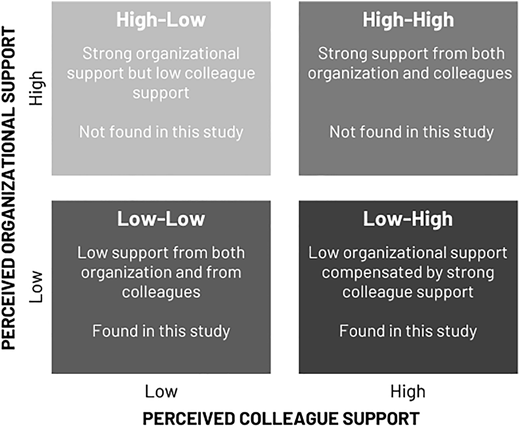
In our study, firstly, employees consistently reported low POS, citing a lack of organizational involvement, justice, debriefing and follow-up. This lack of structured support undermines trust, breeds cynicism and complicates reintegration (Eisenberger et al., 2020; Ford et al., 2018). The lack of HR practices further contributes to low POS (Eisenberger et al., 1986, 2020; Eisenberger and Stinglhamber, 2011; Kurtessis et al., 2017; Rhoades and Eisenberger, 2002). Despite the generally low POS, supervisor support emerged as a key factor in enhancing POS and trust. Our findings suggest a “trickle-down” effect for supervisor support (Adrian et al., 2018; Adler et al., 2008, 2022; Eisenberger et al., 2020; Frear et al., 2017; Kozlowski et al., 2009; Kurtessis et al., 2017; Masterson, 2001) Even though supervisors are viewed as direct representatives of the organization, this effect is not strong enough to overcome the broader lack of organizational support (Agarwal et al., 2020; Eisenberger et al., 2020; Rhoades and Eisenberger, 2002). For POS to be effective, it must be perceived as genuine rather than procedural. This will foster trust and fairness, which in turn encourages loyalty and gratitude (Barnes et al., 2013; Caesens and Stinglhamber, 2024; Eisenberger et al., 1997, 2020; Ford et al., 2018).
Secondly, a significant number of participants experienced low POS but high PCS, receiving emotional and practical support from colleagues. Especially, since colleagues both at home and in deployment units directly relate to returning employees’ challenges, which aligns with prior research (Adrian et al., 2018; Currie et al., 2011; Gil-Rivas et al., 2017; Laffaye et al., 2008; Maguen and Litz, 2006; Williams et al., 2016). However, while colleagues fulfilled socioemotional needs and directly related to returning employees’ challenges, this did not enhance POS. Our study thus provides no support for the “trickle-down or up” effects of social support, where high PCS would lead to higher POS, as suggested by Kurtessis et al. (2017) and Frear et al. (2017). Moreover, shared perceptions of low organizational support among colleagues further eroded POS, creating a negative ‘social contagion’ spiral (Kurtessis et al., 2017; Salancik and Pfeffer, 1978; Stinglhamber et al., 2020; Vardaman et al., 2016; Zagenczyk et al., 2010).
Thirdly, we identified a considerable group of participants who reported both low POS and low PCS, a pattern especially pronounced among military personnel returning to competitive work environments and NGO workers reintegrating into standard medical settings. In these cases, colleagues often lack an understanding of the unique challenges and deployment context, limiting their ability to provide empathy and support (Dexter, 2020; McAdams et al., 2018; Sorsdahl, 2010; Brooks et al., 2015). This dual lack of organizational and colleague support is particularly concerning, as it severely hampers reintegration efforts and undermines employees’ well-being.
HR practices: The findings highlight limitations in current HR practices that reflect low levels of POS, particularly in the reintegration process. Notably, these practices often rely on individual initiative rather than proactive measures from the organization. Discrepancies between policies and employee experiences further complicate reintegration. Mental health stigma emerged as a significant barrier to POS. This aligns with prior research showing that perceived stigma often reflects a culture’s overall support level (Bogaers et al., 2020; Britt and McFadden, 2012; Kelley et al., 2014). Such stigma lowers self-efficacy, discourages help-seeking and weakens both POS and reintegration outcomes (Adler et al., 2022; Britt et al., 2016; Campbell et al., 2023; Cornish et al., 2014; Stevens et al., 2022). Employees also felt limited in voicing concerns or seeking support (Stinglhamber et al., 2020; Zagenczyk et al., 2010). Moreover, low POS led to detachment from the mission and disidentification with the organization, reducing loyalty and motivation (Kalkman, 2023).
4.3 Recommendations
4.3.1 Theoretical recommendations
We propose five theoretical recommendations to advance the understanding of professional reintegration and its support systems. Building on Caesens et al. (2020), future research should replicate and extend their investigation within crisis service organizations, exploring whether distinct support profiles emerge, whether mismatched support profiles exist and whether uniformly low support leads to more negative outcomes. Secondly, following Ng and Sorensen (2008), we caution against assuming similar effects of different support sources on employees, as they may have different antecedents, consequences and strengths of association. Thirdly, future research should explore why high PCS does not increase POS and examine the effects of high POS on PCS. This could help refine theories like social exchange and self-enhancement to explain cases where socioemotional support from colleagues does not influence organizational perceptions or vice versa. Fourthly, further quantitative research is needed to examine the relative impact of different forms of organizational justice on reintegration outcomes and POS (e.g. Colquitt et al., 2001). Finally, future studies should take a broader view of the deployment cycle to better understand how deployment experiences shape reintegration.
4.3.2 Practical recommendations
To foster PCS, and POS in crisis services, we recommend an integrated approach combining psychoeducation, structured and reliable HR interventions and cultural change to reduce stigma (Cornish et al., 2014). These strategies improve employee well-being, satisfaction, resilience and performance while facilitating reintegration (Adler et al., 2008, 2022; Adrian et al., 2018; Brown and Bruce, 2016; Kelley et al., 2014; Kozlowski et al., 2009). Given the similarities in reintegration challenges, these recommendations apply to both military and NGO personnel, as well as expatriate employees deployed in high-risk environments (Faeth and Kittler, 2020; Fee and McGrath-Champ, 2017).
Firstly, strengthening colleague and supervisor support is critical for improving POS and PCS, as these groups can recognize subtle signs of distress but often lack training in identifying and providing timely assistance (Adler et al., 2008; Adrian et al., 2018; Cawkill et al., 2006; Cornish et al., 2014; Greenberg and Jones, 2011). Psychoeducation programs can help by equipping employees with knowledge of stress indicators, reintegration challenges and available resources (Cockcroft-McKay and Eiroa-Orosa, 2021; Cornish et al., 2014; Doyle and Peterson, 2005; Gonzalez-Morales et al., 2018; Hinojosa and Hinojosa, 2011; Young et al., 2018). However, for these programs to be effective, organizations must formalize support structures such as peer mentorship programs and supervisor-led check-ins (Adler and Saboe, 2017; Dimoff and Kelloway, 2019a). Tools like checklists, such as those by Dimoff and Kelloway (2019b), can guide supervisors (Adler and Saboe, 2017). Organizations should also allocate time for colleagues to provide the necessary support during reintegration by adjusting workloads or scheduling regular check-ins. Although statistical analyses showed that participants generally reported more positive than negative professional reintegration experiences, qualitative interviews revealed that frustrations and negative experiences were more frequently discussed. This discrepancy may be explained by negativity bias—a tendency for people to focus more on adverse events (Norris, 2019). Therefore, organizations, leaders and colleagues should be mindful of this bias and intentionally encourage employees to reflect on and share positive aspects of their reintegration as well.
Secondly, our findings highlight that employees often perceive a low level of organizational justice and POS. To address this, HR practices should be designed tailored to the unique challenges faced by returning employees, focusing on fairness, accessibility and proactive engagement. Reintegration procedures should be designed to uphold distributive justice (equitable allocation of resources), procedural justice (clear and consistent policies), interpersonal and informational justice (respectful and supportive communication) (Eisenberger et al., 2020; Kurtessis et al., 2017). Participants in the study advocated for surveys followed by one-on-one check-in calls or counselling meetings. Research by Barnes et al. (2013) suggests that these surveys should assess not only mental health but also factors like POS, PCS and organizational justice. Regular surveys can identify reintegration challenges, guide mental health interventions and evaluate policy impacts on employee well-being (Adler and Saboe, 2017). Additionally, sharing results anonymously can reduce stigma and foster a sense of fairness and solidarity among employees (Adler et al., 2022; Adler and Saboe, 2017; Cornish et al., 2014).
Regarding the timing for organizational support, it is crucial to provide structured support throughout all reintegration phases (e.g. Elnitsky et al., 2017a, b; Glorieux et al., 2023; Lubens and Bruckner, 2018), with a particular focus on the transition phase when the most significant challenges arise. We recommend implementing follow-up assessments at 3–6 months post-deployment to address delayed reintegration challenges, as individuals may not immediately recognize their need for support due to the celebration phase (Adler et al., 2022; Cornish et al., 2014). Additionally, support should continue into the stabilization phase and beyond contract termination to demonstrate the organization’s ongoing commitment to employee well-being and reinforce perceived organizational justice.
Thirdly, to reduce stigma, organizations should prioritize open communication, fairness and employee well-being (Britt and McFadden, 2012; Cockcroft-McKay and Eiroa-Orosa, 2021; Cornish et al., 2014; Sullivan-Kwantes et al., 2005). Current support often relies on individual initiative, which can overlook those struggling with reintegration, increase stigma and reinforce perceptions of unfairness (Adler et al., 2022; Young et al., 2018). Yet, there is limited research on how crisis service organizations can effectively reduce stigma-related concerns in a way that also promotes organizational justice (Kelley et al., 2014). Creating a culture that views mental health as an occupational hazard, not a weakness, fosters collective responsibility. This requires comprehensive training to recognize reintegration challenges and ensure consistent implementation of HR policies and support services (Adler and Saboe, 2017).
4.4 Limitations
This study has several limitations worth considering, which we have divided into those related to practicability and those impacting research. Regarding the practicability, the sample is predominantly composed of highly educated individuals, potentially limiting the generalizability of the findings to all crisis service organization employees. Future research should explore variables such as sector (military vs. NGO), gender, ethnicity, branch of service, roles during deployment and rank to address the diversity within crisis service employees. However, due to constraints in sample size for our qualitative approach, our comparisons were limited to examining the impact of the crisis service sector (military vs. NGO). Secondly, the data relied on participants’ recollection of past experiences, introducing the possibility of recall bias and inaccuracies. While memories of deployment may evolve over time, previous research suggests that recollections of crisis service employees are likely to be accurate and reliable even after a lengthier period (2–3 years), given the perceived life-transforming nature of deployments and salient memories (Chiang et al., 2018; Kraimer et al., 2012; Lazarova and Cerdin, 2007; Stevens et al., 2006; Suutari and Brewster, 2003).
Regarding the impact on research, the reliability of some post-deployment reintegration scale (PDRS) was found to be low, which may impact the validity of the measures used in the study. Nevertheless, the visual inspection revealed that the mean scores on the professional PDRS subscale were within those norms (Fikretoglu and McCreary, 2010; McCreary et al., 2014). Also, the lower Cronbach’s alpha can be explained by the smaller sample size (N = 30), which was imposed by the constraints of our qualitative approach. It is important to note that in this study the richness of information obtained through qualitative interviews had the upper hand on the validity of quantitative data (Creswell and Plano Clark, 2017; Creswell et al., 2003). The questionnaire was primarily used as an introduction to the interview process and allowing us for a deeper exploration of participants’ experiences. While qualitative studies can face challenges in generalizing findings due to the contextual nature of data collection and analysis, efforts were made in this study to mitigate these limitations. Interviews continued until saturation was reached, enhancing the robustness of the findings. Trustworthiness was ensured through various methods, including peer debriefs and member checking allowing their reflections and input (Shah and Corley, 2006). Transferability was established as similar findings emerged across different organizational international contexts, crisis service sectors, levels and types, suggesting that the perceptions and experiences of the reintegration process are transferrable.
5. Conclusion
This study explored the professional reintegration experiences of employees returning from long-term crisis deployments, emphasizing the role of organizational support systems and the differing needs of military and NGO personnel. Using a mixed-method approach, incorporating both quantitative data and qualitative insights, the findings reveal the complexities of professional reintegration. Drawing on OST, the results highlight that reintegration is a dynamic process requiring a similarly dynamic approach to POS. Our analysis found that PCS and POS operate as separate support networks. Notably, while low POS among colleagues negatively impacts returning employees’ POS, high PCS does not enhance it. All participants reported low organizational support indicating systemic gaps in organizational justice and HR practices. Supervisor support was important with a trickle-down effect, but it was not enough to make up for the broader organizational shortcomings. These findings emphasize the variability in support levels and the complex interplay between organizational and colleague support during reintegration (Ng and Sorensen, 2008). Strengthening all support forms and POS antecedents is essential, as their combined influence determines reintegration success. Secondly, HR professionals must acknowledge both the positive and negative reintegration experiences and tailor support strategies to individual employee needs, as revealed through clustering analysis. While military and NGO personnel share common expectations regarding HR practices—advocating for proactive engagement, cultural change within crisis service organizations and diverse forms of support—their differing professional experiences necessitate distinct reintegration strategies for each group. Further, we should investigate reintegration in the context of the broader deployment cycle. By addressing these factors through strategies such as psychoeducation, proactive policy initiatives and cultural shifts, organizations can create a supportive environment that enhances employee well-being and resilience during reintegration and beyond.
Funding: This study was funded by Royal Higher Institute for Defence, Belgium (HFM 19-02).
Disclosure statement: No potential conflict of interest was reported by the authors.
Data availability statement: Due to privacy, ethical and security restrictions, the data are not publicly available.
References
Appendix
Demographic variables of both participants’ groups (Military: N = 18 and NGO: N = 12)
| MIL | NGO | ||
|---|---|---|---|
| Last deployment | < a year | 44% | 25% |
| 1–2 | 17% | 50% | |
| 3–5 | 17% | 17% | |
| >6 | 22% | 8% | |
| # deployments | 1 | 11% | 0% |
| 2 | 11% | 8% | |
| 3–5 | 39% | 42% | |
| 6–10 | 22% | 25% | |
| >10 | 17% | 25% | |
| Age | 20–29 | 17% | 8% |
| 30–39 | 28% | 67% | |
| 40–49 | 17% | 17% | |
| 50–59 | 22% | 0% | |
| >60 | 17% | 8% | |
| Sex | Man | 89% | 42% |
| Women | 11% | 58% | |
| Education | High school | 39% | 0% |
| Professional bachelor | 11% | 33% | |
| Academic bachelor | 6% | 0% | |
| Academic master | 44% | 67% | |
| Marital status | Single | 22% | 42% |
| Married | 61% | 8% | |
| Legally cohabitation | 11% | 17% | |
| De facto cohabitation | 6% | 33% | |
| Children | Yes | 78% | 25% |
| No | 89% | 75% |
Note(s): N = 30
Source(s): Authors’ own work

