


This research aims to analyze the primary social factors influencing the mental health and happiness of older adults. Specifically, the paper identifies the elements of social influences on the psychological well-being of elderly individuals.
Employing a quantitative research methodology, survey data were collected to examine the psychological well-being of older adults, utilizing SPSS software version 28.0 for data analysis.
Psychological well-being in the elderly is intricately linked to personal, cognitive, emotional and social aspects. Seniors experiencing reduced loneliness, ample communication opportunities, active social engagement and living with family members demonstrate higher levels of psychological well-being. Surprisingly, details of daily activities in senior age showed little impact on psychological well-being.
The research results may lack generalizability due to the chosen approach, prompting a need for further testing of proposed propositions.
This study fulfills an identified need to explore how psychological well-being is established in an elderly society, shedding light on critical social determinants.
1. Introduction
Social influence refers to the process through which individuals' thoughts, feelings, and behaviors are affected by the real or imagined presence of others. This phenomenon plays a crucial role in shaping attitudes, beliefs, and actions within societies and groups (Abu Taher et al., 2018; Klausen et al., 2020). It encompasses various mechanisms such as conformity, where individuals adjust their behaviors or opinions to align with group norms; compliance, which involves agreeing to requests or demands from others; and obedience, which entails following orders from authority figures. Social influence can operate through direct interactions, observational learning, or implicit societal pressures. Understanding social influence is essential in fields such as psychology, sociology, and communication studies as it helps explain how collective behaviors and cultural norms develop, evolve, and impact individual and group decision-making processes (Torregrosa-Ruiz et al., 2021).
When discussing the old, it is common to refer to the decline in adaptive human abilities and the onset of detrimental processes. Specific amenities and attributes are required to counteract the effects of these detrimental influences and guarantee a balanced and efficient lifestyle for elderly individuals (Carpentieri et al., 2017; Han et al., 2022; Vanore et al., 2018). Psychological well-being is a complicated aspect of an individual’s state. The aged population is subject to several situations and variables that are of utmost importance. Hence, conducting thorough research on these ailments and variables becomes crucial for individuals at their advanced age. The association between old age and aging with sickness, inactivity, and a decline in development was no longer valid. Subsequently, gerontology has also explored the favorable features of old age, under the belief that it is feasible to sustain a state of well-being and high standard of living even throughout the later stages of life (Han et al., 2022; He et al., 2020). The term “successful aging” emerged in this context, encompassing various concepts associated with psychological well-being. These concepts include positive mental health, which involves self-acceptance, mastery over one’s environment, positive relationships with others, purpose, personal growth, and autonomy (Haslam et al., 2022; He et al., 2020). Additionally, subjective well-being is also a part of successful old age, which refers to overall satisfaction with life and specific areas of functioning, such as health, social relationships, activity, social integration and sense of control.
Social influence significantly impacts the psychological well-being of elderly individuals through various mechanisms and dimensions of social interaction. Firstly, social relationships play a crucial role in providing emotional support, companionship, and a sense of belonging, which are essential for maintaining mental health and overall well-being in older adults. Positive social interactions can reduce feelings of loneliness and isolation, thereby contributing to better psychological outcomes such as higher self-esteem and improved mood. Social influence affects elderly individuals' psychological well-being through processes like social comparison and social support (de Guzman et al., 2015; Reynolds, 2018; Yu et al., 2022). Social comparison involves evaluating one’s own abilities, opinions, and emotions by comparing oneself to others, which can either enhance or diminish self-perceptions depending on the comparison target. Positive social comparisons can bolster self-esteem and life satisfaction, while negative comparisons may lead to feelings of inadequacy or dissatisfaction. Social support, both perceived and received, plays a vital role in buffering against stress and adversity in older adults (Szczupak, 2021). Supportive relationships can provide practical assistance, emotional comfort, and encouragement during challenging times, which can mitigate the negative impact of stressful life events on psychological well-being.
Furthermore, societal attitudes and stereotypes about aging can also influence elderly individuals' psychological well-being. Negative stereotypes and ageism can lead to internalized negative self-perceptions, reduced self-efficacy, and diminished psychological resilience (Zhao and Guo, 2022). Conversely, positive societal attitudes and inclusive social environments can promote a sense of dignity, autonomy, and positive self-perceptions among older adults, which are crucial for maintaining psychological well-being. Social influence profoundly affects the psychological well-being of elderly individuals by shaping their social relationships, self-perceptions, coping strategies, and emotional experiences (Yanardağ et al., 2021). Recognizing and fostering positive social interactions, supportive environments, and respectful societal attitudes toward aging can contribute to promoting psychological resilience and well-being among older adults.
In recent decades, significant progress has been made in the field of social psychology, with fascinating findings emerging on the quality of life for individuals in the later stages of their lives (Merten et al., 2022). This paradox highlights the observation that as individuals grow older, their subjective well-being (SWB) and sense of maturity, also known as psychological well-being (PWB), do not appear to decrease despite the difficulties and losses typically associated with ageing. Furthermore, it suggests that it is possible to sustain or even enhance these markers throughout time. Carol Ryff proposes an alternative and multidimensional model of psychological well-being (PWB) that includes six components. This model is developed based on theoretical and empirical considerations. These components encompass the significance, objective, and orientation individuals attribute to their lives, adhering to their beliefs and principles (autonomy), utilizing their gifts and potential (personal growth), handling life conditions (mastery over one’s surroundings), sustaining deep and meaningful ties with people (positive relationships), and self-knowledge, including awareness of personal limitations (self-acceptance).
This research article follows a structured approach to explore its topic comprehensively. Beginning with an Introduction, the paper sets the stage by outlining the importance and context of social influences on psychological well-being in older adults. A thorough Literature Review follows, synthesizing existing knowledge and theoretical frameworks related to social relationships, aging, and psychological well-being (Jukic et al., 2022). The Research Methodology section details the study’s design, sampling methods, data collection procedures, and analytical techniques employed to investigate the research questions. Results and Discussion present and interpret findings, discussing how social influences impact various aspects of psychological well-being among elderly individuals. The Conclusion summarizes key findings, implications, and contributions to the field (Ning et al., 2022; Rana et al., 2024). Research Implementation discusses practical applications of the findings in relevant settings. Research Limitations acknowledge constraints and potential biases in the study, while Future Research Directions propose avenues for further investigation and expansion of knowledge in this area.
2. Literature review
Psychological well-being encompasses the overall mental health and resilience of individuals, reflecting their ability to cope with stress, maintain positive relationships, and achieve a sense of fulfillment in life. It involves a complex interplay of emotional, cognitive, and social factors that contribute to a person’s subjective experience of happiness and satisfaction (Okulicz-Kozaryn and Morawski, 2021). Key components often identified in psychological well-being include positive affect (experiencing positive emotions), life satisfaction (overall evaluation of one’s life), self-esteem (confidence in one’s abilities and worth), and resilience (ability to bounce back from adversity). Psychological well-being is not merely the absence of mental illness but also encompasses qualities such as optimism, purpose in life, autonomy, and personal growth (Hossen and Mohd Pauzi, 2023). Cultivating psychological well-being involves nurturing healthy behaviors, fostering supportive relationships, engaging in meaningful activities, and developing adaptive coping strategies. Research in this area often explores how various factors, such as social relationships, environmental influences, and personal characteristics, interact to influence psychological well-being across different stages of life and in diverse cultural contexts (Milberger et al., 2023; Özer et al., 2022). Understanding and promoting psychological well-being are essential for fostering individual flourishing and building resilient communities.
Whereas emotional well-being and psychological well-being are closely intertwined aspects of overall mental health. Emotional well-being refers to the ability to manage and express emotions in a healthy way, encompassing feelings of happiness, contentment, and emotional resilience. It involves recognizing and understanding one’s emotions, regulating them effectively, and maintaining a positive outlook on life (Huo and Kim, 2022; James and Sawyer, 2022; Nooripour et al., 2023). Psychological well-being, on the other hand, encompasses a broader spectrum of mental health indicators, including aspects such as life satisfaction, self-esteem, personal growth, and resilience in the face of challenges (Hossen and Rezvi, n.d.). Emotional well-being contributes significantly to psychological well-being by influencing how individuals perceive and respond to life experiences, relationships, and stressors. When individuals have strong emotional well-being, characterized by a balanced emotional state and effective coping mechanisms, they are more likely to experience higher levels of psychological well-being, fostering a sense of fulfillment and overall mental wellness in their lives (Suárez Vázquez et al., 2022; Watcharasarnsap et al., 2020). Thus, nurturing emotional intelligence and cultivating healthy emotional responses are integral to promoting comprehensive psychological well-being and enhancing quality of life.
Moreover, the psychosocial well-being of older individuals holds profound importance in enhancing their overall quality of life and resilience in later years. Psychosocial well-being encompasses psychological factors such as mental health, emotional resilience, and cognitive functioning, as well as social aspects including social relationships, support networks, and community engagement (Huda, 2021; Yu et al., 2022). Maintaining strong psychosocial well-being in older age is crucial for promoting independence, autonomy, and a sense of purpose. It contributes to better physical health outcomes, reduces the risk of mental health disorders such as depression and anxiety, and enhances overall life satisfaction (Dennis et al., 2023; Zhang et al., 2023). Additionally, robust psychosocial well-being enables older adults to adapt more effectively to life transitions, cope with losses such as retirement or bereavement, and navigate challenges associated with aging, such as chronic illness or changes in mobility. By fostering positive social interactions, providing opportunities for meaningful engagement, and supporting emotional resilience, efforts to promote psychosocial well-being in older individuals contribute to creating age-friendly communities and societies that value and support healthy aging (Lu et al., 2015; McGarrigle et al., 2022).
Promoting psychological well-being involves fostering environments that support individuals' autonomy, competence, and relatedness, as outlined in self-determination theory. Additionally, interventions such as mindfulness practices, cognitive-behavioral therapy, and social support networks play crucial roles in enhancing psychological well-being (Idárraga-Cabrera et al., 2020; Molinsky and Forsyth, 2023). Recognizing the significance of psychological well-being contributes to a comprehensive approach to health and emphasizes the importance of mental flourishing in the overall quality of life. Psychological well-being is intricately tied to a range of personal factors that collectively influence an individual’s mental and emotional state. Personality traits play a pivotal role, with optimism, resilience, and self-efficacy contributing significantly to a positive psychological outlook (Otterbach et al., 2018).
Emotional well-being involves the ability to recognize, understand, and effectively manage one’s emotions. Positive emotional factors, such as experiencing joy, gratitude, and contentment, contribute to an individual’s sense of happiness and fulfillment. On the contrary, persistent negative emotions, like stress, anxiety, or sadness, can adversely affect psychological well-being (Ghosh et al., 2022; Xie and Han, 2023). The cultivation of emotional intelligence, which involves perceiving and navigating emotions in oneself and others, plays a pivotal role in fostering psychological well-being. The quality of social connections and the depth of emotional support from friends, family, and community contribute significantly to an individual’s emotional well-being (Bussière et al., 2021; Cao et al., 2023; Pratschke et al., 2017). Recognizing and addressing emotional factors, both positive and negative, is fundamental to understanding and enhancing psychological well-being, emphasizing the importance of emotional awareness, regulation, and positive social interactions in fostering a resilient and satisfying mental state. Conversely, social isolation or lack of meaningful connections can be detrimental to mental health (Kim and Hong, 2021; Yin et al., 2019).
Moreover, the presence of inclusive and supportive social environments promotes a positive view of mental health, reducing the stigma associated with seeking help and fostering a culture of well-being (Adawi et al., 2023; Barbiano di Belgiojoso et al., 2022; Choudhary et al., 2019). The social justice issues, discrimination, and systemic inequalities can impact psychological well-being negatively. Recognizing and addressing these social issues is integral to developing comprehensive strategies for enhancing psychological well-being on both individual and societal levels (Mohanty et al., 2023). In essence, the complex interplay between social factors and psychological well-being underscores the importance of creating supportive, inclusive, and equitable social environments for fostering optimal mental health. Many older individuals experience high levels of life satisfaction, often attributed to factors such as a sense of fulfillment, meaningful connections with family and friends, and a reflective perspective on their life journey (Jin et al., 2022; Salmannezhad et al., 2022).
According to Figure 1 Ryff and Singer (1996) six-factor model of psychological well-being provides a comprehensive framework for understanding what contributes to a person’s overall sense of psychological health and fulfillment. Personal Growth involves the continuous development of one’s potential, and actively seeking challenges that promote growth and self-improvement (Heller and Mansbach, 1984). Self-Acceptance is characterized by a positive self-regard, including awareness and acceptance of one’s strengths and limitations, fostering a realistic and compassionate attitude toward oneself. Autonomy refers to the ability to make independent choices, guided by one’s values and beliefs, thereby promoting a sense of personal control and empowerment. Environmental mastery encompasses effective management of one’s environment, including problem-solving skills and adaptability, contributing to a sense of competence and mastery over life’s challenges (Jun et al., 2021). Positive Relations with Others highlight the importance of nurturing and maintaining meaningful connections with family, friends, and community, which contribute significantly to social support and emotional well-being. The Purpose in Life involves having clear goals, a sense of direction, and a feeling that one’s actions and contributions are meaningful and purposeful, fostering a deeper sense of fulfillment and satisfaction. Together, these factors form a multidimensional view of psychological well-being, emphasizing the importance of personal growth, self-acceptance, autonomy, environmental mastery, positive relationships, and a sense of purpose in promoting a fulfilling and healthy life. Ryff’s model underscores the interconnectedness of these dimensions in shaping individuals' subjective experiences and overall psychological health, providing a valuable framework for both research and practical applications in promoting well-being across diverse populations.
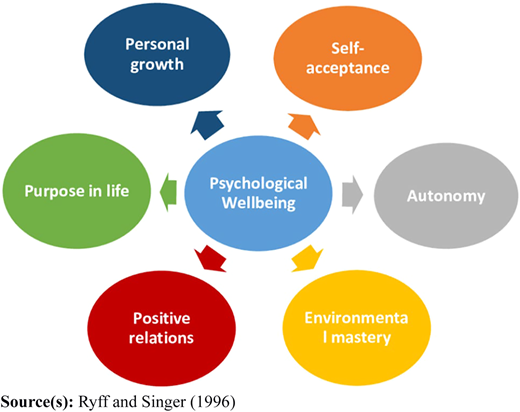
The six-factor model of well-being adopted from Carlo Ryff’s theory of psychological well-being
The six-factor model of well-being adopted from Carlo Ryff’s theory of psychological well-being
The general objectives of the research study are to social influences on the psychological well-being of elderly individuals. The research aims to explore the intricate dynamics affecting the psychological well-being of elderly individuals through several interconnected objectives and questions. Specifically, it seeks to investigate how personal emotions mediate the relationship between social relationships and psychological well-being, as well as the impact of social inclusion as a mediating variable between environmental influences and psychological well-being (Jiang and Jiang, 2021; Wu et al., 2020). Additionally, the study aims to assess the interactive effects of environmental influences and personal emotions on psychological well-being and to understand the holistic contribution of personal emotions, social relationships, social inclusion, and environmental influences to the overall psychological well-being of the elderly (Chappell et al., 2021; Marino et al., 2020).
According to the Figure 2 conceptual framework of this research article is designed to explore the relationship between several key variables and psychological well-being as the dependent variable. Psychological well-being serves as the central focus, encompassing dimensions such as happiness, life satisfaction, and overall mental health (Kalfoss et al., 2022). The independent variables include social relationships, social inclusion, and environmental influences. Social relationships play a critical role in providing emotional support, fostering a sense of belonging, and influencing individuals' perceptions of their social networks. Social inclusion, on the other hand, contributes to identity formation and participation within communities, both of which are vital for maintaining psychological well-being. Environmental influences encompass factors such as physical surroundings, community resources, and safety, which collectively shape individuals' daily experiences and perceptions of their environment.
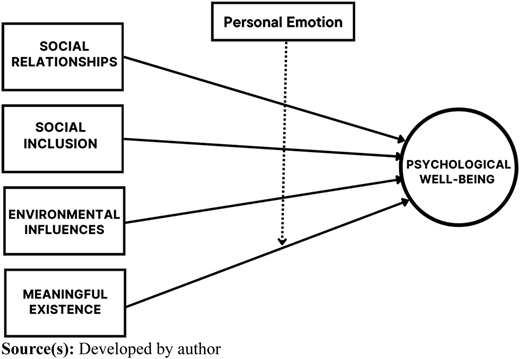
The moderating variable of this central to this framework is the personal emotion, which influences how individuals interpret and respond to social and environmental factors. Emotions such as resilience, coping strategies, and emotional regulation can amplify or mitigate the impact of social relationships, social inclusion, and environmental influences on psychological well-being. This framework provides a structured approach to understanding the complex interactions between these variables and their collective impact on individuals' mental health and overall quality of life (Aroonsrimorakot et al., 2022; Karlin et al., 2019). By exploring these relationships, the research aims to uncover insights that can inform interventions and strategies aimed at enhancing psychological well-being across diverse populations, ultimately promoting healthier and more fulfilling lives.
3. Research methodology
This study employed a quantitative research approach to investigate the factors influencing psychological well-being among elderly individuals, guided by Carol Ryff’s six-factor model. The model posits that psychological well-being is influenced by six key factors, which is self-acceptance, positive relationships with others, autonomy, environmental mastery, a sense of purpose and meaning in life, and personal growth and development. These factors collectively contribute to an individual’s overall contentment and happiness, achieved through a balance of challenging and rewarding life experiences.
3.1 Participants and sampling
The research targeted a sample of elderly individuals aged 60 years plus old, they all reside in the Dhaka division which is the national capital of Bangladesh a south Asian developing country. A stratified random sampling method was employed to ensure representation from different socioeconomic backgrounds and geographic locations. The study examined a sample of 350 individuals.
3.2 Data collection instruments
The research data were collected using validated instruments tailored for the Bangladeshi context, specifically assessing Ryff’s six dimensions of psychological well-being: self-acceptance, positive relations with others, autonomy, environmental mastery, purpose in life, and personal growth. Each dimension was evaluated through a Likert scale on a semi-structured questionnaire, which also captured demographic details, including age, gender, marital status, education level, and socioeconomic status that could affect an individual’s psychological well-being. Participants were recruited from community centers, healthcare facilities, and social organizations serving elderly populations. Informed consent was secured from all participants, with assurances of voluntary participation and confidentiality. Data collection was carried out via face-to-face interviews conducted by trained researchers fluent in local languages to ensure clarity and precision in responses.
3.3 Data analysis
The transcribed data were audited several times for accuracy and completeness. They were then transferred into a data organizing software – SPSS version 28. The quantitative data analysis involved descriptive statistics to summarize demographic characteristics and scores on Ryff’s Psychological Well-Being Scale. Inferential statistics, such as correlation analysis and multiple regression, were used to examine relationships between the six factors of psychological well-being and demographic variables. A portion of the participants were unmarried and resided independently, while out of 350 individuals 250 individuals cohabitated with their immediate family members: spouse, children, grandkids, siblings, parents. The research questionnaires have been translated from English to the Bengali language to collect the answers from respondents. The survey data were collected to examine the psychological well-being of older adults.
3.4 Ethical considerations
This study adhered to ethical guidelines for research involving human participants, including informed consent, voluntary participation, confidentiality, and respect for participants' autonomy. Approval was sought from relevant institutional authority to ensure ethical compliance throughout all stages of the research process.
4. Results and discussion
According to Table 1 data a comparison was made between the scores of respondents with varying levels of loneliness on the six indices of psychological well-being, as well as their overall score. The living arrangement of 40 participants was not specified. Out of the 50 participants, it was reported that they have established connections with their families, friends, and neighbors. However, during the analysis of their daily activities, the remaining 250 participants did not mention any form of contact or interaction with others. 120 individuals actively participate in social activities such as charity work, volunteering, attending workshops, seminars, and meetings, and joining various groups associated with local social service centers. They also participate in activities such as singing in a chorus, engaging in politics or local government, and voting in elections. On the other hand, there are 201 participants who are not socially active. The mean level of participants' despair is 1.10, ranging from −2 to +2. Out of the participants, 69 individuals reported a desolation level below zero, 248 participants reported a desolation level over zero, and 15 individuals did not provide an assessment. The mean level of the effective communication capacity is 0.78, ranging from −2 to +2. A total of 89 participants reported insufficient capability, whereas 235 people reported sufficient capability for communication. Additionally, 15 participants did not respond.
The psychological well-being of respondents with different levels is (n = 312)
Index | X− | Tests | ||
|---|---|---|---|---|
| Group one (lonely) | Group two (not lonely) | t, α = 0.05, crit value = 1.97 | U, α = 0.05 | |
| Social relationships | 52.18 | 55.84 | 2.790 | 10.080,500 α = 0.007 |
| Social inclusion | 51.79 | 53.08 | 1.078 | 8.847,500 α = 0.401 |
| Environmental influences | 50.71 | 54.49 | 3.219 | 10.080,000 α = 0.008 |
| Personal emotion | 49.68 | 53.62 | 3.336 | 10.448,500 α = 0.001 |
| Meaningful existence | 51.13 | 55.65 | 3.470 | 10.126,500 α = 0.005 |
| Psychological well-being | 50.74 | 55.59 | 3.500 | 10.501,000 α = 0.001 |
| Total score | 306.22 | 328.25 | 3.741 | 10.581,500 α = 0.001 |
Source(s): Developed by author
Based on the findings, it can be concluded that seniors with a lower level of desolation (mean = 55.84) have better interpersonal relationships compared to seniors with a higher level of desolation (mean = 52.18). There is no substantial disparity in the level of independence between individuals with higher (mean = 51.79) and lower (mean = 53.08) degrees of desolation. Seniors who experience less desolation (mean = 54.49) exhibit more environmental mastery compared to those who experience higher levels of desolation (mean = 50.71). The first group of respondents (X− pg = 53.62; X− s = 55.59; X− pl = 55.65; X− t = 328.25) demonstrates higher levels of personal growth and self-acceptance compared to the second group of respondents (X− pg = 49.68; X− s = 50.74; X− pl = 51.13; X− t = 306.22). Additionally, the first group also exhibits a greater sense of purpose in life and a higher overall score of psychological well-being.
A comparison was made between the psychological well-being scores of respondents who engage in daily interactions and those who engage in other daily activities, across six different indices and their total score (Homan et al., 2020; Moieni et al., 2021; Rishworth and Elliott, 2022). The data is displayed in Table 2.
The psychological well-being of respondents with different daily activities (n = 325)
Index | X− | Tests | ||
|---|---|---|---|---|
| Group one (relationships) | Group two (additional activity) | t, α = 0.05, crit value = 1.97 | U, α = 0.05 | |
| Social relationships | 55.46 | 54.76 | 0.580 | 9.794,500 α = 0.456 |
| Social inclusion | 52.69 | 52.79 | 0.091 | 10.339,500 α = 0.986 |
| Environmental influences | 53.86 | 53.57 | 0.271 | 9.833,000 α = 0.488 |
| Personal emotion | 53.82 | 52.35 | 1.362 | 8.965,500 α = 0.064 |
| Meaningful existence | 56.40 | 53.73 | 2.245 | 8.488,000 α = 0.013 |
| Psychological well-being | 55.93 | 53.92 | 1.590 | 8.914,000 α = 0.055 |
| Total score | 328.16 | 321.12 | 1.307 | 8.999,500 α = 0.071 |
Source(s): Developed by author
The results indicate that there is no significant difference in positive relations, autonomy, environmental mastery, personal growth, self-acceptance, and total score of psychological well-being between seniors who have daily relationships (X− pr = 55.46; X− a = 52.69; X− e = 53.86; X− pg = 53.82; X− s = 55.93; X− t = 328.16) and those who engage in other daily activities (X− pt = 54.76; X− a = 52.79; X− e = 53.57; X− pg = 52.35; X− s = 53.92; X− t = 321.12). Elderly individuals who engage in daily relationships (mean = 56.40) tend to have a greater sense of purpose in life compared to those who engage in other daily activities (mean = 53.73).
The current opportunity to engage in communication with pals. A comparison was made between the scores of respondents with varying communication abilities on the six indices of psychological well-being and their overall score (Luo et al., 2022; Yuan et al., 2021). The data is displayed in Table 3.
The psychological well-being of respondent’s communication with friends (n = 312)
Index | X− | Tests | ||
|---|---|---|---|---|
| Group one (fewer opportunity) | Group two (more opportunity) | t, α = 0.05, crit value = 1.97 | U, α = 0.05 | |
| Social relationships | 51.71 | 56.30 | 3.804 | 12.204,500 α = 0.000 |
| Social inclusion | 51.96 | 53.09 | 1.034 | 10.339,000 α = 0.329 |
| Environmental influences | 50.38 | 54.89 | 4.193 | 12.648,500 α = 0.000 |
| Personal emotion | 49.51 | 53.98 | 4.118 | 12.510,000 α = 0.000 |
| Meaningful existence | 50.96 | 56.05 | 4.253 | 12.350,000 α = 0.000 |
| Psychological well-being | 50.86 | 55.91 | 3.945 | 12.148,500 α = 0.000 |
| Total score | 305.38 | 330.22 | 4.598 | 12.425,000 α = 0.000 |
Source(s): Developed by author
Based on the aforementioned data, there is no statistically significant disparity in the autonomy of senior individuals with higher (mean = 53.09) and lower (mean = 51.96) degrees of access to social communication with friends. Recent research has revealed a correlation between increased social interaction among older adults (mean = 56.30) and improved interpersonal relationships compared to those who have limited possibilities for communication (mean = 51.71). The initial group of respondents (X− e = 54.89; X− pg = 53.98; X− s = 55.91; X− pl = 56.05; X− t = 330.22) exhibited higher levels of environmental mastery, personal growth, and self-acceptance. Additionally, these respondents demonstrated a greater sense of purpose in life and a higher overall score of psychological well-being compared to the second group (X− e = 50.38; X− pg = 49.51; X− s = 50.86; X− pl = 50.96; X− t = 305.38). A comparison was made between the scores of respondents with varying levels of social life activity on the six indices of psychological well-being, as well as their overall score. The data is displayed in Table 4.
The psychological well-being of respondents with different levels of social life activity (n = 325)
Index | X− | Tests | ||
|---|---|---|---|---|
| Group one (active) | Group two (not active) | t, α = 0.05, crit value = 1.97 | U, α = 0.05 | |
| Social relationships | 58.45 | 53.06 | 5.031 | 8.088,500 α = 0.000 |
| Social inclusion | 53.89 | 52.15 | 1.800 | 10.551,500 α = 0.068 |
| Environmental influences | 56.34 | 52.19 | 4.290 | 8.682,500 α = 0.000 |
| Personal emotion | 55.04 | 51.50 | 3.594 | 8.940,000 α = 0.000 |
| Meaningful existence | 57.96 | 52.55 | 5.043 | 8.197,500 α = 0.000 |
| Psychological well-being | 57.46 | 52.84 | 4.016 | 9.097,500 α = 0.000 |
| Total score | 339.13 | 314.29 | 5.156 | 8.037,500 α = 0.000 |
Source(s): Developed by author
Based on the findings, there is no statistically significant disparity in the level of autonomy between socially active (mean = 53.89) and socially inactive (mean = 52.15) seniors. Active seniors tend to have better relationships with others, a greater sense of purpose in life, and higher overall scores of psychological well-being (mean pr = 58.45; mean pl = 57.96; mean t = 339.13) compared to sedentary seniors (mean pr = 53.06; mean pl = 52.55; mean t = 314.29). The initial group of participants (X− e = 56.34; X− pg = 55.04; X− s = 57.46) exhibits greater degrees of environmental mastery, personal progress, and self-acceptance compared to the second group of participants (X− e = 52.19; X− pg = 51.50; X− s = 52.84). Residential circumstances. A comparison was made between the psychological well-being scores of respondents with varied living conditions (those who live with relatives or live alone) across the six indices and the total score. The data is displayed in Table 5.
The psychological well-being of respondents with different living conditions (n = 291)
Index | X− | Tests | ||
|---|---|---|---|---|
| Group one (with relatives) | Group two (alone) | t, α = 0.05 crit. value = 1.97 | U, α = 0,05 | |
| Social relationships | 55.99 | 52.37 | 2.576 | 8.607,500 α = 0.004 |
| Social inclusion | 53.32 | 51.95 | 1.096 | 7.840,000 α = 0.163 |
| Environmental influences | 54.17 | 52.00 | 1.700 | 7.747,500 α = 0.159 |
| Personal emotion | 53.65 | 50.00 | 2.869 | 8.346,500 α = 0.015 |
| Meaningful existence | 55.57 | 52.60 | 2.104 | 8.072,500 α = 0.049 |
| Psychological well-being | 55.44 | 51.70 | 2.515 | 8.458,500 α = 0.008 |
| Total score | 328.14 | 310.62 | 2.750 | 8.730,500 α = 0.002 |
Source(s): Developed by author
The results indicate that there is no statistically significant distinction in terms of autonomy and environmental mastery between individuals living with relatives (mean autonomy = 53.32, mean environmental mastery = 54.17) and those living alone (mean autonomy = 51.95, mean environmental mastery = 52.00). Elderly individuals who live with family tend to have stronger interpersonal relationships, a greater sense of purpose in life, and a higher overall score of psychological well-being (mean pr = 55.99; mean pl = 55.57; mean t = 328.14) compared to those who live alone (mean pr = 52.37; mean pl = 52.60; mean t = 310.62). The mean score for personal progress and self-acceptance in the first group of respondents (X− pg = 53.65; X− s = 55.44) is greater than the mean score in the second group of respondents (X− pg = 50.00; X− s = 51.70).
The collected data were analyzed to compare respondents with varying living situations, daily and social activities, levels of isolation, and the actual ability to communicate with friends across different scales. The study revealed that the elderly who engage in social activities have the most favorable outcomes across various measures (Singh et al., 2023; Tur-Sinai and Spivak, 2022).
4.1 Discussion on the results of the research
The psychological well-being of older individuals is not correlated with the characteristics of their everyday activities. Nevertheless, individuals who dedicate their time to communicating and showing concern for others possess a greater comprehension of both current and previous life experiences. The ability to comprehend and understand goals is mostly facilitated by engaging in direct conversation with family members, friends, and acquaintances (Watcharasarnsap et al., 2020; Zoranić et al., 2022).
Elderly individuals who have a sense of social connectedness and engage in regular social interactions exhibit a greater degree of psychological well-being, in contrast to their isolated counterparts who lack social communication and engagement. The reason for this is that seniors who possess a greater degree of psychological well-being tend to establish more trusting connections with others (Dennis et al., 2023; Shi et al., 2022). Effective communication is crucial for seniors as it enables them to address the challenges of daily living and significantly influences their overall well-being and functionality. Elderly well-being is influenced by various elements, including an increased capacity for compromise and the ability to show empathy and compassion towards others, a personal feeling of growth and understanding of different periods of one’s life, and a more positive attitude towards different aspects of one’s personality (Aroonsrimorakot et al., 2022; Li and He, 2023).
The study findings indicate that the elderly have a diminished level of psychological well-being. It can be ascertained based on their individual and age-related psychological characteristics. The majority of elderly individuals are unable to achieve life happiness and fulfillment due to their financial circumstances (De Oliveira et al., 2019; Elldér et al., 2023; Karmiyati et al., 2020).
5. Conclusion
Psychological well-being in the elderly is a complex personal phenomenon that is formed in the process of life activity and in the system of real relationships with others. Among its aspects, life satisfaction, feelings of happiness and meaning of life should be mentioned. For the senior’s psychological well-being is determined by several factors, such as personal (subjective age, self-regulation, self-realization, etc.), cognitive (general intelligence, etc.), emotional (depression, neuroticism, self-compassion, etc.), social factors (constructive relationships, level of adaptability to social environment, isolation, etc.), and others.
Additionally, the impact of the intensity of participation in the activities (number of workshops and frequency) was not investigated. It was concluded, then, that permanent education for the elderly, provided by universities and through other sources, contributes to maintaining high rates of satisfaction with life and positive feelings. Older people can assess their development trajectory and commitment to society and consider their commitment to pursuing an ideal of personal excellence. It can be said that living through the experience of aging as a privileged moment of life is also something that is learned in an educational establishment. It is important to note that the empirical work carried out so far has been cross-sectional. Future research should examine the action of time and the associations of subjective and psychological well-being in university students longitudinally.
5.1 Research implications
The findings of this study underscore the importance of addressing social support as a pivotal factor in promoting the psychological well-being of elderly individuals, particularly in an aging global population. Carol Ryff proposes an alternative and multidimensional model of psychological well-being (PWB) that includes components such as autonomy, personal growth, mastery, positive relationships, self-acceptance, and purpose in life. This research aligns with Ryff’s framework by highlighting the central role of positive social relationships in enhancing multiple dimensions of psychological well-being among older adults. By identifying the significant positive effects of robust social networks on mental health outcomes, this research provides crucial insights for designing tailored interventions that can enhance the quality of life for older adults. Understanding and implementing these strategies not only contribute to individual well-being but also have broader societal benefits, including potential cost savings in healthcare and social services. Moreover, by emphasizing the role of social connections in mitigating loneliness and depression among seniors, this study underscores the ethical imperative of fostering inclusive communities that prioritize the support and dignity of older adults. These implications highlight the transformative potential of proactive social policies and interventions in creating age-friendly environments that promote healthy aging and societal cohesion.
5.2 Research limitations
Recognizing the specific focus of this research on a particular community within a defined context, it is important to acknowledge that the findings may not be directly applicable to other ethnic communities or different contextual settings. The study’s reliance on literature exclusively from academic journals also imposes limitations, as it may overlook valuable insights from non-English language studies or other forms of literature. Moreover, the exclusion of non-English studies potentially restricts the generalizability of findings to broader global contexts. Additionally, the personal characteristics of the researchers, such as age, gender, and ethnicity, inevitably influence all stages of quantitative research, including study design, data collection, and interpretation of results. It is plausible that different researchers might have produced varying findings. However, efforts were made to mitigate these limitations and enhance the study’s credibility, dependability, and confirmability. This was achieved through prolonged engagement with the community under study and ongoing reflexivity throughout the process of data collection and analysis. Despite these efforts, it is important to acknowledge the inherent limitations and consider them when interpreting and applying the study’s findings.
5.3 Future research directions
Future studies ought to employ a multifaceted methodology to comprehend the psychological well-being of elderly individuals. It is advisable to explore subjective well-being as well as physical factors, food-nutrition, money, employment, housing, safety, physical and mental health conditions of elderly individuals. This study was focused the relationship among psychological well-being with Self-acceptance, Autonomy, Environmental mastery, Positive relationship, Purpose in life and Personal growth by quantitative methods. Additionally, longitudinal studies could be employed to capture the evolving nature of these influences over time. Comparative analyses across diverse cultural contexts and demographic groups may further enrich our understanding of how social factors contribute to psychological well-being in old age. Furthermore, integrating qualitative methodologies such as in-depth interviews or focus group discussions could provide a more holistic understanding of the subjective experiences of elderly individuals and the intricacies of the social dynamics influencing their psychological well-being.
Retraction notice
The Editor-in-Chief and the publisher of Journal of Humanities and Applied Social Sciences wish to retract the article Mohammad Shahadat Hossen, Siti Fatimah Binti Salleh; Social influences on the psychological well-being of elderly individuals. Journal of Humanities and Applied Social Sciences 15 August 2025; 7 (4): 315–332. https://doi.org/10.1108/JHASS-01-2024-0010. It has come to our attention that a large portion of this article is taken, without full and proper attribution, from an earlier work by Kovalenko, O.H. and Spivak, L.M. (2018) “Psychological well-being of elderly people: the social factors”, Social Welfare: Interdisciplinary Approach, 8(1), pp. 163–176. doi:10.21277/sw.v1i8.323. The decision to retract has been informed by COPE’s guidelines on retractions and Emerald’s publishing ethics. Emerald’s editorial and originality policy guidelines make it clear that work submitted should be original, not infringe any existing copyright, or be currently under consideration for publication by any other journal or publication. The publisher of the journal sincerely apologizes to the readers.
Authors’ contributions: The primary author conceived and designed the manuscript ran the software, analyzed and interpreted the results, and wrote the first draft of the manuscript. The second author proofread the final draft and controlled the quality of the articles, organized the literature and revised the manuscript.
Funding: There was no funding received for this article’s publication.
Conflict of interest: The authors declare that the research was conducted in the absence of any commercial or financial relationships that could be construed as a potential conflict of interest.

