This study aims to examine how humanitarian logistics operations are adapted in constrained and hostile environments to deliver aid to besieged populations effectively.
This study analyses historical and contemporary sieges, drawing insights from secondary data, historical case studies, focus group data and document analysis of reports from humanitarian organisations, including an illustrative case study of Gaza 2023–2025.
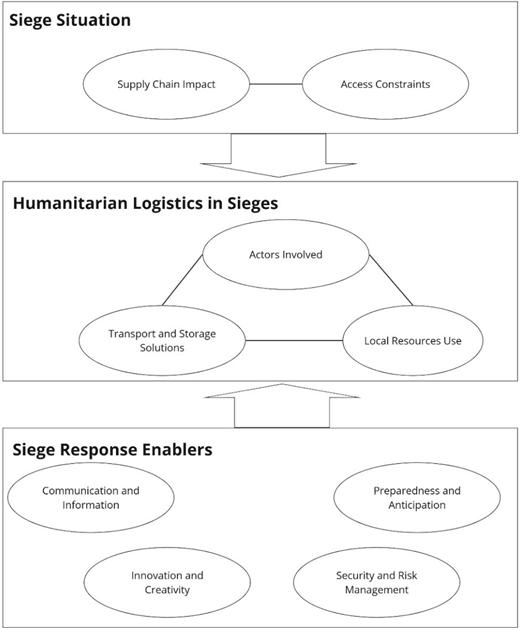
This study develops an integrative framework for humanitarian logistics in sieges, highlighting both aspects of the siege situation and response enablers that affect the transport and storage solutions, local resource use and the actors involved in humanitarian logistics in sieges.
Our research presents a pioneering approach to humanitarian logistics in besieged areas, presenting an integrative framework and outlining an agenda for future research.
This study gives humanitarian organisations insights into the specifics of humanitarian logistics in sieges, highlighting the interplay of different actors needed to address the complexities of the operating environment and the iterative nature of the disaster cycle in sieges.
The specifics of humanitarian logistics in sieges have not been researched previously and no comprehensive coverage of this topic exists in practitioner sources either. Nevertheless, sieges are an aspect of modern warfare that specifically targets supply chains and complicates humanitarian logistics, which this paper explores.
1. Introduction
Despite being an age-old military tactic, sieges are a feature of modern warfare (Fox, 2018) and continue to be valued “as an effective form of physical, psychological and increasingly ‘electronical’ isolation to control territories, especially urban areas” (Barakat et al., 2020, p.477). Isolating a population from the rest of the world in the hope of exacting political change (Geldenhuys, 1990), the siege must be understood, according to Smith (2016), as a “highly developed form of collective punishment against a population deemed surplus” (p. 752). Life under siege is extremely difficult with the most common humanitarian challenges being hunger, dehydration, disease and war wounds (Cuny, 1994).
Among the issues impacting besieged populations, supply disruptions are significant, impacting if and how the population can be fed or supplied with necessary medicines. These are essentially logistical questions. Nevertheless, there are no publicly available documents from humanitarian organisations dedicated to the humanitarian logistics of sieges. As mentioned by Altay et al. (2021), humanitarian logistics is a mature discipline and many subjects have been covered by its academics, from major climate disasters to cash-based interventions and the humanitarian response to the Covid pandemic. However, this literature does not fully address either the specificities of humanitarian logistics in siege situations, despite a call to study the logistics of (re)supplying besieged communities (Oloruntoba and Banomyong, 2018).
In this research, we define a siege as a military tactic in which an enemy force surrounds a city or area to block its communications and supplies, with the aim of subduing or conquering it (Fox, 2018; Smith, 2016). When defining sieges, military and historical sources focus on techniques and operational aims: Wilson (2019) treats the siege as a cluster of practices, investment/encirclement, control of approaches, blockade of supplies and techniques of reduction (bombardment, mining, assault and negotiation), directed at isolating and compelling the surrender or capture of a place. Humanitarian sources, for their part, stress the consequences on the population. The defining feature of a siege is indeed the intentional and concrete ability of the besieger to control or block the communications and movement of the besieged, often leading to severe humanitarian consequences for the population (McCormack and Gilbert, 2022; O'Gorman, 2005).
A blockade can be considered an operational aspect of a siege strategy, and there can be a significant overlap between sieges and blockades that aim to sever trade links and restrict the flow of goods to and from the blockaded area in a form of economic warfare rather than direct military confrontation (Meisels, 2011). Indeed, the Berlin blockade during which West Berlin was cut off from road and rail connections and supplied entirely by air for 11 months is a widely known example of supplying a civilian population under extreme logistical constraints (Spencer, 1968). In practice, there is often no clear differentiation between sieges and blockades as economic and military tactics go hand in hand. We do not focus here on other forms of isolation, for example, through sanctions or remote geographical locations, which typically do not involve physical encirclement or direct military action, although we acknowledge that these can still have severe humanitarian impacts.
Sieges target different locations from key regional towns under some faction’s control in civil wars (like Juba and Sudan) to capital cities (Sarajevo, Bosnia and Herzegovina) or industrial ports (Mariupol and Ukraine). Sieges also target critical infrastructure thus limiting access to essentials such as water, food and medical supplies by “erecting checkpoints at strategic points to a target area, thereby taking control of the area’s supply-lines” (Todman, 2017, p. 2). In modern-day sieges, isolation through encirclement is generally accompanied by “sufficient firepower against the besieged to ensure steady pressure” (Fox, 2018, p. 2). A siege against targets with significant civilian populations can be seen as a process of political domination aimed at isolating an entire population (Smith, 2018), perpetuating violence through economic “de-development” (McCormack and Gilbert, 2022). The Geneva Conventions (article 54 of Additional Protocol, 1977) prohibit starvation as a weapon of war but sieges are permissible if their aim is military in nature. Barakat et al. (2020) point out that few sieges achieve total isolation. Therefore, the siege can be considered a “dynamic process that shifts in severity and in practice from month to month and day to day” (Smith, 2016, p. 753).
We therefore conducted an exploratory study of the unique challenges for humanitarian logistics during sieges of civilian settlements (RQ1). The research also examines how logistical operations are adapted (RQ2) in constrained and hostile environments to deliver aid to besieged populations effectively. Section 2 presents the methodological approach. As there is virtually no literature on sieges in the field of humanitarian logistics, we will then review the contributions of historical, military, medical and humanitarian scientific literature (Section 3). These elements will enable us to draw up a conceptual framework which we will apply to historical cases and validate in a focus group with humanitarian practitioners, and further explore through document analysis including a case study of Gaza 2023–2025 (Section 4). Section 5 presents a discussion of these results and Section 6 presents the conclusions and a future research agenda.
2. Methodology
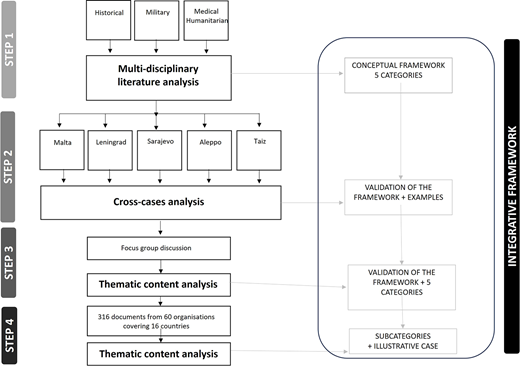
This paper presents an exploratory study on humanitarian logistics in sieges, an area scarcely addressed in humanitarian logistics literature. Our approach involves “theory elaboration” where we develop a conceptual descriptive framework (Meredith, 1993) by abductively comparing (Dubois and Gadde, 2002) insights from military, historical and medical/humanitarian literature with case studies, a focus group and document analysis leading to an illustrative case study. Figure 1 depicts the research design.
Our investigation begins with a multi-disciplinary literature review aimed at identifying key elements related to humanitarian logistics in sieges. This analysis helps us develop structuring categories that will serve as a coding framework for case studies of five historical sieges selected to suit the exploratory nature of the topic (Siggelkow, 2007). Wieland et al. (2024) argued that qualitative research in supply chain management could benefit from incorporating historical research that focuses on “investigating traces of the past and their impact to gain insights into the past, present and future of management practice/theory” (p.5). Including a historical approach is, in our case, particularly appropriate as sieges are recurring warfare strategies since Antiquity and have been extensively documented in historical and military literature.
Our five historical cases represent different geographical settings and contexts: Malta (1940–1943), Leningrad (1941–1944), Sarajevo (1992–1996), Aleppo (2012–2014) and Taiz (2014 onwards). By examining multiple cases, we can capture and conceptualise humanitarian logistics in sieges warfare, offering an “appropriate level of abstraction” and enabling a “broader exploration of the research question” (Eisenhardt and Graebner, 2007, p. 27). The case we have chosen represents different periods of modern history, different political situations and the forces involved had access to very different technologies. As this study focuses on humanitarian logistics rather than military aspects, our selection was focused on variety, especially in landscapes and type of access to identify logistics strategies that unfold over time.
We then discussed and validated the framework developed from literature and the historical case studies in a focus group discussion considered as a supporting method enabling methodological triangulation (Sanchez-Rodriguez et al., 2010). The group consisted of experts drawn from participants at the Humanitarian Networks and Partnerships Week, Geneva, Switzerland (HNPW 2024), a large annual gathering of humanitarian practitioners organised by the United Nations Office for the Coordination of Humanitarian Affairs. Participants had volunteered to attend the hybrid focus group session, either in person or online. In total, 12 humanitarian practitioners and one refugee from a Ukrainian siege participated in the focus group that lasted 2 h. After a brief introduction to the research, we circulated the proposed framework and gathered the participants’ insights. While the nine in person attendees were more outspoken than the four who attended remotely, there was a high level of consensus among the participants: the relevance of the topic and the refined framework presented in Section 4 was agreed on by all. Beyond validating our initial categories, the focus group highlighted complementary points that we decided to incorporate into the framework as new categories.
Our abductive process in an “attempt to find a new matching framework or to extend the theory used prior to the observation” (Spens and Kovács, 2005, p.139) continues through grey literature analysis on non-governmental organization (NGOs)’ experiences during sieges. Reports were obtained from the widely recognised ReliefWeb portal run by OCHA. They were extracted from the database using the keyword “siege”, selecting the pre-defined theme “Logistics and telecommunications” with language “English”. Between April 2011 (date of the first report) and December 2025, we identified 316 reports by 60 different organisations (and some reports from multiple organisations), covering 16 countries (and some reports about multiple countries). We then searched the 316 documents using keywords for the nine categories of the framework (e.g. transport*, storage, access and prepar*). A total of 803 quotes relevant to humanitarian logistics were extracted from these reports. Based on the analysis of these quotes, we were able to establish sub-categories, adding detailed insights to the previously established categories. We further illustrate the framework through an in-depth empirical case focusing on Gaza, selected as a critical case of contemporary siege logistics. Of the 316 analysed documents, 132 pertained to the occupied Palestinian territories (oPt) from 2023 to 2025, with the situation in Gaza described as a siege. We extracted 300 relevant quotes from documents from 27 different organisations. The richness of this documentation, expressing a wide range of viewpoints, confirms that Gaza 2023–2025 can serve as an interesting case study of humanitarian logistics in sieges.
Our four-stage triangulation research gathers ideas and knowledge by combining the analysis of historical case studies through a literature-based framework, with the collection of experts’ opinions and know-how through a focus group and NGOs’ reports. This iterative approach (Figure 1) addresses the need within our field to overcome its own limitations by employing diverse qualitative methods (Wieland et al., 2024).
3. Sieges in different bodies of literature
3.1 Historical literature
Sieges featured prominently in warfare since Antiquity (Różycki, 2018), for as long as attackers have understood that cities and their supply lines are vulnerable (McCotter, 1998). While siege warfare is acknowledged as a key strategy throughout the European Middle Ages, it has not been extensively studied beyond individual case studies with much focus instead on research of pitched battles (Bachrach, 1994; Bachrach, 2005). The siege was regarded as an alternative to a frontal assault through cutting off supply lines to starve a city (Martens, 2012). Sieges were seen as a more efficient way of taking objectives than head-on battles as they resulted in minimal losses for the attackers (McCotter, 1998). Siege tactics included raiding areas around the target to destroy local food supply chains, as well as preventing all traffic into the city to cut off any supplies (McGeer, 1995). In both the classical and the Byzantine period, the method of a “siege from a distance” existed as a potentially more cost-effective alternative to a siege trying to scale walls and breach defences (Makrypoulias, 2018). This method focused entirely on a long-distance blockade, cutting a city’s supply lines to force it to surrender.
Often, historical studies on logistics in a siege focus on resupplying the besieging army rather than any efforts to supply the besieged (Stearns, 1978). In the early modern period, increasing firepower allowed besieging armies to attack from a distance and potentially break resistance more quickly. However, this meant supplying the besieging army with sufficient ammunition became a logistical challenge (Lenihan, 2011). Maintaining a siege for an extended amount of time is logistically difficult for the besiegers as well and many long sieges in the early modern period were lifted because of attrition (Martens, 2012). Sieges that lasted longer usually had re-supply option, for example, the sieges of La Rochelle (1627–1628) and Ostend (1601–1604), which both had limited re-supply by sea facilitated by their access to harbours (Fischer-Kattner, 2018; Palm, 1923).
The situation of non-military actors in a siege and their suffering in isolated cities is particularly little investigated. Historical literature that actually considers civilians shows good awareness of the value of preparedness. De Obsidione Toleranda (how to withstand sieges) is an anonymous treatise focusing on examples of sieges from 904 to 924, which sets out that as soon as enemy intentions are known or suspected, defenders should start gathering and rationing food for six months to a year to be distributed by the bishop and other authority figures to a civilian population reduced to a minimum through evacuations (McGeer, 1995). The Strategikon, a manual of war written in the Byzantine Empire in the 6th century, also recommends removing civilians from the besieged fortress to limit the consumption of supplies and thus enhance the time for which it might be defended (Różycki, 2018). However, texts also focus on using civilians. Those preparing a town for siege were advised to utilise the skills available in a town by putting civilians to work, and stockpile all supplies needed for maintaining the defences (McGeer, 1995). Civilians were, for example, used to collect and distribute food (Philippides and Hanak, 2011).
While there are many examples of charity towards those in besieged cities (McGeer, 1995), supplies during sieges have always been a business opportunity for commercial actors. Throughout the crusades, traders kept up a profitable business in supplying military forces on their journey around the Mediterranean and especially while they were stationary during sieges (Bachrach, 1999). Moreover, accounts written at the time of the fall of Constantinople in 1453 claim that merchants from within the besieged city even provided supplies to the army outside their gates as this was so lucrative (Philippides and Hanak, 2011).
3.2 Military literature
Far from being too formulaic and unimaginative for the complex modern world, sieges have an enduring appeal in modern warfare (Zweibelson, 2023). Due to the brutal nature of sieges and the indiscriminate punishment they inflict upon broad populations, authoritarian regimes are more likely to adopt them as a tactic, as they are unconstrained by law (Ucko, 2016; Todman, 2017). Sieges are also a form of trade-off of military casualties against civilian suffering (Fox, 2018). In the 21st century, sieges require large armed forces and much materiel from the side of the attacker (Funderburk, 2021). They also offer opportunities for other actors to get involved. Offering air support during a siege, for example, can be a way for a foreign military to support a party in a conflict without putting their own soldiers on the ground (Segell, 2023). Thus, despite their medieval image, there have been advocates for the reintroduction of sieges to US warfare doctrine, particularly as an option to defeat adversaries in urban terrain (O'Gorman, 2005; Funderburk, 2021).
Increasing urbanisation makes fighting in urban areas the likely battlefield of the future. Recent wars have demonstrated that conquering them is crucial as they control key elements of any nation such as government or media, as well as being the location of large parts of the workforce and, key industry, sanitation, transport and energy infrastructure (Więcek and Sobolewski, 2023). Control of major cities can be a clear indicator of progress in a war (Landau-Wells, 2018) and starvation sieges are still common in urban areas (Hägerdal, 2023), for example, in Russia’s sieges in Ukraine (Ljungkvist, 2022). Consequently, modern wars are often fought in cities rather than in the fields, as has been evident in countries like Libya, Yemen, Syria and Iraq. We are truly witnessing a resurgence of siege warfare (Fox, 2018), “urbicides” (Todman, 2017), as well as “micro-sieges” for individual streets or even buildings (King, 2021).
Urban sieges provide a complex and dynamic environment for soldiers to operate in, as well as putting high demands on technologies because of the high risk of collateral damage (Inam and Rauf, 2023). They are often combined with bombardment (e.g. in Chechnya and Syria, Ukraine), accepting high collateral damage or even deliberately targeting civilians (Ljungkvist, 2022). Cutting off essential supplies from a distance rather than engaging in direct combat is also a way of forcing negotiations (O'Gorman, 2005). With the legal frameworks and the media attention evident in the 21st century, armed forces need to balance avoiding unnecessary military casualties from urban warfare with mitigating the hugely negative effects on the besieged civilian population, which are highly unpopular with the public if communicated through media reports (O'Gorman, 2005).
3.3 Sieges in medical and humanitarian literature
Medical literature underscores the severe health and developmental consequences of the isolation caused by sieges. Cuny (1994) sums up the major causes of death in besieged cities as hunger, disease from poor sanitation and malnutrition, wounds from shelling and dehydration primarily due to diarrhoea and the lack of water. He then outlines the key priorities for humanitarian aid in such contexts: the provision of food, water and sanitation, disease prevention and control measures, as well as first aid surgical support. In his documented analysis of the 1565 Great Siege of Malta, Savona-Ventura (2014) addresses a range of subjects that remain highly relevant in modern conflicts: the treatment of the wounded, the special care required for burn victims, the psychological trauma and the long-term aftermath. Indeed, medical conditions resulting from the siege persist long after its conclusion. Moreover, siege issues have as much impact on the war wounded as on the sick (cancer sufferers for Kizub et al., 2022) as the distinction between routine health services and emergency humanitarian relief becomes blurred (Morrison, 2019). In addition to undermining the health system and destroying medical facilities, sieges indeed impinge health care by withholding resources (Smith, 2018). They hinder access to essential elements such as medical consumables, medicines (Fardousi et al., 2019) and spare parts that are crucial for maintenance of medical technologies.
During sieges, food availability is also crucial for health particularly for vulnerable individuals, babies/children, the elderly and the sick and is influenced by numerous intertwined factors such as stocks on hand when the siege began, amount of food hoarded by wholesalers and retailers, the ability to grow within the city and the extent to which food is reserved for military force (Morrison, 2019). Other critical resources include heating and cooking fuels (Cuny, 1994), electricity (for operating theatres or oxygen concentrators) and internet access (which enables medical staff to coordinate via platforms like WhatsApp or Telegram). Populations in besieged areas are sometimes able to anticipate shortages. In Aleppo, for instance, health-workers stockpiled large quantities of fuel, medications and consumables such as serums, catheters and plasters (Fardousi et al., 2019). However, secure, protected warehouses for food and other essential goods are typically unavailable, and assets such as electricity generators are often safeguarded by medical teams.
On the grounds of the besieged cities, medical staff adapt by modifying their processes. When possible, health workers purchased locally produced consumables like syringes. Buturovic (2014) also highlights improvisations such as designing spare components in-house and have them manufactured in local factories. In Syria, people mitigated energy shortages by installing wind turbines on rooftops to generate electricity and melting plastics into makeshift fuel (Al-Jablawi, 2016). Some territories thus manage to achieve a degree of self-sufficiency in response to shortages. In protracted sieges, where reconstruction becomes seen as a feasible option (Barakat et al., 2020), construction supplies and equipment may also become essential. In siege situations, price gouging is widespread for all supplies (Morrison, 2019), with shortages naturally driving up prices. Food prices thus serve as a key indicator for starvation as food is unavailable for the poor people long before the supplies run out (Cuny, 1994).
Under international humanitarian law, the passage of essential relief and humanitarian evacuation is required during sieges (Barakat et al., 2020). However, international pressure on besieging forces to grant access to humanitarian services is not always effective. It is often impossible to deliver uninterrupted assistance and circulation of aid can be restricted by intense fighting threatening humanitarians and beneficiaries, the proliferation of check points, bureaucratic hurdles imposed by legal or self-declared authorities and communication breakdowns within the chain of command (Lewin et al., 2018). Access to the besieged zone requires the implementation of humanitarian corridors, “strips of territories supposed to allow the unobstructed deployment of humanitarian aid and/or movement of citizens” (L’homme, 2022, p. 50). However, these corridors are “almost always very difficult to obtain and fragile which explains why they are frequently attacked” (Hoffmann, 2020, p.96). Humanitarian logistics in such conditions must develop the capacity to quickly scale down and scale up corridors and hubs according to the needs to ensure some continuity of the supply chains (Lewin et al., 2018). The opening of humanitarian spaces to supply the city or evacuate wounded or civilians can facilitate the smuggling of aid items, the transportation of munitions or sex trafficking as observed in Sarajevo and Gaza (Gökalp, 2020; Pelham, 2012).
3.4 Initial conceptual framework
Because the humanitarian logistics literature does not specifically address the issue of besieged areas, we sought information from other fields of research, which provided complementary insights. Historic literature shows evidence of logistics being a key issue since Antiquity. Although much of the literature in this body is focused on the logistics of the besieging army, it mentions aspects of preparedness, stockpiling, rationing, distribution of supplies and the roles of different stakeholders. Military literature discusses sieges as a form of warfare aiming to minimise military casualties, but risking a drastic impact on the civilian population, making authoritarian states more likely to engage in siege warfare. Given rising urbanisation, modern wars are seen to continue to feature sieges, combining the elimination of supply lines with heavy aerial bombardment, which makes clear the need for humanitarian logistics in sieges, but also the extreme environment under which it must be provided. Medical and humanitarian literature gives many examples of operational logistics activities such as stockpiling supplies and utilising local sourcing. The leading causes of death showcase the main supplies needed: food, medical supplies, water and hygiene materials. This literature emphasises the mobilisation of segments of the population to compensate for the lack of medical personnel and deliver the necessary aid.
This multidisciplinary literature review elaborated with our (humanitarian) logistics lens led us to identify five key issues that need to be considered in humanitarian logistics for sieges, considering both the logistics of entering a besieged area and distribution internally. We briefly outline them below.
These five crucial dimensions form the conceptual framework we use to extract information from the historic case studies in this paper:
Access constraints: Which access constraints to the besieged area are in place? How is access for external logistics being operated or negotiated?
Supply chain impact: Which external supply chains have been cut off? How have internal supply chains been adapted in response to the siege?
Transport and storage solutions: Which transport mode(s) can be used for re-supplies from outside and distribution within the area? How much capacity is available to meet humanitarian needs?
Local resource use: Which local resources are available to mitigate supply chain impacts? How are they being used to meet humanitarian needs and moved to where those needs arise?
Actors involved: Which stakeholders are part of the humanitarian logistics activities, within and outside the besieged area? How do they interact with each other?
4. Results
This section first considers five case studies from Second World War to the present day. Subsequently, findings from the focus group discussion and the analysis of grey literature are presented.
4.1 Historical case studies
A large variety of information sources has been used to better understand the five sieges briefly described above and their logistics operations. While sources largely agree on the main events of the warfare and provide information about the flows, numbers are not easy to find. Estimating war mortality and other important quantification is crucial though for political, military and health planning as, afterwards, for the identity of the nations and the process of reconciliation. However, it is notoriously difficult (Obermeyer et al., 2008). Quoting Clausewitz (Vom Kriege, 1827), Radford et al. (2023) remind us that “casualty reports on either side are never accurate, seldom truthful, and in most cases deliberately falsified” (p.1). This is no different in modern warfare (Khorram-Manesh et al., 2021). The information presented in the case descriptions in Table 1 are derived from cross-referencing multiple sources (including Wikipedia, Encyclopedia Britannica, NGOs’ publications, print and online press articles) and the numbers should be treated with caution.
Our analysis of the case studies uses the initial conceptual framework as a coding grid, exploring supply chain impact, access constraints, transport and storage solutions, local resources and involved actors. Despite the fact that each case presents unique challenges and solutions, our exploration provides valuable illustrations for the categories derived from the literature review. Table 2 provides indicative examples for each of the five key issues.
Through this cross-case analysis of five historical sieges, we gained valuable insights into the complexities of humanitarian logistics during sieges. The findings point out the critical importance of flexibility in deployed solutions (multimodal access, change of use of land, etc.), local involvement (military, citizens, communities and companies) and international cooperation with NGOs, other army corps, etc.
4.2 Focus group
Drawing on insights from a focus group discussion including a diverse range of stakeholders and utilising the same conceptual framework, this section explores how different factors influence the effectiveness of humanitarian aid in besieged areas (Table 3). As such, it adds insightful categories to our initial conceptualisation derived from the literature and consolidated by historical cases.
Supply chains are inevitably affected in siege scenarios, with many being cut off entirely. The focus group discussed how supply chains are adapted, often through the establishment of informal networks and alliances with local actors, including the military. These adaptations are crucial for maintaining a flow of essential goods and services, although they come with increased risks. Participants shared their experiences of having to work with whoever is willing and able to operate under the extreme conditions of siege warfare, with agreement across the group that their respective international NGOs rely heavily on local knowledge and resources.
Access to besieged areas is frequently restricted by physical and political barriers. The focus group underscored the complexity of negotiating access, which often involves delicate interactions with multiple stakeholders, including hostile parties. These strategies may involve negotiations at multiple levels and the use of intermediaries to facilitate dialogue. Participants stressed that any negotiations rely on how much humanity the besieging party is willing to extend to the besieged, with one NGO representative stating: “Nothing we can do if they [besieging forces] don’t let us. Sure, there’s negotiations and all, but then you’ve got some officer at a checkpoint just going, no, not today.”
In siege contexts, the choice of transport modes for re-supplies is severely limited. Participants highlighted the critical mismatch between available capacity in both transport and storage and the escalating humanitarian needs. This appears as a common factor across the different siege scenarios participants had operated in. Traditional supply routes are often disrupted or completely blocked, necessitating the exploration of alternative pathways. The effectiveness of these methods largely depends on the duration of the siege and the geographical characteristics of the besieged area. The time and place where help is provided are key factors. Here, participants’ experiences varied with those who worked in relatively short-lived sieges in Ukraine reporting much less success with establishing alternative solutions than those in longer-term sieges as in Syria, where networks developed over time as humanitarian needs escalated.
Local resources play a pivotal role in mitigating the impact of the siege. The discussion revealed how besieged communities utilise available local resources creatively to meet their needs, with the Ukrainian refugee participant in particular sharing many examples of neighbourly support and resource pooling. For example, she recounted how “the people try to make soup together, everyone bring something, thing they have, and then make soup, not everyone has… it can be dangerous to cook, so cook for everyone.” More widely, bricolage and improvisation seem to be valued. Examples include the repurposing of local infrastructure, the adaptation of local production capabilities to produce necessary goods and changes in the way products are used. The use of local resources not only supports immediate needs but also helps in building resilience against prolonged sieges.
A wide array of stakeholders is involved in humanitarian logistics during sieges, each playing distinct roles. The discussion highlighted the interactions between local communities, humanitarian organisations, the military and informal actors, whose coordination is challenging but essential for effective humanitarian response. The dynamics among these stakeholders can influence the planning and execution of aid delivery, with each actor bringing different resources and perspectives to the table. Participants particularly highlighted the crucial role of diaspora communities in supporting those in besieged areas, practically or through advocacy. A key concern raised was how the security situation for local actors is often much worse than for international non-governmental organisations (INGOs). The following statement garnered approval across the group with participants sharing examples of how their local partners have been affected in siege situations: “There’s no risk for the INGOs… we can sit here in Geneva and say oh we do great things. But really, we outsource the risk. It’s the local partners who have all the risk. They go in, they get shot at, and we can say we’ve done things, but we have no risk.”
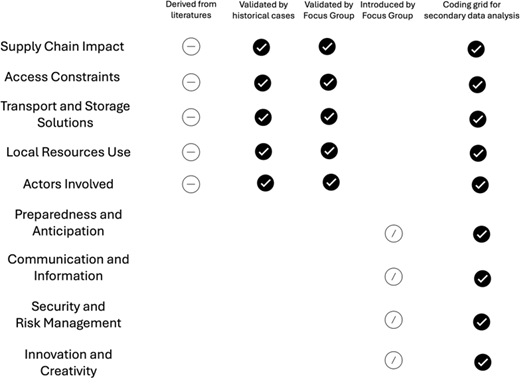
As such, discussion within the focus group complements the initial coding grid with key factors (Table 3).
Beyond validating and reflecting on our previous framework, the focus group discussion insisted upon several enablers for humanitarian logistics in sieges that we incorporated in the final framework: the need for better preparedness, for effective communication, security and risk assessment and the importance of creativity and innovative thinking.
There was considerable emphasis during the focus group on the need for better preparedness and anticipation of sieges. Participants discussed the challenge of predicting when and where a siege might occur, and the difficulties in preparing logistics and supply chains accordingly. The importance of having proactive strategies and contingency plans in place was highlighted as crucial for minimising the humanitarian impact.
Effective communication and the sharing of accurate, timely information were also identified as critical components of successful humanitarian logistics. Participants strongly pointed out the importance of establishing robust communications networks that can withstand the pressures of a siege. This includes leveraging technology such as telemedicine and messaging services to maintain contact and coordinate efforts.
Issues related to corruption and security risks were frequently mentioned. Participants discussed how corruption can complicate the distribution of aid and the allocation of resources. Security for humanitarian workers and the local population is a constant concern, with the need to balance the risk of delivering aid against the potential dangers. The role of local communities and their involvement in humanitarian efforts and the risks they face were repeatedly highlighted.
As mentioned previously, building local capacities and empowering local actors to manage and direct humanitarian efforts were seen as beneficial strategies to enhance the effectiveness and sustainability of aid. The focus group underscored here the importance of creativity and innovation in addressing the unique challenges of sieges. Examples such as the use of local resources for medical support, informal markets during sieges and training non-medical individuals to perform medical assistance illustrate the ingenuity required to navigate complex and constrained environments.
The use of a focus group allowed us to align our conceptual framework with critical points raised by practitioners with recent experience of sieges. In this second methodological stage, we identified four key facilitators of humanitarian logistics in besieged areas: anticipation, communication, creativity and security. We added these factors to our framework and used the resulting nine key issues for our analysis of secondary data (see Figure 2).
4.3 Grey literature
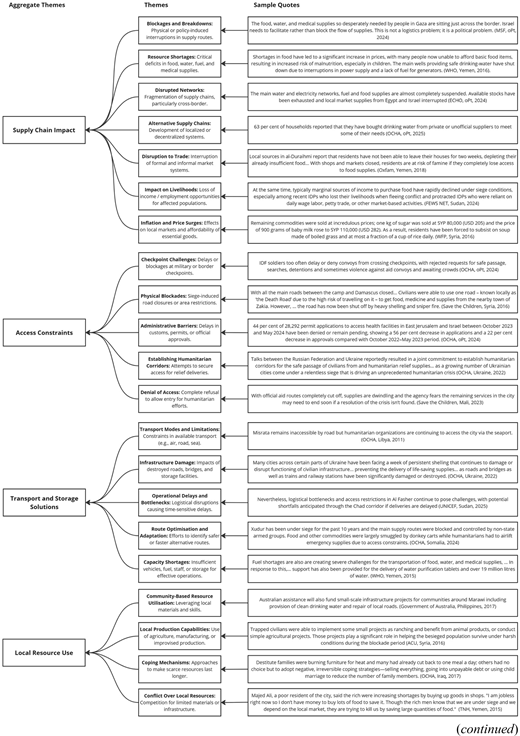
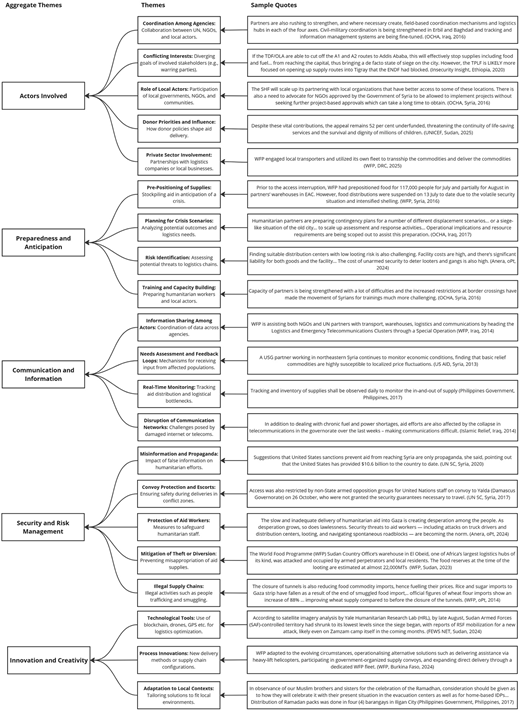
The first two methodological steps, historical case studies and focus groups, highlighted nine key aspects of humanitarian logistics for besieged cities (see Figure 1). To fully explore these themes, we kept on with the abductive approach, gathering insights through reports from humanitarian organisations. We extracted relevant quotes on humanitarian logistics for sieges from over 300 reports across more than 60 organisations. This material was coded using the previously developed framework. We identified several sub-categories that not only emphasise the complexity of humanitarian logistics in siege contexts but also highlight areas that warrant further exploration. The results are presented in Table 4. The detailed version of the comments with more explanation of the sub-categories and quotes can be found in Figure A1.
The coding categories identified in this study can be organised into three complementary analytical perspectives. The first concerns the specific characteristics of siege logistics (RQ1), focusing on their effects on supply chains and on access conditions. Analysis of a substantial documentary corpus shows that siege situations generate severe supply chain disruptions, resulting both from physical constraints and from politically imposed restrictions. Supply networks become fragmented, requiring either the reconfiguration of flows through alternative routes or the development of supply solutions internal to the besieged area. Beyond a shortage of resources, including those essential to civilian survival, siege conditions also affect the physical mobility required for everyday life, economic activity and trade. As a consequence, and as noted earlier, these dynamics lead to sharp price increases, with adverse effects on local populations. With respect to access constraints, the results highlight a range of restrictive measures, including the establishment of checkpoints, the closure of streets or entire areas and the multiplication of administrative barriers such as permits and accreditations. In the most restrictive configurations, access to the besieged area is entirely denied to all or selected humanitarian actors for varying periods. Humanitarian organisations may succeed in negotiating the establishment of secure access corridors, enabling limited but critical flows into the besieged area.
Building on this characterisation of siege-specific constraints, the second analytical dimension addressed by our results concerns the adaptation of humanitarian logistics systems to these conditions (RQ2). Three main coping mechanisms emerge from the analysis: adaptations in storage and transport solutions, the mobilisation of local resources and the complementarity among the actors involved. Transport and logistics operations in besieged areas are characterised by frequent modal shifts, depending on the geography of the siege, the condition of infrastructure and the availability of vehicles. Routes are subject to continuous optimisation efforts and repeated adjustments, which inevitably result in delays and the emergence of logistical bottlenecks. The mobilisation of local resources primarily involves reliance on locally available know-how and equipment within the besieged area. Local production capacities, whether agricultural or industrial, are activated wherever possible. In parallel, local populations, often with the support of humanitarian actors, organise adaptive mechanisms aimed at extending the availability of scarce resources, which may in turn become sources of tension or conflict. As in other humanitarian contexts, coordination takes place, albeit imperfectly, among agencies, INGOs and local ones, shaped by donor priorities and influence. In such a highly constrained and complex setting, the interests of the various stakeholders may diverge. Our analysis further highlights, in an intertwined manner, the significant roles played by local public and private actors in these localised contexts of warfare.
Finally, beyond the exploratory research questions, the focus group discussion allows us to identify a third dimension related to the enablers of humanitarian logistics in siege and crisis situations. Four main enablers are highlighted: preparedness and anticipation, the quality of communication and information flows, security and risk management and the role of innovation and creativity. All four were also clearly identified across the grey literature. Preparedness traditionally includes the pre-positioning of supplies, but our results show that it also encompasses planning for escalating crisis scenarios, the identification of siege-specific risks and the training of both humanitarian staff and local actors. The need for transparent communication, feedback mechanisms and real-time monitoring is repeatedly emphasised, yet these requirements are severely challenged by the disruption of communication networks in besieged contexts. In terms of risk management, NGOs underline the impact of propaganda and misinformation on operations, as well as the heightened need to protect goods and people, particularly given the exposure of local actors to violence. The prevalence of illegal supply chains, which may interfere with or divert humanitarian logistics operations, is also identified as a major concern. Finally, siege situations place a strong demand on the creativity of humanitarian actors. While technological tools may be mobilised when feasible, innovation primarily takes the form of process-oriented adaptations and bespoke solutions, continuously adjusted to the local context and its evolving constraints.
4.4 Case study: Gaza (occupied Palestinian territories)
To further substantiate the framework we propose, the paper includes an in-depth empirical illustration based on the Gaza context. This case is not introduced as a representative example of siege situations but as a critical and revelatory case that allows humanitarian logistics for sieges to be examined under conditions of extreme and prolonged constraint. From October 2023 to late 2025, Gaza experienced indeed highly volatile siege conditions marked by shifting access restrictions, periods of partial opening to humanitarian aid and renewed closures. The siege is characterised by cycles of constrained access, limited humanitarian scale-up and subsequent retrenchment. This makes Gaza a particularly instructive case for examining how humanitarian logistics systems respond to prolonged uncertainty and oscillating access conditions.
4.4.1 Coping with variable and non-binary access conditions
Access restrictions in Gaza cannot be understood as a binary condition of open or closed. From late 2023 onwards, humanitarian organisations reported severe interruptions to the entry of food, fuel, medical supplies and commercial goods. After an initial total access denial, access was granted, but severely limited, with small amounts of aid permitted under heavy restrictions and subject to extensive inspection and coordination requirements (OCHA, oPt, 2024). During 2024, humanitarian actors repeatedly emphasised that the crisis was not driven by a lack of available supplies, but by restrictions on the movement of aid across borders and within Gaza, with food, water and medical items reported to be positioned just outside the Strip while convoys faced delays, denials and movement constraints (Anera, oPt, 2024; OCHA, oPt, 2024; MSF, oPt, 2024). Periods of limited improvement, such as increased truck entry during temporary pauses, were followed by renewed restrictions, delays and denials (Anera, oPt, 2024; OCHA, oPt, 2024).
Across 2024 and 2025, humanitarian actors reported a spectrum of constraints, including checkpoint delays, denied movements, restricted corridors and geographically uneven access, with movements inconsistently facilitated and many requests delayed or denied (OCHA, oPt, 2024; Anera, oPt, 2024; OCHA, oPt, 2025). Northern Gaza remained largely cut off for extended periods, even when limited access was granted elsewhere (OCHA, oPt, 2024; ACAPS, oPt, 2024). Administrative barriers, including permit requirements and coordination processes, further complicated access. Delivering aid required securing permissions and coordinating routes, drivers and vehicles well in advance, with approvals frequently delayed or denied (Anera, oPt, 2024, OCHA, oPt, 2024, MSF, oPt, 2024; ACAPS, oPt, 2024; OCHA, oPt, 2025). For example, OCHA reported that “delays at holding points and multiple inspections have limited the quantity of aid entering the Strip, and the supplies managing to cross into northern Gaza have only been allowed to reach Gaza city” (OCHA, oPt, 2024).
Humanitarian agencies noted that aid movements were frequently approved late, only partially facilitated or cancelled, creating a stop–start operational environment that undermined planning and stock management (Anera, oPt, 2024; OCHA, oPt, 2024; MSF, oPt, 2024). By late 2024, food stocks, medical supplies and fuel reserves had been significantly depleted, leaving partners to stretch diminishing resources and operate at reduced scale (OCHA, oPt, 2024; MSF, oPt, 2024; UNICEF, oPt, 2024). Humanitarian organisations reported that a significant proportion of planned missions were impeded, delayed or cancelled, even when crossings were technically open (OCHA, oPt, 2024; Multiple, oPt, 2025; MSF, oPt, 2025). Humanitarian assessments consistently indicated that air drops and maritime corridors delivered aid volumes negligible relative to land-based transport, entailed high costs and monitoring challenges and could not support sustained food, health or WASH systems at scale, demonstrating that alternative modalities cannot substitute for predictable overland access (UNFPA, oPt, 2024; UNRWA, oPt, 2024; MSF, oPt, 2024).
By 2025, several organisations described the situation as having escalated into a near-total blockade, with humanitarian and commercial supplies prevented from entering for extended periods (MSF, oPt, 2025; Islamic Relief, oPt, 2025). Importantly, these conditions built upon earlier depletion and operational strain, highlighting the cumulative effects of prolonged, fluctuating access constraints. In early 2025, access restrictions finally escalated into a total blockade, with humanitarian organisations reporting that no supplies were permitted to enter Gaza for extended periods (MSF, oPt, 2025; OCHA, oPt, 2025) with Islamic Relief stating: “Since 2 March Israel has shut all Gaza’s crossings and prevented all supplies from entering […] No food, no medicine, and no fuel has been allowed to enter for 2 months.” (Islamic Relief, oPt, 2025).
4.4.2 Local efforts to offset restricted flows
As access fluctuated, Gaza’s logistics infrastructure continued to deteriorate. Throughout 2024, humanitarian assessments documented widespread damage to roads, warehouses, water systems and electricity networks, progressively reducing the capacity to store, transport and distribute aid (ACAPS, oPt, 2024; OCHA, oPt, 2024). These structural constraints were compounded by persistent fuel shortages, which restricted vehicle movement, undermined cold chain functionality, disrupted water production and impaired telecommunications and coordination systems, further constraining humanitarian operations (OCHA, oPt, 2024; OCHA, oPt, 2025), with IOM stating that “humanitarian operations continue to be seriously hampered by […] lack of fuel; massive destruction impeding access; the threat of unexploded ordinance; active hostilities; lack of security and breakdown of law and order preventing the delivery of much needed aid.” (IOM, oPT, 2024). By early 2025, organisations warned that the cumulative degradation of infrastructure, combined with prolonged fuel and supply shortages, had pushed essential systems in Gaza close to collapse, with recovery increasingly unlikely without sustained and predictable access (MSF, oPt, 2025; Amnesty, oPt, 2025; ACAPS, oPt, 2025).
As formal supply chains remained constrained, civilians and local organisations increasingly relied on coping strategies to offset restricted supply flows. These practices, such as dependence on community kitchens, reduced meal frequency, consumption of stored food and informal sourcing of water and fuel, functioned as short-term substitutes for disrupted logistics systems rather than sustainable alternatives (OCHA, oPt, 2024; ActionAid, oPt, 2025). Local NGOs and community-based actors played a critical role in sustaining basic services (UNICEF, oPt, 2024; Islamic Relief, oPt, 2025; ActionAid, oPt, 2025). However, humanitarian organisations consistently warned that local coping mechanisms were being stretched beyond their limits and rapidly exhausted, with rising malnutrition, deteriorating health outcomes and deepening vulnerability indicating the limits of local absorption capacity under prolonged siege conditions (UNICEF, oPt, 2024; Islamic Relief, oPt, 2025; Amnesty, oPt, 2025) as people resorted to desperate measures as in an example from ActionAid saying that “families have resorted to milling dried pasta just to create flour, just enough to make a piece of dough or a loaf of bread to feed their children” (ActionAid, oPt, 2025). Humanitarian organisations consistently noted that local actors were operating by stretching existing resources, reducing service levels and prioritising the most urgent needs, rather than restoring system functionality (UNICEF, oPt, 2024; ActionAid, oPt, 2025; Islamic Relief, oPt, 2025). As access constraints persisted, these locally driven responses became increasingly fragile, with diminishing stocks, rising needs and limited scope for repair or recovery in the absence of external inputs (Amnesty, oPt, 2025; ACAPS, oPt, 2025).
4.4.3 The weaponisation of access
Across the period under review, humanitarian and human rights organisations consistently framed access restrictions in Gaza as the outcome of deliberate political decision-making, rather than as operational by-products of insecurity or infrastructural damage. In 2024, multiple actors warned that humanitarian aid was being rendered conditional, with access expanding or contracting in line with broader political and military objectives rather than assessed humanitarian need (MSF, oPt, 2024; Euro-Med Monitor, oPt, 2024; Amnesty, oPt, 2024). MSF stated that “Israel needs to facilitate rather than block the flow of supplies. This is not a logistics problem; it is a political problem.” (MSF, oPt, 2024). In this framing, control over humanitarian logistics functioned as a form of power exercised through institutionalised mechanisms governing border crossings, movement approvals and the entry of fuel and essential supplies (Anera, oPt, 2024; MSF, oPt, 2024). By 2025, this interpretation intensified, with humanitarian organisations explicitly describing aid denial as deliberate, systematic and sustained, rather than episodic or reactive (MSF, oPt, 2025; Islamic Relief, oPt, 2025; Amnesty, oPt, 2025). Crucially, these accounts point to a temporal dimension of power: access was not simply restricted or denied, but strategically modulated over time, producing cycles of partial opening and closure that eroded humanitarian planning capacity and progressively weakened civilian survival systems. Viewed in this way, the weaponisation of humanitarian logistics in Gaza reflects not a sudden shift, but a process of normalisation, through which restricted humanitarian aid became an enduring instrument of governance under siege conditions.
5. Discussion
This exploratory research confirms that sieges are a current and future challenge for humanitarian logisticians. Historic case studies show the importance of humanitarian logistics for sieges, and this is confirmed by subject matter experts in the focus groups and by recent grey literature. Humanitarian logistics in sieges consists of a complex interplay of factors. The conceptual framework first developed from literature, was applicable to the historic case studies. The focus group participants agreed that all five key issues were highly relevant. Participants highlighted additional issues, and the analysis of grey literature deepened the key issues by adding sub-categories, which the case of Gaza illustrates. Many themes from the different stages of research in this study echo themes prevalent in humanitarian logistics literature in other settings but also point out the incredible complexity of humanitarian logistics for sieges.
The different data sources we utilised show that humanitarian logistics in sieges have to evolve through incremental restriction and cumulative degradation, rather than through a single decisive closure. Like in the Gaza case, humanitarian logistics in sieges operate through variation, escalation and accumulation, rather than as static conditions of access or denial. Periods of fluctuating access generated persistent planning uncertainty, disrupted replenishment cycles and progressively accelerated the depletion of both humanitarian stock and civilian coping mechanisms. Crucially, partial or intermittent access does not stabilise logistics systems; instead, it often contributes to cumulative degradation by delaying repairs, preventing recovery and masking the approach of critical failure thresholds. Over time, humanitarian and civilian systems are weakened, with limited capacity for adaptation or recovery. This temporal progression illustrates how localisation and community resilience can delay, but not prevent, systemic collapse under prolonged siege conditions. Taken together, these dynamics highlight humanitarian logistics in sieges as a temporal but also a very political process, in which control is exercised incrementally and a restriction of aid is normalised over time. Sieges therefore challenge humanitarian logistics frameworks that often implicitly assume access as a binary variable or resilience as an extensible property.
In total, our results provide an empirical foundation for a further research agenda on humanitarian logistics for sieges. Beyond the potential quantitative test of the relevance of our nine categories, numerous sub-categories framework, we want to particularly discuss here two dimensions of the complexity of humanitarian logistics in the context of sieges: examining how the existing framework of the disaster cycle in humanitarian logistics engages or fails to engage with non-binary variability of access and temporal escalation, and how well-known theoretical roles of stakeholders in humanitarian logistics fit the complexity of sieges and the implication of besieged populations.
5.1 Re-considering the disaster cycle’s phases in siege situations
Researchers in humanitarian logistics have long recognised the distinct phases involved: preparation, immediate response and recovery (Spens and Kovács, 2005). Altay and Green (2006) further proposed an additional preliminary phase, mitigation, focused on preventing or minimising the impact of a disaster before it occurs. Due to the highly specific nature of siege situations, influenced by geopolitical factors beyond the scope of our expertise, we will limit our focus to the three original phases outlined above.
The need for robust preparedness was a recurring theme in our research. The focus group clearly emphasised its necessity, noting that anticipation of potential sieges allows for more effective planning and resource allocation. Participants thought sieges were predictable and suggested ways to anticipate them: creating communication networks, identifying local resources and so on. The grey literature highlights the need to stockpile vital items, in line with the literature considering pre-positioning and other preparedness activities (Leiras et al., 2014). Where possible, as mentioned in the literature, civilians should be evacuated before an area is encircled, but it is acknowledged that in active war zones, such population movement may be impossible, resulting in civilians needing to be supplied by, as well as being involved in the humanitarian response in besieged areas.
Utilising local resources and enhancing local capacities are vital in the response phase for siege logistics, as they are in other areas of humanitarian logistics. In Aleppo, small-scale innovations, like the installation of wind turbines, sustained critical hospital electricity needs (Al-Jablawi, 2016). The focus group pointed out the effectiveness of local sourcing, which not only supports immediate logistical needs but also builds resilience within the besieged community. The grey literature highlighted the role of local production capabilities, the coping mechanisms that can be activated and the role of communities. In the response phase, indeed, the role of local stakeholders is crucial, but there are also limits to this as highlighted in the Gaza case.
Recovery usually takes place when a siege is lifted. However, due to the dynamic nature of sieges, the recovery phase (e.g. reconstruction of buildings or restoration of roads) can be initiated during the siege and can help to restore some level of normalcy (Rojas Trejos et al., 2023). This might occur during a ceasefire or when military attention is concentrated elsewhere, as access constraints mean that many humanitarian operations in sieges will be highly local. However, restoration poses problems in terms of the supply of materials, the reuse of bombing debris and so on and these efforts can be annihilated by warfare operations like bombing. This was illustrated in the Gaza case where periods of improved access were able to provide some relief and in some cases even build-up of stocks, but never enough for a proper recovery before the next period of more constrained access.
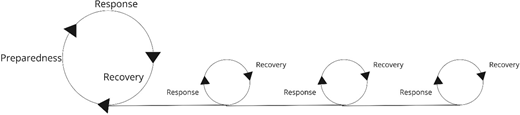
Rather than conceptualising the disaster cycle as a loop, we therefore propose an alternative model that captures a series of smaller, interconnected cycles unfolding throughout the duration of a siege. This perspective invites further investigation into how humanitarian supply chains in siege contexts evolve over time, moving from resilience-oriented responses towards continuous processes of transformation. This approach (Figure 3) better captures the evolving and localised nature of recovery in such contexts.
5.2 Emphasising the role of different actors in sieges and their intersections
To deliver aid to populations affected by crises, humanitarian logistics is implemented by national and international organisations, such as communities, volunteer groups, businesses and governments, operating within the framework of humanitarian principles (Kembro et al., 2024). This requires a deep understanding of the mandates, capacities and limitations of each actor. Our exploratory research on besieged zones confirms this complexity, focusing on different categories of players and their interaction and highlighting the growing relevance of different local actors already pointed out for humanitarian logistics as a whole (Stumpf et al., 2022).
The relationship between civil and military stakeholders is pivotal in the logistics of sieges. This relationship can affect the efficiency and effectiveness of humanitarian aid delivery. The focus group highlighted the importance of these relationships, particularly in negotiating access and ensuring the safety of aid deliveries, of which the analysed reports provided many examples. Participants stressed that logistics solutions for sieges are reliant on military interactions to some degree. The civil-military coordination of logistics in humanitarian relief has proven more challenging than other interagency relationships (Heaslip, 2012), due to the potentially damaging impact of misaligned cultures (Tatham, 2011). This challenge is more prominent in siege situations. Civil-military coordination in siege logistics indeed faces significant challenges, primarily due to deep-rooted cultural differences. Humanitarian actors typically prioritise neutrality, impartiality and the needs of affected populations, while military organisations operate under hierarchical command structures with security-driven objectives and strict protocols (Pramanik, 2015; Heaslip, 2012). Divergent values and working styles can lead to misunderstandings and mistrust that hinder effective communication and joint decision-making in high-pressure environments like sieges (Pramanik, 2015; Tatham, 2011). Such barriers reduce the efficiency of humanitarian operations. To mitigate these challenges, practitioners recommend joined training exercises, regular information-sharing and the establishment of clear guidelines that delineate roles and responsibilities while respecting each organisation’s core principles (Heaslip, 2012; Jenny, 2001). Building mutual awareness through cross-cultural workshops and fostering personal relationships between humanitarian and military personnel can also help bridge perception gaps and improve operational outcomes (Pramanik, 2015; Heaslip, 2012).
Commercial actors are often crucial in siege logistics, as in other humanitarian supply chains (Vega and Roussat, 2015; Vega et al., 2020). The Sarajevo siege, for instance, saw the emergence of a robust black market that, while controversial, played a critical role in supplying the besieged population with goods that traditional humanitarian aid channels could not provide. As far back as the crusades, commercial actors were supplying besieged cities (Bachrach, 1999). Recent reports frequently stressed the importance of commercial actors, both at the local level (e.g. ensuring bakeries had sufficient fuel and materials) and through trade. Focus group participants discussed that there is often a grey area in terms of who humanitarian actors interact with to enable them to get supplies into areas under siege. This underscores the need to consider commercial networks and infrastructure as part of the broader logistics planning in siege situations. A wider discussion of ethics and humanitarian principles is necessary if besieged people are to rely, at least in part, on commercial actors for their survival, as outsourcing in humanitarian supply chains is expected to increase (Gossler et al., 2020).
Effective coordination and cooperation among humanitarian actors are essential in sieges. The Sarajevo case illustrated how international organisations, local NGOs and government agencies worked together to coordinate aid. The focus group and grey literature stressed the importance of cohesive action and open communications among diverse stakeholders to mitigate the logistical challenges in sieges. This ties into literature on coordination and cooperation prevalent within academic writing on humanitarian logistics (Jahre and Jensen, 2010; Tatham et al., 2017; Prakash, 2024). Militarisation and politicisation are heightened, affecting the delivery and distribution of aid. The focus group underlined the delicate balance required to navigate these issues, ensuring that humanitarian aid remains impartial and effective amidst complex political and military dynamics. In the absence of effective control by any single actor, a coordinated global effort between multiple humanitarian logistics providers, an extremely challenging choreography following Grange et al. (2020), would be essential.
These challenges of humanitarian logistics in sieges introduce new forms of complexity and further increase the intricacy of humanitarian supply chains (Spens and Kovács, 2005). They demand an approach that incorporates lessons from historical precedents, leverages the strengths of diverse stakeholders and innovates in anticipation of future needs.
This research provides a foundation for advancing the practical and theoretical understanding of humanitarian logistics in sieges. It aligns with Heaslip’s approach (2024) to humanitarian logistics in conflict zones identifying main challenges among which are coordination and communication, safety and security and innovative solutions. Taken together, the findings indicate that the various dimensions of humanitarian logistics in siege contexts are strongly interrelated and mutually reinforcing. Siege-induced constraints on supply chains and access conditions directly shape humanitarian needs and operational priorities: for instance, physical blockades such as the destruction of key roads disrupt trade flows, force local businesses to close due to a lack of stock and consequently increase reliance on humanitarian logistics. At the same time, the results highlight several enablers that support a more effective humanitarian logistics response. Overall, humanitarian logistics in besieged settings emerges as a systemic and adaptive process, shaped by the interaction between structural constraints, operational responses and enabling conditions in highly volatile environments summed up in Figure 4.
6. Conclusions
Our first contribution is the use of secondary data from both historical and current sources. Historical research has gained prominence in the wider area of management and organisation studies over the past two decades (Decker et al., 2023) and has been used, for example, to analyse paths and speed of transitions (Gross et al., 2018). However, using historical data is not a common practice in the supply chain management area. We believe this is a compelling methodological approach for studying phenomena that have persisted for centuries. Our results suggest that, while the specific contexts, such as weapons, belligerents and scale, change over time, the key elements of humanitarian logistics in sieges remain largely consistent. More broadly, our research presents a pioneering approach to humanitarian logistics in besieged areas, with its integrative framework outlining an agenda for future research.
This exploratory research has its limitations. While we gathered primary data through a focus group, this study mainly relies on secondary data. Therefore, this study is limited by what is being reported. The focus in all data sources has, for example, been mainly on supplying besieged areas from outside, with limited attention paid to internal distribution efforts, which might be less visible to the international actors doing most of the reporting on sieges. Therefore, data on local innovations and changes in the use of local resources might be more limited than the actual practice on the ground. The reports analysed here are all publicly available and as such might under-report issues such as illegal activities like smuggling and trafficking. In the future, we plan to bring the proposed framework to life by conducting semi-structured interviews with various stakeholders involved in humanitarian logistics in besieged areas, such as commercial logistics providers, INGOs or local implementing partners.
Our research also calls for further extensions. The differences, and areas of overlap between sieges and related concepts such as blockades, occupied territories and economic sanctions need to be defined further. Some of the most well-known examples of humanitarian logistics, for example, the Berlin Air Lift, were not called sieges as they lacked military actions aimed at the besieged territory, but in their humanitarian effects, they may be regarded as such, pending a clearer definition of what constitutes a siege from the perspective of humanitarian logistics.
Further research integrating systems thinking (Meier et al., 2025), would help to expand and refine the conceptual framework presented, to provide a more holistic understanding of humanitarian logistics in sieges. In addition to contributing to the academic body of knowledge, future research should aim to develop guidelines and handbooks for practitioners and build up a dedicated logistics training program. The framework developed here could serve as a backbone for this. The need for training and guidelines was stressed by participants in the focus groups as these practitioners see themselves confronted with operations in siege situations without adequate knowledge beyond any personal prior experience they or their teams might have.