The purpose of this paper is to assess the level of knowledge and practice of breastfeeding among factory working mothers in Kathmandu who had a minimum of one child of less than two years of age.
A cross-sectional survey, with the help of a semi-structured questionnaire, was completed. χ2 or Fisher exact tests were applied for analysis using the SPSS program.
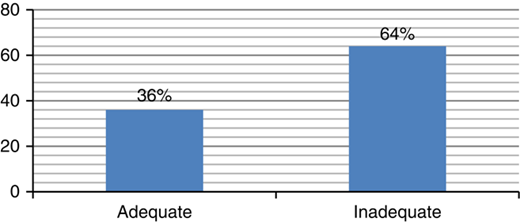
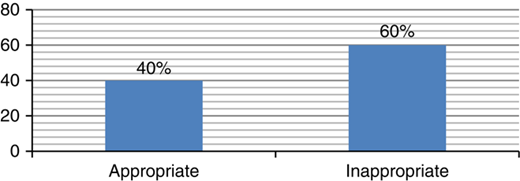
In total, 36.0 percent of the mothers had adequate knowledge, and 40.0 percent had an appropriate practice of breastfeeding (BF). Also, 30 percent of them were supplementing their BF with additional milk and 54.0 percent began to give additional food at less than six months of age, mainly due to insufficient breast milk. However, 40.0 percent of mothers practiced exclusive BF; 34.0 percent of mothers continued BF until their child reached two years of age. BF was initiated within an hour by 64.0 percent of mothers. Regarding knowledge, the majority of them (82 percent) knew about initiation time of the feed, 64.0 percent of mothers knew that breast milk had positive effects on a child’s health while 48.0 percent knew that it also had good effects on the mothers’ health. There was a positive association between available facilities and BF knowledge levels (p-value<0.00, χ2=4.25, df=1). The associations of knowledge levels against the education status of mothers (p-value=0.11, χ2=2.59, df=1) and practice level of initiation of breast milk (p-value=0.96, χ2=0.02, df=1) were not significant.
The knowledge and practices of BF among factory working mothers are not satisfactory. Hence, an effective way to encourage BF is to increase the availability of facilities for the practice of BF at a mother’s workplace.
Introduction
Feeding infants or young children with breast milk through lactation is called breastfeeding (BF). Breast milk offers benefits to both the baby and the mother. The World Health Organization has recommended exclusive BF for infants up to six months of age. BF provides an infant with essential calories, vitamins, minerals and other nutrients for optimal growth, health, and development. By virtue of the antibodies it contains, breast milk provides immunity to infants from different diseases[1]. It has a protective effect against infant gastrointestinal infections, which is observed not only in developing country settings but also in industrialized countries. It also prolongs the duration of lactation, amenorrhea and accelerates the weight loss of mothers[2]. The Pan American Health Organization reports that the nutrient needs of full-term, normal birth weighted infants typically can be met by human milk alone for the first six months if the mother is well nourished[3]. Studies suggest that optimal BF improves brain development in children[4]. Exclusive BF is uncontaminated and contains the entire nutrients needed by the infant in the first six months of life. Despite these benefits, there is a huge gap between existing knowledge and practice regarding BF especially among low-educated working mothers[5]. At present, common workforces in low-income jobs such as factory or construction sites include females; however, the actual statistics about their status is almost absent. The data on factory working women, to our knowledge, are almost lacking. The World Bank report mentions the labor force proportion rate (modeled on the International Labor Organization estimation) of the female population aged 15+, to be 83 percent in 2017[6].
BF is also the birthright of every child. An exclusively breastfed infant is about 10 times less likely to die from diarrhoea, 14 times less likely to die from all causes and nearly 15 times less likely to die from respiratory diseases[7]. The International Lactation Consultant Association reports that BF is usually associated with reduced risk of diarrheal diseases, allergy, stomach pain, asthma, etc.[8]. However, the Nepal Demographic and Health Survey 2016 (NDHS) identified only 66.0 percent of children under six months in Nepal who are exclusively breastfed[9], a slight decrease from 70 percent in 2011[10]. In most parts of urban Nepal, mothers are found to feed children additional milk and milk substitutes due to their jobs (formal and non-formal), socio-cultural beliefs and modernization.
The status of continued BF until one year in Nepal is at 93.0 percent[9, 10]. However, substitute feeding practice before six months of age is increasing day by day among the urban, working women[11, 12] throughout the world. Garment factories recruit the most females who are less educated and economically poor. They work as low-class laborers[13]. The data regarding factory working women in Nepal are almost absent and the research about the status of BF among the factory working mothers (laborers) probably does not exist at all. Ours is, therefore, a study to determine the level of knowledge as well as practice, and the factors associated with BF among the women working in garment factories.
Methods
The study was a cross-sectional and descriptive type, carried out among the female population working in a garment factory in Kathmandu and having at least one child less than two years of age. Data were collected with respect to the youngest child if the mother had more than one child of less than two years of age. These factory working mothers belonged to the population with a low education and economic status and were engaged in the labor force. The survey was conducted during January and February 2015.
Total working staff numbered 162, of which 91 were females. Only mothers with at least one child of less than two years of age were included, which resulted in 59 mothers out of which 50 were sampled in the survey. The interview was conducted on a first come first served basis until the required number (50) was reached. The researcher undertook to collect the data with the help of a structured questionnaire and face to face interviews The questionnaire had three parts: the first related to demographic detail containing 8 questions, the second was a list of 14 questions related to knowledge and the third was a list of 10 questions related to practice. The second and third parts of the questionnaire were related to the detail of analysis that followed the scalar scoring method[14]. Every question carried a score of one for a positive answer and zero for a negative answer. Finally, the total score for each group was added separately and ranked, so ⩾60 percent of positive responses was considered as adequate knowledge or appropriate practice. A pre-testing was done taking 10 percent of the sample, among school teachers in Kathmandu. Necessary modifications were made in the questionnaire and ample literature reviews were studied during the preparation of the questionnaire. Verbal consent was taken from the owner of the factory and written consent was taken from respondents before initiating the interview. Their ideas, values, customs and beliefs were fully respected. The anonymity of the participants and the privacy of the data collected from them were fairly maintained. The data were used exclusively for the purpose of research.
The prevalence of exclusive BF was 89 percent[9] and hence the sample size was calculated by the formula[15]:
where n is the calculated number of the sample, z is the level of confidence which is labeled at 95 percent (=1.96), p is the proportion of mothers with BF children of less than two years, which is 0.89 [9], q=1−p and d is the absolute precision considered to be 9 percent[16]. Following the above formula, n= 46. After considering 10 percent allowable error value (≈4), the size of the sample in the study was 50. Descriptive analysis was done based on the frequencies and percentages, while for the statistical associations, χ2 or Fisher exact tests were used to find their relationship with other variables.
Results
Socio-demographic detail is shown in Table I. Almost 42.0 percent of the mothers were Buddhists, 36.0 percent were Hindus and 18.0 percent Christians. The majority of them (94.0 percent) were Janjatis (a minority caste group in Nepalese society) and almost 88.0 percent of them were from a nuclear family. Among the children, 36.0 percent were of 7–12 months of age. The mother’s literacy rate was 46.0 percent.
Regarding the knowledge about BF, the level was found adequate in 36.0 percent of the mothers (Figure 1). Table II details the aspects of BF knowledge of the mothers. Although 70.0 percent of the mothers knew about BF their children up to two years of age, only half of them (34.0 percent) had knowledge about the value of exclusive BF for the initial six months. As they were asked about the dietary plan for the children before six months of age, (multiple choice question), most of the answers focused on mother’s milk (40.9) while 27.3 percent listed “Sarwottampitho,” which is a brand of formula cereal flour prepared locally, followed by “Jaulo,” rice gruel. The majority of the mothers (82.0 percent) were well aware of the initiation of BF within 1 h of the birth of the child. Regarding the child’s health and BF, only 12.0 percent knew about the immunity a child gets from mothers’ milk. Most of the mothers (82.0 percent) did not know that one natural way of contraception for leaving space between the births of two children can be maintained to some extent by BF. Only 34.0 percent of the mothers had proper knowledge regarding the duration of exclusive BF. About supplementary milk products, 75.0 percent said that no supplementary milk but mother’s breast milk alone should be given to the child, and this idea was irrespective of the child’s requirement of additional milk. Whenever they provided supplementary food or drink, they rather preferred to give solid food to satisfy their children. Many of them (27.9 percent) neither fed the children additional milk nor bottle fed them because of economic reasons. In total, 62.0 percent of the mothers were confident about the sufficiency of breast milk for their children. When they were asked about bottle feeding and maintenance of hygiene, 50.0 percent knew only about washing used bottles with tap water, while 34.0 percent did not even know about the process. Only 16.0 percent knew about the proper way of sanitizing the bottles after each feed. It was also recorded that many of them did not use bottles to feed their children owing to the fact that it is not easy to maintain the hygiene of the bottle. Also, 88.0 percent of the mothers knew that BF strengthens the emotional bond between mother and child. However, only about half of them knew about the health benefits to mothers from BF.
Regarding the practice of BF, the level was found to be appropriate in 40.0 percent of the mothers (Figure 2). Table III explains about BF practices among the mothers. In total, 16 percent of mothers gave their child water before six months. In a multiple choice question about the food they provide to children before six months of age, the reply was mostly “Sarwottampitho” (13.6 percent) and “Jaulo” (7.4 percent). More than half of the mothers said that children can be weaned off breast milk after their first birthday (52.0 percent). Only 34.0 percent of mothers said that they continue BF their children up to two years of age. About managing the child’s breastfeed while at work, most of them (64 percent) left their children at home with extra food and milk since they were not able to manage time for BF their children frequently enough. The rest of them stated that they either joined their work after their children reached six months of age (20.0 percent) when the babies could be given additional food, or admitted their children to child-care centers (16.0 percent). In total, 64.0 percent of the mothers confirmed that they initiated breast milk feeding within 1 h of their child’s birth. The frequency of BF was mostly (74 percent) not appropriate and not up to the level of the baby’s needs. Also, 40.0 percent of the mothers were exclusively giving breast milk for six months while more than that (54.0 percent) had started giving solid food before their children reached six months. Many of them did not breastfeed their children due to the perceived insufficiency of milk (73.3 percent) and some had insufficient time as well (20 percent). The positive aspect of the mother’s practice was that none of them provided nutrient supplements such as iron, vitamins or protein to their child as dietary substitutes.
The χ2 tests between knowledge of BF with available BF facilities at the factory (p-value<0.00, χ2=4.25, df=1) and educational status (p-value=0.11, χ2=2.59, df=1) of mothers showed statistically significant (Table IV) and non-significant (Table V) associations respectively. Table IV showed significant associations between a higher proportion of women who worked in factories having BF facilities (n=17) and had adequate knowledge than women who had no facilities. Regarding the initiation of breast milk and the level of practice (Table VI), the relation was not found to be significant (p-value=0.96, χ2=0.02, df=1).
Discussion
This study was conducted to assess the level of knowledge and practice regarding BF among women working in a garment factory having at least one child less than 2 years of age in the Kathmandu district of Nepal. According to NDHS (2017), 89 percent of children were breastfed until the age of two years. This study showed that only 34.0 percent of the total respondent’s breastfed their babies till their second birthday. The difference is quite large, and possibly because our study chose working mothers as a sample. However, the result was consistent with a review study of worldwide BF practices which showed 33.0 percent of the children were breastfed until two years old and the practice was increasing in South Asian regions[11]. The result was seen to be lower (26.1 percent) in Mauritius[17].
In this study, 40.0 percent of the respondents practiced exclusive BF. That was higher than a study in Mauritius where 17.9 percent of mothers practiced exclusive BF[17]. The variations might be due to geographical difference and the socio-economic status of the mothers. The initiation of BF within 1 h of a child’s birth (64.0 percent) was higher than a study in Southeast Nigeria where 56.0 percent of working mothers initiated BF within 1 h of a child’s birth[18] and lower than that in developed country like USA where it is 73.0 percent[19]. A hospital-based survey in Kathmandu, Nepal, found the practice to be even less, that is 41.0 percent[20] but this seems unusual for hospital cases. Knowledge regarding exclusive BF in this study was inadequate (34 percent) but is consistent with the study in the rural population of North India where it is 39.0 percent[21]. However, the rate of feeding milk by bottle, even before or after six months of child’s age, is low due to their weak economic condition and difficulty in sanitizing the bottles. As a result, they prefer to spoon feed their babies.
More than half of the respondents (56.0 percent) followed an inappropriate practice of BF their children below six months of age, which is much lower than that of the mothers in Mauritius (82.1 percent)[17]. The mothers in this study gave their children additional water, Sarwottampitho, jaulo and honey, etc., and these supplements considerably vary as per society, geography and economic status of the family. The reason for practicing supplementary feeding was mainly due to insufficient breast milk for children or insufficient time for working mothers to feed their children. This was consistent with the other similar studies where mothers prefer to practice bottle feeding due to the perceived insufficiency of breast milk, inappropriate advice, the working status of mothers and the mother’s lack of awareness about the health benefits of BF for children as well as mothers[22, 23].
The availability of facilities at the factory for BF has statistical associations with the level of knowledge of the BF mothers. It means that the mothers who have better facilities for BF their children at factories would have more knowledge about BF. Nevertheless, initiation of BF and the education level of mothers were independent of the level of knowledge about BF, probably due to the majority of BF mothers being illiterate. In contrast, a study from Pakistan showed that the education level of the mother had a negative association with BF[15]. The mothers practiced bottle feeding and other additional food to babies mainly due to inadequate time to care for the baby, cultural practice, insufficiency of milk, lack of knowledge and heavy workload in the factory. The result was found coherent with that of various other studies[23, 24].
This study does not explore the reasons behind the low level of knowledge and poorer practice of BF on factory working mothers, which is very important for a mother and child’s health, and, therefore, the next step should be to find the associated factors for this issue.
Conclusion
Knowledge and practice levels about BF are unexpectedly low among women working in garment factories in Kathmandu district. Most of the women are illiterate and do not have much knowledge of exclusive BF benefits and, as a consequence, this influenced the knowledge and practice levels of BF. Inadequate knowledge and inappropriate practice have negative effects on child health. Therefore, providing adequate facilities in the workplace for BF is important, and also the knowledge and practice of BF their children should be enhanced for the sake of children’s as well as mother’s health.
Conflict of interest: the authors declare that there was no conflict of interest during the entire process of this study.
The authors would like to thank the Nepal Institute of Health Sciences College, Purbanchal University for providing the platform for this study. The authors are grateful to all the mothers who participated in the interview process and thank the factory organizer who permitted the authors to carry out the research in their office. This study did not receive any funding.