


There are still some gaps in this technology to be filled like replacement surgeries, very frequent recharging needs, additional equipment implantation and cost.
The new battery design circuit comprises a piezoelectric polymer, a bridge rectifier, boost converter and a solid-state battery.
This design suits every patient medically and has a long-life span electrically so that it does not need to be recharged very frequently or replaced.
This research is an initial finding, more exploration and translating this into a practical solution necessitate collaboration work. The author invites researchers interested in advancing this technology to work on this innovate model.
This paper although not a practical model serves as a complete theoretical design architecture. The theoretical and previous practical works, as mentioned in the paper, suggest many advantages of the model, which are mainly long-lasting battery, no more space and equipment required than currently used pacemakers’ space and the outer (titanium) frame with lead electrodes.
Along with increases in renewable energy usage, research on a rechargeable cardiac pacemaker is being conducted. However, there are still some gaps in this technology to be filled like replacement surgeries, very frequent recharging needs, additional equipment implantation and cost. The proposed design in this paper is a new step toward passing these limitations.
1. Introduction
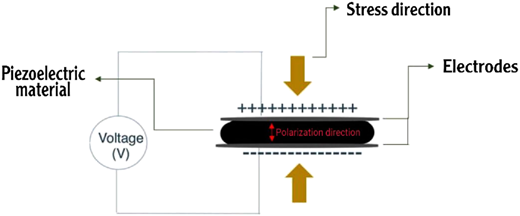
A pacemaker is a battery-powered device that is implanted under the skin when the heart beats are not regular, it is composed of a battery, circuitry, lead(s) electrode(s) and sensor(s) while some of the new pacemakers are leadless (Mayo Clinic, 2021), (American Heart Association, 2016), (Madhavan et al., 2017). Pacemakers are very critical and live-saving devices that are used to treat about 15 heart conditions like heart block, long QT syndrome, sinus node daisies. (Cardiac pacemaker, 2022), (Who needs them | NHLBI and NIH, 2022, 24 March), (Solan, 2022). The first pacemaker was implanted in 1958. Since then, pacemaker designs have continuously improved (Madhavan et al., 2017). Currently, around 3 million people have implanted pacemakers, and annually about 600,000 pacemakers are implanted worldwide (Mallela et al., 2004). Pacemakers have different sizes but commonly are 5 by 4 cm and their thickness is about 6 (or 7) mm (Mallela et al., 2004), (British Heart Foundation, 2023). Most pacemakers today use lithium iodine batteries (Mallela et al., 2004). The battery is generally about half the size of the pacemaker (Huang and Kishk, 2011). Battery in pacemakers works as a electricity source for the programmable circuitry part of the pacemaker, lead electrode system (Hao et al., 2015). The average battery life span for pacemakers is 10 ± 5 years and this life span can vary significantly depending on factors such as specific heart condition (e.g. severe heart failure …), the degree of hearts dependence on the pacemaker and the type of the implanted pacemaker (London Heart Clinic, 2024), (Webdevs, 2024), (Shepard and Ellenbogen, 2008). The battery’s life determines the pacemaker’s life span. Once the battery is depleted, the pacemaker battery should be replaced in a surgery. Therefore, ongoing researches focus on developing and improving the power source and batteries to extend the pacemaker lifespan. Today, scientists are actively developing pacemakers with rechargeable batteries. This innovation aims to eliminate the risks associated with surgical procedures for pacemaker or battery replacement, such as blood clots, air leakage and lead dislodgement (Website, 2023), (Risks, 2017). This research draws a rechargeable battery circuit that recharges by ultrasound waves using the piezoelectric effect of piezoelectric material. Piezoelectric effect is the appearance of an electrical polarization across materials sides’ when it is subjected to mechanical stress (Woodford, 2022), (Mizuno, 2014). This behavior of piezoelectric materials was first discovered by Pierre Curie and Jacques Curie (Qin, 2012). Figure 1 demonstrates the direct piezoelectric effect (Sezer and Koç, 2020). Piezoelectric materials can be classified into two categories: natural and synthetic piezoelectric materials. The synthetic materials are also categorized into three subcategories: ceramics, polymers and composites (Bairagi et al., 2023), all types of piezoelectric materials have their own usefulness and limitations for example the natural piezoelectric materials have a higher mechanical quality factor but they are very expensive, the ceramics have a high piezoelectric constant but they are not strong and easily damaged, the polymers are stronger and more flexible but they have a lower piezoelectric constant. Lastly, composites show a synergistic effect but there is a risk of neutralization to occur because of its inconsistent polarization direction (Bairagi et al., 2023). Piezoelectric materials are used in diverse technologies and applications such as sensors, actuators, nano and micro electromechanical systems, medical devices and 3D printing etc. (Sekhar et al., 2022). The materials used are polyvinylidene fluoride polymer piezoelectric material (PVDF), bridge rectifier with capacitor, boost converter and a battery to store the generated electricity. Despite all the significant advancements that have been made to provide a rechargeable cardiac pacemaker, some challenges still remain, for example some pacemaker designs provide self-power generation but the amount of the power is limited and the size of the pacemaker is increased. Some others require more devices to be implanted with the pacemaker which makes the implantation surgery harder. Furthermore, the cost and the need for frequent recharging for some wireless recharging pacemakers is another issue. This research proposes a rechargeable pacemaker battery model that aims to overcome these existing limitations. To enhance patient safety and comfort, and to simplify the surgical procedure, all necessary components are integrated into a conventional pacemaker design. Environmentally friendly materials are used to reduce toxic wastes. Additionally, to minimize the need for frequent recharging, a solid-state battery is employed. Furthermore, the innovative design and the use of essential, yet cost-effective, materials contribute to an overall affordable solution.
2. Methodology
2.1 Piezoelectric material and ultrasound wave source
This research focuses on the battery component of a lead traditional pacemaker and does not apply to leadless pacemakers. As mentioned, a traditional pacemaker consists of a circuitry section, lead electrodes and a battery. In this rechargeable pacemaker model, no modifications are required for the circuitry or lead electrodes, as they remain the same as in the traditional model. The primary focus of this study is on the battery (power source). The research proposes replacing the lithium battery, currently used as the power source in pacemakers, with a polymer piezoelectric material (PVDF). The piezoelectric effect of PVDF is utilized to generate electricity by exposing it to ultrasound waves (Jiang et al., 2020) using an ultrasound transducer. Ultrasound waves were chosen because generally and with a controlled dosage it is considered to be safe for human tissues and for use in implantable medical devices (Moyano et al., 2022), (Suzuki et al., 2002). The polyvinylidene fluoride (PVDF) disc selected in this study is in beta (β) phase with an all-trans (TTTT) conformation. It has Piezoelectric Coefficient d33 approximately about 32 ± 1.73 pC/N, 20 mm diameter and 0.23 mm thickness (Salama et al., 2024). The structure of this specific phase of PVDF polymer is shown in Figure 2 and Figure 3 (Ruan et al., 2018; Wu et al., 2022). This piezoelectric material disc has been chosen because it is biocompatible meaning that it does not react with the titanium shielding of the pacemaker (Zhang et al., 2023) and it is not environmentally toxic like lead containing PZT-Ceramic (Panda and Sahoo, 2015). Additionally, it generates sufficient power for ultralow power consuming devices such as a pacemaker (Salama et al., 2024). In general, piezoelectric materials with high piezoelectricity like lead zirconate titanate can generate voltage in milli volts and current in micro amperes (Han and Ko, 2021). Although polymers generally have lower power generation efficiency compared to ceramics, PVDF is the most commonly used type of piezoelectric polymer due to its relatively high efficiency. This polymer with its beta phase and all-trans conformation is considered to be the most efficient piezoelectric polymer (Mokhtari et al., 2021). Its size is suitable for insertion into a pacemaker, as mentioned earlier, so no additional space or equipment is required. It is also cost-effective compared to piezoelectric materials like quartz (Salama et al., 2024). Additionally, it is light weight, flexible, durable and strong, due to the robust bonding at the molecular level, so it remains safe in typical human movements like bending and running (Salama et al., 2024). Lastly, it has a high thermal stability (Saxena and Shukla, 2021). An important point to be discussed is the lifespan of piezoelectric materials including the PVDF polymer. Some researches state that the average life-span of them is 20 years (Moussa, 2019), others that the life of them depends on some factors such as mechanical strain and humidity (Which factors contribute to the lifetime of a piezo?). Some other studies state that they can permanently generate electricity (Safaei et al., 2019). In all possibilities the life of piezo is longer than that of the lithium batteries currently used in pacemakers. To generate power, the piezoelectric material is exposed to ultrasound wave within a specific range of frequency and intensity. Low ranges are considered to be more suitable, as low levels of frequency and intensity ultrasound waves, when applied in controlled dosage, pose minimal side effect on tissues and risk on the pacemaker (Conteh, 2015), (Fogoros, 2024). Low kilohertz are most likely to match the resonance frequency of the piezoelectric material, as calculated using resonant frequency Equation (1). Similarly, low intensity waves (with the unit: watts per centimeter square) are considered to be safer for both human body and the circuit. Wave intensity is determined using Equation (2).
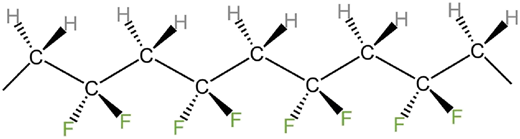
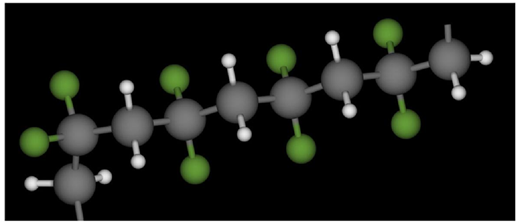
Beta phase of PVDF, green balls: Fluorine, light grey balls: Hydrogen, dark grey balls: Carbon. Source: Figure created by author
Beta phase of PVDF, green balls: Fluorine, light grey balls: Hydrogen, dark grey balls: Carbon. Source: Figure created by author
fres: the natural or resonant frequency of the material. : characteristic dimension of the material, like the length.
: Young’s modulus of the material. : density of the material.
: wave intensity. P: wave power. A: The cross-sectional area through which the ultrasound wave is passing.
The decided low frequency and intensity may reduce the generated power, because of direct proportionality between polarization of piezoelectric materials and mechanical stress, as described by the polarization Equation (3).
P: polarization. T: mechanical stress. d: piezoelectric coefficient.
The decreased polarization causes decrease in polarization charge, which is the surface charge density of the material, as given by Equation (4).
Pcharge: polarization charge. Q: Charge A: cross-sectional area that the stress applied on.
As a result of the decreased polarization charge, the induced voltage decreases, as given in Equation (5).
V: induced voltage. ε0: Vacuum permittivity. εr: relative permittivity. L: length of piezo material.
C: capacitance value.
In case of a low power generation problem, as it is a possibility, use of a boost converter addresses and solves this problem. The boosting process also accounts the self-discharge of the battery, that is a natural occurring process in all electronic devices, including rechargeable and nonchargeable batteries (Babu, 2024), (Holze, 2022) as will be discussed in detail later. However, the exact frequency and intensity values that generate the most electricity from the piezoelectric material and matches the resonance frequency in the safest way, must be obtained experimentally due to reasons like health condition; for some special patient cases cardiologists may prefer different frequencies and intensities. Additionally, the effect of ultrasound may vary based on skin impedance, which differs among individuals due to factors such as age, diseases, sun exposure and other variables (Bora and Dasgupta, 2020). The type of the implanted pacemaker is also an important consideration. Generating electricity under the human skin using ultrasound waves requires careful attention to safety and potential concerns to avoid damage to both the patient and the device. This technology is still in development, and current researches work on it in many different ways to improve it for various medical applications and sickness treatments (Zhang et al., 2022) Figure 3.
2.2 Bridge rectifier and capacitor
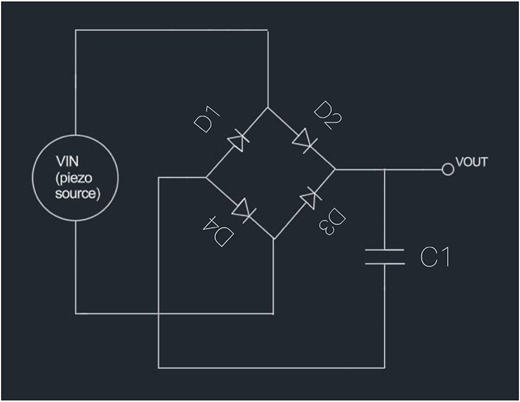
After applying ultrasound waves to the piezoelectric material, the generated voltage must be rectified to direct current (DC) for use in pacemakers (Mulpuru et al., 2017). This study selected a bridge rectifier, which is the most commonly used in scientific works due to its high efficiency (Bhakti, 2018; Admin, 2018). The bridge rectifier consists of four diodes connected to the source (Islam, 2022), (Kumar, 2022). A single-phase bridge rectifier with surface mounting style (SMT) was chosen for its minimal leakage current, compact size, low forward current and voltage rates and thermal stability. It can operate within micro to milli amperes and milli voltages range. The rectified current and voltage are then smoothed by connecting the output terminal of the bridge rectifier to a 22 µF capacitor with dimension of 2 ×1.25 × 1.2 mm. This capacitor has been chosen for its tiny size and high efficiency while operating with small current and voltages. In Figure 4 the circuit of the bridge rectifier and the capacitor are shown (Fundamentals of Electronics Book 1: (Electronic Devices and Circuit Applications). To produce a safe, compact, easily repairable model design, the circuit is implemented on a printed circuit board (PCB) (bepcba, 2023) (Understanding the PCB Requirements for Medical Applications - PCB Directory) (Printed Circuit board design Techniques for EMC Compliance). The PCB should be biocompatible and meet the following key requirements: thickness to be 0.8 mm, high mechanical strength, small size and lightweight structure, low power consumption, hermetic sealing and signal integrity [(Understanding the PCB Requirements for Medical Applications – PCB Directory), (Sharma, 2024)]. At the output terminal, the circuit delivers rectified and smoothed electricity, ready for further processing.
2.3 Boost converter
The electricity generated by piezoelectric materials is very small, as previously discussed. A pacemaker typically operates at 2–3 V with a capacity of 0.5–2 Ah, while the average power consumption of the heart is approximately 10–20 µA [(Pacemakers and implantable cardioverter defibrillators)]. To ensure the pacemaker operates safely and meets standard voltage and current requirements, the DC output voltage of the rectifier must be boosted. To do that, a 1.3 mm synchronous boost converter is selected with the following properties: capacity to boost voltage from milli volts (or less) up to nearly 5 V and micro current (or less) to about 1 A in maximum rate with adjustable output, a compact size, extremely low quiescent current and thermal stability. In general, this specialized type of boost converter has high efficiency (Fathabadi, 2016), higher than other asynchronous boosters, because it eliminates the forward voltage drop of the diode. Power dissipation across the diode of an asynchronous booster is calculated using Equation (6).
Pdis: power dissipated across diode VD: Forward voltage drop of diode IOUT: Output Current VOUT: Output Voltage VIN: Input Voltage.
In contrast, the power dissipation across a MOSFET of a synchronous booster is given in Equation (7).
Pfet: Power dissipated in MOSFET RON: On state resistance of the MOSFET.
IOUT: Output current VOUT: output voltage VIN: Input voltage.
The key differences between a typical asynchronous boost converter and synchronous booster circuit are shown in Figure 5a and 5b (Boost Converter design and simulation, 2020), (Kimball et al., 2004). In a synchronous boost converter, V_IN corresponds to the rectified voltage, meaning its input is connected to the output of the rectifier circuit (capacitor).
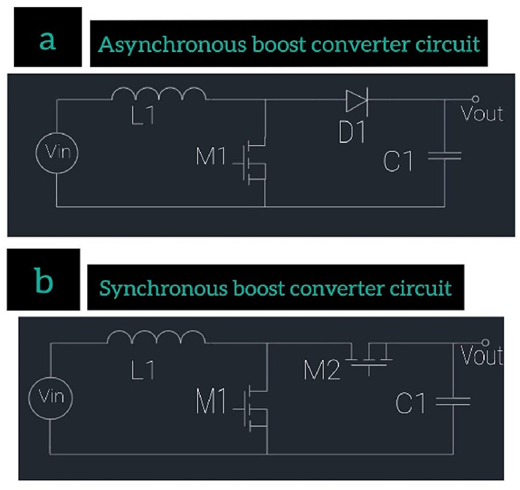
Difference between synchronous and asynchronous set up converter. Source: Figure created by author
Difference between synchronous and asynchronous set up converter. Source: Figure created by author
If the generated voltage is lower than expected, a two-stage boost conversion can be employed:
The first boost converter raises the very small input voltage to a higher intermediate level.
The second boost converter further increases it to the required voltage level.
2.4 Battery
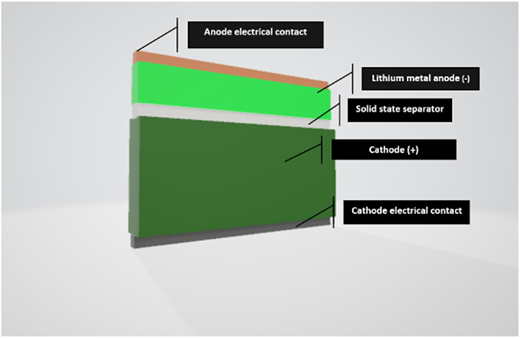
After a small amount of power is generated, it is rectified and converted to DC. Then, a DC–DC boost converter increases the voltage to a level suitable for the intended application. In the final stage, a battery is connected to the circuit. The battery should be a solid electrolyte to prevent or reduce any interfering with ultrasound waves (Bechtler et al., 1970), with the ability to store power efficiently and recharge easily, along with thermal stability and low self-discharge to store the generated electricity for long-term use and prevent daily or frequent recharging. This research selects a solid-state lithium-metal battery that has all the mentioned properties and has 3.7 V and 3Ah. This is because lithium is one of the active alkali metals that stores a lot of energy relative to its mass and recharges quickly (QuantumScape, 2022), (Hammond, 2000). The battery has a thickness of approximately 2 mm positive electrode (cathode), a pure lithium negative electrode (anode), a separator that also functions as an electrolyte and two electrical contacts—one for the anode and one for the cathode (Linda, 2022), (Machín et al., 2024). The outer general structure of a solid-state battery is shown in Figure 6 (Linda, 2022). The output voltage of the boost converter is connected to the battery, with the positive terminal connected to the positive input and the negative terminal to the negative input. It should be noted that this battery is fully charged upon implantation, and the recharging process begins after approximately 10–15 years, as it has a power capacity similar to the batteries currently in use.
3. Results
This research presents a proposed pacemaker power source and battery design that integrates a piezoelectric material, bridge rectifier, capacitor, boost converter, a solid-state battery and the external application of ultrasound waves. The theoretical analysis and mathematical proofs indicate that the selected polyvinylidene fluoride (PVDF) piezoelectric material, when subjected to ultrasound waves, is capable of generating sufficient electrical energy for ultra-low-power medical devices such as pacemakers. To ensure efficient energy rectification (convert the generated AC voltage into DC), the bridge rectifier is followed by a capacitor to smooth the rectified output. Additionally, a boost converter was integrated to regulate and increase the voltage to a suitable level for storage in a solid-state battery, which specialized by long-term energy retention and safety. The integration of these components demonstrated a theoretically stable and efficient output energy for pacemaker applications. In general, the components selected for this design were chosen based on their compact size, affordability, safety and efficiency. While these arguments build a strong theoretical foundation, experimental validation is necessary to confirm the practicality and reliability of the proposed design. Future work will focus on prototype development and performance testing under real-world conditions.
4. Conclusions
This study presents an innovative rechargeable cardiac pacemaker power source and battery model. The study evaluates efficiency and safety in the proposed circuit design and materials used. Factors such as thermal stability, impact of daily activities, ultrasound dosages, cost, material toxicity, recharging requirements, pacemaker size and surgical complexity were all considered. This pacemaker design is drawn based on previous researches, theoretical and mathematical evidences and it also provides new design contributions to fill current gaps. This research outlines a theoretical framework to guide practical implementation. Pacemakers are a critical and evolving technology. This research invites researchers who work in this field, to collaborate and further refine the research and potentially to translate it into a practical solution.
- PVDF:
polyvinylidene fluoride
- fres:
Resonant frequency
- β phase:
beta phase
- :
characteristic dimension of the material, like the length
- :
Young’s modulus of the material
- :
density of the material
- PZT:
lead zirconate titanate
- PCB:
Printed circuit board
- P:
polarization
- T:
mechanical stress
- d:
piezoelectric coefficient
- Pcharge:
polarization charge
- Q:
Charge
- A:
cross-sectional area that the stress applied on
- V:
induced voltage
- ε0:
Vacuum permittivity
- εr:
relative permittivity
- L:
length of piezo material
- Pdis:
power dissipated across diode
- VD:
forward voltage drop of diode
- IOUT:
output Current
- VOUT:
Output Voltage
- VIN:
input Voltage
- Pfet:
power dissipated in MOSFET
- RON:
on state resistance of the MOSFET
- IOUT:
output current
- VOUT:
output voltage
- VIN:
input voltage
- TTTT:
all-trans conformation
The author expresses sincere gratitude and deep appreciation to the respected engineers and university teachers, Znar Rafeeq and Ala Hassan, as well as to the esteemed cardiac surgeon, Dr Dana Mahmood, for their valuable professional guidance and support throughout this research.
Declarations
Ethics approval and consent to participate: From a theoretical standpoint, the proposed research aligns with ethical principles. However, the practical implementation of this research may raise ethical questions that require careful consideration by cardiologists and experts.
Consent of publication: Author grant [Journal of Intelligent Manufacturing and Special Equipment] exclusive publication rights. Author reserve copy rights, and make sure that there is no one or no institution’s right in this research.

