Academia has begun to examine employee withdrawal (EW) in the context of knowledge management (KM) only recently, and no comprehensive reviews of their link have been made so far. To fill this knowledge gap, a systematic literature review has been performed with a focus on EW in connection to KM.
The methodology applied is the systematic literature review, including the descriptive and thematic analyses, which have established the state of the art with regard to EW and KM.
The analysed publications indicate that management science research seldom examines EW itself. Most of the identified papers focused on the relation between employee silence or turnover intention – specific forms of withdrawal behaviour and knowledge sharing, transfer or hiding. Although the existing management literature sheds some light on EW, more studies investigating the specific forms of EW and its impact on various KM processes are required to sketch more explicit picture.
Although the existing management literature sheds some light on EW, more studies investigating the specific forms of EW and its impact on various KM processes are required to sketch more explicit picture.
The paper examines EW in the context of KM in the literature. This topic has not been examined so far and, due to the potential negative consequences of EW for KM, is definitely worth exploration.
1. Introduction
The COVID-19 pandemic catalyzed organizational changes worldwide that continue to influence knowledge creation, sharing, and storage practices today. As many organizations continue to adopt remote and hybrid work structures, rely more heavily on technological infrastructures, and experience higher employee mobility, knowledge management efforts face increasing challenges (Davenport and Mittal, 2023; Hislop et al., 2018). Knowledge has long been recognised as a critical organisational asset, yet the ability to sustain effective knowledge processes increasingly depends on employees’ willingness to engage in sharing, collaboration and knowledge transfer (Nonaka et al., 2022; Serenko, 2023a, 2023b). Despite significant technological investments, KM systems alone cannot safeguard organisational knowledge unless employees remain actively involved in its generation and exchange (Weiss et al., 2021; Capolupo et al., 2023).
However, at the same time research indicates that there is also ample evidence of reduced commitment and engagement among workers. Latest employee engagement studies have discovered an increase of workplace withdrawal syndromes which can have grave implications on organizational learning and knowledge preservation (Wigert and Tatel, 2023; Zhang et al., 2022). Employee withdrawal (EW) behaviours (ranging from psychological disengagement to turnover) represent not only a challenge for human resource management, but also a direct threat to KM effectiveness. Knowledge sharing, hiding, hoarding and even sabotage are inherently tied to employees’ motivation and commitment (Khan et al., 2022; Xiao, 2024). Thus, withdrawal does not merely affect productivity or morale; it disrupts various processes upon which organisational knowledge flows depend.
While previous research has examined withdrawal primarily from the perspective of organisational performance and costs (Colquitt et al., 2013; Bhattarai and Budhathoki, 2023), there remains limited integration of this phenomenon into the KM discourse. Most existing studies narrowly address knowledge sharing or knowledge hiding in relation to withdrawal (Tian et al., 2021; Wang, 2022), neglecting other KM activities like knowledge retention, knowledge creation, knowledge risk management (Bogosian and Stefanchin, 2018; Takhsha et al., 2020). The reality is that withdrawal can splinter networks, deplete social capital, and hasten knowledge loss – especially when tacit knowledge is involved (Serenko, 2023a, 2023b; Fan et al., 2022). This conceptual fragmentation leaves a gap in understanding how EW collectively influences KM systems and cultures.
Given the growing dependence of organisations on intangible assets, this gap is highly important. As the knowledge-based view of the firm suggests, employees are the central carriers of organisational knowledge (Grant and Phene, 2022). When they disengage or exit, the risks extend beyond immediate performance loss to the erosion of knowledge that sustain long-term competitiveness (Davenport and Mittal, 2023). Despite the urgency, no comprehensive review has systematically integrated research on EW with KM processes and risks. This limits both theoretical advancement and practical aspects to knowledge vulnerabilities in dynamic organisational environments.
To address this gap, the present study conducts a systematic literature review (SLR) to synthesise the fragmented body of research at the intersection of EW and KM. More precisely, this paper intends to provide answers to questions such as how withdrawal behaviours have been conceptualised in the KM literature, what are the prevailing themes in this regard and what are the knowledge risks most likely to be affected. To this end, the following research questions were formulated:
How has employee withdrawal behaviour been examined in knowledge management research to date?
What themes and knowledge processes emerge from the literature on the relationship between employee withdrawal and knowledge management?
By systematically organising and evaluating prior research, this article contributes to both KM and organisational behaviour studies. First, it extends KM field by framing EW not merely as an HR challenge, but as a critical determinant of knowledge processes and risks. Second, it provides practitioners with insights into how withdrawal behaviours undermine knowledge systems and cultures, offering guidance for interventions that sustain knowledge flows. Thirdly, the SLR procedure in this study is replicable and can be adapted to other similar studies in the field of KM. Finally, the study identifies key gaps and future research avenues, helping to advance a more integrated understanding of withdrawal in the knowledge era.
The article develops in the following way. First, the background literature on EW and KM is presented. Second, the methodology is explained in detail. Third, the analysis of the literature is described with the descriptive and thematic part. Finally, the discussion and conclusion sections are provided.
2. Literature background
This section presents the concepts of EW and KM. It aims to prepare a broader context for the conducted SLR.
2.1 Employee withdrawal
Employees who are not committed to their organisations engage in withdrawal behaviour, defined as a set of actions that employees perform to avoid the work situation – behaviours that may eventually culminate in quitting the organisation (Hanisch and Hulin, 1990). Dissatisfied employees may choose to withdraw from the organisation in several ways. According to Beehr and Gupta (1978), there are at least four approaches to EW, namely psychological withdrawal, tardiness, absenteeism and turnover. The theory of employee behaviour responses to adverse work events and job dissatisfaction suggests that employees could react in one of the four ways, namely exit, voice, loyalty (Hirschman, 1970) and neglect (Kolarska and Aldrich, 1980). Withdrawal may come in two forms: psychological (neglect) and physical (exit). Disengaged employees who withdraw both physically and psychologically become emotionally disconnected from co-workers in ways that disguise their “thoughts, feelings, creativity, beliefs, and values” (Kahn, 1990, p. 702).
A physical withdrawal that provides an escape from the workplace includes behaviours like tardiness, taking long breaks, missing meetings, absenteeism or quitting (Colquitt et al., 2013). Psychological withdrawal, defined as mental escape from the work, environment includes behaviours like daydreaming, socialising, looking busy, cyberloafing and moonlighting (Colquitt et al., 2013). Erdemli (2015) additionally classifies employee silence, and presenteeism, as forms of psychological withdrawal behaviours. Burnout is also sometimes described as an emotional and psychological condition that can lead to EW (Angelini, 2023).
Since there is no universally accepted definition or classification of EW, it can be concluded that employees may express their dissatisfaction with work by exhibiting physical and psychological withdrawal behaviours in many different forms. All of the behaviours may be different manifestations of the same general phenomenon, since they are associated with some common factors, such as unsatisfactory working conditions, job dissatisfaction or job stress.
These factors are also crucial for KM, as they determine the extent to which employees remain motivated to participate in knowledge creation and exchange. Thus, withdrawal behaviours can be seen not only as outcomes of dissatisfaction but also as mechanisms that hinder organisational knowledge flows.
Given the importance of employees as the central carriers of organisational knowledge, their withdrawal (whether physical or psychological) represents a critical challenge for sustaining effective KM. Therefore, to situate EW in the broader organisational context, it is necessary to clarify how this study conceptualises KM.
2.2 Knowledge management
Davenport and Prusak (1998) recognised knowledge as a corporate asset enabling an organisation to operate and as a resource that sets companies apart from the competition. The primary goal of KM in an organisation is the proficient and effective use of knowledge resources in its possession (explicit and tacit knowledge) and the possession of its members (individual tacit knowledge) (Rudawska, 2013). In this study, KM is understood not merely as a technological system but as a set of interdependent processes – knowledge creation, sharing, retention, and application – that are enacted by employees in their everyday work. This focus allows to examine how withdrawal behaviours directly interfere with these processes and generate knowledge risks for the organisation. Effective KM is a foundation for the development of organisational competitive advantage. It includes knowledge discovery and detection, organisation and assessment, sharing, reuse, creation and acquisition (Hajric, 2018). All knowledge activities require the participation of employees, their focus on work, organisation and environment, and the effectiveness of knowledge processes depends on employees’ behaviours and their skills (Stankiewicz and Moczulska, 2015). The Deloitte Insights Report underlines the importance of the human factor in generating, sharing and managing knowledge in organisations (Weiss et al., 2021). People have been and will always remain natural repositories of knowledge (Cong et al., 2007). Individual workers are considered the primary agents for knowledge creation and accumulation. Consequently, organisations need to use the knowledge that each member of staff possesses to generate new knowledge (Nonaka and Takeuchi, 1995). Employee creativity is necessary to spark the types of innovation that enable organisations to stay ahead of their competition (Colquitt et al., 2013). Knowledge sharing is the primary means through which all employees can contribute to the application of knowledge, its development and organisational innovations (Leiter et al., 2009). Sharing tacit knowledge is a form of social competence and is mainly a people-to-people process. It broadly depends on the willingness of knowledge workers to share their intellectual assets with others (Hajric, 2018). Therefore, effective transfer of knowledge might be difficult to achieve in the situation of EW, as it requires close collaboration between employees and socialisation mechanisms. Given the characteristics of various EW behaviours and KM processes, a link between these concepts. The characteristics of withdrawal behaviours include reduced creativity, emotional disconnection and lack of commitment. All of these have a potentially negative impact on all KM processes.
Accordingly, this study positions EW as a direct antecedent of knowledge risks, such as knowledge loss, disrupted knowledge sharing and diminished relational capital. By operationalising KM in terms of its core processes and risks, we establish a clear conceptual link between withdrawal behaviours and the effectiveness of KM in organisations.
3. Methodology
The SLR method adopted for this study follows the steps of Tranfield et al. (2003), according to whom stages of SLR within the management field should include: (1) planning the review; (2) conducting the review; and (3) reporting. This section presents how these stages were applied to this study.
3.1 Planning the review
The present study can be considered as a “stand-alone literature review” (Okoli, 2015), which aims to review and summarise scholarly research focussing on EW behaviours and their relationship with KM (processes and risks), identify gaps in current research and provide directions for future research.
3.2 Conducting the review
3.2.1 Identification of keywords and research databases.
In line with Tranfield et al. (2003), the relevance and size of the literature were first assessed to better define the topic and map the concepts. Keywords discovered during the scoping study were used to create the list of keywords used in this systematic search and divided into two categories that correspond to the domains of interest, namely “employee withdrawal” and “knowledge management.” Since there is no universally accepted definition or classification of EW, this literature review considers all forms of withdrawal discussed in the literature background. This approach ensures that no relevant aspect is omitted. Additionally, asterisks (*) were added wherever it was needed to capture all related word endings (e.g., withdrawal behavio*, = behavior/behaviors/behaviour/behaviours). The searched publications had to contain at least one keyword from each of the two specified domains of interest in the article title, abstract or the keyword list of the searched publications.
To examine the major scientific journal publishers and conferences, systematic searches were conducted using Scopus and Web of Science, two largest and most well-established multidisciplinary abstract and citation databases of scholarly publications. In addition, these were supplemented with searches conducted in the ProQuest online system, which enables multiple database searches concurrently in several subject areas. The purpose of this study is to review scholarly research; hence, trade publications and grey literature were not included in the database queries.
3.2.2 Literature search and inclusion/exclusion criteria.
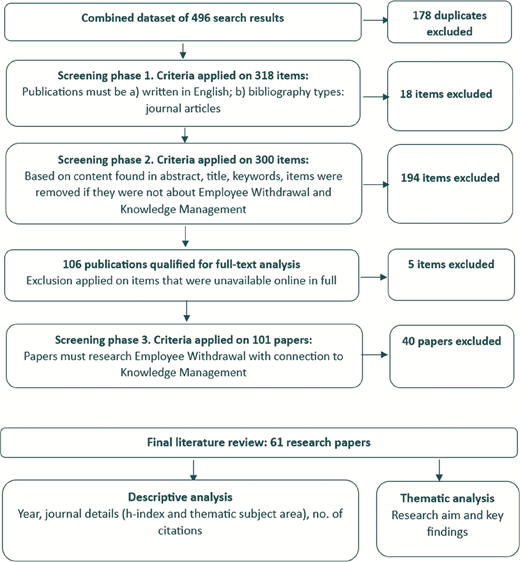
The literature search was conducted on the chosen databases on January 12, 2024, yielding 496 search results. The data files were uploaded to Mendeley citation and reference management software, which combined the files into a single library and removed 178 duplicate files. The library was then exported to the .csv format and converted into a data extraction table containing 318 bibliography entries, which were further analysed with Microsoft Excel. Before conducting the content analysis, the authors predefined a set of inclusion and exclusion criteria (see Appendix) to ensure that the selection of articles remained relevant to the topic.
The inclusion process consisted of three screening phases (see Figure 1). In the first phase, bibliographic data were scanned and filtered, and items were eliminated using two exclusion criteria:
publications in languages other than English; and
publications other than academic journal articles.
To enhance the reliability of the review findings, conference proceedings, book chapters and book chapters have been excluded, as they are typically not subject to peer review.
The second screening phase consisted of reading the abstracts, titles and keywords related to the bibliographic data and removing publications that were judged to lack relevance to the topic of EW and KM. Due to the possibility of subjective evaluations, the screening was carried out by two authors independently, and their results were compared with one another (Tranfield et al., 2003). In case of divergent decisions, uncertain cases were considered individually through discussion. A total of 194 items were determined to be unrelated to the research topic and removed from the data set. Subsequently, the authors searched the literature once more to find the 106 eligible publications for full-text analysis. Five of the publications were unavailable online in full text and were excluded from further analysis.
The last screening phase consisted of reading of 101 available full-text publications. Similarly to the second screening, this one was also carried out independently by two authors, and their results were compared and then discussed. A strict requirement was that the papers had to research EW in connection to KM. In the end, 40 articles were considered out of scope and removed, resulting in the final sample of 61 publications. Furthermore, as part of the review process, backward and forward snowball techniques were applied; however, no additional studies that met the inclusion criteria were identified through this approach.
3.3 Reporting
After all screening phases had been carried out, 61 articles were subjected to descriptive and thematic analysis. In the view of Tranfield et al. (2003), it is relevant to follow a two-stage reporting when conducting SLR within management research. The purpose of the descriptive analysis was to shed light on the first research question: How has employee withdrawal behaviour in knowledge management science been approached so far? The results of the descriptive analysis can be found in Section 4.1.
The purpose of the thematic analysis in this study was to build a picture of the themes discussed regarding EW behaviours and KM, which have been covered in the existing literature. To identify such themes, the six-phase approach of Braun and Clarke (2012) six-phase approach to thematic analysis was used. The analysis began by extracting passages from the reviewed articles relating to the focus of the research and key findings regarding EW and KM. It was prepared in the form of a table and is enclosed in Appendix. These extracts were then compiled into a word processing file and coded inductively by identifying various KM processes, risks and EW behaviours. The construction of themes was accomplished in the third step by looking for similarities and overlaps between the codes. The themes and their connections were then examined in the fourth step. Finally, the themes were ultimately identified, defined and then included in the report. The results of the thematic analysis can be found in Section 4.2.
4. Analysis of results
4.1 Descriptive analysis
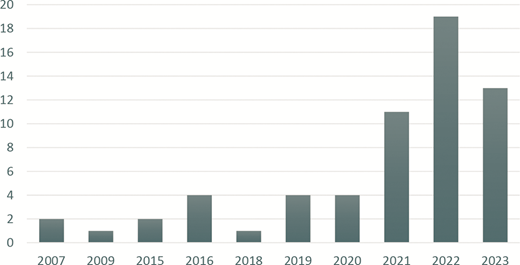
Research on EW in relation to KM is very recent. Seventy percentage of the articles in the final sample were published in 2021 and afterward. There is a noticeable upward trend in interest in this subject (see Figure 2). A decrease in 2023 might be caused by the fact that the literature search was conducted on the chosen databases on January 12, 2024; therefore, some papers published in 2023 may not yet had been available at that time.
To answer fully to the RQ1, the following detailed questions were formulated:
What is the current publication trend on employee withdrawal in knowledge management science?
Which journals are the most productive regarding the research on EW in the context of KM?
What are the most cited publications which examines EW in the context of KM?
What keywords appear in the reviewed bibliography?
What is the geographical distribution, and industry context of research on EW in the context of KM?
What are the research designs, approaches and methods used in research on EW in the context of KM?
The answers to these questions are presented below.
Table 1 illustrates the number of articles published in each journal, their thematic subject areas and the h-index (retrieved from the SCImago Institution Rankings). Thirty-five articles were published in a variety of journals (only one paper for a journal). The Journal of Knowledge Management and Frontiers in Psychology are the leading publication venues for research on EW related to KM. Almost all journals have high h-index, which indicates that they are influential and publish widely cited publications within the field.
The final review literature consisted of 61 scientific publications. To measure their research impact, the number of citations was examined with Google Scholar. Table 2 displays the top 10 articles in terms of the number of citations retrieved. Although the research on EW with connection to KM is recent, and 70% of the articles from the final sample were published in 2021 and beyond, it is noticeable that these publications are of high interest, as evidenced by the high number of citations. The most cited article was by Serenko and Bontis (2016) and describes antecedents and consequences of intraorganisational knowledge hiding, scoring 557 citations. Four articles ranked with more than 200 citations, and five additional articles with more than 100 citations. A table that presents the measurement of all publication citations is enclosed in Appendix.
The author-assigned keywords appearing in the review literature were analysed and grouped. In general, 203 different keywords were found; of which, “knowledge hiding,” “knowledge sharing” and “turnover intention” had the highest occurrence. However, a clear majority of the keywords appeared only once, which is why they were grouped according to their similar meanings or context. Table 3 shows a summary of these groups, their occurrence and associated keywords. The keywords “knowledge hiding,” “knowledge sharing” and “turnover intention” were the most frequent in the reviewed bibliography.
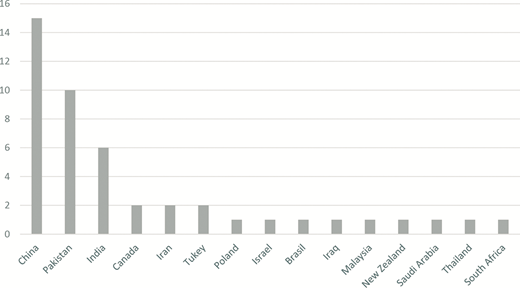
Considering geographic distribution, it can be concluded that the most reviewed literature investigated EW with connection to KM at a single country level (75%, n = 46), only few publications had their data derived from more than one country (6%, n = 4). Figure 3 summarises the geographical distribution of single-country studies in the reviewed literature. The rest of the publications did not specify a particular country of research or constituted a general overview without a specific geographical focus. Most research on EW in relation to KM has been conducted in China.
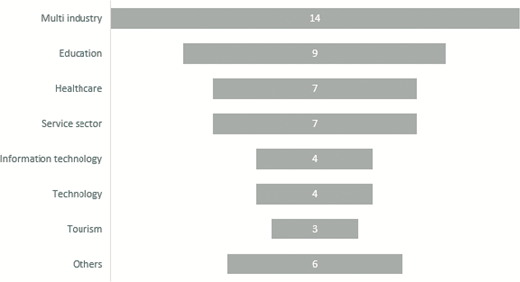
Figure 4 summarises industry focus. Most reviewed literature studied EW with connection to KM in a multi-industry context. Additionally, the top three industries include Education, Healthcare and the Service Sector.
Table 4 provides an overview of the research designs, approaches and their associated data analysis techniques. It should be noted that there was a significant variation in how clearly the articles outlined their methodology.
4.2 Thematic analysis
The primary purpose of the thematic analysis in this paper was to describe the areas the existing research has covered in the context of EW and KM. The analysis of the key findings taken from the reviewed articles was to shed light on the second study research question: What are the main themes discussed in relation to employee withdrawal behaviours and knowledge management (processes and risks)? The analysis of the key findings taken from the reviewed articles points to four themes described below. A summary of the research focus and key findings regarding EW and KM of the reviewed literature synthesis is included in Appendix.
4.2.1 Turnover intentions – knowledge (sharing, hiding, distance and sabotage).
The main topic discussed in relation to EW behaviours and knowledge management is the impact of knowledge sharing or knowledge hiding on employee turnover intention. The studies analysed indicate that knowledge sharing results in lower turnover intention (Lakshman et al., 2022; Srivastava and Pradhan, 2019; Jacobs and Roodt, 2007;Srivastava and Mishra, 2021), while knowledge hiding is positively associated with employee turnover intentions (Ratiu et al., 2021; Serenko and Bontis, 2016; Agarwal et al., 2024).
Moreover, the knowledge-hiding dimensions of evasive hiding and playing dumb (but not rationalised hiding) negatively relate to job satisfaction and positively affect turnover intentions (Offergelt et al., 2019), while organisational embeddedness mediates the relationship between intra-organisational knowledge hiding and turnover intention (Sheidaee et al., 2022). According to Fattah et al. (2022), perceived organisation support mediates the relationship between knowledge sharing, participative decision-making and turnover intention. Furthermore, the distance between individuals has a significant positive impact on the turnover intention of millennial employees (Zhuo and Yuan, 2022). Co-worker knowledge sabotage reduces the job satisfaction of other employees, which, in turn, triggers their voluntary turnover intention (Serenko and Abubakar, 2023).
4.2.2 Employee silence – knowledge (transfer, hiding, hoarding, sharing).
The second theme that is also widely covered in the reviewed literature is how employee silence affect the KM process. According to Bogosian and Stefanchin (2018), it can certainly impact each phase of the knowledge transfer process. It may especially impede the identification of a knowledge gap, which can prevent an organisation from initiating actions to fill it. Moreover, it can be stated that knowledge hiding behaviours have a significant and positive relationship with employee silence (Bari et al., 2020). When employees working in high-power distance cultures perceive their leaders/supervisors as abusive, they avoid confrontation and engage in silent behaviour, which positively affects their knowledge-hiding behaviour (Islam et al., 2022). Additionally, workplace ostracism significantly influences employee knowledge-hoarding behaviour both directly and through defensive silence (Khalid et al., 2020). Organisational silence also has a negative influence on knowledge sharing (Takhsha et al., 2020).
4.2.3 Job Burnout – Knowledge (sharing, hiding).
Another topic discussed is the relationship between employee burnout and knowledge sharing and hiding. According to Leiter et al. (2009) Generation X nurses who experience symptoms of job burnout are also less inclined to participate in knowledge sharing. In the research of Zhang et al. (2016), burnout was negatively associated with knowledge sharing after controlling for personality. However, higher knowledge-sharing behaviours are associated with lower job burnout (Wang et al., 2023).
4.2.4 Moral disengagement – Knowledge hiding.
Much attention has been paid in the literature to moral disengagement and its relation with knowledge hiding. Moral disengagement is significantly related to knowledge hiding (Xiao, 2024; Khan et al., 2022;Wang, 2022). Moral disengagement also significantly moderated the positive associations between abusive supervision and hiding evasive knowledge and playing dumb (Ayub et al., 2021). Furthermore, knowledge hiding by supervisors from subordinates fosters subordinates’ moral disengagement (Arain et al., 2021). Moral disengagement positively influences the hiding of follower knowledge (Erkutlu and Chafra, 2023). The hiding of leader-signalled knowledge has a positive impact on employee work withdrawal behaviour (Xu et al., 2022). The hiding of leader knowledge is a strong predictor of employee service sabotage directly and through moral disengagement (Zulfiqar et al., 2025). Negative workplace gossip triggers moral disengagement and thereby leads to knowledge hiding (Khan et al., 2022).
4.2.5 Other themes.
The experience of organisational injustice enhances knowledge hiding because employees psychologically disconnect from their organisation (Jahanzeb et al., 2021). Psychological contract breach plays a partial mediating role in the inverted U-shaped relationship between perceived overqualification and knowledge hiding (Zhang et al., 2022). A link was found in the relationships between organisational stress and disengagement of knowledge sharing and between stress and maturity in KM (Marques et al., 2019). Emotional commitment to the organisation plays a negative moderating role between workplace marginalisation perception and employees’ knowledge-hiding behaviour (Du et al., 2022). The tendency to leader bias is also correlated with employees’ knowledge-hiding behaviour (Du et al., 2022). Exploitative leadership adversely influences employee performance and turnover intentions through knowledge hiding behaviours (Syed et al., 2021). Harmful leader behaviours relate negatively to knowledge sharing, and positively to knowledge hiding, and stress-related absenteeism (Almeida et al., 2022).
Quiet quitting is a mindset in which employees deliberately limit work activities to their job description. In response to quiet quitting, human capital managers should invest in knowledge sharing, capture the knowledge of potential quiet quitters, think twice before terminating them and conduct a knowledge audit (Serenko, 2023a, 2023b).
All the above themes with key insights and publications where they were identified are summarised in Table 5.
4.2.6 Summary of the thematic analysis.
There are several key outcomes that can be integrated and presented based on the above analysis. First of all, a dominant and recurring code across the analysed literature is knowledge hiding, appearing in the majority of related behaviours. Knowledge hiding frequently co-occurs with phenomena such as moral disengagement, turnover intentions, employee silence, burnout and job dissatisfaction. This suggests that knowledge hiding functions as both a symptom and a driver of EW, linking cognitive disengagement (e.g. cynicism, moral disengagement) to behavioural withdrawal (e.g. turnover, absenteeism, silence).
Second, another important aspect that emerges from the literature is harmful leadership behaviour, such as abusive supervision, exploitative leadership, incivility, and hiding of leader’s knowledge. Such behaviours are examples of toxic leadership and have a strong influence on both knowledge behaviours and withdrawal tendencies of employees. For example, of leaders the knowledge hiding undermines trust and reinforces similar behaviour among employees, as well as causes EW, while abusive supervision is associated with burnout, silence, and intention to change.
Third, several psychological constructs emerge as important precursors to both knowledge behaviour and withdrawal. For instance, burnout, emotional exhaustion, cynicism, job insecurity and role stressors have been commonly associated with knowledge hiding behaviours, silence and turnover intentions. Moral disengagement also allows employees to rationalize knowledge hiding/sabotage when experiencing stressful situations or unethical leadership. Hence, negative affective states and cognition reduces engagement and promotes withdrawal behaviours.
Finally, relational and structural dynamics within the organisation influence both knowledge sharing and EW behaviours. For example, perceived overqualification, psychological contract breach and lack of affective commitment are commonly associated with withdrawal, while ostracism and poor co-worker support not only reduce knowledge sharing, but also heighten turnover intention and silence. On the other hand, perceived organisational support, affective commitment, and organisational citizenship behaviours are positively associated with knowledge sharing and retention.
5. Discussion
The following discussion is divided into two parts. The first part (Section 5.1) discusses current research on EW behaviour in KM science in light of the results of the descriptive analysis. The second part (Section 5.2) continues the discussion of the main themes discussed in relation to EW behaviours and KM.
5.1 Discussion of descriptive analysis
The results of the descriptive analysis indicate that research on EW in KM science is still in its infancy. The fact that the earliest relevant papers were published in 2007, and a significant part of the papers (70%) from the final sample were published in 2021 and afterward supports this statement. The number of publication citations and the number of journals clearly indicate that research on this topic is of high interest, articles are published in high-ranking journals and are highly cited.
The keywords “knowledge hiding,” “knowledge sharing” and “turnover intention” were the most frequent in the reviewed bibliography. This indicated that EW within the realm of KM science has been most frequently discussed in relation to knowledge sharing and knowledge hiding. This can be explained by the fact that knowledge sharing relies to a high extent on individuals and their willingness to share their intellectual assets, and any behaviour that distances them from the organisation can impede this process. However, the literature analysed has not addressed the possibility that EWs could also negatively impact other KM processes.
Given the geographical distribution of the studies, most were conducted in individual countries, particularly in China. Other studies have been conducted in Pakistan, India and countries of the Middle East. When it comes to European countries, there is a clear research gap. Considering the industry context of each review publication, most of the studies focused on a range of industries. Studies that focused on a single industry usually examined education, healthcare, services or technology. Providing further insight in the education sector, there was a predominance of research in higher education and considering healthcare, in nursing. Most of the reviewed publications had a quantitative research design, a questionnaire as the data collection method and structural equation modelling as the data analysis method.
5.2 Thematic analysis discussion
Thematic analysis provided insights into the topics discussed in relation to EW behaviours and KM. EW is rarely considered in KM research. Only two publications have generally discussed its relation with the KM process. Firstly, according to Tian et al. (2021), EW behaviours negatively impact employee willingness to share tacit knowledge. Secondly, Xu et al. (2022) indicate that leader-signalled knowledge hiding has a positive impact on employees’ work withdrawal behaviour. Moreover, only two articles have described the impact of quiet quitting on organisations, including KM processes.
The most identified publications seem to be just focussing on employee silence and turnover intention – the specific forms of withdrawal behaviour, and their relation with KM processes. Recent research highlights the critical role of knowledge-related behaviours in shaping EW intentions within organisations. For example, co-worker knowledge sabotage, which is the deliberate disruption of colleagues’ knowledge work, has been shown to directly trigger voluntary turnover intentions, as employees perceive such behaviours as toxic and demotivating (Serenko and Abubakar, 2023). Similarly, both knowledge hiding and knowledge distance, the perceived gap in knowledge between individuals, are consistently associated with increased turnover intentions. These behaviours not only erode trust, but also hinder collaborative potential, leading employees to disengage or consider exit from the organisation as a response (Ratiu et al., 2021; Serenko and Bontis, 2016; Agarwal et al., 2024; Zhuo and Yuan, 2022).
In parallel, employee silence, a form of withdrawal where employees withhold ideas, feedback or concerns, has a damaging effect on both knowledge sharing and knowledge transfer, weakening the organisational learning capacity and innovation potential (Bogosian and Stefanchin, 2018; Takhsha et al., 2020). Silence is often a consequence of knowledge-hiding behaviours within the workplace, which foster environments of mistrust and reduced psychological safety (Bari et al., 2020). On the contrary, studies consistently find that active knowledge sharing contributes to lower turnover intentions, as it improves connectedness, engagement and a sense of value among employees (Lakshman et al., 2022; Srivastava and Pradhan, 2019; Jacobs and Roodt, 2007; Srivastava and Mishra, 2021).
It should be noted that most of the literature on employee silence and turnover intention focusses on processes such as knowledge sharing and knowledge transfer or knowledge risks; it is hiding and sabotage. It must be emphasised that KM consists of many other key processes, such as creating, acquiring, using, and developing knowledge, which can also be negatively affected by EW. However, these relationships have not yet been explored.
Some attention is also paid in the literature to job burnout and moral disengagement, which are not typically classified by researchers as withdrawal behaviours. Job burnout is more often described as an emotional and psychological condition that can lead to EW such as absenteeism or turnover intentions (Angelini, 2023). While moral disengagement rather refers to the member’s ability to deactivate moral self-regulation, that is, employees morally disengaged have a low level of guilt, so they can engage in withdrawal behaviours without resistance (Zhang and Min, 2022).
Therefore, so far only two forms of EW, i.e. turnover intention and employee silence in the context of KM, have attracted researchers' attention and been preliminarily examined. Other behaviours, such as tardiness, absenteeism, daydreaming, cyberloafing and moonlighting, which researchers have classified as EW behaviours, remain largely unexplored in the reviewed literature regarding their impact on KM processes and associated knowledge risks within organisations. Despite their potential to disrupt multiple knowledge processes in an organisation, including knowledge creation, storage, transfer, and application, these behaviours have not been addressed in discussions about KM.
In summary, it can be stated that the analysed publications are just a starting point for research on EW in the context of KM science. Future research is necessary to address this gap, in particular, to explain how various EW behaviours can affect the entire cycle of KM.
6. Implications for research and practice
The thematic analysis of the reviewed literature offers several important implications for different groups of stakeholders. For researchers, the findings highlight the fragmented and theme-specific way in which the relationship between EW and KM has been studied. This points to the need for more integrated models and longitudinal designs that can capture how various withdrawal behaviours (e.g. silence, burnout, moral disengagement) affect knowledge processes and risks over time.
For teachers and educators in management and organisational behaviour, the synthesis provides illustrative evidence that can be incorporated into curricula on KM and human resource management. The identified themes, such as the impact of silence on knowledge transfer or the role of moral disengagement in knowledge hiding, can serve as case examples to explain the human side of KM processes to students and practitioners.
For practitioners and organisational leaders, the results underline that EW behaviours are not only a human resource issue but also a strategic KM risk. Executives and human resources leaders can view symptoms of detachment, quiet quitting and burnout as red flags that an organisation may be at risk for losing knowledge, employees withholding knowledge or employees engaging in knowledge sabotage. Correcting these behaviours early on with empathetic leadership, equitable company policies and practices, and employee engagement programs can help prevent the loss of knowledge.
7. Conclusions
This paper has presented the state of scholarly research on EW in KM science and highlights the main themes that have been discussed. It has, therefore, addressed its two research questions, namely (1) How has EW behaviour in KM science been approached so far? (2) What are the main themes discussed in relation to EW behaviours and KM?
As far as the first question is concerned, 63 relevant scholarly publications were identified between 2007 and 2023. The existing research is geographically concentrated in China, Pakistan and India, and in industries like Education, Healthcare, Services, and technology. Research data was mainly collected from questionnaires and data analysis was largely based on structural equation modelling. The results of the analysis performed indicated that this field of study is indeed relatively new, with considerable growth seen in the number of studies. Almost all identified publications were published in high h-index journals, which indicates that they are influential and widely cited within the field.
As far as the second question is concerned, a closer look at the key findings from each published paper reveals that analysed research has tended to focus on only two forms of EW, i.e. turnover intentions and employee silence, and its impact on knowledge sharing, transfer and knowledge hiding. Taking into consideration the fact that EW can take many forms, both psychological and physical behaviours, and KM consists of many other crucial processes, it can be concluded that this topic has been not sufficiently well researched and still represents a research gap. In short, although some valuable information can be gained about some relationships between selected withdrawal behaviours and knowledge processes from the existing literature, it is scattered and often focuses on one behaviour. Other important knowledge processes (e.g., knowledge hoarding, knowledge loss, knowledge transfer, knowledge sabotage) are somewhat ignored though they may be influential on employee attitudes and withdrawal behaviours. Furthermore, studies tend to focus on the individual level, overlooking factors such as organisational knowledge culture, leadership dynamics and team dependencies. Although leadership’s influence is acknowledged in some studies, its nuanced interaction with specific knowledge climates and processes is underexplored.
In addition to knowledge hiding and sharing, other knowledge processes, such as knowledge creation, storage, retention and application, remain largely under-represented in the literature examining EW. Processes such as these are critical to organisational learning and innovation; however, little research has been devoted to understanding these processes' relationship to EW behaviours. For example, disengaged employees or employees ready to withdraw from the organisation may not contribute as much new knowledge to the organisation, may not take the time to document or save their tacit knowledge, or may begin to leave informal networks or communities of practice where knowledge is exchanged. Turnover or silent withdrawal can lead to loss of tacit knowledge which can negatively impact organisational intellectual capital and knowledge continuity. Further, few studies investigate how knowledge processes (i.e., knowledge repository transactional activity, mentoring, knowledge utilization) may serve as resilience or protective factors to reduce risk for organisational withdrawal. Future studies should investigate withdrawal behaviour relationships with other areas of the knowledge lifecycle to gain a better understanding of how disengagement impacts not only knowledge flow, but knowledge sustainability as well.
On the basis of these identified gaps, several directions for future research are proposed. First, scholars could investigate a broader spectrum of knowledge processes, including knowledge creation, storage, retention, and application, and how these affect or reflect EW. Second, longitudinal research is needed to explore how knowledge behaviours and EW unfold and reinforce each other over time. The causal direction between the two variables may be reciprocal, and this deserves further examination. Third, studies should explore how withdrawal behaviours and KM are linked theoretically; that is how knowledge is affected or recreated by withdrawn employees. Fourth, future studies may focus on cross-cultural, sectoral, or generational comparisons to discover unique contingencies that affect such knowledge exchanges within varying contexts. Lastly, and perhaps more importantly due to the rise of a handful of workplace trends (e.g., remote working, quiet quitting, The Great Resignation), scholars should also look to study more discreet or informal types of knowledge withdrawal not included in these studies (i.e., cyber loathing).
The primary contribution of this paper is its focus on analysing themes that have already been researched in the area of EW in KM science. The results of the analysis presented can be of high importance to both academia and business. As far as academia is concerned, the paper develops the current body of knowledge on EW and its impact on KM by analysing academic papers from this field. An important contribution to academia is that this SLR can serve as a starting point for further research. Considering that EW in KM science is such an underexplored topic, and little is known about other EW forms and their impact on different KM processes, researchers are strongly encouraged to conduct future studies examining its different aspects mentioned above. Practitioners can also benefit from the results of this SLR, for example, by becoming aware of withdrawal behaviours and their potential impact on organisations. In detail, the paper provides useful information for managers and business owners on how the withdrawal behaviours of their employees could potentially hinder KM in their organisations.
To sum up, the main contributions of this paper are as follows. First, this study offers a comprehensive synthesis of current research on EW within the context of KM, providing valuable insights into how knowledge-related behaviours influence EW and vice versa. Second, it presents the SLR process, including an adaptable review protocol that can guide future research in similar domains. Going beyond merely summarising literature, the third way this study adds to the literature is by compiling and discussing key takeaways from the literature review. The study identifies some intricate relationships between KM practices and EW behaviours (e.g. knowledge hiding, silence, and intention of turnover). It also sets directions for future research and provides impactful insights to the academic conversation allowing for future theory building and empirical work.
This SLR has some limitations. First, the review protocol followed a rigorous screening process, which may exclude some valuable publications, for example, from grey literature. Second, the study solely relies on academic publications as a reliable source of peer-reviewed academic knowledge without taking into account other publications (e.g. reports by institutions, interviews with managers, etc.). These limitations are typical of a SLR and do not undermine its scientific contribution or rigour.