This paper aims to examine how a beyond budgeting (BB)-inspired reconfiguration of accounting controls supports trust-based management practices in a public-sector organization operating under annual budget constraints. While BB advocates replacing traditional annual budgeting with more adaptive and trust-based approaches, public organizations face strong accountability demands that make the abandonment of annual budgets difficult.
This study is based on a longitudinal, exploratory case study of the National Service and Call Center at Norway’s Labour and Welfare Administration. Data were collected through in-depth interviews with managers and employees, as well as an analysis of internal documents, reports and governmental directives.
The study shows how annual budgeting was decoupled across organizational levels. While annual budgets were retained for political and departmental accountability, budget-based resource pre-allocation was abandoned at the operational level. Instead, the organization developed oversight controls – periodic, transparent and comparative accounting practices such as cost monitoring, forecasting and internal benchmarking. These controls supported decentralized decision-making, while preserving financial discipline based on values-based decision-making. The findings further show that increased autonomy fostered trust but also generated employee anxiety, which was mitigated through intensified leadership practices supported by oversight control mechanisms.
The study contributes to the trust–control literature by demonstrating how accounting controls can complement trust-based management, and to BB research by showing how BB principles can be adapted to public-sector contexts.
Introduction
New Public Management (NPM) reforms have been widely debated in the public-sector literature, particularly regarding their implications for accountability, performance, and accounting control (e.g. Olson et al., 1998; Ferlie and Steane, 2002; Guthrie and Grossi, 2025). From a management accounting perspective, a recurring concern is that NPM-inspired management control systems (MCSs) rely heavily on accounting-based performance measurements and budgeting in ways that may constrain professional judgment and limit organizational learning and adaptability (Ferlie et al., 2011; Sehested, 2002). In response, research has increasingly emphasized the need for more balanced MCS configurations that combine constraining and facilitating forms of accounting control (Bracci and Tallaki, 2021). This view aligns with broader calls for trust-based management in the public sector, emphasizing professional discretion, empowerment, and learning-oriented accounting control practices (Osborne, 2006; Funck and Karlsson, 2020).
While trust-based management has gained prominence in policy and academic debates, empirical knowledge of how such approaches are implemented within public-sector accountability frameworks remains limited. Public-sector organizations continue to rely on annual budgets that serve important democratic, legal, and managerial functions (Wildavsky, 1978). As a result, trust-based initiatives are typically introduced alongside existing budgeting systems rather than replacing them. This coexistence raises important questions about how accounting controls are adapted under trust-based management and how accountability is maintained in such arrangements.
Existing studies offer partial insights. Research suggests that reducing formalized accounting controls and increasing discretion may enhance motivation and service quality (Mose, 2025) but can also generate uncertainty and anxiety among employees (Elmersjö and Sundin, 2021). Other studies emphasize that trust-based management does not imply less management but, rather, a reorientation toward closer interaction, guidance, and support (Vallentin and Thygesen, 2017; Bukh and Svanholt, 2022). In parallel, budgeting research shows how organizations develop hybrid or informal practices to retain budgets for accountability while introducing flexibility (Lepori and Montauti, 2020). However, this literature generally assumes that budgeting continues to function as an internal coordination mechanism.
Consequently, there is limited understanding of MCS configurations in which annual budgets no longer serve as the primary instrument for operational coordination yet remain in place at higher organizational levels. In particular, it remains unclear how accounting controls can support trust-based management within overarching budgetary regimes (Siverbo et al., 2024; Karlsson et al., 2025; Mose, 2025).
A relevant perspective for examining these issues is found in the Beyond Budgeting (BB) literature. BB emerged as a critique of traditional budgeting and its role in performance management and coordination (Hope and Fraser, 2003; Bogsnes, 2016). More recent studies conceptualize BB as a set of guiding principles that inform context-specific redesigns of MCSs (Østergren and Stensaker, 2011; Matějka et al., 2021; Becker et al., 2023). While BB is well studied in private-sector contexts, evidence from public-sector settings characterized by strong accountability requirements remains limited (Berg et al., 2021).
This paper addresses this gap by examining how BB principles inform the reconfiguration of accounting controls in a public-sector organization operating under annual budgetary constraints. It draws on a longitudinal case study of Norway’s Labour and Welfare Administration (NAV), focusing on its National Service and Customer Centre (NSCC). NSCC discontinued annual operational budgets for internal resource pre-allocation while remaining subject to annual budgetary allocations and performance requirements at higher organizational levels, primarily for accountability and reporting purposes.
The study is guided by the following research question: How does a Beyond Budgeting–inspired reconfiguration of accounting controls support trust-based management practices in a public-sector organization operating under annual budget constraints? Our study makes three contributions to the management accounting literature. First, we conceptualize “oversight controls”, demonstrating that moving away from annual budgets as operational pre-allocation tools does not entail abandoning accounting but, instead, involves redesigning it into periodic, transparent, and comparative practices such as cost control charts, dynamic forecasting, and benchmarking. This extends Beyond Budgeting research (Hope and Fraser, 2003; Østergren and Stensaker, 2011; Bogsnes, 2016; Becker et al., 2020) and the literature on enabling controls (Ahrens and Chapman, 2004; Jordan and Messner, 2012) by demonstrating how accounting can support discretion and trust. It also contributes to public-sector budgeting debates by showing how structured flexibility can arise from removing internal budget pre-allocations while retaining budgets for political accountability (Sicilia and Steccolini, 2017; Lepori and Montauti, 2020; Johansson-Berg and Wennblom, 2023).
Second, we advance trust–control research by showing that removing detailed budgets as a pre-allocation tool increased both empowerment and employee anxiety, and that leadership practices such as support, coaching, and communication buffered this anxiety, enabling trust and control to become complementary (Das and Teng, 1998; Dekker, 2004; Ma and Kay, 2017; Edmondson, 1999).
Third, we show how Beyond Budgeting can be translated into the public sector rather than introduced as a prescribed model (Modell, 2012), demonstrating how oversight controls can replace excessive operational budgeting while reinforcing trust-based management in public organizations (Siverbo et al., 2024; Wällstedt and Almqvist, 2017; Elmersjö and Sundin, 2021). Together, these contributions explain how oversight controls and leadership enable trust-based management that balances autonomy and accountability in public-sector change.
The remainder of the paper is structured as follows. The next section reviews the literature on trust, control, and BB. The methodology section outlines the research design and data collection, followed by the findings, discussion, and concluding remarks.
Literature review
Trust-based management in the public sector and accounting controls
Trust-based management has emerged as a response to criticisms of NPM-inspired management control systems, which have been associated with excessive performance measurement, rigid budgeting, and constrained professional discretion. In contrast, trust-based approaches emphasize empowerment, professional judgment, and learning-oriented forms of control, where accounting practices are expected to support rather than constrain service delivery (Osborne, 2006; Klijn et al., 2010; Funck and Karlsson, 2020). Importantly, trust-based management does not imply the absence of control but, rather, a reorientation toward accounting arrangements that enable autonomy while maintaining accountability.
In practice, trust-based initiatives typically coexist with annual budgeting regimes that fulfill political and administrative accountability functions (Wildavsky, 1978; Johansson-Berg and Wennblom, 2023). Prior research offers two main interpretations of this coexistence. One stream argues that budgets can be adapted through hybrid or flexible practices that retain formal budgets for accountability while increasing local discretion and informal coordination (Sicilia and Steccolini, 2017; Lepori and Montauti, 2020). A more critical stream contends that detailed budgeting and cascaded performance controls are fundamentally incompatible with trust-based management, as they reinforce rule-following and limit professional autonomy (Wällstedt and Almqvist, 2017).
Across these perspectives, a shared insight is that trust-based management requires the redesigning of accounting controls, so they are perceived as enabling rather than constraining. Emerging studies point to shifts from ex ante budgetary control toward monitoring, dialog, and outcome-oriented information, often accompanied by stronger leadership involvement and employee uncertainty under increased autonomy (Elmersjö and Sundin, 2021; Bukh and Svanholt, 2022; Siverbo et al., 2024). However, how these elements combine into coherent management control configurations in organizations subject to overarching annual budgets remains insufficiently understood.
Beyond budgeting in the private and public sectors
The relationship between trust and accounting controls is also addressed in the BB literature (e.g. Østergren and Stensaker, 2011; Bourmistrov and Kaarbøe, 2013; Sandalgaard and Bukh, 2014; Becker et al., 2020; Andvik, 2021; Matějka et al., 2021; Ax and Ax, 2022; Bukh et al., 2024; Berg et al., 2024). BB emerged as a critique of fixed annual budgets as the primary mechanism for coordination and control (Hope and Fraser, 2003; Bogsnes, 2009). It highlights behavioral problems (e.g. gaming, slack, myopia) and coordination limitations (e.g. planning and forecasting limitations, non-dynamic resource allocation) inherent in traditional budgeting (Hope and Fraser, 2003; Andvik, 2021). BB principles are commonly grouped into leadership principles (e.g. empowerment, shared values, transparency) and management principles (e.g. relative targets, continuous planning, dynamic coordination).
Empirical studies show that organizations rarely implement BB comprehensively. Instead, they selectively adapt and combine BB ideas with existing practices, resulting in varied management control system (MCS) designs (Østergren and Stensaker, 2011; Matějka et al., 2021). Consequently, BB often functions as a guiding logic for context-specific change rather than a prescriptive model (Modell, 2012). Consistent with this view, the present study examines how core BB ideas inform the redesign of accounting controls and leadership practices in a public-sector context, rather than assessing full principle implementation.
Some BB studies stress that viable management models require alignment between management processes and leadership principles (Bogsnes, 2016, 2023; Becker et al., 2023). Organizations adopting trust-based, empowerment-oriented leadership must therefore adapt control processes accordingly (Lindsay and Libby, 2007; Becker, 2014; O’Grady and Akroyd, 2016).
While BB is well studied in private-sector settings, evidence from the public sector remains limited and mixed (Alsharari, 2020). Implementation is constrained by accountability requirements, fears of loosening central control, and low trust in employee self-management (McCarthy and Lane, 2009; Sandalgaard and Bukh, 2014). Limited diffusion may also reflect supply-side dynamics in management-accounting innovations and their promoters (Becker et al., 2020; Ax and Ax, 2022). Overall, there is limited understanding of how BB-inspired practices can be adapted to public-sector contexts characterized by strong accountability demands (Berg et al., 2021).
Accounting controls as signals of trust or mistrust
Management-control research highlights that accounting controls can signal both trust and mistrust. Performance measures, hierarchical management control systems and monitoring may signal mistrust and foster reciprocal distrust (Van der Meer-Kooistra and Scapens, 2008; Christ et al., 2012), particularly when controls are perceived as compensating for negative expectations about employees’ behavior (Woolthuis et al., 2005; Vosselman and Van der Meer-Kooistra, 2009; Baldvinsdottir, 2013). Excessive or illegitimate controls can undermine commitment, creating a “paradox of performance management” where control (by overcompensating for negative expectations) weakens rather than strengthens relationships (Vosselman, 2016).
Whether controls signal trust or mistrust depends on their design and use (Christ et al., 2012). Negatively framed controls that constrain autonomy may signal distrust, whereas positively framed controls reflect confidence in employees’ actions. Accounting can therefore function both as a trust-eroding and a trust-building mechanism, depending on how it is framed and enacted (Johansson and Baldvinsdottir, 2003; Woolthuis et al., 2005).
In sum, existing literature suggests that trust-based management in the public sector is not about replacing accounting controls with trust but about redesigning controls so that trust and accounting coexist (Siverbo et al., 2024). However, the conditions under which accounting controls support trust-based management – and how they are interpreted as enabling rather than constraining – remain unclear. This transition can be understood as a shift from negatively framed accounting controls (that are diminishing trust) toward positively framed forms that reinforce trust while maintaining accountability.
Research context and methods
Nordic countries and trust – Norway and the Norwegian Labour and Welfare Administration (NAV) as a critical case
This paper focuses on Norway’s central government agency, NAV, which experimented with BB ideas. As BB initiatives in the public sector remain rare, NAV’s MCS changes inspired by BB principles represent a critical case (Flyvbjerg, 2006), particularly in a Norwegian context characterized by high levels of societal trust (Inglehart et al., 2014; Schramm-Nielsen et al., 2004). Scandinavian countries provide a distinctive setting where dissatisfaction with NPM has encouraged experimentation with alternative management practices (Siverbo et al., 2024), characterized by “selective complementarity” shaped by national institutional filters (Bourmistrov et al., 2025). Often described as a hesitant NPM reformer (Mellemvik and Pettersen, 1998; Christensen et al., 2008), Norway began exploring trust-based management ideas in the 2010s, demonstrating how managerial values can complement core public values (Lapuente and Van de Walle, 2020).
NAV was established on July 1, 2006, through the merger of three labor and welfare agencies: Aetat (a Norwegian government agency responsible for battling unemployment), the National Insurance Service, and municipal social services. The aim was to improve coordination, efficiency, employment outcomes, and user services (Ministry of Labour and Social Affairs, 2005). By 2025, NAV employed approximately 22,000 staff across central and local government and managed extensive labor-market initiatives and social benefit schemes, administering close to 35% of total government expenditures of NOK 1,576 billion (NAV, 2025).
NAV’s primary task was to address the needs of unemployed individuals and assist them in finding work. In addition, NAV ensured that eligible users received income support in the case of unemployment, pregnancy, childbirth, single parenthood, illness, disability, or old age (The Norwegian Government, n.d.), administering various funding schemes, such as sickness benefits and unemployment benefits. Its divisions process applications, make eligibility decisions, provide guidance, disburse funds, and handle complaints across a wide range of social security programs (Sandness and Skaue, 2023).
At the overarching level, NAV is governed by the Directorate of Labour and Welfare (within the Ministry of Labour and Social Inclusion), which has overall responsibility for ensuring that NAV meets expectations (The Norwegian Government, n.d.). NAV operates under annual budgetary allocations and governance directives issued through the annual goal and allocation letter (tildelingsbrev), which sets performance expectations and key performance indicators (KPIs) within a defined budgetary framework (Roaldsnes, 2018; Tildelingsbrev, 2022), such as expectations of the “service volume” to be provided to NAV’s users, “share of users satisfied with the service” and “share of users who perceive easy access to and relevance of information”. These requirements cascade throughout the organization via formal planning, reporting, and control routines.
Alongside this governance structure, Norway launched a national “trust reform” in 2021–2022, emphasizing top-level goals combined with bottom-up solutions (Johnsen et al., 2022; The Norwegian Government, 2022). NAV became a pilot for this approach in 2022, although experimentation with trust-based ideas had already begun. From 2015–2016, senior management actively questioned whether existing controls were suited to an increasingly complex and unpredictable environment, promoting a shift toward “less control, more leadership” and more dynamic forms of management control (Bjørka, 2016; Sandness and Skaue, 2023).
Internal surveys and interviews revealed strong reporting capabilities but limited learning and innovation, alongside employee demands for greater bottom-up involvement and discretion (Sandness and Skaue, 2023). According to some managers, “NAV’s internal surveys … have also pointed out that in this management, there is a need for more innovation and new thinking, and more freedom to solve tasks where the challenges are known, rather than micromanagement” (Løkkebakken, 2016, p. 62, our translation). Similar concerns were echoed by politicians, who criticized strong budgetary control and micromanagement for restricting NAV’s operational flexibility and professional judgment (Wèden, 2016; Sandvik, 2016).
Research design and data collection
NAV’s change to its MCS, inspired by BB principles, began in 2019. Researchers were invited to follow the experiment at NAV’s National Service and Customer Centre (NSCC), where two operational units stopped using annual operational budgets. The researchers returned to NSCC in 2023, by which time BB practices had been extended to 12 operational units. Accordingly, this study is an exploratory longitudinal case study (Lukka, 2005), aimed at developing emergent theory (Scapens, 1990). Specifically, it seeks to understand how MCS reconfiguration inspired by BB principles supports trust-based management practices.
Data were collected in three phases. The first phase involved initial contact in spring 2020, when a group of master’s students gathered empirical data. The main purpose of this phase was to identify the underlying reasons for, and the early changes in, the design of the MCS. The findings suggested that issues related to trust and accounting controls were central to understanding the emerging system. In spring 2023, a subsequent master’s thesis followed up on these findings by collecting additional primary data, focusing on the MCS design after BB practices had been implemented across 12 operational units. The third phase consisted of collecting secondary data from publicly available sources such as government documents, newspapers, and NAV’s annual reports, to support triangulation.
Primary data were collected through nine in-depth interviews with managers and employees at NSCC (see Appendix 1 for an overview of respondents and the supplementary material for the interview guide). The interviews lasted between 33 and 55 min. The interview guide was informed by both prior literature and the study’s theoretical focus on changes in trust–control relationships. Open-ended questions encouraged interviewees to describe how the new MCS was designed and how it differed from the previous system.
Although the number of interviews may appear disproportionately low relative to the size of NAV and NSCC, methodological literature emphasizes that adequate sample size in qualitative research depends on research purpose rather than representativeness (Baker and Edwards, 2012; Malterud et al., 2016; Saunders and Townsend, 2016). In particular, the concept of “information power” suggests that fewer interviews are required when the sample is highly relevant to a narrow research focus: “the larger the information power the sample holds, the lower N is needed and vice versa” (Malterud et al., 2016, p. 1754).
We consider the number of interviews sufficient for this study. The objective was not to document the full evolution of the MCS over time or to evaluate its impact on organizational performance. Rather, the aim was to develop an understanding of how the BB-inspired system differs from the pre-2019 MCS. The sample exhibits high information power due to a clearly defined research focus, the participants’ relevant roles and expertise, a strong anchoring in a BB theoretical framework, and an emphasis on high-quality interview dialog (Malterud et al., 2016, p. 1756).
Data analysis
Data analysis commenced after the completion of data collection. The primary data were collected by two groups of master’s students under close supervision by faculty members. Supervisors actively supported the formulation of research questions and advised students on relevant literature and the selection and application of theoretical frameworks.
The use of master’s thesis data in scientific publications can be problematic if supervision and methodological rigor are insufficient (Vehviläinen, 2009; Iermolenko et al., 2021; Bastola and Hu, 2025; Aleksandrov et al., 2025). Challenges typically relate to students’ limited research experience and the pivotal role of supervisors in ensuring data quality. To address these concerns, substantial efforts were made to ensure a high level of supervisory engagement. Consistent with best-practice recommendations (Bastola and Hu, 2025), supervisors established clear expectations early, encouraged iterative development of research approaches, and maintained continuous dialog with students. This structured engagement supported methodological consistency, prevented misunderstandings and possible resistance from the student side (Vehviläinen, 2009), and facilitated steady academic progress (Aleksandrov et al., 2025; Iermolenko et al., 2021).
Interview quality was further assured by preparing students for academic discussions. As part of their master’s specialization, students had acquired knowledge of BB principles through both normative BB literature and scientific studies, and they received training in reflexive interviewing techniques (e.g. Kreiner and Mouritsen, 2005). This preparation strengthened their ability to conduct informed and reflective interviews.
In addition to overseeing data collection, the professors contributed to early data interpretation by supporting students’ analytical work, including the structuring of findings and the development of initial theoretical interpretations and data coding. For the present article, however, the principal authors independently re-analyzed the original empirical material (interview transcripts and notes). The master’s theses were used as contextual background rather than as primary analytical sources. All interpretations presented in this paper are therefore based on the authors’ independent and systematic analysis of the original data.
No formal coding software was used. Instead, interview data were reviewed and manually categorized to identify key patterns. Central themes related to BB-inspired MCS design emerged, including a shift away from budget-focused controls, changes in the number and type of performance indicators, the role of leadership in managing employee uncertainty, and the coordinating function of the NSCC management unit. Themes were compared across respondents and triangulated with secondary sources such as NAV documents and media articles. The findings are organized according to MCS configurations discussed in the BB literature (e.g. Becker, 2014; Bogsnes, 2016, 2023; Matějka et al., 2021).
Findings: introduction of BB in NAV’s NSCC
Empirical background: BB in NSCC
The National Service and Customer Centre (NSCC) is part of NAV’s Work and Services Department, one of nine departments within the organization. It functions as a professional point of first contact with users, handling inquiries via telephone, chat, e-mail, and social media. NSCC also processes inquiries on behalf of other NAV departments and units from users, employers, and other stakeholders. Annually, NSCC receives more than five million inquiries (NAV Annual Report, 2023), corresponding to approximately 16,000–20,000 daily contacts. Advisors at NSCC handle around 70% of all initial inquiries to NAV and are expected to provide empathic and competent professional responses.
NSCC is headed by a director with budgetary and reporting responsibility within NAV. The director is supported by an NSCC management unit (NSCC MU), which is responsible for management control tasks such as planning, risk management, benchmarking, monitoring operational units, and reporting. In 2023, NSCC employed approximately 1,000 staff organized into 12 operational units located across Norway, each comprising 60–120 employees. The same year, NSCC’s annual budget was approximately NOK 650 million (EUR 60 million).
NSCC’s core activity consists of “user meetings”, in which advisors interact with users via phone or chat to identify and resolve individualized problems. This work often requires time, detailed needs mapping, and extensive knowledge of NAV’s service portfolio (Terum and Sadeghi, 2021).
Prior to 2015, NSCC was governed through a traditional top-down annual budgeting process, with a stable cost structure dominated by personnel expenses (88%), followed by real-estate expenses (6.5%), operational costs (3.5%), and other expenses (2%) (Robertsen and Eiden, 2020).
Table 1 outlines the different phases in NSCC’s transition toward trust-based management founded on BB. The challenges of using the annual budget as a formal control tool were well known. For instance, the operational budget, which covered costs related to travel, conferences, equipment purchases, minor investments in furniture, and IT solutions/software, presented several issues. First, interview data illustrate how operational budgets based on historical standardized per-employee cost estimates often lacked a clear connection to actual workload, case complexity, or service demands. These figures functioned as taken-for-granted reference points that guided decisions, despite respondents’ recognition that they were, in practice, arbitrary. Second, NSCC’s management unit faced what the respondents called a “December tsunami” – various call centers systematically spent nearly 40% of their operational expenses in December alone.
Prior to the BB experiment, NSCC management concentrated on increasing service efficiency by using KPIs to guide resource allocation. Advisors’ workloads were standardized through metrics like “time used for a user meeting”, which set expected durations based on advisor capacity. However, this KPI was not tied to strategic goals or service quality, often encouraging staff to stick to time limits regardless of case complexity. As a result, some users had unresolved issues within the allotted time and had to make additional calls. As one respondent stated:
The advisors [employees] sat and thought about the content of the conversation while the managers sat and talked about minutes and seconds. So, then, we were not talking about the same thing.
The number of KPIs at NAV gradually increased in an attempt to reflect the growing complexity of service provision. For NSCC, the number of KPIs rose from 34 to 59 between 2013 and 2015 (Robertsen and Eiden, 2020). Most KPIs focused on inputs and service outputs and were weakly connected to NAV’s overall strategy.
In response, NSCC managers drew inspiration from BB developments in the private sector. Although no single organization served as a direct model, participation in the Beyond Budgeting Round Table (BBRT) and exposure to member companies’ experiences were central. Through BBRT, NSCC managers established dialog with key actors, which informed the first steps in developing a BB model for NSCC. The model was presented at a BBRT meeting in 2019.
The transition to BB involved discontinuing the pre-allocation of operational funds to units. A pilot was launched in 2019 for two call centers (Robertsen and Eiden, 2020), expanded to six units in 2021, and adopted by all 12 units in 2022 (Sandness and Skaue, 2023). Prior to implementation, NSCC management aligned with the Work and Services Department to ensure regulatory compliance. The experiment was formally endorsed in NAV’s annual goal and allocation letters for 2020 and 2021, authorizing continued and expanded BB experimentation.
Our informants at NSCC informed us that they regularly share their experience with BB with different parts of their organization, and this experience is positively acknowledged. However, no other departments or units within NAV had introduced similar MCS practices at the time of the study.
New MCS configuration at NSCC inspired by BB principles
From 2015 to 2023, key changes in NSCC’s MCS marked a shift from pre-allocated budgets to values-based spending. The next sections detail these changes with interview and document evidence, summarized in Table 2 across dimensions relevant to MCS configurations in BB literature. Further details are provided below.
No resource pre-allocation as a trigger for mindset change
In 2019, the NSCC MU was assigned a new role in managing operational units as part of the BB experiment. Before the introduction of BB, the NSCC MU controlled whether operational units spent resources in line with annually pre-allocated budgets. With BB, this top-down allocation was discontinued to signal trust in unit managers and employees to make spending decisions based on local priorities and needs rather than predefined budgets. While the NSCC MU retained responsibility for keeping overall expenditures within the budget allocated by higher levels, this budget was no longer cascaded to operational units. Instead, financial decisions were decentralized and guided by clearly stated and shared economic values (see Table 3), with spending based on concrete needs and professional judgment rather than detailed annual budget limits.
Proponents of maintaining an annual resource allocation would argue that removing the annual budget can stimulate uncontrolled and excessive spending by organizational members (e.g. Bogsnes, 2016). Respondents at NSCC pointed out that the opposite was happening – a mindset change (Bourmistrov and Kaarbøe, 2013). The removal of pre-allocations via the annual budget led to a change in the employees’ views of how money should be spent and on what activities. For some managers and employees, it became even more difficult to select the activities on which money should be spent without a predefined resource allocation because individuals had to justify the relevance of each activity for NSCC’s core activities, guided by the economic values described in Table 3. As one respondent stated:
We perhaps took liberties that we do not take now. It may also have had something to do with the fact that we spent more money than before because the budgets were simply a little more sizable. Now, there are cuts across the entire public sector and those cuts have taken place every year. The tighter the budget gets every year, the harder you have to manage as well.
From control of budgetary deviations to cost monitoring
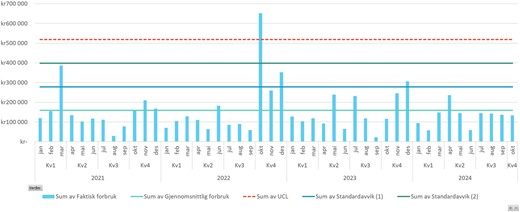
After the removal of budgetary pre-allocations to operational units, the NSCC MU shifted its focus to monitoring actual cost developments using cost control charts (see Figure 1). Intervention occurred only when unusual cost patterns were identified, triggering questions and requests for explanations. These interventions followed simple statistical rules, such as observations exceeding the upper control limit, which represented a threshold for what was considered probable monthly consumption, based on historical trends, or repeated deviations above historical averages. For example, Figure 1 shows cost observations above the upper control limit in Q4 2022, signaling potential abnormalities. This move from ex ante budgetary control to continuous monitoring and exception-based intervention reflects control approaches emphasized in BB literature where traditional budgetary targets are replaced by dynamic performance information and decentralized responsibility (Bogsnes, 2016; Østergren and Stensaker, 2011; Becker et al., 2023).
Relative performance evaluation: transparency and internal benchmarking
Those cost control charts were used to make monthly aggregated reports for the NSCC director. They would also be used by the NSCC MU during their regular meetings with managers of NSCC operational units (OUs). In those meetings, this cost information was utilized to discuss spending at each unit, mostly in terms of relative performance evaluation through internal benchmarking against the cost information of other units (with this information being transparent but anonymized at the level of individual OUs). As one manager of an operational unit stated:
For example, [I might be asked] “Why have you have spent so much more money on course activities than other departments [NSCC units]?” and that kind of thing. There could have been a reason for that, but it had to be a good reason. I feel that we have a conscious, learning-based approach to it. It is in no way irresponsible – the finance department [NSCC MU] has very good control and close follow-up.
Team-based forecasting and dynamic resource reallocation
These meetings between managers from the NSCC MU and the NSCC OUs also serve to update forecasts for cost levels (including salary expenses). By working together in an interactive process, they can jointly estimate the financial consequences of potential developments. NSCC MU prepares rolling 12-month forecasts for operational expenses, as well as rolling forecasts for the next two years concerning staffing needs (including how these needs may affect personnel costs and estimated waiting times). If some units are forecasting that they are going to spend less money on operations than originally estimated by the end of the year, the NSCC MU will make these resources available to other units to cover other needs emerging during the forecast meetings. For instance, funds can be diverted from operations to salaries by hiring new advisors in temporary positions if that is needed to achieve the operational units’ goals. As one employee said:
We should not just spend money. We have to spend money on the right things. If we have, for instance, allocated [NOK] 20 million to operations but have only used [NOK] 15 million, we have to spend [NOK] 5 million on the right thing to get the right results.
NSCC respondents indicated that this practice improved flow of operations within units and resulted in less waste of financial resources compared to the previous annual budget-induced “December tsunamis”. The practice allowed for a “more sensible use of funds”, meaning that the funds were used when actually needed and not because their use had already been decided. Moreover, spending decisions were guided by individuals’ values as state employees. As one respondent stated:
I think that you have responsibility for the economic situation in a completely different way. It challenges us as managers of the units. … We think it through perhaps a little more – How do we spend money? What purposes do we want to spend money on? What purposes do we not want to prioritize financially? When you have a pot of money, it is a little easier to say “Yes, we can afford that,” without going through a whole round of values. Is this expedient in relation to the values?
Therefore, the important work of the NSCC MU involved not only cost monitoring but also following up on all units in terms of forecasts for costs and the achievement of KPIs. It also needed to ensure that NSCC, as a budgetary unit in NAV, was on the right track to achieve the annual targets set by the upper level.
Fewer but more strategy-related KPIs
Another important change was the revision of the whole target-setting system based on the KPIs. A review of NAV’s annual reports indicates that, over time, NSCC has struggled with how to deploy call center resources effectively in response to highly volatile and unpredictable fluctuations in user demand, as well as how to balance capacity with the quality of services delivered.
Previously, NSCC relied on many KPIs that were only loosely connected to organizational strategy. According to respondents, the primary intention was to regulate advisors’ behavior. However, this approach was found to undermine discretion and trust in frontline employees’ ability to interpret and act on NAV’s strategic goals (Terum and Sadeghi, 2021). Time scarcity was a persistent challenge for advisors, revealing a mismatch between available time and performance expectations.
Importantly, the number of users handled did not necessarily reflect advisors’ actual workloads, as cases varied substantially in complexity and required different work methods (Terum and Sadeghi, 2021). This made standardization difficult and created resource challenges that could not be resolved through detailed input controls. As trust in employees increased, and greater discretion was delegated to operational units, the focus of KPIs was significantly revised. Of the 59 KPIs used in 2015, only 14 remained by 2017 (Robertsen and Eiden, 2020), with most input-oriented indicators removed and emphasis placed on outputs and outcomes.
The remaining KPIs were clearly aligned with three strategic areas: 1) availability, 2) quality, and 3) effectiveness of user meetings. Availability was measured through average response time to a user call (KPI target: under five minutes), although waiting times fluctuated considerably across years (e.g. 5.37 min in 2018, 3 min in 2019, and 9.5 min in 2022, as stated in NAV annual reports). Quality was assessed through user satisfaction and case resolution degree, measured via SMS surveys following meetings (targets: 90% satisfaction and 85% case resolution). Effectiveness was measured by the distribution of interactions with users across service channels (KPI target: 65% of the volume by phone; 25% by chat, 10% by written feedback). With increased digitalization, automated solutions started to absorb simpler cases, and remaining phone-based cases became increasingly complex.
Another important change was the shift from individual-level KPI measurement to aggregated (group-level) measurement, which fostered stronger team orientation. This meant that OUs and groups of teams within the OUs were given information to assess the results on their own, improving internal transparency.
The changes in the KPIs had some important effects. For instance, employees became more aware of the importance of achieving a better trade-off between user meetings’ efficiency and satisfaction. As one respondent noted:
We look at efficiency as one thing and customer satisfaction as another. There is not always a correlation between long conversations and high customer satisfaction, even though one might think that is the case.
One consequence of the shift to measuring outcomes rather than inputs and outputs was that employees felt more empowered and perceived improved ownership of their individual tasks. For instance, they expressed concerns about whether and how they could improve the quality of conversation techniques with users. As one respondent explained:
Sometimes we get complaints [from users] that say that the … advisors they spoke to did not have time to listen and kept interrupting, and that was considered bad service.
Similarly, empowered frontline employees felt they were trusted and had the discretion to put their own mark on work to be done. This created a positive atmosphere, as described by one employee:
Even though there are some routine tasks that need to be done, I have full … freedom to be creative, and to come up with new and better solutions for the tasks given to me. This gives me a lot of motivation when I can put my own mark on the job.
Leadership as a buffer between trust and anxiety
Another important change was related to the strengthening of leadership at all levels. As described above, managers of OUs perceived the removal of annual resource pre-allocation as a declaration of trust. However, they also expressed a sense of increasing anxiety. As one respondent from the NSCC MU explained:
They [managers of NSCC OUs] are often unsure of what the “good” activities are. They often ask us when they talk to us … but we do not say “yes” or “no”. Instead, we discuss whether it will result in goal achievement and whether they are good activities. They think it is difficult because they have to defend the choice they make, while previously they could refer to the budget.
The fact that NSCC MU had good oversight over spending and KPIs created a “safety net”, as managers of OUs had the opportunity to defend their level of spending when benchmarked against other departments.
A “safety net” was established between managers and employees within the operational units (OUs). While employees were granted greater trust and discretion, the shift of decision-making responsibility to individuals increased uncertainty about what constituted the “right” decision, particularly in complex situations.
For managers, approving overtime previously involved checking costs against predefined personnel budget ceilings. Under the new practice, managers must exercise judgment about when overtime is necessary, balancing financial considerations with employee well-being and statutory obligations. Similarly, hiring decisions were no longer tied to specific budget lines but instead required assessments of overall staffing needs and organizational priorities, making managerial judgment more central than adherence to budget ceilings. For employees, participation in courses and conferences was an important competence-building activity. Under the former budgeting approach, such participation was constrained by following a training budget, prompting questions such as: “Do we have budget for this?” or “How much can we spend on competence activities this quarter?” In the current system, employees may decide to pursue such activities and simply inform their leader, rather than request explicit permission. Another example is decisions related to “welfare” spending—such as organizing a summer gathering. Under the previous model, unit managers and employees consulted the dedicated “welfare/event” budget line and spent within that ceiling (e.g. “we have X NOK available for the summer event”). Now, both managers and employees must assess the necessity of proposed expenditures and consider cost alternatives rather than relying on a predetermined budget line. As one interviewee noted: “If they wanted to hire a comedian, … [they should ask about] the cost and whether we should spend on that; they might choose something cheaper.”
Overall, whereas budget pre-allocation previously defined clear decision boundaries, the new approach requires spending decisions to be evaluated against purpose, values, and strategic alignment, increasing the need for judgment and introducing uncertainty about what level of spending is “reasonable”.
This uncertainty created a need for a psychological safety net that allowed employees to consult with and maintain close communication with their managers when faced with difficult issues. Paradoxically, the greater trust in employees led to more frequent daily interactions between managers and employees, with both working together to solve emerging problems. This, in turn, placed pressure on managers to be available to employees, and to avoid being too busy and inaccessible. The OU managers explained:
We do not want our employees to feel as if they have been thrown off a cliff. We want them to have autonomy to make their own decisions but, at the same time, know that the team and the leaders are there to back them when necessary.
If I have an employee who is struggling with a task, I will say that we need to work together to improve and have closer follow-up. I adapt according to where they are. If we have a newly hired individual, I follow up more.
In some situations, the advisors’ work could be very demanding because they experienced difficult challenges from users, including threatening behavior towards advisors or threats of self-harm or suicide. This meant that advisors needed both competence in handling such situations and continuous support from their leaders. As one manager said:
I perceive that our employees have an internal drive for the work they do. I judge it based on the quality they deliver. I see their smiles. I see it in the interest they have in sharing and learning, and in the way they step in during demanding periods. This would never happen if they did not have this internal motivation.
In this sense, trust at NSCC was not “blind” but combined with structured oversight. Managers conducted regular follow-up through bimonthly reviews of group-level KPIs (e.g. user satisfaction and waiting times), post-complaint dialogs with individual employees, and ongoing informal conversations in daily work. These interactions emphasized clarification, reflection, and coaching rather than compliance enforcement, resembling enabling and trust-but-verify forms of supervision described in the literature, where autonomy in task execution is preserved while performance is periodically reviewed (Johansson-Berg and Wennblom, 2023; Vosselman and Van der Meer-Kooistra, 2009).
Follow-up intensity varied according to employee experience, task complexity, and signs of strain. Service complaints, for example, triggered individual developmental dialogs, sometimes involving work-method specialists. Leaders also stressed their proximity and availability, as mechanisms for early problem detection (e.g. open-door interaction and informal conversations). Group-level KPI monitoring also functioned as an organizational signal, prompting reflection and dialog at team level rather than individual evaluation. Overall, these practices illustrate how positively framed oversight controls operated in practice: quantitative monitoring (KPIs) was combined with qualitative interaction (coaching, dialog, and support), producing a continuous but non-coercive form of supervision consistent with trust-based management and the complementarity view of trust and control (Woolthuis et al., 2005; Vosselman and Van der Meer-Kooistra, 2009; Siverbo et al., 2024).
Summary of findings
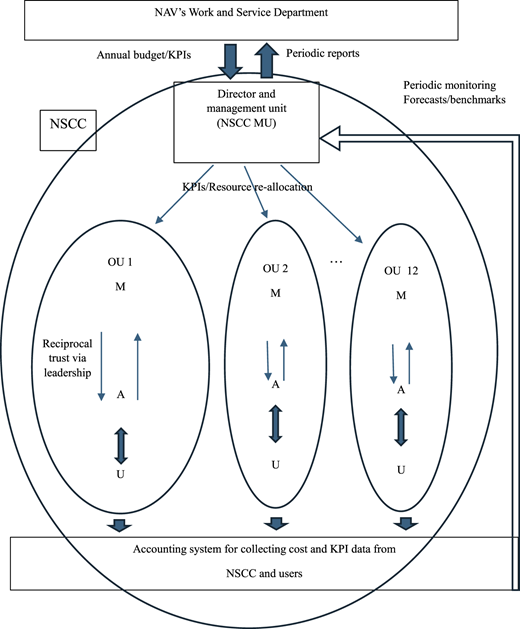
Figure 2 provides an overview of the new MCS design in NSCC, which is inspired by BB principles. As indicated, the newly introduced BB-inspired MCS configuration aligns with NSCC's trust-based management objectives. The cessation of annual pre-allocation to NSCC OUs was not the primary objective but, rather, an initial move toward redefining the dynamics between trust and control. This transition resulted in trust being conceptualized more broadly, as empowerment embodied a “chain of trust”, extending from top management to employees within each OU. With these changes, the management and leadership dimensions become more aligned.
Importantly, enhanced trust did not eliminate the need for accounting controls but transformed their role. Rather than constraining behavior, accounting controls became tools for benchmarking, transparency, and learning, overseen by the NSCC MU. The revised MCS did not replace controls but recalibrated them to support trust-based management. NSCC MU played a key coordinating role, linking empowered OUs to departmental budget allocations through cost-control charts, KPI monitoring, forecasting, and dynamic resource reallocation. These practices align with BB literature that emphasizes dialog, learning, and continuous improvement (Bogsnes, 2023; Bourmistrov and Kaarbøe, 2013).
In this sense, trust did not mean blind trust. The new accounting control framework facilitated close connections among what the NSCC was expected to do on the aggregated level, its available resources based on annual budgets and KPIs, and how OUs could deliver on those expectations in the most efficient way. Budgetary control shifted away from internal resource pre-allocation toward greater employee discretion, supported by ongoing cost monitoring and forecasting. However, increased discretion also generated employee anxiety, requiring active leadership support. Annual budgets ceased to function as coercive mechanisms and, instead, provided an enabling framework for expected performance. Improved digitalization further shaped these dynamics by shifting routine tasks away from employees and increasing case complexity.
Discussion
The research question addressed in this paper is How does a Beyond Budgeting–inspired reconfiguration of accounting controls support trust-based management practices in a public-sector organization operating under annual budget constraints? In the following, we discuss our major findings in relation to extant literature.
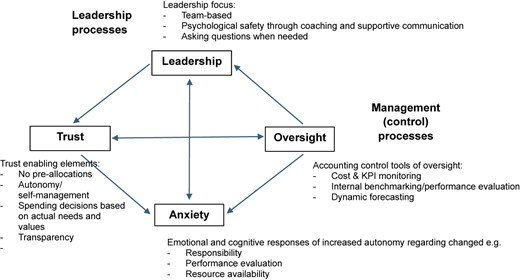
We have three main findings: (1) the emergence of oversight controls in place of operational budgets, (2) the anxiety produced by increased autonomy, and (3) the role of leadership practices in buffering that anxiety and enabling trust–control complementarity. Together, these findings speak directly to the trust–control literature by illustrating how trust and accounting controls can become complementary through the joint role of oversight controls and leadership practices. Figure 3 summarizes our findings and how those positively framed controls were configured in the case of NAV’s NSCC using its own interpretation of the Beyond Budgeting model.
The model shows that trust-based management introduced in a public-sector department operating under an annual budgetary resource allocation regime requires a delicate balance between trust and accounting controls, moderated by the mobilization of leadership. The model in Figure 3 has two important dimensions. From an accounting control perspective, empowerment through trust must be complemented and balanced by systematic and periodic monitoring of costs, KPI achievement, and forecasting processes. The combination of these accounting-based processes constitutes what we label oversight controls.
This extends the trust–control literature (Das and Teng, 1998; Dekker, 2004) by showing that increased autonomy not only strengthens trust but also generates employee anxiety, which must be actively managed for trust–control complementarity to be sustained.
Redesigning control in trust-based management
Our findings contribute to the BB literature by showing that accounting controls are not eliminated but redefined within trust-based management models. While early BB contributions emphasized the abandonment of traditional budgets and tight ex ante controls (Hope and Fraser, 2003; Østergren and Stensaker, 2011; Bogsnes, 2016), more recent work conceptualizes BB as a coherent management model, comprising alternative control forms across key management processes (Becker et al., 2023). These alternatives span a continuum from centralized budget pre-allocations to decentralized, trust-enhancing coordination mechanisms. Our study aligns with this perspective (Becker et al., 2023) by demonstrating how accounting controls can be repositioned as oversight-based controls that support distributed decision-making while maintaining organizational coherence.
Rather than addressing a fragmented debate on trust-based control, the case illustrates how oversight controls are enacted in practice under conditions of uncertainty. Traditional budget pre-allocations to operational units were abandoned and replaced by trust- and values-guided spending logic. At the same time, accounting information retained a central role in monitoring performance, supporting sensemaking, and legitimizing managerial action. This highlights how oversight controls correspond to alternative control designs discussed in the BB literature, while also revealing practical tensions associated with their implementation.
Importantly, the findings show that the effectiveness of oversight controls depends on their co-evolution with leadership practices. Consistent with the BB view of a coherent management model, in which management processes and leadership principles mutually reinforce each other (Lindsay and Libby, 2007; Becker, 2014; O’Grady and Akroyd, 2016; Bogsnes, 2016; Becker et al., 2023), increased operational autonomy generated uncertainty and anxiety related to responsibility, performance evaluation, and resource availability. Leadership practices became a critical buffering mechanism, with managers engaging in intensified sensemaking, coaching, and supportive communication. Leadership thus complemented rather than replaced control, enabling trust–control complementarity to stabilize over time.
The change process observed was iterative rather than linear. Initial modifications to control practices exposed limitations in formal systems and prompted adjustments in leadership behavior. These leadership responses helped normalize uncertainty and reinforce trust, allowing oversight controls to function as intended. This suggests that alignment between control systems and leadership practices emerges through experimentation and adaptation rather than ex ante design. A limitation of the study is that it captures only how MCS design facilitates this interaction, leaving future research to understand the trajectory of change and the nature of self-reinforcing processes involved.
By showing how oversight controls and enabling leadership co-evolve under pressure, this study explains how BB works in practice. Trust-based management requires both redesigned accounting controls and leadership that addresses the emotional and cognitive challenges of increased autonomy, enabling trust-enhancing systems to remain workable under uncertainty. Against this backdrop, the following sections elaborate on how oversight controls and leadership practices were configured in practice in the NSCC case.
How oversight controls enable trust
The NSCC case shows that the shift toward trust-based management did not eliminate accounting controls but fundamentally changed their meaning and signaling effects. Previously, annual budgets and output-oriented KPIs were negatively framed as signals of distrust, associated with micromanagement and rigid expectations. The move toward trust-based management, by contrast, signaled positive expectations regarding employees’ competence and judgment (Christ et al., 2008). Accounting controls were reframed as oversight mechanisms aligned with empowered employees, emphasizing outcomes to ensure alignment with overall organizational targets (Vosselman, 2016).
This reflects a nuanced balance between trust and control, supporting the complementarity rather than substitution view of their relationship (O’Neill, 2002; Vosselman and Van der Meer-Kooistra, 2009). Abandoning annual budget pre-allocations increased autonomy for OUs, while the NSCC MU retained responsibility for cost monitoring, KPI review, and periodic assessment of self-management outcomes. Comparative performance information enabled OUs to oversee their own costs and results, while both the MU and OUs used performance data to forecast progress toward targets set by higher organizational levels.
Three forms of oversight emerged: 1) MU oversight of OUs through cost and KPI monitoring, 2) OUs' peer oversight via internal benchmarking and transparency, and 3) joint forecasting by the MU and OUs. These positively framed oversight controls reinforced trust, providing evidence of trustworthiness while enabling effective self-management (O’Neill, 2002; Vosselman and Van der Meer-Kooistra, 2009).
Navigating the trust–control tension
The NSCC case shows that empowering employees through increased discretion and the removal of resource pre-allocation can raise anxiety among organizational members. Psychological research suggests that employees experience anxiety when structures supporting predictability and controllability are weakened (Ma and Kay, 2017). Budgetary pre-allocation previously provided such structure. As NSCC adopted a trust-based system, unit managers and employees faced greater uncertainty in everyday decisions. Since trust is a psychological state based on positive expectations of others’ ability, benevolence, and integrity (Mayer et al., 1995), heightened anxiety required active countermeasures (as shown by the arrow from trust to anxiety in Figure 3).
One key response involved unit managers adopting stronger leadership roles to foster psychological safety (the arrow from anxiety to leadership in Figure 3). Leadership activities and reductions in employee anxiety were closely linked to the use of oversight controls. Regular, transparent team-level KPI information helped reduce uncertainty and supported independent decision-making. Outcome-focused KPIs, combined with oversight, contributed to trust-building but also required managers to assist employees in navigating complex choices, thereby strengthening confidence and decision quality (Christ et al., 2008).
Overall, leadership and oversight jointly enabled a balance between trust and control. Employees were expected to act in good faith toward organizational goals, while managers reciprocated through support and guidance (Hasche et al., 2021). This illustrates that trust and control are dynamic and context-dependent (Mahama and Chua, 2016), requiring continuous adaptation to task complexity and service demands.
Beyond budgeting in the public sector
An important implication of our findings concerns how BB implementation or, more precisely, claims about the need for “budget abandonment” should be understood in public-sector contexts (Wällstedt and Almqvist, 2017). Drawing on the emic–etic distinction (Geertz, 1973), emic accounts capture actors’ own understandings and experiences of organizational practices, while etic analyses reflect the researcher’s analytical interpretation. From an emic perspective, actors in the case organization experienced the removal of operational budget pre-allocations as a form of budget abandonment. Managers and employees described a clear break with prior budget-based coordination and control at the operational level, emphasizing increased discretion, flexibility, and reduced reliance on fixed spending limits in day-to-day decision-making. In this sense, budgeting was no longer experienced as a guiding or constraining device in operational work.
From an etic perspective, however, full budget abandonment cannot be fully claimed. Annual budgets continued to exist at higher organizational and political levels, serving essential accountability and legitimacy functions typical of public-sector organizations. Rather than the elimination of budgeting altogether, the case reflects a partial and level-specific displacement of budgeting practices, where budgeting ceased to function as an internal coordinating mechanism at the operational level but remained intact at higher levels, functioning for accountability purposes.
This emic–etic distinction helps reconcile actors’ experiences of budget abandonment with the enduring structural role of budgets in public-sector organizations. It highlights that budget abandonment in such contexts is necessarily conditional and context-dependent. While public organizations may not abandon budgets for accountability and reporting purposes toward the directorate, they may fundamentally alter the role budgets play in their management control systems by decoupling operational decision-making from budgetary pre-allocations. Recognizing this distinction allows us to avoid overstating claims of budget abandonment while preserving the empirical insight that budgeting can lose its coordinating function in trust-based, BB–inspired management systems.
Contributions
Our study makes three key contributions to management accounting literature. First, we conceptualize oversight controls. The NSCC case shows that moving away from annual budgets as pre-allocation tools does not imply abandoning accounting but, rather, redesigning it into periodic, transparent, and comparative forms of control. Oversight controls included cost control charts, dynamic forecasting, and benchmarking across units, enabling accountability without prescribing detailed resource pre-allocations. This extends the BB literature (Hope and Fraser, 2003; Østergren and Stensaker, 2011; Bogsnes, 2016; Becker et al., 2020), which has largely emphasized the advantages of abandoning budgets, by theorizing accounting solutions suited to contexts where accountability requirements persist. It also contributes to research on enabling versus constraining uses of management accounting (Ahrens and Chapman, 2004; Jordan and Messner, 2012) by showing how accounting can support discretion and trust when enacted as oversight rather than policing. This study specifies how accounting can be used as a trust-supporting rather than trust-eroding mechanism.
At the same time, the study contributes to public-sector budgeting literature by demonstrating how budget-based control systems can be adapted to trust-based management (e.g. Sicilia and Steccolini, 2017; Lepori and Montauti, 2020; Johansson-Berg and Wennblom, 2023). In NSCC, annual budgets ceased to function as internal coordination mechanisms and were replaced by oversight controls, while remaining in place at higher levels for political accountability. The study extends budget literature by showing that structured flexibility may also be achieved through the deliberate removal of internal budget pre-allocations, rather than through informal adjustments within budgeting practices (Lepori and Montauti, 2020).
Second, we advance the trust–control literature (Das and Teng, 1998; Dekker, 2004; Ma and Kay, 2017; Edmondson, 1999) by highlighting the role of leadership in buffering anxiety. While prior research has debated whether trust and control act as substitutes or complements (Das and Teng, 1998; Dekker, 2004), our study shows that they can be mutually reinforced under specific conditions. Granting more empowerment enhanced employees’ sense of autonomy and resource efficiency under BB-inspired MCS. However, removing detailed budgets also generated anxiety, as employees and managers became uncertain about expectations and performance standards. Without intervention, such anxiety risked undermining the benefits of increased discretion. We show that leadership practices – such as coaching, active support, and communication – functioned as a buffering mechanism that stabilized trust and enabled oversight controls to operate effectively. This contribution connects emotions and organizational systems (Ma and Kay, 2017) and engages with Edmondson’s (1999) concept of psychological safety. Leadership thus emerges as the mediating mechanism through which trust and accounting controls become complementary rather than contradictory.
Third, we contribute to understanding how BB is translated into the public sector. While BB research has mainly focused on private-sector firms seeking flexibility and performance improvements (Hope and Fraser, 2003; Østergren and Stensaker, 2011; Bogsnes, 2016), public organizations face institutional and political accountability requirements that limit the abandonment of annual budgets. By identifying oversight controls, our study shows how BB principles can be implemented at lower levels (Modell, 2012), reinforcing trust-based management in public sector organizations (Siverbo et al., 2024; Wällstedt and Almqvist, 2017; Elmersjö and Sundin, 2021). BB-inspired practices can be introduced at operational levels while retaining annual budgets at higher levels for accountability purposes. This supports earlier criticisms that cascaded budget controls are incompatible with trust-based management (Siverbo et al., 2024; Wällstedt and Almqvist, 2017) and extends them by showing how excessive operational-level controls can be replaced by BB-inspired MCSs. In doing so, the study connects previously fragmented evidence by demonstrating both the design and use of trust-based management control systems in a public agency.
Together, these contributions show how oversight controls and leadership enable trust-based management in public organizations, balancing autonomy and accountability while explaining how accounting, trust, and leadership interact during organizational change.
Limitations and suggestions for further research
The study has several limitations. First, transferability may be constrained, as the case focuses on BB practices in NAV’s call centers, which may not represent other public-sector organizations, although the ways of balancing annual budget constraints and trust-based management may still be relevant elsewhere. Second, the fact that data were collected by master students under the authors’ supervision, could have limited in-depth ethnographic engagement, including emotional closeness and reflexive sense-making typically associated with experienced ethnographic research. This may have affected the granularity of the data and should be borne in mind when interpreting the findings. Finally, the data may be biased because interviewees were preselected by management, potentially presenting a more positive picture of organizational practices. Future research could therefore compare trust-based management models across countries and sectors, examine their long-term effects on organizational performance and employee experiences, and analyze how such control systems evolve over time in the interplay between trust, accountability, and efficiency. Practical implications could be to focus more on how management and leadership are aligned (see, for example, Becker et al., 2023).
We thank Hilde Kristiansen from NAV for making the data collection possible. We also thank Linda March from The Good English Company for language editing. We would also like to thank two anonymous reviewers and the guest editor of the JPBAFM for valuable comments.
Appendix 1
Supplementary material – Interview guides
2.1 Leaders
Leadership: How would you describe your leadership style? What is your perception of employee satisfaction with regard to the conditions they work under today? How do you experience your ability to guide your employees? What is your role in relation to this? How much freedom do employees have to make their own choices and decisions based on their own assessments? How is employee satisfaction in this department? Where do you score high or low? Have there been any changes in recent years? Do people feel they have the competence they need to perform their tasks?
Budget: What is the role of the budget in the department? How has cost awareness changed in recent years? Do you have examples of when the budget has worked and examples of when it has been a hindrance? What strategies are used to retain control when the operating budget is abandoned? What do you do to prevent high consumption and keep costs low?
Performance: How do you measure performance in the workplace (both financial and non-financial)? Has this changed in recent years? Why is this measured? To what extent is the individual employee measured on performance?
Qualitative assessments of what is being evaluated: How do you think your leadership style contributes to increased performance and motivation among employees? What do you consider the biggest change in the company/department in the last five years? What was the reason for this change? How has this change affected your tasks as a leader and your leadership style?
2.2 Advisors
Leadership: How would you describe your leader’s leadership style? How satisfied are you with the conditions you work under today? How much freedom do you have to make your own choices and decisions based on your own assessments? How do you perceive employee satisfaction in this department (both your own and your colleagues’)? Where do you score high or low? Have there been any changes in recent years?
Budget: What is the role of the budget in the department? How would you say cost awareness has changed in recent years? Do you have examples of when the budget has worked and examples of when it has been a hindrance? What strategies are used to retain control when the operating budget is abandoned? What do you do to prevent high consumption and keep costs low?
Performance: How do you measure performance in the workplace (both financial and non-financial)? Has this changed in recent years? Why is this measured? To what extent are you, as an individual employee, measured on performance? How do you think your leader’s leadership style contributes to increased performance and motivation among employees? What do you consider the biggest change in the company/department in the last five years? What was the reason for this change? How has this change affected your tasks?