


This paper aims to investigate the relationship between management control (MC) systems (MCS) and strategy processes within the context of the Dutch central government. By examining types of organisational learning, it seeks to explain the role of MC practices in the implementation and/or development of policy strategies by the Dutch ministries.
A multiple case study was conducted to gain in-depth understanding of the design and use of MCS within ministries of the Dutch central government. Using the analytical framework of Pfister et al. (2023) and Simons’ (1995) levers of control MC framework, three research questions were defined, corresponding to three analytical levels, including the descriptive, analytical and explanatory levels.
The results show that MCS were mainly used to control the implementation of organisational strategy. This mainly involved the use of feedback mechanisms to facilitate single-loop learning, which offered limited space for the development of strategies.
This paper contributes to the MC literature by increasing the conceptual understanding of the relationship between MCS and strategy in the public sector in general and in the public policy context in particular. Ministries are responsible for policy and legislation that affect citizens and organisations, making research into strategy implementation and development both practically and academically important.
1. Introduction
Since the end of the last century, much attention has been paid in management control (MC) literature to the relationship between MC systems (MCS) and strategy. Various studies have shown that there is a two-way relationship, meaning that the MCS both impact on, and are affected by strategy (Simons, 1995; Kober et al., 2007; Langfield-Smith, 1997, 2005). This relationship can be analysed by the type of learning MCS facilitate. MCS are considered as process-based tools that emphasise issues such as dialogue and interaction around the use of MCS to support the emergence of new strategies. By identifying deviations between set goals, actions and the organisational strategy, learning mechanisms can be triggered. Therefore, learning has a strategic character as it affects the organisation’s ability to identify, react and adopt to changes in the environment. Despite great interest in this issue in the MC literature, studies within the public and not-for-profit sectors are so far under-represented in this area (Kober et al., 2007; Kominis and Dudau, 2012).
MC covers a broad strategic and operational spectrum of management practices that direct, influence and control the organisation in order to align it with its common goal and objectives (Pfister et al., 2023). MCS can be used for this purpose in formal and informal ways. They can help implement intended strategies, which are planned but not always realised (Langfield-smith, 1997). MCS can support this process by serving as “feed-back mechanisms” and “feed-forward mechanisms” between objectives, actions and organisational strategy, thereby facilitating different types of learning including single- and double-loop learning (Ferreira and Otley, 2009; Kominis and Dudau, 2012).
Public sector organisations prefer a formal, structured and cyclical process for formulating strategies (Tucker and Parker, 2013). This usually involves the use of formal control systems to generate budgetary, financial, accounting and performance information. However, formal mechanisms are considered poor mobilisers of learning as they function in cybernetic loops, which facilitates single-loop learning at best (Kloot, 1997; Batac and Carassus, 2009), resulting in little room for double-loop learning and the emergence of new practices. This contrasts with their desired ability to detect and interpret societal developments, allowing existing strategies to be continuously reviewed for their relevance and ability to provide solutions for current and new societal issues (Moyson et al., 2017). Together, these observations draw attention to the central and critical role of control mechanisms and strategy in public sector organisations.
The relation between MCS and strategy has been researched within the public sector among medical centres (Kober et al., 2007), not-for-profit organisations (Tucker and Parker, 2013) and local authorities (Ferry et al., 2017). In addition, the contribution of accounting information in relation to strategy implementation has been studied in hospitals (Abernethy and Brownell, 1999; Naranjo-Gil and Hartmann, 2006). Moreover, the link between MCS and organisational learning within municipalities in conditions of uncertainty and change has been studied by Kloot (1997), and Batac and Carassus (2009). Studies on ministries at the central government level are missing so far. This is remarkable for several reasons. First, ministries develop policy and legislation that affect citizens and organisations. The considerable societal and economic impact of these organisations makes research into how strategies are developed and how control is exercised over their implementation and development of practical importance. Second, ministries work with highly formalised and bureaucratic planning processes in the formulation and implementation of strategies. In addition, such organisations benefit considerably by thorough learning from the execution of intended strategies and identifying new societal developments in order to adapt existing strategies and develop new ones to respond to these developments.
Therefore, this paper aims to investigate the relationship between MC systems and strategy processes. By analysing types of organisational learning, it seeks to explain the role of MC practices in the implementation and development of policy strategies. The context in which this research takes place is that of the ministries of the Dutch government. In the Netherlands from 2006 onwards, a new function, so-called policy control, has been implemented. Its goal is to improve the effective allocation and control of public resources in order to increase the societal added value of public spending (Fitz Verploegh et al., 2023).
In this paper, based on the analytical framework of Pfister et al. (2023), we distinguish three levels of analysis: the descriptive level, where we systematically describe the MC practices; the analytical level, where we analyse the use of control mechanisms; and the explanatory level, where we reflect on how the MC systems contribute to various forms of learning and therefore contribute to either the implementation or development of policy strategies. For the analytical level, we use the lens of Simons’ (1995) levers of control (LoC) framework as a method theory. Our analysis reveals several findings. First, formal control mechanisms are used within the budget cycle to monitor the implementation of the strategy. Secondly, the interactive use of formal control mechanisms was organised via standardised consultation structures linked to the budgetary process. Third, due to structures and content of the budget documents for monitoring strategy implementation, the incentive to review existing policy plans and their contribution to strategic ambitions seems to be ignored. As a result, the opportunity to allow strategies to emerge is insufficiently utilised.
This paper proceeds as follows. The next section reviews the literature on MCS and strategy in the public policy context. This section concludes with the research questions that will be used to present the research findings. In the following sections, we will elaborate on the research questions and corresponding analytical lenses.
2. Literature
2.1 Strategy and MCS
2.1.1 Strategy
The construct of strategy has been conceptualised and operationalised in various ways in the literature (Langfield-Smith, 1997, 2005). At its core, strategy is “a careful articulation of objectives and plans for achieving these objectives”, which suggests “a highly rational, systematic approach involving formalised procedures that integrate decision-making throughout the organisation to achieve desired outcomes” (Chenhall, 2005, p. 11). When analysing strategy, a distinction can be made between studies that use a “content-based” approach and studies that examine strategy in a “process-based” way (Chenhall, 2005). The content-based approach focuses on the product of the strategy process, while the process-based approach focuses on identifying and analysing ways in which strategy is formulated and implemented. Regarding the process-based approach, a distinction can be made between “intended” strategies and “emerging” strategies (Langfield-Smith, 1997). Intended strategies are considered a declaration of intent that is planned and implemented proactively, consciously, formally and rationally. In contrast, strategy development can be seen as adaptive, incremental and spontaneous, arising in response to unpredictable external threats and opportunities, and learning from insights gained in practice. The result of this process is called an “emerging” strategy. The intended/emerging continuum of the strategy formulation process serves in this study, as in many others, as a useful taxonomy for analysing the relationship between strategy and MCS within the ministries and will therefore form the analytical basis for our research.
2.1.2 MCS
In this study we consider MCS as “formal, information-based routines and procedures managers use to maintain or alter patterns in organisational activities” (Simons, 1995, p. 5). This definition fits well in the context of public sector organisations characterised by their highly formalised and bureaucratic planning processes for the formulation and implementation of strategies. Although this definition focuses on formal control mechanisms, we acknowledge that alongside formal control mechanisms, informal mechanisms are also prevalent that can complement formal mechanisms (Langfield-Smith, 2005; Pfister et al., 2023).
MCS encompass both operational and strategic issues. As such, MCS have two complementary and interdependent functions (Simons, 1995). They can be used to exert control over the realisation of “intended strategies”. In contrast, MCS can be used to facilitate “the emergence of strategies” that stimulates the search for innovations and response to unpredictable developments by learning from insights gained in practice. As such, control mechanisms are not only concerned with ensuring that planned strategies with predetermined objectives are realised but also have the freedom to innovate in order to realise intended objectives (Kloot, 1997; Tessier and Otley, 2012). These functions can be further explained by considering the type of learning that MCS enables.
2.2 The relationship between MCS and strategy
This study investigates the relationship between MCS and strategy processes, by examining types of organisational learning MCS enable. We use Simons’ (1995) LoC framework for this as it integrates a feedback mechanism between goals, actions and organisational strategy, thereby facilitating learning. This bottom-up perspective explicitly allows strategies to emerge from patterns of action and consequently enables MCS to re-influence strategy by learning from insights gained (Simons, 1995). As noticed by Argyris (1995), learning involves identifying and correcting errors, enabling organisations to implement their objectives and standards (single-loop or adaptive learning) and to change these standards and objectives (double-loop or generative learning). In doing so, learning has a strategic role to play as it affects their ability to identify, react and adopt to changes in the environment. In the public policy context, learning refers to “a deliberate attempt to adjust the goals or techniques of policy in response to past experience and new information” (Hall, 1993, p. 278). As the learning process is often not clearly defined, literature often refers to the products of learning, namely “adaptive learning” and “generative learning”. In this study, we therefore categorise “learning” into these two products. In doing so, we consider policy learning at the meso-level (Moyson et al., 2017).
2.3 Types of organisational learning
MCS have two complementary and interdependent functions (Simons, 1995). They are used to exert control over the realisation of organisational goals and also to enable employees to search for opportunities and solve problems. Regarding the first aspect, diagnostic and boundary control systems focus on critical performance variables that include monitoring and feedback systems. They also contain values, processes and procedures that outline how objectives should be realised. To do this, they include a set of controls that oversees “what the organisation must do well to achieve its strategy” (Tessier and Otley, 2012, p. 180). Regarding the second aspect, belief and interactive systems generate positive and inspiring forces for learning and innovation, allowing strategies to adapt constantly to changes in the environment. To achieve this, they include a set of controls to “monitor whether the organisation has the proper strategy to ensure the attainment of its vision” (Tessier and Otley, 2012, p. 180). As such, they “can provide a check for strategic validity” and are able to “signal the need to review strategies” (Ferreira and Otley, 2009, p. 274). According to Simons (1995, p. 7) “these four levers create the opposing forces – the yin and yang – of effective strategy implementation”. Together, these control mechanisms can create and interplay between positive and negative forces. These cause a dynamic tension between opportunistic innovation and predictable goal achievement (Simons, 1995). Therefore, the power of the levers does not lie in how each is used alone but how they complement each other when used together.
2.3.1 Adaptive learning and MCS – feedback
Diagnostic control systems and interactive control systems together guide the monitoring of the implementation and formulation of strategy (Simons, 1995). Diagnostic systems focus on the implementation of intended strategies by communicating desired organisational outcomes and setting specific objectives. Belief systems formally communicate the core values, broad goals and strategic directions of the organisation with the intention of promoting commitment to the organisation’s core values. Boundary control systems provide frameworks and guidelines regarding operational procedures on how objectives should be realised. The design of diagnostic systems is based on the basic feedback control model, meaning that clear strategic objectives are identified and translated into measurable key performance indicators (Kominis and Dudau, 2012). In addition, these systems provide information that can be used to compare performance with predetermined objectives in order to identify exceptions and deviations, thus serving as a tool to track, review and support the achievement of objectives. When this information is used interactively, it can be used to undertake corrective and adaptive actions (Ferreira and Otley, 2009), facilitating single-loop or adaptive learning. This entails “a response to a signal of deviance from a pre-defined course of action that does not question the initial objectives or strategies; it sees the deviance as the product of a deficient operationalization” (Ferreira and Otley, 2009, p. 273). In the public policy context this refers to “instrumental learning which entails lessons about the viability of policy instruments or implementation designs” (May, 1992, p. 332).
2.3.2 Generative learning and MCS – feedforward
If the collected information is used to question the rationality of existing strategies and assess whether the current strategies are suitable in a particular environment, MCS can influence the perception of the suitability of existing strategies. In the literature, this is referred to as a feed-forward mechanism (Ferreira and Otley, 2009). Information from MCS can be used to enable the organisation to learn from experience, to generate new ideas and to recreate strategies and plans. In doing this, they facilitate double-loop or generative learning. This type of learning is a cognitive learning process that challenges the understanding of the causes of the problem and learning systems that underlie actual goals and strategies, hence their association with feed-forward information flows (Simons, 1995; Ferreira and Otley, 2009). In this way, MCS systems are considered process-based tools that emphasise issues such as dialogue and interaction around the use of MCS to support the emergence of new strategies (Langfield-Smith, 2005; Kominis and Dudau, 2012). Dunlop and Radaelli (2013, p. 599) refer in this context to “the updating of beliefs based on lived or witnessed experiences, analysis or social interaction”. Belief and boundary systems define and communicate the “strategic domain”, meaning that they serve to inspire and guide the search for new opportunities, and to ensure that the search for opportunities is limited to areas considered crucial by managers (Simons, 1995). Via interactive control, managers can get involved in new developments and give more resources and structure to those initiatives with the most potential.
2.4 Management control practices
The LoC framework emphasises the “style of use” of formal control mechanisms. It does not examine which controls are used to support certain strategies (Tessier and Otley, 2012). Pfister et al. (2023, p. 207-210) have made an overview of MC practices that are helpful in analysing the relationship between MCS and strategy. Most fundamental are the “vision and mission”, which are often accompanied by value statements that establish behavioural norms for the organisation. In addition, “strategies and plans” describes how the vision and mission should be realised and what actions organisational units should take to implement a strategy. Here, a distinction can be made between the degree to which the strategy is defined top-down or emerges bottom up. In addition, “operational policies and procedures” such as protocols, formats and checklists can be defined to inform and standardise working methods. In this way, they provide direction and boundaries within organisational units on how objectives should be realised. Moreover, the design and use of “performance measures” provides the means to assess whether and to what extent objectives are released. Usually, financial performance information forms the basis for this, although various studies have found that this type of information is a poor indicator, as it only shows the consequences of past behaviour (Batac and Carassus, 2009). Therefore, non-financial information is needed to determine the extent to which intended objectives are being realised. In this context, performance evaluations can be helpful. Related to this are “information, communication and decision flows”, which includes the way in which managers design, engage in and/or influence information, communication and the decision flow itself. A relevant issue here is which information systems infrastructure is organised and how it is used. Ferreira and Otley (2009, p. 273) compare this infrastructure to the human nervous system, “transforming information from the extremities to the centre and from the centre to the extremities”. In this context, a distinction can be made between feedback information – meaning “information used to enable the undertaking of corrective and/or adaptive courses of action” and feed-forward information – meaning “information used to enable the organization to learn from its experience, to generate new ideas and to recreate strategies and plans” (Ferreira and Otley, 2009, p. 273).
2.5 The use of the LoC framework in the public sector context
Simons’ (1995) LoC framework has been successfully applied to MC research in the public and not-for-profit sectors. Studies by Abernethy and Brownell (1999) and Naranjo-Gil and Hartmann (2006) show that budgets can contribute to the strategy implementation of hospitals and that the financial background of decision-makers influences the degree to which financial and non-financial information are used interactively. Kober et al. (2007) come to the same findings, and state that there is a two-way relationship between MCS and strategy, suggesting that MCS (including budgets) that are used in an interactive manner help facilitate a change in strategy; when a change in strategy occurs, the MCS themselves change to match. However, in their research among medium-sized local public organisations, Batac and Carassus (2009) find that budgets are considered poor mobilisers of learning because they operate in cybernetic loops and rarely challenge goals because they tend to focus on ensuring compliance with regulations. In addition, they observed that the political logic may prevent interactive systems for facilitating learning and strategy development. Further, Kominis and Dudau (2012) and Tucker and Parker (2013) found that the interactive use of diagnostic control systems, such as budgets, was not appropriate within their research context of not-for-profit organisations, as ambitions and objectives were perceived too vague and the relationship between objectives, resources and performance information was unclear and incomplete. Furthermore, according to Kominis and Dudau (2012), the increasing level of uncertainty in today’s policy environment forces governments to actively seek to complement their diagnostic systems of control with more interactive ones.
2.6 Research questions
To summarise, MCS can have a dual function, allowing them to control “intended” strategies and at the same time allow space for strategies “to emerge”. This function can be clarified by the type of learning facilitated by MCS, which is analysed in this study using Simons’ (1995) LoC framework. Learning can be explained by means of two products: “adaptive learning” and “generative learning”. Each type of learning requires its own form of MC practices, which can be summarised as “feedback” and “feedforward” systems. Ministries as public sector organisations benefit from formal, structured and cyclical processes when it comes to formulating and implementing strategies (Tucker and Parker, 2013). However, such formal control mechanisms limit the ability to identify developments that affect organisational strategy, as well as the ability to learn from the implementation of plans. This contrasts with their desired ability to identify and interpret societal developments so that existing strategies can be assessed for their relevance and ability to provide solutions to current and new societal issues. Despite the significant societal impact of ministries, studies into the relationship between MCS and strategy are missing so far. This study aims to fill this gap in the literature by addressing the following research questions that support the systematic operationalisation of the research aim of the study:
How are management control mechanisms organised and used in practice?
How do the management control practices function according to the LoC framework?
What role do management control systems have in the development and implementation of policy strategies?
3. Methods
This paper aims to contribute to the MC literature by increasing the conceptual understanding of the relationship between MCS and strategy, in the public sector in general and in the public policy context in particular. Three research questions were defined that aim to contribute to the systematic analysis of the research results. These were based on the analytical framework of Pfister et al. (2023) and corresponded to the three levels of analysis as defined herein. First, the descriptive level, where we systematically describe the empirical MC practices, including design and use. Its purpose is to describe insights about MC practices in the researched organisations. Second, the analytical level, where we analyse MC practices through an LoC framework. Its purpose is to theoretically elevate the pragmatic insights gained at the descriptive level through the lens of control theory, in this study Simons’ (1995) LoC framework. This framework was considered appropriate as it explicitly focuses on the dual use of MCS to facilitate organisational learning while controlling the achievement of the organisation’s objectives. It is therefore an analytically powerful and frequently used tool for explaining how organisations use their MCS to encourage organisational learning while simultaneously exerting control of how objectives are realised. Regarding the learning aspect, the LoC framework assumes a feedback mechanism between goals, actions and organisational strategy, making it an appropriate tool for analysing MCS practices and learning activities (Martyn et al., 2016). Third, the explanatory level, where we reflect on the relationship between MCS and strategy by exploring whether MCS contribute to strategy implementation or strategy development by analysing the type of learning they enable.
3.1 Research method
A multiple case study was used for this study (Yin, 2003). This qualitative research was considered the most appropriate method to gain an in-depth understanding of the relationship between MCS and strategy. In this way, it was possible to study and compare differences and similarities between various ministries. The Dutch central government had a total of 13 ministries at the time when this research was conducted (December 2020 to March 2021). Of these ministries, we excluded the Prime Minister’s ministry as it is not a policy ministry. From the remaining 12 ministries, we selected a total of seven ministries. The selection was based on general characteristics of the ministries, such as size of budget, policy responsibilities described in the budget, policy area, and the presence of ministry-affiliated agencies. In this way, we sought to generate the broadest possible representation of ministries for this study.
3.2 Data sources
We addressed our research questions by drawing on data collected from interviews with policy controllers, complemented with provided internal documents from informants and a literature review. In line with other studies in the MCS literature, the choice of interviews rather than a longitudinal field study of one or a few ministries was driven by our intention to provide an overview of the MC practices of one group of public sector organisations at a given moment in time. Moreover, policy controllers were interviewed as their role is to improve decision-making on and control of policy plans by providing insight into the relationship between the intended social effect and the planned activities, in order to monitor and evaluate the extent to which the intended effects are achieved (Fitz Verploegh et al., 2023). To do this they use control mechanisms to collect, process and use relevant policy information. Although Simons (1995) focuses on how top managers use control mechanisms in strategic renewal, in this study we applied the LoC framework from the controllers’ perspective. As such, we have not examined the policy controllers’ own use of control mechanisms.
Eleven policy controllers were interviewed during eight interviews. An overview of the departments and job titles of the interviewees is included in Table 1. The interviews with EZK, I&W and OCW were double interviews. The interview consisted of twelve questions (see Appendix 1). The first part dealt with the role and involvement of the policy controllers in each phase of the policy process. The second part focused on the MCS practices. Here, questions were asked about the design and use of control mechanisms based on the LoC framework. The third part of the interview focused on the role of the policy controller in comparison to other controller roles. During the interviews, which took 60–90 min, all themes were briefly explained before the corresponding interview questions were asked. Furthermore, all informants were asked to prepare cases that could be used to illustrate and explain their involvement in the policy cycle by means of practical examples.
Background information about informants
| ID | Ministry | Job title | Years of experience in current position | Years of experience in the central government |
|---|---|---|---|---|
| ID1 | Economic Affairs and Climate Policy (EZK) | policy controller | 10 | 10 |
| ID2 | Economic Affairs and Climate Policy (EZK) | policy controller | 1 | 2 |
| ID3 | Infrastructure and Water Management (I&W) | policy controller | 9 | 21 |
| ID4 | Infrastructure and Water Management (I&W) | policy controller | 1,5 | 3 |
| ID5 | Justice and Security (J&V) | policy controller | 3 | 11 |
| ID6 | Justice and Security (J&V) | Manager policy control | 4 | 27 |
| ID7 | Interior and Kingdom Relations (BZK) | policy controller | 5 | 14 |
| ID8 | Education, Culture and Science (OCW) | policy controller | 2 | 7 |
| ID9 | Education, Culture and Science (OCW) | policy controller | Less than 1 | 17 |
| ID10 | Health, Welfare and Sport (VWS) | policy controller | 5 | 20 |
| ID11 | Foreign Affairs (BHOS) | policy controller | 3 | 28 |
As part of the research process, we asked the policy controllers to provide additional documents about policy control function to validate the interviews. Appendix 2 contains an overview of documents handed in. Three of the seven ministers had such documents available. These documents included descriptions and presentations of the function of policy control, processes and instruments. In addition, an example of the implementation of an annual plan was handed over, in which the relationships between intended core values, instruments, performances and KPIs had been worked out. Four ministries indicated that they did not have a specific description of the role of policy control. They perform the tasks as described in general legislation and had not made a specific translation of this to their own practice.
3.3 Data analysis
The relationship between MCS and strategy is explored by analysing whether MCS contribute to strategy implementation or strategy development by analysing the type of learning they enable. Data analysis was carried out in several steps, with the interview data forming the primary data source, combined with documents supplied by the informants. These documents provided additional contextual and illustrative information in support of our analysis of the transcripts. All interviews were recorded and transcribed. The interview questions were deductively derived from the LoC literature. The interview transcripts and documents provided by the informants were inductively coded in two steps, open coding and axial coding (Corbin and Strauss, 1990). These materials were also used to highlight relevant texts and quotations. We assigned a conceptual label to events, actions and interactions, which were then categorised. The categories were then axial coded, which means that they were clustered into subcategories and categories. Finally, the categories were tested against the data.
4. Empirical data and analysis
4.1 Context
Within the Dutch central government, various management and budgetary reforms have been implemented in recent decades aiming to improve the effectiveness of policies and the related financial resources, including reform in budget structures to enhance the coherence between policy objectives and related financial means by placing more attention on policy information in budget documents. In addition, several laws have been adopted to ensure that policy proposals include not only financial explanation but also policy explanation of the expected effectiveness and monitorability of plans. Furthermore, there has been an increasing focus on improving the qualitative and evidence-based foundation of policy proposals. In 2019, the Government Accounts Act was amended, with a new rule prescribing that all proposals and intentions to be sent to parliament need to include an explanation of the effectiveness, efficiency, policy instruments and financial consequences. The evaluation revealed that ministries have been working on ways to strengthen the visibility of how policies work and learn from them, and that traceability of policy justifications has improved with the amendment to the Government Accounts Act, but the quality of this justification is frequently insufficient (Court of Audit, 2021).
During the research, the Dutch central government consisted of 13 ministries, each headed by a minister and supported by one or more Secretaries of State. The government usually works on the basis of coalition agreements which set the policy framework for the four years of the electoral cycle, and annual budget plans (OECD, 2020). Although the role of such coalition agreements has diminished, partly due to the unpredictable policy dynamics, they generate proposals for policy and legislation. Although each ministry is responsible for specific areas of policy and the development of new regulatory proposals, decision-making is collective, based on a network of ministerial committees ultimately reporting to the Council of Ministers.
Within the Dutch Government, there is no single administrative procedure for developing policy or regulation as exists in some other OECD countries. Instead, general procedures for rule-making are laid down in the constitution and elaborated on in internal regulations within the administration and parliament. Ministries have a large degree of autonomy when it comes to organising the MCS, though restricted by general laws and regulations; ministries are themselves responsible for their adequate application (OECD, 2020). In addition, the Government Accounts Act and the Integral Assessment Framework are (legal) frameworks for the design of policy plans. The Government Accounts Act prescribes that proposals, intentions and commitments to parliament must include an explanation that addresses: the objectives, the effectiveness and the efficiency that are being pursued; the policy instruments that will be used; and the financial consequences for the national government and, where possible, societal sectors. In addition, the Integral Assessment Framework is a guideline for policy-makers and contains standards that good policy should meet (OECD, 2020).
4.2 Management control practices – design and use
This section addresses the first analytical level of the analytical framework of Pfister et al. (2023) and describes the empirical MC practices that are useful in analysing the relationship between MCS and strategy. Its purpose is to describe insights about the MC practices in the researched organisations.
4.3 Vision and core values
The starting point is the “vision and mission” that sets behavioural standards for the organisation. Regarding this aspect, we asked the interviewed policy controllers to what extent the ministry has made its strategic values explicit and whether they can be used. The interviews reveal that all ministries have a vision and mission statement that includes strategic core values. The policy controllers indicated that the organisation also provides guidelines on how it wants to realise its strategic core values in terms of behavioural norms, values and culture. However, policy controllers were divided on the extent to which core values were useful in practice. In cases where the values were useful (I&W, EZK, OCW and BHOS), policy controllers referred to the operationalisation of values into goals in budget documents. Reference was made to the budget infrastructure in which goals were specified per budget article. In addition, reference was made to the internal annual planning cycle in which strategic values and ambitions are translated into a “goal tree” that was developed for each directorate general of a ministry.
The budget describes the role and responsibility of a minister for each policy area. Policy ambitions are described and elaborated at the level of the budget article. (ID7)
In cases where the values were perceived as unusable (VWS, J&V and BZK), policy controllers indicated that the strategic values had been defined but were perceived as too vague and abstract.
I think those strategic values are not explicit enough and I think that we as a ministry should also have our own opinion about our strategic direction. At the moment, we are too dependent on political opinion in that respect. (ID5)
4.4 Strategies and plans
The vision and mission can be made explicit through “strategies and plans”. On this aspect, we asked informants to what extent the ministry’s strategic values are described in an operational framework and to what extent this framework can be used. None of the interviewees indicated having such a framework that could be used to determine whether policy plans contributed to the core values.
There is not really a framework for this. There is a shared idea behind the mission and vision, but it has not been put down on paper or translated into models. They do play a role in the considerations we make, but then implicitly. (ID3)
The interviews reveal that there are no specific frameworks or design guidelines within the ministries for translating strategies into plans. In practice, generic frameworks are used, such as budgetary rules, operational guidelines and general laws such as the Government Accounts Act. The latter provides guidelines, conditions and requirements that a policy proposal must meet. Illustrations include mandatory explanations of efficacy, effectiveness, financial impact and evaluability of policies that must be met. The interviews also reveal that decisions about strategic plans are made in the context of the budget allocation process. This means that the strategic values, policy ambitions and policy agenda are used in the budget as a framework for assessing policy plans.
A strategic plan describes the implementation of the objective as described in the budget. It also specifies the planned results, the financial instruments to be used and the indicators to be used to monitor progress in achieving the objective. (ID4)
4.5 Public budgets
According to the interviews, the budget process, including the budget documents and their components such as the policy agenda, budget infrastructure, financial instruments and indicators, are frequently used to communicate, plan and monitor strategic ambitions. The operational translation of strategic ambitions, the allocation of resources and the monitoring of progress take place through this process and the related documents.
4.6 Operational policies and procedures
Regarding the “operational policies and procedures”, the policy controllers were asked on which aspects and criteria they assess and evaluate policy plans in order to determine whether they contribute to the core values and organisational strategies. The interviews and the documents provided show that there are no specific formats within the ministries for drawing up policy plans. In practice, plans were assessed on generic topics prescribed by law including efficiency, effectiveness and monitorability. In addition, other aspects that the policy controllers considered relevant were assessed, including the problem definition that substantiated the policy plan and the legitimacy of government intervention. The latter concerns explain why a ministry has a role to play in creating a policy plan and intervening in a societal issue.
The first question is, is there a role for the government here if we want to do something about it? What will go wrong if we do nothing? (ID9)
The interviews show that in some cases (BHOS and OCW) a policy vision was used to assess whether plans contributed to strategic goals and core values. In the case of BHOS there was a development cooperation policy paper that provided strategic priorities. Furthermore, some policy controllers (J&V and VWS) stated that policy plans were not perceived as complete in practice, despite the lack of formats for this. They came to this opinion because of a lack of general information in the plans.
When I look at it, there simply aren’t many properly formulated policy plans. And that is something I have often experienced in my career. In theory, there are various criteria available that we could use to assess plans, but in practice I notice that the political urge to make plans quickly means we never actually get to a situation where we can make a comprehensive assessment. (ID6)
4.7 Information systems infrastructure
Information systems are needed to collect the information, both financial and non-financial, to monitor the implementation of the strategy. Regarding this aspect, we asked the policy controllers to what extent (formal) information structures have been organised for the purpose of policy control in which financial and non-financial information is collected with the aim of monitoring the progress of policy and evaluating its effects. The interviews show that cyclical budget documents, monitors and evaluations are used to monitor the realisation of the strategy and underlying plans. Budget documents, such as the budget and annual report, serve as mechanisms to monitor strategy implementation as they provide insight into the exhaustion of budgets allocated to goals, supplemented by KPIs that provide information about goal achievement. In this context, the availability of financial and operational management information was mentioned as important.
In addition, policy controllers referred to the evaluation agenda in the budget, which provided insight into planned evaluations and separate policy monitors. These evaluation reports and monitors served as a source of information for monitoring strategy implementation. These evaluations were periodically published, with some available for consultation via a website dashboard [1].
Well, actually we do everything via the budget cycle and the products (budget documents) within it. In the budget we have an appendix with the evaluation agenda. Once these evaluations have been carried out, we report on the results in the budget or in the annual report. (ID3)
Furthermore, the interviews show that a lot of information is recorded, but not all of it can be accessed or used for monitoring and evaluation purposes. For example, some policy controllers noted that there is a lack of control of information and the nature of the information leads to discussion. In practice, this meant that too often insufficient thought was given to what kind of information was needed to monitor the implementation of plans and to ensure that the information structures were organised for this purpose before a plan was implemented.
We recently started using a climate monitor that is published every year. This monitor includes indicators that are intended to indicate the extent to which goals are being realised so that action can be taken when deviations are visible. It is really a kind of dashboard or control information to enable intervention. (ID2)
In our policy field, we monitor developments in the number of teachers in the education system as we have a shortage of teachers. We also have labour market figures and other information about the potential teaching workforce that we send to parliament in a monitor every year. We also discuss these reports with the minister. (ID9)
4.8 Performance monitoring
With regard to monitoring the implementation of plans and goal realisation, “performance measures” and “monitoring systems” are needed to assess whether and to what extent targets are realised. In this context, we asked the policy controllers how their ministry monitors whether the strategic values are being realised. The interviews reveal that policy controllers devote a great deal of attention to the monitorability of plans, which starts from the moment they are designed. They often mentioned that it is important to conduct a baseline measurement before implementation plans, so that the results of policy plans can be monitored and evaluated afterwards. In addition, the interviews revealed that the budget indicators in budget documents are the most important mechanisms for all policy controllers to monitor the realisation of objectives.
Well, at least through the annual report every year. That is the counterpart to our budget. Our budget is actually the strategic framework that is derived from the mission statement and is broken down into indicators and all the related instruments. And in the annual report we also render account for it. Then we can also see which issues are on track and which are not and where adjustments are needed. (ID3)
Furthermore, financial and operational information is often used to monitor the realisation of objectives. Examples of this are periodic spending reviews, project reports and operational management dashboards. These documents mainly consist of financial and operational management information about budget exhaustion and absenteeism. Some policy controllers did not consider such information useful to monitor goal realisation. Policy controllers indicated that they are searching for ways to present financial and policy information in an integrated manner, thereby focusing on the subjects on which the ministry and the minister are able to exert influence. Moreover, some policy controllers (VWS, J&V BHOS) mentioned that they used evaluations to monitor goal realisation.
4.9 How information is used
Regarding the available information structures and monitoring systems, it is relevant to consider how these are used interactively. Policy controllers were asked to what extent the information structures are used in meetings with decision-makers to learn from the insights obtained and make improvements to plans. The interviews show that there are standard consultation procedures in which the progress of policy plans, developments that have been identified or evaluations that have been completed are discussed with decision-makers. Two cycles that facilitated periodic dialogue were apparent in the interviews, namely the budget cycle and the planning and control cycle. The budget can be adjusted twice a year as part of the budget cycle. According to the policy controllers, these moments are often intended to discuss how well the organisation is doing in achieving its objectives using budget information. Objectives were discussed in relation to allocated budgets and their depletion. In addition, based on the planning and control cycle, periodic meetings were held with the administrative leadership of the ministry. Within ministries, strategic ambitions were translated into annual plans that described how these ambitions would be realised. Three times a year, the progress of these plans and any deviations from the planned objectives are discussed. With the exception of one (J&V), the policy controllers believed that information was actually used for learning.
Information is certainly discussed, but I think the extent to which this results in policy plans being modified is limited. (ID5).
A recent evaluation of our development cooperation policy showed that our strategy was too unfocused, that we were shooting from the hip. The report was called “Less pretension, more realism”. Based on this, we have drawn up a new agenda called “Less, better, more flexible”. In this agenda, we adopt a more focused approach, carrying out less activity in a smaller number of countries on a smaller number of themes. This gives us a greater scope of results, which is what we aim for with our strategy. (ID11)
Finally, the interviews show that the attention and interest of decision-makers in learning has increased. They indicate that they can see that the culture of learning is becoming more apparent.
Within our ministry, it is a culture of learning, of lessons learned. Whether that is completely formalised is another issue. But we do notice that we often try to learn from things that have happened in the past. (ID4)
Look, it also starts with decision makers wanting to have information. And I do notice that there is an increasing desire for it. It does depend a bit on the person. (ID11)
5. Analysing management control systems – LoC framework
This section addresses the second level of the analytical framework of Pfister et al. (2023) and analyses MC practices using the LoC framework of Simons (1995). The description of the MC practice suggests that the way in which MCS are organised and used within the ministry emphasised operational strategy implementation and placed less emphasis on strategy development. The communication, monitoring, evaluation and discussion of strategic objectives and their realisation primarily took place in the context of the budgetary process.
Regarding the diagnostic control systems that communicate ambitions, objectives and critical performance variables, the MC description shows that budget documents from the budgetary process, such as the budget and annual report, were primarily used for this purpose. In practice, this means that budget documents are used to communicate, monitor and evaluate objectives. In the budget, ambitions are translated via the budget infrastructure into objectives to which budgets and KPIs are linked.
Ultimately, our budget contains a mission statement. This has been operationalised in terms of objectives. And each of these objectives is linked to indicators. (ID3)
In some cases, strategic ambitions were translated via a goal tree to organisational units within the ministry for which annual plans were formulated. These annual plans describe the most important goals an organisational unit must work towards, and its progress is periodically reported and discussed via the annual plan process (management agreement cycle).
We have two things. First, we have the planning and control cycle with the goal tree, which is used to periodically report on the realisation of goals. Second, we have the budget itself, which includes goals, budgets and performance indicators. These are reported on in the budget and the annual report. (ID1)
Concerning the boundary control systems, the processes and procedures that outline how objectives should be realised, the MC description shows that no general guidelines were established that prescribed how policy plans should be developed. Instead, legally prescribed subjects such as efficiency, effectiveness and monitorability were addressed. In this regard, no qualitative standards were included and each ministry had elaborated these aspects in its own way. In practice, the prescribed aspects of the Government Accounts Act were used for this, and the ambitions and objectives in the budget were used as a reference framework to assess whether plans fit within the ministry’s strategic frameworks.
Regarding the belief systems, the communication of core values and inspiring forces for learning and innovation, the MC description shows that mission and vision documents were present within the ministries, but that these were not always clear enough to be used in practice. The budget therefore mainly served as a strategic reference document. In addition, the contribution of (new) policy plans to strategic ambitions was indirectly assessed, with no operational frameworks. With regard to the inspiring forces for learning and innovation, the MC description suggests that the sentiment and culture within ministries tends towards learning, but that no direction is given as to where innovations and improvements should be sought.
Concerning the interactive use of control mechanisms, the description of MC practices shows that the realisation of objectives of existing strategies was periodically discussed with decision-makers via standardised discussion cycles. These discussion structures were organised according to the periodic review moments of the budget cycle and organisational annual planning cycle. During these meetings, the progress of the annual plans was a topic of conversation. In addition, periodic and ad hoc policy monitors and studies were also discussed with decision-makers. During these discussions, developments in the environment were addressed. The results of these studies were communicated and monitored in the budget along with the evaluation agenda.
6. Discussion and conclusion
This section addresses the third level of the analytical framework of Pfister et al. (2023) and reflects on the relationship between MCS and strategy. It does so by analysing whether MCS contribute to strategy implementation or strategy development by examining the type of learning they enable. This picture, viewed through the lens of Simons’ (1995) LoC framework, suggests that ministries prefer a formal, structured and cyclical process regarding the implementation and monitoring of strategies, including formal control systems to generate budgetary, financial, accounting and performance information. Within the context of the budgetary process, the budgetary documents such as the budget and annual report were the most important control mechanisms for communicating, monitoring and evaluating planned strategic ambitions. The research shows that these documents were used to communicate goals and as a strategic frame of reference to assess policy plans on their contribution to strategic ambitions. In addition, budget documents were used in periodic discussions with decision-makers to monitor goal realisation. This dialogue structure was used in the context of the budget process, in which the progress of goal realisation was discussed in light of budget depletion. As such, our research findings show that the budget process and the associated documents were used to control strategy implementation.
In addition, the research findings show that periodic discussion on the realisation of objectives took place via standardised dialogue structures, making use of budgetary documents or internal monitoring reports based on such documents, including annual plans. However, the type of information in budget documents is limited to information about planned objectives with associated budgets for a specific implementation year. These documents do not explain how goals are realised, nor do they indicate relevant developments in the organisation’s environment or the suitability of the current strategy in this respect. The research findings show that meetings with decision-makers regarding progress in achieving objectives were held mainly to discuss deviations from the planned objectives and associated budgets and, in line with this, to assess the suitability of policy instruments for achieving the intended objectives. Learning focused on optimising these instruments to achieve the intended objectives and adapting the budgets accordingly. The discussions did not centre on the question of whether existing policy should be continued or whether budgets should be terminated.
Furthermore, the results show that the evaluation agenda, the programme of policy studies, was communicated in the budget. The outcomes of these policy evaluations were also reported in the budget. This evaluation agenda was used as a mechanism for monitoring the achievement of the strategies’ objectives. The outcomes of these evaluations were also discussed with decision-makers to facilitate learning. Regarding the latter aspect, the involvement of decision-makers and the organisation’s culture of learning contributed to the learning sentiment within the organisation. However, there was no clear picture of the extent to which lessons were actually learned based on policy evaluations. Due to the research design, no statement can be made on this matter either.
As for the degree to which MCS leave room for the emergence of new strategies, the research results show that this aspect is ignored given the aforementioned way in which MCS are designed and used. The research findings reveal that no encouragement was given to search for alternative ways to realise strategic ambitions and related objectives. When assessing plans, the ministries did check whether there was a role for it to initiate a policy plan, but the budget infrastructure often served as a reference framework for this because strategic ambitions in vision documents were frequently perceived as too vague. Since budgets are often a means of implementing strategy, the question is to what extent these documents can serve as a strategic frame of reference for strategy development.
Considering the previous reflection, we conclude that the design and use of the MCS systems within the ministries focus on the implementation of planned strategies, and learning is focused on the adjustment of instruments to realise planned objectives and the alignment of budgets accordingly. In doing so, they facilitate adaptive learning. These findings are in line with those of Abernethy and Brownell (1999), Naranjo-Gil and Hartmann (2006) and Ferry et al. (2017) who found that budgets facilitate strategy implementation and adaptive learning. In addition, the MCS provided space for the discussion to allow strategies to emerge; as discussions were frequently held with decision-makers about goal realisation, the learning sentiment was present within the organisations through the evaluation agenda, as was forward thinking about the programming of policy evaluations. This provided the possibility of identifying changes in the environment, to respond to them and to adapt the strategy accordingly. However, encouragement to reconsider beliefs and develop strategies was ignored as the strategic domain was not identified, the suitability of existing strategies with underlying policy plans was not questioned and the MCS was organised and used within the framework of the formal budgetary process. As such, policy learning, “the attempt to adjust the goals or techniques of policy in response to past experience and new information”, focused on lessons about the viability of policy instruments or implementation designs (Hall, 1993, p. 278). Updating beliefs based on experiences, analysis or social interaction was neglected. These results support the findings of Batac and Carassus (2009) regarding the limited mobilising force of budget information for learning. This is remarkable because ministries operate in a dynamic environment and one would therefore expect them to be able to identify, detect and interpret these dynamics. One explanation for this could be that ministries are mainly focused on implementing a coalition agreement and its strategic ambitions.
Taken together, our findings enrich our conceptual understanding of the relationship between MCS and strategy in the public sector. One of this study’s contributions is that it enriches our understanding of the LoC in the public sector. In this respect, it adds to the work of Kober et al. (2007), Kominis and Dudau (2012) and Ferry et al. (2017) by providing empirical descriptions of control mechanisms from the ministries of central government. Second, it extends the literature on learning types MCS can facilitate in the public policy context (Kloot, 1997; Batac and Carasuss, 2009). Our research shows that, despite the interactive use of formal control mechanisms, the ministries ignored the search for alternative plans for new strategies. In addition, they focused on optimising the implementation of planned strategies through adaptive learning. Our research therefore supports the findings of earlier studies into the ability of budgets and accounting information to help implement planned strategies (Abernethy and Brownell (1999), Naranjo-Gil and Hartmann, 2006) and their limitations in facilitating generative learning (Kominis and Dudau (2012) and Tucker and Parker (2013). Based on our research, we conclude that the LoC framework is a suitable reference framework for analysing the relationship between MCS, organisational learning and strategy (processes) in the context of the public sector, because it is useful in analysing the “style of use” of MCS. However, interpreting this style of use requires a systematic frame of reference to identify and give meaning to the LoC. A suitable framework for this can be found in the framework for theoretical explanation of Pfister et al. (2023). Finally, our research contributes to the perpetuation of the methodological framework for theoretical explanation of Pfister et al. (2023) by using it to systematically describe and analyse MC practice in the public policy context.
This research has some limitations. First, it did not analyse the effectiveness of the control systems. Further research could focus on the effectiveness of MCS with respect to policy learning by analysing the results of these systems over a longer period of time. Second, data from interviews with policy controllers were used for this study as these representatives were considered well informed about the subject of our study. Future research could further explore the perspective of managers and decision-makers. Finally, we did not differentiate between the policy areas in which ministries are active. Further research could focus on possible differences in the organisations and use of MCS in specific policy domains.
Appendix 1 Summary interview protocol
This document contains a summary of the original interview protocol. The entire protocol can be provided upon request.
[The original protocol provides a more extensive introduction to the PhD research.]
For this study, I am conducting interviews with policy inspectors. In the invitation to this interview, I asked you to prepare two or three practical examples of policy dossiers in which the entire policy cycle has been completed. I would like to use these cases to go through the interview questions. This interview consists of 12 questions that are divided into three sections:
Section 1: policy control in the policy process
The first section of this interview deals with the policy control process in practice. There are various ways to analyse the policy process. One of these is the policy cycle, which divides the policy process into various chronologically sequential phases. According to this model, the policy process has the following phases: agenda setting, policy formulation, decision-making, implementation and evaluation. The policy cycle can be visualised as follows (This image was shown to the interviewee during the interview):
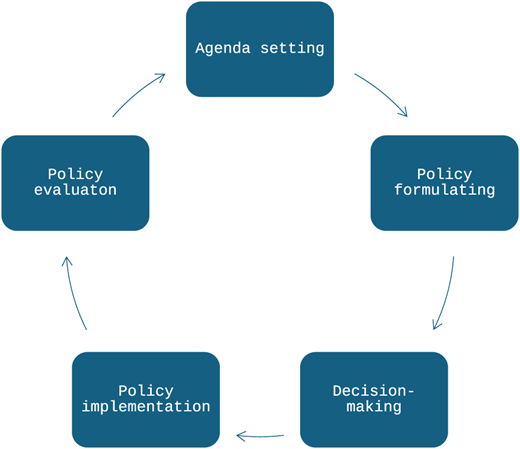
[the original protocol explains the phases of the policy process].
Question 1: If you look at the policy cycle in this way, can you indicate, based on the practical examples given, to what extent policy control is present in each phase of the policy cycle? Can you give a brief description of what policy control entails and which instruments you use?
- 1a.
Can you indicate the degree of presence on a scale of 1–5?
Not present
Slightly present
Neutral (no opinion)
Somewhat present
Fully present
Question 2: On the basis of which aspects/criteria do you assess and evaluate policy plans?
Question 3: As a policy controller, to what extent do you assess the way in which the policy cycle has been completed by forming an opinion on whether all relevant information has been considered and whether all relevant actors have been involved in drawing up the plan so that the policy proposal is a complete and well-considered one?
- 3a.
Can you indicate on a five-point scale to what extent you evaluate the completion of the policy cycle?
Not at all
Moderately
Neutral (no opinion)
Somewhat
Completely
[the original protocol explains the different rationales in the budget, which can be divided into technical rationality, policy rationality and political rationality]
Question 4: When you look at your practical examples, how do you weigh these rationales when conducting policy control and is there an order to this?
Section 2: The design and use management control systems.
The original interview protocol contains a short explanation of the LoC framework. The image below was shown and explained
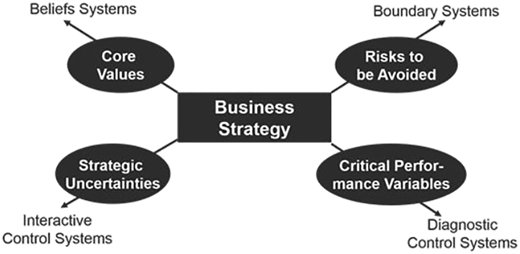
Using the LoC framework, I have formulated a question for each control mechanism that I would like to discuss based on the practical example. Before we do so can you explain the purpose of policy control?
Question 5: What is the purpose of policy control at your ministry?
Question 6: Regarding the belief systems.
To what extent has the ministry made its strategic values explicit and can you make use of them?
Can you demonstrate this using practical examples?
Question 7: regarding boundary systems:
To what extent have the ministry’s strategic values been described in an operational framework?
and to what extent is this framework used? For example, in decision-making about budgets and policy plans?
Feedback and monitoring systems form the basis for the diagnostic and interactive levers. The distinction between diagnostic and interactive relates to the way in which the information is used.
Question 8: regarding the diagnostic control systems:
How does the ministry check whether the strategic values are being realised? For example, have KPIs been formulated? Can you share some examples?
To what extent have (formal) information structures been organised for the purpose of policy control in which (financial and non-financial) information is collected with the aim of monitoring the progress of policy and evaluating its effects?
Can you rate this on a five-point scale?
Not present
Moderately present
Neutral (no opinion)
Somewhat present
Fully present.
Question 9: regarding the interactive control systems:
To what extent is information from the ministry’s information structures used in consultation with decision-makers in order to learn from the insights gained and to make improvements to policy plans. For example, to policy theory and policy design?
Can you rate this on a five-point scale?
Not at all
Moderately
Neutral (no opinion)
Somewhat
Completely
Section 3: the results of policy control
Finally, I would like to briefly discuss the results of policy monitoring.
[The original interview protocol contains an explanation of the positioning of policy control with the finance and economics department (Financieel-Economische Zaken ((FEZ)), where other types of controllers can also be found.]
Question 10: What is the difference between policy control and standard FEZ work? How does the policy controller differ?
Question 11: All things considered, what do you see as the most characteristic differences between policy control and traditional MC?
Question 12: Are there any issues you would like to bring to my attention that have not yet been raised?
[The original interview protocol contains a conclusion and description of the follow-up process.]
Appendix 2 Overview of documents handed in
This document provides an overview of the documents handed in by the informants
| Nr | Ministry | Document name | Description |
|---|---|---|---|
| 1 | BZK | One-year annual plan (2 pages) | Example of an annual plan. The annual plan translates the ministry’s strategic values to a department level. It lists results for the year of implementation, the planning and KPIs. The operational capacity for implementing the results is indicated and opportunities and risks are identified |
| 2 | BZK | Description of roles, tasks, responsibilities and policy control instruments (2 pages) | Description of the tasks and responsibilities of officials in the budget cycle. A distinction is made between policy controllers, policy officers and directors' advisers, among others. For each phase of the budget process (preparation, implementation and accountability), the tasks and responsibilities of the officials are indicated. A list of instrument for each stage is summarised |
| 3 | I&W | A description of the design and operation of policy control within the ministry (44 pages) | Description of the tasks and responsibilities of officials in the budget cycle. The policy control instruments have been described in detail. This involves the relevant questions that must be asked to assess the efficiency, effectiveness and efficacy of plans. In addition, guidelines have been drawn up for assessing plans, including an explanation of the problem analysis and the role of the ministry in solving the problem. Finally, an overview and explanation of the budgetary rules has been included |
| 4 | J&V | A presentation of the design and operation of policy control within the ministry (65 slides) | A description of the ministry’s budget process, the budget rules, the legal tasks and policy control instruments. This presentation provides an overview and connection between the budget cycle and the policy cycle. The function of policy control is defined. The internal governance of the ministry is then described with control relationships. Furthermore, the policy control instruments were described, with reference to the general legislation including the Government Accounts Act and Integral Assessment Framework. Finally, practical examples were interpreted with lessons learned |
| 5 | BHOS | IOB Evaluation Less Pretension, More Realism An evaluation of the Reconstruction Programme (2012–2015), the Strategic Partnerships in Chronic Crises Programme (SPCC) (2014–2016) and the Addressing Root Causes Tender Process (open source in English) | IOB’s report contains lessons and recommendations that have a wider bearing on formulating programmes whose objective is to provide sustainable benefits to vulnerable people in situations of insecurity. In its evaluation, IOB sought to answer the following main question: Have the Reconstruction and SPCC programmes been effective and how can programmes that aim to address conflict and insecurity be improved? |
| 6 | BHOS | Dutch development Results in Perspective (open source in English) | In this report (Dashboard), the Ministry of Foreign Affairs provides an overview of the results achieved in the field of development in 2023 |
| 7 | EZK | Climate monitor dashboard (open source in Dutch) | The Climate Policy Dashboard provides information on the progress of national climate policy and the development of greenhouse gas emissions in the Netherlands. It offers insight into this progress per sector: Electricity, Built Environment, Industry, Agriculture and Land Use, and Mobility. The Dashboard also provides information on developments within the cross-sector climate themes of energy system, labour market and training and making government operations more sustainable |
| 8 | EZK | Hard copy document. Description of the tasks and instruments of policy control | The document describes which responsibilities, activities and instruments are applicable to the various stages of the policy process. For example, a distinction is made between policy planning, decision-making, implementation and evaluation. Activities and instruments are defined for each stage. The activities in the stages of the policy process also describe activities from the budgetary process. The instruments provide a general framework with questions for assessing policy plans, an assessment framework for risk regulations and a guide for writing policy documents |
| OCW | No documents handed in | ||
| VWS | No documents handed in |

