This paper investigates the influence of using a lightweight aggregate called “Diatomite” in hollow masonry (i.e. cement) blocks for bushfire resistance.
One of the 100-block series category (i.e. 90 mm thick) hollow masonry blocks were fabricated using a diatomite fine aggregate-based cement mix (i.e. cement-sand-diatomite mix). Properties of the mixed ingredients were determined, and the cement-sand-diatomite mix were developed based on the absolute volume method. After 28 days of curing, tests were conducted on hollow blocks, including density, compressive strength, bushfire and building fire resistance, and the results were compared with those of the cement-sand (standard) mix hollow block and one of the commercially available hollow blocks.
The newly developed diatomite mix hollow block satisfies the density requirement for ultra-lightweight masonry units and the strength requirement for loadbearing hollow masonry units. It is the only block that complied with the temperature limit for unguarded interior surfaces of bushfire shelters and showed one-hour additional building fire resistance (−/120/120) than that of cement-sand mix (−/60/60) and commercial hollow blocks (−/60/60).
The diatomite mix hollow block developed in this research can be suggested as a suitable loadbearing lightweight hollow masonry block for bushfire shelters and external walls of the buildings in bushfire-prone areas.
Limited studies are available for hollow masonry blocks in relation to their bushfire and building fire resistance.
1. Introduction
Many countries that experience very hot and dry weather conditions, such as Australia, the United States, Greece, Africa and Russia, have suffered from bushfires for centuries. A bushfire is an unplanned and uncontrollable fire that ignites naturally through lightning or artificially through deliberate lighting (Willis, 2005). It plays a vital role in the ecology and helps to provide necessary nutrients to many native plant species (Beringer, 2000). However, on the other hand, severe bushfires have become a significant threat to the residents who live along the urban bushland interface by losing their lives, properties and livestock.
People who appreciate the natural setting make their settlements at the urban bushland interface, and these settlements are continued to increase despite the fire risk. Therefore, necessary measures should be taken to reduce their vulnerability to bushfires. A properly designed, constructed and maintained house is one of the possible options to defend themselves from bushfires (ACT Emergency Services Agency, 2009). Even though people could not evacuate well in advance for many reasons, it acts as a safe refuge during the fire-front passage. Otherwise, last-minute evacuation results in many fatalities due to flames, embers, intense heat, smoke, vehicle accidents, etc (Haynes et al., 2010). Also, when people do shelter inside their houses, they can actively attend to protect their properties after the fire front passes.
Having bushfire resistance building materials in buildings is essential in developing a well-prepared house to defend from bushfires. Special attention needs to be offered to the external wall element of the house, as it is the component that is massively exposed to embers, radiant heat and direct flames of bushfires.
On the other hand, external wall is vital in building energy consumption. Much energy is dissipated through the exterior wall, as it is the most significant building element separating the indoor and outdoor environment. Therefore, hollow masonry block application is practiced in construction, as they provide good thermal and sound insulation. Although it has a lower thermal mass than the solid block due to its cavities, its thermal transfer is lower, as the thermal transmission of air is much lower. Therefore, no additional insulation materials are required. Also, it is environmentally friendly due to less material usage. Due to its lightweight characteristics, it reduces the construction cost and enhances the productivity of masons (i.e. labour hours).
Because of these inherited advantages of hollow masonry blocks, research has been conducted to enhance the properties of conventional hollow masonry blocks, so their application in the construction industry is assured (Gunduz, 2008; Kumar, 2003; Ali et al., 2020; Mohammed et al., 2012; Popoola et al., 2015; Xie et al., 2021; Al-Tamimi et al., 2020). One of the methods is combining new materials at suitable proportions. Gunduz (2008) produced 15–35% lighter hollow blocks than the standard weight blocks by mixing scoria, pumice, fly ash and cement. Kumar (2003) developed fly ash-lime-phosphogypsum hollow blocks that are lightweight and have sufficient strength. In some studies, conventional materials used in producing hollow blocks were replaced with new natural and waste materials. Ali et al. (2020) replaced sand in the mixture with expanded polystyrene (EPS) crumbles and produced lightweight hollow blocks for non-loadbearing applications. For example, the weight and net compressive strength of the control blocks were 23.5 kg and 9.5 MPa, respectively, while they were 6.9–2.4 MPa and 19.5–10.6 kg in EPS blocks. In contrast, a loadbearing hollow block was cast by replacing fine aggregates in the block mixture with crumb rubber (Mohammed et al., 2012). The newly developed block was not only loadbearing but also lightweight and had good thermal, acoustic and electrical properties. In another study, cement was replaced by sawdust ash to produce a new hollow block (Popoola et al., 2015). It is commonly observed in all the above studies that the higher the replacement content (i.e. EPS, rubber or sawdust), the lower the strength and density of the block. On the other hand, Xie et al. (2021) developed a lightweight and thermally insulating hollow block by replacing cement, natural sand and coarse aggregates with ground granulated blast furnace slag, fine recycled aggregates from demolished waste concrete blocks and sludge ceramsite, respectively. The new block’s density, compressive strength, water absorption and thermal resistance coefficient were 920 kg/m3, 3.6 MPa, 12.3% and 0.884 m2k/W, respectively. In contrast to all these studies, Al-Tamimi et al. (2020) investigates a way to reduce the heat flow of the block by changing the cavity geometry and its layout. The thermal conductivity of the hollow blocks with the optimum cavity design was 0.460 W/mK, whereas it is 1.6 W/mK in regular concrete hollow blocks. Also, they investigated that this value can be further reduced by replacing the aggregates in the block mix with an insulating material such as perlite, polyethylene and rubber.
In summary, it can be concluded that new hollow masonry blocks have been developed by adding new materials and changing the geometry of the block/cavities. The commonly examined properties were density, compressive strength, water absorption, durability and thermal conductivity of the block. No experimental studies have been conducted to investigate the bushfire resistance of conventional hollow masonry blocks and the effect of adding a lightweight aggregate into the block mix for the bushfire resistance.
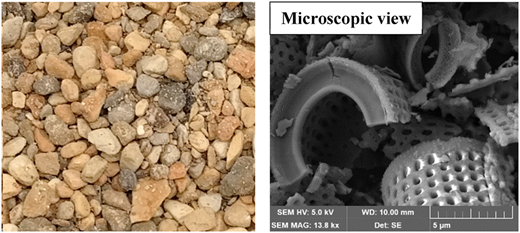
Among the lightweight aggregates, diatomite is one of the natural aggregates available in countries that suffer from bushfires. Diatomite is made from a unicellular aquatic plant called “Diatoms”. They produce their skeletal structure by extracting silica from water. Hence diatomite is abundantly found in lakes in volcanic environments. Once the diatoms died, they deposited, fossilized and compressed into a rock called “diatomaceous earth or diatomite”. It is white, yellowish, grey, light grey and sometimes dark grey in colour. Also, it is lightweight due to its cellular structure with high porosity (Figure 1). The bulk density of diatomite ranges between 417 and 600 kg/m3. Further, it has a lower thermal conductivity value of 0.05–0.1 W/mK. Due to their unique properties, diatomite aggregates are mostly used in building construction as insulation, filtration material and fillers (Topçu and Uygunoğlu, 2007; Posi et al., 2013; Ivanov and Belyakov, 2008; Ahmadi et al., 2018).
This study aimed to develop a hollow masonry (i.e. cement) block by adding one of the lightweight aggregates (i.e. diatomite) into a cement-sand mix and investigate its influence on the bushfire resistance of hollow masonry blocks. First, the properties of cement, sand and diatomite aggregate are presented. Second, the mix proportions, the geometry of the block and casting details are described. Then details of test procedures and test results of hardened hollow blocks, such as density, compressive strength, bushfire and building fire resistance, are presented and discussed. Here the presented test results include one of the commercially available hollow masonry blocks.
2. Experimental study
2.1 Materials
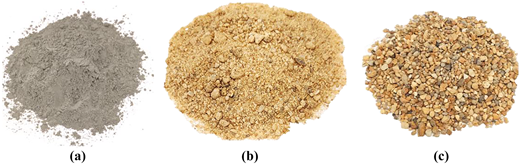
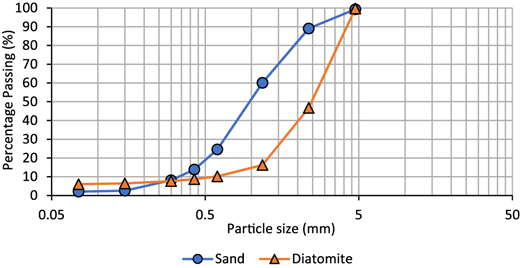
Hollow masonry block mixes were developed using general-purpose cement (28-day strength of 49 MPa and specific gravity of 3.06), fine aggregates (i.e. commercially available sand and diatomite) and tap water (Plate 1). Diatomite aggregates were sourced from Chalkmine, Australia. The measured saturated surface dry (SSD) specific gravity values of sand and diatomite aggregates are 2.57 and 1.34, respectively (SA, 2000). Water absorption values of sand and diatomite aggregates at their SSD condition are 0.1 and 110.6%, respectively (SA, 2000). The chemical composition of materials is shown in Table 1. Figure 2 shows the average particle size distribution of fine aggregates determined based on the standards (SA, 2009). All these properties were measured using the relevant standards in this study.
2.2 Mix design
This study developed two mixes: (1) cement–sand and (2) cement–sand–diatomite mixes. Both the mixes were proportioned based on the absolute volume method. The cement to the sand ratio in the cement–sand mix at the mixing stage was 1:3, while the effective water to cement ratio was 0.6:1. Lightweight aggregate mixes are developed by replacing sand in the cement-sand mix with lightweight aggregate on an equal volume basis. This study developed a cement–sand–diatomite mix by replacing 60% sand. This was based on previous research developing various diatomite cement mixes to achieve a suitable bushfire resist solid masonry block to use as an external walling material for buildings in bushfire-prone areas (Ariyaratne et al., 2023). Mix proportions of the cement–sand and cement–sand–diatomite mixes are shown in Table 2.
2.3 Geometry of the hollow masonry block
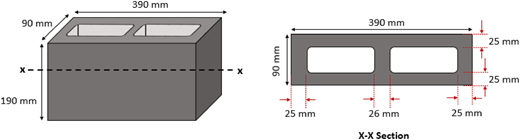
One of the hollow blocks (i.e. 10.01 block) included in the 100-block series was fabricated in this study, where 390, 90 and 190 mm are its length, width and height, respectively. Figure 3 shows the hollow block’s geometry, cross-sectional view, and dimensions. The block’s perimeter face shell and web thickness are 25 mm and the middle web thickness is 26 mm. Commercial blocks of a similar overall geometry were also tested in this research for comparison purposes. In this paper, hollow blocks made of cement–sand mix will be referred to as standard mix hollow blocks, while those made of cement–sand–diatomite mix will be referred to as diatomite mix hollow blocks.
2.4 Mixing and casting procedure
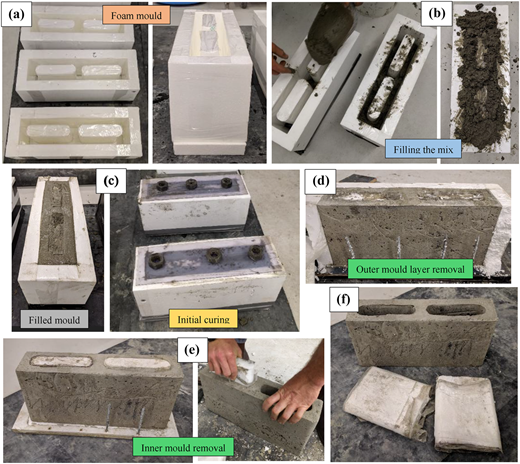
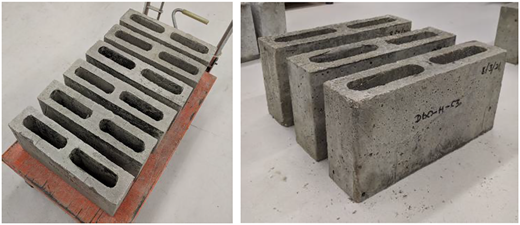
Mixing and casting of the hollow blocks were performed by following the procedures given in ASTM C192/C192M-18 (ASTM, 2018), AS 1012.2–2014 (SA, 2014a) and AS 1012.8.1–2014 (SA, 2014b). Fine aggregates, cement and water were added to the pan mixer and mixed for 7 min. Since diatomite aggregate has a higher water absorption capacity, diatomite aggregate was saturated and surface dried before mixing with cement, sand and effective water. After completing the mixing, hollow blocks were cast within the next 20 min (Plate 2). The hollow block mould was prepared by assembling the foam board pieces into the block shape. The mould was filled in two layers and vibrated/compacted manually based on the slump of each mix. Filled moulds were covered and kept at room temperature (i.e. 23 ± 2 0C) for 24 h, and then specimens were removed from the moulds. Finally, all the specimens were placed inside lime-saturated water at a temperature of 23 ± 2 0C until 28 days. Plate 3 shows the cast hollow block specimens.
2.5 Test details
The blocks’ compressive strength, density and fire resistance were determined following the relevant Australian and ASTM standards. Details of the test set-ups and procedures are presented in this section. Ambient compressive strength and hardened density tests were conducted using three specimens, while fire-resistance tests were conducted using the individual block specimens.
2.5.1 Compressive strength
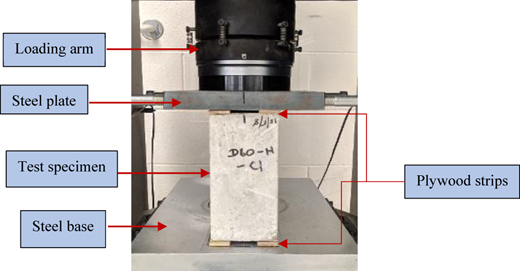
The compressive strength of the hollow blocks was determined as per AS/NZS 4456.4–2003 (AS/NZS, 2003). After 28 days of moist curing, blocks were removed from the curing tank. Before conducting the compression test, the top/bottom surfaces of the blocks were grinded to have flat surfaces. After that, they were conditioned inside a humidity chamber at 25 0C and a 75% humidity level before conducting the compression tests. Block specimens (three in each case) were subjected to compression using a 2 MN Instron testing machine at a loading rate of 0.3 MPa/s (Plate 4). The loading was applied only through the face shells of the block. Since the height-to-thickness ratio of the hollow block is more than 5, the unconfined compressive strength of the hollow block is similar to the experimental compressive strength as per AS 3700-2018 (SA, 2018b).
2.5.2 Density
The saturated surface dry (SSD) hardened density of blocks was determined as per AS 1012.12.1–1998 (SA, 1998). SSD density of the block was calculated by dividing the SSD mass by its volume. Similarly, the air dried (AD) mass of the block at the compression test date was determined by dividing the AD mass by its volume. The oven-dry density of the block was calculated using the following equation for each cement mix (ASTM, 2014).
2.5.3 Fire resistance of hollow blocks
Bushfire and building fire resistance of the hollow blocks under non-loadbearing condition were observed following the relevant AS standards (SA, 2018a; SA, 2014c). After finishing the moist curing of block specimens, they were removed from the curing tank and air-dried for at least one week before any fire tests. However, before conducting the bushfire resistance tests, those air-dried blocks were again conditioned inside an environmental chamber at a temperature of 25 0C and relative humidity of 45% for at least one week.
During the bushfire test, blocks were tested under bushfire flame zone conditions by exposing them to the standard fire curve for 30 min and then cooling down for 60 min (SA, 2018a). The building fire resistance test was conducted by exposing blocks to a standard fire curve until any failure was observed (i.e. integrity or insulation). These fire test results help to assess the fire resistance level of the block if any consequent structural fire occurs after the bushfire front passes.
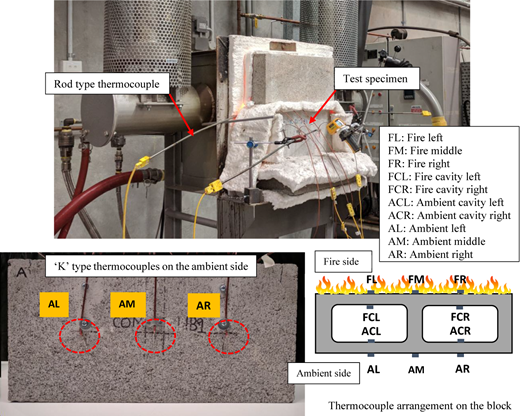
Block surface temperatures were recorded by attaching a total ten number of “K” type wired thermocouples on the fire side, fire side cavity, ambient side cavity and ambient side surfaces and the furnace temperature was recorded by placing a rod-type thermocouple closer to the fire side block surface inside the furnace (Plate 5).
3. Results and discussion
This section presents and compares the results of the standard mix and diatomite mix and commercially available hollow blocks in detail. Table 3 summarizes properties of all the hollow blocks.
3.1 Density
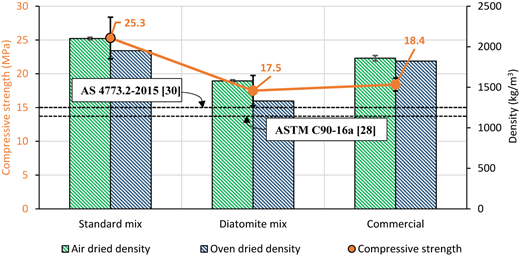
The average SSD density of the standard mix hollow block was 2,188 kg/m3, and the calculated oven-dry density was 1,952 kg/m3. The average air-dried (AD) density of the block at the compression testing day was 2,101 kg/m3. As indicated in Table 3, blocks with 60% of diatomite aggregate have an average SSD hardened density, air-dried density and calculated oven-dried density of 1,794, 1,579 and 1,331 kg/m3, respectively. The AD and oven-dry densities of all the blocks are shown in Figure 4.
The standard mix block recorded the highest AD and SSD density. The AD and SSD density of the diatomite mix hollow block was lower than the standard mix hollow block because 60% of the sand in the standard mix was replaced by lightweight diatomite aggregate. Considering the AD density and volume of the block, AD masses of standard and diatomite mix hollow blocks are approximately 9.1 and 6.9 kg, respectively. Therefore, the mass of a standard mix hollow block can be reduced by 24% with the inclusion of diatomite aggregate. Even though hollow blocks are lighter than solid masonry blocks, masses can be further reduced by including a lightweight aggregate in the mix. This results in better work comfort, ease of handling, reduced dead load of a structure, reduced construction cost, etc. Additionally, commercial blocks were also conditioned at the same conditions applied to the cast blocks for about one week before conducting the compression test (i.e. 25 0C and 75% relative humidity). The AD density of the commercially available block is 1,859 kg/m3 (8.7 kg) and thus the newly developed diatomite mix hollow block is 21% lighter than those of commercial blocks. Therefore, diatomite mix hollow blocks are more efficient in reducing the weight and consequently cost of construction than commercially available units.
Also, the difference between the SSD and AD densities of standard and diatomite-mix hollow blocks are 4 and 14%, respectively. This is because the water absorption capacity of diatomite aggregate is comparatively higher than sand (i.e. 110.6 versus 0.1%). Hence, more water is absorbed by the diatomite mix hollow block. Therefore, there is a higher possibility of penetrating external agents into the diatomite mix hollow block. Hence, necessary measures such as applying water-repellent surface sealants, protective coatings or external renders or incorporating hydrophobic additives during mixing can be taken to avoid any durability issues that could arise in diatomite mix hollow blocks when utilized in external wall applications.
A lightweight concrete masonry unit is a block with an oven-dry density of less than 1,680 kg/m3 (ASTM, 2016). Also, if the oven-dry density is less than 1,400 kg/m3, lightweight concrete masonry units can be subclassified as ultra-lightweight units (CMAA, 2020). Since the oven-dry densities of the standard mix and diatomite mix and commercial hollow blocks are 1,952, 1,331 and 1,823 kg/m3, respectively, only the diatomite mix hollow block satisfies the oven-dry density requirement for ultra-lightweight masonry units. Standard mix and commercial hollow blocks are classified into medium weight based on their oven-dry density (ASTM, 2016).
3.2 Compressive strength
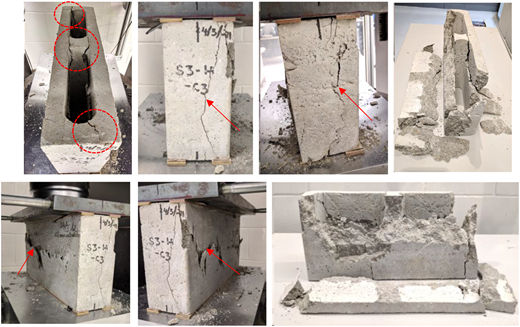
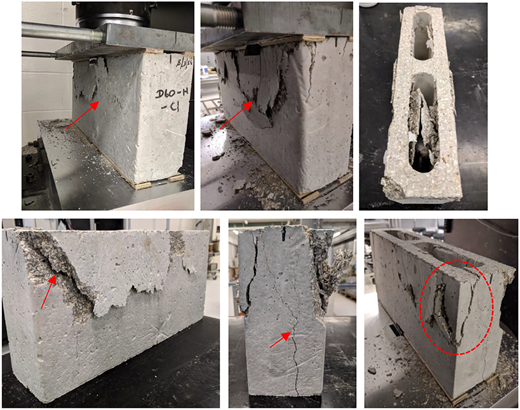
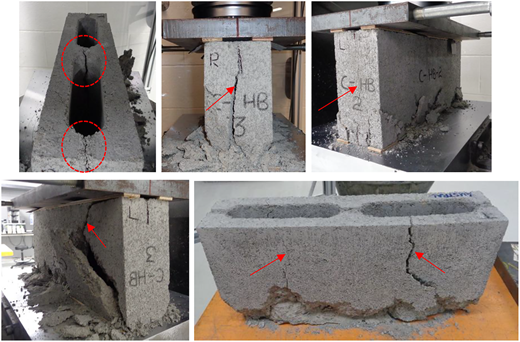
Table 3 and Figure 4 shows the average compressive strength of each block type. The average compressive strength of a standard mix hollow block was 25.3 MPa. Plate 6 shows the compression failure patterns of those blocks. Splitting through the web shells and shear failures across the face shell at the middle are the commonly observed cracks during the compression tests. Diatomite mix hollow blocks showed an average compressive strength of 17.5 MPa. Most of those blocks failed during the compression test by cracking across the face shell at the middle level (see Plate 7). In addition, few cracks were observed on the block’s web shells. The average face shell bedding compressive strength of the commercial block was 18.4 MPa. Plate 8 shows the compression test failure patterns of the commercial block.
The compressive strength requirement prescribed in ASTM C90-16a (ASTM, 2016) for loadbearing concrete masonry units is 13.8 MPa. AS 4773.2–2015 (SA, 2015) shows that unconfined compressive strength requirements for loadbearing and non-loadbearing hollow masonry units are 15 MPa and 10 MPa, respectively. In this study, both experimental and unconfined compressive strengths were the same. Since the compressive strength of all the blocks are greater than 15 MPa, both the standard mix and diatomite mix hollow blocks developed in this research and the commercial block comply with the strength requirement for loadbearing masonry units in both standards.
As in Figure 4, the highest compressive strength was recorded by the standard mix hollow block and strength reduces in the order of commercial hollow block and diatomite mix hollow block. The strength of the standard mix block is 38 and 45% higher than that of the commercial block and the diatomite mix block. Therefore, it is realized that the inclusion of a weaker aggregate into the mix (i.e. diatomite) has lower the strength in the diatomite mix block than the standard mix block. Even though the mix ingredients are not known in the commercial block, the inclusion of a weaker and lighter aggregate might be one of the reasons for its reduced strength. This is evident from having a comparatively lower oven-dried density. So, the strength and density of the blocks are in the descending order of standard mix, commercial and diatomite mix hollow blocks. Therefore, the higher the density, the higher the compressive strength (i.e. a positive relationship).
3.3 Fire resistance
3.3.1 Bushfire resistance
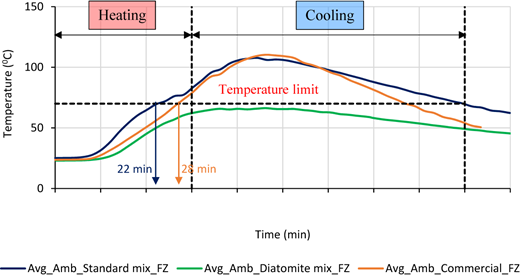
Figure 5 and Table 4 show the ambient side surface time–temperature curves from the bushfire tests and a summary of bushfire test results of all the blocks, respectively. In Figure 5 and Table 4, the average ambient or fire side surface temperature is the mean of temperature readings taken at three locations on both surfaces. For additional results and data, Ariyaratne (2023) provides time–temperature curves for individual thermocouples attached to the fire side, ambient side and cavity surfaces.
The initial average ambient surface temperature of all the blocks was 24 ± 1 0C. This was seen to be uniform in the first few minutes, and then temperatures started to increase at different rates. As shown in Figure 5, the ambient surface temperature of both standard and commercial blocks at the end of the heating phase was greater than 70 0C except for the diatomite mix hollow block. After exposing to 30 min of standard fire, average ambient surface temperatures of the standard mix, diatomite mix and commercial hollow blocks were 83, 62 and 79 0C, respectively. Therefore, the temperature rise rate during the heating period can be approximately calculated based on the initial temperature and the temperature after 30 min. For example, the temperature increment rate of the standard mix block is 1.93 0C/min (). Similarly, it is 1.30 and 1.83 0C/min on the diatomite mix and commercial blocks, respectively.
From this point onwards, temperatures in all blocks continued to increase until they reached the maximum temperature. Therefore, heating of the block was observed in all the blocks during both heating and cooling phases. The maximum average ambient surface temperature of both the standard mix and commercial hollow blocks was greater than 100 0C, while it was 66 0C on the diatomite mix block (Table 4). Therefore, including diatomite aggregate resulted in recording lower ambient surface temperatures (i.e. higher bushfire resistance). The maximum temperature recorded by the standard mix hollow block can be reduced by 39% with the replacement of sand with diatomite aggregate.
Also, it is noticed that all these blocks achieved their peak value after around the same amount of time. Therefore, similar to the temperature increment rate calculated during the heating phase, the increment rate of the blocks during the cooling phase also can be calculated based on their temperature at the beginning of the cooling phase and the peak temperature reached. So, the increment rate in the standard mix, diatomite mix and commercial hollow blocks are 1.67, 0.25 and 1.94 0C/min, respectively. Therefore, similar to the heating period, the lowest increment rate during the cooling period was recorded by the diatomite mix hollow block.
After reaching the peak, temperatures on each block started to drop. At the end of the cooling phase, the temperature recorded by the standard mix, diatomite mix and commercial hollow blocks were 70, 49 and 52 0C, respectively. Hence, the cooling rate of the standard mix block is 0.84 () 0C/min. Similarly, cooling rates of the diatomite mix and commercial blocks are 0.39 and 1.32 0C/min, respectively, where the diatomite mix block recorded the lowest. Also, cooling rates seem to be lower than the heating rates of each block.
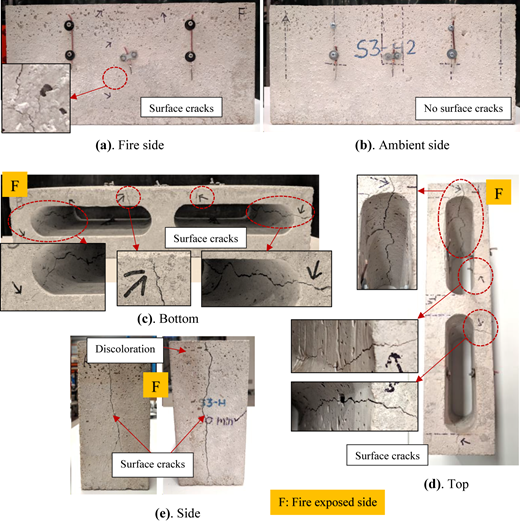
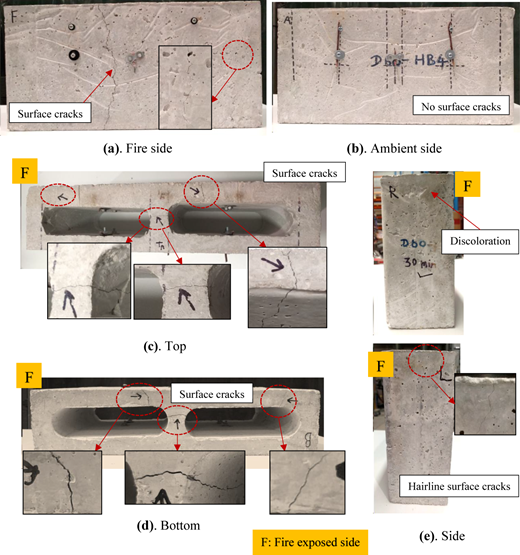
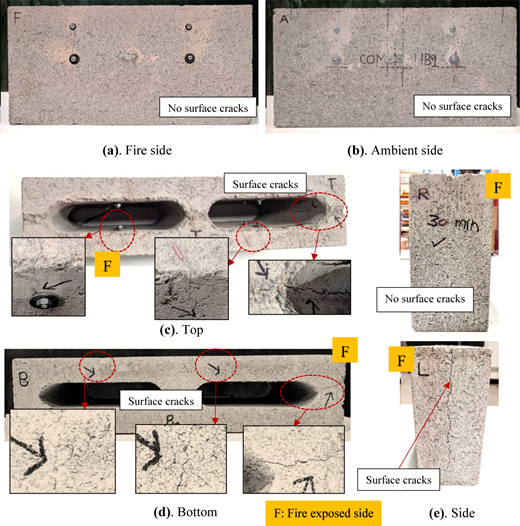
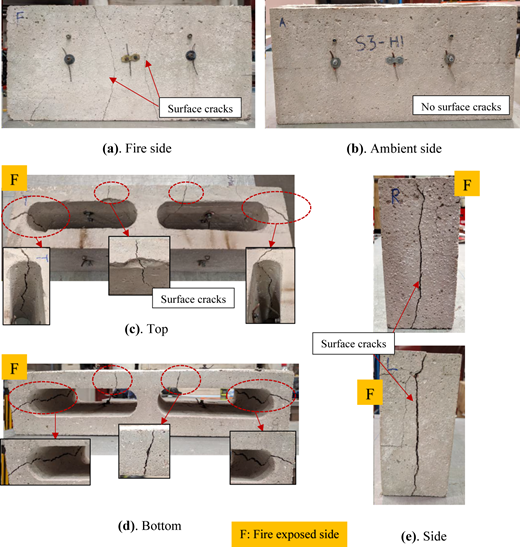
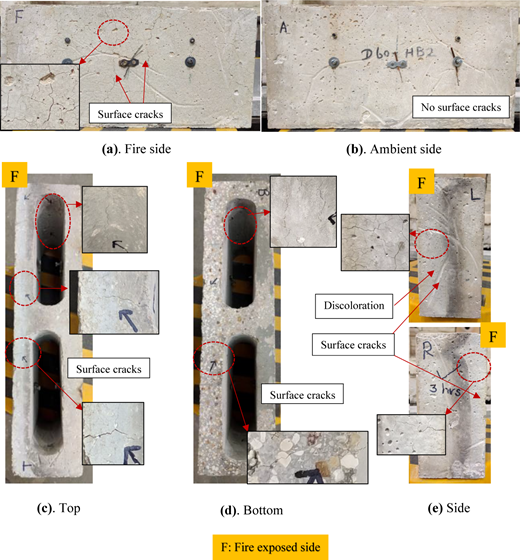
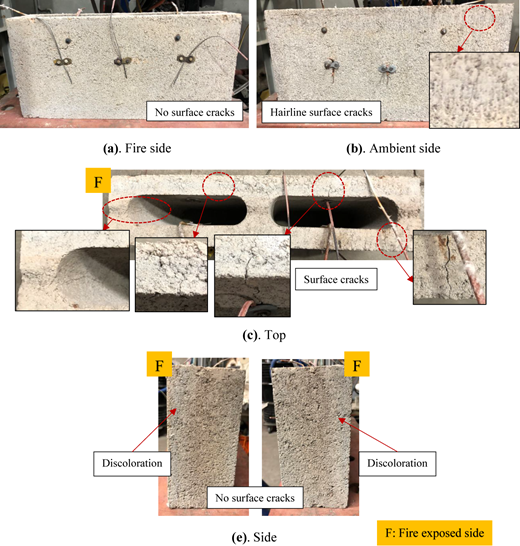
All over both heating and cooling phases, none of the blocks were combustible and had ambient surface cracks. Also, no gaps (i.e. cracks greater than 3 mm) were visible from the fire to the ambient side of the block. Mainly, cracks were observed across the face shell of the block on the fire-exposed side (Plates 9-11). In addition, during the 90 min of the test period, the standard mix hollow block recorded the highest ambient surface temperatures and the commercial hollow block showed slightly lower values. On the other hand, the diatomite mix hollow block recorded the lowest ambient surface temperatures and heating rates. Therefore, the inclusion of diatomite aggregate into the masonry block mix, higher the bushfire resistance of the block. Also, earlier, it was observed that there is a positive relationship between the density and compressive strength of the block. In contrast, the lower the density, the higher the bushfire resistance (i.e. negative relationship).
The Australian Building Codes Board (ABCB) performance standard suggests a temperature limit for the unguarded interior surfaces of a bushfire shelter as 70 °C (Performance Standard, 2014). In this study, the standard mix and commercial hollow blocks exceeded this limit during the heating phase. The diatomite mix hollow block’s average ambient side surface temperatures were less than 70°C throughout the testing period. Therefore, considering the low ambient surface temperatures, low heating rates and compliance with the bushfire shelters’ unguarded interior surface temperature limit, diatomite mix hollow block looks more suitable for bushfire shelters.
3.3.2 Building fire resistance
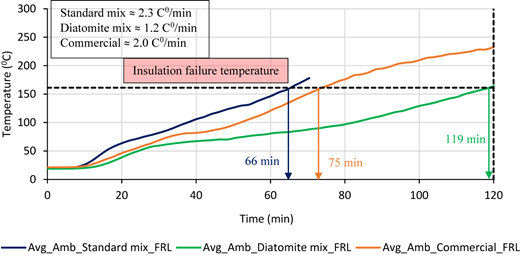
Average ambient side surface time-temperature curves from the building fire tests are shown in Figure 6 and Table 5 summarizes building fire test results of each block. Similar to the bushfire resistance test, the average ambient or fire side surface temperature represents the mean of temperature readings recorded at three distinct points on each respective surface. For additional results and data, Ariyaratne (2023) provides time–temperature curves for individual thermocouples attached to the fire side, ambient side and cavity surfaces.
As mentioned in Table 5, the initial ambient side temperature of all three blocks was around 20 ± 1 0C. The initial temperature continued the same for the first few minutes and then increased. The temperature of the standard hollow block started to increase rapidly due to the insulation failure (i.e. initial ambient temperature 20 + 140 0C). So, the standard hollow block failed via insulation at 66 min. The commercial block also reached its failure after 75 min from the start of the fire exposure. Until 75 min, the diatomite block temperature was well below the insulation failure. At the time of failure of standard and commercial blocks, temperatures recorded by the diatomite mix block are 48 and 43% lower than each block, respectively. However, the diatomite block also recorded a higher ambient surface temperature than the insulation limit after 119 min from fire exposure. Until then, the temperature of the diatomite block is comparatively lower than the standard and commercial blocks. Also, the insulation failure of the standard mix hollow block can be delayed by 53 min with the inclusion of diatomite aggregate in the mix. Therefore, building fire resistance of blocks can be listed in the descending order as diatomite mix, commercial and standard mix hollow block with respect to the insulation failure time. Similar to the pattern observed in the bushfire test, building fire resistance also shows a decreasing trend with the block’s increased density.
In addition, the rate of ambient surface temperature increment during the building fire test can also be calculated using the trendline drawn across each time-temperature curve. So, it is 2.3, 1.2 and 2.0 0C/min, for the standard mix, diatomite mix and commercial block, respectively, where the diatomite mix block again recorded the lowest.
None of the blocks showed any integrity failure during the test. Therefore, the building fire resistance of the standard, diatomite and commercial hollow blocks are -/60/60, -/120/120 and -/60/60, respectively. Hence, it shows that adding diatomite aggregate into the block mix enhances the building fire resistance of a hollow masonry block.
Surface cracks were mostly observed on the fire-exposed side and across the face shell on the fire side (see Plates 12-14), which was similarly observed during the bushfire test. However, the width of the cracks observed in the standard block building fire resistance test is much more severe than the cracks from the bushfire test, whereas, in the diatomite mix block, there was no significant difference.
Therefore, considering the failure during the bushfire test and having lower building fire resistance, both standard mix and commercial hollow blocks cannot be recommended as suitable for use in external walls of buildings in bushfire-prone areas. However, adding diatomite aggregate into the standard mix enhances the bushfire and building fire resistance of the hollow blocks. Hence, diatomite-mix hollow masonry block is an option for buildings in bushfire-prone areas. It is not only enhancing bushfire and building fire resistance, but it is also ultra-lightweight and loadbearing, which are added advantages in the construction field and will be a solution to reduce the energy consumption of the buildings. Studies on the newly developed block’s thermal and sound insulation and durability properties should be conducted as future works.
4. Conclusions
In this study, a diatomite mix hollow masonry block was developed by adding diatomite aggregate into a cement-sand mix (i.e. standard mix) and properties such as density, compressive strength and bushfire and building fire resistance were determined experimentally. The results were compared with the standard mix hollow block and one of the commercially available hollow blocks as well. Results shows that the addition of diatomite aggregate into the block mix enhances the bushfire and building fire resistance of hollow masonry blocks. Based on the experimental results obtained, the following conclusions can be drawn:
Standard mix hollow block recorded the highest density and compressive strength and lowest bushfire and building fire resistance.
Newly developed diatomite mix hollow block satisfies the oven dry density requirement for ultra-lightweight masonry units and strength requirement for loadbearing hollow masonry units.
There is a positive relationship between the density and compressive strength of the blocks. At the same time, there is a negative relationship between the bushfire/building fire resistance and the density of the block.
During the bushfire test, the diatomite mix hollow block showed the lowest ambient surface temperatures and heating rates. It satisfied the temperature limit for unguarded interior surfaces of bushfire shelters in the ABCB performance.
In terms of building fire resistance, both standard mix and commercial hollow block had only one hour of fire resistance level. However, the diatomite hollow block had two hours of resistance, showing the lowest ambient side surface temperatures and rate of temperature increment and a relatively low crack intensity level.
Inclusion of diatomite aggregate into the standard mix decreased density and strength while enhancing bushfire and building fire resistance of hollow masonry blocks.
Considering the enhanced bushfire and building fire resistances, the newly developed diatomite mix hollow block is a suitable masonry block for bushfire shelters and external walls of the buildings in bushfire-prone areas compared to the standard mix and commercially available hollow blocks. Being loadbearing and ultra-lightweight are the added advantages of this newly developed block unit.