


Compared to wholly owned subsidiaries (WOSs), certain international organizational forms such as international joint ventures (IJVs) often fail. Moreover, associated expatriations to these organizational forms also regularly fail, which contributes to or exacerbates the problem described above. To address this issue, this article aims to investigate the effect of expatriates’ role conflict on their desire to terminate an international assignment and on venture performance, measured as managerial satisfaction, by comparing expatriates who are delegated to an WOS with expatriates who are delegated to an IJV.
Drawing on role theory, a vignette-based experimental study was conducted with role conflict and organizational form as experimental variables. After conducting two pilot studies, data were gathered by means of an online questionnaire targeting organizational assigned expatriates (AE) for the main study.
The results indicate that role conflict negatively influences managerial satisfaction with venture performance, but has no effect on expatriates’ desire to terminate an international assignment and show no moderating effect of the organizational form. Additionally, we found a significant direct effect of organizational form on managerial satisfaction with venture performance. Hence, participants were less satisfied with IJVs compared to WOSs.
Studies in international business research lack experimental investigations. This article addresses this deficiency for the presented topic by applying a vignette-based experimental approach, thereby drawing causal inferences. Moreover, we extend role theory to the context of IJVs and contribute to organization research, as this article is the first to make a comparison between WOSs and IJVs for the context of role conflict. Fertile opportunities for future re-search are also provided.
Introduction
Globalization drives companies to start operating globally or to reinforce their existing international activities (Knight and Liesch, 2016; Nambisan et al., 2019). Therefore, wholly owned subsidiaries (WOSs) and international joint ventures (IJVs) are regularly incorporated abroad (Deloitte, 2010, 2020) to remain or become competitive in international markets (Schuler and Tarique, 2006). IJVs are strategic alliances in which at least two independent organizations from different countries create a separate legal organizational entity to collaborate in pursuit of mutual strategic goals (Nippa and Reuer, 2019; Shenkar and Zeira, 1992). These collaborations are established to access foreign markets and improve organizational learning (Parmigiani and Rivera-Santos, 2011), thereby increasing competitiveness (Nielsen and Nielsen, 2009).
WOSs as well as IJVs require the delegation of employees (expatriation/international assignment; Mendenhall et al., 1987) to achieve corporate goals (Park, 2010). Although expatriations are thoroughly planned, delegates frequently abort (Deloitte, 2016; Tung, 1981; Wang and Varma, 2019; Weisheit, 2018) since, for instance, (occupational) roles and (organizational) commitments might change (Goede and Berg, 2018). Because of (cross-cultural) differences between the partnering companies (Pothukuchi et al., 2002) that can result into situations of conflict, IJVs are considered more complex than WOSs (Nippa and Reuer, 2019), so expatriations to IJVs may be more likely to fail. Since employees of high entrepreneurial importance are usually delegated, the failure of an expatriation can have negative consequences (e.g. knowledge/financial losses due to cost of training), affecting the organization’s performance (Bebenroth and Froese, 2020; Kataria and Sethi, 2013). Hence, literature analyzes and calls for further research of factors, particularly embedded in behavioral science (Fan et al., 2021; Gong et al., 2001), that can explain the termination of expatriate assignments (e.g. Andresen et al., 2018) and maximize the venture’s performance, so that organizational goals are achieved.
Based on behavioral science, it stands to reason that expatriates tend to face role conflict. Despite the disappearance of former roles (e.g. executive of a domestic team), the number of roles (e.g. delegate) increases and some existing roles change because of new (e.g. family-related) and (e.g. culturally) divergent working conditions (Goede and Berg, 2018). The termination of an expatriation, understood as non-performance of an expatriate (van Bakel et al., 2011), has not, to the best of our knowledge, been the target of research with respect to role conflict, although other constructs (e.g. work-life balance; Mello and Tomei, 2020) have been thoroughly addressed. Moreover, venture performance has steadily been a prominent topic of empirical analyses for international business research, as particularly IJV performance is regularly worse than hoped or such organizations even completely fail (Nippa and Beechler, 2013); some academics even estimate their rate of failure as high as 50% (Bamford et al., 2004; Kauser and Shaw, 2004). Nonetheless, the relation between role conflict and venture performance (WOSs or IJVs) has also only seen little analysis (Gehrisch, 2024; Gong et al., 2001; Mohr and Puck, 2007), although research claims to focus on this relation to improve competitiveness (Gehrisch and Süß, 2023; Nippa and Reuer, 2019).
Due to their complex organizational form (Nippa and Reuer, 2019), IJVs may lead to more or stronger perceived conflicting roles, which could increase the chance of quitting an international assignment compared to employees who have been sent to WOSs. Role conflict can also have a more significant effect on IJV performance than it does on WOS performance (Mohr and Puck, 2007). However, no comparative analyses (WOSs vs. IJVs) regarding the described relationships have been conducted to verify these assumptions. Furthermore, literature points to consider behavioral science in international business research more often (Mellewigt, 2017) and to apply experimental methodologies (Noethen and Alcazar, 2020; Zellmer-Bruhn et al., 2016) to draw conclusions regarding causality (Aguinis and Bradley, 2014). This study responds to these calls.
Against this background, the article’s aim is to investigate the effect of expatriates’ role conflict on their desire to terminate an international assignment and on venture performance by comparing expatriates who are delegated to an international WOS with expatriates who are delegated to an IJV. The remainder of this article is organized as follows. We outline the relevant body of literature and develop hypotheses regarding the relationships between role conflict and expatriates’ desire to terminate an international assignment as well as venture performance. Then we test the derived hypotheses in the course of a vignette-based experimental study. Subsequently, we interpret the results and point out implications. Lastly, limitations and opportunities for future research follow.
Literature review and hypothesis development
Behavioral science, commonly denoted as “organizational behavior,” especially in the business context, has its roots in several research disciplines: e.g. psychology, sociology and management studies (O’Reilly, 1991). Organizational behavior and its lens thereby distinguish between three levels of analysis: individual, group-related and organizational behavior (Meyer et al., 1993; O’Reilly, 1991). Depending on the respective level, research concentrates on different aspects (Gelfand et al., 2007), referred to as micro phenomena (e.g. conflicts), meso phenomena (e.g. team processes) and macro phenomena (issues related to organizational culture), since the identification of homogeneous categories is beneficial to organization science and interlinked research projects (Meyer et al., 1993).
Role theory is a theoretical lens in the realm of organizational behavior, particularly embedded on the individual level of analysis. It describes and explains tensions associated with membership in organizations (Pandey and Kumar, 1997). For decades, role theory aims to predict human behavior and management research also began to consider its assumptions (Anglin et al., 2022). A “role” can be depicted as a set of expectations applied to an individual – either by the individual or others from inside or outside an organization (Neiman and Hughes, 1951). Role theory encompasses several key terms (e.g. role conformity, role identity; Anglin et al., 2022; Biddle, 1986). This study focuses on the pivotal term “role conflict” that was introduced by the work of Kahn et al. (1964) and is linked to role theory’s fundamental assumption: the principle of unity of command (Rizzo et al., 1970). Based on this view, an employee should receive orders from one supervisor only. A violation of this principle can lead to role conflict, harming an organization’s economic performance.
The term role conflict describes an individual’s state of mind arising from the simultaneous occurrence of two or more role expectations, whereas the approval of one would be in conflict with the others (Pandey and Kumar, 1997). Building on role theory, research characterizes role conflict as a multidimensional construct and, thus, reflects four ways to express it (Pandey and Kumar, 1997; Rizzo et al., 1970): interrole conflict, person-role conflict, intrasender conflict and intersender conflict. (1) An interrole conflict takes place when a person faces expectations that are incompatible with expectations that are associated with other roles she/he encompass (e.g. work–family conflict). (2) A person–role conflict takes place when expectations associated with a certain role are incompatible with a person’s values, needs, etc. (3) An intrasender conflict takes place when a person addresses incompatible requests to a recipient. (4) An intersender conflict takes place when the expectations of one or more role senders are incompatible with the expectations of (an) other role sender(s). Moreover, role conflict must be distinguished from the related term of role ambiguity. This construct indicates a state of unclear expectations opposite to a specific role (Anglin et al., 2022; Rizzo et al., 1970).
Regardless of the type of role conflict, role theory makes clear that role conflict can lead to occupational stress, dissatisfaction at the workplace and/or a decline in job performance (Preyer, 2012; Rizzo et al., 1970). Therefore, business research is dealing with role conflict by focusing primarily on the individual level. In this regard, current research mainly deals with role conflict resulting from work–family tensions (e.g. Laß and Wooden, 2023; Li et al., 2021; Pascucci et al., 2022) by particularly accentuating insights from the COVID-19 pandemic (e.g. due to increased work from home) and role conflict’s relation to occupational stress. Despite this, role conflict of individuals in complex organizations are continuously focused on as well (Mohr and Puck, 2007; Nippa and Reuer, 2019; Rizzo et al., 1970). In line with role theory, the literature generally emphasizes that role conflict is not only harmful on the individual level. It can also affect the entire organization. Rizzo et al. (1970) point out that because of role conflict, any company can experience loss of organizational effectiveness and efficiency. Especially when key employees like expatriates are caught in the middle between conflicting demands from superiors and subordinates, decision-making processes may be hindered, harming the whole organization. Thus, role conflict is undesirable for both individuals and organizations.
In the course of globalization, the importance of cross-cultural organizational behavior increased, which analyzes how the national culture is related to phenomena on the individual, group-related and organizational level. This academic perspective also began to examine expatriates, including potential role conflicts related to such a corporate position (Gelfand et al., 2007). Hence, with respect to expatriates, two types of role conflict are particularly relevant. An interrole conflict can arise when expatriates’ work- and family-related roles change significantly compared to what they were in their previous life (Goede and Berg, 2018). However, intersender conflict, which expresses expectations of one or more role senders that are incompatible with the expectations of one or more other role senders, are most common for expatriates, so we focus on this type. It might happen that expatriates assume certain work-related roles during their stay (e.g. control/knowledge agent; Kraimer et al., 2016), which can lead to differing request/instructions during their daily work that are not executable (simultaneously).
Cross-cultural organizational behavior as well as international business research acknowledges that role conflict has strong effects on several expatriate outcomes (e.g. organizational commitment, job performance; Chiang et al., 2018; Gelfand et al., 2007). This view goes hand in hand with role theory, postulating that role conflict negatively affects individual work behavior (Preyer, 2012; Rizzo et al., 1970). Thus, role theory’s view that such tensions can negatively affect an employee’s occupational satisfaction (Rizzo et al., 1970) suggests that an expatriate’s dissatisfaction, resulting from role conflict, may increase the likelihood of terminating an international assignment. Moreover, Kraimer et al. (2016) emphasize that role conflict negatively relates to the international adjustment of an expatriate, describing the degree of psychological comfort with the foreign culture (Black and Stephens, 1989). In addition, strain linked to one’s role identity, leading to role conflict, predicts turnover of expatriates (Kraimer et al., 2012). Hence, we hypothesize:
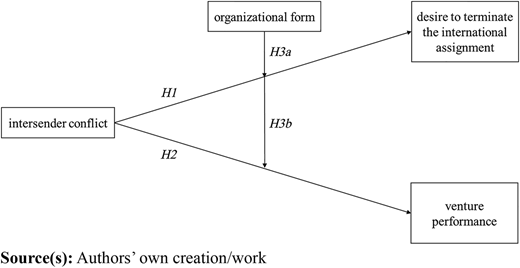
Intersender conflict has a positive effect on expatriates’ desire to terminate an international assignment.
Expatriates are usually high in the corporate hierarchy and responsible for central functions, which make them important company-wide (Fan et al., 2021). In their recently published systematic literature review, Ridgway and Langinier (2023) hence stress that expatriates can have a direct impact on an international subsidiary’s performance. Role theory and research on expatriation confirm that the occurrence of every type of role conflict affects several outcomes on the individual level like a decrease in job performance (Chiang et al., 2018; Preyer, 2012; Rizzo et al., 1970). Because of expatriates’ hierarchical position, tensions experienced individually due to role conflict can therefore also affect the whole organization, which is in line with the assumption of Ridgway and Langinier (2023) as depicted above. Moreover, in the view of role theory, role conflict has an impact on the organization’s effectiveness and efficiency (Rizzo et al., 1970), as key employees, which applies to expatriates, may be caught in the middle and, thus, numerous tasks, processes, etc. might not be executable anymore.
Venture performance, understood as the degree to which organizational goals are achieved (Ariño, 2003), is often analyzed and discussed in (international) business research but also in the context of (cross-cultural) organizational behavior (O’Reilly, 1991; Rousseau, 1997; Venkatraman and Ramanujam, 1986). It is thereby presented as a proxy for organizational effectiveness (Bener and Glaister, 2010; Venkatraman and Ramanujam, 1986). The ongoing investigations stem from the fact that academics describe venture performance, in particular IJV performance, as deficient (Lu and Ma, 2015; Madhok, 2006) and an impaired behavior of expatriates could be one of many reasons for this.
Despite this, research on role conflict that deals with venture performance mostly concentrates on work–family conflict as one type of role conflict. The literature agrees that such a discord has performance implications at the organizational level, because of detrimental effects on strategic decision-making (e.g. Reina et al., 2017) and that, hence, management strategies to counteract role conflict will improve venture performance (e.g. Shelton, 2006). Furthermore, role conflict in general, this means not exclusive to a special type, is researched on with regard to venture performance. Thereby, academics often consider mediating variables like role ambiguity to further explain the respective relationship (e.g. Parayitam et al., 2021), but also the direct relationship between role conflict and performance-related outcomes is emphasized (e.g. Gehrisch, 2024). As the negative impact of role conflict, in this study intersender conflict, is uniformly clarified in the literature and since these circumstances do not change in an international business context and, hence, for an expatriate, they even intensify, we hypothesize:
Intersender conflict has a negative effect on venture performance.
According to role theory, the moral dilemma of role conflict (Rizzo et al., 1970) may be exacerbated as all types of role conflict can interact with the following three factors: organizational, interpersonal or personality factors (Kahn et al., 1964). Despite aspects like the size of an organization or its products, the organizational form is also classified as an organizational factor. Moreover, (cross-cultural) organizational behavior emphasizes that an organizational form can be regarded as a certain context that may shape moods, emotions, etc. of the individuals that work in the respective setting (Brief and Weiss, 2002). The organizational context respectively organizational forms are complex systems per se (Daft and Lewin, 1990), although the number of activities and subsystems in an organization as well as geographical locations the organization is tangent to further increase its complexity (Daft, 2021), which applies to IJVs. Such organizational arrangements generate complexity by recombining skills, processes, etc. inherited from the partner companies (Anderson, 1999). For instance, multiple organizational commitments, an overload of information from not less than three organizations (Li et al., 2002; Mohr and Puck, 2007), and dealing with at least two national cultures within one organization (Nippa and Reuer, 2019), result in a complex working environment. Hence, the particularities of IJVs that make up this organizational form can lead to behaviors that are impossible to forecast (Anderson, 1999).
In addition, organizations provide a social framework by assigning formal roles to their employees (Preyer, 2012). Depending on the organizational form and its complexity, the roles assigned might differ compared to other organizational forms. Thus, role theory suggests that impairments due to role(s) (conflict) (s. H1/H2) may be amplified by a complex system, such as certain organizational forms, because behaviors can change in such environments. Consequently, we hypothesize:
The organizational form moderates the relationship between intersender conflict and expatriates’ desire to terminate an international assignment, such that, compared to a WOS, the positive effect of an IJV is stronger.
The organizational form moderates the relationship between intersender conflict and venture performance, such that, compared to a WOS, the positive effect of an IJV is stronger.
Figure 1 summarizes the hypothesized relationships among intersender conflict, organizational form, expatriates’ desire to terminate their international assignments and venture performance.
Method
Design and procedure
Studies in international business research lack experimental investigations (Noethen and Alcazar, 2020; Zellmer-Bruhn et al., 2016). Up to now, primarily cross-sectional or qualitative studies have been carried out, which do not allow causal inference. To overcome this dearth for the presented topic and to draw conclusions on causality (Aguinis and Bradley, 2014), we applied a randomized, vignette-based experimental study using a 2 × 2 between-subjects factorial design (Atzmüller and Steiner, 2010). This design brings several strengths. First, it allows us to manipulate selected aspects of the written stimulus respectively factors that are relevant to the research project, while excluding or controlling for confounding sources of variability (Aguinis and Bradley, 2014). Second, despite this method’s robustness, especially when testing a theory, other strengths include, for example, the ability to replicate the regularity under controlled conditions (Zellmer-Bruhn et al., 2016). Third, the vignette-based approach allows sensitive issues to be investigated that would be difficult or unethical to test using field studies (Aguinis and Bradley, 2014). It is almost impossible to identify global operating companies (WOSs or IJVs) that beforehand notice or openly admit that their employees currently face a high level of (role) conflict. Thus, it makes sense to use this method to analyze certain types of conflict by manipulating them. The experimental approach was, hence, chosen for all these reasons.
The survey asked employees who currently were or have been expatriates to imagine that they were working as a delegate (head of a research team) for a fictitious company. Organizational assigned expatriates (AEs), rather than self-initiated expatriates (SIEs), were addressed. We chose this group of expatriates as IJV employees are commonly asked in advance to work abroad for a defined period of time, are controlled by the mother company and do not relocate on their own (Fan et al., 2021; McNulty and Brewster, 2017; McNulty and Vance, 2017). Participants were then introduced to some general information. Subsequently, four vignettes (written scenarios) were presented that differ from each other with regard to “organizational form” (WOS/IJV) and “intersender conflict” (yes/no). We manipulated the organizational form in the introductory part by explaining several particularities of IJVs in comparison to WOSs (Nippa and Reuer, 2019), such as an equity distribution of 70:30% and the characteristic of cooperating companies that are embedded in different national cultures, to make the differences as apparent as possible. An intersender conflict (Pandey and Kumar, 1997; Rizzo et al., 1970) was chosen as the role conflict to be manipulated and was described in the vignettes as an expected decision regarding a staffing issue when the partner/mother company disagrees with the management board of the subsidiary (WOS/IJV). This type of role conflict is easy to understand in the course of a questionnaire and regularly analyzed, especially in studies in IJV research (e.g. Mohr and Puck, 2007). Participants were randomly assigned to one of the four experimental conditions, read the scenario, and responded to statements regarding the two dependent variables. To enhance external validity, the passage of the scenario showing the intersender conflict was presented as an e-mail, designed in accordance with the interface of a well-known mailing program. Appendix 1 shows the vignette of the control group and all manipulations with regard to organizational form and intersender conflict.
Since international business literature faces almost no experimental research (Ramani and Aguinis, 2023; Zellmer-Bruhn et al., 2016) and no vignette-based analyses of the effects of role conflict have been done so far, the vignettes needed further validation to enhance validity. We conducted two pilot studies. First, the written scenarios were assessed by experts of expatriation management (n = 5) in the course of a qualitative pilot study. Semi-structured interviews were performed to provide an in depth qualitative assessment of the vignettes (Strübing, 2018). Researchers as well as practitioners were interviewed. By considering both views, we aim the vignettes to be as realistic as possible. Second, a quantitative pilot study was conducted to verify the manipulation in our self-created vignettes. Business students of a German university (n = 114) who were aware of topics related to international HR management and IJVs were addressed during a lecture via a paper-and-pencil survey. Pandey and Kumar’s (1997) items referring to intersender conflict helped us to conduct the manipulation check. For both vignettes that presented the intersender conflict, the item means exceeded 2.5 on a five-point scale, so the manipulation was considered to be effective. The great effort involved in conducting two pilot studies helped in reviewing and refining the questionnaire for the main study, so that high-quality results are achieved.
Data collection and sample
Addressing AEs in the main study, data were gathered from May to June 2023 by means of an online questionnaire. Participants must have worked abroad for at least three months to take part to reduce the degree of abstraction. Literature emphasizes that the use of labor portals is an efficient and appropriate way to achieve a specific participant pool (Behrend et al., 2011), so an internationally recognized and leading crowdsourcing service provider was utilized to scatter the online questionnaire. The initial sample comprised 250 expatriates, but it was adjusted for one participant who incorrectly answered attention check items, embedded in the dependent variables’ scales. Unfortunately, some participants also incorrectly answered the stimulus check items referring to the manipulations in the vignettes, so the sample of 249 participants was adjusted to 128. The stimulus checks, presented in Appendix 1, were included to verify, whether participants have read the scenarios with sufficient attention and were aware of the manipulations, so that the desired effects will be evoked. The sample was further reduced by outliers to the final size of 123. We accepted this high dropout to ensure the best possible data quality.
The sample comprised 45 female (36.59%) and 78 male (63.41%) expatriates, with an average age of 36.04 years (SD = 9.44, age range is 20–67 years), an average work experience as expatriate of 6.33 years (SD = 5.02) and an average work experience in an IJV of 3.55 years (SD = 4.16). Work experience as expatriate and work experience in an IJV could thereby have the same numerical value, because an employee could have been solely sent to an IJV as an expatriate, although this has not always to be the case: Maybe an employee was working several years as an expatriate in a WOS and then afterward also in an IJV. In such a case, the numerical value of average work experience as expatriate would be higher than the numerical value of work experience in an IJV. Twenty-five nations were represented in the sample, with Germany having the largest representation (44 participants, 36%), followed by the US (15 participants, 12%) and India (14 participants, 11%). Overall, the sample was diverse and not specific to a certain region. Participants also rated their English language skills on a seven-point scale, ranging from 1 = “very bad” to 7 = “very good” to ensure that the vignettes were thoroughly understood, as they were created in English so as to address a wide audience. Participants stated an average level of 6.15 (SD = 1.01), which is in line with the view that expatriates should be fluent in English. Appendix 2 shows additional insights regarding the demographic variables.
Measures
Expatriates’ desire to terminate their international assignment was measured using a three-item scale developed by Caligiuri (2000) that participants answered using a four-point Likert scale, ranging from 1 = “definitely not” to 4 = “yes definitely”. An example item is “Would you like to terminate this expatriate assignment early?”. The internal consistency of the scale was 0.75.
Methodological papers and literature reviews outline several ways to depict venture performance that can be either objective or subjective (e.g. financial performance like sales growth vs organizational performance like managerial satisfaction; Ariño, 2003; Christoffersen, 2013; Robson et al., 2006). Research acknowledges that which way is chosen to depict venture performance is of minor relevance, as various findings indicate a strong correlation between the objective and subjective dimensions (Dess and Robinson, 1984; Geringer and Hebert, 1991). Similar to previous studies (e.g. Ali et al., 2021; Huang and Chiu, 2020), we used a subjective measure: management’s satisfaction with the venture (Gehrisch and Süß, 2023), since such scales are easily transferable to questionnaires, so we measured venture performance using a four-item scale from Pearce (2001). Participants answered the items using a five-point Likert scale, ranging from 1 = ”strongly disagree” to 5 = ”strongly agree”. An example item is “I am absolutely delighted with the degree of goal achievement in this venture.”. The internal consistency of the scale was 0.83. As we therefore consider satisfaction with performance and not financial ratios as the dependent variable “venture performance,” this variable is henceforth referred to as “managerial satisfaction with venture performance.” Appendix 3 shows the items for both Likert scales – expatriates’ desire to terminate their international assignment as well as managerial satisfaction with venture performance.
Demographic and control variables were also captured (e.g. age, gender, time of expatriation in years, work experience in IJV in years).
Results
Table 1 presents the descriptive statistics and correlation coefficients of the variables in this study. These data provide preliminary evidence of the expected effects. The correlations reveal that intersender conflict (r = −0.667, p < 0.01) as well as organizational form (r = −0.229, p < 0.05) are significantly related to managerial satisfaction with venture performance. Moreover, the participants’ age significantly correlates with the work as expatriate (r = −0.446, p < 0.01), and the work as expatriate also significantly correlates with the work in an IJV (r = 0.239, p < 0.01).
Descriptive statistics and correlation coefficients
| Variables | Mean | SD | 1 | 2 | 3 | 4 | 5 | 6 | 7 | |
|---|---|---|---|---|---|---|---|---|---|---|
| 1 | TD | 2.363 | 0.845 | 1 | ||||||
| 2 | MSVP | 2.785 | 0.858 | 0.120 | 1 | |||||
| 3 | IC | 0.602 | 0.492 | −0.136 | −0.667** | 1 | ||||
| 4 | OF | 0.472 | 0.501 | −0.053 | −0.229* | 0.070 | 1 | |||
| 5 | Gender | 1.630 | 0.484 | 0.094 | 0.174 | −0.204* | 0.041 | 1 | ||
| 6 | Age | 36.040 | 9.440 | −0.043 | −0.154 | 0.095 | 0.020 | −0.003 | 1 | |
| 7 | Work as expatriate | 6.330 | 5.016 | −0.068 | −0.038 | 0.107 | 0.090 | 0.047 | −0.446** | 1 |
| 8 | Work in an IJV | 3.550 | 4.161 | −0.063 | −0.052 | 0.012 | −0.024 | 0.073 | −0.102 | 0.239** |
Note(s): *p < 0.05; **p < 0.01 (two-tailed)
TD, termination desire; MSVP, managerial satisfaction with venture performance
IC, intersender conflict (dummy coded as 1 = yes, 0 = no); OF, organizational form (dummy coded as 1 = IJV, 0 = WOS)
Gender: female = 1; male = 2
Source(s): Authors’ own creation/work
Following, we conducted a two-way ANOVA to determine how expatriates’ intersender conflict (no vs yes), as experimental variable, affects their desire to terminate an international assignment as well as managerial satisfaction with venture performance, as dependent variables, by considering the organizational form (WOS vs IJV) as another experimental variable. Before testing the hypothesized relationships, we focused on the dependent variables, which offered further impressions regarding the experimental study. Table 2 shows the mean values and standard deviations for the experimental conditions, broken down by the two dependent variables. The descriptive results show almost no variance in the dependent variable expatriates’ desire to terminate their international assignment (“termination desire” for short). Moreover, there is a skew across the vignettes, as the third vignette (no intersender conflict/IJV) includes well under 30 participants, which can be interpreted as an indication of weak effects. To address these concerns, we conducted a post-hoc power analysis using G*Power (Faul et al., 2007), which is generally recommended by researchers to justify a study’s sample size (Lakens and Caldwell, 2021). The results show that the small sample size still exhibits an acceptable statistical power of nearly 80% (F-tests; ANOVA, main effects and interactions; post hoc; α = 0.05; power = 0.7853; Perugini et al., 2018). Moreover, Lakens (2022) references several academic voices who state that 15 to 20 participants in each between subject condition are sufficient for achieving a satisfactory statistical power. And as each experimental condition of our sample includes more than 20 participants, we perceive its size as appropriate to conduct the two-way ANOVA, thus commenced running its calculations.
Means and standard deviations across each experimental conditions
| TD | MSVP | ||||
|---|---|---|---|---|---|
| Vignette | N | Mean | SD | Mean | SD |
| No intersender conflict/WOS | 28 | 2.62 | 0.89 | 3.70 | 0.74 |
| Intersender conflict/WOS | 37 | 2.24 | 0.87 | 2.42 | 0.65 |
| No intersender conflict/IJV | 21 | 2.35 | 0.83 | 3.20 | 0.47 |
| Intersender conflict/IJV | 37 | 2.30 | 0.78 | 2.22 | 0.57 |
Note(s): TD, termination desire; MSVP, managerial satisfaction with venture performance
N = 123
Source(s): Authors’ own creation/work
As Table 3 shows, the analysis revealed a statistically significant main effect of intersender conflict on managerial satisfaction with venture performance (F(1, 119) = 95.442, p < 0.001, η2part. = 0.445), providing support for H2. This effect is very strong (ε2 = 0.430; Perugini et al., 2018). No other hypothesis is supported. We observed no statistically significant main effect of intersender conflict (H1; F(1, 119) = 1.873, p = 0.174, η2part. = 0.015) on expatriates’ desire to terminate their international assignment. The interaction effects of organizational form were also statistically insignificant (H3a; F(1, 119) = 1.074, p = 0.302, η2part. = 0.009/H3b; F(1, 119) = 1.665, p = 0.199, η2part. = 0.014). But, our data indicate that organizational form has a significant negative effect on managerial satisfaction with venture performance (F(1, 119) = 8.921, p < 0.003, η2part. = 0.070), which was not addressed in a hypothesis. Hence, compared to a WOS, an IJV leads to a lower managerial satisfaction with venture performance.
Two-way ANOVA results
| Source of variation | Dependent variable | Type III SS | df | MS | F | Sig | η2part |
|---|---|---|---|---|---|---|---|
| IC | TD | 1.332 | 1 | 1.332 | 1.873 | 0.174 | 0.015 |
| MSVP | 37.075 | 1 | 37.075 | 95.442 | 0.001 | 0.445 | |
| OF | TD | 0.3390 | 1 | 0.339 | 0.477 | 0.491 | 0.004 |
| MSVP | 3.465 | 1 | 3.465 | 8.921 | 0.003 | 0.070 | |
| IC × OF | TD | 0.764 | 1 | 0.764 | 1.074 | 0.302 | 0.009 |
| MSVP | 0.647 | 1 | 0.647 | 1.665 | 0.199 | 0.014 | |
| Error | TD | 84.583 | 119 | 0.711 | |||
| MSVP | 46.227 | 119 | 0.388 | ||||
| Total | TD | 774.000 | 123 | ||||
| MSVP | 1043.500 | 123 | |||||
| Corrected total | TD | 87.113 | 122 | ||||
| MSVP | 89.791 | 122 |
Note(s): TD, termination desire; MSVP, managerial satisfaction with venture performance; IC, intersender conflict; OF, organizational form
Dependent variables: TD: R-squared = 0.029 (adjusted R-squared = 0.005); VP: R-squared = 0.485 (adjusted R-squared = 0.472)
Source(s): Authors’ own creation/work
The overall model explains 0.5% of the variance in the dependent variable termination desire (R-squared = 0.029, adjusted R-squared = 0.005) and 47.2% of the variance in the dependent variable managerial satisfaction with venture performance (R-squared = 0.485; adjusted R-squared = 0.472). The conducted two-way ANOVA and its results offer the foundation for further discussion.
Discussion
Interpretation of results
In line with several studies featuring IJVs (e.g. Gehrisch, 2024; Li et al., 2002; Mohr and Puck, 2007), our results indicate that, notwithstanding a few contradictory insights (e.g. Gong et al., 2001), intersender conflict negatively influences managerial satisfaction with venture performance. Hence, for expatriates, not only outcome variables like psychological adjustment, organizational commitment and job performance (Rizzo et al., 1970) are affected by role conflict; managerial satisfaction with venture performance is affected alike and should be additionally considered.
Our results also show that an expatriate’s termination desire does not relate to intersender conflict, which contrast the current literature on expatriation management, which suggests that role conflict influences expatriates’ turnover, a proxy for terminating the international assignment (Kraimer et al., 2012). However, comparing the operationalization of this dependent variable to that of the other dependent variable, managerial satisfaction with venture performance (Pearce, 2001), the following explanation arises: As supported by our results, an expatriate’s organizational satisfaction can be quickly impaired by role conflict. This progression seems logical, as an expatriate could be unhappy with (personnel) investments and decisions made by executives of the WOS/IJV or the mother company/companies (s. Pearce, 2001) that affect the expatriate’s daily work and tasks. This can lead to managerial dissatisfaction, harming the organizations’ effectiveness because of the expatriate’s strategic importance, as those individuals commonly occupy focal positions in hierarchy (Fan et al., 2021). However, an adverse event like an intersender conflict has to take place frequently and over months and even years to sufficiently impact, for instance, the expatriate’s adjustment (Kraimer et al., 2016), resulting in a decision to terminate the current expatriation. This may be an explanation for no significant effect having been discovered for this dependent variable. Presenting more scenarios of role conflict and measuring this dependent variable at several points in time could have led to differing results with respect to the dependent variable describing expatriates’ termination desire. Besides, participants have an average work experience as expatriates exceeding six years, so they may have developed resilience in their role as expatriates. Resilience, a positive psychological trait, can buffer against uncertainty (Abonil et al., 2024; Sarfraz et al., 2023), perhaps explaining why expatriates may not develop the intention to terminate their current assignment despite feeling dissatisfaction with the company for the moment.
In addition, our study’s insights reveal that a previously not assumed direct effect is apparent. Compared to WOSs, participants who faced an IJV-delegation-scenario were less satisfied with the venture performance. Again, the dependent variable’s operationalization can work to explain this significant effect. Expatriates in IJVs tend to be quickly dissatisfied with their company since they are much more complex to deal with than WOSs are. In particular, the recombination of skills and processes inherited from the partner companies (Anderson, 1999) as well as the merging of two national cultures into one organizational culture can pose significant challenges on the part of the expatriates (Nippa and Reuer, 2019), which they have to handle. Therefore, this complexity can negatively affect managerial satisfaction with venture performance, although it might take some time for the expatriate to make the final decision of terminating the international assignment – only due to the organizational form and its complexity.
Finally, our results show that the organizational form (WOS vs IJV) has no moderating effect on the relationships between intersender conflict and the expatriates’ termination desire as well as managerial satisfaction with venture performance. Since the comparative analysis of these two organizational forms indicates no differences, it has no implications for expatriates. In contrast to international business and IJV literature (e.g. Chowdhury, 1992; Mohr and Puck, 2007; Nippa and Reuer, 2019), our empirical investigation points out that the organizational form might not be that apparent to the individual, or if it does, is not important for daily work. Such organizational differences could be more familiar to expatriates who have academic backgrounds in business administration since their field of study teaches this content. However, a wide range of highly skilled employees, regardless of their field of education (e.g. engineers), are regularly delegated (Hays, 1974). These employees might be largely unfamiliar with organizational particularities. The organizational form may also have been too difficult to manipulate as an experimental variable, which could have affected our results.
Implications
This study offers several implications. First, we contribute to the application of role theory in the field of international business research. Our data show that intersender conflict of expatriates, who typically fill strategically important positions (Fan et al., 2021), negatively influences managerial satisfaction with venture performance. This finding is in line with role theory’s fundamental assertion that impairments like role conflict can have a negative impact on an organizations’ effectiveness (Preyer, 2012; Rizzo et al., 1970). A recently published literature review that features articles about role theory/conflict published in the last 20 years highlights research topics and traditions (Anglin et al., 2022), like the occupation of both work and non-work roles, which often leads to role conflict (Michel et al., 2011), or stereotypes that influence role expectation/conflict, which illustrates the continuous interest in this literature field. The topic of role conflict in complex organizations also sees a steady focus (Mohr and Puck, 2007; Nippa and Reuer, 2019; Rizzo et al., 1970). Consistent with Anderson (1999), Schotter et al. (2017) emphasize an IJV as a complex global organizational form as because of its nature individuals can develop multiple identities, experience an overload of information, etc. that lead to role conflict. All this motivated us to conduct the present comparative experimental investigation. Although we found no moderating effect of organizational form on the two relationships that include intersender conflict, our findings advance this literature field. Data stresses that expatriates do not notice differences in whether they work in a WOS or an IJV that affect their perceptions of the level of role conflict. Future (experimental) studies are encouraged to replicate this finding or to consider other complex organizational forms and their effects on role conflict.
Second, the obtained insights offer implications to the research on complex organizations, as we surprisingly found a significant direct effect of organizational form on managerial satisfaction with venture performance, but also found no moderating effects of this variable. Hence, we argue that participants tended not to perceive differences between these two organizational forms. This finding contrasts with the literature, indicating that organizational forms like IJVs have a higher level of complexity than other forms do (Anderson, 1999). Therefore, whether IJVs really differ from WOSs in terms of their level of complexity or whether this complexity is simply not perceived by employees is open to debate. Because both of the organizational forms we analyzed are modes of internationalization or are created to operate globally (Pan and Tse, 2000), it could be argued that employees do not perceive differences when working in these companies, as cross-cultural concerns occur in both WOSs and IJVs.
Third, the insights gained from this study also have implications for practitioners. Regardless of the organizational form, expatriates can face role conflict during their international assignments that can decrease their managerial satisfaction and, as a result, harm organizational effectiveness (Mohr and Puck, 2007). Hence, employees in executive positions of the mother company/companies (WOS/IJV) who are considering delegating an employee to another country should consider role conflict, as such a discord can occur frequently particularly because of information overload from supervisors to the expatriate (Li et al., 2002; Mohr and Puck, 2007; Rizzo et al., 1970). Executives who are responsible for designing international assignments to be as problem-free as possible should constantly monitor whether the delegated employee perceives conflicting roles or is about to do so (e.g. by implementing frequent meetings). Only by noticing role conflict in advance one can implement strategies to counteract. One could also establish a separate authority in the organization that is responsible for tracking the relationships between expatriates and their supervisors. Furthermore, the results of our analysis revealed that the organizational form has a direct influence on managerial satisfaction with venture performance – although the organizational form does not moderate the relationships between both intersender conflict and expatriates’ desire to terminate their international assignment as well as intersender conflict and managerial satisfaction with venture performance. Therefore, the partner companies and also the management board of an IJV should be aware of the fact that their organizational form is quite complex (Anderson, 1999; Schotter et al., 2017) and, hence, the recruitment of employees to work in such a venture should be done carefully. Only with employees who can cope with this complexity can the jointly set goals be achieved.
Limitations and future research
The present study has several limitations. We employed a scenario design, which could restrict the generalizability of our findings. Further, we made use of a crowdsourcing service provider to gather our specific sample of expatriates. Such tools have been criticized because, for instance, individuals of some geographic regions disproportional take part or a financially driven motivation can bias results (Landers and Behrend, 2015). Moreover, our sample faces common method biases, which can have serious effects on research findings (Podsakoff et al., 2003), and we adjusted the sample because several participants answered our stimulus check items incorrectly. Thus, the sample’s quality can be put into question. We encourage future research to replicate our study with another sample to assess the generalizability of our results. In addition, the purpose of this study was not to exclusively create and fully validate vignettes of role conflict for the respective topic and, hence, the external validity of our findings could be limited because of the study’s design. Although the four written scenarios we employed were an appropriate approximation of real-life expatriate assignments, which we verified by conducting two pilot studies, other settings could be even more realistic, if, for instance, the organizational form, as experimental variable, is manipulated in a better way than we did. One could also think of conducting research that aims to solely create and validate vignettes for an experimental investigation in the presented context by including several more tests with respect to the manipulations. In any case, as experimental research is scarce in international business research (Noethen and Alcazar, 2020; Zellmer-Bruhn et al., 2016), we encourage academics to use vignettes.
Despite the call for future studies to replicate our approach, we also accentuate to include other complex (international) organizational forms besides IJVs in analyses that focus on role conflict to ascertain whether organizational complexity really has no moderating effect respectively which organizational forms could have on the observed relationships. Regarding role theory (Pandey and Kumar, 1997; Rizzo et al., 1970), we analyzed only one type of role conflict: intersender conflict. Thus, all statements made must be related to this type of role conflict. However, considering the other three types of role conflict could be useful. For example, interrole conflict is seen as central to expatriates (Goede and Berg, 2018; Schuler, 2001) and to executives working in IJVs (Gong et al., 2001; Hambrick et al., 2001). Research designs that focus on expatriates in their everyday lives over the long term by investigating role conflict also seem promising. Lastly, cross-country comparisons of expatriates (e.g. Tung, 1987) could be of interest as well since, for instance, German, US or Indian employees may perceive any manifestation of role conflict differently due to their national cultural backgrounds.
Conclusion
The article’s aim was to investigate the effect of expatriates’ role conflict on their desire to terminate an international assignment and managerial satisfaction with venture performance, considering an international WOS and an IJV as organizations to be delegated to. Our results indicate that role conflict negatively influences managerial satisfaction with venture performance, but no effect regarding expatriates’ desire to terminate an international assignment was apparent, nor was a moderating effect of the organizational form. These insights contribute to the expatriation as well as IJV literature and advance current knowledge with regard to role theory. We encourage academics to replicate our study, as international business research lacks experimental analyses (Zellmer-Bruhn et al., 2016). Longitudinal studies could also reveal effects of role conflict over time.4,5
Disclosure statement: None; the authors have no financial or personal interest directly or indirectly related to the publication of the submitted work.
Funding details: This research did not receive any specific grant from funding agencies in the public, commercial, or not-for-profit sectors.
Availability of data: All relevant data generated or analyzed during this study is included in this article or is available from the corresponding author on reasonable request.
References
Appendix 1


Appendix 2
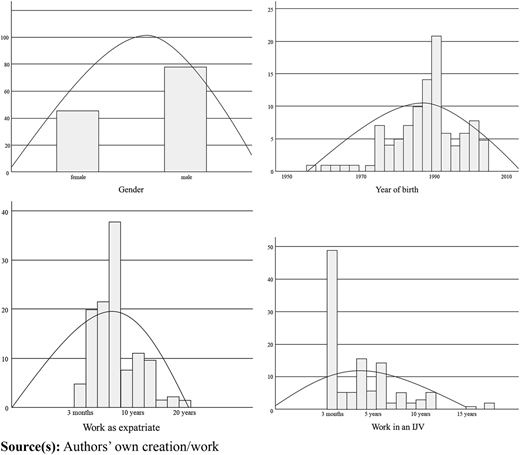
Frequency distributions of demographic variables
Frequency distributions of demographic variables
Appendix 3
Scales’ items
| Desire to terminate the assignment |
| 1 Would you like to terminate this expatriation assignment early? |
| 2 If this assignment had no effect on your career, would you terminate this assignment now? |
| 3 Do you hope that you will be asked to return home early? |
| Note(s): 1 = definitely not, 4 = yes definitely; α = 0.75 Source(s): Caligiuri (2000), p. 78 |
| Venture/IJV performance |
| 1 I could not be more pleased with the venture’s/IJV’s overall performance |
| 2 I am extremely satisfied with the progress that has been made toward achieving the venture’s/ |
| IJV’s long-term goals |
| 3 The investment in the venture/IJV will be rewarded beyond original expectations |
| 4 I am absolutely delighted with the degree of goal achievement in this venture/IJV |
Note(s): 1 = strongly disagree, 5 = strongly agree; α = 0.83
Source(s): Pearce (2001), pp. 569–570

