P. Beckmann, London
If, before the testing, the condition of the struts was known not to be suitable for the application of carbon fibre reinforced polymer (CFRP) ‘plates’, why were the tests not carried out with the dry-fibre-RIFT material used for the in situ strengthening?
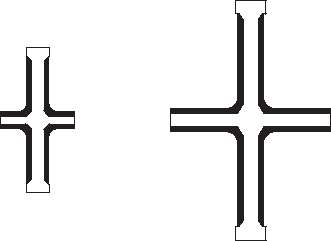
I also think the paper would have been even more informative if an illustration, similar to Fig. 3(b), had been included, showing the amounts and disposition of the CFRP strengthenings on the cross-sections of the struts, as they were actually applied in situ.
Authors' reply
The authors are grateful for Mr Beckmann's comments about the paper. We were trying to show that the laboratory work was complementary to the in situ strengthening.
The question is a good one. The answer is that it was partly a matter of convenience and partly because the two materials are almost identical in their final condition. The CFRP composite material is a mixture of the carbon fibres and the epoxy resin. The plates were made in factory conditions using a pre-impregnation process (‘prepreg’). The resin was mixed with the fibres and allowed partially to cure, resulting in a thin lamina. Layers were placed on top of each other until the required number was present. The whole was then cured under elevated temperature and pressure. The ‘prepreg’ process results in about 60% by volume of fibres in the finished product. The vacuum infusion (RIFT) process can be used in the factory or, as in this case, in situ. The dry carbon fibres are placed in layers on top of each other and a sealed bag is placed over them. A vacuum is used to suck out the air and compress the fibres. The resin is then sucked into the bag by the vacuum, fully impregnating the fibres (called ‘wetting out’). The vacuum is maintained for about 24 h to allow the resin to cure. The finished composite contains about 55% by volume of fibres. The strength and stiffness of the composite largely depend on the fibres, so the difference in fibre proportion can be compensated by using more fibres in the RIFT process. The actual composites are identical for practical purposes. Even the bonding is similar, since the plates are bonded to the metal using a two-part epoxy adhesive and the RIFT process uses the adhesive properties of the epoxy resin.
In situ the RIFT process had to be used to take up the flaws and imperfections in the Victorian cast iron. In the laboratory the modern cast iron was less flawed and plate bonding was possible. The upshot from this rather long answer is that technically there was no significant difference between the two approaches and the plate bonding was easier in the laboratory.
In response to the comment about the inclusion of an illustration that shows the disposition of the CFRP strengthenings, we should have done this in the paper. Fig. 22 shows the location of CFRP on the in situ struts. Up to 26 plies (layers of fibres) were applied to each arm of the cruciform sections.