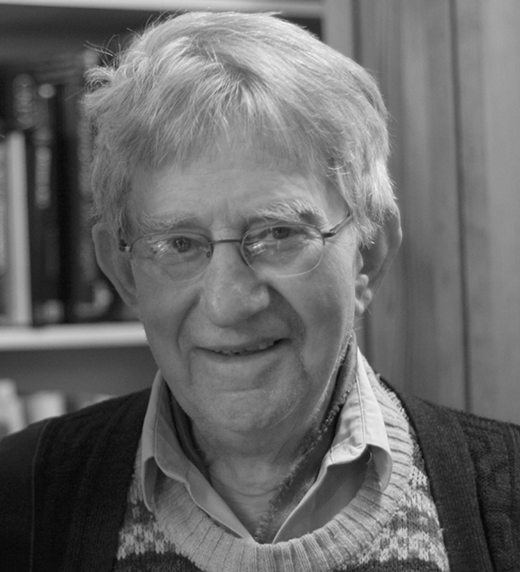
With the death of Professor Nathaniel Lichfield DSc, PhD, FRICS on 27 February 2009, the planning profession in Britain, and internationally, lost a pioneering visionary and practitioner.
Lichfield is regarded as one of the greatest amongst urban and regional planners of the post-war era. His work concerned the gaps between planning aspirations and realities, and he developed new and broader approaches to the field that focused on the interaction between the economic, physical and social aspects of change. His academic and practical works are highly respected internationally, and many leading professionals recall the inspiration he gave them as his students. Paying tribute to Lichfield, Professor Sir Peter Hall said
He'll always be one of University College London's planning giants. And he'll leave a space no one will ever quite fill. He was really one of the heroes.
Lichfield's career was a great mix of public service, private practice, and academic research and teaching, reflecting his view that ‘life has all these aspects to it, and you cannot plan without recognising all the angles’. He held the first ever chair of economics of the planned environment at University College London (UCL) and at the age of 85 received a doctor of science degree from UCL for his cumulative achievements. He was president of the Royal Town Planning Institute in 1965 and received its first ever lifetime achievement award in 2004. Lichfield wrote eight books and scores of articles, starting with his pioneering PhD thesis Economics of Planned Development. He also taught in universities in Israel, Italy and the USA.
Lichfield's best known innovations were in techniques of evaluation in planning and the economics of land policy. Experts of the subject in the UK and around the world have unanimously recognised that much of the theory and practice of evaluation in planning – both existing and new directions – comes from the lifetime work of Nathaniel Lichfield. He highlighted the contrast between private costs and benefits, which are accounted for in market transactions, and social ones, which are not. His planning balance sheet analysis (PBSA) – later refined as community impact evaluation – introduced the first steps away from utilitarianism and overcame the limitations of classical benefit–cost analysis, which ignores the distributional aspects of social utility. This introduced a form of impact analysis – a method of analysing and displaying the implications of the subject plan or project.
Well ahead of his time, Lichfield recognised the resource value embedded in land and the role it could play in repaying society for the costs it incurred due to development of the land. This idea, bridging the reality of ‘planning gain’ and the broad theoretical concept of the Georgist proposal to ‘abolish all taxation save that upon land values’, brought attention to the fact that most increased land value goes to the landowner who, in contrast to the developer, has done little to change its value. An equitable distribution of costs and benefits from this process of growth can therefore assist in reallocation of financial benefits.
Lichfield's valuable contributions to spatial development included planning for post-war new towns in Britain and, more recently, the urban village concept. His original ideas influenced the planning of Milton Keynes, Peterborough and Stevenage. As a member of the council of the Urban Villages Forum in the 1990s, he helped to develop key ideas that proved immensely influential not only in Britain, but also influencing the new urbanist movement in the USA.
In 1962, he founded his consultancy practice, Nathaniel Lichfield & Partners. Leaving 30 years later, he set up Lichfield Planning LLP with his wife Dalia, and created an innovative approach to integration in planning. He also became a director of Choudhury Lichfield & Associates, an integrated land-use and transport planning consultancy whose establishment he inspired. These practices continue to carry his name and his legacy.
Lichfield gave much of his time to public services and served, among others, as chairman of the planning committee of the Social Science Research Council, member of the Council for National Academic Awards, member of the Urban Motorways Committee, member of the South-East Economic Planning Council, executive director of the International Centre for Land Policy Studies, member of council of the Urban Villages Forum and honorary vice-president of the Professional Land Reform Group.
Born into an immigrant Jewish family in London's East End in 1916, Lichfield's early life posed many challenges, including illness. He overcame these with an exceptional strength of character that remained with him until his last day. Nat, as he was known to his friends and colleagues, was modest, good natured, interested in people and a generous mentor. Many of his friends and colleagues have fond memories of him as a ‘true gentleman’ and ‘a kind and loving man’.
Nathaniel Lichfield is survived by his second wife Dalia, four children and several grandchildren from two marriages.