

Examples abound of clients seeking the ‘quick fix’ for problem sites while contemporary critics have rounded on masterplanners—arguing that their plans lack substance and detail, do not go far enough and as a consequence deliver too little on the ground. Some critics point to a number of the post-war city redevelopment projects in the mid-twentieth century and a repetition of this previous bad practice during the 1980s and 1990s. Others highlight the questionable legacy of a number of past major international sporting events.
The creation and delivery of new, high-quality, functional urban environments is a complex process. At its best, it demands inspirational vision combined with an understanding of the present and historic context. Creative, functional, flexible and sustainable masterplans, which unlock the potential of long-term developments for the benefit of all and are truly ‘stitched back’ into the communities they serve, depend on collaboration, contextualisation and commitment.
The design approach needs to be both comprehensive and holistic, and should withstand assessment and challenge. In addition to contemporary scrutiny, new developments need to be capable of standing the more onerous test of time. There is a need both to anticipate change and make allowances for the unforeseen. Designers should consider current trends and future opportunities and ensure that plans have an inherent flexibility. Finally, and perhaps most importantly, there is the need to make sure any new development proposal is as sustainable as it is practicable.
Over recent years the planning process has evolved, particularly in the UK but increasingly worldwide, to encourage the private sector to become far more engaged with larger and more strategic development proposals—often resulting in the sector influencing public planning policy and driving change. However, while masterplanning continues to involve a significant element of ‘vision setting’ and ‘top-down’ strategic planning, urban regeneration and development plans should be built on, and integrated into, existing infrastructure. Projects must also be woven into the local social and economic fabric.
The professional teams who support the masterplanning process nowadays need to be adept at both creative visual representation of revitalised urban quarters and the canvassing of local opinion. This will help teams to develop plans that not only deliver new physical environments, but also improve social and economic environments, to benefit existing communities and businesses in line with local needs and desires.
If design teams take into account all of the factors affecting a site—including policy, feasibility, context and design intent—they should be in a stronger position to take a balanced approach to development, enabling an overall benefit to be achieved.
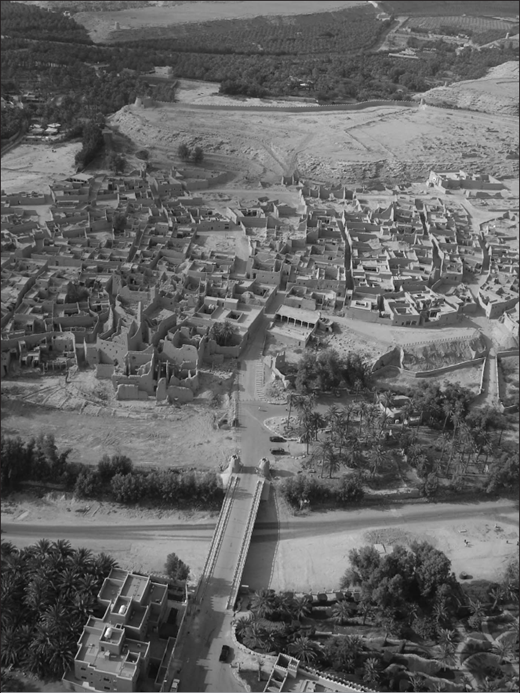
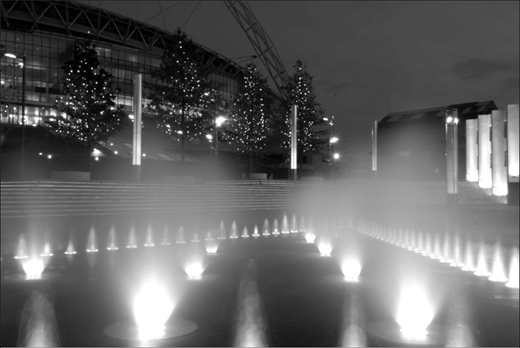
Buro Happold has vast experience of a wide range of strategic masterplanning projects in the UK and internationally, including iconic structures such as London's Millennium Dome and the Great Court of the British Museum, major real estate development such as Al Khiran in Kuwait and the reclamation of the great Wadi Hanifah in Riyadh. These projects have been designed not only to achieve their immediate purpose but with flexibility and legacy in mind (see Figs 1–4). The Great Court has won countless accolades and has helped to reassert the position of the British Museum as one of Britain's great institutions, whereas the Millennium Dome has been adapted successfully for a new life as ‘The O2 Centre’.
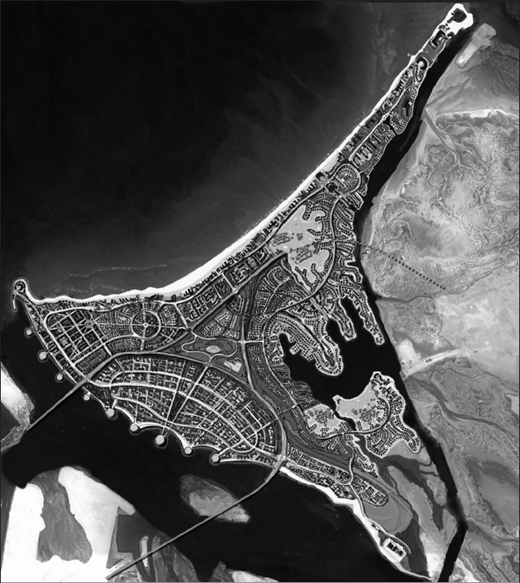
Saadiyat island, United Arab Emirates, is being transformed into an international residential and tourist destination
Saadiyat island, United Arab Emirates, is being transformed into an international residential and tourist destination
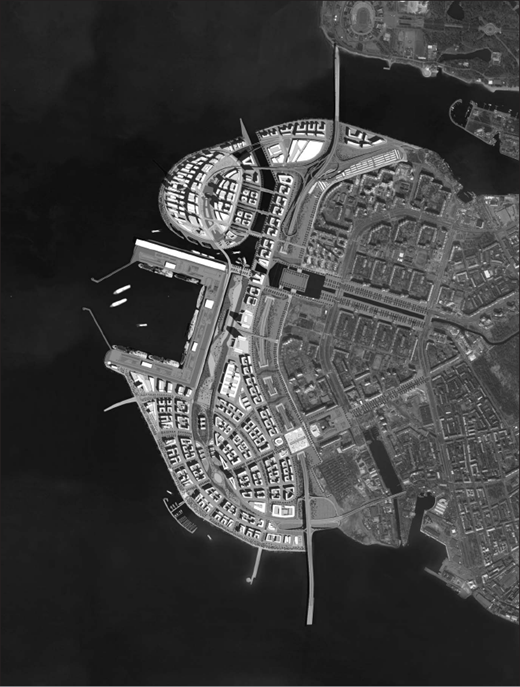
Vasilyevskiy Island, St Petersburg, Russia – the masterplan creates a blueprint for extending the city of St Petersburg by reclaiming 480 ha of land from the island's current coastline. Photo: Gensler
Vasilyevskiy Island, St Petersburg, Russia – the masterplan creates a blueprint for extending the city of St Petersburg by reclaiming 480 ha of land from the island's current coastline. Photo: Gensler
Through projects such as these, we have learnt that the key to unlocking the maximum future potential of a new project can only be achieved by the creation of a well-considered and appropriate masterplan–a blueprint for a site which considers a wide range of environmental, social and economic issues. It is, however, also concluded that a fully integrated approach is fundamental to good masterplanning. By working as part of an integrated delivery team, experts are able to bring to bear their in-depth understanding of complex and often interrelated environmental, technical and regulatory issues.
The aim should always be to work with others to create high-quality, deliverable projects for communities with lasting value. In order to succeed fully, this requires teams to develop a clear understanding and thorough knowledge of the physical aspects of a project, including those relating to the environment and site constraints. In addition to core areas of expertise in infrastructure design and transport planning, teams should draw on skills from a wide range of disciplines—from sustainable site development planning and topographical and land-form modelling to stakeholder and public consultation.
The challenge is to ensure that, if we put our names to work of this nature, it is genuinely of quality and value and not a pastiche or veneer of design. Partly this means working for the right clients and with like-minded consultants; sometimes it is about educating our clients and encouraging a more complete solution.
Together we should be striving to create inspirational, deliverable and flexible plans that allow for new uses, future markets and technological advancements. One must consciously approach engineering with a determination to use one's influence to deliver low-impact development solutions and support the high priority now given to sustainability–and welcome the challenges that this presents.
Creative, functional, flexible and sustainable masterplans, which unlock the potential of long-term developments for the benefit of all and are truly woven into the communities they serve, depend on the following.
Collaboration. The alliance of clients, authorities, planners, urban designers, architects, engineers and specialists to build a shared knowledge base, reinvigorate best practice and deliver truly integrated masterplans.
Contextualisation. The full and detailed consideration of government policies and regulatory requirements, as well as physical site issues, local socio-economic factors and existing land uses and infrastructure. This will ensure that development is ‘stitched back’ into the society, serves local communities and addresses the so-called ‘deep-green’ agenda for large-scale change.
Commitment. The current and future generations of practitioners must face up to the challenges ahead, integrate to form rounded teams and innovate with passion and sensitivity to deliver quality places where people want to live for generations to come.
The role of the designer and engineer in the masterplanning process is inextricably linked, with one having a direct impact on the other. The input of the engineer to this area of work has never been so critical in the design and procurement of environmentally responsible projects and only very close collaboration will continue to allow us to identify design solutions that maximise the opportunities for sustainable results while minimising impacts.
‘Sustainability’ should be part of an everyday approach to engineering and is delivered through good design and good engineering solutions–effective, efficient and environmentally sensitive responses to the challenges we are set. In the words of Buro Happold's founder Sir Ted Happold, we strive ‘to touch the Earth lightly’ in our work. While global warming and climate change have focused our minds, sustainable design is really a natural evolution of sound engineering practice. It must inform our approach to construction development, from masterplanning to specific buildings and smaller scale projects.
Buro Happold is pioneering the design of low-energy, high-performance and modular forms of buildings and systems. The company is also continuing to examine and identify new and more responsible ways to limit use of natural resources–by adopting more efficient approaches, seeking more proficient methods to move people, products and waste, and encouraging new and alternative technologies to meet existing needs.
As engineers we believe that new and innovative approaches are certain to play a central role in the development of creative, functional, flexible and sustainable masterplans for urban living, which will safeguard the longevity of our planet and improve the quality of the places that we create, for future generations to come.
As noted earlier, masterplanning and engineering are inextricably linked and this is reflected in the name of our exhibition ‘Masterplanning Engineering: Past > Present > Future’, which is being hosting at the London office (17 Newman Street, London W1T 1PD) and which runs until 30 May 2008.

