1. INTRODUCTION
The UK government's draft strategy for sustainable construction (at the time of writing out for consultation) proposes a number of targets and milestones in respect of waste
by 2012, a 50% reduction (over 2005 levels) of construction, demolition and excavation (CDE) waste to landfill
by 2015, zero net waste at construction site level
by 2020 zero waste to landfill.
As with other environmental issues, consideration of waste has progressively moved from ‘end-of-pipe’ waste management to one of resource management throughout the construction process. One such approach receiving increasing attention is designing for deconstruction.
This article draws on the Ciria report Design for Deconstruction1 and introduces the following four principles
consider the whole life of a product or material
consider the potential of components for reuse
consider the processes of deconstruction when designing components and buildings
consider the ownership of buildings and their components.
Recent developments in this area are summarised in the conclusion.
2. THE LIFE CYCLE OF PRODUCTS AND MATERIALS
Many initiatives are being developed by manufacturing industries for the long-term aim of attaining a zero-waste economy. By considering the whole life of a product, or of a material used in a product, it is possible to identify where ‘waste’ is generated or, rather, where a material turns from being useful to being ‘waste’, then becoming an unwanted problem.
In the UK, this approach has made use of the so-called ‘waste hierarchy’. In the Netherlands, the rather more sophisticated ‘Delft ladder’ is considered (Table 1). The ten stages of the Delft ladder are stages in the life cycle of materials and components at which a designer can take action to ensure they are used at the highest possible level in their life cycle, for as long as possible. By this means, the degradation of materials towards landfill is prevented or slowed down. When making design choices, a designer should consider, in sequence, each stage of the life cycle, as follows.
Prevention. How can waste be avoided by design (e.g. reducing waste by minimising material use or eliminating components)?
Object renovation. How can waste be avoided by prolonging an element's life in use (e.g. through maintenance)?
Element reuse. How can an element be reused after removal (e.g. refurbishment of a kitchen sink)?
Material reuse. How can materials be reused after removal (e.g. reconditioning bricks for reuse)?
Useful application. How can materials or elements be recycled or reused in new applications (e.g. using crushed bricks as hardcore or using a structural steel beam in a temporary works structure)?
The ‘waste hierarchy’ is, effectively, a reduced and simplified version of the Delft ladder.
3. ASSESSING THE POTENTIAL FOR REUSE AND RECYCLING
Designers and specifiers are constantly faced with choices between alternatives. For deconstruction and subsequent reuse and recycling to be brought into the process of choosing (alongside cost, performance, durability, etc.), suitable selection criteria need to be established.
Decisions about how and why to reuse or recycle, and how best to minimise the quantities of materials sent to landfill, will be influenced by the criteria used to evaluate the environmental impact of the alternatives. It is important to ensure that the criteria for assessment and evaluation are agreed among members of the project team and the client early in the project.
To undertake a thorough analysis of alternatives at the design stage calls for a very sophisticated methodology. In practice, busy designers will need to rely on tools that address the complex issues and present them in a form that can be digested by the decision makers. The potential for recycling or down-cycling can be addressed at the level of materials and building elements or construction systems.
3.1. Materials
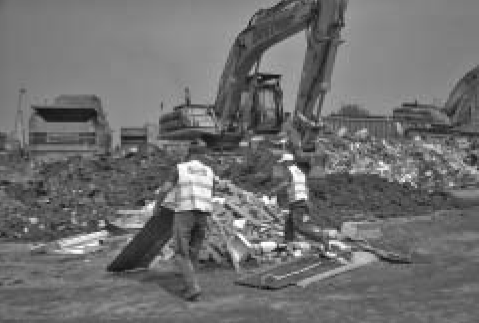
Materials vary in the ease with which they can be separated from the general mass of a dismantled or demolished building. Iron and steel, for instance, can be separated magnetically, while copper and tin cannot; glass and plasterboard are very likely to be damaged when removed from a building but timber is more robust (Fig. 1). Understanding the processes of deconstructing and demolishing buildings is vitally important in assessing the opportunities for reusing components and recycling materials.
3.2. Building elements and construction systems
Building elements are usually installed using a series of assembly and fixing processes that strongly affect how reversible the process is and the degree of damage that is likely to be caused in the deconstruction process. As a simple example, a bolted connection is easier to deconstruct without damage than a welded or glued one.
The criteria for assessment can be grouped to enable each element to be independently assessed for its suitability for
general dismantling
reuse as a second-hand item
reuse as new
down-cycling or recycling.
In practice, decisions about dismantling and deconstruction are very similar to decisions that are made regarding design for industrial manufacturing processes (‘production engineering’ as it is called in the car industry, for example). Many design decisions taken to improve assembly processes can result also in products that are easy to disassemble. For this reason, the use of off-site manufacturing in the construction industry will sometimes lead to easier deconstruction at the end of life. It would be useful, therefore, for demolition (or deconstruction) contractors and specialists in the use of reclaimed goods in new construction to become involved in developing off-site manufacturing processes.
4. HOW TO APPROACH DESIGN FOR DECONSTRUCTION
The decision will need to be taken in the design phase as to whether a building component should be designed with reuse or recycling in mind. It will often be impractical to design an entire building with easy deconstruction in mind. In practice, it will be preferable to adopt this approach for as much of the building as practicable, and certainly preferable to ignoring the issue.
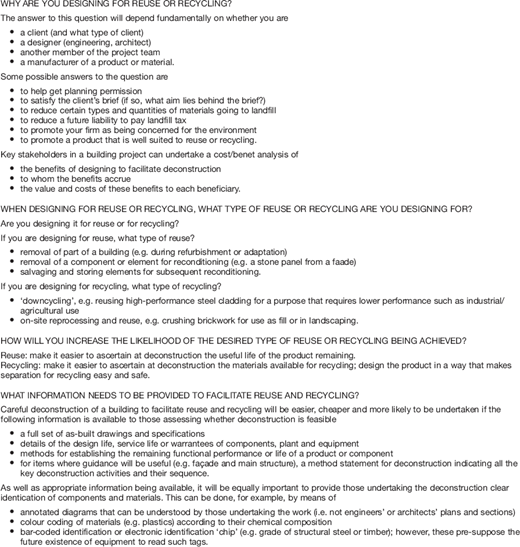
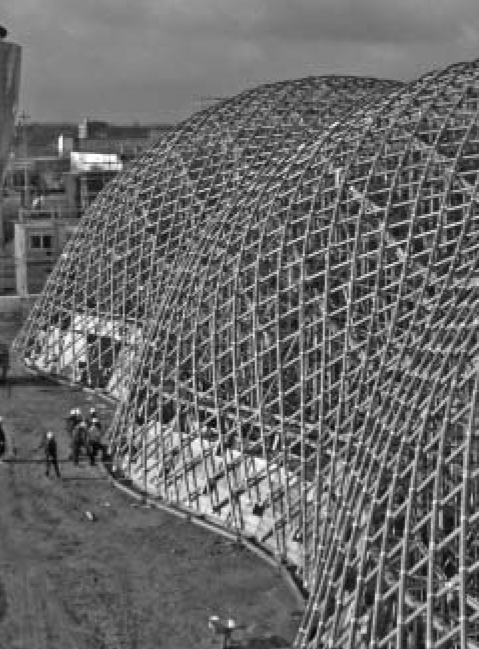
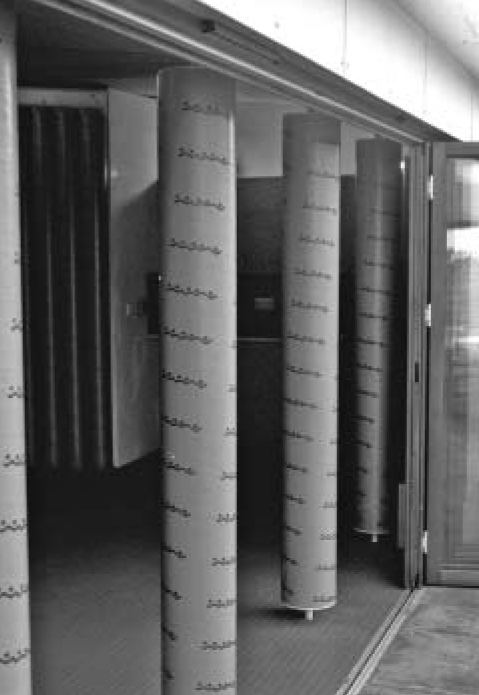
The processes involved in reusing a component when it has come to the end of its first life are fundamentally different from the processes involved in recycling the materials from which something is made. Therefore, for each component of the building being designed, a decision (perhaps an educated guess), will need to be taken as to whether it will be destined for likely reuse or for recycling. Fig. 2 sets out a number of questions that will need to be considered. Figs 3 and 4 illustrate some projects that have addressed deconstruction at the design stage.
5. OWNERSHIP AND RESPONSIBILITY FOR BUILDINGS
There are clear differences in attitude between owners of buildings (e.g. private houses) and those who rent them—the former are much more likely to look after, maintain and repair the property than the latter. At present this notion has not really addressed the end of such a building's life. For practical purposes, such buildings are still considered as assets whose value depreciates towards zero. Lasting ownership of a building is likely to have a direct effect on its design and construction not only because of its ultimate disposal but because an owner can be encouraged to consider subsequent use and then ensure it comes about.
Such attitudes to ownership have led some companies to apply the same philosophy to parts of buildings. Just as it has been possible to rent a television and a building, some firms have devised the idea of providing a building element as a service rather than product to be bought.
6. RECENT DEVELOPMENTS
Over the past two years, two important project tools have become available that will significantly help project teams to address the dismantling or demolition of buildings, and the use of reclaimed or recycled materials and goods in new construction.
The Institution of Civil Engineers' (ICE) demolition protocol2 provides a methodology for tracking the amounts of demolition arisings that are reused or recycled and thus prevented from being sent to landfill. Already, several projects have achieved targets in excess of 85%.
The recycled content toolkit3 developed by the Waste and Resources Action Programme (Wrap) enables project teams to audit the proportion of reclaimed or recycled materials and goods, calculated by value, that are used in new construction. Many projects are already achieving targets in excess of 20%.
As more historical data from the demolition protocol and recycled content toolkit are collected, so designers and contractors will be able to set and achieve even higher targets. At present, however, the Wrap scheme does not usefully distinguish between using reclaimed goods and recycled materials and so does little to encourage deconstruction and reclamation in preference to demolition and recycling. Wrap is currently undertaking studies that will redress this inherent bias and, hence, do much to encourage deconstruction. The first step is to provide a directory of sources for reclaimed construction goods and materials. The second and bigger challenge will be to devise a simple means of specifying performance targets for design for deconstruction.
7. CONCLUSIONS
The need for future adaptability, renovation by replacement of elements as opposed to wholesale reconstruction, requirements to incorporate reused or recycled materials within buildings and structures, together with increased scrutiny of waste arisings, further escalation of disposal costs are just some of the many drivers that point to the need for increased consideration of design for deconstruction.