


This study aims to unlock the choices of attraction patterns among international repeat tourists in Tanzania.
Cluster analysis and cross tabulation was employed to identify decision-making criteria from 1,550 international repeat tourists who visited Tanzania between November 2022 and July 2023.
Results from cluster analysis revealed seven distinct preferred attraction patterns, the leading three include wildlife-oriented (34.9%); a blend of culture and beach activities (16.9%) and a mix of wildlife, culture and beach experiences (16.6%). Chi-square results indicated a significant association between pattern choice and age, sex, education level and region of origin (p-value = 0.000, <0.05) for all variables. Additionally, it has been revealed that repeat tourists prefer a combination of attractions from different categories rather than favouring attractions from a similar category apart from the wildlife category.
This study focuses only on international repeat tourists. Domestic repeat tourists may also provide other interesting patterns.
By revealing attraction patterns preferred by repeat tourists, tour providers will have the light on the basis for segmenting them based on their attraction's choices. Therefore, they will be able to design products and services according to their requirements.
1. Introduction
Heightened competition among tourist destinations underscores the significance of cultivating a repeat tourist market (Almeida-Santana & Moreno-Gil, 2018; Oppermann, 2000). A central assumption in this premise is that repeat tourists tend to lower marketing costs, as their positive word of mouth attracts more tourists to the destination (Čaušević, Mirić, Drešković, & Hrelja, 2020; Lim, Kim, & Lee, 2016; Matzler, Teichmann, Strobl, & Partel, 2019). In addition, repeat tourists stay longer at the destination (British Tourism Authority, 2015). Furthermore, they reduce the chance of financial failure due to their spending in the destination (Kruger, Botha, & Saayman, 2012).
Despite their importance, the inability of tourist destinations to effectively utilize their natural and cultural attractions to secure a satisfactory number of repeat tourists has been a significant concern (Almeida-Santana & Moreno-Gil, 2018; Okamura & Fukushige, 2010; Oppermann, 1999). As a result, various destinations worldwide have failed to achieve a competitive advantage and win market shares by retaining their tourists regardless of having a diversity of attractions (Armenski, Gomezelj, Djurdjev, Deri, & Aleksandra, 2011; Assaker, Vinzi, & O’Connor, 2011). For instance, destinations including Trajectories (Assaker et al., 2011), Australia (Dolnicar, Coltman, & Sharma, 2015), Malaysia (Nasyat et al., 2020) and Northern Zimbabwe (Woyo & Woyo, 2019) are still struggling to secure sufficient repeat tourists in order to gain market shares and attain competitive advantage.
In line with this, Tanzania faces the same challenge; as a tourist's destination, it contains varieties and diversity of natural and cultural attractions over its competitors such as Kenya and South Africa (World Bank Group, 2019). Despite these potentials, the country is still struggling to attract an adequate number of repeat tourists compared to its competitors such as Kenya and South Africa. For instance, between 2016 and 2019, Tanzania received an average of 20% of repeat tourists, compared to South Africa and Kenya, which received an average of 80% and 42%, respectively (Musembi et al., 2020; SIA, 2020; TRI, 2020). The expectation was due to availability of uniqueness and diversity of natural and cultural attractions, which primarily attracts tourists to the destination, and Tanzania should gain a competitive advantage over its competitors by attracting a large enough number of tourists (Wamboye et al., 2020).
Previous studies that have been conducted have relied heavily on tourists' first choice of destination (Becken, Simmons, & Frampton, 2003; Hasnat & Hasan, 2018; Huang et al., 2020; Kim, Cheng, & O’Leary, 2007). Few studies that have been conducted on repeat tourists' attraction choices have been limited to a single attraction choice, such as golf (Correia, Barros, & Silvestre, 2007), beach (Gyte & Phelps, 1989), urban (Masiero & Zoltan, 2013) and theme parks (Kemperman, Joh ChangHyeon, & Timmermans, 2009). These research endeavours have failed to capture the multi-dimensional nature of repeat tourists, especially when they decide to make a repeat visit to a destination and opt to choose a combination of attractions, which belong to similar or compatible categories (McKercher, Tolkach, Eka Mahadewi, & Ngurah Byomantara, 2021b). Theoretically, these studies assume the homogeneity nature of repeat tourists within a single attraction type, overlooking the aspect that, repeat tourists might seek varieties and complementary of attractions to maximize their experiences (McKercher et al., 2021b). By concentrating on the single attraction criteria, these studies neglect the dynamic interplay between different types of attractions such as wildlife, mountain, culture and beach. Therefore, we are missing a comprehensive understanding the pattern-based approach that recognize repeat tourists as heterogeneous and not homogeneous in the aspect of their choice of attractions, which is the gap the current study is trying to fill (Bernini & Cagnone, 2014; Romão et al., 2015). Addressing this gap is crucial as it advances the tourists' choices theories by highlighting the dynamic nature of repeat tourists' decision-making across different attraction types.
Therefore, the current study intends to reveal attraction patterns which are more preferred by international repeat tourists in Tanzania. Practically, it equips destination managers and marketers with more understanding to better segment the repeat tourist market and tailor offerings to meet varied expectations, ultimately enhancing satisfaction, destination loyalty and competitiveness.
2. Literature review
2.1 Theoretical review
2.1.1 Choice theory
Choice theory is effective in determining preferences and assesses trade-offs facing individuals when considering various products and services. It deals with qualitative choice behaviour on discrete-choice decisions. The assumption of discrete choice is that individual makes a decision to choose a product or service that maximizes utility. Additionally, utility can be obtained as a function of known and unknown factors relating to choices of alternatives and the individual who makes those decisions.
In tourism, discrete-choice model refers to a choice made by tourists between destinations that differ in terms of their attributes such as attractions, facilities and the distance from tourists' home (Huybers & Bennett, 2003). Moreover, in the body of literature, a tourist's choice of attractions is regarded as the primarily motive behind travel decision (McKercher, Denizci-Guillet, & Ng, 2012a; McKercher, Filep, & Moyle, 2021a). Given the importance of tourists' attractions within the destination, the understanding of the discrete choice behaviour among international repeat tourists is a crucial part in travel and tourism research.
However, the choice theory is too general; therefore, it fails to give a clear picture on the way tourists make choices of attractions within the destination based on the assumption that, tourist destinations contain multi-products where the market is heterogeneous (McKercher et al., 2021a, b). In cementing this, the choice theory did not capture the interdependence of choices to influence decisions, as tourists might opt for a combination of attractions which belong to similar or compatible categories. Therefore, to clearly understand the choice theory from a tourism perspective, the theory of cumulative attraction was added to explain the notion of attractions' dependence in destination choice (Nelson, 1958).
2.1.2 Theory of cumulative attractions
This theory was first developed by Nelson in 1958 in retail and recreational businesses. The theory stands by the assumptions that if two or more adjacent businesses affect each other by increased volume of sales, those businesses are compatible (Hunt & Crompton, 2008; Lue, Crompton, & Fesenmaier, 1993). According to cumulative attraction theory, both similar and complementary cumulation attractions influence the consumer decision to visit a particular destination.
The theory of cumulative attractions is applied in the field of tourism with the notion that most tourism businesses are shared. An attraction secures its visitation not only as a result of its own generative power but also as a result of the generative power of other attractions. And a tourist who chooses to visit those attractions acts as a representative to those businesses. They also have their principal motives behind visiting those attractions. The theory was applied by Crompton (1979). In their study, they explore the relationship between multi-attractions visits and cumulative attraction theory. This study was conducted in commercial and recreational facilities, and it was the first study to validate the existence of tourists' choices of multi-attractions. In their results, they revealed moderate to high compatibility of the assessed tourism facilities based on the Nelson criteria of compatibility (Crompton, 1979; Nelson, 1958).
According to Hunt & Crompton (2008), high percentage of tourism businesses interchange their tourists between attractions in order to increase their appeal. Additionally, tourists are unlike to visit one attraction without visiting the other in the same trip. Therefore, based on the theory of cumulative attractions, which has also gained support from previous studies, it offers a standpoint for the current study, as it aims to unlock the attraction patterns preferred by international repeat tourists visiting Tanzania for leisure and recreation purposes.
Generally, in the current study, the choice theory stands as the principal framework for understanding how international repeat tourists make choices on the attraction to visit, while the theory of cumulative attractions provides a more focused lens that explains the way tourists choose a combination of attractions within a destination. The theory of cumulative attractions was also supported and used by existing studies (i.e. Hunt & Crompton, 2008; Lue et al., 1993). These studies validate the idea that tourists often choose multi-attraction visits based on similarity and compatibility. On the other hand, discrete choice models, rooted in choice theory, have been used to provide insight on the choice decisions based on available alternatives (Huybers & Bennett, 2003). Therefore, the current study extends these two theories by integrating them to explain not only which attractions are chosen by repeat tourists but also how these attractions are chosen together to form identifiable patterns.
2.2 Empirical review
2.2.1 Tourists' choices
Individual choices can be traced back from consumer behaviour studies, as they reflect on how a people become interested in one product over the other (Pachauri, 2001). The individual needs and desires normally change over time, making it a little tricky to determine (Irvine, 2005). Some choices such as buying a washing soap at the shop are more often and simple to make. Other choices are more infrequent and difficult to decide, as they require more information, time and analysis of the best choices (Nyman et al., 2018).
The term choice is also applicable in the tourism industry. As an industry, tourism offers various products and services ranging from airline, accommodation and attractions; all these products and services influence tourists' choices. When tourists decide to visit a destination, they face trade-offs oi making choices, especially on where to go, which type of activities to participate in and at what time (Nyman et al., 2018). Additionally, these choices are ranging from choosing a country as a destination to visit (Hamilton, 2011; Karl, Reintinger, & Schmude, 2015), travel components (Liu, Mehraliyev, Liu, & Schuckert, 2020), mode of transport (Cascetta, Cartenì, Henke, & Pagliara, 2020), class of accommodation (Losada, Alén, Nicolau, & Domínguez, 2017) and attractions (Padrón-Ávila & Hernández-Martín, 2019).
Since the current study intends to assess choices of attraction patterns among international repeat tourists in Tanzania, the choice of attractions was considered. According to Padrón-Ávila and Hernández-Martín (2019), attractions available in the country are regarded as the core motive that draws tourists to the destination. Tourists' decision to travel begins when they identify and are assured of the availability of various choices within the destination, specifically “attractions” that fulfil their desires (Liu et al., 2020). Concentrating on the choice of attractions allows for a detailed examination of various attraction categories and their influence on repeat tourists' decisions within a destination. Therefore, in the perspective of the current study, “choices” refer to repeat tourists' preferences of “attractions” within the destination (Padrón-Ávila & Hernández-Martín, 2019).
2.2.2 Attraction patterns
The concept of attraction patterns refers to the specific ways in which tourists choose and organize their visits to varieties of attractions within a destination (Masiero & Zoltan, 2013; Molinillo & Japutra, 2017). It includes the categorization and combination of attractions that tourists prefer to visit within a destination and they can be based on their interests (Molinillo & Japutra, 2017). Tourists' attractions can be generally categorized into natural and cultural categories (BOT and NBS, 2019). Natural attractions include scenic beauty of landscape, wildlife attractions, beaches and mountains. These attractions are more preferred by tourists who are interested in nature experiences, adventure tourism and outdoor activities (Lindberg, Veisten, & Halse, 2019). Furthermore, cultural attractions include historical sites, museums, monuments, arts and crafts (BOT and NBS, 2019). These attractions are suitable for tourists with the desire to explore cultural practices and history of the destination (Molinillo & Japutra, 2017). According to literature, each category of attractions can be combined in several ways to form a pattern that suits tourists' diverse interests (Molinillo & Japutra, 2017; Zhong et al., 2019). For instance, nature-based tourists may prefer a pattern that combines attractions like national parks and mountains, while a culture enthusiast might opt for a pattern that involves exploring museums, monuments and historical landmarks. Recognizing and analysing these attraction patterns helps in tailoring marketing strategies, improving visitor satisfaction and enhancing the overall tourism experience within a destination (Masiero & Nicolau, 2012; Masiero & Zoltan, 2013; Molinillo & Japutra, 2017).
On the other hand, attraction patterns can be traced back from the theory of cumulative attractions, which was developed by Nelson (1958). Based on this theory, there are two different types of cumulative attractions, which lead to the formation of different patterns of attractions based on the way they are chosen by tourists (Hunt & Crompton, 2008; Lue et al., 1993). The first is similar cumulative attractions, and the second is complementary cumulative attractions. In the perspective of tourism, similar cumulative attractions are those attractions which belong to a similar category. For instance, Tarangire National Park, Manyara National Park and Mikumi National Park are all belong to similar category “wildlife category”. According to the theory, similar cumulative attractions draw tourists to the destination because they provide alternative areas for visitation and offer a competitive price (Nelson, 1958) – for instance, national parks in Tanzania. Tourists who wish to get wildlife experiences may opt to visit among the 22 national parks available in the country based on their preferences. Tourists are also more likely to visit a destination, which offers a variety of options than one without alternative attractions; that's when the complementary attractions come in.
Complementary attractions are different in type but appear compatible due to their nature of sharing a percentage of tourists (Nelson, 1958). For instance, tourists might come to Tanzania to visit attractions associated with wildlife, i.e. national parks, and may also visit cultural attractions such as Stone Town and coral paintings in Kondoa Irangi. These attractions belong to different categories, but they complement each other in attracting tourists with varieties of motives and interests. Likewise, tourists who come to visit Stone Town in Zanzibar might also be interested in visiting beach attractions at Nungwi, which is in proximity to Stone Town. Therefore, based on the nature of this study, attractions are grouped based on their similarities and complementarity in formulating attraction patterns as a result of choices among international repeat tourists visiting Tanzania.
2.2.3 Tourists' choice of attraction patterns
According to literature, tourists can be understood and attracted through choices available within the destination (McKercher et al., 2012a; McKercher, Shoval, Ng, & Birenboim; 2012b, McKercher et al., 2021a, b). The major suggestion is to focus on understanding the attractions which motivate tourists to choose a certain destination (McKercher et al., 2012a, b; McKercher & Koh, 2017; Mckercher & Tolkach, 2020). This is because the tourist attractions available in the country are regarded as a primary motive that influences tourists' decisions on whether to visit or not to visit a certain destination (Liu, Li, Cárdenas, & Yang, 2018). Usually the flow of tourists to specific attractions is measured to determine their rate of visitation to the destination (Meleddu et al., 2015). Therefore, if destination managers and operators want to satisfy and retain their customers, they have to focus on the way they are making choices of attractions within a destination (McKercher et al., 2012a, 2021b).
Scholars revealed that attractions available within destinations can formulate different patterns based on tourist choices (McKercher & Koh, 2017; Mckercher & Tolkach, 2020). Therefore, if these patterns are unlocked and understood, it will be easy to know where exactly to focus if the country wants to increase the number of repeat tourists (McKercher et al., 2012a, b; 2021a, b).
In the body of literature, several studies have been conducted on tourists' choices of attraction patterns. The early study by Crompton (1979), drawing on the theory of cumulative attraction, examined two distinct attractions – Six Flags Over Texas Theme Park and the Texas Rangers Baseball Stadium – located in the Dallas-Fort Worth area. The findings indicated that the two attractions function as complementary to each other, with each one enhancing the tourist appeal of the other and jointly contributing to visitor generation. Crompton (1979) concluded that the theory of cumulative attractions is largely applicable in tourism enterprises regardless of tourists' profiles.
Furthermore, Lue et al. (1993) extended the theory of cumulative attractions into an attraction taxonomy. The authors developed a classification framework that outlines various patterns emerging as a result of tourists' choices of similar or complementary attractions. This framework comprises five categories: single attraction/destination, en route, base camp, regional tour and trip chaining. Additionally, the authors highlighted that these proposed travel patterns are likely to shape the spatial distribution of tourist attractions and significantly affect the probability of tourists visiting specific sites.
In the same vein, McKercher and Koh (2017) developed a classification framework for tourism products to evaluate the influence of attractions in drawing tourists to a destination. The research examined how specific tourist needs align with the types of attractions they visit. Findings indicated that tourists with a wide range of needs tend to show a stronger inclination to visit multiple attractions, whereas those with more limited travel interests are likely to visit fewer sites. The proposed taxonomy was then applied by Mckercher and Tolkach (2020) to assess the role of attraction on travel decision to visit Texas as a tourist destination. The authors concluded that tourists' choice to travel to Texas is driven by their pursuit of attraction-specific experiences that align closely with their underlying travel motivations.
Despite the extensive literature on tourists' attraction choices of attraction patterns, the aspect of repeat tourists' choices has received limited scholarly attention, particularly their diverse and heterogeneous preferences when selecting attractions within destinations like Tanzania, which offers a wide array of diverse tourism experiences. As recommended by McKercher et al. (2012a, b), repeat tourists is an independent segment that requires special attention.
Therefore, the current study focuses on assessing the choice of attractions patterns among international repeat tourists visiting Tanzania as a tourist destination. Both natural and cultural attractions are considered to formulate patterns as a result of repeat tourists' choices of similar or compatible attractions (Arshad, Iqbal, & Shahbaz, 2018; Sertkan, Neidhardt, & Werthner, 2019). Hence, the question on where exactly international repeat tourists wish to go when revisiting Tanzania will be answered (McKercher et al., 2021a, b; Zoltan & McKercher, 2015). For example, Tanzania, as a standalone destination, boasts a wide spectrum of tourist attractions, including wildlife, lush vegetation, mountain landscapes, pristine beaches, birdlife, natural forests, traditional cuisine, local arts and crafts and historical monuments, among others. These diverse attractions significantly shape tourists' decisions, often leading to the formation of attraction patterns based on the similarity or compatibility of their preferences (Dellaert et al., 1998; Liu et al., 2020). Therefore, understanding the patterns of attraction that encourage repeat visits to Tanzania can provide essential guidance for tourism marketers and planners, helping to overcome the challenge of drawing returning tourists. Moreover, tour operators will benefit from insights into the types of tourism products and packages to promote, enabling them to tailor their offerings to better meet the preferences of repeat visitors – ultimately enhancing tourist satisfaction by delivering exactly what their clients seek.
Do repeat tourists in Tanzania opt for a combination of attractions to formulate patterns based on their choice of similar and compatible attraction?
3. Methodology
3.1 Research design and study area
This study used a cross-sectional design to gather data from international tourists visiting the Tanzania mainland and Zanzibar repeatedly. This design was preferred for the current study due to its methodological suitability and practical advantages in fulfilling the intended objectives. Since the primary aim of the current study was to assess the choice behaviour among international repeat tourists visiting both the Tanzania Mainland and Zanzibar, the cross-sectional design involves obtaining data from a subset of a population in a single instance (Allen, 2017). This approach offers notable benefits in terms of time and expenses and is particularly suitable for research involving numerous variables and a substantial number of participants.
3.2 Sampling design and data collection
This paper reports the results of an analysis of survey data collected from 1,550 international repeat tourists between November 2022 and August 2023. International repeat tourists in Tanzania were chosen because they play an important role in the country's tourism industry and contribute significantly the economy (cite). Their repeated visits to the country provide more understanding into more preferred attraction choices with Tanzania's diverse tourism offerings. Additionally, this group remains under-represented in tourism research, especially in African contexts; therefore, studying them becomes crucial for addressing available knowledge gaps in order to improve marketing and planning strategies to encourage repeat visits to the country.
A convenience sampling procedure was employed to get the appropriate respondents for the study. This sampling method falls under non-probability techniques, where participants are chosen based on their ease of access and closeness to the researcher, rather than being randomly selected. Considering the nature of this study, the use of convenience sampling enabled efficient and timely data collection from international repeat tourists who were readily available during the study period. Therefore, this approach was suitable given the logistic constraints and time limitations typically associated with assessing a group of international tourists at once in order to apply probability sampling techniques (Kara, 2016; Mgonja et al., 2017).
Convenience sampling was used to select tourists who willingly participated in the study. This method is appropriately used when there is control in the research design to make sure the samples used are true representatives of the desired population. Therefore, data from this study were collected from three major international airports regarded as the major exit point for international tourists visiting Tanzania (BOT and NBS, 2019). For this point, the chance of having true representatives besides using the convenience sampling method is very high.
It is known that convenience sampling has inherent limitations related to potential sampling biases and constraints in data collection. Therefore, in order to reduce bias associated with employing the convenience sampling method, Kara (2016) and Ferber (1977) noted that convenience sampling is one of the forms of non-probability sampling that can be used when there is a control in the research design in order to reduce the impact of non-random sampling by making sure that the generated findings are from the true representative of the population. To enhance that, in the current study, data were collected from the three major international airports in Tanzania (Julius Nyerere International Airport (JNIA), Kilimanjaro International Airport (KIA) and Abeid Aman Karume International Airport (AAKIA)). These airports act as the major exit point for international tourists visiting Tanzania (BOT and NBS, 2019). Therefore, the chance of having diversity of respondents in the aspects of preferences and demography was very high.
The drop-and-pick method was used to distribute questionnaires to tourists at three main international airports: JNIA, KIA and AAKIA. The use of airports as the major data collection point guaranteed a diverse sample of international repeat tourists. This is because these airports are considered the major exit point for international tourists who visit Tanzania (BOT and NBS, 2019). Furthermore, these hubs serve travellers from various countries, backgrounds and travel purposes (Kara, 2016; Mgonja et al., 2017).
A structured questionnaire with close-ended questions was used to gather information from international repeat tourists who were found at the departure lounges of the mentioned three airports. Repeat tourists were identified using an introductory question that required respondents to indicate whether they had previously visited Tanzania or not. Tourists found at the departure lounge were approached based on their availability and politely invited to participate in the survey. The purpose of the study was clearly explained to them, and their participation was entirely voluntary. Those who consented to take part were provided with a questionnaire to complete. The researcher, accompanied by research assistants who understood the subject matter of the study and were conversant with the research procedures, led the exercise of drop and picking the questionnaires.
3.3 Measurements of the study variables
Attraction patterns were identified using a list of tourist attractions in the country which was obtained from Tanzania Tourism official pages, including the Tanzania Tourist Board and the Tanzania National Parks also from the Tanzania Tourism Sectoral Survey Report of 2019. A list of attractions was organized into categories including wildlife, mountains, culture and beaches. According to the Tanzania Tourism Sectoral Survey Report by BOT and NBS (2019), these four categories represent the most popular attractions for international tourists visiting Tanzania. Tourists were asked to specify which attractions they visited during their trips, with each attraction being assigned to one of the categories as outlined in the Tanzania Tourism Sectoral Survey Report of BOT and NBS (2019).
Furthermore, theory and literature provide evidence that tourists often opt to visit more than one attraction, which might belong to a similar or compatible category (Hunt & Crompton, 2008; Masiero & Zoltan, 2013; Nelson, 1958; Zoltan & McKercher, 2015). According to choice theory, attractions can be grouped based on their similarities and compatibility (Nelson, 1958). Furthermore, the studies conducted by Hunt & Crompton (2008) and Lue et al. (1993) validated the existence of attraction patterns as a result of tourists' choices of similar or compactible attractions within the destination. Therefore, attractions preferred by Tanzanian international repeat tourists were grouped into different clusters based on their choice similarities and compatibility. Each pattern incorporates a variety of attraction types; for a tourist to fall into a specific pattern, they must have visited all the attractions associated with that pattern.
3.4 Data analysis
K-means cluster analysis was used to group choices of attraction patterns among international returning tourists based on similarities and compatibility. The algorithm aims to form clusters in a manner that maximizes the similarity and compatibility within each cluster while maximizing the dissimilarity between clusters. This method has been widely applied in marketing to achieve effective market segmentation (Paulino et al., 2021). Furthermore, the chi-square test was used to examine the association between the demographic characteristics of repeat tourists, such as age, gender, education level and region of origin.
3.5 Ethical consideration
The data collection process for this study commenced once the research clearance from the University of Dodoma was obtained, with Reference No. MA.84/261/02. Furthermore, all ethical procedures, such as securing introduction letters and seeking permission to gather data at three airports (JNIA, KIA and AAKIA), were followed. Each respondent was provided with a consent form that concisely delineated the main objectives of the research and emphasized the importance of his or her participation in the study's success. The consent form also explicitly outlined participants' freedom to withdraw from the study at any stage, ensuring their involvement remained entirely voluntary.
4. Results
4.1 Tourist repeat visitation
In this section, respondents were asked to indicate the number of times they had visited Tanzania for tourism purposes. The aim was to observe visitation trends and measure the level of continuation of tourists’ interests for Tanzania over time. The responses were analysed using descriptive statistics, specifically frequencies and percentages.
As presented in Figure 1, the majority of respondents (74.3%, n = 1,152) reported visiting Tanzania for the second time, which suggests high level of satisfaction during their first visit to the country. A smaller proportion (19.7%, n = 305) were on their third visit, followed by 3.9% (n = 60) who had returned for the fourth time and just 2.1% (n = 33) who were visiting the country for the fifth time.
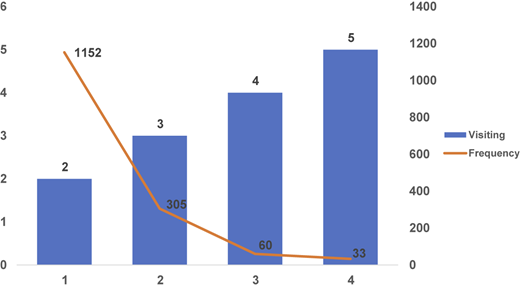
These findings highlight a positive but limited progression in repeat visitation in the country. While the large percentage of second-time tourists indicates a strong appeal of the first tourism experience in Tanzania as a tourist destination, the declining numbers for the following visits may be an alert to a gap in product diversification or promotion. Specifically, the reduced frequency of third-, fourth- and fifth-time visitors may be associated with limited awareness of other attractions that could act as a motivator to additional trips. This trend suggests the need for more effective targeted marketing strategies, enhanced information spreading and the diversification of tourism products to extend the lifecycle of tourist engagement with the destination. See Figure 1.
4.2 Attraction patterns among international repeat tourists
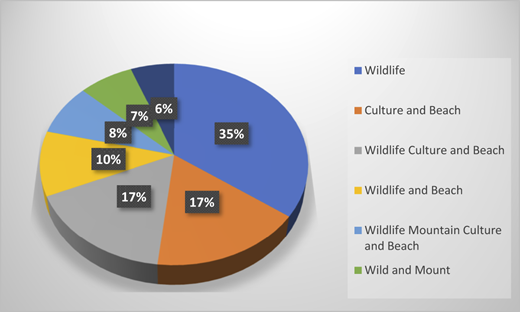
The results revealed about 34.6% of international repeat tourists are mainly drawn to Tanzania's wildlife experiences, which provides strong justification for promoting the country as a prime destination renowned for its abundant and diversity of wildlife resources. The next most favoured the attraction that involves a combination of cultural experiences and beach tourism labelled as “Cult_Beach”, accounting for 17%. Similarly, 16.9% of tourists are enticed by the attractions involving a mixture of wildlife, culture and beach activities, referred to as “Wild_Cult_Beach”. Conversely, beach tourism alone appears to be the least attractive option, with just 5.7% of repeat visitors selecting it as their main interest. This suggests that although Tanzania boasts numerous coastal attractions, the beach on its own may not be the primary motivator for return visits by international tourists (see Figure 2). Furthermore, the results from the chi-square test suggest a highly significant difference between choice of attraction patterns, as the p-value is very close to zero (p = 0.000).
4.3 Cross-tabulation results
4.3.1 Repeat tourists' choice of attraction pattern and age
The findings from the cross-tabulation between the choice of attraction patterns among returning tourists and their age groups demonstrated a significant association with the p-value (<0.05). Furthermore, the results show that tourists aged 25–34 show a notable inclination for patterns centred around wildlife experiences (124). Similarly, patterns that incorporate both cultural and beach (108) destinations are also well received by this age group. Furthermore, tourists aged 35 to 44 years display a significant preference for wildlife-centric patterns (115), and a similar inclination is observed among tourists aged 55 and above, who favour wildlife-themed patterns as their preferred choice (134). See Table 1.
Cross-tabulation between repeat tourists' choice of attraction patterns and age category
| Age category | ||||||
|---|---|---|---|---|---|---|
| Attraction patterns | 18–24 | 25–34 | 35–44 | 45–54 | Above 55 | Total |
| Wild_Cult_Beach | 20 | 106 | 57 | 26 | 49 | 258 |
| Wildlife | 84 | 124 | 115 | 84 | 134 | 541 |
| Cult_Beach | 18 | 108 | 58 | 30 | 48 | 262 |
| Wild_Beach | 27 | 58 | 43 | 16 | 17 | 161 |
| Wild_Mount_Cult_Beach | 12 | 44 | 31 | 21 | 19 | 127 |
| Wild_Mount | 24 | 29 | 19 | 21 | 19 | 112 |
| Beach | 3 | 26 | 30 | 18 | 12 | 89 |
| Total | 188 | 495 | 353 | 216 | 298 | 1,550 |
| Chi-square | Pearson χ2(24) = 100.7052 Pr = 0.000 | |||||
4.3.2 Repeat tourists' choice of attraction patterns vs tourists' gender
The cross-tabulation results revealed a strong association between gender and repeat tourists' choice of attraction patterns with a p-value (<0.05). The results further suggest that females dominate all categories, especially the top three preferred patterns, namely wildlife (308), the combination of wildlife, culture and beach (163) and the combination of culture and beach (163), which are more popular among females than males. Additionally, it is evident that the wildlife pattern is a favoured choice among males. See Table 2.
Cross-tabulation between repeat tourists' choice of attraction patterns and gender
| Gender | |||
|---|---|---|---|
| Attraction patterns | Male | Female | Total |
| Wild_Cult_Beach | 95 | 163 | 258 |
| Wildlife | 233 | 308 | 541 |
| Cult_Beach | 99 | 163 | 262 |
| Wild_Beach | 76 | 85 | 161 |
| Wild_Mount_Cult_Beach | 51 | 76 | 127 |
| Wild_Mount | 44 | 68 | 112 |
| Beach | 51 | 38 | 89 |
| Total | 649 | 901 | 1,550 |
| Chi-square | Pearson χ2(6) = 15.8687 Pr = 0.014 | ||
4.3.3 Repeat tourists' choice of attraction pattern and education
The findings from the cross-tabulation of choice of attraction patterns among repeat tourists and their education level indicated a significant association with the p-value (<0.05). The results also revealed that the most favoured patterns, including wildlife, the combination of wildlife, culture and beach, as well as the combination of culture and beach, were significantly preferred by repeat tourists who attained a university level. See Table 3.
Cross-tabulation between repeat tourists' choice of attraction patterns and education
| Education | |||||
|---|---|---|---|---|---|
| Attraction patterns | Primary | Secondary | College E | University | Total |
| Wild_Cult_Beach | 2 | 19 | 57 | 180 | 258 |
| Wildlife | 3 | 60 | 84 | 394 | 541 |
| Cult_Beach | 4 | 22 | 61 | 175 | 262 |
| Wild_Beach | 6 | 19 | 30 | 106 | 161 |
| Wild_Mount_Cult_Beach | 3 | 14 | 35 | 75 | 127 |
| Wild_Mount | 3 | 44 | 14 | 51 | 112 |
| Beach | 2 | 2 | 18 | 67 | 89 |
| Total | 23 | 180 | 299 | 1,048 | 1,550 |
| Chi-square | Pearson χ2(18) = 125.7818 Pr = 0.000 | ||||
4.3.4 Repeat tourist choice of attraction pattern and region of origin
The results revealed a strong association between repeat tourists' region of origin and their choice of attraction pattern with the p-value (<0.05). Furthermore, the results indicate that European tourists overwhelmingly opt for the most popular patterns, including wildlife (371), the combination of wildlife, culture and beaches (196) and the combination of culture and beaches (202). See Table 4.
Cross-tabulation between repeat tourists' choice of attraction patterns and region of origin
| Region of origin | |||||||
|---|---|---|---|---|---|---|---|
| Attraction patterns | Europe | N.America | S.America | Asia | Africa | Australia | Total |
| Wild_Cult_Beach | 196 | 24 | 6 | 8 | 24 | 0 | 258 |
| Wildlife | 371 | 57 | 23 | 38 | 45 | 7 | 541 |
| Cult_Beach | 202 | 16 | 20 | 8 | 16 | 0 | 262 |
| Wild_Beach | 115 | 14 | 10 | 9 | 13 | 0 | 161 |
| Wild_Mount_Cult_Beach | 79 | 17 | 13 | 8 | 10 | 0 | 127 |
| Wild_Mount | 97 | 5 | 0 | 1 | 9 | 0 | 112 |
| Beach | 72 | 3 | 1 | 1 | 12 | 0 | 89 |
| Total | 1,132 | 136 | 73 | 73 | 129 | 7 | 1,550 |
| Chi-square | Pearson χ2(30) = 77.6778 Pr = 0.000 | ||||||
5. Discussion
This study offers valuable insights, particularly in comprehending the specific patterns that attract repeat tourists when they travel to Tanzania. The findings suggest that Tanzania is successful in drawing repeat tourists for their second and third visits, although only a small number of tourists expressed an interest in returning for the additional visits. This trend may be attributed to the challenge of limited diversification of tourist attractions, which hampers the ability to provide a diverse range of experiences and fails to entice repeat visits as frequently as desired (BOT and NBS, 2019).
Furthermore, it has been revealed that the abundance of wildlife resources plays a pivotal role in capturing repeat tourists. Repeat tourists tend to choose attractions that belong to a similar category (wildlife) as their place to enjoy during their repeat visit. This is supported by Okello and Yerian (2009), who found that tourists express a strong inclination to revisit wildlife attractions in the northern circuit. Therefore, more emphasis should be focused on expanding and diversifying wildlife attractions in order to encourage repeat visits to the country. Additionally, international repeat tourists typically tend to explore multiple attractions from different categories to form different patterns. One of such patterns encompasses the combined wildlife, culture and beach attractions categories. According to McKercher and Koh (2017), tourists tend to choose varieties of attraction sets in order to maximize their experiences in the destination. This is in line with the results of the study conducted by Khairi and Darmawan (2021) that tourists tend to choose a variety of places to visit to increase their level of satisfaction with the destination. Furthermore, Dolnicar et al. (2015), and Femenia-Serra and Gretzel (2020) support this by placing more emphasis on tour providers and marketers to ensure that they have a clear understanding of their customers, especially on their variety of choices when visiting the destination.
Regarding the cross-tabulation results, the data demonstrated a correlation between individuals aged 25–34 and their preference for wildlife-oriented patterns. This correlation can be attributed to the fact that people in this age group are generally strongly inclined to engage with nature. This observation aligns with the Tanzania Tourism Sectoral Survey Report of 2019, which found that young tourists visiting Tanzania often prioritized national parks and mountains. Furthermore, the results indicate that tourists aged 55 years and above prefer wildlife patterns as their destination to repeat. This is also supported by Joseph and Khanin (2019), who found that elderly tourists demonstrate an increased propensity to explore natural settings. Therefore, youth tourists between the ages of 25 and 35 and older tourists above 55 should be the target if the country wants to increase repeat visits to wildlife attractions. In the aspect of gender and choice of attraction patterns, the results revealed that females dominate all the patterns, particularly the top three most frequently visited categories. This might be contributed to by the fact that women like to participate in outdoor recreation activities more than men. A report from the Tanzania Tourism Sectoral Survey also revealed that female tourists mainly visited Tanzania for leisure and holidays (BOT and NBS, 2019). Furthermore, the literature reveals that the number of females exceeds that of males when it comes to visiting tourist attractions (Kim et al., 2007).
6. Study implications
6.1 Theoretical implications
The study contributes to the theory of cumulative attractions, as the theory assumes that both similar and complementary cumulative attractions influence the consumer decision to visit a particular destination. Therefore, the current study supports the theory of cumulative attraction by providing empirical evidence on its application in the context of international repeat tourists in Tanzania. In this study, international repeat tourists opted for attractions that belong to similar and compatible category during their repeat visit to Tanzania. Therefore, the current study provides the empirical evidence on the application of the theory of cumulative attraction assumptions in the context of international repeat tourists in developing countries like Tanzania.
6.2 Managerial implications
Tour providers will shed light on the basis for segmenting international repeat tourists according to their choice of attraction patterns. Therefore, they will be able to design products and services based on similarities and compatibility of attractions special to cater to the needs of international repeat tourists. Therefore, the assurance of satisfaction as a result of matching product attributes with repeat tourists' desires will be guaranteed.
Additionally, after unlocking patterns that attract repeat tourists in Tanzania, marketers and promoters will be able to understand the kind of attractions to market to their potential repeat tourists. Hence, the cost of marketing and promotion will be reduced.
The author gratefully acknowledges the financial support provided by the University of Dodoma for this research. This support was instrumental in facilitating data collection, analysis, and the successful completion of the study.

