


A model on the cognitive elements of engagement is adopted and content analysis, along with sentiment analysis, has been used to explore the post characteristics and the levels of stakeholders' interactions in controversial and non-controversial European industries through three Poisson regressions. At last, an ANOVA test has been used to check the level of interaction regarding the coronavirus disease 2019 (COVID-19)-related aspects.
The intrinsic characteristics of controversial industries cause the stakeholders’ skepticism about their corporate social responsibility (CSR) strategies. This results in the need to elaborate proper involvement strategies to approach industries' stakeholders. Such need has assumed relevance during the COVID-19 crisis and has traced a certain border between the companies that are more sensitive to the social side of the surrounding environment and the ones that are less involved in risky sectors. The present paper aims to understand the role of social media in stakeholder engagement, and social media's characteristics, and tries to elaborate on companies' CSR communication readiness to the challenges shown by the pandemic.
The study reveals how the success of stakeholder engagement in CSR communication is affected by both controversial sector membership and the characteristics of the posts such as the inclusion of the sustainable development goals (SDGs). In addition, the study emerges how the European companies have focused on social aspects in companies' communication, revealing a certain readiness for the COVID-19 challenges.
Building on a model of cognitive elements of engagement, the present study provides useful insights for companies' next engagement strategies on social media. Moreover, the thematic analysis provides a benchmark for the improvement of current corporations' communication strategies in light of the pandemic effects.
This paper contributes to the literature by investigating the role of Twitter as a stakeholder engagement tool and identifies the drivers for an effective Twitter content strategy. Moreover, the paper provides a useful proxy for current and future research on the COVID-19-related CSR communication.
1. Introduction
Over the last years, companies have started paying more attention to corporate social responsibility (CSR), with a growing awareness that focusing on sustainable development can positively pursue long-term competitive advantages (Waheed and Zhang, 2022). This interest is also linked to the sustainable development goals (SDGs) delivered by the United Nations to raise awareness and address organizations from all countries about sustainable development (United Nations, 2020). Being a set of 17 goals to be pursued by the year 2030, the SDGs have represented a turning point for companies' organization and accountability practices (PwC, 2017). Specifically, the SDGs have started receiving increasing attention from scholars and practitioners because of their role in sustainability disclosures and the positive impact on stakeholder involvement (Gusmão Caiado et al., 2018; Morioka et al., 2017).
However, SDGs involvement in companies' communication is only part of the processes that companies are activating to improve the dialog with their stakeholders. Stakeholder relationships constitute a source of competitive advantage (Panda and Sangle, 2020; Surroca et al., 2010) that generate a range of potential benefits from reputation improvement to risk reduction, besides better relationships with employees and all companies' stakeholders (Carroll and Shabana, 2010). Moreover, as Adams (2020) reveals, stakeholder engagement has to be seen as a core principle for the effective realization of a sustainable business, and thus, it emerges a strong relationship between the UN Agenda 2030 objectives and the adoption of valid engagement strategies.
The stakeholder involvement in the organization’s decision-making process results from listening to their expectations regarding corporate CSR strategies (Arena et al., 2018). To this end, it is essential to activate a process of two-way symmetrical communication. Thanks to their interactive nature, social media represents a valid tool to feed this process (Bartosik-Purgat and Bednarz, 2021; Surucu-Balci et al., 2020). Among the various social media, Twitter is one of the most used to target large audiences and communities (Wright and Hinson, 2014; Xiong et al., 2018). Specifically, as a micro-blogging platform, Twitter represents a valuable tool for companies to achieve a dialogical relationship with a massive number of stakeholders (Shin and Ki, 2021).
The need to engage stakeholders in CSR activities is even stronger for companies in controversial industry sectors, namely, organizations whose social and environmental behavior is considered doubtful and unethical (Kilian and Hennigs, 2014) and, thus, often exposed to public debate. Although controversial industries are more likely to invest in CSR campaigns, unfortunately, they are struggling to reach CSR benefits due to their nature (Cai et al., 2011). As described in Vollero et al. (2019), controversial corporations are those companies whose activity has relevant costs in terms of human and environmental impact. Specifically, such entities are involved in the production of goods perceived as sinful or risky by society and, thus, bound to a continuous seeking for legitimacy from the stakeholders (Yoon et al., 2006). This feature relates to the various issues that emerge in terms of CSR. On the other hand, non-controversial companies, being characterized by a lower impact on the environment, adopt different CSR strategies to engage with their stakeholders (Jo and Na, 2012).
The advent of the COVID-19 pandemic has represented a huge event for the current economic scenario (Carroll, 2021; Ishfaq et al., 2021). Specifically, companies have felt the need to change their priorities and started to focus more on social and ethical aspects in the development of their communications and disclosures (He and Harris, 2020). Above all, such change has represented a true challenge for the organizations involved in controversial sectors since it has involved a reduction in the well-being of their employees while, from another side, it has revealed an increase in sales (as in the case of the alcohol production companies) (Donthu and Gustafsson, 2020).
Moreover, the COVID-19 pandemic has provided multiple changes in the sharing of information (Chen et al., 2020). Specifically, the new request for health information and the social distance had a relevant impact on the companies' communication processes of selecting the contents to be shared (Farooq et al., 2021).
In this complex scenario where realizing relationships with stakeholders has been made difficult by the pandemic outbreak, social media has played a pivotal role (Chen et al., 2020). However, fostering stakeholders' content generation in social media is not a simple task.
Few studies have examined the stakeholders' engagement process through CSR communication strategies, with specific attention to controversial industries in the field of social media, despite their international relevance (Aqueveque et al., 2018; Vollero et al., 2019). Specifically, prior studies on controversial industrial industries have explored the level of transparency and the use of social media CSR communication without considering the cognitive processes of engagement (Ju et al., 2021).
Furthermore, despite the growing interest in the topic of controversial versus non-controversial industries' CSR communication, it emerges a lack of analysis of the sources of dialog along with a scarcity of studies that consider the personal involvement of the customers (Song et al., 2020a, b). In this sense, it emerges also a need for qualitative and quantitative studies that are able to contribute to the debate (Isaksson and Kiessling, 2021). Within a multi-stakeholder ecosystem, it is recognized the high utility to collect relevant information from heterogenous sources (Annosi et al., 2020). The novelty of the scientific debate on the role of social media in the enhancement of stakeholder engagement (Viglia et al., 2018) has driven the attention to the characteristics of the content of the CSR communication able to accelerate stakeholders' engagement. On the point, prior research has contributed to the topic through different perspectives. The study proposed by Fernández-Ferrín et al. (2020) has explored the role of CSR communication in the relationship with customers, but it has not included the impact that the industry features can have in shaping companies' strategies and interactions. Moreover, contributions have been advanced concerning the role exerted by the CSR social media messages on the stakeholder engagement, but little evidence is available regarding the type of content communicated (Galati et al., 2019).
In addition, the new and still current debate on the role exerted by the COVID-19 pandemic has raised the attention of researchers. According to Ninaus et al. (2021), it is required the exploration of the coping mechanism that companies have adopted to face a great crisis such as the pandemic. Moreover, as Bae et al. (2021) have pointed out, COVID-19 has shown that CSR strategies were expected to change to face the new issues. However, it remains open the question related to CSR communication and the impact that has been received from the new COVID-19 challenges.
In such a complex environment, the present study takes advantage of what prior research has pointed out on CSR communication both in controversial and non-controversial industries, and by adopting a qualitative analysis of the communicated contents, it identifies which features characterize the communication of companies on CSR in the current scenario. Moreover, concerning the increasing value that is being covered by social media platforms in stakeholder–firm communication, the present study aims to provide scholars and managers with useful insights on how to improve the discourse with corporate stakeholders by identifying the cognitive elements that trigger stakeholder's involvement. Finally, as pointed out by many scholars (Bae et al., 2021; Carroll, 2021; Ishfaq et al., 2021), the challenges linked with the outbreak of the COVID-19 pandemic have requested a change of direction for many businesses. By adopting a pre-pandemic point of view, the present study aims also to point out the state of the CSR communication before the pandemic issues to provide a benchmark for the current communication strategies and understand if the two types of the examined companies were forced or not to drastically change their behavior in the relationship with their stakeholders.
Based on these elements, the research questions are identified as follows:
What are the characteristics of CSR disclosure through tweets for organizations that belong to controversial industries able to stimulate stakeholder participation?
What are the determinants of stakeholder engagement in CSR tweets for organizations that belong to controversial industries?
Is the CSR communication by controversial and non-controversial industries ready to satisfy the needs of the stakeholders approaching the COVID-19?
The article is structured as follows. The background resumes the bondages among the stakeholder engagement in the CSR strategies and through social media and summarizes what challenges have been proposed by the COVID-19 pandemic. Next, it has been provided the theoretical framework. Then, methods are described. Subsequently, results are presented and discussed in light of academic and practical implications.
2. Background
2.1 Stakeholder engagement in the CSR strategies
In recent years, the communication of CSR information has interested a multitude of scholars. Specifically, as described in the contribution of Garriga and Melé (2004), there are different theories and approaches behind the adoption of such practice: instrumental, political, integrative and ethical theories have been identified. As part of the ethical theories and focusing on the relationship established between a company and the public, the stakeholder theory highlights the relevance of stakeholders' role in CSR (Dahlsrud, 2008; Freeman, 1984), which is focused on taking into account their expectations in companies' actions (Aguinis, 2011; Marais et al., 2020). This implies that stakeholders have to be involved in communication activities (Le et al., 2021), using CSR communication as a tool to create and maintain relationships with stakeholders (Du et al., 2010). CSR communication enables companies to generate a dialog with stakeholders, share information about CSR activities and gain feedback on stakeholders' expectations and perceptions (Iaia et al., 2019; Vrontis et al., 2020). Specifically, in CSR communication, one of the principal issues regards UN SDGs elaborated by United Nations to address organizations in building sustainable development (United Nations, 2020). These goals and all related activities enable organizations to obtain visibility and reputation among stakeholders (Phan et al., 2020).
Morsing and Schultz's (2006) framework offers three main CSR communication strategies that companies can use to communicate with stakeholders while including them in their corporate strategy development: information strategy, stakeholder response strategy and stakeholder involvement strategy.
Stakeholder involvement requires the activation of two-way symmetrical communication and can be satisfied by the interactive nature of social media, transforming the engagement of stakeholders on social media platforms into a real challenge (Surucu-Balci et al., 2020). The level of qualitative and quantitative interactions activated is affected by CSR posts published by organizations, their media and content type (Pletikosa Cvijikj and Michahelles, 2013) and the length and sentiment of the message (Surucu-Balci et al., 2020), as well as the related followers' reactions, that assess the effectiveness of such messages (Kucukusta et al., 2019). It depends on the organization’s content strategy, which is the usage of multimedia elements (images and videos) on social media aimed at activating storytelling able to deeply engage a resemble but various audiences of stakeholders (Alarcón-del-Amo et al., 2018) due to its credibility and reliability (Needleman, 2007).
The topic and the format of content positively affect the degree of user engagement (Pletikosa Cvijikj and Michahelles, 2013). The first requires that the posted information be add-value, illustrative and entertaining (Del Pino-Romero and Castelloó-Martiínez, 2015). The second refers to the relevance of text, video, photo or link used in composing the post media (Pletikosa Cvijikj and Michahelles, 2013), as different formats deliver various levels of engagement – long text could negatively impact participation – while images increase interactions (Ureña et al., 2014).
A review of the stakeholder marketing literature shows few empirical studies proving the way stakeholders are engaged in the decision-making processes with a relevant issue in the online context (Viglia et al., 2018). In particular, it emerges how the understanding of the stakeholder engagement role and how it can improve the company organization and practices is interesting scientific literature (Driessen et al., 2013; Zhao et al., 2019). Among the most recent studies, Shin and Ki (2022) provide a first exploration of the green and environmental tweets within non-profits and profit companies and suggest further analysis of a wider variety of tweets on socially responsible information. Similarly, Kim and Kim (2020) contribute to the debate concerning the dialog between firms and employees and stimulate deeper research on the topic by requesting the exploration of the different CSR topics in firm communication.
The study of the communication strategies of CSR and stakeholder engagement takes on specific characteristics in consideration of the industrial sector to which the observed companies belong. In particular, this issue is peculiarly notable in modern research since the current studies are focusing on the platforms on which CSR communication is being transmitted (Dabić et al., 2021). Also, CSR is characterized by being multidisciplinary and able to provide companies with a multitude of values (Battisti et al., 2022). This is due, in particular, to the different expectations of stakeholders, social pressures and sectoral performances (Du et al., 2010).
Among all industries, the study of CSR communication in controversial industries is particularly intriguing, owing to the conflicting nature of CSR and the characteristics of the controversial industries (Dobele et al., 2014). Managers are, in fact, interested in the adoption of tools to reduce the distance with their stakeholders while improving the company's reputation (Marzi and Caputo, 2019).
Although controversial industries (Table 1), such as the oil, mining and tobacco industries, are more likely to invest in CSR campaigns, unfortunately, they are struggling to reap the benefits of CSR because of the controversial nature of their businesses (Kilian and Hennigs, 2014; Wilson and West, 1981). Moreover, regarding the UN Agenda 2030, the communication of the SDGs-related information has appeared to be interesting to the companies that are more concerned with the sustainable issues related to the goals, but it is not clear how the communication of SDGs is perceived by the company stakeholders (ElAlfy et al., 2020; Nicanor Franco Riquelme et al., 2020).
Variables description
| Content | Description | Reference |
|---|---|---|
| Dependent variables | ||
| Favorites | Number of favorites for each tweet | Saxton et al. (2020) |
| Retweets | Number of retweets for each tweet | Saxton et al. (2020) |
| Comments | Number of comments for each tweet | Haro-de-Rosario et al. (2018) |
| Independent variables | ||
| Photo | Dummy variable that assumes value 1 if the tweet includes a photo | Mariani et al. (2018) |
| Video | Dummy variable that assumes value 1 if the tweet includes a video | Mariani et al. (2018) |
| Communication of group leader | Dummy variable that assumes value 1 if the tweet relates to a group leader communication | Etter (2014) |
| Innovation | Dummy variable that assumes value 1 if the tweet discloses information related to innovation | Ewe et al. (2014) |
| SDG | Dummy variable that assumes value 1 if SDGs have been disclosed | (Rosati and Faria, 2019) |
| Controversial | Dummy variable that assumes value 1 if the communicating company belongs to a controversial sector | Vollero et al. (2019) |
| Interaction | Product between SDG and controversial | |
In these terms, only a handful of studies have attempted to integrate different controversial industries and examine their CSR communication strategies and outcomes holistically (Aqueveque et al., 2018; Vollero et al., 2019).
Controversial industries' CSR communication is particularly susceptible to stakeholder skepticism and cynicism (Godfrey et al., 2009; Woolfson and Beck, 2019). Corporations' part of such category is perceived as not compliant with the core moral laws of the society. In these terms, the adoption of CSR disclosures and communication of internal information is often perceived as a solution adopted for gaining legitimacy and improving the external image of the business (Nirino et al., 2022; Song et al., 2020a, b).
According to Seok Sohn et al. (2012), CSR programs highly associated with the companies' existing business can be more easily integrated into stakeholders' cognitive schemas, thus leading to stakeholders' evaluations. Results showed that CSR programs could significantly increase stakeholders' less-favorable attitude toward controversial industries so much as that the attitude change is more significant than for non-controversial industries. Then, Vollero et al. (2019) observe that controversial industries do not seek intense involvement with stakeholders. Apparently, in discrepancy, Song et al., (2020a, b) found that controversial industries' CSR videos apply more involvement content strategy than non-controversial industries, but they limit the level of users' interaction by limiting comments sections.
Considering prior studies, it emerges, thus, how the topic is under the lens of research. Specifically, the exploration of CSR communication on tweeter has been focused on specific topics (Galati et al., 2019; Shin and Ki, 2022) and leaves an open debate on the relevance of the messages contents. Moreover, the attention to the difference in stakeholder engagement between controversial and non-controversial industries has opened an interesting debate concerning the perception of communication on sustainability with the externals (ElAlfy et al., 2020; Song et al., 2020a, b).
2.2 COVID-19 and CSR communication
The COVID-19 pandemic is an unpredictable event, a “Black Swan Event,” that shocked and changed the world (Grech, 2020; He and Harris, 2020; Mazzoleni et al., 2020; Taleb, 2007). It caused disruptions in economic, social, political and cultural fields (Emma and Jennifer, 2021), with global consequences last seen in the 1930s Great Depression (Shiu and Yang, 2017).
Like it was for the oil crisis in the 1970s, the pandemic could be considered one of the most meaningful environmental shifts in contemporary history, which could produce relevant effects on CSR (He and Harris, 2020).
Consumers have changed in the pandemic period. They are more aware of the impacts of their buying choices, and their responsible consumption and prosocial buying choices will become the new parameter to measure their and others' consumer identity (He et al., 2012). This new awareness has brought them to expect more socially responsible behaviors from firms, which will be the unique ones to be successful in the near future (Carroll, 2021). The effective and efficient effort and implementation of CSR strategies will be awarded, while inauthentic CSR practices (such as greenwashing, pink washing, etc.) will be recognized and firms avoided by awareness consumers (He and Harris, 2020).
The importance of communicating the CSR activities with a transparent and reliable approach is more than ever fundamental to improving stakeholders' perception of CSR (Mata et al., 2022). These aspects have already emerged in the analysis of the relationship existing between the several types of communication and the role of CSR. Such studies have examined the internal communication to engage employees (Duthler and Dhanesh, 2018), the corporate communication to understand the consumers' expectations (Kim and Ji, 2017) and the role of CSR communication in affecting consumers' CSR knowledge, trust and perceptions of corporate reputation (Kim, 2019). Adding to this, scholars stated that the CSR is also able to assure the mitigation of the adverse effects on companies from negative news and crisis communication containing the value loss, thanks to the moral capital developed (Jo and Na, 2012; Shiu and Yang, 2017; Yang et al., 2019).
The COVID-19 outbreak has represented a turning point for CSR studies. Specifically, prior mainstream studies on CSR have not considered peculiar global risks as the pandemic. Thus, the phenomenon has represented fertile ground for the development of research questions on the CSR ability to maintain a company accountable for social issues (Crane and Matten, 2021). Such insight emerges, also, from the study of Rinaldi (2022), who clarifies that in the field of accounting practices, it is relevant to understand how the current communication and disclosure channels of the companies have reacted or have been impacted by the effects of the COVID-10 pandemic. Finally, a clear direction is traced by Lodhia et al. (2021) who reveal how the singular crisis has made necessary the exploration of the disclosed CSR information through the use of alternative platforms as in the case of the social media report operated by companies.
Although the research on the relationship between CSR and communication during the pandemic period is not very comprehensive, many scholars have demonstrated that CSR can perform the same effect during the COVID-19 pandemic, reducing the negative effect of the crisis. It was demonstrated that companies with more CSR activities such as corporate donation (Zhai et al., 2022) were less affected by the stock price drop caused by the pandemic (Ding et al., 2020), and outside investors have more rewarded companies with an elevated level of environmental responsibility (Garel and Petit-Romec, 2021). This underlines that farsighted entrepreneurs will foster the relationship with the stakeholders through the CSR activities, with a long-term perspective (Waheed and Zhang, 2022), while myopic entrepreneurs will concentrate on the core operating business and the short-term survival.
The COVID-19 pandemic is continuously asking organizations for engaging in more responsible activities, and CSR actions that firms should communicate to improve both “the walk” and “the talk” (Phan et al., 2020; Wickert et al., 2016). The two concepts, in particular, refer to the capability of a company of integrating sustainable practices in their businesses and the availability of documents and reports that certify the progress to them related (Venturelli et al., 2020). If the importance of “the walk” and “the talk” was stated in a “normal” context, the pandemic situation has reinforced the bond between CSR implementation and communication (Ham and Kim, 2020).
Over the crisis, the COVID-19 pandemic represents an opportunity for businesses to reconsider their role in society, their priority and their relationship with stakeholders; the focus is on the choice of the CSR activities able to reach advantageous and interdependent goals for people, the planet and profit (Lu and Wang, 2021).
3. Theoretical framework
The CSR approach requires considering the stakeholder priorities in the corporate strategy, and the engagement of stakeholders represents the way to understand those priorities (Iaia et al., 2019; Vrontis et al., 2020). Specifically, the continuous growth and development of society are shaping the relationship between organizations and stakeholders in multiple ways. It appears that the stakeholder category is not homogeneous, and different subjects are triggered only by receiving certain types of information. In this sense, the stakeholder theory in its initial formulation has interested further development for the understanding of its functioning (Friedman and Miles, 2002).
Previous studies have also shown that controversial and non-controversial industries are different in the CSR communication strategies (Du et al., 2010), implying that the CSR message strategy and the related involvement follow different paths. However, in both industries, the larger the number of stakeholders involved, the higher the amount of information to encompass.
With this aim, the authors have focused their attention on the determinants of the engagement for the CSR tweets based on the UN SDGs, which amply the necessity to understand those dynamics at the international level for the controversial and non-controversial industries. Based on Viglia et al. (2018), a model has been elaborated on the cognitive elements of engagement able to trigger the behavioral activation component, which can be assessed through visible interactions of the followers' reactions. It focuses on three participation degrees of social media users linked to the effort and time they have spent to demonstrate their participation (Gorry and Westbrook, 2011). For the present paper, the three levels have been organized into “favorite,” “retweets” and “comments.” The first degree is measured with the number of “favorites,” which are identified with the “click” to express the user favor on the Twitter platform (Bonsón and Ratkai, 2013). The second degree is the number of “retweets” representing a higher involvement than the “favorite” actions, as posts are shared – with the opportunity to add a supporting comment too – in the follower network of Twitter users becoming viral (Phethean et al., 2015). The third variable consists of the number of comments. It considers the highest level of effort and time invested in giving feedback to the organizations' communication and offers a significant contribution to revealing the impact of posts on stakeholder engagement (Bonsón and Ratkai, 2013). The followers' reactions help us assess the CSR messages' effectiveness (Kucukusta et al., 2019).
The theoretical framework elaborated is represented in Figure 1.
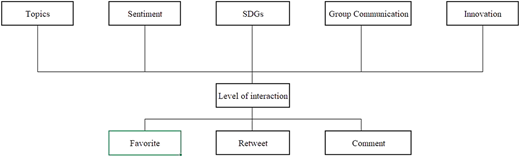
Pointed out the three levels of interaction achievable from organizations, the further objective of our study is to identify the topic disclosed and content type (Pletikosa Cvijikj and Michahelles, 2013) together with the sentiment of the message (Surucu-Balci et al., 2020) and the different levels of interaction in the stakeholders of controversial and non-controversial industries. In this sense, a codification of the tweets has been operated. In particular, the number of favorites, retweets and comments has been coded to identify the level of stakeholder engagement. In addition, visual contents such as photos and videos have been coded because of the role exerted as an emotional component. Then, the group communication and the disclosures related to innovation (Periac et al., 2018) have been coded to add the cognitive component to the analysis. At last, the presence of SDGs disclosure has been added to codification (Rosati and Faria, 2019).
Based on the previous assumptions, the hypotheses have been proposed as follows:
Visual contents have a positive effect on stakeholder interaction;
Group communication has a positive effect on stakeholder interaction.
Information on innovation has a positive effect on stakeholder interaction.
Being a controversial industry has a negative effect on stakeholder interaction;
The communication on SDGs has a positive effect on stakeholder interaction.
Finally, following the approach suggested by Kent et al. (2021), the communication of topics linked to the social side of the corporate disclosures has been adopted as a proxy to verify the readiness of companies' communications on Twitter before the advent of the COVID-19 pandemic.
4. Methods
The sample has been composed starting from the 1,000 companies identified by The Alliance for Corporate Transparency (2020) report that are interested in the European directive of non-financial reporting. The Alliance for Corporate Transparency report includes the most extensive collection of companies that have to provide non-financial reports as a result of the Directive 2014/95/EU. Specifically, the project analyses the non-financial reports of 1,000 European companies to provide useful insights for policy makers. The adoption of the present data has limited the risks that can emerge from the use of an original sample of analysis (García-Sánchez et al., 2013). Considering the content of the document, the study has considered the companies that have reported at least an SDG in their non-financial report, representing a signal of orientation toward the paradigm of the 2030 Agenda (Pizzi et al., 2020). Furthermore, considering the information provided by the report, data linked with the country of settlement and the related sector of activity have been considered for each company. In particular, following the approach of Vollero et al. (2019), the sampled companies have been separated between the ones belonging to the controversial sectors and the non-controversial sectors.
Afterward, the collection of the tweets published by those European companies has been operated. The choice to use Twitter as the primary source is related to its high degree of reliability (Neu et al., 2019).
The collected data have been reduced to a single year. The time range has been set to the year 2019 to have a complete picture of the information flowing linked with the financial year (Gómez-Carrasco et al., 2020).
A content analysis (Krippendorff, 2018) has been developed to identify the determinants that influence CSR tweets' engagement. The content analysis represents a widely adopted method used in management studies to collect qualitative information about a specific phenomenon (Lopatta et al., 2017; Parsons, 2013; Shen and Bissell, 2013). The content analysis is structured in three phases: (1) identifying the units, (2) codification of the units and (3) analysis of the results.
To identify the units of analysis, the official websites and published non-financial reports of the sampled companies have been checked to locate the companies' official Twitter accounts. Specifically, this operation allows avoiding the selection of subsidiaries or unofficial accounts. The extraction of the units from the official Twitter accounts has been developed using the NCapture tool included in the software Nvivo 12 (Hai-Jew, 2015). Because of the language heterogeneity included in the published tweets, the collected messages have been translated using the translation tool Google Sheets (Wu et al., 2016).
The codification process has been operated following Viglia et al. (2018) and has interested three researchers. First, a researcher has collected the data from the official Twitter accounts. Subsequently, two researchers have selected CSR-related tweets. At last, two researchers have codified the final set of tweets following the selected framework of analysis. To increase the coding reliability, the researchers have checked and discussed the codification results before the succeeding analysis (Milne and Adler, 1999).
The use of the NCapture tool has allowed us to automatically collect the information related to the three dependent variables. Besides, following Rodríguez Bolívar et al. (2015) approach, six dummy variables (ranging from 0 to 1) have been realized to measure the presence or the absence of the different identified contents. Specifically, the “Photo” and “Video” variables have been examined through the analysis of the tweets attachments. The variables of “Group communication”, “Innovation” and “SDGs” have been realized through the analysis of tweets contents. Specifically, the “Group communication” variable is verified when the tweets cite an announcement of the group, while the “Innovation” variable is verified is the tweets describe the introduction of a new CSR practice. Subsequently, the variable “Controversial” refers to the information collected during the sampling process. Finally, “Interaction” is a variable that is realized to measure the role of SDGs communication in controversial industries and has been manually calculated.
Table 1 illustrates the variables that have been included in the study.
Finally, the analysis of the results has been structured using a mixed-methods approach (Guthrie and Durand, 2008). The first step is represented by qualitative analysis and has been developed to understand the main topics that are being disclosed in the tweets published by controversial and non-controversial companies and the related communication methods. In particular, following Conaway and Wardrope (2010), a thematic analysis of the units has been deployed to identify common patterns in terms of critical topics disclosed. Besides, sentiment analysis has been used to understand the tone adopted by the companies in their communication toward stakeholders (Etter, 2014). Furthermore, the second phase of analysis has been operated through the development of quantitative analysis. In particular, a series of Poisson regressions have been performed to understand the determinants influencing the number of favorites, retweets and comments in CSR-related tweets (Mariani et al., 2018). The Poisson regression is a method that suits analysis in which the dependent variable is a count one (Harris et al., 2012).
Specifically, four regressions have been developed for each dependent variable. The first regression has been developed aiming to identify the determinants that are impacting stakeholder engagement. Then, the three remaining regressions have been developed to check the relevance of the SDG disclosure, the role of the membership in a controversial sector and how the interaction between the two variables influences the engagement.
Finally, by adopting an ANOVA test, it has been possible to measure the difference in variance between two groups (Anderson, 2001). Specifically, the analysis has taken the results of the thematic analysis on CSR tweets to determine the amount of environmental and non-environmental communicated information and, in this sense, to explore the level of communication readiness regarding the pandemic issues between controversial and non-controversial industries.
5. Results
The initial sample was composed of 62 European companies. Afterward, 43 controversial companies and 19 non-controversial companies have been identified. Finally, a total of 1,326 CSR-related tweets have been extracted from the companies' official Twitter accounts.
The first step of analysis has been conducted to understand the topics that controversial and non-controversial European firms are disclosing in the CSR-related tweets.
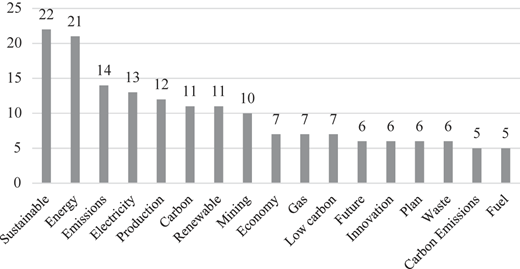
Figure 2 shows the results achieved by developing the automated thematic analysis of the tweets published by companies belonging to controversial sectors. Specifically, it emerges how the largest part of the sampled tweets is related to environmental sustainability topics. Specifically, covering 57.3% of the identified topics, controversial companies communicate their performance in terms of emissions, energy and waste management. Moreover, the remaining part of the identified topics is linked with social aspects such as innovation management and future planning (14.7%).
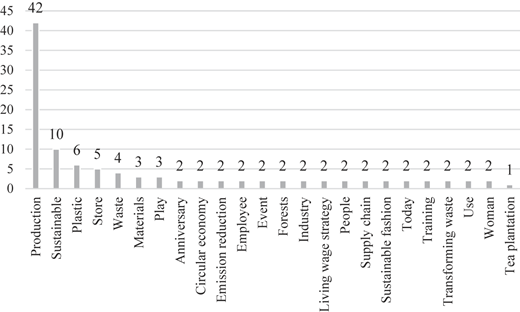
Similarly, Figure 3 represents the findings that resulted from developing the thematic analysis of the non-controversial companies. Specifically, it emerges how in the non-controversial companies the focus is oriented to production-related topics (39.6%). However, as in the previous case, the sampled companies show sensitivity toward environmental sustainability, with 37.6% of topics related to the actions of environmental care. Finally, the attention to social issues has been identified in the non-controversial companies' disclosure. In particular, it emerges the focus on the work environment and gender equality.
Afterward, two sentiment analyses have been developed to understand how the companies communicate through the tone they are adopting in their tweets.
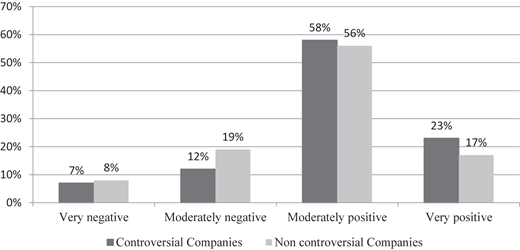
Figure 4 illustrates the results. The two outputs reveal how the European companies from both sectors prefer a neutral tone (moderately positive). In these terms, the use of a neutral tone can be linked with the cautious behavior of the companies that are trying to avoid impression management issues (Casonato et al., 2019). Also, it emerges how the non-controversial European companies are more open to disclosing negative results or issues. Finally, the controversial European companies are more oriented toward using very positive tones (23% of the published tweets against the 17% of the non-controversial companies).
Next, Table 2 provides the descriptive statistics of the dependent and independent variables. Specifically, from a first overview of the dependent variables, it is possible to state that all the variables show a common minimum value of zero. This information reveals how the sample indicates tweets that have not influenced any reaction from the users. Also, the favorites mean value is higher among the three dependent variables. All three variables have achieved a maximum number of observations above the thousand units.
Variables descriptive statistics
| Dependent variables | Mean | Std Dev | Min | Max |
|---|---|---|---|---|
| Favorite | 37.149 | 475.749 | 0 | 16.774 |
| Comments | 8.891 | 60.882 | 0 | 1.346 |
| Retweets | 13.733 | 180.493 | 0 | 6.094 |
| Independent Variables | Mean | Std. Dev | Min | Max |
| Controversial Sector | 0.849 | 0.358 | 0 | 1 |
| SDGs | 0.922 | 0.268 | 0 | 1 |
| Photo | 0.716 | 0.451 | 0 | 1 |
| Video | 0.158 | 0.365 | 0 | 1 |
| Group Communication | 0.936 | 0.245 | 0 | 1 |
| Innovation | 0.475 | 0.5 | 0 | 1 |
In addition, some insights have been achieved from the analysis of the independent variables. In particular, it emerges how most of the sampled companies are citing the SDGs in their CSR tweets. Also, it is possible to notice how most of the published tweets provide a picture to engage Twitter users. On the contrary, the mean value achieved on the video variable suggests a poor tendency in adopting this type of content to engage users.
Furthermore, a quantitative analysis has been developed. Before the Poisson regressions, a correlation analysis of the variables has been provided. The correlation analysis is a tool that allows measuring the collinearity of the examined and testing the validity of the analysis (Kalnins, 2018). In this sense, the presence of a value lower than 0.600 measures the validity of the data. In the present case, only three variables overcome such limits. Such variables are not explored in the same models and are strictly related due to the nature of the cognitive model. In this sense, it does not emerge relevant collinearity in the model (Table 3).
Correlation analysis
| Variables | (1) | (2) | (3) | (4) | (5) | (6) | (7) | (8) | (9) | (10) |
|---|---|---|---|---|---|---|---|---|---|---|
| (1) Controversial sector | 1.000 | |||||||||
| (2) Interaction | 0.821 | 1.000 | ||||||||
| (3) SDGs | 0.072 | 0.559 | 1.000 | |||||||
| (4) Favorite | −0.073 | −0.057 | 0.016 | 1.000 | ||||||
| (5) Comments | −0.004 | 0.003 | 0.021 | 0.762 | 1.000 | |||||
| (6) Retweets | −0.066 | −0.050 | 0.017 | 0.951 | 0.695 | 1.000 | ||||
| (7) Photo | 0.108 | 0.117 | 0.042 | 0.005 | −0.012 | 0.009 | 1.000 | |||
| (8) Video | −0.055 | −0.043 | −0.001 | 0.012 | 0.051 | 0.008 | −0.691 | 1.000 | ||
| (9) Group communication | −0.024 | −0.051 | −0.064 | 0.011 | 0.033 | 0.014 | −0.001 | −0.080 | 1.000 | |
| (10) Innovation | −0.030 | 0.004 | 0.054 | 0.024 | −0.024 | 0.035 | 0.007 | 0.028 | −0.010 | 1.000 |
Subsequently, four Poisson regressions have been performed for each type of user reaction. Table 4 identifies the results of the analysis conducted by adopting the number of favorites as the dependent variable.
Regressions with “favorite”
| (1) | (2) | (3) | (4) | |
|---|---|---|---|---|
| Favorite | Favorite | Favorite | Favorite | |
| Photo | 1.146*** | 1.446*** | 1.107*** | 1.466*** |
| (0.023) | (0.023) | (0.023) | (0.023) | |
| Video | 1.422*** | 1.574*** | 1.403*** | 1.618*** |
| (0.024) | (0.024) | (0.024) | (0.024) | |
| Group communication | 0.889*** | 0.749*** | 0.941*** | 0.828*** |
| (0.026) | (0.026) | (0.026) | (0.026) | |
| Innovation | 0.586*** | 0.555*** | 0.563*** | 0.524*** |
| (0.009) | (0.009) | (0.009) | (0.009) | |
| Controversial sector | −1.705*** | 0.296*** | ||
| (0.009) | (0.078) | |||
| SDGs | 1.316*** | 2.808*** | ||
| (0.032) | (0.07) | |||
| Interaction | −2.101*** | |||
| (0.079) | ||||
| _cons | 1.334*** | 2.429*** | 0.072 | −0.328*** |
| (0.035) | (0.035) | (0.047) | (0.078) | |
| Observations | 1,325 | 1,325 | 1,325 | 1,325 |
| Pseudo R2 | 0.034 | 0.137 | 0.043 | 0.156 |
Note(s): Standard errors are in parentheses
***p < 0.01, **p < 0.05, *p < 0.1
The analysis reveals how the adoption of photos and videos positively influences engagement in CSR tweets. Also, a robust positive significance can be found in group communication and the disclosure of innovation topics (p-value: 0.5). Moreover, the regression results highlight how being part of a controversial sector is significant (p-value: 0.09) but has a negative effect (β: −1.705) on the number of favorites achieved. Subsequently, the third regression shows the impact that the disclosure of SDGs has on the collection of favorites. It emerges a solid and positive significance (p-value: 0.03), and it results in a driver of engagement. Finally, the interaction between SDGs and the controversial sector is significant (p-value < 0.1) and negative, claiming that the controversial sector neutralizes the positive effect of the SDGs disclosure.
Afterward, Table 5 provides the results achieved by developing four regressions on the “Retweets” dependent variable. The results are in line with the findings achieved in the previous analysis. In particular, it emerges how the first regression shows significance (p-value < 0.1) for each variable in the first model. Subsequently, a similar result as the previous analysis has been achieved in the last three regressions showing the negative effect of the controversial sector membership (β: −1.598), the positive impact of the SDGs disclosure (p-value < 0.1) and the negative effect of the related interaction.
Regressions with “retweets”
| (1) | (2) | (3) | (4) | |
|---|---|---|---|---|
| Retweets | Retweets | Retweets | Retweets | |
| Photo | 1.394*** | 1.702*** | 1.354*** | 1.717*** |
| (0.042) | (0.042) | (0.042) | (0.042) | |
| Video | 1.532*** | 1.728*** | 1.514*** | 1.775*** |
| (0.044) | (0.044) | (0.044) | (0.044) | |
| Group communication | 1.328*** | 1.167*** | 1.379*** | 1.239*** |
| (0.053) | (0.053) | (0.053) | (0.053) | |
| Innovation | 0.931*** | 0.896*** | 0.909*** | 0.864*** |
| (0.016) | (0.016) | (0.016) | (0.016) | |
| Controversial sector | −1.598*** | 0.578*** | ||
| (0.015) | (0.149) | |||
| SDGs | 1.393*** | 3.056*** | ||
| (0.056) | (0.137) | |||
| Interaction | −2.274*** | |||
| (0.15) | ||||
| _cons | −0.529*** | 0.516*** | −1.867*** | −2.477*** |
| (0.068) | (0.068) | (0.087) | (0.152) | |
| Observations | 1,325 | 1,325 | 1,325 | 1,325 |
| Pseudo R2 | 0.054 | 0.137 | 0.063 | 0.154 |
Note(s): Standard errors are in parentheses
***p < 0.01, **p < 0.05, *p < 0.1
At last, four Poisson regressions have been developed to analyze the determinants of the number of comments (Table 6).
Regressions with “comments”
| (1) | (2) | (3) | (4) | |
|---|---|---|---|---|
| Comments | Comments | Comments | Comments | |
| Photo | 1.292*** | 1.298*** | 1.267*** | 1.296*** |
| (0.05) | (0.051) | (0.05) | (0.051) | |
| Video | 1.993*** | 1.993*** | 1.978*** | 1.995*** |
| (0.052) | (0.052) | (0.052) | (0.052) | |
| Group Communication | 2.156*** | 2.155*** | 2.198*** | 2.199*** |
| (0.095) | (0.095) | (0.095) | (0.095) | |
| Innovation | −0.367*** | −0.367*** | −0.381*** | −0.381*** |
| (0.019) | (0.019) | (0.019) | (0.019) | |
| Controversial Sector | −0.067*** | 2.488*** | ||
| (0.025) | (0.281) | |||
| SDGs | 0.777*** | 3.156*** | ||
| (0.048) | (0.278) | |||
| Interaction | −2.679*** | |||
| (0.282) | ||||
| _cons | −1.1*** | −1.046*** | −1.846*** | −4.089*** |
| (0.107) | (0.109) | (0.117) | (0.298) | |
| Observations | 1,325 | 1,325 | 1,325 | 1,325 |
| Pseudo R2 | 0.057 | 0.057 | 0.063 | 0.067 |
Note(s): Standard errors are in parentheses
***p < 0.01, **p < 0.05, *p < 0.1
The first model of regression confirms the results achieved in the previous regression showing the significance of the “Photo,” “Video” and “Group Communication” variables. In the present case, it emerges how the “Innovation” variable is significant for the model but has a negative effect on the number of comments (β: −0.367, p-value < 0.1). This result is confirmed in all four models. As in favorites and retweets, the controversial sector variable is significant and negative (β: −0.67, p-value < 0.1), while the disclosure of SDGs as represented in the fourth model positively impacts the engagement of comments. Finally, the interaction of SDGs disclosure and controversial sector membership confirms the trend explored in the previous analysis with a negative influence on the dependent variable (β: −2.679).
Finally, the last step of analysis presents the results of the ANOVA test conducted to understand how the disclosure of the topics identified in the qualitative analysis impacts the engagement of CSR tweets by analyzing the descriptive statistics between the groups (Table 7).
ANOVA results
| N | Mean | Std. Deviation | Std. Error | 95% confidence interval for mean | Min | Max | |||
|---|---|---|---|---|---|---|---|---|---|
| Lower bound | Upper bound | ||||||||
| Favorite | Other | 529 | 59.06 | 745,096 | 32,395 | −4.58 | 122.70 | 0 | 16,774 |
| Environment | 753 | 23.02 | 91,115 | 3,320 | 16.50 | 29.54 | 0 | 1,505 | |
| Comments | Other | 529 | 14.55 | 94,050 | 4,089 | 6.51 | 22.58 | 0 | 1,346 |
| Environment | 752 | 5.33 | 16,639 | 0.607 | 4.14 | 6.52 | 0 | 218 | |
| Retweets | Other | 527 | 23.49 | 282,987 | 12,327 | −0.73 | 47.71 | 0 | 6,094 |
| Environment | 747 | 7.45 | 30,563 | 1,118 | 5.26 | 9.65 | 0 | 599 | |
To develop the analysis, two macro themes of the disclosure have been isolated referring to the disclosure of environmental sustainability and other topics. In particular, the “other” topics category relates to the tweets that have involved information on employees, health and social risks. Specifically, it emerges how the mean number of favorites, comments and retweets is higher in the tweets that relate to the “other” topics related to sustainability. The results can be understood by considering that the non-environmental tweets have been published mainly by non-controversial sector companies. Also, the performances of environmental sustainability tweets in terms of engagement are influenced by the criticism that revolves around the attempts of greenwashing that have been detected in the controversial sector. In these terms, it emerges how the communication on Twitter in the pre-pandemic era can be considered ready for the change of paradigm that has been required by the COVID-19 challenges.
6. Discussion
In the last year, many academics evaluated the financial impacts caused by the pandemic. The attention paid by academics has been driven by the central role covered by financial dynamics on business strategies. In fact, evaluating the financial impact of an unexpected event represents a critical issue for managers. However, the increasing awareness about the existence of a direct relationship between financial and non-financial strategies underlines the need to integrate the two perspectives. In this regard, Crane and Matten (2021) highlighted that pandemic will represent a turning point for CSR research. In particular, the authors argued that the traditional framework used by management scholars to evaluate CSR communication will be revised because of the raise in new stakeholders' expectations. According to this evidence, our research has been conducted to provide an overview of social media communication before pandemic. The need to provide a detailed analysis of that period will contribute to the advancement of scientific knowledge through the identification of the main practices adopted by companies before an event that will radically change corporate behaviors.
Such a result is consistent with the findings described by Ramananda and Atahau (2019). Specifically, it emerges how CSR and sustainability information is being approached with certain cautiousness by companies regardless of their sector. Moreover, such insight reveals how companies are aware of the stakeholder skepticism on sustainability information and are providing as much neutral information as they can (Galati et al., 2019).
Moreover, the analysis of the communicated topics in controversial and non-controversial companies of the sample reveals a certain difference between the two groups and confirms how the companies characterized by a higher exposition of moral issues are also more focused on sustainability themes (Shin and Ki, 2022).
In this sense, the achieved results provide useful insight for companies that are approaching CSR communication on social media. In particular, a neutral tone appears to be the standard in the field and how the selection of the contents should be oriented to the firm features.
Concerning the engagement determinants, the analysis has evidenced how the hypotheses H1 and H2 are verified. Photos and videos represent an effective tool for the engagement of stakeholders in Europe. Specifically, the results are coherent with the findings of Fiore et al. (2005) and Mariani et al. (2018), who agree on the descriptive and engaging power of visual contents. Also, the study has revealed how group communication has a positive effect (H2) on the attention of the stakeholders due to the authority and the greater soundness that can be achieved by involving the brand and the referencing group (Lee, 2021). Subsequently, the study does not verify the third hypothesis and highlights how the disclosure of innovation-related topics has a positive impact on favorites and retweets number but assumes an adverse effect on the comments. This is to be attributed to the technological anxiety involved in the innovation (Ewe et al., 2014). Another relevant insight has been found on the role exerted by the controversial sector membership of a European company. This result verifies the third hypothesis of the analysis and is linked with the criticism around the controversial companies' disclosure.
Finally, the SDGs disclosure on Twitter messages appears to be a positive driver of engagement and confirms the last hypothesis of the analysis (Iazzi et al., 2020). The finding is in line with previous literature and shows how the stakeholders and the users at large on Twitter are interested in a company’s contribution to the Agenda 2030 (Grover et al., 2019; Reyes-Menendez et al., 2018). However, the results changes if the communication is operated by controversial industries. Communication from this sector is seen by the public with distrust, and the efforts in terms of SDGs disclosure are perceived as greenwashing attempts (Leopizzi et al., 2020; Lyon and Montgomery, 2013).
By analyzing the contents, the usefulness of resorting to issues with social content emerges, avoiding negative reactions from stakeholders that occur frequently following environmental tweets (Neu et al., 2019).
In light of the third research question that has been identified by the present work, it emerges how the communication of social issues in the pre-pandemic period reveals a positive insight into the engagement practices of companies belonging to controversial and non-controversial companies.
According to this evidence, the research provides interesting insights with reference to a context that was partially explored. The base concept of CSR, meant as the various obligations businesses have toward society (Carroll, 1979), reveals its fluidity over time. In other words, corporations truly appear as citizens in society and, thus, have to change their priorities following the main changes that occur in society (Waddock, 2004). This finding finds coherence with the contributions of various scholars that have analyzed the impact of the COVID-19 outbreak on CSR practices. In these terms, Ishfaq et al. (2021) confirm that there is a bilateral relationship between stakeholders and companies and that CSR is an effective tool to integrate social issues in business management during pandemic times. In agreement with the prior statement, Bae et al. (2021) confirm that pre-pandemic CSR must be improved to face the challenges that characterize a pandemic.
7. Conclusions
The research reveals how companies were already focusing on topics that involve employees, customers and health management. Also, the findings are aligned with the insights achieved by He and Harris (2020) during the period of the COVID-19 pandemic. The outbreak of the COVID-19 pandemic has stimulated the development of multiple studies that have tried to understand the role that CSR strategies adopted by companies have played in the crisis (Zhong et al., 2022). Looking at the results described by Arturo and Avelar (2022), it appears that most companies were already aligned with the key topics that would have been disclosed during the first period of the pandemic and demonstrated a certain attitude to resilience, mostly for the controversial companies. This result suggests how, despite the CSR practices having been developed in a context not interested in relevant social issues (Crane and Matten, 2021), they result resilient to great changes as the pandemic ones. Moreover, the analysis of the CSR tweets produced by the different environments reveals how companies are approaching CSR communication with different strategies when meeting stakeholders on social media and during the COVID-19 outbreak (Lodhia et al., 2021).
8. Theoretical and practical implications
The findings of this research provide implications for both scholars and managers or public makers interested in CSR communication in controversial industries in the pre-pandemic situation.
From the theoretical perspective, our investigation aimed to provide an original contribution to the research and shed light on how to increase the stakeholder’s involvement through CSR communication in controversial (and non-controversial) European companies. Moreover, the study of the tweets' contents, with a perspective on the COVID-19 pandemic, has allowed providing literature with a comparison basis. This study investigated the role of social media as a channel for improving stakeholder engagement, extending the past studies on the CSR communication strategies in controversial (and non-controversial) businesses before the pandemic. Adding to this, we argue that scholars should continue to critically theorize this research stream in the controversial industry (Ju et al., 2021).
From a managerial perspective, our study highlights that the engagement strategy does not yet represent a business differentiation strategy (Vollero et al., 2019), as we found a small number of companies engaged in communication via Twitter and a greater recourse by controversial companies.
Stakeholder involvement must be “substantial” in order to generate effective utility in defining reporting strategies and practices. Increasing social control over CSR actions, particularly in online environments, can cause inconsistency between “talk” and “action,” resulting in companies being accused of greenwashing (Lyon and Montgomery, 2015) and clouding their efforts in reporting on CSR initiatives. As the controversial industries already suffer from social stigma (Ju et al., 2021) and the pandemic global crisis requires more transparency and CSR actions, also policy makers might revise some reporting features to increase their effectiveness and ability to influence the business results of firms (Orzes et al., 2020). Adding to this, governments (national and international) should concentrate and be concerned on the other areas interested by the SDGs, in particular those profoundly exacerbate by the COVID-19 crisis such as the inequalities and poverty (Emma and Jennifer, 2021). In these terms, it emerges that the current pandemic scenario has highlighted how, despite having already prioritized social issues in disclosures, it is necessary for companies to re-evaluate their CSR strategies on various levels to meet the stakeholder needs. Specifically, the concept becomes relevant for controversial industries which, in the case of the COVID-19, are required to improve their communication strategies to both overcome pandemic and sector issues in the relationship with society.
Although the valuable results for both theoretical and managerial/policy fields, our conclusions could be improved by future studies. The framework developed so far could be enriched in the next research with a content analysis of comments from the users to gain more information about the sentiment of the post reactions and understand the dynamics of the discussions started to increase the engagement of stakeholders on social media. Furthermore, future research could extend the present study through an empirical analysis of the main impacts caused by the pandemic. In this regard, the use of advanced research methods such as diff-diff or panel data will fill the knowledge gap identified in the present study.
Then, the adoption of a data triangulation process through the use of interviews could enrich the robustness of the findings and provide a different perspective of analysis. At last, future research could replicate the study with a different timeline to provide a comparison between the pre and post-pandemic period.
The results of this paper are not free from limitations. First, the results are limited to a single social media platform. In addition, a short timeline has been considered for the analysis. Finally, the analysis has provided a one-to-one analysis of the pre-pandemic post contents.

