The paper aims to focus on the mechanisms in place at team and service level, that help to maintain a compassionate and person-centred model of care to meet the complex nature of each young people’s needs. The paper outlines how to foster psychological and emotional safeness for the team, which in turn creates conditions for young people to recover.
Using a case study approach, the paper demonstrates how a new model of care implemented an intelligently kind and compassion focused approach to support the recovery of young people in a specialist eating disorders service for young people aged between 10–18 years old. The service is part of the National Health Service (NHS) Tier 4 Child and Adolescent Mental Health (CAMHs) specialist pathways, and all young people are treated under the powers of the Mental Health Act (1983).
The paper identifies important processes that help to maintain safeness and resilience in team members. The distinction between safeness and safety are explored and the term “Intelligent Compassion” rather than Intelligent Kindness’ is proposed to distinguish between the psychological motivation behind compassion, which is to relieve distress and suffering in others, and kindness, which is make another person happy. The creation of regular safe space for teams to meet, reflect together and build cohesion and community is central to this approach.
The paper draws on qualitative research principles using individual and collective team narratives to identify meaning and sense making of their subjective experiences. As it is not primary research it cannot be said to be generalisable to all services, however, the paper draws on conceptual and theoretical principles which support main arguments presented.
Finding time for individual and team development in busy and chaotic clinical settings can be tricky and easily neglected. The paper provides an overview of a new model of care “The STEP Model” and characteristics and attributes of clinical leaders to deliver an integrated trauma informed approach.
It is well known that young people placed in hospital settings far away from home experience the effects of social exclusion and loss of relations and the service model described in this paper supports the young person to maintain links with their friends and social networks wherever possible.
The paper introduces an original model of care for young people with complex needs and eating disorder called The STEP Model. The STEP (Stop Things Escalating Please) model is an integrative relationally based approach that frames the whole care experience of young people with complex needs. It has three distinct elements: 1. How we understand you 2. How we provide care for you; 3. How you will experience us. These elements capture the use of young person friendly language and the use of engaging and evidence informed assessment process that comply with evidence-based guidelines (NICE, 2025).
Introduction and note on use of language
This paper uses the term “we” deliberately, because the underpinning philosophy of our service is concerned with the importance of connection and belonging, indeed we may well extend that to Seigel’s (2022) idea of “Mwe” an integration of me + we. The experience of developing the service to support connection and integration as a member of a wider belonging in the world. For everyone who is in contact with the service, “We” is an essential part of the success of our work. To quote Siegel (2022, p. 147):
In modern times, an experience of self - what is sometimes called “sense of self” - that is defined only by our individual body as a center of identity and belonging can lead to sadly common experiences of disconnection, disillusionment, and despair.
This quote reflects some of the experience that the young people in the service, and their carers express.
We also distinguish between the interchangeable use of the words “kindness” (a wish for others to flourish and enjoy happiness) and “compassion” (a wish for others to be free of suffering). These differences in language are important because as Gilbert et al. (2019, p. 2261) explains, “Kindness doesn’t really require an analysis of suffering, but compassion does”.
As this case study is about the relief of suffering of young people, we propose the term ‘Intelligent Compassion’ as one that best describes our approach and thinking.
Starting from scratch – creating a new compassionate approach to in-patient care
Working with young patients in an inpatient hospital setting has been an ongoing journey of learning, reflection and growth. Supporting young people with complex trauma requires knowledge and skills, including empathy, adaptability and patience. Every day brings opportunities to understand more about how trauma shapes behaviour, trust and emotional regulation. We’ve learned that progress is rarely straightforward, it depends on creating a safe environment where young people can begin to feel seen and understood.
A major insight from our experience has been the importance of flexibility in approach. While structure and consistency are essential in hospital care, we’ve found that adapting routines, communication styles and interventions to each young person’s needs leads to improved outcomes. Flexibility helps staff respond to fluctuating emotions and changing levels of engagement. It sends a powerful message that young people’s preferences and voices matter, fostering collaboration rather than control.
Equally important is the strength of relationships, not only between staff and patients and carers, but within the staff team itself. We actively build these connections through shared activities such as cultural celebrations, reflective practice sessions and team-building exercises. These moments encourage understanding, unity and compassion. When staff connect well with one another, it models healthy relationships for young people and strengthens the consistency and empathy within the care environment.
At the heart of Intelligent Kindness (Campling et al., 2020) is a commitment to providing compassionate care through kind, safe and warm therapeutic relationships. These relationships exist in teams with clear roles and boundaries, with high support and the ability to reflect, learn and renourish their collective ability to be compassionate.
The importance of compassion to delivering intelligently compassionate care has been well articulated (Campling et al., 2020) and our use of an evolutionary understanding of compassion, defined as “a sensitivity to suffering of self and others, with a commitment to try to alleviate and prevent it” (Gilbert, 2017, p. 11) has also been central to our approach.
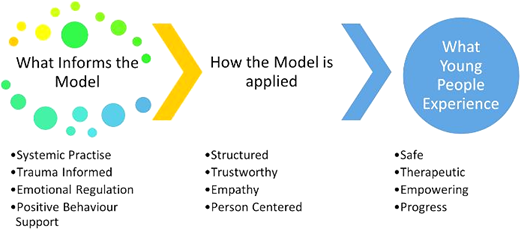
Before the service opened two of the authors (SD and ST) led the co-design of the STEP service model, developing an integrative approach to care that is illustrated in Figure 1 below.
The STEP (Stop Things Escalating Please) model in Figure 1 is an integrative relationally based approach that frames the whole care experience of young people with complex needs. It has three distinct elements:
How we understand you.
How we provide care for you.
How you will experience us.
These elements capture the use of young person friendly language and the use of engaging and evidence informed assessment process that comply with evidence-based guidelines (NICE, 2025).
A fundamental requirement of the STEP model was to create a sense of safety from the first contact with the young person. Our panel of experts by experience, together with our lived experience practitioner, provided invaluable guidance in shaping our understanding of how service structures can unintentionally compound the challenges faced by young people. They highlighted that repeated rejections (i.e. where services state they are unable to meet a young person’s needs) do not simply leave those needs unmet, but can actively intensify feelings of exclusion, frustration and hopelessness.
Using reflective spaces to intentionally develop safeness
Whilst recruiting to the new service we recognised that the emotional demand on workers in CAMHS inpatient services was high (Mareva et al., 2024), and that the wellbeing of individuals and teams could be compromised placing the newly recruited, and relatively inexperienced team of nurses and health care support workers, at risk of empathy fatigue (Marshman et al., 2021).
The intentional and thoughtful design of staff reflective practice groups (Caltagirone et al., 2025) and creating opportunities for shared team learning has been a priority. Known as Team Development Days (TDDs), these sessions are collaboratively led by the Principal Psychologist and the nursing team to provide a safe and supportive space for all staff to regenerate their compassionate focus. TDDs are designed and implemented to offer staff ongoing training throughout the year on a variety of subjects, for example recognising the deteriorating patient, understanding sensory challenges, and engaging in effective debriefing. These sessions aim to upskill staff and create opportunities for shared learning and professional growth.
Empathy and communication training is also provided as part of the TDD programme, which reinforces the importance of separating behaviour from identity. Staff learn to avoid labels or personal blame and instead focus on understanding behaviour as communication of unmet need. This approach promotes constructive dialogue, reduces shame and helps staff maintain compassion under pressure
During TDDs, reflective practice is offered as a structured and facilitated space for staff to pause, examine their clinical experiences, and consider the emotional impact of their work. Reflective practice is consistently endorsed across UK professional bodies (BPS, 2025; HCPC, 2025; NMC, 2025). It is an important mechanism for supporting practitioner wellbeing and strengthening person-centred care. NICE highlights the role of reflective approaches in enhancing compassionate, individualised practice (NICE, 2025). Collectively, these bodies position reflective practice as a key contributor to both staff wellbeing and high-quality service delivery. Thus, reflective practice plays a meaningful role in supporting staff to sustain emotional resilience, professional effectiveness and compassionate care.
The principle of co-production is also embedded within TDD’s, with young people contributing to staff development by delivering training based on their lived experience and expertise. For example, young people have led sessions on bipolar disorder, offering valuable insights into how they personally experience the condition. While staff may be familiar with the clinical symptoms, these sessions provide a unique opportunity to deepen understanding through the lens of lived experience, fostering empathy and enhancing the quality of support provided.
This emphasis on understanding the lived experience of young people aligns closely with contemporary theoretical developments pertinent to CAMHS inpatient care.
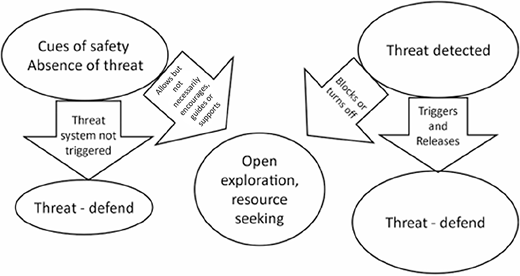
Highly relevant to CAMHs inpatient settings, is the distinction between safety and safeness. This concept draws on attachment and evolutionary biopsychosocial theories to explain how humans experience and process emotions including how young people can experience elevated sensitivity to threat (Gilbert, 2024). Such threats are often perceived to originate from others. Including caring professionals and can as a for ongoing social and relational distrust, heightened anxiety and behaviours commonly associated with eating disorders. These include self-defeating patterns such as self-harm, pacing (due to being unable to engage in physical activity as a compensatory behaviour). Withdrawal from social interaction as forms of emotional regulation or self-punishment is also common. Recognising these responses and meeting them with compassion is essential for care teams in creating an environment of safeness where trust and emotional recovery can begin to develop.
Wellbeing – creative and playful approaches
Building on this foundation, the establishment of wellbeing sessions has become an important component of supporting staff to sustain the emotional capacity required for relational work. These sessions offer a dedicated space for self-care and reflection, giving team members permission to engage in the wider wellbeing opportunities available to them.
A central feature of the wellbeing sessions is the use of creative expression, which provides an accessible and meaningful way for staff to process and share their emotional experiences. A range of creative activities is offered, each designed to facilitate reflection, emotional release and a sense of connection across the team. To ensure the approach is fully inclusive, sessions are made available to both day and night staff. Support workers contribute to the delivery of wellbeing sessions for night staff and receive monthly supervision to ensure they feel guided, valued and supported. Empowering support workers reinforces their role as integral members of the care community and ensures intelligent compassion is maintained across all levels of the team.
Alongside creative expression, the sessions incorporate mindfulness-based activities that help staff reconnect with calm, presence and grounding. These sessions also encourage reflection on how small, intentional practices can be integrated into the working day, for instance, using breaks to step away from clinical tasks avoiding working while eating, or taking a few minutes for mindful breathing. By highlighting the importance of these everyday self-care strategies, the wellbeing sessions help foster a culture that values emotional wellbeing and compassionate, attuned engagement with young people.
These staff-focused initiatives, creating opportunities for shared experiences between staff and young people has also been central to fostering connection and mutual understanding. These activities highlight that therapeutic relationships are built not only through daily care and clinical responsibilities, but also through moments of shared humanity, creativity and collaboration. For example, Cultural Days invite young people to collaborate with their support workers to prepare presentations or activities such as question-and-answer sessions about their culture, dance performances or singing. Such events encourage compassion, curiosity and kindness, while celebrating individuality and strengthening the relational fabric of inpatient environment. These events build belonging, reduce isolation and challenge assumptions by centring lived experience rather than solely relying on formal training.
This emphasis on connection aligns closely with the distinction between “safety” and “safeness” (see Figure 2). When we are stimulated by a perceived threat, that we perceive is not within our control, this is regulated in the body and brain by the threat system to avoid harm, mostly the sympathetic nervous system and the hypothalamic – pituitary adrenal axis (HPA) (Gilbert, 2024). Safeness is not simply the absence of threat, but the experience of openness and play and exploration. Openness is associated with signals in the ventromedial prefrontal cortex (Eisenberger et al., 2011), and facilitates problem solving (Gillath and Karantzas, 2019). Thus, providing an environment to promote safeness is a significant contribution to treatment.
The experience of being cared for within an inpatient setting provides opportunities for the young person to seek help from those around them. The skills and qualities within the helping team have been shown to facilitate the development of an internal safe base for the young person, through experiencing the therapeutic setting as a safe haven. This ability to create a safe haven from which positive relational attachments can develop is through a deep appreciation and compassionate understanding of the young person’s inner-self and how physiological responses to threat mean that for some young people, compassionate and caring behaviours may themselves be seen as a threat.
This process is important when considering the research of attachment styles for people experiencing eating disorders that suggests that a presentation of insecure attachment is higher in those with eating disorders than non-clinical controls (Zachrisson and Skårderud, 2010; Kuipers and Bekker, 2012):
The approach towards my husband and I as parents, I would use the word compassionate. I don’t think that in previous placements there was always that compassionate approach either to parents or to the young people.
[…] the carers (health care support workers) really are immense, they are just mental health carers (support workers), but they were fantastic.
I never, ever doubted the, you know, the compassion, the support, the intention and that my daughter’s welfare, you know, was at the very heart.
The above comments are from parents of some young people and emphasise the element of “Trustworthiness” in the STEP model which is an important relational goal which requires the team to understand the expectation for building trust and that being trustworthy is the responsibility of the team member, not the young person. The processes designed into the treatment model to support the growth of trustworthiness include:
Having a positive first meeting to help the young person decide if they want to come to the service is a crucial first step that requires careful consideration. Attention is given to creating a sense of “safety” for the young person before they arrive at the hospital. This is achieved through exploring young person’s expectations and experiences of services they have used previously, helping them choose room colours, food preferences and meeting the senior clinical team.
Using supportive emotional tones in all interactions helps create a relational environment in which young people feel heard, understood, and genuinely valued. This approach encourages creative, young person–centred bio-psycho-social practices that draw on the whole team’s capacity to remain curious, reflective and attuned. Rather than adopting a “think for” stance, where staff assume or interpret the young person’s needs on their behalf, this relational style promotes a “think with” approach, in which staff and young people work collaboratively to make sense of experiences, emotions, and challenges.
Using person centred care planning and positive behavioural support as therapeutic tools to reinforce the uniqueness of each person. These approaches ensure that support is tailored to personal strengths, preferences and goals, while promoting meaningful involvement in decision-making and enhancing a sense of agency and autonomy
Encouraging and responding positively to young people’s experiences of the service, valuing the young person’s perspectives not only supports ongoing service improvement but also empowers them to participate confidently in their care, fostering shared ownership of the therapeutic process.
The psychological safety established within the staff team through these approaches directly shapes the psychological safety and therapeutic milieu experienced by young people, setting the emotional tone of the environment in which care is delivered.
Working in this setting brings predictable challenges and barriers. Young people may struggle with mistrust, aggression, withdrawal or difficulty communicating emotions. The fast-paced hospital environment, combined with staffing pressures and emotional intensity, can also impact staff wellbeing. We address these challenges through open communication, supervision, and reflective debriefs. Sharing experiences and learning together helps maintain resilience and a sense of shared purpose. A trauma-informed mindset enables us to interpret behaviour as communication, not defiance, allowing us to respond with calmness and understanding.
Trauma-Informed Care (TiC) (Seubert and Virdi, 2018; OHID, 2022) underpins everything we do, promoting safety, trust and empowerment. Our focus is on consistency, compassion and supporting young people to regain a sense of control over their environment and choices.
Our belief is that the foundation of trauma-informed practice cannot exist without a safe and secure base, both for young people and for the staff who care for them. As Rogers (1957, p. 95) reminds us, “The most basic of all human needs is the need to be understood and understanding can only come from listening”. This principle, to listen more and to say less, lies at the heart of our therapeutic approach and underpins the creation of safeness within the service.
In practice, this means being patient and adaptable when supporting young people who may initially struggle to trust or engage. What has proved most effective is the use of varied approaches when one strategy has not been successful, ensuring that staff remain consistent, compassionate and persistent in their care. This commitment to not giving up, to returning, re-engaging, and trying again, helps to establish and maintain the sense of reliability and emotional safety that is essential for recovery. Over time, this approach allows young people to experience genuine connection, strengthening their ability to trust others and potentially begin to work towards recovery.
Building on this foundation, the interventions we provide are intentionally designed to embed compassion and kindness across the entire service. These approaches do more than support day-to-day functioning; they actively foster psychological safety, emotional attunement and the relational warmth that underpin trauma-informed healing.
Centrality of compassionate leadership
Fostering an Intelligent Compassionate Care Culture calls for a management style that diverges from traditional leadership models. Conventional approaches may prioritise financial efficiency over quality of care, whereas Intelligent Compassion emphasises care that is truly about people’s experiences, feeling safe and recovering from their emotional and physical distress.
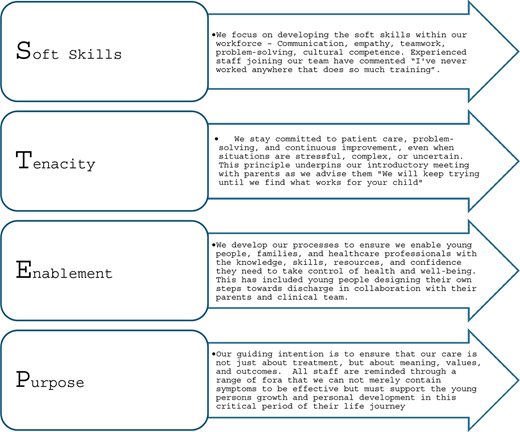
The key components of our leadership and management focus on developing the following attributes within our staff team and are set out in Figure 2 below.
Ensuring a consistent and rich pool of soft skills that foster compassion, including tenacity, enablement and purpose within the whole workforce (clinical, administrative and support functions e.g. domestic, catering, administration) fosters a compassionate and resilient environment that enhances patient care, strengthens collaboration and sustains professional motivation. By equipping staff with interpersonal abilities, persistence in problem-solving, the tools to overcome barriers and a clear sense of meaning in their roles we have achieved improved outcomes, greater efficiency and a positive culture where both patients and professionals thrive.
Structured supervision and line management training equips the senior staff to model compassionate leadership and provide supervision that is supportive rather than punitive. Emphasising guidance, reflection and encouragement helps to build the confidence of junior staff and contributes to a consistently compassionate and psychologically safe ward culture.
Leadership and management in this area of healthcare requires courage and compassion (Hawking et al., 2017) combined with a clear moral and ethical commitment to providing excellent service. These attributes are core to contemporary thinking about compassionate leadership (Benevene et al., 2022) and are required in the values and behaviours of leaders at all levels to ensure that intelligent compassionate care cultures are fostered and nourished. This means that leaders hold hope when teams lose theirs, remembering with their teams that rejected sessions are not failures, keep offering, keep adapting and stay persistent. Prioritise the wellbeing of staff alongside the care of patients, as both are essential to safe and effective practice. Honour cultural difference and individuality, and let flexibility, curiosity and kindness guide your leadership and clinical practice.
We would like to thank Professor Paul Gilbert for the use of the illustration in Figure 3.
Funding
This research received no specific grant from any funding agency, commercial or not-for-profit sectors.