Dietary transitions towards reduced meat consumption are widely promoted for health and sustainability reasons, but empirical knowledge of current patterns of protein source consumption is limited. This study aims to examine consumer motivations and reported protein source choices among Finnish survey respondents following the publication of the updated Finnish Nutrition Recommendations, which were released in November 2024.
An exploratory online cross-sectional survey (n = 617) was conducted in April 2025, approximately six months after the publication of the updated recommendations. The questionnaire assessed dietary patterns, the frequency of consumption of meat and plant-based meat alternatives and factors influencing protein source selection. The use of plant-based fish alternatives was also assessed to provide additional context for the study.
Meat was the most frequently reported protein source, particularly among men and younger respondents. Women and older age groups reported more frequent use of plant-based meat alternatives and women placed greater importance on ethical considerations, sensory attributes, price, ease of use, availability and naturalness. Age-related patterns suggest that frequent meat consumption may coexist with experimentation with plant-based meat alternatives, especially among younger adults. Regional differences were modest, with lower use of plant-based meat alternatives in South Ostrobothnia compared with other regions. Overall, the reported consumption patterns were only partially consistent with the direction of the updated nutrition recommendations.
By providing timely post-policy evidence from a high-income Nordic context, this exploratory study contributes to understanding associations between demographic characteristics, consumer motivations and protein source choices.
Introduction
Over recent decades, dietary patterns in many high-income countries have increasingly shifted in response to concerns related to non-communicable diseases, environmental sustainability and food system resilience. Animal-based protein sources, particularly red and processed meat, have attracted growing attention due to their associations with adverse health outcomes and substantial environmental impacts. International frameworks, including the World Health Organization’s guidance on healthy diets and the EAT-Lancet Commission’s planetary health diet, call for reduced red and processed meat consumption and greater reliance on plant-based foods (WHO, 2020; Willett et al., 2019). As a result, sustainability considerations have become increasingly integrated into national dietary guidelines.
Finland provides an informative context for examining these dynamics. Traditionally characterised by relatively high consumption of red and processed meat and dairy products (Valsta et al., 2018), national data indicate a gradual reduction in meat intake and growing interest in plant-based diets (Lehto et al., 2022). Median consumption of red and processed meat declined from 128 g/day in 2007–96 g/day in 2017, while the proportion of vegetarians increased modestly (Lehto et al., 2022). More recently, red meat consumption has continued to decline, partly replaced by poultry (Natural Resources Institute Finland, Luke, 2024). Similar but uneven trends have been observed across Europe, suggesting that dietary transitions remain gradual and shaped by local contexts (EuroMeatNews, 2025).
During the 2010s, plant-based diets gained increased public visibility through campaigns such as Veganuary and Meatless Monday, and in Finland, this period has been described as a “veggie boom” (Jallinoja, 2020; Lehto et al., 2022; Véron, 2016). While vegetarianism and veganism remain uncommon, typically accounting for 2%–4% of the adult population, flexitarian and reduced-meat orientations have become more prevalent (Dagevos, 2021; Kirk, 2018). Consumer data indicate that most Finns (approximately 80%) continue to identify as omnivores, although interest in plant-based alternatives is widespread (Ipsos, 2023). Younger consumers and women appear particularly likely to adopt plant-forward diets, consistent with international evidence (Hartmann and Siegrist, 2017; Knaapila et al., 2022; Modlinska et al., 2020; Smart Protein Project, 2023).
These developments are reflected in food markets, where the availability of plant-based protein products has expanded rapidly across Europe. Finnish retail data show substantial growth in plant-based purchases during the late 2010s, followed by temporary fluctuations (Vegconomist, 2025). Despite this increased visibility and market growth, a gap often remains between expressed sustainability intentions and actual consumption behaviour (Ipsos, 2023).
Finland’s updated National Nutrition Recommendations were published in November 2024 by the National Nutrition Council (Finnish Institute for Health and Welfare, 2024) and represented the first major revision since the previous national recommendations issued in 2014 (National Nutrition Council, 2014). The updated recommendations were based on the Nordic Nutrition Recommendations 2023 (Nordic Council of Ministers, 2023). Before and following publication, the recommendations received substantial public and media attention, including public consultation processes. Public discussion particularly focused on the recommended reduction of red and processed meat consumption and the increased emphasis on plant-based eating and plant-based protein intake (Yle, 2024a, 2024b). Compared with the 2014 recommendations, the updated guidelines increased the recommended intake of vegetables, berries and fruits from at least 500 g/day to 500–800 g/day, while the recommended maximum intake of red and processed meat was reduced from 500 g/week to 350 g/week (National Nutrition Council, 2014; Finnish Institute for Health and Welfare, 2024). The recommendations also emphasize increasing the use of legumes and other plant-based protein sources, while promoting fish consumption as part of a nutritionally adequate and environmentally sustainable diet (Finnish Institute for Health and Welfare, 2024). Because the present study was conducted approximately six months after the publication of the updated recommendations, it provides an early exploratory indication of how these revised dietary guidelines may be reflected in consumers’ reported food choices and motivations. However, adherence to dietary recommendations varies across population groups and is shaped not only by knowledge but also by taste preferences, habits, cultural norms, convenience and economic constraints (Nevalainen et al., 2023). Up-to-date empirical evidence on current patterns of protein source consumption and their sociodemographic determinants is therefore needed.
Previous Finnish studies have examined consumer attitudes towards plant-based eating, meat reduction and dietary identities (e.g. Lehto et al., 2022; Knaapila et al., 2022; Nevalainen et al., 2023). However, less attention has been paid to the simultaneous examination of meat and plant-based meat alternatives together with the motivations underlying their consumption. In particular, few studies have examined both consumption frequencies and food choice motivations simultaneously. In addition, many earlier studies have focused primarily on self-identified dietary patterns (e.g. omnivore, flexitarian, vegetarian or vegan), although such dietary identities do not necessarily correspond directly to actual food consumption behaviour or consumption frequency. Previous research has shown that self-identified flexitarians and omnivores may exhibit overlapping food consumption patterns despite differing dietary identities (Bayudan et al., 2025). The present study therefore extends previous Finnish research by incorporating both self-reported dietary identity and reported consumption frequencies to provide a broader perspective on protein-related food choices. Furthermore, the survey was conducted approximately six months after the publication of the updated Nordic and Finnish Nutrition Recommendations, providing timely insight into consumer perceptions during an ongoing societal discussion on sustainable diets and protein transition. The study also contributes regional perspectives by comparing respondents from South Ostrobothnia – a region strongly associated with livestock production and food-related livelihoods – with respondents from other parts of Finland (Regional Council of South Ostrobothnia, 2025).
Food choices are influenced by a combination of sensory, economic, practical, social and value-related factors. Consumer food choice research has consistently shown that taste, price, availability, habits, perceived naturalness and ethical concerns shape food purchasing and consumption decisions (Steptoe et al., 1995; Knaapila et al., 2022). Previous studies have also identified these factors as important determinants of consumer acceptance of plant-based foods and meat alternatives (Hoek et al., 2011; Jallinoja et al., 2016; Nevalainen et al., 2023). In the context of dietary transition, such factors may either facilitate or hinder the adoption of plant-based protein sources and the reduction of meat consumption. Because dietary transitions require changes not only in nutritional knowledge but also in everyday food choice behaviour, understanding these determinants is important for interpreting current protein source choices and identifying potential barriers to dietary change.
Thus, this exploratory study aims to provide timely evidence on reported protein-related food choices and their underlying motivations among Finnish survey respondents following the publication of the updated nutrition recommendations. The study addresses the following research questions:
How frequently do respondents report consuming meat and plant-based meat alternatives?
How do reported consumption patterns differ by dietary pattern, age, sex and region of residence?
What factors are associated with respondents’ choices between meat and plant-based meat alternatives?
To what extent do the reported consumption patterns appear consistent with the updated Finnish Nutrition Recommendations?
Methods
Study design and participants
This exploratory cross-sectional survey was conducted in April 2025. The questionnaire was distributed through Facebook, Instagram and LinkedIn via both university-affiliated accounts and the personal/professional social media accounts of research team members. In addition, the survey link was shared through the university intranet for both staff and students. To encourage participation, respondents were offered the opportunity to enter a prize draw for an online store gift card. A total of 642 responses were received. Before analysis, responses with substantial missing data or incomplete answers to key study variables were excluded. The data set was also screened for potential duplicate responses by examining identical response patterns and duplicate entries in the raw data. No evident duplicate responses were identified. In addition, respondents who selected “other” (n = 7) or “prefer not to say” (n = 5) for gender were excluded from the final analytical sample because the subgroup sizes were too small to support meaningful statistical comparisons. This resulted in a final analytical sample of 617 respondents.
Ethical approval was obtained from the Ethics Committee of the authors’ institution (statement dated 2 April 2025). Participants were informed about the purpose of the study, the voluntary nature of participation and data handling procedures before responding to the questionnaire. Data were collected anonymously and processed in accordance with applicable data protection regulations.
Questionnaire and measures
At the beginning of the questionnaire, respondents provided background information (age, sex and region of residence) and reported their dietary pattern, categorized as omnivore (no restrictions regarding animal-based products), flexitarian (prefer plant-based foods but do not completely avoid meat), vegetarian (do not eat meat and fish) or vegan (do not consume any animal-based products). The definition of flexitarianism was based on Dagevos and Voordouw (2013), referring to individuals who occasionally abstain from meat without eliminating it entirely.
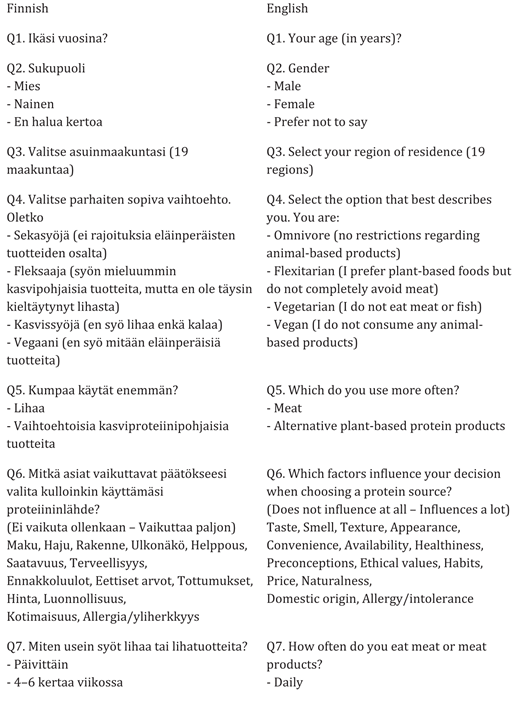
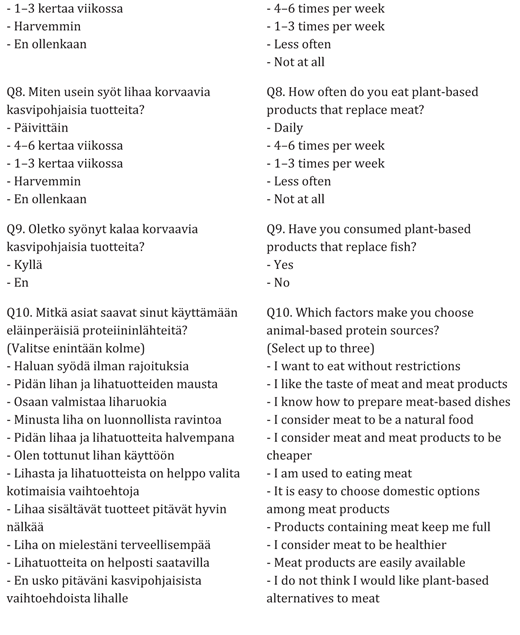
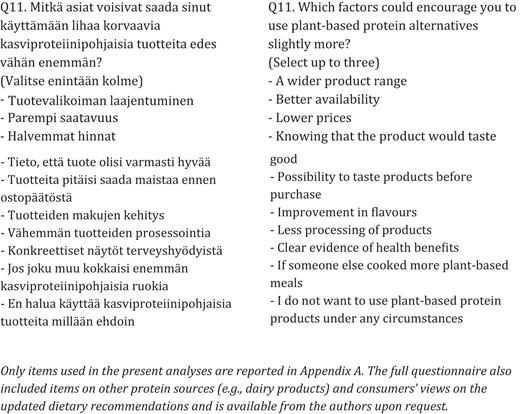
Respondents reported the frequency of meat consumption and the use of plant-based meat alternatives. In addition, respondents were asked whether they had used plant-based fish alternatives. They also assessed the extent to which various factors influenced their choice between meat and plant-based meat alternative products. Items assessing motivations and selection criteria were adapted from previously published questionnaires (Knaapila et al., 2022; Keefer et al., 2024). The questionnaire was administered in Finnish and the English-language item descriptions presented in this manuscript are provided for reporting purposes. Before data collection, the questionnaire was reviewed and pilot tested by ten members of the research team to evaluate clarity, wording and face validity. No changes to the questionnaire were made following the pilot testing. The questionnaire is provided in Appendix section.
Statistical analysis
Statistical analyses were performed using IBM SPSS Statistics (version 30). Group differences were examined using Pearson’s chi-square test (χ2). The assumptions of the chi-square test were evaluated before analysis. A p-value < 0.05 was considered statistically significant. Effect sizes were assessed using Cramér’s V.
Results
Respondent characteristics, dietary patterns and reported protein source choices
Most respondents were women (76.3%). The respondents’ ages ranged from 18 to 65 years, with a mean age of 30 years. Approximately four of ten (40.4%) respondents were under 25 years of age, while 35.7% were aged 25–35 years and 24.0% were over 35 years. Most respondents lived in South Ostrobothnia (70.7%), with the remaining 29.3% residing elsewhere in Finland. Overall, 87.2% of respondents reported preferring to consume meat rather than plant protein–based meat alternatives. This preference was more common among men (93.2%) than women (85.4%) and the gender difference was statistically significant (p = 0.014). The demographic profile of the sample likely reflects the recruitment strategy based on social media and university-related channels, which may have particularly reached women, younger respondents and individuals interested in food, health or sustainability-related topics.
Dietary patterns differed significantly between women and men (p = 0.021). Most respondents followed an omnivorous diet (84.1%), with this being more common among men (91.8%) than women (81.7%). In contrast, plant-oriented dietary patterns were more prevalent among women. Flexitarian diets were reported by 11.9% of women and 6.1% of men, while vegetarian and vegan diets together accounted for 6.4% of women and 2.1% of men. Overall, women were more likely than men to follow diets that emphasize reduced meat consumption.
Reported meat and plant-based meat alternative consumption frequencies by gender, age and region
Consumption frequencies differed by gender and age. Men reported more frequent meat consumption than women, whereas women reported more frequent use of plant-based meat alternatives. Men were also more likely to report never using plant-based meat alternatives (χ2 test, p < 0.001, Table 1). A total of 39% of men reported never consuming plant-based meat alternatives. The observed effect sizes indicated small-to-moderate associations between gender and reported consumption frequencies (Cramér’s V = 0.22 for meat products and 0.23 for plant-based meat alternatives).
Frequency of meat and plant-based meat alternative consumption by gender (n women = 471, n men = 146)
| Consumption frequency | Meat | Plant-based meat alternatives | ||
|---|---|---|---|---|
| Women, n (%) | Men, n (%) | Women, n (%) | Men, n (%) | |
| Daily | 206 (43.7) | 100 (68.5) | 32 (6.8) | 6 (4.1) |
| 4–6 times/week | 152 (32.3) | 30 (20.5) | 23 (4.9) | 9 (6.2) |
| 1–3 times/week | 68 (14.5) | 12 (8.2) | 88 (18.7) | 20 (13.7) |
| Less frequently | 20 (4.3) | 1 (0.69) | 249 (52.9) | 54 (37.0) |
| Never | 25 (5.3) | 3 (2.1) | 79 (16.8) | 57 (39.0) |
Gender differences were significant for both meat consumption (Pearson’s χ2 test, p < 0.001, Cramér’s V = 0.22) and plant-based meat alternative consumption (Pearson’s χ2 test, p < 0.001, Cramér’s V = 0.23)
No regional differences were observed in meat consumption between respondents living in South Ostrobothnia and those living elsewhere in Finland (p = 0.443). However, the use of plant-based meat alternatives was more common outside South Ostrobothnia (p = 0.019).
Only 6.2% (n = 38) of respondents reported having tried plant-based fish alternatives, with no statistically significant differences by gender (p = 0.245) or region (p = 0.076). Given the low prevalence of use, no further subgroup analyses were conducted for plant-based fish alternatives.
Age-related differences were also observed. Respondents under 25 years reported the highest frequency of daily meat consumption, whereas those over 35 years consumed meat less frequently (p < 0.001, Cramér’s V = 0.15). Conversely, the use of plant-based meat alternatives was more frequent among respondents aged over 25 compared with the youngest group (p = 0.018, Cramér’s V = 0.12, Table 2), although the observed effect sizes were small.
Reported consumption frequency of meat and plant-based meat alternatives by age group
| Consumption frequency | <25 years (n = 248) | 25–35 years (n = 219) | >35 years (n = 148) |
|---|---|---|---|
| Meat consumption frequency* | |||
| Daily | 139 (55.9) | 113 (51.6) | 53 (35.8) |
| 4–6 times/week | 71 (28.8) | 64 (29.2) | 46 (31.1) |
| 1–3 times/week | 27 (10.9) | 24 (11.0) | 29 (19.6) |
| Less often | 5 (2.0) | 5 (2.3) | 11 (7.4) |
| Never | 6 (2.4) | 13 (5.9) | 9 (6.1) |
| Plant-based meat alternative consumption frequency** | |||
| Daily | 9 (3.6) | 18 (8.2) | 11 (7.4) |
| 4–6 times/week | 9 (3.6) | 16 (7.3) | 7 (4.7) |
| 1–3 times/week | 33 (13.3) | 40 (18.3) | 35 (23.7) |
| Less often | 140 (56.5) | 96 (43.8) | 65 (43.9) |
| Never | 57 (23.0) | 49 (22.4) | 30 (20.3) |
*Values are presented as n (% within age group). Pearson’s χ2 test, p < 0.001, Cramér’s V = 0.15. **Values are presented as n (% within age group). Pearson’s χ2 test, p = 0.018, Cramér’s, V = 0.12
Drivers and motivations underlying protein source choices
The primary reasons for choosing meat products were taste preference, perceptions of naturalness and habitual use (Table 3). Practical considerations, such as the ease of choosing domestically produced options and the desire to eat without restrictions, were also frequently reported. In contrast, price, availability and perceived healthiness were less commonly cited as key drivers and only a small proportion of respondents expected to dislike plant-based alternatives.
Factors influencing protein source choices (respondents could select up to three options, n = 617)
| Reason | n (%) |
|---|---|
| Factors influencing the use of animal-based protein sources | |
| Preference for the taste of meat and meat products | 316 (51.2) |
| Meat is perceived as a natural food | 220 (35.7) |
| Habitual use of meat | 218 (35.3) |
| Ease of choosing domestically produced meat products | 182 (29.5) |
| Preference for eating without dietary restrictions | 169 (27.4) |
| Familiarity with preparing meat-based meals | 133 (21.6) |
| Meat products are perceived as satiating | 94 (15.2) |
| Meat is perceived as healthy | 86 (13.9) |
| Good availability of meat products | 85 (13.8) |
| Expectation of disliking plant-based meat alternatives | 49 (7.9) |
| Meat is perceived as inexpensive | 46 (7.5) |
| Factors that could increase the use of plant-based meat alternatives | |
| Lower prices | 261 (42.3) |
| Less processed products | 188 (30.5) |
| Certainty that the product would taste good | 170 (27.6) |
| Improved product flavours | 166 (26.9) |
| Opportunity to taste products before purchase | 118 (19.1) |
| Wider product range | 117 (19.0) |
| Someone else (e.g. another household member) preparing more plant-based meals | 113 (18.3) |
| Concrete evidence of health benefits | 99 (16.0) |
| Unwillingness to use plant-based products under any circumstances | 80 (13.0) |
| Better availability of plant-based products | 57 (9.2) |
Regarding plant-based meat alternatives, lower prices and reduced processing emerged as the most prominent factors that could increase use (Table 3). Sensory-related considerations, including expected taste quality and improved flavours, were also important, along with opportunities to taste products and broader product availability, indicating that the issue is less about negative expectations and more about the importance of achieving positive sensory appeal. Notably, a minority of respondents indicated unwillingness to use plant-based products under any circumstances.
Gender differences in protein source selection
Significant gender differences were observed in several determinants of protein source selection. Women more frequently reported strong influence of sensory attributes (appearance, texture, smell and taste) as well as practical and product-related factors, including price, availability and ease of use (Table 4; appearance, texture, smell, price and availability: all p < 0.001; taste: p = 0.042; ease of use: p = 0.031). Ethical values, habits and prejudices were also more strongly emphasized among women (all p < 0.001), whereas no significant gender difference was observed for domestic origin (p = 0.143), healthiness (p = 0.176) and allergy-related (p = 0.621) factors. Naturalness was reported as less influential among men than among women (p = 0.030). The observed effect sizes were generally small to moderate (Cramér’s V = 0.10–0.32), with the strongest association observed for ethical values (V = 0.32).
Gender differences in protein source selection
| Factor | Not at all | Very little | Some extent | Quite a bit | Great deal | p-value | Cramér's V |
|---|---|---|---|---|---|---|---|
| Price | <0.001 | 0.21 | |||||
| Women | 7 (1.5) | 24 (5.1) | 72 (15.3) | 168 (35.7) | 200 (42.4) | ||
| Men | 9 (6.1) | 16 (11.0) | 31 (21.2) | 55 (37.7) | 35 (24.0) | ||
| Availability | <0.001 | 0.18 | |||||
| Women | 6 (1.3) | 17 (3.6) | 60 (12.7) | 164 (34.8) | 224 (47.6) | ||
| Men | 4 (2.7) | 13 (8.9) | 25 (17.1) | 62 (42.5) | 42 (28.8) | ||
| Easy to use | 0.031 | 0.13 | |||||
| Women | 9 (1.9) | 22 (4.7) | 79 (16.8) | 166 (35.2) | 195 (41.4) | ||
| Men | 2 (1.4) | 13 (8.9) | 33 (22.6) | 56 (38.3) | 42 (28.8) | ||
| Appearance | <0.001 | 0.19 | |||||
| Women | 16 (3.4) | 55 (11.7) | 115 (24.4) | 167 (35.5) | 118 (25.0) | ||
| Men | 14 (9.6) | 30 (20.5) | 32 (21.9) | 47 (32.2) | 23 (15.8) | ||
| Texture | <0.001 | 0.18 | |||||
| Women | 8 (1.7) | 34 (7.2) | 72 (15.3) | 140 (29.7) | 217 (46.1) | ||
| Men | 8 (5.5) | 19 (13.0) | 27 (18.5) | 51 (34.9) | 41 (28.1) | ||
| Smell | <0.001 | 0.21 | |||||
| Women | 14 (3.0) | 73 (15.5) | 91 (19.3) | 146 (31.0) | 147 (31.2) | ||
| Men | 16 (11.0) | 19 (13.0) | 45 (30.8) | 32 (21.9) | 34 (23.3) | ||
| Taste | 0.042 | 0.13 | |||||
| Women | 3 (0.6) | 19 (4.0) | 20 (4.3) | 93 (19.8) | 336 (71.3) | ||
| Men | 5 (3.4) | 4 (2.8) | 11 (7.5) | 26 (17.8) | 100 (68.5) | ||
| Prejudices | <0.001 | 0.19 | |||||
| Women | 67 (14.2) | 100 (21.2) | 165 (35.0) | 91 (19.3) | 48 (10.3) | ||
| Men | 44 (30.1) | 23 (15.8) | 44 (30.1) | 17 (11.6) | 18 (12.4) | ||
| Ethical values | <0.001 | 0.32 | |||||
| Women | 42 (8.9) | 95 (20.2) | 122 (25.9) | 136 (28.9) | 76 (16.1) | ||
| Men | 50 (34.2) | 27 (18.5) | 37 (25.3) | 20 (13.7) | 12 (8.3) | ||
| Habits | <0.001 | 0.18 | |||||
| Women | 8 (1.7) | 18 (3.8) | 55 (11.7) | 178 (37.8) | 212 (45.0) | ||
| Men | 10 (6.8) | 9 (6.2) | 26 (17.8) | 55 (37.7) | 46 (31.5) | ||
| Naturalness | 0.030 | 0.13 | |||||
| Women | 19 (4.0) | 54 (11.5) | 150 (31.8) | 155 (32.9) | 93 (19.8) | ||
| Men | 16 (11.0) | 18 (12.3) | 39 (26.7) | 44 (30.1) | 29 (19.9) | ||
Values are presented as n (% within gender group). Women, n = 471; men, n = 146. p-values are based on Pearson’s χ2 test; effect sizes are reported as Cramér’s V. For simplicity, healthiness, domestic origin and allergen/hypersensitivity are omitted because no statistically significant gender differences were observed
Discussion
Alignment with updated nutrition recommendations and dietary transition
This exploratory study provides timely evidence on reported protein source choices among Finnish survey respondents shortly after the publication of the updated Finnish Nutrition Recommendations. Despite increasing public discourse on sustainability and plant-based diets, animal-based protein sources – particularly meat – remain dominant. Reduced-meat dietary orientations were present but not widespread in this sample, suggesting that substantial shifts in protein source choices may not yet be widespread.
The findings provide indirect evidence of only partial alignment between reported consumption patterns and the updated Finnish Nutrition Recommendations. Although the 2024 recommendations encourage increasing the consumption of plant-based foods and reducing red and processed meat intake to a maximum of 350 g/week (Finnish Institute for Health and Welfare, 2024), meat remained a frequently consumed protein source among many respondents. In contrast, the use of plant-based meat alternatives was less common and appeared concentrated among specific consumer groups. These findings suggest that the dietary transition promoted by the updated recommendations may still be at an early stage among consumers. Because the survey assessed self-reported consumption frequencies rather than quantitative dietary intake, direct comparisons with gram-based recommendation targets should nevertheless be interpreted cautiously.
These findings align with earlier national studies showing that dietary change has been gradual rather than transformative, with reduced-meat diets increasing slowly alongside continued consumption of animal-based foods (Jallinoja, 2020; Lehto et al., 2022). Taken together, the findings provide preliminary support for the view that Finland may remain in an early phase of the broader “protein transition”, despite strong nutrition policy frameworks and high public awareness of sustainability issues.
Differences between the present findings and studies focusing on younger cohorts highlight the potential role of generational dynamics. Earlier research among Finnish millennials has reported higher proportions (11%) of vegetarian and vegan dietary identities (Knaapila et al., 2022), suggesting that dietary change may emerge first within specific demographic groups. However, these differences may also partly reflect methodological factors, such as sampling approaches and self-reported dietary classifications. In the present study, the prevalence was notably lower (6.1% among women and 2.1% among men), indicating that the diffusion of plant-based diets into mainstream consumption remains limited, particularly among men.
Gender differences in protein source choices and motivations
Gender differences were observed in reported protein source choices and their underlying motivations. Men reported more frequent meat consumption and a stronger preference for meat, whereas women reported lower meat consumption and higher use of plant-based meat alternatives. This aligns with previous research linking meat consumption to masculine food norms and identity, while women more often adopt health- and sustainability-oriented dietary practices (Ruby and Heine, 2011; Hartmann and Siegrist, 2017; Modlinska et al., 2020).
Motivational differences further reinforced this pattern. Taste was the most influential factor for both genders, but women placed greater emphasis on ethical considerations, price, availability, ease of use, habits, naturalness and sensory attributes. Similar gendered value orientations and food choice priorities have been reported in earlier studies, with women often reporting greater consideration of ethical and sustainability-related factors in food choices (Jallinoja, 2020; Onwezen et al., 2021; Ipsos, 2023).
In contrast, men more often reported that ethical values and prejudices had little influence on their choices, which may reflect a more routine-driven decision-making pattern. These findings may suggest that dietary transition strategies could benefit from gender-sensitive approaches that account for identity-related barriers and culturally embedded meanings of meat consumption. However, the generally small-to-moderate effect sizes indicate that these gender differences should be interpreted as tendencies rather than clear-cut distinctions between women and men.
Age-related differences and life-stage dynamics
Age-related differences showed a more nuanced pattern than often assumed. The youngest respondents reported the most frequent meat consumption, whereas the use of plant-based meat alternatives was more common among respondents aged over 25 years. These findings may reflect a pattern in which younger respondents combine frequent meat consumption with openness to experimentation with plant-based alternatives.
These findings align with the broader literature on the attitude–behaviour gap in sustainable eating. Although younger consumers may express favourable attitudes towards plant-based diets, structural barriers such as price sensitivity, convenience needs and habitual food practices may limit regular adoption. Plant-based meat alternatives are often perceived as relatively expensive compared with conventional meat products, which may be particularly relevant for students and other low-income groups (Pais et al., 2022; Mäkiniemi and Vainio, 2014).
In addition, acceptance of plant-based meat alternatives may be hindered by unfamiliarity and concerns regarding sensory appeal (Hoek et al., 2011; He et al., 2020; Stewart et al., 2026). Together, these factors may partly help explain why frequent meat consumption remained common among the youngest respondents in this sample despite increasing interest in plant-based options. However, because the analyses were unadjusted, these age-related patterns should be interpreted cautiously. The observed differences may also reflect variation in gender composition, dietary identities, recruitment channels or other unmeasured factors across age groups.
Regional context and food culture
Regional differences were less pronounced than gender and age differences. While the reported frequency of meat consumption did not differ between respondents living in South Ostrobothnia and those living elsewhere in Finland, the use of plant-based meat alternatives was more common outside South Ostrobothnia. This may reflect regional differences in food culture, retail environments and exposure to plant-based innovations.
South Ostrobothnia is a central region for Finnish food and livestock production and has a strong agricultural identity (Regional Council of South Ostrobothnia, 2025; South Ostrobothnia Survey Report, 2023). Such structural and cultural characteristics may help explain the lower reported use of plant-based meat alternatives observed in this sample. Similar urban–rural patterns have been reported nationally, where livestock-intensive regions often maintain stronger cultural attachments to meat-based diets (Jallinoja, 2020; Nevalainen et al., 2023). However, because the regional analyses were unadjusted and the sample overrepresented respondents from South Ostrobothnia, these findings should be interpreted cautiously.
Plant-based fish alternatives were rarely used across all groups, suggesting that this category remains marginal. Limited availability, low familiarity and strong cultural associations of fish as a natural and healthy food may partly explain this pattern.
Implications for dietary change
The findings suggest that reported protein source choices remain only partially aligned with the direction of the updated Nordic and Finnish Nutrition Recommendations. While awareness of sustainability issues and interest in plant-based products are evident, meat continues to play a central role in everyday diets and reduced-meat dietary orientations have not yet become mainstream.
Importantly, the results highlight that protein source choices are shaped by factors beyond nutrition knowledge. Familiarity, taste preferences and perceived naturalness emerged as important factors associated with the continued use of animal-based protein sources. In contrast, increased use of plant-based meat alternatives was more strongly associated with economic and product-related conditions, including price and perceptions of product quality. Although sensory appeal was important for both protein source categories, lower prices, reduced perceived processing and increased confidence in product quality emerged as factors that may support greater acceptance of plant-based meat alternatives.
This pattern is consistent with international evidence emphasizing the importance of sensory quality, price and trust in shaping consumer acceptance of plant-based alternatives (Hoek et al., 2011; He et al., 2020; Michel et al., 2021; Onwezen et al., 2021; Smart Protein Project, 2023; El-Anany et al., 2024; Vignesh et al., 2025). The prominence of price is consistent with survey evidence suggesting that economic considerations continue to shape sustainable consumption choices, even among environmentally concerned consumers (Ipsos, 2023).
From a public health perspective, the findings suggest that supporting dietary transitions may not rely solely on promoting meat alternatives but could also benefit from greater emphasis on whole-food plant protein sources (e.g. legumes), product reformulation and clearer communication regarding nutritional quality. However, given the exploratory and non-representative nature of the sample, these observations should be interpreted cautiously and viewed primarily as hypothesis-generating.
Although these findings are exploratory and based on a non-representative sample, they may nevertheless help identify factors that warrant further investigation in future representative studies. Similarly, the results suggest that factors such as price, perceived processing, familiarity and sensory appeal may represent promising areas for future dietary interventions and communication strategies. Future studies using nationally representative samples could further examine whether messages emphasizing affordability, taste, naturalness or nutritional quality influence acceptance of plant-based meat alternatives across different demographic groups. In addition, structural approaches such as public procurement policies, pricing strategies, product reformulation and improved health and sustainability labelling may warrant further investigation as potential tools to support dietary transitions in line with updated nutrition recommendations.
Strengths, limitations and future research
Strengths and limitations
Several limitations should be considered. Firstly, the study was conducted in Finland, a high-income Nordic country with strong public health nutrition policies. While this provides a relevant context for examining early-stage protein transition dynamics, the findings may not be directly generalizable to settings with different socio-economic or cultural conditions. In addition, residents of South Ostrobothnia were overrepresented in the sample.
Secondly, the sample was not nationally representative of the Finnish population, as participants were recruited voluntarily through social media and university-related channels. Women and respondents under 25 years of age were overrepresented, likely due to the survey distribution through higher education institution channels. Because women are more likely to adopt plant-oriented diets and younger individuals may face greater economic constraints, the prevalence of plant-based dietary orientations and the emphasis on price-related factors may differ from those observed in the general population. The gender imbalance may also have amplified some of the observed gender differences. Consequently, the findings may overestimate the prevalence of positive attitudes towards plant-based meat alternatives compared with the Finnish population overall.
Thirdly, the study relied on self-reported consumption frequencies and motivations, which are subject to recall and social desirability bias. The cross-sectional design limits causal inference, as the observed associations cannot establish causal relationships. In addition, all reported associations are based on unadjusted bivariate analyses and should therefore be regarded as exploratory rather than inferential estimates of population-level relationships. Furthermore, because multiple bivariate comparisons were conducted, statistically significant findings – particularly those with small effect sizes and p-values close to the significance threshold – should be interpreted cautiously.
Therefore, the findings should be interpreted as exploratory rather than population-level estimates of Finnish consumers’ dietary behaviour. However, despite these limitations, the study has notable strengths. Data were collected shortly after the publication of updated Finnish Nutrition Recommendations, offering a timely snapshot of behavioural patterns during a policy-relevant period. In addition, the inclusion of both consumption frequencies and motivational factors provides a multidimensional perspective on protein source choices. Although not representative, the overrepresentation of women and younger individuals provides insight into demographic groups that have previously been associated with greater interest in dietary change and plant-based eating.
Future research
Future research would benefit from nationally representative sampling to assess the extent to which the observed patterns reflect population-level trends. Longitudinal designs would also allow for examination of how dietary behaviours evolve over time in response to policy updates, market developments and broader societal debates on sustainability.
Further investigation into low-income and younger populations is particularly warranted, as economic constraints emerged as an important factor associated with protein source choices. Comparative research across countries with differing food prices, policy instruments and cultural norms could deepen understanding of structural versus individual-level determinants of dietary transition.
Finally, additional research on consumer perceptions of processing, naturalness and healthiness of plant-based meat alternatives, is needed. As many meat alternatives are highly processed, understanding how consumers balance sustainability goals with health-related concerns may be important for designing effective public health and market-based interventions.
Conclusion
This study provides timely empirical evidence on reported protein source choices in a high-income Nordic context shortly after the publication of updated national nutrition recommendations. The findings indicate that, among surveyed respondents, animal-based proteins – particularly meat – were reported more frequently than plant-based meat alternatives despite increasing public discourse on sustainability and plant-based eating. While reduced-meat dietary orientations such as flexitarianism were present, they were not widespread in this sample, suggesting that the ongoing protein transition remains gradual rather than transformative.
The results further demonstrate that reported protein source choices varied by gender and age and were shaped by multiple interacting factors, including taste preferences, habits, price considerations, ease of use and perceptions of naturalness. Ethical motivations play a role, particularly among women, yet these motivations coexist with structural and cultural barriers that sustain meat consumption. The prominence of price sensitivity and concerns about processing highlights the importance of food environments and market conditions in shaping dietary behaviour. These findings also point to the limits of information-based interventions alone.
Taken together, the findings provide preliminary and indirect evidence that recent nutrition policy updates have not yet translated into substantial behavioural shifts in this sample, at least in the short term. Supporting closer alignment between dietary recommendations and everyday consumption patterns may therefore require multi-level approaches involving communication, food environments, pricing and product development.
Although the findings are context-specific and should not be generalized directly beyond the study sample, the study contributes to broader international discussions on sustainable and healthy diets by illustrating how dietary guidelines, consumer motivations and food environments may interact during the early stages of a protein transition. Such insights may help inform the development of realistic and socially sensitive strategies that support healthier and more sustainable protein source choices.
References
Appendix. Questionnaire (Finnish/English)