


This paper intends to develop a model to assess stakeholders’ perceptions of accounting change processes, drawing from Fontes et al.’s (2016) preliminary framework. In addition, it provides a comprehensive analysis of stakeholders’ perceptions regarding the transition of Portuguese unlisted non-financial companies to an International Financial Reporting Standards (IFRS)-based model.
The proposed model is based on a grounded theory approach to a longitudinal qualitative study conducted in Portugal, consisting of 84 interviews with the primary targets of an IFRS-based system: 42 interviews before its adoption, in 2009, and another 42 after formal adoption, in 2017.
Among the main findings is the embracing of the concept of commitment, which consists of a dynamic process dependent on several causal conditions, strategies and contextual factors of different natures. Taken as a whole, the findings demonstrate the IFRS model’s legitimate role in generating commitment, even under circumstances where the anticipated impact on the accounting information is negative or neutral.
The study findings are significant for the IASB, European Union and countries’ accounting standard-setters as they provide relevant insights to improve the future of the global process of accounting convergence.
By adopting a grounded theory strategy, this study develops Fontes et al.’s (2016) preliminary theoretical construction based on the integration of several streams of literature, addressing a gap in accounting literature. Such an improved theoretical framework provides a valuable basis for studying stakeholders’ commitment to accounting change in different national contexts.
1. Introduction
International Financial Reporting Standards’ (IFRS) mandatory adoption from 2005 onwards by European Union (EU)-listed companies helped legitimize IASB standards and prompted national governments’ widespread adoption of IFRS-based systems for unlisted companies. Although this global diffusion of IFRS reflects growing legitimacy and regulatory endorsement, in many jurisdictions, IFRS adoption may serve as a mere “label” or symbolic gesture to satisfy international expectations, allowing entrenched local practices to persist. Consequently, these reforms risk becoming largely ceremonial, driven by the pursuit of external legitimacy rather than genuine improvements in financial reporting quality (Daske et al., 2013, p. 495; Giner et al., 2025; Silva et al., 2023).
These critical concerns are echoed in much of the prevailing literature on IFRS adoption, which extensively draws on institutional theory to examine how IFRS become institutionalized within national settings. These studies typically focus on macro-level factors, such as external pressures from international financial institutions and global audit networks (see e.g. Becker et al., 2021, section 5.1, for an overview of IFRS adoption research). While they also recognize the significance of national contextual factors and the agency of powerful local actors in shaping the IFRS institutionalization process (Becker et al., 2021, 2023; Fülbier et al., 2017; Guerreiro et al., 2012), this macro-level emphasis leaves a critical gap in understanding how IFRS are implemented at the micro level, where standards are enacted in practice. This gap is critical, as individual actors are more than passive participants subject to the influence of institutional entrepreneurs (Modell, 2022). Instead, stakeholders’ perceptions, defined as an active process through which they interpret and make sense of reality, lead to unique understandings shaped by their personal experiences, beliefs and context (Gordon, 1993). Thus, these perceptions act as a “micro-motor”, enhancing our understanding of the dynamics of institutional change and highlighting the crucial role of individual actors in driving such processes (Tost, 2011, p. 968). Although some micro-level IFRS research has begun to investigate how stakeholders perceive, respond to and enact IFRS in everyday practice (Albu et al., 2023; Fontes et al., 2023; Maroun and van Zijl, 2016; Morris et al., 2014), the literature in this area remains underdeveloped, with various methodological and theoretical limitations that warrant further investigation.
Given these challenges, further theoretical development is necessary to understand how individual actors contribute to the national institutionalization of accounting standards. Fontes et al. (2016) addressed this issue by proposing a theoretical model that integrates multiple streams of change-related literature, offering an initial framework to explore stakeholders’ perceptions of a new financial reporting system. While their contribution marked a significant step towards theory development, the accounting literature still lacks a comprehensive theoretical framework to explain stakeholders’ perceptions of accounting change processes (Fontes et al., 2017). To address this gap, the present study builds on and expands the model proposed by Fontes et al. (2016), aiming to develop a more holistic and longitudinal framework. This study focuses on Portugal and examines how stakeholders perceive the country’s transition to an IFRS-based accounting model, known as the Accounting Standardisation System (SNC). This system was tailored for unlisted non-financial companies, closely aligning with EU-endorsed IFRS (André, 2017), and has been in effect since 1 January 2010. Portugal offers a compelling context for examining the complexities and contradictions of institutionalizing global standards. As a code-law country, its accounting tradition – shaped by creditor-oriented objectives, limited capital market pressures, the national tax system and a Latin-based legalistic framework – contrasts sharply with the Anglo-Saxon model that underpins IFRS. Most unlisted companies are micro-entities, whose information needs are less demanding, and thus, their incentives to adopt more complex and costly accounting practices are lower, making IFRS reporting comparatively more burdensome than for their listed counterparts (Becker et al., 2021; Silva et al., 2023). Within this context, stakeholders may face significant challenges in translating global standards into meaningful local practices.
Our research adopts a longitudinal qualitative approach, drawing on 84 semi-structured interviews with key SNC stakeholders: preparers, auditors and tax officials. Guided by a grounded theory methodology (Strauss and Corbin, 1990), interviews were conducted at two points: 42 interviews in 2009, before the adoption of the SNC, and 42 with the same participants in 2017, after its formal adoption. Among the main findings is the centrality of stakeholders’ commitment, which is conceptualized as a complex and dynamic process shaped by multiple causal conditions, strategies and contextual factors. This study demonstrates that commitment to adopting Portugal’s IFRS-based accounting model for unlisted companies is neither straightforward nor uniform. Rather, it emerges from the interplay of legitimacy and globalization pressures, reputation concerns, adaptation to local realities and technical, behavioural and contextual considerations. Taken as a whole, the findings demonstrate how the legitimacy of the IFRS model fosters commitment, even under circumstances where the anticipated impact on accounting information is negative or neutral. The results also raise awareness of the contextual and dynamic factors influencing stakeholders’ commitment to the accounting reform. Notably, the developed model highlights that institutionalizing a new accounting system requires multiple strategies to mitigate the adverse effects on the quality of financial reporting anticipated by the interviewees.
This study advances the understanding of accounting change as a socially embedded and contested process. It reveals how IFRS reforms are negotiated, reinterpreted and potentially resisted locally, revealing patterns of symbolic adoption, ritualistic compliance and contextual adaptation. This study aligns with and extends existing research on the ceremonial use of IFRS in code-law environments (e.g. Giner et al., 2025; Silva et al., 2023) while addressing a significant gap in the IFRS literature by shifting the focus from predominantly macro-level analyses to the micro-level dynamics of IFRS implementation. In doing so, it highlights the critical role of stakeholders’ commitment in mediating the translation of IFRS into national accounting practices – a dimension often overlooked in existing literature. Although prior studies have examined stakeholders’ perceptions of IFRS adoption for unlisted companies (e.g. Maroun and van Zijl, 2016; Morris et al., 2014), they tend to be cross-sectional in design, offering limited insight into the long-term dynamics of IFRS institutionalization. Moreover, the literature remains theoretically narrow, with few interdisciplinary approaches exploring the broader implications of IFRS institutionalization. By building on and extending Fontes et al.’s (2016) preliminary model, this study integrates theoretical insights from interdisciplinary change-related literature into financial reporting literature to assess stakeholders’ commitment to an IFRS-based reform (Thomson, 2016). This enhanced framework captures the multi-layered nature of IFRS institutionalization, emphasizing the interplay of causal conditions, strategies and contextual factors of varying nature. Also, it reinforces the view that perceptions and change are dynamic and continuously evolving, addressing calls for research that can provide a robust foundation for longitudinal and comparative analyses across national contexts (Fontes et al., 2017; Kuruppu and Lehman, 2016).
Alongside, by offering an in-depth empirical analysis of the Portuguese context, this study contributes to the national IFRS literature, which has primarily focused on the formal adoption of IFRS for listed companies or the institutionalization of Portugal’s IFRS-based accounting system, emphasizing the role of regulatory bodies, professional associations and influential networks in driving the adoption process (e.g. Caria and Gomes, 2022; Guerreiro et al., 2012, 2015). While recent research has started to address stakeholders’ views on the adoption of SNC for unlisted firms, these studies have predominantly focused on isolated groups, such as preparers (Silva et al., 2023) or auditors (Fontes et al., 2023), and have mainly emphasized technical rationales or environmental influences [1]. This paper distinguishes itself by adopting a more holistic and longitudinal perspective, integrating the perceptions of multiple stakeholder groups and considering developments since Portugal’s initial adoption of the SNC. In doing so, it provides a complete picture of how an IFRS-based reform is received, interpreted and enacted across Portugal’s fragmented, micro-entity-dominated business environment.
Ultimately, the study underscores that regulatory endorsement alone is insufficient for successfully institutionalizing IFRS. Substantive change relies on sustained stakeholder commitment and context-sensitive strategies, offering critical guidance for the IASB, EU, Portuguese standard-setters and other national standard-setters undertaking accounting reforms involving IFRS adoption. These insights bridge the gap between macro-level policy design and micro-level implementation realities, emphasizing the need to foster commitment across diverse actors to improve the future of the global process of accounting convergence.
The remainder of the paper is organized as follows: Section 2 reviews the main theoretical background underpinning this research; Section 3 outlines the empirical setting and research method; Section 4 discusses the findings and the theoretical model of stakeholders’ commitment to accounting change; and Section 5 concludes with recommendations and suggestions for future research.
2. Theoretical basis
Given the accelerated rate and complexity of changes underlying the worldwide adoption of IFRS by national governments, it is not surprising that there is a large and growing literature on the reasons, consequences and constraints for the effective institutionalization of international standards across different institutional frameworks (e.g. Guerreiro et al., 2012, 2015). Following the mainstream literature on institutional change, much of this research adopted a macro-oriented approach to exploring national IFRS adoption processes. Within this body of international accounting literature, several studies explored stakeholders’ perceptions of the national adoption of IFRS (e.g. Fontes et al., 2023; Maroun and van Zijl, 2016; Morris et al., 2014; Silva et al., 2023). However, much of this accounting research examined stakeholders’ perceptions of accounting change, often focusing on environmental or technical factors. This narrow focus overlooked other critical factors, such as behavioural matters and change process issues. Consequently, this approach has hindered the development of a more comprehensive understanding of stakeholders’ views regarding the acceptability and implementation of accounting standards. This research gap is particularly concerning because stakeholders’ perceptions and behaviours are pivotal to successfully implementing new accounting systems.
Although the importance of understanding and managing stakeholders’ perceptions for the success of change initiatives is well recognized (e.g. Campbell, 2020; Parker, 2012), most research underplayed the role of individual actors (targets of the change) in the success of change processes while overemphasizing the agency of dominant actors (change agents). Neves (2009) reinforced this view, highlighting the limitations of the predominant macro approach and advocating for greater attention to micro-level analyses of individual factors influencing change. Change management research has shown that individuals’ perceptions and responses to change are critical predictors of the success or failure of planned organizational change (Parker, 2012). Jermias (2001) emphasized the importance of understanding individuals’ motivation to resist change, as this can help mitigate inertia and encourage alternative approaches to improve future actions. As remarked by Fontes et al. (2017), adopting a proactive approach that fosters feedback and dialogue between change agents and all stakeholders should be the primary goal in reshaping financial reporting. Stakeholder groups, as the targets of these changes, often encounter challenges that can impede the success of change initiatives. Their insights are invaluable to regulators striving to implement a new financial reporting system effectively.
Thus, a comprehensive understanding of individuals’ change-related perceptions implies combining knowledge from multiple disciplines and conducting multi-level analysis, exploring the micro- and macro-level interactions (Sinatra, 2002). This quest to develop a fuller understanding of stakeholders’ perceptions of accounting change processes has motivated Fontes et al. (2016) to develop a theoretical model through a “theory borrowing” approach, whereby different streams of literature (namely, change, psychology, management accounting, management information systems and institutional theory) were integrated into the literature on financial reporting change. This model, illustrated in Table 1, introduces the concept of “perceived value” to measure stakeholders’ perceptions of accounting change, such as the national adoption of IFRS or IFRS-based models. This concept captures stakeholders’ support for an adoption decision, typically based on an implicit comparison of its benefits versus costs or sacrifices. It reflects their assessment of the positive or negative value of a new financial reporting system. Their model proposes a relationship between stakeholders’ perceived overall value of a new financial reporting system and the following factors grouped into four categories: individual (P1.1 to P1.9), technical (P2.1 to P2.3), situational factors (P3.1 to P3.5) and change process factors (P4.1 to P4.5). Fontes et al. (2016) contend that when managed together, these factors may reduce resistance and improve the chances of successfully institutionalizing change initiatives.
Fontes et al.’s (2016) theoretical model for assessing how stakeholders perceive a new financial reporting system
| Individuals’ perceptions of the value of a new financial reporting system… | Some supporting literature | |
|---|---|---|
| Individual factors | ||
| P1.1 | … decrease with their age | Caldwell et al. (2004) |
| P1.2 | … increase with their level of education | Heggestad and Kanfer (2000); Uyar and Güngörmüsß (2013) |
| P1.3 | … are related to their level of experience | |
| P1.4 | … are related to their level of commitment to traditional accounting values | Burns and Baldvinsdottir (2005); Jermias (2001) |
| P1.5 | … are related to their disposition to change | Strauss et al. (2008) |
| P1.6 | … are related to the personal impact of the new financial reporting system on their job and on satisfaction of their individual needs | Armenakis et al. (2007) |
| P1.7 | … are related to the importance they attach to financial statements | Son et al. (2006) |
| P1.8 | … are related to their capacities to implement change | Turgut and Neuhaus (2020) |
| P1.9 | … vary among the different accounting interest groups | Doan et al. (2020) |
| Technical factors | ||
| P2.1 | …. increase with the expected operational benefits of the IFRS model | Seo and Creed (2002) |
| P2.2 | … decrease with the perceived complexity of the IFRS-based standards | Brusca et al. (2016) |
| P2.3 | … decrease with the perceived costs of adopting the new financial reporting system | |
| Situational factors | ||
| P3.1 | … are related positively to the perceived suitability of IFRS underlining principles to the national environment | Albu et al. (2020); Peyrefitte et al. (2022); Silva et al. (2023) |
| P3.2 | … are related positively to the perceived compatibility of IFRS-based standards to the national accounting culture | DiMaggio and Powell (1983); Gray (1988) |
| P3.3 | … are related to the perceived global suitability of the underlining principles of IFRS | Albu et al. (2014); Cameron and Green (2019); Hope et al. (2006) |
| P3.4 | …. are associated with the perceived suitability of IFRS-based standards for the national business context | Oliver (1991); Petre and Albu (2020); Silva et al. (2023) |
| P3.5 | … are related positively to the perceived contextual benefits arising from the adoption of the new financial reporting system | Guerreiro et al. (2015); Silva et al. (2023) |
| Change process factors | ||
| P4.1 | … increase with the perceived fairness of the change process | Katsaros and Tsirikas (2022) |
| P4.2 | …. are related to the perceived quality of the change communication | Peyrefitte et al. (2022); Rodrigues and Craig (2007); Situ et al. (2021) |
| P4.3 | … are related to their perceptions of trust in the national standard setting team | Gigliotti et al. (2019) |
| P4.4 | … are related to their perceptions of the adequacy of the timing of the reform | Smollan (2006) |
| P4.5 | … are related to their views on the legal legitimacy of the accounting reform | Campbell (2020); Chand (2005) |
Despite its acknowledged theoretical relevance, this model has faced criticism for its linear approach, the inadequacy of the “perceived value” construct and failure to account for temporal dynamics (Kuruppu and Lehman, 2016; Thomson, 2016). In response to these criticisms, the authors acknowledged the preliminary nature of their model, emphasizing its limitations and the need for further development. Their goal was not to present a definitive model but to offer a flexible framework with propositions that provide initial insights and serve as a foundation for future research (Fontes et al., 2017).
Thomson’s (2016) perspective on the inadequacy of using the perceived overall value concept to capture stakeholders’ support for accounting change aligns with Conner’s (1993) assertion that positive perceptions of change do not necessarily equate to support, nor does support for change imply the absence of resistance. In the wording of Conner (1993, pp. 150–151), “A positive perception of change signals progress into the acceptance stage. Negative perceptions indicate resistance to change. Nothing is black or white […] A change may be perceived negatively from one aspect, but still be accepted because of stronger implications.” Likewise, numerous scholars in the change management literature (e.g. Bouckenooghe et al., 2015; Conner and Patterson, 1982) have emphasized the importance of an alternative, more comprehensive construct – commitment to change – for assessing individuals’ perceptions and predicting their behavioural support for change initiatives. Citing Conner and Patterson (1982, p. 18), “the most prevalent factor contributing to failed change projects is a lack of commitment by the people.” Thus, albeit absent in Fontes et al. (2017), commitment to change has been incorporated into various theoretical models (e.g. Bouckenooghe et al., 2015). Conner (1993, p. 147) described commitment to change as “the glue that provides the vital bond between people and change goals,” suggesting two different levels: institutionalization and internalization. As implied by this author, the sole recognition of external demands and/or rewards does not indicate an emotional commitment (internalization):
[…] many change processes become institutionalized when targets are given the option to comply or face severe consequences. When targets have a negative perception of the effort, this strategy usually has little positive impact on their attitudes towards the change […] They learn to do and say the “right things”. Is like the little boy whose parents demanded that he eat his green beans: “You can make me eat’em, but you can’t make me like them.” (Conner, pp. 153–154)
This stage of commitment – institutionalization – aligns with two forms of Oliver’s (1991) typology of strategic behaviours under the acquiescence category: imitation, which is consistent with the concept of mimetic isomorphism and involves mimicking established institutional models; and compliance, which reflects obedience and adherence to institutional requirements. Conner (1993) highlights that institutionalization, while influential, only alters outward behaviour, not internal beliefs. Internalization, by contrast, reflects a more profound commitment that “comes from the heart,” driven by personal motivations and values (p. 154). The author asserts that for change to gain full support, individuals must be intrinsically motivated, aligning the change with their beliefs and desires. This internalization stage may be compared with the less active resistance tactic of acquiescence, which Oliver (1991, p. 152) named as “habit” and refers to as “unconscious or blind adherence to preconscious or taken-for-granted rules or values”.
Although Fontes et al.’s (2016) model may appear static, the authors acknowledge the evolving nature of perceptions over time and call for future research to better refine the model to capture the dynamic aspects of change. As remarked by Tost (2011), the process of institutional change inevitably involves changes in individuals’ perceptions, which subsequently lead to shifts in their behaviours towards change initiatives. The importance of this temporal interconnectedness in individuals’ responses to change is further emphasized by Piderit (2000, p. 791), who notes that:
[…] responses to change may evolve, and paying attention to this evolution might yield insights about how to manage change initiatives […] Observing patterns of attitudes and ambivalence over time might be more useful in predicting the success of a change initiative than examining […] attitudes at any one point in time.
Recognizing the relevance of the micro context (stakeholders’ perceptions) for successful institutionalization, recently, institutional theorists (Hoefer and Green, 2016; Soublière and Gehman, 2020; Tost, 2011) moved away its focus from top-down, passive conceptualizations of institutions to a more bottom-up interactive perspective that recognizes that change agents (macro contexts) must be strategic in shaping the behaviours of the targets of the change (micro context). This stream of research has provided relevant insights into the dynamic and temporal nature of institutional change, emphasizing how micro-level perceptions enable change agents to adapt future strategies to legitimize change (Soublière and Gehman, 2020). Through micro-level analysis, change agents gain a deeper understanding, allowing them to develop strategies to reconcile competing institutional logics and build consensus among stakeholder groups (Cornelissen and Clarke, 2010). By examining how various actors interpret change, researchers can identify different approaches to overcoming barriers to change. This research assumes that micro-level perceptions generate new knowledge and open opportunities for dialogue, conflict resolution, negotiation and persuasion (Zilber, 2007).
3. Empirical setting and research method
3.1 Empirical setting
Portugal is a notable example of a non-Anglo-Saxon context that has aligned with the IASB model endorsed by the EU. Under European Commission Regulation 1606/2002, publicly traded companies in Portugal, like their counterparts in other EU member states, were required to adopt IASB standards to prepare and present their consolidated financial statements, effective from fiscal periods beginning in 2005. To extend alignment with international accounting practices to unlisted companies, the Portuguese Accounting Standards Board (CNC) approved a new Accounting Standardisation System, known by its Portuguese acronym, SNC, in 2009. This system, which has been in effect since 1 January 2010 was designed explicitly for unlisted non-financial companies [2] and adapted the EU-endorsed IFRS to the Portuguese context, closely aligning with IASB standards (André, 2017). The SNC is structured into four tiers of standardization:
28 standards for large and medium-sized entities;
a simplified standard tailored for small entities;
an even more simplified standard for micro-entities; and
a distinct standard dedicated to non-profit entities.
Portugal’s adoption of the IFRS-based SNC represented a significant shift from its traditional code-law framework. While the IASB standards are developed in environments where accounting practices generally operate independently of tax laws and capital is predominantly raised through public markets, in Portugal, financial reporting is closely intertwined with tax reporting, with banks serving as a primary source of financing (Silva et al., 2023). Furthermore, the principle-based IFRS philosophy contrasts sharply with Portugal’s high uncertainty avoidance, the rules-based approach, conservatism and secrecy that characterized the pre-SNC accounting landscape (Guerreiro et al., 2012).
In what follows, Portugal presents a rich context for studying stakeholders’ commitment to the adoption of a new accounting system since the transition to SNC – a model aligned with the common-law institutional logic of IFRS – introduced new values (e.g. professional judgement, fair value accounting and enhanced disclosure that represent a significant departure from the previous accounting system.
3.2 Methodological approach
The key methodological foundation of this research is qualitative, and it is consistent with the grounded theory approach (Strauss and Corbin, 1990) – a choice mainly driven by the core objective and the nature (novelty) of the object under study: to contribute to theory development on evaluating stakeholders’ perceptions of financial reporting change processes. In what follows, our primary objective did not involve a quest to generalize the perceptions gained (Vaivio, 2008). We wanted to gain detailed insights into these perceptions by exploring in-depth how and why they were held (Flick, 2006; Miles and Huberman, 1994).
Grounded theory has garnered growing interest in qualitative field research, presenting a unique methodology for developing theories that aim to capture the complexity and richness of environments in which accounting and management are conducted (Parker and Roffey, 1997). However, despite recognizing the contribution of grounded theory to interpretative research, grounded theory accounting research remains scarce (Goddard and Assad, 2006).
In this study, grounded theory enabled us to go beyond traditional content analysis, allowing for the identification of relationships between concepts that emerge directly from the empirical material. This facilitated a deeper understanding of the dynamic and multi-faceted nature of stakeholder perceptions related to institutional change processes. Consequently, this methodological approach has been pivotal to the theoretical relevance of the study, particularly in enriching existing theory, most notably Fontes et al.’s model, and supporting the development of theoretical generalizations within the realm of accounting literature.
This methodology acknowledges the relevance of prior theories as groundwork settings for exploring the phenomenon under research. Beyond illuminating data collection, it implies a continuous interaction between theory and data while prioritizing the new empirical data over previous theoretical assumptions (Gurd, 2008; Joannidès and Berland, 2008; Strauss and Corbin, 1990). In this sense, the researcher must recognize the need for empirical flexibility, reflection and reflexivity that allow for theory revision based on data (Fontes et al., 2017; Parker, 2014; Richardson and Kramer, 2006). Grounded theorists often regard prior theories as tentative, as they seek to enrich theory development by modifying or disconfirming existing propositions.
In what follows, the central aim of grounded theory is to develop a theory through a continuous interplay and comparisons between prior theoretical assumptions and data across the research (Gurd, 2008; Strauss and Corbin, 1990). The resulting theoretical construction can be used not only to bring reality to light (i.e. stakeholders’ perceptions of financial reporting change processes) but also to guide action by providing a framework for identifying strategies to manage potential problems and the conditions under which these strategies should be implemented.
3.3 Data collection
Data were collected by in-depth face-to-face interviews with preparers, auditors and tax officials. Consistently with the grounded theory approach, we developed a semi-structured interview guide based on a prior comprehensive theoretical framework provided by Fontes et al. (2016). While enabling a balance between openness to new issues, comparability and completeness of the data collected, this approach facilitated data analysis and theory development.
Free-response questions were complemented by closed questions, which provided interviewee-rated quantitative data on established scales [3]. Besides limiting interviewer bias, this combined analysis also allows triangulation of results, thus representing a valuable test of convergent validity (Flick, 2006). Notably, one advantage of this triangulation is overcoming the drawbacks inherent to using a single data type by exploring and counter-balancing the strengths of qualitative and quantitative data (May, 2001). Thus, it is essential to emphasize that this research survey does not seek to use quantitative evidence for rigorous proposition testing or empirical generalization (Johnson et al., 2006). In what follows, qualitative and quantitative procedures do not represent a philosophical conflict with the interpretative research underlying this study; instead, they complement one another to enhance interpretation and construct validity (Eisenhardt, 1989; Marginson, 2004).
A further strength of using this mixed approach is its potential to enable an enriched, holistic and contextual understanding of the phenomenon under study by providing complementary details to further the analysis (Ford, 2006; Horton et al., 2004). Such data triangulation represents a rich source of contextual information about the empirical manifestation of variables and their linkages [4]. Indeed, as it will become apparent in the discussion of the findings, the combined analysis of elaborated and scaled answers reflected the overwhelming importance of contextual differentiation. On the contrary, by enabling the identification and search for divergent evidence, this approach demands the researcher to “[…] reconcile the evidence through deeper probing of the meaning of the differences” (Eisenhardt, 1989, p. 541). Finally, as will be further elaborated, using scaled answers was also helpful in operationalizing the grounded theory coding procedures (namely, the definition of dimensions).
Overall, there was a two-stage interviewing process involving 84 interviews. The first round of interviews took place in 2009, when Portugal was in the stage of preparation for SNC adoption, in a period where its implementation was still in considerable debate. The second round of interviews was conducted with the same interviewees seven years after SNC’s formal adoption, in 2017. Such longitudinal methodology offers the strength to explore the dynamics of constituents’ responses to change over time (Piderit, 2000).
Before each interview, participants were provided information about voluntary participation, confidentiality protocols, study aims and data collection processes. All interviewees verbally consented to record the interviews via digital voice recording. The interview length ranged from approximately 1 h to over 2 h. In each of the years under analysis, a total of 42 interviews were held, covering 17 certified accountants – herein named preparers (P [5]), 16 auditors (A) and 9 tax officials (TO). Among preparers, eight were employed by accounting offices (external preparers) and nine were company employees (internal preparers).
3.4 Data analysis
Data analysis was performed using grounded theory coding procedures described by Strauss and Corbin (1990). These authors defined “coding” as representing “[…] the operations by which data are broken down, conceptualised, and put together in new ways. It is the central process by which theories are built from data” (Strauss and Corbin, 1990, p. 57, emphasis in original). It involves raising questions and providing provisional answers about categories and their relationships (Strauss and Corbin, 1990). The primary objective of coding is to systematically derive core categories, which serve as the focal concepts contributing to theoretical generation (Parker and Roffey, 1997).
While creating codes is theoretically driven, it remains flexible, allowing some codes to evolve, others to be discarded and new ones to emerge during the fieldwork. In this sense, our coding approach also implied a more open-minded and context-sensitive analysis [6]. Such a coding approach assisted in avoiding the researcher’s risk of imposing theoretical concepts on the data (Bringer et al., 2004). Also significantly, following Taylor’s (2008) recommendation, given the emotional issues surrounding our research, critical reflexivity and subjective interpretation assisted us in identifying sensitive and discursive nuances presented in the data. Therefore, the theory development process was comparative, iterative and reflective (Parker and Roffey, 1997).
Data analysis using grounded theory comprises the following coding procedures: open, axial and selective coding. The initial open coding procedure is done “line by line” and involves fracturing the data and identifying concepts embedded in interviewees’ statements (Flick, 2006; Wasserman et al., 2009). Accordingly, this first coding procedure represents the process of categorizing, which involves grouping concepts that pertain to the same phenomenon. Such a data fracturing process requires questioning (who, when, where, what, how, how much) and comparing (Strauss and Corbin, 1990). This allows the researcher to identify categories and their properties and dimensions. In sum, open coding involves the discovery of the categories, their properties (the attributes of a category) and dimensions (locations of a property along a continuum). An example of the properties and dimensions of one category is shown in Figure 1.
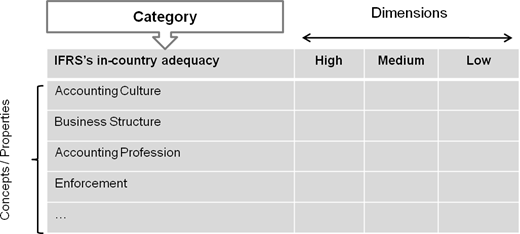
The second procedure, as Strauss and Corbin (1990) suggested, involves refining the categories derived from open coding. The authors developed their paradigm model as an integrating device for identifying and explaining the relationships among the emerging concepts grounded in the data. As such, in axial coding, subcategories are related to their categories through the paradigm model, as illustrated in Figure 2.
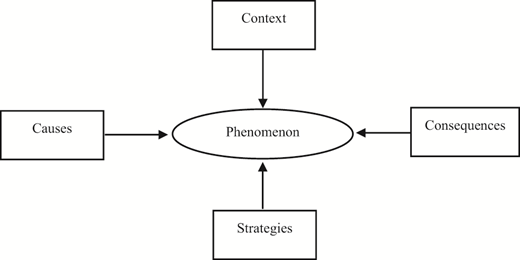
As depicted in Figure 2, the grounded paradigm model clarifies the relations among a phenomenon, its causes and consequences, its context and the strategies of those involved. This model is based on two axes: one goes from causes to phenomenon and consequences, and the other links context and interactional strategies to the phenomenon. At the centre of the paradigm model is the core category that emerges from the coding process, as described above. The causal conditions (often pointed out in the data by terms such as when, since and because […]) are the specific properties that pertain to a particular phenomenon. In addition, there are interactional strategies, which are strategic or routine responses made by individuals to the core category. Usually, they are pointed out in the data by action-oriented expressions (e.g. is dependent on […]; requires […]). The sets of circumstances or situations in which the core category is embedded are called the conditioning context. Finally, there are consequences, which are outcomes derived from the failure to take an interactional strategy.
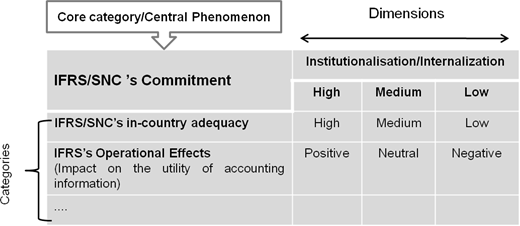
Finally, selective coding involves executing axial coding more abstractly by discovering and focusing on the focal core category, representing the central phenomenon that emerged from the axial coding (Figure 3). All core categories generated from the axial coding process must be connected to this focal core category, either directly or indirectly (Parker and Roffey, 1997). Thus, this final procedure requires the identification of the focal core category/the central phenomenon (which must match the story that it is supposed to represent) and relating it to the other categories through the paradigm model to write the storyline. This approach allows for the construction of a theoretical model comprising interrelated concepts, illustrating the proposed relationships between the central concept (i.e. the focal core category representing the central phenomenon identified in answer to the question “What is the central activity occurring here?”), its causal conditions, interactional strategies, conditioning context, and consequences (Parker and Roffey, 1997; Strauss and Corbin, 1990). In what follows, under the grounded theory approach, the ultimate goal of the analysis is to develop a theory of links among the context, the conditions, the strategies and the consequences of the phenomenon under study.
Data were analysed using a qualitative data analysis program (NVIVO), which was particularly useful in facilitating grounded theory analysis by organizing the data into meaningful categories and enhancing the efficiency and power of our analysis (Irvine and Gaffikin, 2006).
4. Findings
A deep analysis resulting from the grounded theory approach yielded valuable new insights, leading to the development of additional propositions beyond those of Fontes et al. (2016). This analysis also reinforced the inadequacy of the perceived value construct, suggesting that it should be replaced by “commitment” to more accurately reflect individuals’ perceptions and predict their behavioural support for change initiatives (e.g. Bouckenooghe et al., 2015). This commitment came forth as the central phenomenon of our model. Besides confirming the influence of the various categories of factors on stakeholders’ perceptions of financial reporting change processes, the data analysis method has further identified the role of those factors within the grounded theory paradigm model. This section discusses the research findings under the main elements of the grounded theory’s paradigm model: the core concept (Section 4.1), causal conditions (Section 4.2), strategies (Section 4.3), contextual factors (Section 4.4) and consequences (Section 4.5).
The resulting model of our study is depicted in Figure 4. As currently developed, this model provides the foundations of a midrange theory of stakeholders’ commitment to an IFRS-based reform, explaining relations among variables in a code-law-rooted setting – Portugal. The core concept/phenomenon (IFRS-SNC’s level of commitment) is determined by various causal conditions (individual, situational, technical, and change process factors); it is dependent on the fulfilment of several strategies (communication, enforcement, accounting profession measures and IFRS’s in-country adjustment); and it may vary according to the underlying contextual factors (national, organizational, individual and time). Appropriate strategies are required to ensure/promote IFRS-SNC’s commitment and, as a consequence, the success of the financial reporting reform.
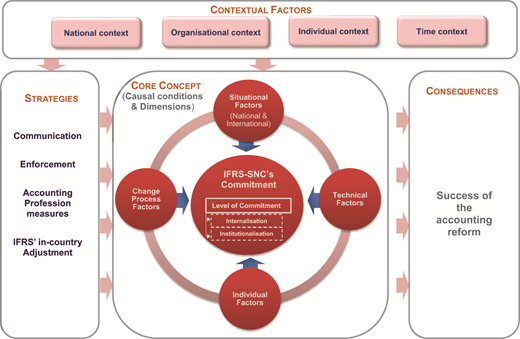
Model of stakeholders’ commitment to the adoption of a new accounting system
Source: Authors’ own work
Model of stakeholders’ commitment to the adoption of a new accounting system
Source: Authors’ own work
4.1 The core concept/phenomenon
From the analysis of the interview findings, we conclude that the perceived value construct identified in Fontes et al.’s (2016) model proved to be restrictive to writing our storyline. This limitation likely stems from its original design for quantitative surveys, where objective measures are more suitable. In a counterpoint, the final step of grounded theory development implies the execution of a more abstract level of analysis and, thereby, the uncovering of a broader and subjective concept – the core phenomenon.
Indeed, despite the overwhelming support towards the accounting reform, both in 2009 and 2017, the qualitative evidence obtained during the interview revealed, in several instances, negative perceptions towards the accounting change and, therefore, resistance to change. For instance, some individuals who supported the accounting reform perceived low IFRS in-country adequacy, a negative impact on the utility of accounting information and/or the satisfaction of their individual needs. In a counterpoint, it was also evident that even the individuals who did not reveal support towards adopting the new accounting system manifested, in some instances, positive attitudes towards the accounting reform by recognizing some of its potential benefits.
From the above, it becomes clear, as remarked by Conner (1993), that positive perceptions of change do not necessarily equate to support for the change. Similarly, support for change does not imply the absence of resistance. These concepts are distinct, as individuals may hold favourable views yet resist change due to various factors, while others may support it despite harbouring reservations. These considerations prompted us to delve deeper into our analysis and evaluate individuals using an alternative, broader, theoretical construct: stakeholders’ commitment to the accounting reform – as proposed by authors such as Bouckenooghe et al. (2015) and Conner (1993). This concept more accurately aligned with the data and emerged as the central phenomenon within our grounded theory framework, effectively capturing the core narrative of our study. The main story from the data was how and to what extent interviewees representing the various interest groups revealed commitment regarding the accounting reform. The core phenomenon was defined by drawing on Oliver’s (1991) typology of strategic behaviours and Conner’s (1993) levels of commitment to change: institutionalization and internalization [7].
The triangulation between the perceived benefits and support reveals that all individuals supporting the accounting reform acknowledge some of the claimed benefits. Following Oliver’s (1991) typology of strategic behaviours to institutional processes, most respondents revealed less active resistance to adopting the new accounting system – the acquiescence strategy. According to this author, when individuals anticipate legitimacy and/or economic (or efficiency) benefits, the likelihood of resistance to institutional pressures is lower. However, following Conner (1993), we suggest that the existence of positive perceptions towards accounting change, namely the recognition of its likely positive outcomes, is not assuredly a reflection of commitment to change.
These considerations are essential since individuals who supported the accounting reform differed in their commitment to the accounting change. Indeed, in some cases, individuals manifested their support merely driven by the globalization demands or compulsory requirements (i.e. an “institutionalized” – or externalized – commitment):
I agree with the adoption of the SNC […] Portugal is so small, and we had no way to impose ourselves. So, to be socially validated, it was inevitable. (TO5_ 2009)
The change [SNC] makes some sense because it is a mandatory requirement. It’s logical and perfectly rational because we’re following international accounting developments, and it must be done. If we didn’t do it, it would become a problem. (P16_2009)
The benefits don’t seem so objective to me. They are more qualitative and are mainly related to the country’s image abroad and the profession’s image. (P15_2017)
Alternatively, others revealed a high commitment to the accounting change (“internalized” commitment):
They [IFRS] do not have to be suitable [for the Portuguese accounting culture]; it is the culture that has to change, and anything more! This must be done because Portugal is not an isolated island. This has to change! (P16_2009)
I constantly privilege change […]: ‘So, ok, let us all study, let us learn for this to be done’. (P16_2017)
I like this accounting model […] Being held to high standards is challenging and beneficial in becoming a better professional. We all had to work: it was a learning process, and it allowed the accountants themselves to develop. (A9_2017)
In what follows, it was considered necessary to undertake a broader and interpretative analysis of interviewees’ discourse on the several categories to classify individuals’ commitment to the accounting change per the above-proposed classification. The results from such interpretative analysis are presented in Tables 2 and 3.
Classification of individuals’ perceived overall value of SNC and commitment in 2009 (pre-SNC adoption)
| SNC’s perceived overall value SNC commitment | Positive | Negative/reservations | Total | ||
|---|---|---|---|---|---|
| Frequency | % | Frequency | % | ||
| Total | 37 | 88 | 5 | 12 | 42 |
| Conner’s forms of commitment | |||||
| • Internalization | 17 | 46 | 0 | 0 | 17 |
| • Institutionalization | 20 | 54 | 2 | 40 | 22 |
| • Defy | 0 | 0 | 3 | 60 | 3 |
| Level of commitment | |||||
| • High | 22 | 60 | 0 | 0 | 22 |
| • Medium | 6 | 16 | 0 | 0 | 6 |
| • Low | 9 | 24 | 5 | 100 | 14 |
Classification of individuals’ perceived overall value of SNC and commitment in 2017 (post-SNC adoption)
| SNC’s perceived overall value SNC commitment | Positive | Negative/reservations | Total | ||
|---|---|---|---|---|---|
| Frequency | % | Frequency | % | ||
| Total | 37 | 88 | 5 | 12 | 42 |
| Conner’s forms of commitment | |||||
| • Internalization | 11 | 30 | 0 | 0 | 11 |
| • Institutionalization | 26 | 70 | 4 | 80 | 30 |
| • Defy | 0 | 0 | 1 | 20 | 1 |
| Level of commitment | |||||
| • High | 24 | 65 | 0 | 0 | 24 |
| • Medium | 9 | 24 | 0 | 0 | 9 |
| • Low | 4 | 11 | 5 | 100 | 9 |
The surface classification of the data gathered uncovers the same level of individuals’ perceived overall value of SNC in both moments of analysis (prior and post-SNC adoption, n = 37 / 88%). However, going beyond the restrictiveness of the original concept of overall value, our deep analysis shows that “institutionalized” individuals differed in their level of commitment, ranging from low to high. Among the individuals perceiving a positive overall value of the new accounting system, less than half of the participants (n = 17 / 46%, 2009; n = 11 / 30%, 2017) revealed emotional engagement regarding the accounting reform. Furthermore, the longitudinal analysis unveils that while there was a decrease in the internalization level after the effective adoption of SNC, it was evident that there was an enhanced (medium to high) level of commitment (n = 28 / 76%, 2009; n = 33 / 89%, 2017). The analysis also shows that even many of the individuals revealing a negative SNC’s perceived overall value (or reservations) exhibited an externalized commitment (low level of institutionalization) with the accounting reform, mainly in 2017 (n = 2 / 40%, 2009; n = 4 / 80%, 2017). Importantly, from 2009 to 2017, an increase in commitment (even though low) among these unsupportive or sceptical individuals is perceptible. Empirical evidence also suggests different commitment levels among the surveyed interest groups, as detailed in Table 4.
Classification of individuals’ level of SNC support and commitment by interest groups (pre and post-SNC adoption)
| SNC support | Conners’ forms of commitment | Level of commitment | |||||||||||||||||||
|---|---|---|---|---|---|---|---|---|---|---|---|---|---|---|---|---|---|---|---|---|---|
| Interest group/ | Positive | Negative | Reservations | Total | Internalization | Institutionalization | Defy | Total | High | Medium | Low | Total | |||||||||
| Interview year | Frequency | % | Frequency | % | Frequency | % | Frequency | % | Frequency | % | Frequency | % | Frequency | % | Frequency | % | Frequency | % | |||
| Tax officials | |||||||||||||||||||||
| 2009 | 7 | 78 | 1 | 11 | 1 | 11 | 9 | 3 | 33 | 5 | 56 | 1 | 11 | 9 | 4 | 44 | 2 | 22 | 3 | 33 | 9 |
| 2017 | 7 | 78 | 1 | 11 | 1 | 11 | 9 | 1 | 11 | 7 | 78 | 1 | 11 | 9 | 5 | 56 | 1 | 11 | 3 | 33 | 9 |
| Auditors | |||||||||||||||||||||
| 2009 | 14 | 88 | 2 | 13 | 0 | 0 | 16 | 9 | 56 | 5 | 31 | 2 | 13 | 16 | 12 | 75 | 2 | 13 | 2 | 13 | 16 |
| 2017 | 16 | 100 | 0 | 0 | 0 | 0 | 16 | 7 | 44 | 9 | 56 | 0 | 0 | 16 | 11 | 69 | 4 | 25 | 1 | 6 | 16 |
| Preparers | |||||||||||||||||||||
| 2009 | 16 | 94 | 1 | 6 | 0 | 0 | 17 | 5 | 29 | 12 | 71 | 0 | 0 | 17 | 6 | 35 | 2 | 12 | 9 | 53 | 17 |
| 2017 | 14 | 82 | 0 | 0 | 3 | 18 | 17 | 3 | 18 | 14 | 82 | 0 | 0 | 17 | 8 | 47 | 4 | 24 | 5 | 29 | 17 |
| Internal preparers | |||||||||||||||||||||
| 2009 | 8 | 89 | 1 | 11 | 0 | 0 | 9 | 3 | 33 | 6 | 67 | 0 | 0 | 9 | 4 | 44 | 1 | 11 | 4 | 44 | 9 |
| 2017 | 8 | 89 | 0 | 0 | 1 | 11 | 9 | 2 | 22 | 7 | 78 | 0 | 0 | 9 | 4 | 44 | 3 | 33 | 2 | 22 | 9 |
| External preparers | |||||||||||||||||||||
| 2009 | 8 | 100 | 0 | 0 | 0 | 0 | 8 | 2 | 25 | 6 | 75 | 0 | 0 | 8 | 2 | 25 | 1 | 13 | 5 | 63 | 8 |
| 2017 | 6 | 75 | 0 | 0 | 2 | 25 | 8 | 1 | 13 | 7 | 88 | 0 | 0 | 8 | 4 | 50 | 1 | 13 | 3 | 38 | 8 |
| Totals | |||||||||||||||||||||
| 2009 | 37 | 88 | 4 | 10 | 1 | 2 | 42 | 17 | 40 | 22 | 52 | 3 | 7 | 42 | 22 | 52 | 6 | 14 | 14 | 33 | 42 |
| 2017 | 37 | 88 | 1 | 2 | 4 | 10 | 42 | 11 | 26 | 30 | 71 | 1 | 2 | 42 | 24 | 57 | 9 | 21 | 9 | 21 | 42 |
Considering Conner’s forms of commitment, auditors were the group exhibiting the highest level of commitment (internalization) in 2009 and 2017, and preparers (in 2009) and tax officials (in 2017) were those with the lowest. The ranking of the several surveyed groups by level of commitment is as follows:
auditors (75%, 2009; 69%, 2017);
tax officials (44%, 2009; 56%, 2017); and
preparers (35%, 2009; 47%, 2017).
Noticeably, whereas tax officials were the group revealing the lowest level of internalization in 2017, overall, a high level of commitment was more evident compared with preparers. Interestingly, while external preparers in 2009 were the least committed group (25%), in 2017, there was a recovery in their level of commitment (50%), which surpassed that of internal preparers (44% in both years). The longitudinal analysis further unveils that the overall decline in the internalization level from 2009 to 2017 (40%, 2009; 26%, 2017) was attributed to the auditors’ group, which may arguably be symptomatic of their unfulfilled expectations to some degree. Such suspicion might call for further and deeper research explicitly directed at this group.
Despite the qualitative nature of this study, the data analysis also appears to suggest that certain participants’ characteristics (such as age, level of experience, previous IFRS experience, academic position and educational level) might play some role in explaining individuals’ level of commitment. Such evidence is in accordance with prior research on management change and psychology (Caldwell et al., 2004). In general, in both years of analysis, experienced and elderly individuals revealed less commitment to the accounting reform; also, academics and individuals with previous IFRS experience reported higher internalized commitment.
The following subsections (4.2–4.5) discuss the interview findings in line with our model of stakeholders’ commitment towards accounting change (Table 5).
Model of stakeholders’ commitment to the adoption of a new accounting system
| Contextual factors | |||||
|---|---|---|---|---|---|
| Individuals’ commitment towards a new financial reporting system varies … | |||||
| P eii: … with the national context | P 3.4: … according to the organisational context. | P 1.9: … among the different accounting interest groups. | P ei: … across time. | ||
| Strategies | Causal conditions | Consequences | |||
| Change process factors | Situational factors | Individual factors | Technical factors | ||
| Individuals’ commitment towards a new financial reporting system requires… | Individuals’ commitment towards a new financial reporting system is related to… | Individuals’ commitment towards a new financial reporting system… | Individuals’ commitment towards a new financial reporting system is… | Individuals’ commitment towards a new financial reporting system is related to… | Individuals’ commitment towards a new financial reporting system influences… |
| P 5.1e: … communication strategies P 5.2e: … enforcement measures P 5.3e: … accounting profession measures. P 5.4e: … IFRS in-country adjustments | P 1.4: … their level of commitment to traditional accounting values. P 1.5: … their disposition to change. P 1.6: … the personal impact of the new financial reporting system on their job and on satisfaction of their individual needs. P 1.7: … the importance they attach to financial statements. P 1.8: … to their capacities to implement change. P 1e: … personal conformism, submissiveness, or passivity towards government decisions. | P 2.1: … increases with the expected operational benefits of the IFRS model. P 2.2: … decreases with the perceived complexity of the IFRS-based standards. P 2.3: … decreases with the perceived costs of adopting the new financial reporting system. P 2ei: … increases with the perceived technical superiority underlying it. P 2eii: … is associated with the perceived general novelty. | P 3.1: … related positively to the perceived suitability of IFRS underlining principles to the national environment. P 3.2: … related positively to the perceived compatibility of IFRS-based standards to the national accounting culture. P 3.5: … related positively to the perceived contextual benefits arising from the adoption of the new financial reporting system. P 3.3: … related to the perceived global suitability of the underlining principles of IFRS. P 3e: … impacted by ongoing financial scandals and crisis. | P 4.2: … the perceived quality of the change communication. P 4.4: … their perceptions of the adequacy of the timing of the reform. P 4.5: … their views on the legal legitimacy of the accounting reform. P 4e: … their views on the IFRS in-country adjustments. | P 6e: … the resulting quality of the accounting information (i.e., the likely success of the accounting reform). |
The propositions numbered 1–4 follow Fontes et al.’s (2016) numbering (as shown in Table 1) to enhance comparability. Some of these authors’ propositions were confirmed and incorporated into the developed model though reformulated by replacing the “perceived value” construct with “commitment”. Additional propositions introduced in this study are marked with “e” (where “e” stands for “extended’”)
4.2 Causal conditions
Causal conditions either facilitated or constrained stakeholders’ commitment towards accounting change.
4.2.1 Situational causal conditions.
The situational factors comprise international and national factors. External environmental factors comprised two issues: IFRS globalization adequacy and financial scandals and crises. The concepts of IFRS in-country adequacy, national culture and contextual benefits represent the causal national environmental factors.
It can be argued that IFRS globalization adequacy is more pronounced in promoting stakeholders’ commitment towards the accounting reform. This concept encompasses the globalization demands for international comparability, the need to follow international developments (which appeared to be associated, in some instances, with external pressures and legal requirements) and financial and legitimacy benefits. Therefore, as long as individuals recognize the relevance of globalization needs, they tend to reveal a compromising attitude towards accounting change, as seen from statements such as the following:
[…] we must adopt IFRS because of integration in the world. Full Stop! Honestly, I do not care if they are suitable for our national environment. It is we who must adapt to this new accounting thought. Full Stop!! (P16_ 2009)
There is no other way […]. The accounting comparability must be ensured. We cannot claim niches of different standards in different countries. The trend is actually to harmonise. (TO1_ 2009)
Accounting systems at the European and global levels are increasingly resembling each other to promote comparability. That’s the big goal of SNC, and I agree with the change. (P12_2017)
This evidence echoes the widely held argument in the change literature (e.g. Cameron and Green, 2019), highlighting the critical effect of the globalization context in promoting individuals’ receptiveness to change initiatives. It also conforms with the contention recognizing the power of globalization pressures in promoting IFRS worldwide adoption (e.g. Albu et al., 2014). Additionally, although not predicted in Fontes et al.’s (2016) model, we found evidence suggesting that the financial scandals and crises impacted stakeholders’ commitment to accounting reform in both years. The following excerpts convey these views:
Right now, I do not consider IFRS appropriate or relevant for the national environment, given the current economic background. I think you should postpone because there are more pressing needs. The companies that are about to fail will face additional costs by adopting this new accounting system. (P15_2009)
Under rule-based standards, market players will always come up with new situations unforeseen by such rules, thereby opening the door to big financial scandals; to the contrary, under principle-based standards, there are guiding principles that apply to every situation at hand, thereby acting as a deterrent to financial scandals. (A7_2017)
There could not be a better timing [for SNC adoption] because of the crisis, which made it impossible to deny the importance of financial information […] there were things that, until that time, had been hidden […] and turned out to be unacceptable. (TO2_2017)
In summary, the interview findings provided substantial support to Fontes et al.’s (2016) proposition P3.3 regarding the influence of the globalization context on stakeholders’ perceptions (herein reformulated to stakeholders’ commitment) and brought into light a further external factor influencing stakeholders’ perceptions (P3.e): financial scandals and crisis (Table 5). It was also evident that stakeholders’ commitment towards the accounting reform was partially hampered by country-specific factors (i.e. IFRS in-country adequacy), such as the Portuguese business structure, the Continental European accounting cultural background, the accounting profession and the tax-driven nature of the national accounting system. Below, we provide some representative comments:
Users’ needs [in Portugal] are more pragmatic: they are historical cost needs and requirements of the regulations. Replacing an accounting philosophy with deregulated principles is obviously irrelevant to us. It will present challenges. (P9_2009)
The Portuguese are keen on rules […] They don’t like being forced to make decisions […]. Acting according to principles implies having to decide and taking responsibility. Portuguese don’t like it. (A5_2017)
There are fundamental cultural barriers to internalising the Anglo-Saxon philosophy, including the low relevance most entrepreneurs confer to accounting, which is still mostly seen as a tax collection tool. (P15_2017)
This evidence corroborates the role of internal environmental issues on stakeholders’ commitment to change and is in tune with the insights of the change literature (e.g. Peyrefitte et al., 2022). Specifically, these findings are consistent with prior international accounting research studies (e.g. Albu et al., 2014, 2020), suggesting the influence of a country’s institutional setting on IFRS adoption.
Despite the identification of various concepts in the general category of IFRS in-country adequacy, the analysis of the findings revealed a high association between some of these concepts. In particular, we realized that specific categories (such as the accounting profession, the objectives of financial reporting and the relationship between accounting and taxation) were, to some extent, a reflection of the national accounting culture. In this way, they might be regarded as characterizing elements of the Portuguese accounting culture, which is the outcome of the national societal values and institutional norms, as Gray’s (1988) model suggested. Having acknowledged this, it might be claimed that IFRS in-country adequacy is mainly explained by the national culture. Such inference, reiterating the role of the existing national culture, clearly conforms to the institutional theory’s emphasis on the embedded rules and values in a social system as a source of resistance to change (Campbell, 2020; DiMaggio and Powell, 1983).
However, the above factors hindering stakeholders’ commitment to SNC adoption were compensated by the expected national legitimacy benefits (and their underlying financial benefits) resulting from IFRS globalization adequacy (Albu et al., 2014; Guerreiro et al., 2015). Again, this logic echoes the perspectives of institutional theory, highlighting the role of legitimacy reasons in overcoming resistance to change caused by institutionalized environments. In our interpretation, the study evidence suggests that the perceived misalignment between the new external businesses’ conditions (namely, the globalization context) and the specific national context prompted openness to institutional change.
In sum, based on the interview evidence, this study supports Fontes et al.’s (2016) propositions regarding the positive influence of the perceived suitability to the national environment (P3.1) and to the national accounting culture (P3.2), as well as of the anticipated contextual benefits (P3.5) on individuals’ IFRS/SNC commitment (Table 5).
4.2.2 Technical causal conditions.
The interview evidence also unveiled a dual influence of technical causal factors on stakeholders’ commitment to the accounting reform. The technical issues raised by the interview findings may be organized into five groups:
perceived SNC (IFRS) technical superiority (comprising considerations such as conceptuality, flexibility, disclosures, and fair value accounting);
anticipated impact on the quality of accounting information;
costs of adoption;
perceived general novelty; and
perceived complexity.
Perceptions of the technical inefficiencies of the previous accounting system, titled Plano Oficial de Contabilidade (POC – Official Accounting Plan), were exposed by some interviewees as motivating demands for the reform:
I think this culture [in which the POC is based] is not exactly beneficial for the accounting development. (P1_2009)
Having superior accounting standards and increasingly qualified accountants is widely beneficial for all. (A7_2017)
SNC is conveying a more authentic picture of the company […] There is no doubt that if there are adequate management judgments and a correct application of the principles, we have superior information. (P9_2017)
This evidence is consistent with Seo and Creed’s (2002) contention that the acknowledgement of insufficiencies of the existing rules fosters the institutionalization of new arrangements. There was, however, a notable diversity of views on the anticipated operational benefits, which raised difficulties in grouping these comments during data analysis. Despite interviewees’ faith in the operational benefits resulting from SNC adoption, the analysis of their comments revealed some scepticism on the practical implementation of the new accounting system. As explained later, some responses appeared vacillating because they depended on some contextual factors and measures to ensure the proper implementation of the new accounting system.
Another issue hindering some individuals’ commitment was concerned with the costs of adopting the new accounting system – which aligns with earlier evidence (e.g. Brusca et al., 2016) and was more pronounced in 2009, at the earliest stage of the accounting reform. Such adverse effects were boosted by the ongoing financial crisis in 2009 and, thus, reflected timing implementation issues. Finally, the views held by individuals about the differences between the SNC and the POC (i.e. the perceived general novelty) and the complexity of the new accounting model also appeared to affect stakeholders’ commitment to the accounting change. Exemplifying this, some respondents stated:
I did not see real changes with the implementation of the new model. Little more than the name of things has changed. (TO6_2017)
This is the great obstacle to the application of SNC: we go there to clarify a doubt, and you simply don’t clarify any doubt! […] how can an accounting system whose explanation is not understandable be implemented? Only if SNC was more synthetic and precise and offered more examples […] (P11_2017)
Given the above discussion, the interview evidence corroborated Fontes et al.’s (2016) propositions regarding the influence on individuals’ commitment towards IFRS/SNC of the expected operational benefits (P2.1), perceived complexity (P2.2) and adoption costs (P2.3). In addition, the evidence gathered gave rise to two new propositions regarding the influence of perceived IFRS/SNC technical superiority (P2.ei) and general novelty (P2.eii) (Table 5).
4.2.3 Individual causal conditions.
Although we observed that key drivers to commitment towards accounting change were the anticipated contextual and operational benefits and the globalization context, it was also evident that some respondents’ commitment was influenced by given personal interests/benefits. Representative comments include:
Personally, I would vote no […] although recognising some strengths, it will mess too much with our work […] things worked so well until now, calmly, etc. (P2_2009)
It will change [my work] in a positive way […] the new accounting system is much more demanding, it brings back much more and better information and, therefore, will be a better basis for decision-making. (A17_2009)
[…] with the SNC, I became more of an interpretation technician in implementing accounting policies […] in this perspective […] it benefited me a lot. (P1_2017)
It follows that adopting IFRS at the national level can bring winners and losers in terms of legitimacy and efficiency benefits. Most notably, the evidence indicated that career concerns and external professional reputation often outweighed personal information needs in driving individuals’ commitment to adopting the IFRS philosophy in Portugal. In contrast, some respondents’ commitment to the new accounting system was negatively influenced by the perceived adverse effect of the accounting reform on their individual preferences. This study’s findings are consistent with prior research (e.g. Armenakis et al., 2007) reporting the influence of the anticipated personal impact of the change on individuals’ willingness to support a change initiative. Such evidence also aligns with institutional perspectives (e.g. DiMaggio and Powell, 1983; Oliver, 1991), underscoring the relevance of individual legitimacy-related reasons for accepting innovations, such as power, autonomy, status and reputation. Furthermore, consistent with prior research (e.g. Burns and Baldvinsdottir, 2005; Jermias, 2001), our findings indicate that individuals’ commitment to traditional accounting values was also perceived to influence their commitment to accounting reform, as may be seen in the following quotes:
I'm completely adept at principle-based [standards], so there is mental development of all people. (A4_2009)
For me, the fair value is the main point with which I disagree […] one thing I like in accounting is the objectivity, and I think we will lose the objectivity. (P2_2009)
Another factor that explains individuals’ commitment is their disposition towards change initiatives. Our results also bear similarities to prior research highlighting the influence of individuals’ psychological predisposition to change on change acceptance, mainly as reflected by their public-spiritedness/altruism (Strauss et al., 2008). The statements below illustrate this view:
The adoption of the SNC for the profession is an opportunity. As much as it is a challenge, it is also an opportunity to rethink everything. (P3_2009)
The standards are suitable and relevant [for the national environment]. The problem is not the standards but the Portuguese mentality […] we must evolve to adjust; otherwise, we will be isolated from developed countries. It is an important step in this change. (TO6_2009)
I think we always have to face all the changes with optimism, and I think the implementation was positive. (TO5_2017)
Also, as it will be elaborated further in subsection 4.4, some respondents viewed some of the barriers to the accounting reform as time-bridgeable obstacles – such evidence conveyed, in our interpretation, an optimistic attitude towards accounting change.
Another personality trait conveying a disposition to change, which might also explain individuals’ commitment to accounting reform, is related to individuals’ conformism, submissiveness, or passivity towards government decisions. The following remarks convey this inference:
Neither yes nor no [support to the SNC] […] I must implement it because the government obliges me to do so. (P2_2009)
[…] but if there is a CNC that says it must be like that, we must adapt ourselves. (P14_2017)
There is no option other than its implementation; no other remedy exists! (P12_2017)
In fact, some respondents’ support was merely provided for mandatory reasons, thereby conveying a low level of commitment. To the best of our knowledge, such inference brings into light an unexplored personality factor in the background literature of our previous theoretical framework.
Consistent with prior research suggesting that individuals’ incapacities to implement change (i.e. demands ability-fit) represent an important source of resistance to change (Turgut and Neuhaus, 2020), our study provided evidence sustaining this association. In the wording of some interviewees:
There will always be an initial difficulty of adaptation […] In aspects that are of subjective valuation or personal discretion, it will be challenging to make the [tax] corrections. (TO3_ 2009)
I feel more insecure […] because there is room for professional judgment […] The principles make everything more subjective, and I sometimes fear not making the right decision. (P14_2017)
Finally, our study also unveils some evidence, albeit limited, that individuals’ views regarding the importance and usefulness of accounting information affect their perceptions of the accounting change. This reported association bears similarities and is somehow associated with prior research analysing individuals’ uses and usefulness of accounting information (e.g. Son et al., 2006).
In sum, we developed an extra-proposition to reflect personal submissiveness towards government decisions (P1.e) and confirmed the relevance of Fontes et al.’s (2016) P1.4–P1.8 regarding the influence of commitment to traditional accounting values, disposition to change, personal impact of change, perceived usefulness of financial statements and demands/ability fit (Table 5).
4.2.4 Change process causal conditions.
The analysis of the evidence also brought to light the influence of change process factors on individuals’ commitment to accounting reform.
The interview data provide support that ineffective and poor communication had partially contributed negatively to one’s commitment to change. The following are some insightful statements:
I also doubted the applicability of the new system because I thought there would be much resistance. There has not been enough effort to inform and instil the new accounting system in people. (A2_2009)
The CNC has demonstrated remarkable passivity in effectively implementing what it advocates. (P15_2017)
No one was too convinced by the motivations CNC presented for the accounting reform. (TO3_2017)
Such finding lends support to extant research from different areas (e.g. Peyrefitte et al., 2022; Situ et al., 2021), emphasizing the relevance of communication in generating openness to change initiatives. However, scarce evidence suggested that participation in the accounting reform process affected individuals’ commitment. Thus, our study provides limited support to prior research (e.g. Katsaros and Tsirikas, 2022), claiming that individuals’ involvement in implementing change initiatives promotes their acceptance (P4.1 of Fontes et al., 2016). Similarly, the lack of evidence on the relevance of the trust in the change agent (CNC) provides weak support to P4.3 of Fontes et al. (2016) and thereby to the literature emphasizing the influence of this factor on the success of change efforts (e.g. Gigliotti et al., 2019).
It is still mentioned that the timing and speed of the implementation of the new accounting system also emerged as one factor hindering individuals’ commitment towards the accounting reform, as reported by two tax officials:
[…] the main problem is that there will be much resistance to change. In my opinion, it [the IFRS/SNC] should be gradually implemented […] for example, first listed companies, then, later, companies above a certain turnover, and so on […] so that they can gradually adapt to change. (TO3_ 2009)
People should have been given more time to implement this because this led to significant costs of context at the beginning, and a great deal of work all at once!! (TO3_2017)
Such a finding is consistent with some authors’ contentions, including Smollan (2006), underlining the relevance of timing implementation issues on individuals’ attitudes to change processes. The interview evidence also confirmed the relevance of legal legitimacy in promoting individuals’ commitment to the accounting reform (Chand, 2005; Suchman, 1995). Indeed, the overall findings suggest that individuals’ standing of commitment is promoted by EU and government mandatory requirements. Such evidence further confirms the relevance of the pressures exerted by governmental authorities in the institutionalization process. In this regard, it is worth noting that the Minister of Finance at the time was a giant guardian of the IASB model, which underscored Portugal’s political will to adopt an IFRS-based accounting system nationally.
In closing, another factor that might be regarded as a change process factor is the extent and type of the adaptations undertaken by the CNC to the IASB accounting system (herein named IFRS in-country adjustments). In our interpretation, some of these adaptations, such as the maintenance of a chart of accounts, might be regarded as an attempt by the CNC to influence individuals’ commitment to change:
IFRS were adapted to meet the financial information needs of local companies. It was not about changing the philosophy of standards but rather simplifying so that the SNC general reporting framework is applied to companies with more stringent requirements, and the SNC simplified optional standards are applied to the smaller. (A1_2009)
[…] IFRS adjustments are too tenuous. We cannot directly import those standards into our accounting system, as other countries cannot. […] we need to adapt to the reality of each country. (TO9_2009)
I think that IFRS adjustments have to do with cultural issues: our culture is […] keener on rules rather than principles […] and then, I think that the maintenance of the code of accounts, the restrictions on the use of fair value, came to withdraw some of the subjectivity and turned things much more practical. (P1_2017)
Since we have always been used to coding, the maintenance of the chart of accounts was very well done. (TO3_2017)
In brief, the study findings corroborate Fontes et al.’s (2016) propositions P4.2 (communication), P4.4 (timing implementation issues) and P4.5 (legal legitimacy) and gave rise to an additional proposition to reflect the influence of individuals’ views on the IFRS in-country adjustments (P4.e) (Table 5).
4.3 Strategies
Notwithstanding interviewees’ general support towards the accounting change, several respondents repeatedly highlighted the need for CNC and professional organizations to undertake measures to overcome the accounting reform’s potential adverse consequences. In this way, the above-mentioned key drivers were deemed insufficient to generate commitment towards accounting change. On the contrary, some factors found to cause conflict were associated with recommendations for enhancing individuals’ commitment.
In common with the widespread claim in change literature (e.g. Peyrefitte et al., 2022), some respondents emphasized improving communication with the targets of the change. In some instances, such recommendations reflected a need to create awareness of the proposed accounting system. In other cases, such bargains called for a mobilization of power sources – this is to use communication as a tactic to challenge the institutionalized cultural values and promote change acceptance. In this sense, the need to promote a cultural and mentality change emerged as one of the critical strategies for fostering commitment. Illustrating this, some interviewees stated:
There will be more disclosure. […] But for that, the mentality has to be changed substantially. (A9_2009)
[…] Some say that with the SNC, the information has become less reliable because there is more room to play with accounts. And this awareness […] has to be a matter of education, of deontology (even) at the level of the profession. But we need […] to welcome this level of openness […] and in this regard, I have a great deal of reticence […] it requires […] a sound awareness or education of the accountant for the new way of working. (P7_2017)
Better than adding enforcement mechanisms, one should enact preparers’ ethics through education and training. (A2_2017)
Rodrigues and Craig (2007, p. 739) partially supported these claims, as they remarked that the convergence success implies a cultural shift, which depends on developing a “belief system” in IASB standards. These suggestions, highlighting the importance of creating a cultural identity, also clearly conform with the cognitive-cultural view of legitimacy in institutional theory and thereby reflect a solid commitment to the accounting change – as these individuals do not only seem to intend a mere conformation with the new accounting model but also have in view the adoption of deeper cultural values.
Many of these appeals also illustrate the relevance of communication as a strategy used to influence individuals’ perceptions, and they are consistent with the empirical evidence of several accounting studies documenting the symbolic power of communication (e.g. Situ et al., 2021). In this way, our analysis points to the need to reorient core management and accounting assumptions – most notably, a greater involvement of accountants in management and a higher integration between management and accounting. Specifically, some respondents’ comments underscored the importance of creating awareness of the relevance of financial statements and increased disclosures. For example, one interviewee reasoned: “[…] that thing which is rooted in most preparers’ minds that accounting is only made because entrepreneurs have to pay taxes; for me, this culture has to disappear. In my view, accounting is much more than that […] Thus, culture affects 100%” (P16_2009). It was also expressed the need to promote a more significant intervention of the managers in the accounting process and a greater interdisciplinary to implement the new accounting system: “[…] the SNC will increase dialogue with management and will turn the role of the accountant more proactive in management […] we already seek to play that role, but this is not always easy […]” (P13_2017). From the recommended measures, one might also infer a need to promote a change in accountants’ perceptions of themselves and self-reorientation. Furthermore, we found that individuals strongly perceived a need for accurate enforcement measures to secure the success of the accounting reform:
Portugal is a “Law-driven” country […] we implement change only by law, by obligation […] and only when there is enforcement; without it, the law is there or not; for us Portuguese, it is the same. Someone must come and say, “Either you comply, or you will be punished.” The current enforcement mechanisms are not enough. We only have the tax inspectors scrutinising, but merely from a tax perspective. (A5_2017)
There are few supervisory mechanisms: the standards are laid down, the fines are foreseen, and who executes? Nobody! (P10_2017)
From an institutional perspective, this evidence supports Oliver’s (1991) contention on the relevance of enforcement mechanisms to overcome resistance to change. The emergent evidence is also in tune with prior literature (e.g. Silva et al., 2023) reporting the enforcement of IFRS-based financial statements as an elementary condition for worldwide financial reporting convergence.
Following Oliver (1991), from the analysis of the previous recommended measures, it might be inferred that the emergence of acquiescent strategic responses to the adoption of the new accounting system, as they mirror an acceptance and a conscious intent to conform to institutional pressures, and, thereby, a high level of commitment. Other initiatives demanded by some interviewees, which might also be interpreted as expressing such strategic response to the accounting reform, included the request for accounting profession’s market measures (such as the regulation of the fees and number of clients of the professional accountant).
Overall, this evidence corroborates a well-established assertion in international accounting research (e.g. Hope et al., 2006), suggesting that the successful outcome of the global adoption of IFRS demands a change in a country’s institutional setting. There was also some evidence of signing some calls and proposals to adjust the IASB standards to the needs and constraints of the national reality (IFRS in-country adjustment), such as to provide principles’ regulation, further exemplifications of the new accounting system and some fair value-related measures. From our perspective, these specific requests seem to be closest to one of the manipulation tactics pointed out by Oliver (1991) – the influence tactic – as it might mirror an attempt to shape institutional processes and thereby signal a lower level of commitment to the new institutional rules (Campbell, 2020). Thus, the identification of these strategies led to the development of additional propositions, illustrating that individuals’ commitment towards a new financial reporting system requires communication strategies (P 5.1e), enforcement measures (P 5.2e), accounting profession measures (P 5.3e) and IFRS in-country adjustments (P 5.4e) (Table 5).
4.4 Contextual factors
Consistent with the grounded theory approach, the analysis of the interview evidence has also given rise to tentative suggestions about contextual factors affecting the core concept, its causal conditions and strategies. Indeed, a chief benefit of directly asking the constituents is that they presumably have the best information about the circumstances surrounding their decisions. It follows that stakeholders’ commitment towards the accounting reform (the core concept), its hindering/promoting factors and associated strategies are not straightforward but differ with some contextual factors. In particular, four contextual factors were found to be important: time, national, organizational and individual contextual factors. Overall, our evidence provides a reference point for describing and explaining differing commitments and under which conditions the above-described strategies should be taken to manage commitment to accounting change.
The organizational context comprised some firms’ characteristics, such as size, international orientation, capital structure and entrepreneur culture. Indeed, our conditional analyses show that the surveyed individuals perceive the accounting reform as especially important for larger and internationally oriented companies with a dispersed ownership structure:
For most companies […] the new standards are not very relevant because these companies do not use financial statements for management purposes […] accounting information is seen only from a tax perspective and a little more. (TO3_2009)
If a company does not have external financing and […] the shareholders are the entrepreneur, his wife, and the kids, it does not have to provide accounts to anyone […] so SNC’s improved reporting is not so relevant. (A3_2017)
This supports analogous findings in IFRS literature (e.g. De George et al., 2016; Petre and Albu, 2020). This evidence also aligns with the institutional insights, namely those stressed by Oliver (1991), suggesting that the inadequacy of institutional norms to organizational goals and interests enhances the probability of resistance to change.
As regards the individual context, one of the factors found to explain differing perceptions among individuals is related to their interest group, as previously elaborated in Section 4.1. This finding is similar to those indicated in different research areas (e.g. Doan et al., 2020), suggesting that attitudes towards change initiatives vary among functional groups.
In line with prior research (e.g. Heggestad and Kanfer, 2000; Uyar and Güngörmüsß, 2013), as reported in Section 4.1, our evidence appears to suggest the role of other individual features in explaining differing attitudes towards change initiatives, such as level of education and experience:
Because I work at a multinational company, I have an obligation and am better prepared than most people. I already have certain habits that can make life easier for me in terms of SNC adoption. (P2_2009)
I am also prepared due to my lecturing, which helps me grasp the theoretical support of standards, and then I can more easily implement them in practice and justify them. (P1_2017)
It must also be stressed that the overall analysis and interpretation of the interview data indicate that perceptions evolve and might be shaped by some initiatives undertaken by the change agent. Such a general interpretation is further reinforced by direct evidence unveiling that some of the barriers to the accounting reform are regarded as time-bridgeable obstacles:
[…] maybe within 3 or 4 years, when this is at cruising speed, nobody will remember POC, then this will evolve naturally. After this period of adjustment, everyone will adapt […] Within ten years, the accounting profession will be completely different; there will be an evolution. (P12_2009)
Some older practitioners left because they could no longer update and assimilate all the new concepts and paradigms brought with the SNC, and there are still many just waiting for retirement. I place great expectations on the new generation of accountants as they are better prepared. (A5_2017)
The difficulties are being overcome over time […] current practice will show us the way forward and how to overcome differences in interpretation, translation problems, the complexity of standards, and the cultural tradition itself. (A6_2017)
In our view, such observations might signal a contextual factor of stakeholders’ commitment, reflecting time-dependent implications for IFRS institutionalization. This contention echoes some perspectives underlying recent institutional theory developments (e.g. Hoefer and Green, 2016; Soublière and Gehman, 2020), stressing the dynamic nature inherent to change processes. Notably, the above evidence conveys individuals’ optimism towards change as an essential individual factor promoting one’s commitment.
In closing, it is crucial to consider the institutional context of the change. Therefore, we should remember that this study involved a specific situational context – Portugal. Our focus on a single country prevents us from ascertaining the likely effect of differing national contexts on individuals’ commitment to IFRS local adoption. Notwithstanding, drawing upon extant insights from international accounting research, there may be grounds to suggest different levels of commitment to adopting the IFRS model in Continental European countries and Anglo-Saxon countries. However, such expectation requires the replication of this study to a broad range of countries, namely, the development of a multiple case study.
Considering the above discussion, the interview findings confirmed the rephrased propositions regarding the contextual influence of organizational factors (P 3.4) and interest/functional group (P 1.9) and assisted the development of two additional propositions, which account for the time- and nation-dependent nature of stakeholders’ commitment to change (P ei, Pe2) (Table 5).
4.5 Consequences
As stipulated earlier, the promoting and hindering factors of individuals’ commitment to change (causal conditions) are insufficient to explain, secure and manage their commitment. Therefore, it might be inferred that failure to undertake the recommended strategies is likely to hinder individuals’ commitment to change, which, in turn, might generate adverse consequences for the implementation of the new accounting system. Such expectation was corroborated by the interview evidence when some interviewees explicitly highlighted the probable occurrence of resistance to change resulting from some environmental barriers. The recognition of this potential consequence is associated with our core concept, as it might be regarded as a trigger of the remaining anticipated consequences, such as the decoupling – namely, the maintenance of the caution and secrecy approach and the linkage between taxation and accounting; the manipulation risk; and poor adjustment to change.
4.5.1 Decoupling.
[…] the culture will pull a bit to the historical cost […] (P13_2009)
It can improve a little [the level of disclosure], but not much, because this is already in our blood. (P5_2009)
What accountants did before SNC continues to be done, but there is still a preference for secrecy. (TO3_2017)
We are so culturally attached to taxes that it will be tough to separate what is accounting from what is taxation […] it is not because there is a new accounting system that our culture will change. (A1_2009)
4.5.2 Manipulation risk.
[…] preparers will become more vulnerable to clients […] they might be coerced by their clients to manipulate the accounts given the subjectivity underlying SNC. (TO1_2009)
There may be a tendency towards manipulation because there are fewer rules, especially regarding fair value. (A11_2017)
In Portugal […] when there is room for subjectivity, it is immediately used for what best serves our interest; it is soon adulterated. It is a very “ingrained” mentality. (P12_2017)
4.5.3 Poor adjustment.
The inconsistency between IFRS and accounting culture may cause problems such as poor adaptation and resistance; it must be chewed very slowly. (P5_2009)
Since this new logic radically differs from ours, there will be much resistance to change and difficulties in adoption. (TO8_2009)
Thus, given the above-reported evidence, it is plausible to claim that individuals’ commitment to the accounting reform will likely influence the proper implementation of the new accounting system. Such conjecture is supported by prior research (e.g. Burns and Baldvinsdottir, 2005), highlighting the crucial role of personal resistance to change in successfully implementing change processes. In closing, it is worth reinforcing that the questioning of the success of the accounting reform in this section contrasts with earlier sections, which illustrated individuals’ faith in its operational benefits. In other words, notwithstanding individuals’ positive perceptions of the resulting quality of accounting information and their support for the accounting reform, the interview evidence reported in this section also revealed some scepticism and uncertainty towards the accounting change. Based on these considerations, a final proposition was posited to mirror the influence of individuals’ commitment towards a new financial reporting system on the likely success of the accounting reform (P6e) (Table 5).
5. Conclusion
Prior IFRS-based research has predominantly taken a macro-level approach to examine accounting change, focusing on environmental influences, technical aspects and institutional pressures (e.g. Guerreiro et al., 2012, 2015; Morris et al., 2014). Acknowledging the limitations of this emphasis and the increasingly recognized importance of the micro-context of the change for successful institutionalization, Fontes et al. (2016) introduced a tentative model of stakeholders’ perceptions of a new financial reporting system, marking a crucial preliminary step towards addressing this research gap. Building on this micro-level perspective, the present study aims to refine and extend Fontes et al.’s (2016) model by investigating stakeholders’ perceptions regarding a significant financial reporting reform: Portugal’s transition to an IFRS-based system.
This study marks the first attempt to test Fontes et al.'s (2016) model of stakeholders’ perceptions of a new financial reporting system. Grounded theory procedures allowed for enhancements to their preliminary theoretical model through the dynamic interaction between theory and data. Findings strongly support Fontes et al.'s (2016) model predictions, validating most[8] of its global propositions (P1 to P4). However, the propositions were refined by replacing “perceived overall value” with the broader and more abstract concept of individuals’ “commitment” as the central phenomenon, aligning with established theoretical models in the change management literature (e.g. Bouckenooghe et al., 2015). The analysis of interview findings also provided further insights, leading to the inclusion of extra propositions (“e”) – such as those regarding the influence of individuals’ submissiveness to government decisions (P1.e), the effects of financial crises and scandals (P3.e), perceptions of SNC’s technical superiority and overall novelty (P2.ei; P2.eii) and IFRS in-country adjustments (P4.e). Furthermore, new propositions emerged from components of the grounded theory paradigm model, specifically related to contextual factors (P3.4; P1.9; Pei; Peii), recommended strategies (P5.1e to P5.4e) and consequences (P6e).
Notably, the developed model demonstrates that individuals’ commitment to the local adoption of an IFRS model for unlisted companies is neither straightforward nor linear but rather a complex, dynamic, multi-faceted process influenced by various causal conditions, strategies and contextual factors. These insights resonate with recent institutional research (e.g. Hoefer and Green, 2016; Soublière and Gehman, 2020), raising awareness of the contextual and potential dynamics within the change process. This suggests that examining individuals’ commitment to change extends beyond analysing quick-fix technical and legitimacy factors, and it demands a nuanced approach that transcends a straightforward cost–benefit analysis. However, there was an apparent consensus that the accounting reform in Portugal was primarily motivated by the pursuit of legitimacy rather than by the genuine efficiency of the new accounting system – a finding that concurs with institutional perspectives (e.g. DiMaggio and Powell, 1983; Oliver, 1991). Factors such as legitimacy, globalization and related mandatory issues often overshadowed the technical and informational contributions of IFRS-based reports. As such, we are inclined to suggest that the relevance of legitimacy benefits in promoting individuals’ commitment towards the adoption of a new accounting system might lead to decoupling.
Given the above, individuals pay significant attention to personal, professional, national and organizational reputation and globalization demands. Most interviewees are willing to make small to moderate sacrifices regarding IFRS adoption to achieve international comparability. Thus, it is plausible to infer that globalization and the anticipated benefits of the accounting reform helped mitigate perceived constraints surrounding SNC adoption in Portugal, including concerns about potential negative impacts on accounting quality and at the individual level. While shifting external business conditions revealed technical inefficiencies in the entrenched accounting system and paved the way for individuals’ commitment to change, the true institutionalization of the new accounting system requires strategies that foster a transformational collective consciousness. Thus, a significant challenge lies in developing strategies that effectively enhance individuals’ commitment based on the technical features, philosophical underpinnings of IFRS and their operational benefits. This supports the views of institutional theorists (e.g. Becker et al., 2023; Cornelissen and Clarke, 2010), who advocate for an interactive perspective that acknowledges the need for change agents to strategically influence the behaviours of those impacted by the change. Consequently, achieving full IFRS institutionalization presents a significant challenge for standard setters, as they must secure “public endorsement” to establish IFRS-based standards as the widely accepted foundation for financial reporting (Deephouse, 1996, p. 1025; Kusano and Sanada, 2019).
When benchmarked against existing research, our study offers significant theoretical and practical contributions. The theoretical relevance of this study stems from developing a preliminary theoretical model (Fontes et al., 2016), which was enhanced through its interaction with empirical evidence from the Portuguese setting, pursuing a grounded theory strategy (Strauss and Corbin, 1990). By integrating different lines of research and theories, this research covered various factors explaining individuals’ positions towards change, addressing a gap in accounting literature. Thus, the developed model has significant potential for predicting the success of accounting reforms and can effectively help manage resistance to change, thereby enhancing the chances of successfully implementing a new accounting system. Given the lack of research, this improved theoretical framework offers a valuable foundation for researchers examining stakeholders’ commitment to accounting change across various national contexts. While the model was developed using evidence from the local adoption of an IFRS-based system, it can also be applied to evaluate the implementation of other accounting frameworks, such as the International Public Sector Accounting Standards. Moreover, as the accounting field increasingly moves towards integrated reporting that emphasizes corporate social responsibility and prepares for the IFRS Sustainability Disclosure Standards (Silva et al., 2023; Becker et al., 2021), this model has the potential to facilitate the adoption of emerging accounting and reporting changes, particularly in the realm of sustainability standard-setting. Consequently, it will be of interest to a range of accounting regulators.
Finally, this study also provides critical practical contributions by augmenting our understanding of the complexities and dynamics of constituents’ commitment to the suitability of an IFRS model. The findings are particularly relevant for national accounting standard-setters and professional organizations representing various interest groups, as these change targets are ultimately responsible for translating their strategic decisions into actions. In this sense, constituents’ change-related perceptions can be a valuable source of information that can assist them in devising appropriate strategies to address perceived problems and challenges. Specifically, the findings highlight the need for effective communication strategies to foster a culture and mindset conducive to the true institutionalization of the new accounting model. The study also emphasizes the necessity of enforcement measures to ensure the success of the accounting reform. Other political messages include calls for improvements in the accounting profession’s market and suggestions for aligning IASB standards with national realities. Along these lines, the findings of this study suggest that acknowledging constituents’ ambivalent reactions to accounting change can help institutions generate innovative ideas and solutions for implementing the new accounting system effectively (Cornelissen and Clarke, 2010; Soublière and Gehman, 2020).
Additionally, the proposed model unveils that the extent of constituents’ commitment plays a decisive role in predicting the likely success of the accounting reform. As such, the research findings have broad implications for the future development of “truly” accountable financial reporting. Consequently, this study is also significant for international institutions like the IASB and the EU, providing relevant insights to enhance the global convergence process in accounting.
The results should be interpreted with caution owing to limitations imposed by the nature of qualitative research, which tries to engender theoretical generalizations rather than statistical ones (Vaivio, 2008; Wasserman et al., 2009). Relatedly, despite the challenge of empirically sustaining the influence of some of Fontes et al.’s (2016) factors on individuals’ commitment (P1.1–P1.3, P1.9, P3.4, P4.1 and P4.3), we do not discard their potential relevance in explaining our core concept – an assertion supported by a substantial body of literature on change processes. Finally, when evaluating the outcomes of this study, it is essential to consider the subjective nature of the perceptual indicators. As Milliken (1987, p. 135) notes, “perceptions of reality are likely to differ from ‘objective reality’ because of limitations in our cognitive reasoning and ability.” This was particularly evident when individuals were ranked by their level of SNC commitment.
This research marks only the beginning of a sustained effort to bring forth the voices of various stakeholders concerning the adoption of IFRS in specific national contexts – and, consequently, the process of global accounting convergence. We hope this study inspires further research to validate the proposed theoretical framework. It would also be valuable to extend this research to other countries. We strongly emphasize the relevance of keeping track of the evolution of national accounting reforms through the development of longitudinal studies based on a common framework (Fontes et al., 2017; Ford, 2006; Piderit, 2000).
Notes
Given the breadth of the data underlying the developed model, other studies (Fontes et al., 2023; Silva et al., 2023) have been produced with a narrower focus.
In 2023, Portugal had a total of 1,510,274 enterprises, the vast majority of which were micro-entities (1,450,548), followed by small (49,794), medium (8,382), and large entities (1,550) (Pordata, Portugal EmpresasLink to the website of pordata.).
We also converted some interview data (emergent concepts) into rating scales. Three-point scales seemed easiest and most reliable (e.g. high, medium, low). In the display and analysis, we aimed to keep the “numbers” as if they were closely associated with the words from which we drew the judgements.
By recognizing this strength, some authors have emphasized the relevance of adopting this mixed approach within the context of organizational and accounting change. For example, Horton et al. (2004) contended that such an approach provides a rich all-round perspective on accounting change. Ford (2006) also emphasized its potential to capture the “longitudinal perspective” of organizational change.
Hence, for example, P1_2009 = preparer one as interviewed in 2009.
Miles and Huberman (19904, p. 62) highlighted the relevance of emergent codes, noting that these “[…] are especially satisfying to the researcher who has uncovered an important factor. They also satisfy other readers, who can see that the researcher is open to what the site has to say, rather than determined to force-fit the data to pre-existing codes.”
These concepts form the primary dimensions of the core concept – stakeholders’ level of commitment – within the grounded theory framework.
There was limited evidence to support a few specific propositions – namely those concerning the influence of individual characteristics (P1.1 to P1.3), interest group (P1.9), perceived in-country adequacy (P3.4), fairness of the change process (P4.1) and trust in the change agent (P4.3).

