


This paper aims to explore the role of restaurants in the preservation and communication of volcanic cuisine within gastronomic tourism in Garrotxa, Catalonia. Focusing on the “cuina volcànica” (volcanic cuisine) brand, this research examines how local identity, seasonal products, and connections to the volcanic landscape are communicated to consumers. The analysis draws on online menus (260 dishes) and Instagram content (123 posts) from ten restaurants. Results show that, although there is a clear effort to link cuisine with its territory, communication strategies are often inconsistent and lack clarity and depth. This weak strategy of place-based identity represents a missed opportunity to connect gastronomy more effectively with local heritage and traditions. However, some establishments demonstrate practices that could serve as a model to strengthen the identity of volcanic cuisine and its potential as a tourist attraction.
Introduction
Volcanic Cuisine is a gastronomic brand born in the Garrotxa region, a Catalan rural area known for its volcanoes and fertile lands. This type of cuisine is based on the use of local products that have been grown, raised or produced in volcanic soils, establishing a direct connection not only with the territory but also with the identity and sense of belonging of its inhabitants. This sense of belonging is reflected in the dishes served in restaurants, which incorporate native products and flavors, and convey the essence of the volcanic landscape and its history. In addition to preserving the region’s culinary traditions, Volcanic Cuisine aims to promote sustainability and proximity, valuing the authenticity of ingredients and the work of local producers. This initiative enriches the gastronomic offer, contributes to the region’s economic development and increases its tourist appeal. It has also become a mark of quality that attracts both locals and visitors, thus encouraging interest in Catalan gastronomy.
Food tourism is a growing form of tourism, particularly due to travelers’ increasing interest in culture and local experiences (Ellis et al., 2018; Okumus, 2021). Today’s tourists seek new experiences and pay more attention to aspects such as health and quality of life during their travels (Tunming, 2019; Yang et al., 2024). In this context, volcanic cuisine becomes a key element of Garrotxa’s heritage and cultural identity, as it reflects local cooking styles, traditions and the region’s unique products. Tasting unique flavors and dishes creates pleasant memories for consumers (Di-Clemente et al., 2019; Lee, 2023), which are enriched when the gastronomic experience is integrated with additional factors such as the natural environment, service and company (Hjalager and Johansen, 2013; Stone et al., 2022).
The region, with its unique volcanic setting, offers ideal conditions for enjoying this experience. The Garrotxa Volcanic Zone Natural Park stands out as a geotourism destination – a concept that has gained relevance in recent years and is defined as the combination of geology and tourism to promote understanding of natural landscapes, emphasizing the importance of geological processes and their interpretation as tourist attractions (Dowling and Newsome, 2018). Moreover, tourism operators increasingly recognize the role of food as a unique experience that cannot be easily reproduced elsewhere, giving the destination a special and authentic appeal (Lian, 2024). However, current academic literature shows a lack of studies that integrate gastronomic tourism within natural areas, such as volcanic zones.
Volcanic tourism, a prominent sector of geotourism, involves exploring the geological features of both active and dormant volcanoes (Erfurt-Cooper, 2011; Dóniz-Páez, 2014; Erfurt-Cooper et al., 2015) and is often associated with recreational activities such as hiking (Erfurt-Cooper and Cooper, 2010). In Spain, one of the most significant examples is Teide National Park (Canary Islands), a protected natural area of great environmental relevance and geological significance (Carcavilla et al., 2011). Despite today’s growing interest in volcanic tourism and its potential to enhance and promote a region’s local gastronomy, few studies have explored the relationship between these two concepts. For example, Dóniz-Páez (2014) points out that the link between gastronomy and volcanic tourism is a recent area of study that requires further attention (see also Fusté-Forné, 2021).
For this reason, the present research aims to fill this gap by analyzing how volcanic cuisine is communicated through the restaurants of Garrotxa and the role it may play in highlighting local products. Based on the link between gastronomy and territory, the study seeks to understand how this culinary approach helps to reinforce local identity and enrich the tourist experience. It should be noted that this work does not focus exclusively on the Volcanic Cuisine brand collective, but rather analyzes how different restaurants in Garrotxa (whether part of the brand or not) communicate a cuisine tied to the territory. For this reason, the term “Volcanic Cuisine” (with capital letters) is used throughout the study to refer to the registered brand, while “volcanic cuisine” (lowercase) refers to the locally rooted cuisine inspired by the values promoted by the brand – such as the appreciation of local products, collaboration with producers, sustainability, proximity, respect for culinary heritage and the promotion of the region through gastronomy – even if the restaurant is not explicitly part of the brand.
In particular, the paper aims to observe to what extent the use of local ingredients is communicated in menus and on social media and whether this communication helps reinforce the perception of the region as an authentic destination rooted in its territory. Garrotxa, known as an agricultural and livestock-based region, is not only distinguished by its nature and volcano tourism, but also by its rich food heritage and tradition. The region boasts a wide variety of local products, such as cured meats, cheeses and veal, which are essential to its cuisine. Over the years, farmers and livestock breeders have faced deteriorating conditions due to globalization, market structures and changes in consumer preferences (see e.g. Plana, 2016). This makes it crucial to raise awareness about the importance of local ingredients, as encouraging their consumption not only benefits the local economy but also helps preserve cultural identity and promote healthier, more sustainable eating habits. In this context, volcanic cuisine can play a key role in promoting these values while strengthening the region’s tourist appeal.
Theoretical framework
Food tourism
Gastronomy has become a fundamental part of a destination’s cultural heritage, reflecting its history and identity. Moreover, this culinary experience not only evokes local culture but also connects visitors with the nature and landscapes of the destination, offering a deep engagement with the territory and its culture through food (Hjalager and Richards, 2003). According to the UNWTO (2024), culinary preparation and wine-making have become key elements of the brand image of many destinations. Furthermore, as highlighted by UNWTO (2012), local gastronomies play an important role in the choice of destination, enriching the tourist experience. At the same time, gastronomy fosters a sense of community pride and offers opportunities for both rural and urban communities to participate in the tourism sector (Dixit, 2021; Dixit and Prayag, 2022).
Despite the great importance gastronomy holds today, just a few decades ago there were barely any documented references on gastronomic tourism (Mejía Ramos et al., 2024), with some of the earliest dating back to the 1980s (Bélisle, 1983). As a result, definitions of this concept have evolved over time as more studies have emerged. Hall and Sharples (2003) describe food tourism as visiting primary and secondary food producers, food festivals, restaurants and specific locations to taste and experience the attributes of a region specialized in food production. In addition, authors such as Tramontin and Gonçalves (2010) consider food tourism to be a subtype of cultural tourism, focused on understanding traditional practices and the lifestyle of local communities as expressed through their gastronomic products.
Local products
Local products, many of which are protected by quality labels, represent the uniqueness of the territory where they are produced, recognized through the concept of terroir and valued as intangible cultural heritage. As noted by Mejía Ramos et al. (2024), these products guarantee quality and a close connection to their place of origin. More and more consumers value knowing the origin of products, particularly appreciating those that are local and high quality, as this fosters an authentic relationship with the local culture (Velasco et al., 2017). Farmers’ markets, where fresh products are sold, attract both tourists and residents and provide an authentic encounter with the local way of life (Fusté-Forné, 2022; Kastenholz et al., 2012).
Research exploring the relationship between typical agri-food products, designations of origin and tourism has yielded interesting findings that confirm their potential in rural development processes (Gonda et al., 2021; López and Martín, 2004; Sgroi, 2022). In this sense, Millán Vázquez de la Torre et al. (2016) demonstrate that tourism can be a tool to strengthen products with quality labels, generating synergies that promote destinations based on the product’s image. This relates to the growing demand for high-quality, place-based foods and the desire of consumers to learn how food is produced in its place of origin. Although more studies on gastronomic tourism have been conducted in Spain compared to other regions, as noted by Mejía Ramos et al. (2024), there is still a lack of research exploring its relationship with natural areas. Moreover, as noted by Komilova et al. (2021), gastronomic tourism is growing in many regions of the world, integrating local products into culinary routes and events that promote both local culture and the economic well-being of communities (see also Kumer et al., 2019).
Gastronomic tourism and the countryside
Gastronomic tourism has become a tool for connecting food with natural areas, enabling tourists to discover not only the flavors of a destination but also its landscape, culture and local products, which are direct expressions of the territory. Authors such as Bessière (1998), Feo-Parrondo (2005) and (Sims, 2009) have highlighted that food heritage is a defining element of peoples and regions, as culinary traditions reflect the mindset and character of local communities. In this regard, Silva Barrera et al. (2022) note that tourism activities in natural areas contribute to regional development by promoting various products such as agri-food activities, agro-industries and crafts, as well as traditional cuisine, which is essential in this context. This connection with the territory generates a sense of belonging and identity (Henderson, 2009; Everett, 2012; Everett, 2024; Timothy and Ron, 2013).
The experience can take many forms: from purchasing cheese as a souvenir to participating in local markets, themed festivals or enjoying an authentic dish in a restaurant surrounded by a unique landscape (Fusté-Forné, 2015). These activities are based on local products created or prepared by artisans who work in specific landscapes, thereby linking the gastronomic component with the natural environment. Gastronomic tourism is presented as a tool for local development, linking food, territory and community. Thus, it is not limited to tasting dishes or visiting quality restaurants but is rooted in experiences that connect the human and geographical aspects of a destination, including both cultural and natural components (Hillel et al., 2013; Tresserras, 2009). According to Millán Vázquez de la Torre (2014), this type of tourism contributes to environmental preservation and promotes rural development. However, the study of gastronomic tourism in protected natural areas has remained limited (Hjalager and Johansen, 2013).
Volcanic tourism, geotourism and natural areas
Volcanoes represent an important source of tourist appeal due to their natural and geographical richness (Dóniz-Páez et al., 2010). To achieve effective management of these spaces, joint action among all stakeholders is essential, as noted by Isamat (2008), who highlights the need to value and preserve natural areas through deep respect and conscious management of their resources. Volcanic tourism is defined as the exploration and study of active volcanic and geothermal forms and processes, including visits to dormant and existing volcanic regions where the remnants of activity attract visitors interested in geological heritage (Erfurt-Cooper and Cooper, 2010). In particular, geotourism focuses on the geological heritage of a territory and its conservation through educational resources and interpretive services that facilitate in-depth knowledge of the place (Carcavilla et al., 2016). According to Calaforra and Fernández-Cortés (2006), in Spain, the main geotourism attractions are karst areas, sites with paleontological remains – especially of dinosaurs – and volcanic areas.
In this work, geotourism is understood as the combination of geology and tourism to foster learning about natural landscapes, highlighting geological processes and their value as tourist attractions (Dowling and Newsome, 2018). Within the framework of geotourism, local gastronomy becomes a key tool for connecting visitors to the territory (Sims, 2009), strengthening the link between geological and cultural heritage. Although there are few studies analyzing the combination of volcanic tourism and gastronomic tourism, a clear example of the connection between these two forms of tourism can be found in the city of Riobamba (Ecuador), a city located near Sangay National Park, which hosts several active volcanoes. According to Yajaira and Erlinda (2023), Riobamba has a rich gastronomic and cultural tradition that is used as a tourist attraction to draw both local and international visitors. The city’s proximity to the park’s volcanoes, combined with the promotion of local cuisine, aims to position Riobamba as a unique destination, offering tourists an experience that merges natural surroundings with gastronomic culture (Yajaira and Erlinda, 2023). In this sense, restaurants play a key role in creating a unique gastronomic experience, which can become an important part of developing gastronomic tourism (Bertan, 2020).
Methodology
Menus are a fundamental tool in the promotion of gastronomic tourism, as they reflect not only the dishes offered but also the values and initiatives of the restaurant. Hernández-Rojas et al. (2022) indicate that tourists are increasingly interested not only in the food itself but also in the ingredients and their properties, seeking menus that reflect sustainable and healthy practices. However, Filimonau et al. (2017) and Liu et al. (2019) note that today’s consumers are increasingly aware of the environmental impact of their food choices and look for restaurants that incorporate sustainability initiatives, such as the use of local and seasonal products, which reduce the environmental impact of food production.
This awareness also extends to social media, where restaurants can communicate these values and connect with the public in a more direct and visual way. Social media enables the creation and exchange of user-generated content (UGC), such as images, videos, and texts. UGC refers to any media created by users and shared through social platforms (Fatanti and Suyadnya, 2015), and it is a key tool for boosting the promotion and visibility of restaurants. Social media has transformed the way tourists explore, experience and share their gastronomic experiences, changing how gastronomic establishments promote and market themselves (Lian, 2024). According to Pérez et al. (2024), the quality of the information presented through social networks can directly influence tourists’ perceptions of a destination, improving its image and attracting a wider audience. Through platforms such as Instagram, Facebook and X (formerly Twitter), restaurants can reach a global audience and encourage digital word-of-mouth, generating interest in local and regional gastronomy (Lian, 2024).
The following describes the methodology used to carry out this work, which is structured in several sections. The Natural Park of the Volcanic Zone of La Garrotxa was declared a natural park in 1982 and stands out as one of the best-preserved areas in Catalonia. As noted by Planagumà-Guàrdia et al. (2022), the area covers a surface of 15,000 hectares and includes 40 volcanic cones, 28 of which are nature reserves. The park is one of the best-preserved volcanic fields on the Iberian Peninsula, and although 98% of its territory is privately owned, its management must be coordinated to preserve both the landscape and traditional agricultural methods, which are essential to maintaining the area’s environment and beauty (Planagumà-Guàrdia et al., 2022).
First of all, restaurants within the “Volcanic Cuisine” brand were selected, provided they had an updated menu on their website and a presence on the Instagram platform. This platform was chosen because, according to Robles (2021), Instagram is one of the most widely used tools by businesses to promote their advertising, and the trend is to continue using this social network in the future (Palao Pedrós, 2020). Moreover, its capacity to generate high levels of user interaction has made it one of the most effective networks in the restaurant sector (Arteaga Sánchez et al., 2025), particularly due to its ability to humanize brands through images, videos and photographs (Poveda-Anchundia and Morocho-Valarezo, 2023). This makes it especially useful for observing how restaurants promote themselves and interact with customers.
Thus, out of the eight affiliated restaurants, three were excluded for not meeting these criteria. However, as mentioned previously, five restaurants outside the brand were selected as they use local products or volcanic cuisine according to their websites and the Garrotxa Hostalatge (2026) platform, in addition to having an updated website with menus and an Instagram presence. From there, an analysis was conducted of the menus and Instagram posts of the following restaurants:
Restaurants under the brand Volcanic Cuisine: Can Xel, Els Ossos, Font Moixina, La Deu and La Quinta Justa.
Restaurants that are not under the brand Volcanic Cuisine: Ca La Nàsia, Ca l’Enric, Cafè Europa, Cal Sastre and Les Cols.
The collected data were organized and analyzed using a template created with Microsoft Excel because of the number of units of analysis. Once the template was created, a trial was conducted with a first restaurant to ensure functionality and make adjustments, if necessary. The methodology used for the data screening process is described below.
Menu analysis
To analyze the presence of products described as part of the Volcanic Cuisine as well as the use of local products in restaurants in Garrotxa, a screening of the menus available on their websites was carried out. This process was conducted in several phases:
Menu selection criteria
For each restaurant, the tasting/gastronomic menu was selected.
For restaurants with only one available menu, that single option was analyzed. In cases with several menus in the selected category, two menus per restaurant were included.
For dishes that were poorly described or unclear, the restaurant’s à la carte menu was consulted to identify the ingredients.
Examples:
Restaurant Cafè Europa: the “Autumn Cuisine” menu was selected, the only one available on their website.
Restaurant Ca l’Enric: two menus from their website were analyzed, the “Discovering the Valley” menu and “Memories in Evolution” menu.
Restaurant La Quinta Justa: for the dish “Local Cheese Board,” the types of cheeses offered were checked on the à la carte menu.
Dish analysis criteria.
Each dish was analyzed using the following criteria:
Restaurant name: identification of the restaurant to which the menu belongs.
Certification: marked as 1 (equals yes) if the restaurant is part of the Volcanic Cuisine brand.
Menu name.
Category: description of the dish as listed in the menu.
Dish type: starter (tastings, bread, first course), main (second course, meat, fish) and dessert.
Main ingredients: each dish was analyzed by identifying its main ingredients, which were categorized into vegetables and greens, fruits, cereals and derivatives, legumes, nuts and seeds, meats, fish and seafood, eggs and dairy (including cheese, yogurt, ice cream, cream, recuit, milk, mató, mascarpone and butter), handmade products (such as cured meats, honey, jams and sauces), spices or condiments (like salt, pepper, cinnamon and vanilla), mushrooms, processed products (e.g. Patates d’Olot, cake, flan, paella, brownie), alcoholic beverages and others.
Local product:
Yes: when there is explicit reference to a product from Garrotxa.
No: when no connection to Garrotxa is mentioned, but one with another region is.
Not specified: when the product’s origin is not indicated. Examples: “Patates d’Olot” is considered a local product. “Iogurt La Fageda” is marked as a local product since the brand is based in Garrotxa. If a dish mentions that a product is “from the garden,” it is considered local (from Garrotxa).
Description and origin of ingredients:
Yes: when detailed information about product origin is provided.
No: when the origin of the product is not indicated.
Garrotxa origin: when the product is stated to be from the region.
Other region origin: when the product is stated to be from another region or county.
Volcanic cuisine products: only products that explicitly appear with their full name, according to the official list on the Cuina Volcànica website, are marked. If none are mentioned, “No” is marked:
Buckwheat (Fajol).
Spelt (Farro).
Santa Pau beans (Fesols de Santa Pau).
Serrat sheep cheese (Formatge serrat d’ovella).
Black turnips (Naps negres).
Potatoes from Vall d’en Bas (Patata de la Vall d’en Bas).
Piumoc.
Recuit.
Montserrat tomato (Tomàquet de Montserrat).
Well-raised veal (Vedella ben criada).
Flock-raised or pigalla lamb (Xai de ramat o pigalla).
Exception: Mas Farró cheese is classified as “Serrat sheep cheese.”
Certifications and labels:
Yes: if the dish mentions that it is organic, km0, artisanal, made by the restaurant, associated with a brand, place of elaboration, etc. Example: “Mas Farró cheese,” “Fageda yogurt,” “Volcanic Cuisine dish,” “Artisanal Patates d’Olot,” “Our meat,” “Girona apple,” etc.
No: if no certification or mention is provided.
Aspects to consider during screening
Menus were downloaded from restaurant websites on January 27, 2025.
The screening was carried out on January 27, 30 and February 1, 8 and 22.
In total, 260 dishes from ten different restaurants were analyzed.
When a dish includes several ingredients with specified origins, the origin of the main ingredient is noted.
Generic dishes without detailed descriptions are classified in general terms (e.g. “salad” as “vegetables and greens”).
Products from well-known local brands are classified as “local product” and “Garrotxa origin,” even if the origin is not directly specified.
Ice creams and flavored cakes (chocolate, apple, vanilla) are included in both the general product category (e.g. “apple cake” as “processed product”) and the individual ingredient category (e.g. “apple” as “fruit”).
Instagram analysis
To complement the study of menus and understand how volcanic cuisine and local products are promoted through social media, an analysis was conducted of the restaurants’ Instagram posts. This process was carried out in a manner similar to the menu screening.
Instagram selection criteria
The Instagram posts analyzed belonged to the same restaurants included in the menu screening.
The collection and analysis of posts were conducted on March 15, 2025. It was important to do this on the same day to avoid discrepancies caused by changes in content. For example, if a restaurant deletes or modifies a post, the analysis results might not match the original content at that moment.
Fifteen posts per restaurant from the year 2024 were analyzed, considering only those restaurants that had at least one post about dishes or products in 2024:
In total, 123 posts were analyzed, distributed as follows:
No posts from the restaurant Cal Sastre.
Four posts from the Restaurant Can Xel.
Fourteen posts from the restaurant Ca La Nàsia Restaurant.
Fifteen posts from each of the other restaurants.
Fifteen posts per restaurant were considered sufficient to obtain data on Instagram use in promoting volcanic cuisine and local products. Following a model similar to other studies, such as Lozano-Blasco et al. (2023), which analyzed ten Instagram posts from various influencers, this amount was deemed enough to gain a clear overview of the restaurant sector.
The posts analyzed were the 15 most recent from 2024 for each restaurant.
Post-analysis criteria.
Each post was analyzed according to the following criteria:
Restaurant name: identification of the restaurant owning the post.
Certification: whether the restaurant is part of the Cuina Volcànica brand.
Category: always identified as “Instagram.”
Post description: brief description of the post’s visual content.
Publication date: the day the post was published.
Number of likes and comments.
Content type: differentiated between photograph and video.
Products (specific name of the visible product/ingredient).
Main visual elements: product, dishes, people, nature/environment, spaces, restaurant architecture or structure, animals and others when the product or post-element does not fit into any of the previous categories.
Local product (mentioned in the caption):
Yes: clearly specified as local, from Garrotxa.
No: specified as from another origin.
Not specified.
Origin Garrotxa: when the product is mentioned as from the comarca.
Origin another region: when the product is mentioned as from another comarca or region.
Cuina Volcànica product:
Yes: explicitly mentioned as such.
No.
Comments.
Aspects to consider during screening
The text of the posts was used as support but was not analyzed as the main content, since the focus of this work is mainly the visual part, which is the most prominent element on Instagram.
For posts with multiple images (carousel), only the first image was analyzed.
Joint posts with other accounts were analyzed as regular posts from the restaurant, using the first image as reference.
Video content was categorized according to the main element featured (dishes, people, spaces, etc.).
When an image contained more than one main element (e.g. a dish and a person), all relevant options were marked.
In the “Products” subsection, only products clearly identifiable in the dish posts were described (if not written in the post description).
In the “Local product” section, only explicit mentions in the post description were marked, excluding hashtags. This is because many restaurants consistently use the same hashtags, such as #cuinavolcànica, regardless of whether volcanic products are included.
In the “Cuina Volcànica product” section, under “Comments,” elements that are neither products nor foods were mentioned.
Once the analysis was completed and data compared between certified and non-certified restaurants, useful conclusions were drawn to understand which aspects favor the promotion of products and cuisine from Garrotxa. This process helped address both the main objective and the secondary objectives of the study.
Results
This section presents the results obtained from the analysis of the menus and Instagram posts of the selected restaurants. The results are organized into two sections: first, the online menus are analyzed, and second, the posts shared on the social network Instagram.
Menu analysis
A total of 260 dishes from ten restaurants were analyzed, five of which are part of the Volcanic Cuisine brand and five that are not affiliated with the brand. The non-affiliated restaurants offer a greater variety of dishes (138) compared to those that are part of the brand (122), although the difference is not very significant.
Regarding the distribution of dish types, there is a certain balance: 97 starters (37%), 88 main courses (34%) and 75 desserts (29%). It is worth noting that the menus of the Volcanic Cuisine restaurants offer a slightly higher number of desserts (41) than the others (34), while the non-branded restaurants offer more starters and main courses.
Vegetables are the most frequently used ingredients, appearing in 88 dishes (33.8%) out of the 260 total, with 42 different varieties identified (see Table 1). They are followed by processed products, found in 81 dishes (31.2%) with 44 varieties. Next are meats, present in 69 dishes (26.5%) and represented by 13 varieties. Also noteworthy are eggs and dairy (65 dishes, 25%, 12 varieties), handmade products (55 dishes, 21.2%, 22 varieties) and fish and seafood (54 dishes, 20.8%, 29 varieties). Other categories like fruits (53 dishes, 20.4%, 19 varieties), cereals and derivatives (43 dishes, 16.5%, 15 varieties) and mushrooms (35 dishes, 13.5%, nine varieties) have lower representation but remain important among the most commonly used ingredients. Legumes (18 dishes, 6.9%, five varieties) and spices or condiments (16 dishes, 6.2%, nine varieties) are among the least frequently used ingredients in the menus analyzed.
Ingredients and varieties in the restaurant menus
| Ingredient category | Dishes (n) | % of total | Varieties identified | Most common items |
|---|---|---|---|---|
| Vegetables | 88 | 33.8 | 42 | Potato, onion and pumpkin |
| Processed products | 81 | 31.2 | 44 | Desserts and sweets |
| Meats | 69 | 26.5 | 13 | Pork and beef |
| Eggs and dairy | 65 | 25 | 12 | Ice cream and cheese |
| Handmade products | 55 | 21.2 | 22 | Jams and sauces |
| Fish and seafood | 54 | 20.8 | 29 | Cod and prawns |
| Fruits | 53 | 20.4 | 19 | Apples and strawberries |
| Cereals and derivatives | 43 | 16.5 | 15 | Bread; farro and buckwheat rare |
| Mushrooms | 35 | 13.5 | 9 | Ceps and truffle |
| Legumes | 18 | 6.9 | 5 | Fesols de Santa Pau |
| Spices/condiments | 16 | 6.2 | 9 | Vanilla and local wild foods such as rosemary |
Results show the importance given to vegetables, meats and processed products in menu composition. Overall, there is a certain balance between plant-based and animal-based foods, as well as a notable presence of processed and handmade products. Among vegetables, the potato stands out in particular, present in 26 dishes (10%), followed by onion (nine dishes, 3.5%) and pumpkin (eight dishes, 3.1%). Their use may be related to local cultivation and their versatility in preparation. Processed products form one of the most represented categories, particularly highlighting the large presence of desserts and sweets. Restaurants offer a wide variety of cakes (19 dishes, 7.3%) with different flavors, such as cheesecake or tarte Tatin, among others.
Within the meat category, the most used meats are pork (22 dishes, 8.5%) and beef (15 dishes, 5.8%). Pork is mainly used in the form of sausage (botifarra), while beef appears in different cuts, such as entrecot and llata, showing some diversity in its usage. Duck (nine dishes, 3.5%), though used less frequently, is found in more elaborate dishes like micuit (foie) and also as a main element. There are nine dishes (3.5%) that include meat but do not specify the type, possibly because it is not relevant to the dish or because it is part of a processed product like meat-filled cannelloni or Patates d’Olot.
In the egg and dairy category, ice cream is the most prominent dairy product (31 dishes, 11.9%), reflecting its popularity as a dessert. A wide range of flavors is observed, from traditional to more original ones, indicating a desire to satisfy a broad spectrum of customer preferences. Cheese is next (21 dishes, 8.1%), followed by yogurt (seven dishes, 2.7%). It is noteworthy that six of the yogurt dishes specify it is from La Fageda (a product made in Garrotxa), which reinforces the link between local gastronomy and the region’s restaurants. This product is a clear example of how local ingredients can enrich culinary offerings and contribute to sustainable food production.
Among the handmade products, jams are the most frequent, appearing in nine different dishes (3.5%) and in various types, such as red fruits, fig or tomato. Sauces also have a significant presence (eight dishes, 3.1%), with different flavors, such as ratafia or mushroom (ceps) sauce. Other notable handmade items include honey, romesco and different types of oils, each appearing in five dishes (1.9%).
In relation to fish and seafood, cod is the most used (13 dishes, 5%), appearing both as brandada and fillet, showing its versatility. Prawns are also quite common (seven dishes, 2.7%), served grilled or as accompaniments, followed by anchovies and monkfish, each used fairly frequently (five dishes each, 1.9%). Other items like cuttlefish and squid have a more moderate presence, while more exclusive products like caviar, lobster or oysters appear only occasionally. This suggests that common fish and seafood items are widely used in a variety of dishes, while more unique ones are used sparingly.
Although not one of the most prominent categories in the analyzed menus, fruits have a notable presence, especially in desserts and some starters. Apple (ten dishes, 3.8%) and strawberry (eight dishes, 3.1%) are the most used, likely due to their versatility in recipes. The variety of fruits observed is likely intended to add color, freshness and balance to the dishes.
In the cereals and derivatives category, bread is the most used element (ten dishes, 3.8%), which is common as it is often served as an accompaniment or component of dishes. Pasta is also fairly frequent (six dishes, 2.3%), represented in various forms (ravioli, noodles, tagliatelle, etc.). It is worth noting that farro and buckwheat, two products representative of La Garrotxa and associated with Cuina Volcànica, do not appear among the top three items in this category, indicating that they are still not very common in menus despite their potential to represent the region’s cuisine and identity.
In the mushroom category, the generic use of “mushrooms” is the most common, appearing in 13 dishes (5%), followed by ceps (eight dishes, 3.1%) and truffle (seven dishes, 2.7%). In general, mushrooms are notably present in the menus, especially considering their seasonal nature. Their inclusion not only adds flavor and value to the dishes but also reflects the connection to the territory, as La Garrotxa is a well-known area for mushroom foraging. Thus, their use in local gastronomy helps to enrich the offering and reinforce ties to the landscape.
Though not a leading category, nuts and seeds have a considerable presence in the menus, with ingredients such as walnuts (five dishes, 1.9%), chestnuts (four dishes, 1.5%), raisins and pine nuts (two dishes each, 0.8%) appearing occasionally. They are often used as complementary elements in sweet or savory dishes, adding texture, contrast or nutritional value. Additionally, some of these products, like chestnut or carob, may be linked to local production or be seasonal items.
Alcoholic beverages like ratafia (especially the local Russet variety) have a notable presence (16 dishes, 6.2%), often as an ingredient in dishes. Wines (three dishes, 1.2%) and cavas are also used, both as culinary components and for pairing.
In the legumes category, beans are the most used, appearing in 12 dishes (4.6%), followed by chickpeas, which appear in three dishes (1.2%). Although legumes have a lower overall presence across dishes, they are part of various preparations and include products with strong ties to the territory, such as fesols de Santa Pau (featured in eight dishes). This product is used more than others in this category, possibly reflecting its recognition in local gastronomy. By contrast, the rest of the legumes appear only occasionally, which may suggest they play a more secondary role in the analyzed offerings.
Finally, regarding spices and condiments, vanilla is the most frequently used, appearing in eight dishes (3.1%), all of which are desserts. Rosemary appears in two dishes (0.8%). In general, spices are not often mentioned on the menus, probably because they are usually taken for granted, and add a special local touch to the dishes and enhance their flavor.
Local products.
Of the 260 dishes analyzed, 60 dishes (23%) indicate the use of local products, while only five dishes (2%) specify that their products are not from Garrotxa. The vast majority of dishes, 75% (195 dishes), do not specify the origin of the product.
Regarding each group, it is observed that of the 60 dishes indicating the use of local products, 33 (55%) come from restaurants not affiliated with the Volcanic Cuisine brand, while 27 dishes (45%) come from certified restaurants. This shows that there is interest in using local products both inside and outside the brand.
As for the dishes that do not specify the origin of the products, the percentages are also similar: 105 dishes (54%) belong to restaurants outside the brand, and 90 dishes (46%) to certified restaurants. Notably, there are five dishes that explicitly state they do not use local products and they are all from restaurants within the Volcanic Cuisine brand, whereas no restaurant outside the brand specifies this. Moreover, this number is relatively low considering the total number of dishes analyzed, which may indicate that it is uncommon for restaurants to highlight the use of products from other regions.
These data show that there is still a significant lack of information about the origin of ingredients on menus, as the vast majority of dishes do not specify where their products come from, making it difficult for customers to identify them. However, it is observed that the use of local products occurs in very similar proportions between the two groups of restaurants, demonstrating that the use of local products is not exclusive to Cuina Volcànica brand restaurants, but is also present in non-affiliated establishments and that both types of restaurants promote local cuisine.
Product origin.
Of the 260 dishes analyzed, only 63 dishes (24%) specify the origin of their products, while 197 dishes (76%) do not. Of the dishes with specified origin, 22% come from Garrotxa and only 2% from other regions. Regarding each group, it is observed that of the 63 dishes specifying the origin of their products, 32 dishes (51%) are part of the Volcanic Cuisine brand, while 31 dishes (49%) are not. Of the 197 dishes that do not indicate the origin, 90 dishes (46%) come from brand-affiliated restaurants and 107 dishes (54%) from non-affiliated restaurants.
As for products from Garrotxa, 27 dishes (47%) are from restaurants within the Volcanic Cuisine brand, while 30 dishes (53%) are from restaurants outside the brand. Of the dishes with products from other regions, five dishes are from brand restaurants, and only one is from a non-affiliated restaurant. These data on product origin are quite similar for both restaurants within and outside the Volcanic Cuisine brand. However, a greater difference is noted in dishes that indicate products from other regions, with a significantly higher number found in brand-affiliated restaurants.
Overall, it is clear that most dishes do not specify the origin of their products, which may point to a lack of communication strategies regarding local products. This gap could be due to restaurateurs’ limited awareness of the importance of communicating the use of local products, or a lack of training or support in drafting more detailed menus. Nonetheless, this could be seen as an opportunity for both brand and non-brand restaurants to benefit by highlighting the local origin of their products. This would increase customer trust and add value for those seeking a more local and sustainable culinary offering.
Volcanic cuisine products.
Out of the total 260 dishes, only 23 (9%) include a product recognized as part of Volcanic Cuisine, while the vast majority (91%) do not contain any. Among the featured products, the most used is the fesol de Santa Pau, present in eight dishes. It is followed by serrat d’ovella cheese (five dishes), fajol (buckwheat) and farro (spelt) (four dishes each). The vedella ben criada (well-raised beef) appears in only two dishes, and both naps negres (black turnips) and recuit (a local fresh cheese) appear in just one dish each. Products like patata de la Vall d’en Bas, piumoc, tomàquet de Montserrat and xai de ramat or pigalla do not appear explicitly in any of the analyzed menus.
In terms of distribution among restaurants, La Quinta Justa (a brand-affiliated restaurant) stands out with eight dishes incorporating these ingredients. Ca l’Enric and Les Cols (restaurants outside the brand) also stand out with four dishes each. The rest of the restaurants show very limited or no presence of these products. Regarding product distribution, fesols de Santa Pau appear in more than one restaurant, and most of the restaurants have a dish containing this ingredient. The other products, however, appear only sporadically in some restaurants, indicating low variety and limited distribution among establishments.
Results show that products recognized as part of Volcanic Cuisine have a fairly limited presence in the analyzed menus, and that there is little diversity and distribution among establishments. It is likely that some establishments already incorporate local products like vedella ben criada or patata de la Vall d’en Bas, but their menus do not specify them as such. Often, these products are presented generically, making it difficult for customers to be aware of their origin and value as local products. A similar case is cheese: although it often appears on menus, the serrat d’ovella variety is rarely specified, which may indicate that other varieties are used or that the product is not clearly described in the menus.
This lack of visibility for local products can also affect how customers perceive a restaurant’s connection to the region. If the origin of ingredients is not specified, it is a missed opportunity to highlight the gastronomic richness of Garrotxa and promote the work of local producers. Therefore, clearly identifying these products on menus would help not only to reinforce the restaurant’s identity but also to promote the Volcanic Cuisine brand and increase interest in cuisine connected to the territory.
In conclusion, the fact that these products (which represent the gastronomy of Garrotxa) only appear in a small portion of the dishes may indicate that they are still underutilized as a distinctive feature, or that most products used do not originate from the region. Incorporating them more frequently in menus and making this information visible could help strengthen the culinary identity of the area and highlight the value of quality local products.
Instagram analysis
The posts that primarily feature images of dishes represent the vast majority (Figure 1), accounting for 56% of the total (69 posts). In 24 posts (20%), the main focus is on people. In six posts (5%) the main element is nature or the environment, and in another six (5%) it is products. In 23 posts (19%), spaces are featured, while in four of them (3%), the most prominent aspect is the architecture or structure of the restaurant. In 24 posts (20%), other elements are the main focus. It is worth noting that none of the analyzed posts featured animals.
 The chart presents categories on the horizontal axis and values on the vertical axis up to 80. The categories are dishes, people, nature or environment, products, spaces, architecture or structure, and other elements. The bar for dishes is the highest. The bars for people, spaces, and other elements are mid-range and similar in height. The bars for nature or environment and products are low. The bar for architecture or structure is the lowest.
Main focus of the posts
Source(s): Own source
The chart presents categories on the horizontal axis and values on the vertical axis up to 80. The categories are dishes, people, nature or environment, products, spaces, architecture or structure, and other elements. The bar for dishes is the highest. The bars for people, spaces, and other elements are mid-range and similar in height. The bars for nature or environment and products are low. The bar for architecture or structure is the lowest.Main focus of the posts
Source(s): Own source
Most of the posts focus on dishes, making up 56% of the total. This reflects the importance of showcasing what is prepared in each establishment to attract followers and highlight the restaurant’s culinary quality. Within this theme, the restaurants Font Moixina and Ca l’Enric stand out, with 11 posts each featuring dishes. However, posts featuring people are also quite common (20%), which may suggest a desire to connect emotionally with followers and involve them in special moments, for example, by posting during holiday celebrations.
On the other hand, posts often feature restaurant spaces (19%), such as interiors or general ambiance, showing that establishments are interested in conveying a sense of place, and not just through food. This may be important for consumers who value ambiance and décor as part of the dining experience. Within this theme, the Restaurant La Quinta Justa stands out clearly, with eight posts showing the establishment’s space.
Although nature or the environment appears in only a few posts (5%), the fact that some establishments are located in privileged settings with scenic views or pleasant terraces, such as La Deu, La Moixina, Les Cols or Ca l’Enric, could turn this element into an opportunity to strengthen their presence on social media – even if, for now, it does not seem to be a central part of their communication strategy.
In terms of products (Table 2), vegetables are the most frequently featured food items, present in 44 out of 123 total posts (36%), with 21 different varieties identified. The most commonly shown are pumpkin and potato (five posts each, 4.1%), followed by lettuce and carrot (four posts each, 3.3%). Fruits follow, with 27 posts (22%) and 14 varieties. The fig is the most represented (four posts, 3.3%), followed by apple, grape and tomato (three posts each, 2.4%). Berries, strawberries and raspberries are also frequent (two posts each, 1.6%).
Products featured in the posts
| Category | Posts (n) | % | Most common items |
|---|---|---|---|
| Vegetables | 44 | 36 | Pumpkin, potato, lettuce, carrot |
| Fruits | 27 | 22 | Fig, apple, grape, tomato |
| Meats | 25 | 20 | Duck |
| Fish and seafood | 24 | 20 | Cod, shrimp, salmon |
| Cereals and derivatives | 20 | 16 | Bread |
| Mushrooms | 17 | 14 | Black trumpets, saffron milk caps |
| Handmade products | 17 | 14 | Sauces |
| Eggs and dairy | 16 | 13 | Cheese |
| Other products | 11 | 9 | Cocoa, lavender |
| Nuts and seeds | 8 | 7 | Hazelnuts, pine nuts |
| Elaborated products | 7 | 6 | Cakes |
| Legumes | 3 | 2 | Fesols de Santa Pau |
| Alcoholic beverages | 1 | 1 | Beer |
Next are meats, appearing in 25 posts (20%) with 11 varieties identified. Many posts show meat in general without specifying the type (six posts, 4.9%). Duck appears in five posts (4.1%), while stew meat and pork are featured in three posts each (2.4%). Fish and seafood are also prominent (24 posts, 20%, 11 varieties), with cod featured in five posts (4.1%) and shrimp and salmon in three posts each (2.4%).
In the cereal and derivatives category (20 posts, 16%, seven varieties), bread is the most visible item, with seven posts (5.7%), followed by rice (six posts, 4.9%) and ravioli (three posts, 2.4%). Mushrooms (17 posts, 14%, seven varieties) are shown in general in six posts (4.9%), while black trumpets appear in four posts (3.3%) and saffron milk caps in three (2.4%).
As for handmade products (17 posts, 14%, 12 varieties), sauces appear in four posts (3.3%), while black pudding and ham appear in two posts each (1.6%). In the eggs and dairy group (16 posts, 13%, five varieties), cheese is the most prominent (ten posts, 8.1%), followed by ice cream and eggs (two posts each, 1.6%).
There are a number of less frequently featured foods that are still important among the commonly used ingredients. This is the case for items in the “other products” category (11 posts, 9%, eight varieties), such as cocoa (three posts, 2.4%) and lavender (two posts, 1.6%). The same goes for nuts and seeds (eight posts, 7%, 6 varieties), with hazelnuts and pine nuts appearing in two posts each (1.6%). Among the elaborated products (seven posts, 6%, four varieties), cakes are the most prominent (four posts, 3.3%), while in the legumes category (three posts, 2%, two varieties), the Santa Pau beans stand out (two posts, 1.6%). Finally, alcoholic beverages (one post, 1%, one variety) and spices/condiments (no posts) are among the least represented foods in restaurant posts.
Looking closely at the data, one can see that there is a great diversity of foods represented, but some clearly stand out. Cheese (8.1%), bread (5.7%), mushrooms, rice and meat (4.9% each), cod, duck, pumpkin and potato (4.1% each) are the most recurrent products in the posts. This may indicate the importance of these ingredients in the culinary offerings of the analyzed restaurants, as well as a desire to showcase seasonal (like mushrooms) or traditional foods (like potato, cheese or meat) on social media.
Although many of these ingredients are common in Catalan cuisine, some also belong to volcanic cuisine, such as the Vall d’en Bas potato (though its origin is not specified in the posts), serrat d’ovella cheese (mentioned only once) or the Santa Pau beans, which also appear occasionally. This use is still limited but shows a small presence of local products. If restaurants wanted to emphasize their link to the region and the brand, they could use these products more and give them greater visibility on social media.
On the other hand, among the most commonly used foods, there is no trace of other distinctive volcanic cuisine products such as buckwheat, farro (a type of spelt), recuit (fresh cheese) or black turnips, which may indicate a lack of clear strategy to promote these items on Instagram. Therefore, enhancing the presence of these products could help strengthen the gastronomic distinctiveness of the restaurants and their connection to the volcanic environment.
Out of the 123 analyzed posts, only ten (8%) specify that the product is locally sourced, specifically from the Garrotxa region. This suggests that, in general, little information is provided about the origin of food products on the restaurants’ social media. However, among restaurants that are part of the brand and those that are not, there is a certain balance in the number of posts referring to Garrotxa products (five posts per group).
Among the most notable products, the patates d’Olot or patates de la Deu (Figure 2) are emblematic dishes of Olot’s gastronomy, so it is not surprising to see them featured in the analyzed posts. Rovellons (saffron milk caps), a type of mushroom, can be found in Garrotxa forests and are part of the seasonal cuisine. The pumpkin cream from the hort de les Mulleres and the organic egg from Mas Castanyer, although they appear in a specific dish from La Quinta Justa, demonstrate a commitment to using locally sourced ingredients. As previously noted, pumpkin is a common vegetable in the analyzed menus and posts, and in this case, the origin of both the cream and the egg is explicitly mentioned on Instagram and in the restaurant menu. La Volcànica beer, made with buckwheat from Batet de la Serra, is a product created by members of the Volcanic Cuisine collective and sold exclusively in the group’s establishments. Moreover, buckwheat is considered a signature product of Volcanic Cuisine, reinforcing its direct connection to the region. The duck, sunflower and hazelnut and turnip log – products from Les Cols – are identified as local because they come from the restaurant’s own garden. This demonstrates a commitment to using locally grown and harvested products.
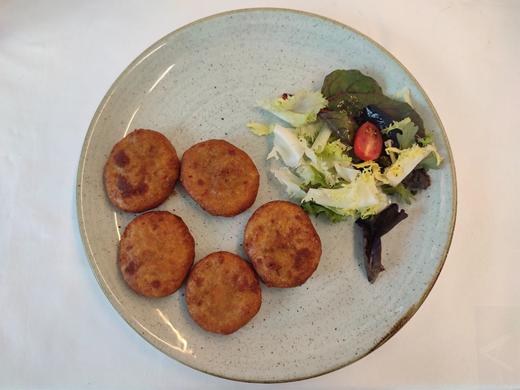
Finally, the fesols de Santa Pau are the quintessential legumes of Garrotxa. With Protected Designation of Origin (PDO) status, they are grown in volcanic soils and are considered a high-value gastronomic product both within and beyond the region. Despite the presence of these local products (some of which are also associated with the Volcanic Cuisine brand, such as fesols de Santa Pau or buckwheat), it is surprising that only 8% of the analyzed posts explicitly reference the local origin of the ingredients. This low visibility shows that there is still significant potential to enhance their value, both in menus and in communication via social media to convey the gastronomic identity of the region and reinforce the values of proximity and authenticity associated with volcanic cuisine.
Discussion and conclusions
This study aims to analyze how volcanic cuisine, through the restaurants of Garrotxa, contributes to enhancing local products, strengthening territorial identity and boosting the gastronomic and touristic appeal of the region. To do this, the research examined the extent to which restaurants communicate their use of local products in menus and on social media, specifically on Instagram. The results allow us to reflect on the presence of these products in menus and their promotion on social platforms, showing that, although local products are commonly used, there are still shortcomings in their identification and communication.
The analysis of menus – both from restaurants affiliated and not affiliated with the Volcanic Cuisine brand – reveals an uneven presence of local products, particularly those officially recognized as part of volcanic cuisine. While ingredients such as fesols de Santa Pau (Santa Pau beans), serrat d’ovella (sheep cheese), buckwheat or farro (spelt) appear in some dishes, their explicit mention is scarce and inconsistent. In fact, only seven of the 11 products officially identified as part of Volcanic Cuisine were found on the analyzed menus, and even in dishes where these ingredients might be used – such as patata de la Vall d’en Bas (Vall d’en Bas potatoes) or tomàquet de Montserrat (Montserrat tomatoes) – their origin is not specified. This phenomenon is not exclusive to Garrotxa: previous studies have shown a low inclusion of local dishes on menus, despite their gastronomic and touristic potential (Ceylan and Güven, 2018; Kurnaz and İşlek, 2018; Temi̇zel, 2024). This absence of clearly identified local offerings can hinder visitors’ ability to connect with the region’s cuisine, despite the growing interest of tourists in discovering and tasting authentic dishes during their travels (Sims, 2009; Yurtseven and Kaya, 2011; Lian, 2024).
In Garrotxa, the issue is not so much the use of local ingredients but their limited visibility. Often, the origin of food is not specified on menus, and no labels or visual tools are used to highlight the connection with the territory. This lack of communication is a missed opportunity to reinforce both the gastronomic identity and the Volcanic Cuisine brand. Zocchi and Fontefrancesco (2020), in the case of Nakuru County (Kenya), also point out that only a minority of restaurants adequately contextualize their dishes, including the origin or history of ingredients. This trend is, to some extent, repeated in the research.
Despite these shortcomings, some establishments showcase notable practices using informative labels, such as having their own gardens or collaborating with local producers. According to Fusté-Forné and Noguer-Juncà (2024), this enables the preparation of dishes using fresh, seasonal products, reinforcing seasonality and the connection with the agricultural environment. In addition, some restaurants include traditional dishes or label them as “volcanic cuisine” on their menus, thereby contributing to the preservation and promotion of the region’s culinary heritage. Social media, unlike menus, offers a more dynamic and visual space to communicate this link with the territory. However, their communicative potential is still underused. Although images of dishes are the most common, the posts that generate the most interaction often include people or are linked to events. This supports Dmitrijeva’s (2022) suggestion that showing restaurant staff in action helps foster a stronger emotional connection with users. Therefore, showing everyday scenes of dish preparation or including people in posts can make communication feel more relatable and authentic, conveying values of proximity, effort and tradition.
Regarding the food depicted, there is a clear presence of typical Catalan ingredients such as cheese, bread, mushrooms, rice, meat, cod, duck, pumpkin and potato. Some of these relate to Volcanic Cuisine, but their provenance is rarely mentioned. In fact, only 8% of the analyzed posts explicitly refer to the local origin of the ingredients. This lack of detail may hinder the differentiation of volcanic cuisine within the broader Catalan gastronomic landscape, especially considering the similarities with nearby regions. This issue has also been observed in other contexts, such as Gökçeada (Turkey), where interviewees in a study explained that some local foods are also common in neighboring areas (Yurtseven and Kaya, 2011). In Garrotxa, if distinctive products are not clearly highlighted, it becomes difficult to position the Volcanic Cuisine brand, and the volcanic cuisine, as a unique and territorially rooted proposal.
Relation to the objectives
Results show that some establishments incorporate local products that can be associated with volcanic cuisine, such as mushrooms, pork or pumpkin. Although these ingredients are not explicitly linked to the Volcanic Cuisine brand, they can be considered representative of traditional Garrotxa cuisine and help reinforce the region’s gastronomic identity. However, the presence of products identified as part of volcanic cuisine is irregular and not especially prominent, and their origin is often not mentioned on the menus. This lack of identification represents a missed opportunity to strengthen the Volcanic Cuisine brand and its connection to the territory. As mentioned in the theoretical framework, visitors increasingly value not only the quality of the dishes but also the origin of ingredients, sustainable practices and commitment to the local area (Filimonau et al., 2017; Velasco et al., 2017; Liu et al., 2019; Hernández-Rojas et al., 2022). In this context, highlighting local ingredients and explaining their origin can help restaurants to connect with an audience that is increasingly aware of sustainability, proximity and the identity of the places they visit.
The presence of volcanic cuisine on restaurants’ social media shows a lack of consistent digital communication concerning the identification of local products. While some restaurants demonstrate good practices (such as showcasing dishes and local products like Olot potatoes, Santa Pau beans or La Volcànica beer), most posts do not mention the origin of the ingredients. This hinders the transmission of values associated with both volcanic cuisine more broadly and weakens the brand’s and the region’s positioning in the digital sphere. While the results confirm that, despite the existence of a diverse gastronomic offer and a collective such as Volcanic Cuisine, improvements are needed in identifying products on menus and promoting them through social media to increase the visibility of volcanic cuisine, local products and their value as part of the identity and gastronomic heritage of Garrotxa.
In addition, it was observed that some restaurants not affiliated with the brand also use ingredients that could be part of it or are typical of the region. This shows that local cuisine is well-rooted, even if it is not always made explicit. Finding ways to better connect these efforts – for instance, through closer collaboration between member and non-member restaurants, or by creating joint promotional and training initiatives – could strengthen the gastronomic identity of Garrotxa. Such actions would help build a clearer and more recognizable image of the region, improve the visitor experience and make the area’s gastronomic offerings more committed to the territory.
Limitations and future research directions
As shown, this study has revealed that restaurants associated with the Volcanic Cuisine brand still face several challenges in communicating their gastronomic offering and its connection to the local territory. Despite efforts to link cuisine with the landscape and local products, there are aspects that could be improved to better convey this identity to consumers. This observation also highlights some limitations of the study that should be taken into account.
First, although the study is based on an analysis of menus and Instagram posts from various restaurants both inside and outside the collective, the findings cannot be generalized to all establishments in Garrotxa region. Menus represent a specific moment in the year, which may influence the presence of certain seasonal products. As explained by several chefs in the province of Girona (including some from Garrotxa) interviewed by Fusté-Forné and Noguer-Juncà (2024), menus are typically adapted three or four times a year according to product seasonality, though maintaining this rhythm is increasingly difficult due to the impacts of climate change on the availability of ingredients like mushrooms.
Second, in terms of social media, not all available posts were analyzed – only a representative selection. Moreover, not all restaurants affiliated with the brand were included due to a lack of updated content (some had no recent posts), and among the analyzed establishments, some hold distinctions such as Michelin Stars, which could influence their communication strategy.
It would be useful to expand the analysis to include a larger number of restaurants from the Volcanic Cuisine collective, especially those excluded from this study due to outdated or missing digital content. This would allow for a more comprehensive view of communication strategies within the group and offer better insight into how connections to the territory are reflected in their messaging. In addition, future studies could track menu evolution across different seasons to examine how restaurants adapt to seasonal products and whether this is effectively communicated both on the plate and in their promotional content.
Another valuable line of inquiry would involve a deeper analysis of social media posts, not only focusing on images but also on captions, comments and hashtags. This would help to understand how gastronomic narratives are constructed and whether they truly reach and engage the public. On another note, it would be worth exploring whether being part of the Volcanic Cuisine brand has a direct impact on customer demand or restaurant ratings. For instance, researchers could examine whether affiliated restaurants attract more clients, have greater digital visibility or receive higher ratings compared to non-affiliated establishments. This type of study would help quantify the benefits associated with the brand and assess its effectiveness as a tool for promoting local gastronomy and territorial identity.
Finally, a highly relevant future research direction would be to incorporate the perspectives of producers, restaurateurs and consumers. For producers, it would be interesting to understand how they perceive their relationship with local restaurants – whether they feel their products are valued and visible and what channels they use to promote themselves. For restaurateurs, studies could analyze whether they have a clear communication strategy regarding food origins and whether they believe highlighting local products influences customer perceptions or business success. A study could also be conducted to measure the role menus play in promoting local food among business managers. From the consumer’s perspective, it would be useful to explore whether they value the origin of ingredients, whether they recognize the use of local products through menus or social media and whether these elements actually influence their decision to visit a restaurant. These three perspectives would provide a fuller understanding of how gastronomic communication affects consumer behavior and help identify opportunities and barriers for developing a culinary offering that is more deeply rooted in the local territory.

