This paper analyses students’ perceptions of generative artificial intelligence (GAI) usage in open and distance learning (ODL). It establishes an extended diffusion of innovation (DOI) model framework to understand the drivers and critical barriers as reported by students, offering a balanced perspective on the factors that influence student adoption decisions in online learning.
The study used a quantitative research technique, collecting self-reported data via a structured questionnaire from 337 ODL students in Pakistan. Partial least squares structural equation modeling was used to estimate direct, mediating and moderating effects to analyze the proposed model. The findings reflect student perceptions only and do not measure actual learning outcomes or institutional feasibility.
The findings confirm that relative advantage and compatibility are significant positive predictors of students' GAI adoption intentions. Conversely, ethical issues, perceived risk and dehumanization of learning are significant negative obstacles. These relationships are mediated by the intention to adopt. Prior expertise in GAI moderately and positively moderates the intention-adoption relationship. Trialability had no significant impact, challenging classical DOI predictions in the GAI context.
Evaluating the direct associations and mediating role of intention to adopt GAI, the results provide valuable insights for ODL educational institutions where the use of GAI is unavoidable. Additionally, it examines the moderating role of prior GAI expertise in influencing the adoption behavior. The study proposes an extended DOI framework that ODL educational institutions must inculcate to ensure GAI adoption in true spirit.
ODL institutions should note that students report strong ethical and risk concerns that suppress adoption intentions. However, these findings are based on student perceptions only; institutional decision makers should validate these concerns against operational feasibility, cost, infrastructure and pedagogical objectives before implementing policy changes.
The research demonstrates that from the student perspective, a balance between technological progress and human-centered education is desirable. Addressing social issues regarding dehumanization and ethics may improve student acceptance of GAI, but whether such integration improves learning outcomes or damages interpersonal relationships requires further investigation.
The study is innovative in integrating three critical barriers: ethical considerations, perceived risks and dehumanization of learning as major constructs within the DOI framework from the student perspective. This provides a more detailed model for understanding student adoption of transformative technologies such as GAI in learning environments.
Introduction
The traditional educational landscape has undergone a significant paradigm shift from face-to-face classroom-based learning to digital technology-based learning (Ahmed et al., 2025; Chan et al., 2021). The rapid spread of generative artificial intelligence (GAI) technologies has transformed the educational structure of our time. ChatGPT, DeepSeek, Copilot and Gemini, among other content creation technologies, are GAI technologies that allow the creation of automated content and personalization to revamp research capabilities in the sphere of education (Cao et al., 2022; Lee et al., 2011; Tlili et al., 2023). While the adoption of these technologies has created excitement about the potential pros (Rafiq and Ahmad, 2025), concerns about ethical issues and lack of pedagogical competence pose a big question mark on GAI adoption (Hodzic et al., 2026; Niloy et al., 2025). It is therefore important to analyze both the light and dark sides of GAI adoption. The study strives to achieve the same.
The theoretical framework of the study was derived from Everett Rogers' diffusion of innovation (DOI) theory (Rogers, 2003). The DOI theory explains how, when and at what rate the new technology spreads into the system. The theory states that the central determinants for innovation adoption are relative advantage, compatibility, complexity, observability and trialability. While the current literature presents evidence of the use of the technology acceptance model (TAM) and the unified theory of acceptance and use of technology (UTAUT) (Al-Abdullatif, 2023; Bouteraa et al., 2024), there remain noticeable gaps in the understanding of three dimensions that leave a significant mark on GAI adoption within academics and open and distance learning (ODL) environments (Singh and Strzelecki, 2026). These are Ethical Concerns, perceived threats and the dehumanization of learning.
The use of GAI in educational settings pinpoints several ethical concerns that need to be addressed. These include responsibility issues at the centre of GAI-generated content, equity in access and outcomes, transparency in the operations of the system and compliance with evolving legal and academic standards of integrity (Sobaih et al., 2024). Moreover, perceived risks such as the threat of academic dishonesty due to plagiarism, fears about cognitive dependency, lack of critical thinking ability and the issue of the reliability as well as the validity of the system could also act as an impediment to the adoption of GAI tools (Huang et al., 2024). Another noticeable area in the domain of GAI adoption includes the dehumanizing impacts of GAI-mediated education. The human element of education includes peer contact and development of emotional intelligence, as well as mentoring. Literature reveals that overreliance on the use of artificial intelligence (AI) tools can have an adverse impact on social skills, the possibility of a collaborative learning process and the erosion of productive learning conditions (Tiwari et al., 2024; Yusuf et al., 2024). Thus, it is important to analyse both the light and dark sides of GAI adoption. The study strives to achieve the same. The following research questions guide this investigation: To what extent do ethical considerations, perceived risks and dehumanization of learning influence ODL students' intentions to adopt GAI, relative to traditional DOI facilitators (relative advantage, compatibility)? How does prior GAI expertise moderate the relationship between intention to adopt GAI and actual adoption behavior in ODL environments?
The proposed extended DOI model addresses gaps in GAI adoption within ODL by incorporating dehumanization, ethics and risk perceptions as key independent variables. These factors, unlike cost or digital literacy, are theoretically underdeveloped yet critical in emerging literature (Al-Zahrani, 2024; Sobaih et al., 2024; Niloy et al., 2025). While retaining DOI’s strengths, the model responds to prior shortcomings in ODL contexts. Findings will guide ODL administrators in balancing innovation with ethical responsibility, help educators preserve human connection and inform students of GAI’s opportunities and pitfalls, ensuring innovation enhances learning without undermining it.
Theoretical foundations
The unique characteristics of ODL, asynchronous instruction, minimal interaction, written communication and students’ external commitments (Ahmed et al., 2025) make it highly receptive to GAI’s 24/7 support yet vulnerable to dehumanization and academic integrity risks. While prior ODL adoption research focused on learning management system (LMS) and mobile learning (Pinho et al., 2021), GAI-specific studies remain nascent. Rogers’ (2003) DOI theory, encompassing relative advantage, compatibility, complexity, observability and trialability (Lundblad, 2003), although applied in educational technology (Mulhem and Almaiah, 2021; Teo and Tan, 2012), insufficiently addresses ethical, psychological and pedagogical dimensions of emergent GAI systems like ChatGPT and DeepSeek (Al-Zahrani, 2024; Sobaih et al., 2024). This study extends DOI within ODL by integrating three critical barriers: ethical considerations, perceived risks and fear of dehumanization, beginning with relative advantage.
Relative advantage
Relative advantage in GAI adoption for ODL (Rogers, 2003) is a multi-dimensional construct encompassing efficiency (time reduction), personalisation (24/7 adaptive feedback), cognitive offloading (freeing mental resources) and quality enhancement (improved academic output) (Ayanwale and Ndlovu, 2024; Huang et al., 2024; Raman et al., 2023). However, a balanced understanding requires acknowledging the “dark side” of these benefits. Efficiency may encourage over-reliance and reduce independent problem-solving (Niloy et al., 2025); personalisation can create filter bubbles (Grassini, 2023); cognitive offloading is linked to skill atrophy and diminished critical thinking (AlAfnan, 2024); and quality enhancement may blur academic authorship boundaries. Thus, ODL students perceive relative advantage not as an unambiguous positive but as a set of competing trade-offs that shape adoption decisions.
This nuanced understanding provides the first hypothesis:
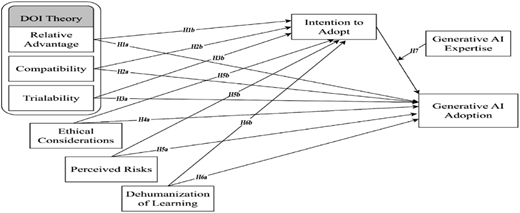
Relative advantage positively influences GAI Adoption.
Existing literature corroborates that while relative advantage boosts adoption intentions, ongoing barriers like ethical issues (Jobin et al., 2019) and concerns about risk can weaken this effect (Teo and Tan, 2012). Therefore, the intention to adopt acts as a crucial filter: even though perceived advantages may increase the willingness to use GAI, adopting it depends on addressing the negative perceptions. This mechanism explains why different ODL institutions have varied adoption rates; some quickly integrate GAI despite ethical and risk-related concerns, while others hesitate even when they see its potential benefits. Thus, we propose the following hypothesis:
Intention to Adopt GAI mediates the positive effect of Relative Advantage on GAI Adoption.
Compatibility
It is the extent to which an innovation fits in the culture, the past experiences and the needs of the targeted users (Rogers, 2003). With respect to education, it relates to the extent of integration of new technologies into the teaching and learning frameworks, learning management systems and assessment systems (Almaiah et al., 2022). Studies indicate that compatibility is among the relevant aspects that should be considered in new technology adoption. The pleasure in accepting innovations compatible with existing practice is higher, and more so with GAI tools (Ayanwale and Ndlovu, 2024; Bouteraa et al., 2024). In the case of ODL students, compatibility will be critical because their learning is usually mediated by technology. Students consider the use of GAI tools as a valuable addition when these tools are congruent with the institutional systems, supplement previous study practices and follow the prevailing academic rules. Therefore, this study proposes that:
Compatibility positively influences GAI adoption.
Users' academic engagement with institutional frameworks and ecosystems increases when GAI tools are perceived as aligned, thereby strengthening adoption intentions. This alignment enhances cognitive inertia and enhances the likelihood of eventual integration into learning practices. Thus, the study proposes:
Intention to Adopt GAI mediates the positive effect of compatibility on GAI Adoption.
Trialability
Trialability is defined as the ability to test an innovation before making a final decision regarding whether to adopt it or not (Rogers, 2003). Students who could test AI tools, including chatbots, are willing to employ these tools dramatically (Ayanwale and Ndlovu, 2024; Huang et al., 2024). This implies that the more realistic the laboratory experience with GAI by means of demonstrations and educational sessions, the higher the chances of adoption. Hence, the study proposes:
Trialability has a positive effect on GAI adoption.
The ability to test GAI tools before implementation reduces the perceived risk and increases user confidence. This further enhances the intention to incorporate these technologies into academic practices.
Trialability has a positive influence on GAI adoption mediated by intention to adopt GAI.
Ethical considerations
Learner-perceived ethical considerations refer to subjective concerns about the moral implications of GAI use in academic work, including informed consent, data privacy, algorithmic transparency and accountability for errors or biases (Bouteraa et al., 2024; Owe and Baum, 2021). Unlike institutional policies, these vary among students; a learner may reject GAI due to perceived academic dishonesty or distrust of data handling, even when permitted. Concerns about algorithmic bias producing culturally inappropriate or incorrect information also deter adoption. Prior research shows ethical reservations often outweigh perceived advantages in technology adoption decisions (Zhou et al., 2020). Therefore, we hypothesize that:
Ethical considerations, as perceived by learners, negatively influence GAI adoption.
The ethical issues negatively influence the intention to use GAI. Users with ethical concerns about data privacy, algorithmic bias and accountability of GAI systems are less prone to adopt GAI systems regardless of the potential benefits.
Intention to adopt GAI mediates the negative relationship between ethical considerations and GAI Adoption.
The hypothesis is associated with recent studies that demonstrate that ethical reservations tend to outnumber the assumed advantages when deciding to adopt technology (Zhou et al., 2020).
Perceived risks
The perceived risk appears to be a vital consideration when determining GAI adoption (Chan et al., 2021). It is the assessment of a person of the possible negative effects and uncertainty of using technology (Featherman and Pavlou, 2003). Issues such as academic dishonesty, data privacy and decreased critical thinking abilities represent the concerns of GAI adoption in academic settings (Niloy and Huda, 2025; Grassini, 2023). A review of the literature supports that risk perception affects user acceptance negatively (Al-Abdullatif, 2023; Huang et al., 2024; Cao et al., 2022; Dixit et al., 2023). In this study framework, it is predicted that ODL students with higher risk perceptions will be less willing to adopt GAI technologies. For this purpose, the following hypothesis:
Perceived risk negatively influences GAI adoption.
Perceived risk has a negative impact on the decision to adopt GAI. Evidence establishes that the risk of negative outcomes, particularly regarding academic integrity (Grassini, 2023), data privacy (Zhou et al., 2020) and cognitive development, substantially reduces users' willingness to adopt these technologies (AlAfnan, 2024).
The negative relationship between Perceived Risks and GAI Adoption is mediated by Intention to Adopt GAI.
This relationship positions risk perception as a critical psychological mediator between technology awareness and adoption behavior (Ayanwale and Ndlovu, 2024).
Dehumanization of learning
Another noticeable concern in GAI adoption is the possible dehumanization of learning (Fügener et al., 2021; Ryan, 2020). It is the fear of the evasion of necessary human pedagogical interaction that is crucial for the learning environment (Shneiderman, 2020; Tan, 2024). This fear appears to be a barrier to GAI adoption; thus, the study proposes the following hypothesis:
Perceived dehumanization of learning negatively influences GAI adoption.
Students' perceptions that the teachers' interaction (being reduced) is a barrier to GAI adoption. This hypothesis suggests that a balance needs to be maintained for the use of technology in education due to its significance in protecting essential human values and the quality of relationships in education.
The negative relationship between dehumanization of learning and GAI adoption is mediated by intention to adopt GAI.
Students' perceptions about GAI's impact on human relationships and pedagogical structures deteriorate their intention to adopt GAI (Shneiderman, 2020). This consequently results in decreased GAI adoption.
Intention to adopt
Intention to adopt GAI functions as a critical psychological antecedent to actual behavioral change, a principle well-established in the theory of planned behavior (Ajzen, 1991). In the context of ODL, even if teachers and students see the benefits and trialability of Generative AI (GAI), their adoption intends to be significantly impacted by dehumanization (concerns regarding reduced human interaction), perception of risks (data breaches and privacy risks, misinformation) and some ethical concerns (algorithmic fairness, responsibility voids, accountability gaps) (Dixit et al., 2023). Intent to adopt serves as a primary mediating variable, connecting perceived advantages of technology and its real use, in situations where negative perceptions of technology are sufficiently settled.
GAI expertise
Literature shows that students with prior GAI expertise can intervene in the relation between the intention to adopt and the actual adoption (Fryer et al., 2023; Scherer and Teo, 2019). Technology adoption models introduce intention as one of the mediating variables (Venkatesh et al., 2003). Recent studies on GAI show that such a relationship is dependent on technical skill (Pillai and Pillai, 2024). Without the ability to use AI tools sufficiently, good intentions might not be followed by adoption (Fryer et al., 2023). The students who have higher GAI literacy achieve more success in GAI Adoption. This goes in line with long-term technology acceptance models that identify competency and expertise as core requirements of new technology (Jaffar et al., 2025). Therefore, we propose:
GAI expertise positively moderates the relationship between intention to use GAI and GAI adoption.
Figure 1 presents the theoretical model of the study.
Methodology
This study adopted a quantitative survey methodology to empirically test the proposed hypotheses, aligning with established research practices in GAI adoption studies. A structured, self-administered questionnaire was developed, with all items directly mapped to the constructs of the conceptual model. To ensure validity and reliability, measurement scales were adapted from well-cited prior research on technology acceptance, with detailed operationalization provided in Appendix A. Data collection spanned from May 15 to July 31, 2025.
Ethical considerations were explicitly stated on the questionnaire’s introductory page. Participants were assured of confidentiality, voluntary participation and the right to withdraw at any stage. The study used adapted questionnaires for measuring the constructs of the study. These questionnaires have already gone through various pilot tests and were screened after assuring reliability and convergent validity. A five-point Likert scale was used to collect the responses, where 5 denotes strongly agree and 1 denotes strongly disagree. Demographic profiles of the respondents were also taken into consideration. Table 1 outlines the details of the tools used for the study.
The target population consists of undergraduate and graduate students who were enrolled in ODL programs in Pakistan, a population that is active in using GAI-enhanced learning resources. The person used voluntary convenience sampling to select the participants using university announcement boards, the email system and social media to have a varied group of respondents.
The conceptual model combines individual-level constructs (relative advantage, compatibility, trialability, GAI expertise, intention, adoption) with learner perceptions of broader phenomena (ethical considerations, perceived risks, dehumanization). This cross-level design is intentional: individuals form subjective ethical judgments and risk perceptions independently of institutional policies (Sobaih et al., 2024; Teo and Tan, 2012). GAI expertise, i.e. self-reported proficiency in prompt engineering, output evaluation and ethical use, moderates the intention-behavior relationship, consistent with TAM3 (Venkatesh and Bala, 2008). Multi-level modelling is appropriate as theoretical mechanisms span both individual capabilities and perceived environmental factors (Burton-Jones and Gallivan, 2007).
The validation rate was 337, which is a sufficient sample size to proceed with Structural Equation Modeling (SEM) since the expected size is 10 participants per item (Kline, 2013). Questionnaire data were processed using partial least squares structural equation modelling (PLS-SEM) on PLS Smart 4.0 as it can work with moderate sample sizes and complicated models, which have direct, indirect and moderating effects.
Results
Demographic findings
Table 2 summarizes the respondents’ demographic characteristics, providing insights into the study’s respondents’ profile.
The demographics of the respondents in the study are characterized by a sample that is very young, with 82.79% of the respondents aged between 18 and 29 years and only 4.16% of the respondents aged 40 years and above. The sample has a skewed gender distribution with a higher number of the female population (57.27) than the male population (42.14), which might require consideration in gender-sensitive studies. The distribution of the academic backgrounds is more diverse, as Applied Sciences (32.05%) and Natural Sciences (29.67%) are the most common and other disciplines and Social Sciences include 14.84% and 16.91%, respectively. Though this is a questionable disciplinary heterogeneity, the comparatively low percentage of Computer Science students (6.53) can be worth it in terms of technology-oriented research. The general demographic scenario is that the sample consisted mostly of young adults having science-related academic backgrounds. The next-generation research should strive to achieve a more stratified sampling to improve the strength and generalizability of the results to diverse groups of people and fields of study (Aldraiweesh and Alturki, 2025).
Convergent validity
Table 3 represents the statistical report of convergent validity, including factor loadings, Cronbach's alpha, composite reliability (CR), average variance and explanatory power of the model.
The convergent validity results demonstrate strong psychometric properties across all latent constructs. All factor loadings exceed the recommended threshold of 0.7 (Hair et al., 2019), ranging from 0.754 (RA3) to 0.907 (CO4), indicating excellent item reliability. The constructs show high internal consistency, with Cronbach's alpha (α) values between 0.8 and 0.9, surpassing the acceptable level of 0.7 (Matthews et al., 2018). CR scores, all above 0.8, further confirm the scales' reliability (Fornell and Larcker, 1981). The average variance extracted (AVE) values meet the threshold benchmark of 0.5, with variation from 0.58 for Ethical Considerations to 0.79 for Relative Advantage. It is crucial to state that four items (EC5, EC6, EC7 and EC8) were removed from the model as their factor loadings were below the threshold value.
The explanatory power (R2) of 0.6 for GAI Adoption indicates a moderately strong predictive relationship in the model. Particularly robust constructs include relative advantage (AVE = 0.79), trialability (AVE = 0.77) and perceived risks (AVE = 0.78), demonstrating excellent convergent validity. The Dehumanization of Learning construct also shows strong validity (AVE = 0.69), with all loadings above 0.83. These results collectively support the measurement model's adequacy for SEM.
Discriminant Validity
Discriminant validity of the constructs is shown in Table 4.
The HTMT ratio is used to assess how much the constructs vary from one another. The HTMT ratio examines the relationships between various constructs, i.e. whether they distinctly measure the concept or are the same. Values less than 0.90 are preferred since they suggest discriminant validity (Fornell and Larcker, 1981). Results as shown in Table 4 demonstrate strong discriminant validity for all constructs, as all values fall below the conservative threshold of 0.85 (Henseler et al., 2025). However, the moderately high HTMT value between Compatibility (CO) and Trialability (TB), i.e. 0.743, suggests potential conceptual overlap, which aligns with theoretical expectations given their shared focus on technology integration (Venkatesh et al., 2003). These results collectively affirm that the measurement model satisfies psychometric standards for construct distinctness.
Structural Model Analysis
The researchers conducted data analysis using structural equation modelling. PLS-SEM by Anderson and Gerbing was employed for the data analysis to elucidate the relationship between the constructs of the study (Falebita and Kok, 2025; Troiville et al., 2025). PLS Smart 4.0 has been used as a data processing tool.
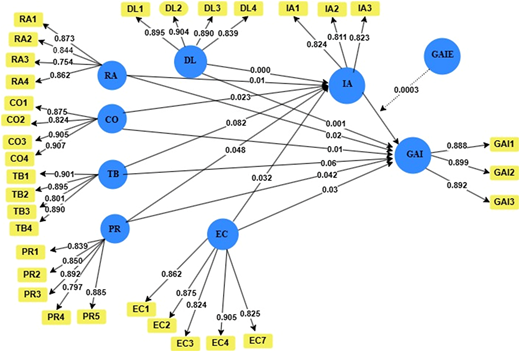
Figure 2 shows the PLS Smart demonstration of the overall model of the study.
Table 5 presents the results of hypothesis testing.
Results robustly support the proposed model (p < 0.05). Relative advantage (β = 0.35) aligns with Rogers (2003), and compatibility (β = 0.26) supports UTAUT (Venkatesh and Bala, 2008). Significant negative effects for Ethical Concerns (β = −0.35) and Perceived Risks (β = −0.42) extend research on AI adoption barriers (Farisco et al., 2020; Owe and Baum, 2021), indicating moral considerations may outweigh functional benefits. GAI Expertise significantly moderates the intention-adoption relationship (β = 0.37).
However, Trialability was non-significant (p > 0.05), deviating from traditional DOI (Rogers, 2003) and suggesting trial opportunities matter less for intangible GAI systems (Dixit et al., 2023). Partial mediation accounts for 28–44% of total effects. These findings demonstrate that established technology adoption models require adaptation for GAI in ODL environments (Dixit et al., 2023).
Discussion
Results reinforce UTAUT's compatibility construct in AI domains (Venkatesh et al., 2003), asserting that integration with existing workflows predicts adoption (β = 0.26), leading to the acceptance of H2a, stating that Compatibility positively influences GAI adoption. Students’ perception that adopting GAI aligns with the existing infrastructure urges them to have the intention to adopt it (β = 0.21), resulting in the acceptance of H2b, which states that Intention to Adopt GAI mediates the positive effect of Compatibility on GAI Adoption. The relatively stronger direct effect suggests compatibility operates through both cognitive alignment (mediated) and automatic assimilation (direct) (Bouteraa et al., 2024).
Findings regarding the trialability-GAI adoption relationship show a significant departure from the current research. There is no significant relationship between trialability and GAI adoption (H3a: Trialability positively influences GAI adoption is rejected because 0.23 = 0.06), and a non-significant relationship (0.23) is observed between trialability and GAI adoption. It is opposed to the current literature (Alamri, 2025; Ayanwale and Ndlovu, 2024; Rogers, 2003). In addition, the indirect effects (0.18, p = 0.082) showed an insignificant contribution, which resulted in the rejection of H3b: Intention to Adopt GAI mediates the positive effect of Trialability on GAI Adoption. This result indicates that the predictive ability of trialability in adoption decisions is diminished because of the intangible nature of generative AI systems, in which trial runs may insufficiently show capabilities or risks. The research recommends that developers of GAI need to create visualization tools of the outcomes that indicate the possible benefits/risks before complete implementation. This could compel them to embrace GAI. Moreover, in terms of implementation, the developers of GAI ought to take into consideration trial periods along with obligatory training sessions. The combination enhances meaningful interaction at the testing stages (Venkatesh and Bala, 2008).
The significant negative effects (β = −0.35 direct, β = −0.22 indirect through mediation-Intention to adopt GAI) validate the need for emerging AI ethics frameworks (Stahl et al., 2022; Zhou et al., 2020), showing that moral considerations substantially impact adoption decisions; thus, accepting our hypotheses proposing that Ethical Considerations negatively influence GAI adoption, as well as the negative relationship between Ethical Considerations and GAI Adoption is mediated by Intention to Adopt GAI. Ethical considerations such as data privacy, algorithmic bias and accountability in GAI systems reduce the students’ willingness to adopt these technologies, thus negatively impacting adoption. The study proposes that education policymakers should establish a powerful rules and regulations framework and ensure that the frameworks are put in place to embrace GAI in its real form and to reap the benefits thereof (Niloy et al., 2024a, b; Al-Zahrani, 2024).
Since risk perceptions are the strongest predictor (−0.42 direct, −0.33 indirect through mediation of intention to adopt GAI), risk perceptions are more dominant than the traditional use of technology settings (Featherman and Pavlou, 2003), which is probably caused by opaque decision-making of AI, so our hypotheses H5a: Perceived risk negatively influences GAI adoption as well as H5b: The negative relationship between perceived risk and GAI Adoption is mediated by intention to adopt GAI are accepted. The perceived threat to academic integrity in terms of plagiarism, loss of personal information and fear of losing critical thinking capabilities will lead to inhibited intention of GAI adoption among students, which eventually lowers GAI adoption. This is in line with the available literature (Alamri, 2025; Dang and Liu, 2025; Sobaih et al., 2024; Niloy et al., 2024a, b. According to the research, perceived risk in GAI adoption can be minimized by involving a combination of technological protection, adherence to policy and training users (Niloy and Huda, 2025). Through enhanced transparency, security, and control, organizations can diminish the barriers to adoption and increase trust in GAI systems, which will ultimately lead to GAI adoption (Kotni et al., 2023).
The hypotheses that are supported regarding the dehumanization of learning (direct: 0.24 and indirect: 0.19 mediation-Intention to adopt GAI) show that the user is opposed to the system that reduces human interaction. The intimidation of losing face-to-face communication with teachers, the disappearance of human contact and the modification of pedagogical relationships hurt GAI adoption (Fügener et al., 2021; Shneiderman, 2020). Thus, resulting in accepting our proposed hypothesis H6a: Perceived dehumanization of learning hurts GAI adoption, as well as H6b: The negative relationship between Dehumanization of Learning and GAI Adoption is mediated by Intention to Adopt GAI. The results demonstrate that emotional connections between students and teachers outweigh GAI adoption. The fears about dehumanization resulting from GAI adoption can be mitigated through a human-centered approach that preserves meaningful teacher-student interactions while leveraging AI as a supplemental tool. Incorporating emotion-aware GAI to support (not automate) socio-emotional learning and offering a hybrid learning environment in which GAI should be given repetitive tasks (e.g. grammar checks) while teachers focus on imparting education and critical thinking development (Dang et al., 2026). These strategies can build students’ trust in GAI and thereby increase GAI adoption.
The study findings prove that GAI experience (GAIE) has a very positive moderating effect on the intention-adoption relationship (=0.37, p < 0.001), which maintains and extends the existing body of research on technology acceptance (Venkatesh and Bala, 2008). The implications of such findings on the implementation strategies include the following: new users may be upgraded through participation in the educational programs, which may help to enhance the intention and long-established users can be better engaged in the execution of the habit-reinforcement methods, such as custom AI training and workflow integration. Other studies should follow it in diverse organizational and cultural situations.
Conclusion
This study aims to investigate GAI adoption in ODL environments. Applying the existing theory of DOI, the study has been able to show that it is not only a matter of perceived benefits that would lead to the adoption of GAI, but a fine balance that would have to be struck between the benefits and the issue of deep ethical, psychological and pedagogical concern. The findings strongly suggest that even though drivers such as relative advantage and compatibility are useful drivers of GAI integration, their power is considerably reduced and defeated by the overwhelming challenges of the perceived risks, ethical concerns and fear of dehumanizing the learning process. The future of education in the age of GAI will be determined by the ability to develop a symbiotic relationship between technological innovation on the one hand and values that are human-centred on the other hand. The path towards responsible GAI integration is not that of blindly accepting, but rather wise moral acceptance.
Theoretically, the study contributes by suggesting that ODL institutions: (1) develop ethical guidelines and risk communication strategies to address concerns that reduce GAI adoption intentions; (2) pilot human-centered approaches preserving teacher-student interaction while using GAI as a support tool; and (3) offer voluntary GAI expertise training, as expertise strengthens intention-behavior translation. These perception-based findings require experimental validation before policy implementation. Additionally, integrating DOI with TAM offers a comprehensive framework.
Practically, this study provides a holistic model for professionals, policymakers and vendors to combine dehumanization, ethical concerns, perceived risks and technology solutions. Developers can design privacy-enhancing strategies based on risk principles and suggest pilot studies to ease technology acceptance. The study’s value extends beyond ODL to business, marketing, finance and financial services.
This study also has several limitations, offering future research directions. First, beyond GAI adoption challenges like overreliance and equity in access, future research should examine additional dimensions including student engagement, trust and creativity. Second, trialability showed non-significant effects, possibly due to poor initial experiences or complexity; guided trials, augmented reality, GAI sandboxes and expertise-based personalized trials warrant investigation. Third, our findings represent only student voice. Future research should collect paired multi-stakeholder data from students, administrators, finance and operations personnel to understand the full adoption ecosystem. Multi-level modeling examining student perceptions alongside institutional policies and objective feasibility constraints would be a valuable extension.
The supplementary material for this article can be found online.