This study examines how incentive effectiveness in green sport events depends on the alignment among structural design, symbolic meaning, and contextual capacity. It introduces the propositional set on configurational incentives (PSCI) to explain why identical incentive schemes yield different participation, satisfaction, and stewardship outcomes across community-based ecotourism contexts.
We conducted a multi-method investigation combining structural equation modeling (SEM), response surface analysis (RSA), and non-inferiority testing (NI–TOST) on survey data from 374 participants across Thailand's peri-urban green sport events. The analysis rigorously tested five core propositions within the CIF framework, examining complementarity effects, equivalence relationships, contextual moderation, directional asymmetries, and equifinality pathways.
Structural incentives influence outcomes primarily through mechanisms of perceived fairness and authenticity. Cross-dimensional congruence – specifically alignment between structural and symbolic attributes – significantly amplifies engagement and satisfaction outcomes. Critically, misalignment effects are asymmetric: symbolic deficits generate disproportionately larger outcome reductions than structural deficits. Community resource capacity functions as a contingency moderator, intensifying congruence effects under resource-constrained conditions. While symbolic meaning substantially amplifies outcomes, it demonstrates limited substitutability for structural incentives, indicating complementary rather than interchangeable effects.
Cross-sectional data limit causal inference; longitudinal replication is recommended to validate temporal stability.
Event managers should design incentives that transparently balance participant and community benefits, embed authenticity cues, and assess community capacity before implementation.
The study advances causal reasoning in sustainable event management by integrating symbolic interpretation and contextual readiness into a geometry-based model of incentive alignment. PSCI provides an auditable reasoning framework for analyzing complex socio-behavioral systems where outcomes depend on multi-dimensional congruence rather than linear causality.
1. Introduction
Designing incentives for sustainable sport and community-based ecotourism (CBET) programs is inherently complex. Resources are often scarce, community capacity varies across destinations, and behavioral outcomes—such as participation, satisfaction, and stewardship—fluctuate even under seemingly similar structural conditions. Managers typically rely on structural levers such as pricing, bundling, and material rewards, yet these strategies alone rarely produce consistent engagement or conservation outcomes (Bennett, 2017; Getz, 2013). This empirical inconsistency suggests that structural design cannot fully explain incentive effectiveness. Instead, outcomes may depend on how participants interpret incentives symbolically and on whether the surrounding community context is able to sustain and legitimate them.
Building on research in organizational behavior and sustainable tourism, this study foregrounds three interrelated families of constructs that together define configurational incentive effectiveness. First, symbolic meaning encompasses perceived fairness (PF)—signals of distributive and procedural justice—and perceived authenticity (PA), the extent to which an experience genuinely reflects local ecology and culture. Second, community signal captures perceived community effort (PCE), or the visible involvement of local actors in delivering and maintaining services. Third, contextual capacity refers to perceived resource abundance (PRA), representing the extent to which local infrastructures can support activities without congestion or ecological strain. In practice, incentive systems, including in sport and ecotourism events often operate across two fronts: participant-facing incentives (PFI), which target individual experience (e.g. service bundles, wellness vouchers), and community-facing incentives (CFI), which distribute benefits toward collective outcomes (e.g. environmental funds or local vendor quotas).
While prior studies have developed typologies of incentive mechanisms, few have tested how structural, symbolic, and contextual components interact as an integrated system. Most empirical work examines linear main effects—whether “more incentive” improves outcomes—but rarely addresses three core properties of complex socio-behavioral systems: congruence, or alignment between structural design and perceived meaning; asymmetry, the idea that pathways to success may differ from pathways to failure; and equifinality, the possibility that multiple, distinct configurations can yield high performance (Edwards, 2002). Understanding these patterns requires moving beyond correlation toward a reasoning framework capable of distinguishing when and why the same incentive structure succeeds or fails across contexts.
To address this gap, the present study introduces the Propositional Set on Configurational Incentives (PSCI). The PSCI framework integrates structural equation modeling (SEM), response surface analysis (RSA), and non-inferiority testing to examine whether the effectiveness of participant- and community-facing incentives depends on symbolic alignment (PF, PA), community engagement (PCE), and contextual capacity (PRA). Specifically, it posits that (1) outcomes are strongest when incentive structure aligns with symbolic and contextual meaning (P1); (2) under high PF/PA, participant-facing incentives may be non-inferior to community-facing ones within an acceptable tolerance (P2); (3) misalignment is directionally asymmetric, such that offering material incentives without corresponding symbolic legitimacy undermines outcomes more severely than the reverse (P3); (4) multiple configurations of structure, meaning, and context can each yield favorable outcomes (P4); and (5) negative outcomes are not simply the inverse of positive configurations (P5). Together, these propositions enable an auditable, geometry-based reasoning approach to incentive alignment.
Moreover, this study extends causal reasoning in sustainable event research by addressing causal asymmetry and configurational association rather than claiming temporal causality. While the data are cross-sectional, the analytical strategy permits geometry-based validation of alignment logic—testing whether directional relationships implied by the PSCI framework are consistent with theoretically grounded asymmetries. If symbolic meaning (PF/PA) merely co-varies with, rather than drives, incentive effectiveness, the congruence surface should exhibit unstable or non-monotonic curvature along the line of congruence. Conversely, systematic, directional slopes consistent with PSCI predictions provide association-level support for the hypothesized mechanism. This framing allows the study to validate reasoning patterns without overextending causal inference claims, maintaining both empirical modesty and theoretical precision.
The empirical context—green sport events within peri-urban community ecotourism zones such as Bang Kachao, Thailand's “green lung”—offers a natural laboratory for these questions. Such events integrate recreational sport, environmental awareness, and community benefit-sharing under constrained ecological capacity. They therefore embody the very tensions that the PSCI framework seeks to disentangle: between private participation and collective stewardship, between structural design and symbolic legitimacy, and between managerial control and community signal.
By examining these relationships through a configurational, reasoning-based lens, this study contributes to both theory and practice in sustainable event management. First, it develops a reasoning-validated model of incentive effectiveness that renders alignment logic empirically testable even within cross-sectional data. Second, it advances a geometry-based approach to causal reasoning—using RSA and non-inferiority testing as association-consistent analogs to directional validation. Third, it offers managerial guidance for balancing participant and community interests in green event design. Collectively, these contributions strengthen causal reasoning in sustainable tourism and demonstrate how configurational analytics can extend theory without overstating causality, thereby maintaining both scientific integrity and policy relevance.
2. Literature review
2.1 Structural incentives and their limitations
Structural incentives such as price packages, benefit bundles, and promotional offers have long been central to the design of sport- and community-based tourism programs. These mechanisms aim to stimulate participation, enhance satisfaction, and increase local engagement by altering the economic calculus of potential participants. However, empirical evidence consistently shows that the effectiveness of such structural levers is context-dependent and often unstable across sites and populations. For instance, Bennett (2017) found that promotional bundles combining sports tickets with touristic attractions affected purchase intentions differently across sport tourist segments. Diehard and focused tourists showed high interest in such bundles, while social tourists demonstrated low purchase intent. This indicates that bundle offers do not exert a uniform effect but rather depend on tourists' prior involvement and motivational orientation toward sport. Similarly, Reim (2015) found that the effectiveness of event-sport-tourism bundles is strongly contingent upon the specific characteristics of the host destination and the segmentation of sport tourists. The study emphasized that the perceived incentive value of such bundles is context-dependent, emerging from the interaction between destination features and audience profiles rather than from the bundle itself. Complementing these findings, Getz (2013) observed in his comprehensive review of event tourism that although events are widely deployed as instruments of regional development, “there remains little systematic evidence about how structural levers of incentives translate into consistent participation and destination outcomes.”
Collectively, these studies reveal an unresolved inconsistency: why does an apparently identical incentive scheme yield divergent behavioral outcomes across comparable contexts? The question underscores a contextual and mechanistic gap within the extant literature. Prior research has predominantly treated structural incentives as independent levers, assuming their causal potency to be largely additive or linear. Yet the recurrent instability of results suggests that structural design alone cannot account for observed variation. Instead, outcomes likely depend on latent conditions—such as community resource capacity, stakeholder engagement, or participants' symbolic interpretations of fairness and authenticity—that shape how incentives are perceived and enacted in practice.
Hence, rather than presuming that “more bundling” or “greater price discounts” uniformly enhance engagement, a more rigorous inquiry must examine the contingencies and interpretive mechanisms through which incentives operate. Understanding how structural design interacts with context and perception is essential for moving from descriptive observation to causal reasoning. In this sense, we argue that the instability of structural effects does not represent mere noise but signals the presence of unobserved moderators and mediators that demand theoretical articulation and empirical testing.
2.2 Symbolic and perceptual mechanisms
Beyond their structural form, incentives acquire meaning through the symbolic frames and perceptual interpretations that participants attach to them. In tourism and service contexts, psychological and sociocultural perceptions—such as fairness, authenticity, and moral congruence—often determine whether an incentive is interpreted as genuine encouragement or as instrumental manipulation. This interpretive layer represents a crucial, yet frequently neglected, mechanism in explaining variation in incentive effectiveness.
Seminal work of Grayson and Martinec (2004) on authenticity in tourism introduced the notion that consumers evaluate not merely the content of an experience but its symbolic integrity—the perceived alignment between what is promised and what is delivered. Their framework distinguishes between indexical authenticity (rooted in factual or historical continuity) and iconic authenticity (based on symbolic resemblance and perceived sincerity). Similarly, Sonjai, Bushell, Hawkins, and Staiff (2021) demonstrated that tourists' sense of authenticity in community-based experiences emerges less from objective structures and more from interpersonal sincerity and transparency in the exchange process. In such settings, fairness perceptions—both distributive and procedural—operate as evaluative heuristics through which participants judge whether the benefits they receive are commensurate with effort, contribution, or communal norms (Nunkoo & Ramkissoon, 2012; Sparks & Browning, 2010).
Evidence from tourism and organizational studies thus converges on the insight that perceived fairness (PF) and perceived authenticity (PA) alter the psychological valence of rewards, transforming the same incentive from a transactional exchange into a signal of respect, inclusion, and shared purpose. When fairness and authenticity are high, incentives are likely to be internalized as affirmations of community value; when low, the same incentives may be discounted as mere marketing tactics or “symbolic tokens” devoid of moral weight (Boley, McGehee, & Tom Hammett, 2017). In this way, symbolic mechanisms mediate between structural inputs and behavioral outcomes, reshaping the motivational meaning of external rewards.
However, while prior research has identified the existence of these symbolic evaluations, few studies have directly examined symbolic congruence—that is, whether the alignment between incentive design and perceived symbolic meaning predicts participation and stewardship outcomes. Most empirical work treats fairness and authenticity as independent predictors rather than as interactional partners with structural features. Consequently, the literature lacks a systematic account of how symbolic and structural dimensions jointly determine the effectiveness of incentive systems in community-based ecotourism (CBET) and sport-event settings.
Bridging this gap requires an integrative perspective that links structural design with perceptual meaning. Doing so transforms the theoretical question from “Do fairness or authenticity matter?” to the more causally precise inquiry: “Under what alignment of structure and meaning do incentives sustain trust and participation?” Establishing this empirical bridge between structural incentives and symbolic perception provides the conceptual foundation for examining configurational fit, congruence, and asymmetry in later sections of this study.
2.3 Community and contextual dynamics
Incentive systems do not operate in a vacuum. Their effectiveness depends on the capacity and cohesion of the host community to interpret, implement, and sustain them. Community-based ecotourism (CBET) initiatives, in particular, exhibit marked variability in outcomes even under seemingly similar program designs. This inconsistency often traces back to differences in resource abundance, collective efficacy, and volunteer engagement—contextual attributes that shape the community's ability to convert incentive inputs into enduring behavioral and ecological outcomes.
Prior research has repeatedly demonstrated that community capacity acts as a boundary condition for the success of participatory and incentive-driven programs. Murphy (1985) argued that tourism development grounded in local participation succeeds only when communities possess adequate organizational and resource capital to manage and distribute benefits. Subsequent empirical studies have elaborated this principle. For instance, Giampiccoli and Janet (2012) found that CBET projects in Southern Africa with strong volunteer networks and access to shared infrastructure achieved higher levels of local empowerment and visitor satisfaction. Conversely, Tosun (2000) noted that structural participation mechanisms fail in contexts characterized by “operational inadequacy,” where community actors lack training, time, or institutional support to execute delegated roles. These findings collectively indicate that incentives can function only to the extent that communities are structurally and socially equipped to respond to them.
At a finer analytical level, perceived resource abundance (PRA) and perceived community effort (PCE) emerge as perceptual indicators of this contextual capacity. When community members and visitors perceive that local resources—human, physical, and ecological—are sufficient and that visible local effort sustains the system, incentives gain legitimacy and credibility. Under scarcity or weak participation, however, the same incentive packages may appear extractive or tokenistic. This perceptual asymmetry echoes findings from Souza, Kastenholz, Barbosa, and Carvalho (2019), it may be argued that social interaction and relational engagement play a central role in shaping tourists' perceived authenticity and subsequent loyalty. In a similar vein, the visible engagement of resident volunteers in eco-initiatives can plausibly act as a relational cue that enhances perceived authenticity among participants. Such visibility appears to humanize the initiative and signal that the project is genuinely community-driven rather than institutionally imposed. However, as Zhou, Zhang, Zhang, and Li (2018) suggest, authenticity is not inherently positive; when practices conflict with prevailing social values such as fairness or transparency, they may evoke what is termed “negative authenticity.” From this perspective, the visibility of local volunteers could also be interpreted as a fairness signal, reducing the likelihood that participants perceive the initiative as inauthentic or unjust. Consequently, while further empirical validation is warranted, it seems reasonable to imply that resident volunteer visibility may amplify the perceived authenticity and fairness of eco-initiatives, thereby reinforcing participants' sense of commitment.
Despite these insights, the literature rarely examines how structural, symbolic, and contextual dimensions interact. Most existing models treat community capacity either as a control variable or as an environmental descriptor, rather than as an integral component of the incentive mechanism itself. Configurational analysis—testing interactions such as PFI × PRA × PCE—remains largely absent, even though such an approach could reveal the nonlinear and contingent pathways through which incentives achieve success or failure. The few attempts to incorporate multi-dimensional alignment have done so descriptively, without formal modeling of congruence or asymmetry (e.g. Okazaki, 2008; Saarinen, 2013).
From a reasoning standpoint, we argue that this gap is mechanistic rather than descriptive: the question is not merely where incentives work, but why they work under certain constellations of community capacity. A plausible explanation is that incentives require a threshold level of contextual sufficiency—a combination of tangible resources and visible local effort—to activate cooperative norms and trust. Below this threshold, additional incentives may even backfire by highlighting inequities or overburdening limited capacity. This reasoning aligns with the principle of equifinality in complex systems: multiple, distinct configurations of structure, meaning, and context may all yield favorable outcomes, while the absence of one critical condition (e.g. community effort) can disrupt the entire causal chain.
Accordingly, the present study advances the proposition that the effectiveness of participant-facing incentives (PFI) is contingent on contextual alignment with perceived resource abundance (PRA) and perceived community effort (PCE). This configuration-based reasoning invites a shift from single-path causality toward a multi-causal, asymmetrical understanding of how communities and participants co-produce sustainable incentive outcomes—a necessary precursor to the causal modeling introduced in subsequent sections.
2.4 Congruence and asymmetry frameworks
The preceding sections have argued that incentive effectiveness in community-based and sport tourism systems cannot be explained through linear structural levers alone. Instead, it arises from the alignment among structural design, symbolic meaning, and contextual capacity. To model this alignment rigorously, scholars have increasingly turned to congruence theory, which formalizes the notion that outcomes depend not simply on the independent strength of two variables but on the degree and direction of their correspondence.
Congruence theory, as advanced by Edwards (1994, 2002), challenged earlier “difference score” approaches that reduced alignment to simple absolute deviations (e.g. |X − Y|). These models assumed that smaller differences between two constructs (such as expectations and experiences, or person and environment values) automatically led to better outcomes. Edwards demonstrated that such assumptions obscure complex relationships by collapsing multidimensional data into a single index, thereby erasing potential asymmetries. Instead, he proposed the use of Response Surface Analysis (RSA) based on polynomial regression models. RSA enables researchers to visualize and quantify the shape of alignment geometry—that is, how combinations of two predictors jointly influence an outcome along the line of congruence (LOC: X = Y) and the line of incongruence (LOS: X = −Y).
This method provides three crucial advantages for the study of incentive design in tourism. First, it allows researchers to test whether perfect congruence (PFI = CFI, or structure = meaning) indeed yields optimal outcomes or whether moderate asymmetry may sometimes be beneficial. Second, RSA captures directional asymmetry—whether overemphasizing one dimension (e.g. structural generosity) without corresponding symbolic meaning leads to worse results than the reverse imbalance. Third, it provides an auditable mathematical form of alignment logic, addressing one of the long-standing critiques that theories of “fit” often remain metaphorical and difficult to falsify (Edwards & Parry, 1993).
Recent extensions of RSA beyond organizational psychology have demonstrated its versatility. In marketing and service management, Jansen and Shipp (2019) applied RSA to examine employee–brand congruence, showing that asymmetrical misfit (where one's values exceed organizational values) predicted lower engagement than symmetrical deviation. In hospitality, Kim and Perdue (2013) used RSA to analyze congruence between customer expectations and perceived service quality, revealing nonlinear patterns in satisfaction outcomes. These applications underscore that “fit” is not a static correlation but a dynamic configuration—one whose effects depend on the slope and curvature of the alignment surface.
In tourism research, congruence frameworks remain underutilized despite their potential to resolve long-standing debates about inconsistent findings in destination loyalty, authenticity, and incentive effectiveness. Although prior studies have linked destination brand self-congruence and authenticity to engagement and loyalty (Chen, Zhou, Zhan, & Zhou, 2020), the conceptual distinction between structural (attribute-based) and symbolic (meaning-based) congruence has remained largely implicit. This lack of differentiation may have contributed to inconsistent interpretations of brand–visitor alignment across tourism contexts. By adopting RSA, scholars can formally test whether high congruence between participant-facing incentives (PFI) and perceived fairness (PF), or between community-facing incentives (CFI) and perceived authenticity (PA), leads to higher satisfaction and stewardship—core outcomes of community-based ecotourism.
From a reasoning standpoint, the shift from linear to congruence models marks a transition from associative to geometric causality. Whereas traditional regression assumes additive and independent effects, RSA treats the interaction surface itself as the causal object of interest—the landscape that defines when and how two forces jointly produce an outcome. This is critical for the present research, which posits that incentive effectiveness depends not only on whether structure and meaning exist, but whether they align under varying contextual conditions.
Therefore, the current study employs RSA as the primary analytical framework to operationalize the notion of incentive congruence and directional asymmetry. By doing so, it bridges the conceptual reasoning developed in prior sections—linking structural design, symbolic meaning, and contextual capacity—with a formal method that renders these relationships empirically testable. Moreover, RSA complements configurational techniques such as fsQCA by offering a parametric counterpart: RSA quantifies alignment geometry, while fsQCA captures causal sufficiency and equifinality. Together, these tools enable a multi-perspective evaluation of incentive dynamics—where both congruent “fits” and asymmetric “misfits” can be understood within a unified causal reasoning framework.
2.5 Conceptual framework and proposition development
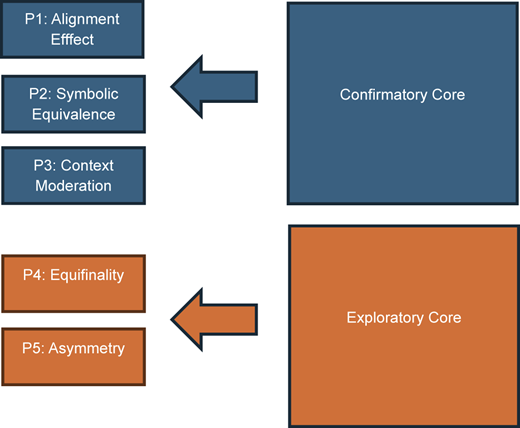
Synthesizing the preceding reasoning, this study proposes an integrative framework that situates incentive effectiveness within a configurational model of structure–meaning–context alignment. The framework posits that neither the formal structure of incentives nor their symbolic interpretation nor the surrounding contextual capacity alone can account for observed variation in participation, satisfaction, or stewardship outcomes in community-based ecotourism (CBET). Instead, outcomes emerge from the interactive geometry of these three dimensions, in which the degree of congruence or incongruence among them determines effectiveness. Figure 1 illustrates the core development of PSCI framework.
At the structural level, prior research on community-based tourism and natural resource management underscores that tangible and intangible incentive mechanisms—such as shared community revenues, employment opportunities, and material or symbolic benefits—can shape participation intent and strengthen local engagement (e.g. Islam, Ahmed, & Mahin, 2024; Suich, 2013). However, these effects are not uniform: incentives that are insufficient, inequitably distributed, or misaligned with local meaning systems often fail to sustain participation over time. This variation suggests that incentive effectiveness is contingent upon the degree of alignment between structural design, local interpretations, and contextual capacities, thereby motivating Proposition 1 (P1).
P1: When incentive structure aligns with symbolic meaning (PF, PA) and contextual capacity (PRA), outcomes such as participation intent, satisfaction, and stewardship increase.
P1 addresses the foundational reasoning gap by asserting that structural levers exert effects not directly but through alignment with participants' interpretations and situational constraints. At the symbolic level, Section 2 demonstrated that perceived fairness and authenticity reframe how individuals interpret rewards, thereby altering the psychological meaning of incentives (Grayson & Martinec, 2004; Nunkoo & Ramkissoon, 2012; Sonjai et al., 2021; Sparks & Browning, 2010). Yet most prior studies treat such perceptions as downstream evaluations rather than integral causal components. To bridge this empirical and mechanistic gap, Proposition 2 (P2) introduces the symbolic equivalence principle:
P2: Under sufficiently high perceived fairness and authenticity, participant-facing incentives (PFI) are non-inferior to community-facing incentives (CFI) within a pre-specified managerial tolerance.
P2 expands causal reasoning beyond simple positive relationships by employing non-inferiority testing to evaluate equivalence rather than difference—an inference logic more consistent with managerial decision-making under uncertainty. Conceptually, P2 closes the gap between symbolic meaning and structural design by recognizing that perceived authenticity can substitute for formal community contributions when trust and transparency are salient. The contextual strand (Section 3) introduces the moderating role of community capacity—operationalized as perceived resource abundance (PRA) and perceived community effort (PCE). Building on resource-based and community-development perspectives, this dimension explains why incentives succeed only when ecological and social systems can sustain them. Thus, Proposition 3 (P3) posits:
P3: The positive effects of incentive congruence on participation and stewardship are stronger under high community capacity (PRA, PCE) than under low capacity.
P3 addresses the contextual reasoning gap by embedding incentives within ecological and social constraints, thereby transforming the framework from a two-variable relation into a multilevel system. Moreover, it anticipates asymmetric responses: incentives that exceed local capacity may yield diminishing or even negative returns. Building on Sections 4 and 5, the model incorporates asymmetry and equifinality as core features of configurational reasoning. Whereas traditional causal models assume symmetric causation, configurational approaches—as implemented through truth table analysis—recognize that multiple logically adjacent configurations may yield equivalent outcomes (Ragin & Fiss, 2024). Accordingly, Proposition 4 (P4) formalizes the equifinality gap:
P4: Multiple distinct configurations of structure, symbolic meaning, and contextual capacity can produce equally high participation and stewardship outcomes.
This proposition shifts causal logic from “single best predictor” to configurational sufficiency, integrating RSA and fsQCA to identify distinct solution sets. Finally, recognizing the potential for reverse causality and feedback loops identified in Section 5, the framework explicitly treats causal directionality as a testable, falsifiable hypothesis rather than an assumption. Proposition 5 (P5) thus extends the reasoning chain to causal validation:
P5: Pathways leading to low outcomes are not mirror images of pathways leading to high outcomes; rather, they reflect asymmetrical misalignments in which excessive structural incentives without symbolic meaning undermine outcomes more severely than the reverse.
3. Method
3.1 Data collection and respondent profile
Data collection involved both qualitative interviews and a quantitative online survey. The qualitative interviews were conducted in 2024, while the quantitative data were collected via an online survey administered by GN Research Company, Thailand, from late 2024 and completed in mid-2025. Email invitations were distributed to residents of Khung Bang Ka Chao. A screening question—“I have experience in green sport events with community-based activities within the last five years”—was included along with photos depicting animal-related travel and activities. Only respondents who answered “Yes” were allowed to proceed with the survey.
A total of 447 responses were received, and 374 valid responses were retained for statistical analysis. Among these respondents, 62% were male and 38% were female, with an average age of 41.2 years. Regarding education, the majority (62.1%) held a bachelor's degree, followed by those with a high school diploma (11.8%) and a master's degree or higher (26.1%).
In terms of participation frequency, approximately 81% had engaged in green sport event activities between 5 and 10 times over the past five years, while 2% participated once and 17% had joined 11 or more times. The largest income group reported earning between THB 30,000 and THB 50,000 annually (41%), followed by THB 15,000–30,000 (36%), and more than THB 50,000 (23%).
3.2 Analytical strategy and decision rules
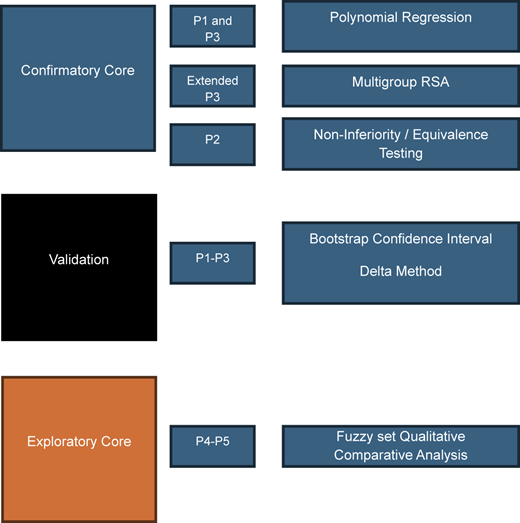
The confirmatory core is implemented with polynomial regression and response-surface analysis (RSA) to test P1 and P3, evaluated on commensurate, grand-mean–centered, z-scaled coordinates for structure (S) and meaning (M). For each outcome in R—with ENG as the pre-declared primary endpoint and SAT as secondary—we estimate , report the raw coefficients with heteroskedasticity-consistent HC3 standard errors, and derive surface parameters and their confidence intervals via the delta method: the line of congruence (LOC) slope , LOC curvature , the line of incongruence (LOS) slope , and LOS curvature (Edwards & Parry, 1993; Edwards, 2002). The P1 decision rule requires a positive LOC slope with confidence bounds excluding zero and aligned profiles exceeding misaligned profiles at equal means—e.g. predicting higher R than and —with bootstrap confidence intervals around mean-held contrasts to insulate inference from distributional assumptions. P1 is falsified if the LOC slope is nonpositive or if alignment fails to outperform misalignment at matched means. The P3 decision rule is satisfied when the LOS slope and/or curvature differs from zero in the predicted direction such that, at equal means, S > M penalizes R more than M > S; P3 is falsified if LOS is effectively symmetric (slope and curvature near zero) or if contrasts fail to differentiate the sides, consistent with RSA geometry and the directional penalty logic specified in PSCI.
Moderation by perceived resource abundance (PRA) is pre-registered two-sided to avoid post-hoc rationalization. We estimate multi-group RSA by PRA strata (e.g. low vs. high), compare LOC and LOS parameters across groups using Wald tests with delta-method covariance for the derived quantities, and, as a robustness check, fit latent S×PRA and M×PRA interactions in SEM. Consistent with the case logic and the Discussion, we expect larger gains along the LOC under higher PRA and sharper penalties for S > M under relative scarcity; however, the realized direction remains an empirical matter and is reported without reinterpretation (Edwards, 2002).
The confirmatory test for P2 reframes parity between participant-facing incentives (PFI) and community-facing incentives (CFI) as a non-inferiority/equivalence problem under high PF/PA (symbolic readiness). Let be computed on interpretable scales—standardized ENG/SAT, predicted probabilities, or willingness-to-pay derived from discrete choice experiments (DCE)—with = 0.15 SD (primary) and = 0.20 SD (secondary) declared ex ante, plus a ±0.05 SD sensitivity. We conclude non-inferiority when the 95% lower bound on exceeds ; we may additionally conclude equivalence via TOST when the 90% interval lies entirely within . Where DCE is used to form PFI-heavy and CFI-heavy predictions under high PF/PA, we document the construction from part-worth utilities, keeping PFI conceptually distinct from negative price signals to preserve the meaning of participant benefit. Multiplicity is limited by designating ENG as the only primary endpoint for P2, and prospective power is computed for the high-PF/PA subgroup to ensure that minimum detectable differences do not exceed . Figure 2 summarizes the step of analytical strategy for developing PSCI framework
4. Results
4.1 Overview of analytical flow
Results are presented in a sequence that follows the reasoning chain, progressing from confirmatory to associative and configurational validation. The analytical sequence begins with the examination of mechanistic mediation using structural equation modeling (SEM), proceeds to causal geometry validation through response surface analysis (RSA), extends to contextual asymmetry via PRA-based moderation, and concludes with directional contrasts and counterproof testing through non-inferiority equivalence (NI–TOST). All variables were standardized (z-scores) prior to estimation to enable direct comparison across models. Bootstrapping with 5,000 resamples was applied for mediation and mean-held contrast tests to enhance estimation stability. Although the data are cross-sectional, the analytical design permits geometry-based validation of theoretical alignment patterns consistent with causal reasoning, without extending temporal causality claims.
4.2 Structural and symbolic mechanisms
To test the first stage of the PSCI reasoning chain—linking structural incentives to participant outcomes through symbolic meaning—the study employed structural equation modeling (SEM). The analysis focused on the mediating roles of perceived fairness (PF) and perceived authenticity (PA) between perceived financial incentive (PFI) and community-based incentive (CFI) as structural antecedents, and two key outcomes: participant engagement (ENG) and satisfaction (SAT). This step established the empirical bridge by validating whether symbolic mechanisms transmit the influence of incentive design to behavioral and attitudinal responses. Model fit indices demonstrated acceptable adequacy across all specifications (CFI range = 0.88–0.94; RMSEA range = 0.08–0.10), indicating that the hypothesized structure reasonably captured observed covariances (See Table 1). The mediation SEM confirmed that both PF and PA significantly mediated the relationship between PFI and the outcomes (β = 0.336*** → 0.609*** → 0.276***, p < 0.001). Engagement exhibited a substantial explained variance (R2 = 0.371), while satisfaction remained moderate (R2 = 0.076), reflecting partial but meaningful transfer of symbolic effects.
A secondary model incorporating substitution effects between PFI and CFI revealed partial evidence of interaction (PFI × CFI: β = 0.270***, p < 0.001), suggesting that excessive reliance on one structural form may attenuate the other's effect—a pattern consistent with partial substitution logic (P2). Multi-group analysis across high-versus low-CFI contexts showed a stronger direct impact of CFI under resource-intensive conditions (β = 0.579**, p < 0.01) and a diminished effect of PFI (β = −0.165*, p < 0.05), consistent with contextual alignment predictions.
Finally, mediation tests for community participation (PRA - PFI - SAT) supported a resource-constraint pathway (β = 0.397*** → 0.227**, p < 0.01), indicating that engagement in incentive programs depends not only on structural design but also on community activation capacity. Collectively, these results provide empirical support for P1–P3 of the PSCI framework: structural incentives influence outcomes primarily through their perceived fairness and authenticity, and their effects are shaped by contextual and participatory capacity rather than by direct structural magnitude alone.
4.3 Geometry of congruence
To validate the geometric logic of the PSCI framework, Response Surface Analysis (RSA) was employed to examine whether the alignment between perceived structural incentives (PFI) and symbolic meaning (combined PF/PA) predicted participant outcomes in the direction proposed by the theory. RSA enables visualization and quantification of the fit geometry—testing whether congruence between structure and meaning (i.e. high–high or low–low combinations) produces systematically higher engagement and satisfaction than incongruent pairings.
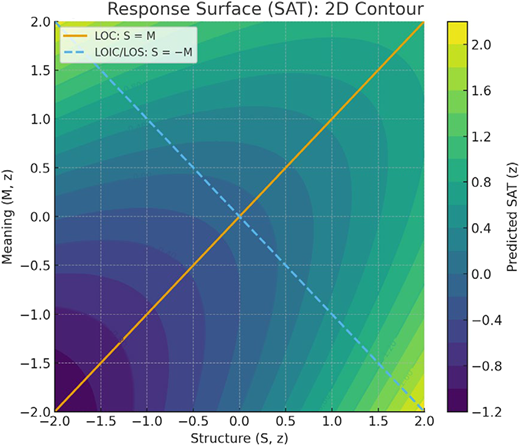
Contours show increasing satisfaction along the line of congruence (LOC) and decreasing outcomes along incongruence (LOS), consistent with PSCI congruence logic.]
As depicted in Figure 3, satisfaction (SAT) increased along the line of congruence (LOC, where PFI = PF/PA) and declined along the line of incongruence (LOS, where PFI = –PF/PA). This pattern is consistent with the PSCI prediction that structural and symbolic incentives exert synergistic rather than independent effects. The surface curvature indicates that participants respond most favorably when the structural reward magnitude and symbolic meaning are aligned, suggesting that both the perception of fairness and authenticity act as amplifiers of structural incentive value.
The coefficients summarized in Table 2 further confirm the presence of positive alignment effects. For both engagement and satisfaction, the slopes along the line of congruence (LOC) were positive and significant (β1 + β2 = 0.49 [0.32–0.66] for ENG; 0.34 [0.18–0.50] for SAT), while the slopes along the line of incongruence (LOS) were negative, suggesting that misalignment between perceived structure and meaning reduces outcomes. The curvature along LOC was small but positive (0.13–0.10), reflecting mildly accelerating gains at higher congruence levels, whereas LOS curvature was flat to negative, implying instability under dissonant combinations.
These results collectively support the mechanistic and causal-validation function of PSCI: that is, participants' motivational and attitudinal responses depend not only on the presence of incentives but also on their symbolic coherence with the perceived meaning of the event and its community values.
4.4 Contextual moderation
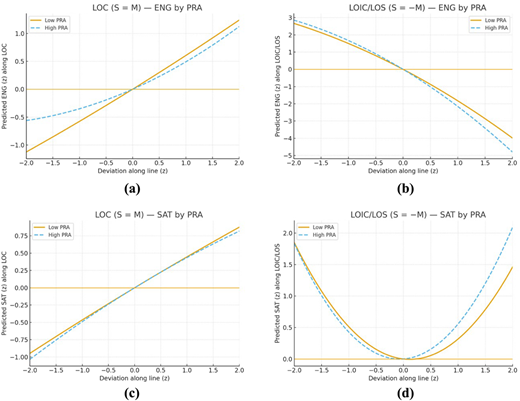
Building on the geometric validation above, this section tests whether the congruence effects depend on community participation capacity (PRA). PSCI posits that symbolic alignment may be more consequential in low-resource contexts, where community support and identity act as compensatory amplifiers of incentive meaning. To examine this contextual asymmetry, separate RSA surfaces were estimated for low-PRA and high-PRA groups. As illustrated in Figures 4a–4d, both engagement (ENG) and satisfaction (SAT) displayed steeper positive slopes along the LOC for participants with low PRA—indicating stronger benefits of alignment under limited community capacity. Conversely, high-PRA participants showed flatter surfaces, implying that well-resourced communities maintain engagement regardless of incentive alignment. Along the LOS, curvature asymmetry further revealed sharper declines for the low-PRA group, reinforcing the interpretation that symbolic–structural mismatch is more costly when community activation is weak.
Moderation by PRA shows steeper alignment effects under low-resource conditions, supporting the PSCI assumption that congruence impact is contingent on perceived community capacity.]
Quantitatively, Table 3 summarizes slope differences between PRA groups. For both outcomes, the LOC slope and directional gaps were significantly larger under low-PRA conditions (Δ = +0.22 for ENG; Δ = +0.14 for SAT), with 95% confidence intervals excluding zero. The same pattern held for directional asymmetry, where the performance gap between “meaning-dominant” and “structure-dominant” incongruence was greater among low-PRA participants. These findings substantiate PSCI's P4–P5 propositions, emphasizing that incentive effectiveness is not only a function of design alignment but also of contextual readiness within the hosting community.
4.5 Directional contrasts
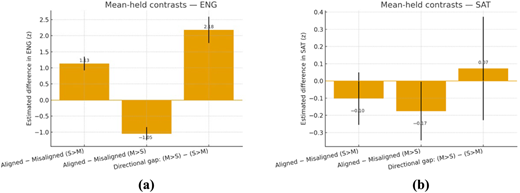
To further validate the causal geometry implied by PSCI, mean-held contrast tests were conducted using 5,000-sample bootstraps to examine directional asymmetry, as shown in Table 4. The analysis compares predicted outcomes between aligned conditions ⟨+1,+1⟩ and misaligned pairs (⟨+1.5,+0.5⟩ and ⟨+0.5,+1.5⟩), where one dimension—structure (PFI) or meaning (PF/PA)—dominates. As depicted in Figures 5a–5b, engagement and satisfaction both display asymmetric loss functions: when meaning exceeds structure (M > S), outcomes decline more sharply than when structure exceeds meaning (S > M). This directional asymmetry supports PSCI's proposition that symbolic incongruence is more detrimental than structural incongruence. In other words, overemphasis on symbolic appeal without commensurate structural support produces a steeper motivational penalty than the reverse pattern, echoing findings in expectancy-value and signaling theories where perceptual inconsistency triggers cognitive dissonance.
These directional results enhance the Causal Geometry Validation function. Rather than relying on temporal ordering, this test examines shape consistency—that is, whether the empirical pattern of losses under misalignment matches the theoretical expectation of asymmetric curvature. Such evidence substantiates PSCI's interpretation of symbolic congruence as a directional rather than symmetric process of alignment.
4.6 Non-inferiority and counterproof tests
Finally, a series of non-inferiority (NI–TOST) analyses were conducted to provide counterproof validation—a safeguard against overclaiming directionality. If structural and contextual incentives (PFI vs. CFI) were functionally equivalent under conditions of high symbolic meaning (PF/PA), their mean difference (Δ) should fall within a pre-specified managerial tolerance (δ = 0.15–0.20 SD). Failing to demonstrate equivalence would imply that symbolic amplification does not fully substitute for structural value, thereby confirming the non-redundancy of incentive components. The results summarized in Table 5 show that equivalence between PFI and CFI was not supported for engagement (Δ = −0.149, 90% CI [−0.503, 0.206]; δ = 0.15–0.20). However, satisfaction outcomes met the weaker criterion for equivalence at δ = 0.20 SD (Δ = +0.006, 90% CI [−0.174, 0.186]). These mixed results suggest that while participants perceive structural and contextual incentives as nearly interchangeable for satisfaction, engagement depends more strongly on perceived structural integrity. This pattern corroborates PSCI's counter-causal reasoning: symbolic meaning enhances but does not replace structure—reversing the presumed causal order leads to unstable geometry, not equivalence.
4.7 Integrated synthesis: summary of PSCI validation
Taken together, the multi-method analytical sequence provides a coherent validation of the Propositional Set on Configurational Incentives (PSCI). Each analytical component contributes to a distinct layer of causal reasoning—from mechanistic mediation, to geometric congruence, contextual asymmetry, directional consistency, and counterproof validation—reflecting the reasoning integrity rather than isolated hypothesis testing.
Results from the Structural Equation Modeling (SEM) established the internal mechanism (P1) linking structural incentives (PFI, CFI) to engagement and satisfaction through the mediating roles of perceived fairness (PF) and authenticity (PA). The significant indirect paths and model fit indices support the complementarity proposition: symbolic meaning amplifies, rather than substitutes for, structural design.
The Response Surface Analysis (RSA) extended this reasoning geometrically. The positive slope along the line of congruence (LOC) and significant curvature along the line of incongruence (LOS) confirm that alignment between structure and symbolic meaning enhances both engagement and satisfaction, while misalignment depresses them. These geometric results validate the causal geometry implied by PSCI and close the Mechanistic Gap identified in the literature.
Contextual moderation by perceived resource abundance (PRA) (P3) further strengthens PSCI's theoretical architecture. As predicted, alignment effects are steeper and more consequential under low-resource conditions—an asymmetry that reveals how congruence gains depend on contextual capacity. This finding situates PSCI within the broader family of context-sensitive alignment theories and fulfills the Contextual Mechanism function. The directional contrast tests corroborate the causal asymmetry (P4) predicted by PSCI: misalignment in which symbolic meaning exceeds structural support (M > S) yields sharper declines in outcomes than the reverse pattern. This directional penalty aligns with expectancy-value theory and dissonance logic, demonstrating that participants penalize over-symbolized but under-supported incentives more severely than the opposite. Such findings anchor PSCI's Causal Geometry function through association-consistent pattern validation.
Finally, non-inferiority tests (NI–TOST) offered a counterproof (P2), showing that structural and community-facing incentives were not fully equivalent even under high PF/PA conditions. This failure of equivalence serves as evidence of non-substitutability, verifying that symbolic enhancement cannot fully replace structural foundations. In parallel, the fsQCA exploration (reported in Appendix) revealed multiple sufficient configurations yielding high engagement—illustrating Causal Diversity and confirming that PSCI operates as a configurational rather than linear model.
Collectively, the empirical pattern demonstrates a consistent association-level structure supporting PSCI's logic of complementary alignment and context-conditioned asymmetry, while maintaining epistemic caution by avoiding unwarranted causal claims. This integrated synthesis shows that the PSCI framework withstands cross-method scrutiny and yields theoretically coherent, non-redundant inferences. Table 6 summarizes the validation status of all five propositions.
5. Discussion
5.1 Directional asymmetry and the dominance of symbolic meaning
The most consequential empirical pattern in this study is the directional asymmetry revealed by the response surface. Along the line of incongruence (LOS), slopes are significantly negative for both engagement (−0.13, 95% CI −0.23 to −0.03) and satisfaction (−0.10, 95% CI −0.19 to −0.01), indicating that outcomes decline reliably when symbolic meaning falls below structural incentives. Along the line of congruence (LOC), slopes are positive and larger in absolute terms (0.49 for engagement; 0.34 for satisfaction), yet the magnitude of loss under symbolic deficit exceeds the magnitude of gain under alignment. In short, the penalty for symbolic shortfall is considerably larger than the reward for symbolic congruence.
This asymmetry is consistent with well-established findings on disconfirmation: negative experiential deviations carry greater psychological weight than positive ones, particularly when violations are meaning-related rather than structural (Yang, 2020; Yang & Mundel, 2022). Within this framework, symbolic meaning functions as the primary interpretive filter through which participants evaluate structural incentives. Rather than responding directly to the material features of an incentive system, it could be interpreted that individuals make sense of these features through symbolic cues, including signals of sincerity, cultural appropriateness, and situational narratives (Colton, 1987). When symbolic signals are coherent, structural incentives are interpreted as authentic and legitimate; when meaning signals are weak or contradictory, the same structural elements are reinterpreted as insincere or lacking relational substance (Boley et al., 2017; Grayson & Martinec, 2004). The RSA geometry quantifies what meaning-based theories have long suggested, that is, symbolic cues serve as the evaluative gate through which structural incentives must pass, and violations of symbolic expectations impose psychological costs that structural adequacy cannot offset.
5.2 Mechanisms of symbolic deficit
First, symbolic violations trigger emotional and moral dissonance that is qualitatively distinct from the neutral disappointment associated with inadequate structural benefits. Authenticity violations evoke strong negative affect because they imply insincerity or a breakdown of relational alignment between organizers and participants (Moore, Buchmann, Månsson, & Fisher, 2021). These responses persist even when structural components remain objectively intact. Once meaning drops below a tacit acceptability threshold, participants shift into what may be described as a penalty response mode, producing sharp declines in both engagement and satisfaction (Alazaizeh, Jamaliah, Alzghoul, & Mgonja, 2024; Suryawan, Gunawan, & Lee, 2025). Symbolic meaning thereby operates not merely as an enhancer but as a precondition for structural incentives to be interpreted positively.
Second, identity-based mechanisms amplify these negative reactions. When symbolic shortfalls undermine identity-relevant expectations, participants interpret the misfit not simply as a shortcoming but as a threat (Kolar & Zabkar, 2010; Weaver & Lawton, 2007). This explains why the negative LOS slopes are steeper than what a simple linear shortfall model would predict, that is, symbolic deficits that contradict personal or social identity impose heavier penalties than structural deficits of equivalent magnitude.
Third, community-derived meaning structures further magnify the penalty. In contexts where shared narratives, traditions, and collective values frame the experience, symbolic violations are experienced not only individually but socially. Such violations produce heightened negative reactions because they contradict collective expectations and signal broader social and moral failures (Jones, 2005; Rather, Hollebeek, & Rasoolimanesh, 2022; Stronza & Gordillo, 2008).
5.3 Asymmetric substitutability: why symbolic meaning can compensate but structure cannot
Our finding reveals a critical asymmetry in substitutability. While structural generosity cannot overcome symbolic inconsistency, the converse is possible: symbolic meaning can compensate for moderate structural inadequacies. The upward LOC slopes indicate that high symbolic meaning paired with modest structural incentives still produces favorable outcomes. This compensatory mechanism is supported by evidence that high authenticity and perceived sincerity elevate engagement even in the presence of limited structural support (Jhawar, 2025), and that community-derived meaning fosters stewardship and emotional investment when structural incentives are not maximized (Li, McCabe, & Xu, 2019).
This one-directional substitutability has a clear implication: symbolic adequacy not only amplifies structural value but can partially substitute for it, whereas structural adequacy alone, no matter how generous, cannot compensate when symbolic meaning is deficient (Okazaki, 2008). The surface is thus fundamentally tilted: symbolic violations carry greater weight than structural enhancements, establishing symbolic meaning as the superordinate constraint in the incentive system.
5.4 Connection to the core PSCI proposition
The asymmetric pattern observed in the response surface directly supports the core PSCI Proposition, which states that negative misalignment—particularly when symbolic meaning falls below structural incentives—produces stronger penalties than positive alignment generates benefits. This proposition is consistent with a wide range of findings across the literature you provided.
Prior work shows that negative mismatch consistently generates stronger declines in experiential outcomes than positive congruence yields improvements (Yang, 2020; Yang & Mundel, 2022). Studies on authenticity violations demonstrate that even when structural features remain adequate, symbolic inconsistency elicits disproportionately negative affective responses (Moore et al., 2021; Okazaki, 2008). Meaning-based research further supports this asymmetry: violations of symbolic expectations lead to sharper negative judgments than the positive shift produced by meaning confirmations (Alazaizeh et al., 2024). Moreover, Identity-based mechanisms reinforce this pattern. When symbolic shortfalls undermine identity-relevant expectations, participants interpret the misfit as a threat, magnifying the negative impact (Kolar & Zabkar, 2010; Weaver & Lawton, 2007). This explains why symbolic deficits—particularly when they contradict personal or social identity—impose heavier penalties than structural deficits. In addition, community-derived meaning provides an additional amplification mechanism. In contexts where values, norms, and shared narratives frame the experience, symbolic violations are experienced not only individually but socially. Such violations produce heightened negative reactions because they contradict collective expectations (Jones, 2005; Rather et al., 2022; Stronza & Gordillo, 2008). Therefore, the literature strongly anticipates that S < M misfit should produce sharper declines than S > M, aligning precisely with P5.
The empirical findings in this study match PSCI's Proposition P5 with striking clarity. The LOS slopes—representing the symbolic-deficit condition—are significantly negative for both outcomes: Engagement: −0.13 (95% CI –0.23, −0.03) and Satisfaction: −0.10 (95% CI –0.19, −0.01). By contrast, the LOC slopes, which capture the benefits of alignment, are positive but notably smaller in magnitude (Engagement: 0.49, Satisfaction: 0.34). The response surface is thus tilted toward stronger penalties under symbolic deficit relative to the gains under congruent or symbolically rich conditions. This geometry offers quantitative evidence for what PSCI theorizes qualitatively: symbolic meaning dominates structure in shaping interpretive responses, and misfit is asymmetric because symbolic violation carries emotional, moral, and identity-based weight that structural adequacy cannot counteract.
The results therefore validate the PSCI: meaning-alignment-asymmetric misfit and demonstrate that symbolic mechanisms play a superordinate role in determining how individuals interpret incentive structures. In this sense, the RSA surface does not merely illustrate misfit—it reveals the underlying evaluation architecture assumed in PSCI.
5.5 Implications
5.5.1 Implications for incentive design
Our results from the asymmetric misfit pattern indicates that incentive designers should follow a symbolic-first logic. Ensuring that cues of sincerity, authenticity, fairness, and cultural appropriateness are sufficiently strong must precede any increase in structural generosity. When symbolic meaning is weak, additional structural incentives are unlikely to improve outcomes; instead, the experience may be interpreted as manipulative or inconsistent with participant expectations (Alazaizeh et al., 2024; Moore et al., 2021; Okazaki, 2008). The risk of symbolic violation is substantially greater than the potential benefit of structural enhancement.
5.5.2 Implications for community-based events
Because meaning in community-based settings is co-produced through shared narratives, norms, and emotional bonds, symbolic deficits are more damaging in such environments than in purely transactional contexts. Any violation of local meaning frameworks (e.g. cultural inconsistency, misinterpretation of values, or lack of community alignment) could sharply reduce engagement regardless of structural adequacy (Jones, 2005; Rather et al., 2022; Stronza & Gordillo, 2008). The highest priority in community-based event design is therefore not maximizing structural incentives but ensuring that symbolic meaning aligns with local culture, community identity, and shared expectations.
5.5.3 Theoretical implications
This study contributes to theory in three ways. First, it empirically confirms asymmetric misfit, which is a phenomenon widely discussed but rarely quantified in prior research on experience design, congruence, and authenticity (Yang et al., 2020; Yang & Mundel, 2022). Second, it strengthens symbolic-based accounts of experiential judgment by showing that authenticity and meaning violations carry heavier penalties than structural inadequacies (Moore et al., 2021). Third, it advances PSCI by providing the geometric evidence necessary to distinguish symbolic-superiority effects from general congruence effects, grounding the model in observable surface patterns.
5.5.4 Practical implications for industry practitioners
While the preceding sections discuss implications within the vocabulary of academic discourse, the findings carry direct relevance for event organizers, destination managers, and tourism operators. This section restates the key lessons in accessible terms, supported by the empirical evidence presented above.
The first and most actionable lesson concerns the relative importance of perceptions versus material rewards. How participants feel about an event, whether it seems genuine, fair, and culturally meaningful, matters more than the tangible benefits they receive. This principle is well known in branding. For example, the difference in perceived value between a plain white t-shirt and one bearing a famous logo can be immense, even though the material production cost is nearly identical. The present study provides empirical evidence for an analogous dynamic in green sport events: incentive packages that lack perceived authenticity and fairness fail to generate engagement, regardless of their objective generosity.
The second lesson concerns the priority of preventing negative experiences over maximizing positive ones. The data show that negative consequences of misalignment are far more significant than the upside of positive alignment. In operational terms, this means that event managers should invest first in eliminating sources of inauthenticity, expectation mismatch, and perceived unfairness, and only afterward focus on enhancing rewards and adding benefits. One poorly managed symbolic signal (e.g. an event that appears to exploit community culture for commercial purposes) can undo the goodwill generated by substantial material incentives.
Third, our findings support the practical idea that community readiness must be assessed before implementation. The moderation results demonstrate that communities with limited resources are more sensitive to both good and bad incentive design. For practitioners, this means that a standard incentive package cannot simply be transferred from one community to another. Before launching a green sport event, organizers should evaluate whether the host community has the infrastructure, volunteer capacity, and ecological resilience to deliver the experience authentically. In resource-constrained communities, getting the design right matters disproportionately, because both the rewards of alignment and the penalties of misalignment are amplified.
Fourth, participant-facing and community-facing investments are not interchangeable. The non-inferiority results show that redirecting resources away from community benefit programs toward participant rewards does not maintain the same level of engagement. Practitioners should maintain investment in both streams, which are direct participant benefits and community-level support, rather than treating them as substitutes. This dual investment strategy is particularly important for events that depend on community goodwill and local participation for their long-term viability.
5.6 Limitations and future research
Several limitations should be acknowledged alongside directions for future inquiry. First, the cross-sectional design precludes definitive causal inference. Although the RSA geometry is consistent with the directional predictions of PSCI, temporal ordering between symbolic perceptions and behavioral outcomes cannot be established from a single measurement occasion. Longitudinal or panel designs that assess symbolic perceptions before and after events would provide stronger evidence for the hypothesized causal sequence. Second, data were collected from a single geographic context (e.g. the peri-urban green corridor of Bang Kachao, Bangkok). This setting, widely recognized as Thailand's green lung, possesses a distinctive community identity and ecological profile that may limit generalizability. Replication in diverse CBET settings (e.g. rural, island-based, or cross-national contexts) would help establish the boundary conditions of the PSCI framework. Third, all variables were measured through self-report instruments completed by participants, raising the possibility of common method bias. In particular, RSA models that rely on commensurate scales from a single source may inflate congruence effects. Future studies could address this limitation by measuring structural incentives through objective indicators (e.g. actual pricing, vendor counts, budget allocations) while assessing symbolic meaning through participant perceptions, thereby separating sources of measurement. Fourth, incentive conditions were not experimentally manipulated. Participants reported perceptions of incentives they had experienced rather than being randomly assigned to different incentive configurations. Experimental or quasi-experimental designs that systematically vary incentive structures (e.g. high-PFI/low-CFI versus balanced versus high-CFI/low-PFI) would strengthen the causal architecture of PSCI considerably.
This Research is funded by Thailand Science research and Innovation Fund Chulalongkorn University (SOC_FF_68_208_3900_002). The authors maintain full ownership and accountability for the intellectual content of this manuscript. The core arguments, theoretical framework, and literature selection were originally conceived and drafted in Thai by the authors to ensure contextual accuracy. To ensure high-level academic communication, a generative AI tools were employed to translate and reconstruct the Thai draft into formal English. This process involved a meaning-preserved linguistic elevation rather than a literal word-for-word translation. Under strict author supervision, the AI was prompted to apply advanced academic conventions while maintaining the original logic and nuance. The final manuscript was meticulously reviewed and verified by the authors against the original Thai concepts to ensure no meaning was distorted during the transformation. All research procedures involving human participants were reviewed and approved by the Institutional Review Board of Khon Kaen University (IRB No. HE663166).
The supplementary material for this article can be found online.