Autistic people experience academic, vocational, social, lifestyle and independence barriers. Understanding how these barriers differ across demographic groups is essential for designing targeted supports and interventions. This study aims to investigate the influence of age and gender on the types and frequency of barriers reported by autistic individuals.
Survey data were collected from 158 autistic participants, who reported on 40 barriers across three domains: academic and career challenges, social interactions and relationships and lifestyle and independence. A 2 × 5 independent measures factorial ANOVA was conducted to examine the effects of gender, age and their interaction on the number of barriers reported within each domain.
No significant differences were found in the number of barriers endorsed based on gender, age or their interaction for academic and career domain barriers. However, significant main effects of gender were identified for social and lifestyle barriers, with females reporting more barriers than males in both domains (social: p = 0.035; lifestyle: p = 0.002). Barrier frequencies by gender and age group were also identified and made available through an online tool.
This study highlights important gender and age differences in the types of barriers experienced by autistic individuals. The findings provide actionable insights that can inform the development of more tailored programs and supports to better address their diverse needs.
Introduction
Autism is a neurodevelopmental condition experienced by approximately 1% of the population (Zeidan et al., 2022). Autism is characterised by differences in social communication and social interaction, coupled with restricted interests and/or repetitive behaviours (Olson et al., 2020). Characteristics should be evident during the early stages of development, although they may not become fully apparent until social demands surpass an individual’s capacity, or may be hidden by adaptive strategies developed later in life (American Psychiatric Association, 2021). These characteristics can have a negative impact on daily living and present a barrier to social, academic and vocational participation.
Research has consistently shown the importance of independence, social inclusion and meaningful participation in work and study when it comes to wellbeing and quality of life, highlighting the need to reduce and overcome barriers experienced by autistic people (Bishop-Fitzpatrick et al., 2016; Brouwers et al., 2024; Nasamran et al., 2017; Tobin et al., 2014). There is growing evidence that people experience autism differently based on their age (Lord et al., 2018) and gender (Van Wijngaarden-Cremers et al., 2014).
Therefore, we must first understand how these barriers vary across different demographic groups to develop effective strategies for reducing and overcoming barriers.
Individuals with autism encounter numerous barriers in the academic and career domain. Research highlights difficulty in managing studies (Pinder-Amaker, 2014), being distracted at the task at hand (McDougal et al., 2020), difficulty in planning for deadlines (Cromjongh et al., 2024; Gentil-Gutierrez et al., 2022) and experiencing poor academic outcomes (Shattuck et al., 2012; Taylor and Mailick, 2014). In the workplace, they often struggle with responding in a job interview (Barnhill, 2007; Lorenz et al., 2016), dissatisfaction with jobs (Baldwin et al., 2014), difficulty in looking for jobs (Muller et al., 2003; Wei et al., 2018) and procrastinating on tasks (Schaffer et al., 2021). These challenges not only hinder academic and professional success but also contribute to higher rates of anxiety and depression (Dow and Laugeson, 2020). Research shows that autistic people also face social barriers. A wide range of challenges, like difficulty in communication (Baldwin et al., 2014), difficulty in understanding social cues (Ghanouni et al., 2019), behaving properly around people of the opposite sex (Sperry and Mesibov, 2005) and social anxiety (Black et al., 2024; Kalyva, 2010; Spain et al., 2016; White et al., 2009), have been identified. Additionally, autistic people are more likely to face difficulty in forming friendships (Petrina et al. 2014; Sosnowy et al. 2019), difficulties forming a relationship (Stokes et al., 2007) and bullying (Cappadocia et al., 2012; Lee et al., 2008) leading to social isolation (Atherton et al., 2022; Bauminger and Kasari, 2000; Locke et al., 2010; Rowley et al., 2012). It is known that autistic people experience lifestyle and independence barriers as well. Existing research reveals difficulties like transportation issues (Dirix et al., 2023; Lubin and Feeley, 2016), over-reliance on support (Hume et al., 2009) and fatigue (Keville et al., 2021). Autistic people may suffer from eating disorders (Goldschmidt and Song, 2015; Micai et al., 2023) and erratic sleep patterns (Cohen et al., 2014; Devnani and Hegde, 2015) as well. Therefore, gaining insight into how these academic and career, social and lifestyle barriers differ across age and gender is essential for designing more effective, personalised interventions and support strategies.
While much of the research has focused on the challenges faced by autistic children, there has been significantly less attention on the experiences of autistic adults, especially as they navigate different stages of life (Torres et al., 2020). Given that adulthood spans a major part of life (Matson et al., 2016) and more people are getting diagnosed with autism, there is an urgent need to offer life-long supportive measures to autistic people (Shattuck et al., 2011). However, research on support for adults with autism remains limited (Poon and Sidhu, 2017), underscoring the need for a deeper understanding of how challenges evolve with age.
Despite growing awareness of autism, there exists a substantial gap in our understanding of the perspective of females with autism, largely due to the predominant focus on males in research. This bias stems from the statistical measure that for every four men diagnosed with autism, one woman is affected (Fombonne, 2009; Mandy et al., 2012), leading many studies to either recruit participants based on this ratio or to concentrate exclusively on male subjects (Lai et al., 2015). Acknowledging that females with autism are often underrecognized (Loomes et al., 2017), there is a growing interest in exploring experiences of girls and women with autism (Mandy and Lai, 2017).
Given the gaps in research and the need for more inclusive studies, it is crucial to explore how gender influences the barriers faced by individuals with autism. Moreover, existing research suggests that core characteristics of autism are influenced by both age and gender. For example, Rosenthal et al. (2013) found age-related differences in real-world executive functioning across childhood, indicating that the types of barriers individuals face are likely to shift over time. Vogan et al. (2017) found that older adults with autism tend to use fewer services than younger adults, possibly due to age-related decline in service access. Together, these findings support the expectation that age significantly shapes both the nature and number of experienced barriers.
Gender differences have also been explored in prior research. Nagib and Wilton (2021) found that autistic women report more significant challenges than men, particularly in areas such as stress, social interaction and communication.
This aligns with broader findings suggesting that autistic women may encounter unique or more pronounced barriers across various life domains. However, the limited number of studies that examine how characteristics vary by gender have produced inconsistent results (Van Wijngaarden-Cremers et al., 2014), highlighting the need for a clearer understanding of how difficulties differ across both age and gender.
Building on prior studies, this paper aims to contribute to the existing research by comprehensively analysing how barriers across three life domains vary by age and gender in individuals with autism. The study will focus on three key areas:
the main effects of age and gender on the number of barriers endorsed,
the interaction between age and gender in each domain, and
the most frequently reported barriers within each age and gender category.
It was hypothesised that:
the number and type of barriers across each domain will vary significantly by both age and gender.
there will be a significant interaction between age and gender, meaning that the impact of age on barriers will differ depending on gender.
certain barriers will emerge as particularly prominent for specific age-gender subgroups.
This study considers these hypotheses and in addition, introduces an online tool that enables users to filter barriers by age group, gender and category. This tool facilitates the practical application of the survey data, allowing for a personalised approach to understanding the most pressing barriers for specific subgroups.
Method
Participants
Participants comprised 158 autistic Australians aged 12–54, all of whom had a clinical diagnosis of autism. For participants aged 12–17, parents or guardians (n = 41) completed the survey as proxy respondents on behalf of their child. Participants were recruited via a disability service provider’s database that specialises in coaching people with autism. No exclusion criteria were applied, as the goal was to maximise responses and capture a diverse range of perspectives and experiences within the autistic community. Ethics approval (Project ID: 40498) was obtained from the Monash University Human Research Ethics Committee. Refer to Table 1 for participant demographics.
Measures and procedure
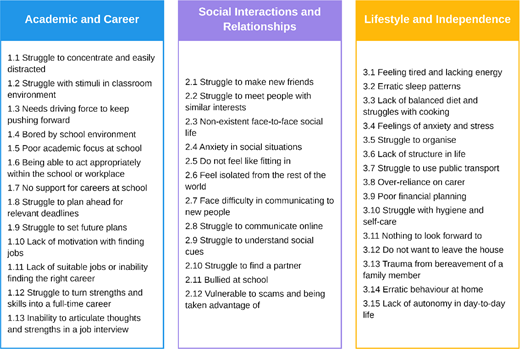
Potential participants were identified through the coaching service database, which includes individuals with autism and parents of children with autism who have previously consented to being contacted for research purposes during expressing their interest in the coaching service. All eligible individuals within the database were contacted directly via email. The email included an explanatory statement outlining the purpose of the study, ethical considerations and details about confidentiality. Participants were informed that completing the survey was entirely voluntary and that all responses would remain anonymous. For participants under 18, the email was addressed to the parent or guardian listed in the database. The explanatory statement clarified that parents or guardians were responsible for completing the survey on behalf of their child but were encouraged to involve their child in answering the questions wherever possible. This ensured that the survey responses reflected the lived experiences of the autistic people themselves, even when parents acted as proxies. For adult participants, the email was sent directly to the individual with autism. Participants were asked to provide their age range and gender. Age ranges were structured to represent key life stages: 12–17 (secondary school age), 18–21 (post-secondary education), 22–25 (transitioning from academic to vocational life), 26–35 (early career) and 36–54 (mid to advanced career). The survey presented participants with a list of 40 barriers grouped into three domains: Academic and Career, Social Interactions and Relationships and Lifestyle and Independence and are shown in Figure 1. The barriers included in the survey were identified collaboratively by the coaching service and individuals with lived experience of autism, including individuals with autism (n = 5), parents of children with autism (n = 23) and support workers (n = 5). All distinct barriers identified through this collaborative process were included in the survey; no additional selection or exclusion process was applied. Participants were asked to indicate whether they had encountered each barrier within the past six months by responding “yes” or “no” via Typeform. Consent was implied through submission of the completed survey. Participants had the option to enter into a prize draw for a gift voucher following completion.
Data analysis
The data analysis was completed in Python (3.10.12) and SPSS (v27). Of the 182 responses received, 24 responses were removed due to missing data (gender), leaving 158 complete responses. Z-scores were used to screen for outliers in the number of barriers endorsed by each group, within each domain. Using a cut-off of 3.29 as per Hills (2011), no outliers were identified. An independent-measures factorial ANOVA (2×5) was used to determine whether there were significant differences in the number of barriers endorsed based on age group and gender (main effects) and interaction between age and gender, for each domain. A post hoc power analysis was conducted using G*Power software to assess the achieved power given the sample size of 158 participants. With an effect size of 0.325, which is between medium and large (Cohen, 2013), and α = 0.05, achieved power (1 − β) = 0.80 was computed. Given the unequal age × gender subgroup sizes, assumptions were examined prior to interpretation of the factorial ANOVA results. Kolmogorov–Smirnov statistics indicated minor violations of normality for several subgroups; however, no extreme outliers were identified, and Levene’s tests indicated that the assumption of homogeneity of variance was met. Given that departures from normality were minor, no extreme outliers were present and homogeneity of variance was satisfied, factorial ANOVA was retained for the analyses. Post hoc t-tests were used with Sidak correction to account for multiple comparisons. Frequency tables were generated to show the prevalence of each barrier based on age and gender, allowing for visual comparisons of how individual barriers differed across these groups.
Community involvement statement
The study used barriers identified in collaboration with autistic people, their parents and support workers to ensure real-world relevance, making the findings actionable for intervention and support planning.
Results
Independent-measures factorial ANOVA
Academic and career barriers.
A 2 × 5 (gender × age group) independent measures factorial ANOVA was performed on the number of career and academic barriers faced. The age group × gender interaction was not significant, F(4, 148) = 0.97, p = 0.42; as was the main effect of age, F(4, 148) = 0.91, p = 0.46; and the main effect of gender, F(1, 148) = 0.39, p = 0.53.
Social interactions and relationship barriers.
A 2 × 5 (gender × age group) independent-measures factorial ANOVA was performed on the number of social interactions and relationship barriers faced. The age group x gender interaction was not significant, F(4, 148) = 1.40, p = 0.24; as was the main effect of age, F(4, 148) = 0.63, p = 0.64; but the main effect of gender was significant, F(1, 148) = 4.55, p = 0.035, ηp2 = 0.03. The effect size of the main effect of gender indicates that 3% of the variance in the number of social interactions and relationship barriers was explained by gender. Females (M = 5.75, SD = 2.65) reported experiencing more social barriers than males (M = 4.95, SD = 2.76) on average.
Lifestyle and independence barriers.
Moreover, a 2 × 5 (gender × age group) independent measures factorial ANOVA was performed on the number of lifestyle and independence barriers faced. The age group x gender interaction was not significant, F(4, 148) = 1.16, p = 0.33, ηp2 = 0.03; as was the main effect of age, F (4, 148) = 0.99, p = 0.41, ηp2 = 0.03; but the main effect of gender was significant, F(1, 148) = 9.76, p = 0.002, ηp2 = 0.06. The effect size of the main effect of gender indicates that 6% of the variance in the number of lifestyle and independence barriers was explained by gender. Females (M = 6.53, SD = 3.54) reported experiencing more lifestyle and independence barriers than males (M = 4.83, SD = 3.37) on average.
Discussion
In this study, we explored how barriers academic and career, social and relationship and lifestyle and independence barriers for individuals with autism differ by age and gender. Our approach consisted of a comprehensive survey of autistic people aged 12–54, leveraging 40 distinct barriers. These barriers align closely with those found in previous research, as discussed in the introduction. However, our study adds value by examining how these barriers vary across specific age and gender groups, which is an aspect that has not been sufficiently addressed in the existing literature (Mandy and Lai, 2017; Torres et al., 2020).
The study hypothesised that (1) the number of barriers across each domain would vary significantly by both age and gender, (2) there would be a significant interaction between age and gender, such that the impact of age on barriers would differ depending on gender, and (3) certain barriers would emerge as particularly prominent for specific age-gender subgroups. The results partially supported the first hypothesis: females reported experiencing significantly more social and lifestyle barriers than males, aligning with existing research on gendered experiences in autism. However, no significant differences were found across age groups or in academic and career barriers, possibly because these types of challenges are more consistently experienced across the lifespan or are influenced by factors other than age or gender, such as socioeconomic status, support access or comorbid conditions. The second hypothesis was not supported, as no significant interaction between age and gender was found in the overall number of barriers. This could be due to limited statistical power in smaller age-gender subgroups, or it may indicate that age and gender independently, but not interactively, affect the types of barriers experienced. In contrast, the third hypothesis was supported: specific barriers varied in frequency across different age and gender subgroups. Our results support existing literature that emphasises the need for age- and gender-specific interventions for autistic people (Strang et al., 2020).
For our frequency analysis across demographics, barriers were grouped into three domains and discussed here accordingly. To simplify the discussion a barrier is considered here only if it is reported by over 50% people in a demographic. The trends discussed should be interpreted cautiously as exploratory insights.
Cross-cutting barriers across age and gender
The persistence of the struggle to find people with similar interests and difficulty in making new friends has been mentioned in prior research (Petrina et al., 2014). Our findings suggest that these barriers are cross-cutting through age and gender. Anxiety in social situations also affects individuals across all ages and genders. However, our data reveals a gender difference, with females reporting higher levels of social anxiety compared to males. This aligns with research which demonstrates that females on the autism spectrum experience higher and more consistent levels of stress and anxiety than their male counterparts (Hull et al., 2017), calling for targeted interventions. Feelings of anxiety and stress were reported by both genders across all age groups, with females reporting them more frequently. These findings underscore the need for comprehensive supports that address persistent social and emotional challenges across the lifespan, while recognising that females may experience some of these difficulties more frequently. The need for a driving force to keep moving forward, a known barrier (Bos et al., 2020), is persistent across all age groups and genders; descriptive patterns in our sample suggest it may be more frequently endorsed by females than males, except in the 22–25 age group. This pattern highlights the importance of fostering sustained motivation and internal drive, particularly among females, through long-term supports.
Gender-specific themes
Gender specific social challenges emerged in our study. While prior studies have found that people with autism often struggle with romantic relationships (Sperry and Mesibov, 2005; Stokes et al., 2007), our findings indicate that this barrier was not commonly reported across most age groups—with the exception of females aged 36–54. This calls for further investigation as earlier research has largely focused on younger individuals or has not considered the specific challenges faced by older females in forming romantic relationships. Over half of males aged 22–25 in our study reported a reluctance to leave the house, which may indicate particular social or environmental challenges during early adulthood contributing to avoidance behaviours. Although this pattern is an initial observation, it raises important questions about the factors influencing social engagement in this group and underscores the need for further investigation. These findings highlight the importance of age- and gender-sensitive research into social withdrawal and relationship-related challenges. Gender specific independence barriers were also noted. Difficulty maintaining a balanced diet and cooking is a known barrier (Kopp and Gillberg, 2011), and this study suggests that this peaks for females aged 22–25, where targeted interventions might be most beneficial. Additionally, over-reliance on carers emerged as a notable issue for females aged 1825. Although existing research has primarily focused on caregiver dependence during childhood and adolescence (Poon and Sidhu, 2017), our findings suggest that this reliance may persist into young adulthood for some females. These observations point to the importance of developing specific strategies that support greater independence. Educational and Vocational barriers had gender variability. A lack of motivation in job searching, a barrier documented in prior research (Wei et al., 2018), was noted among females aged 18–25. Our findings suggest this specific age range as a potential period of heightened vulnerability, suggesting a critical window for targeted interventions. Boredom in school, particularly among males aged 12–17 was noted from our sample. This suggests that interventions for school-related disengagement might benefit from being attuned to the distinct ways in which young males experience and express disengagement. Difficulties with behaving appropriately within school or workplace settings emerged as particularly prominent among females aged 18–21, suggesting a potential area for further investigation into how such challenges may manifest during this developmental stage. These patterns provide insights into developing specific supports to address academic and career barriers. Having nothing to look forward to was commonly described by females in the 22–25 and 36–54 age ranges, suggesting a need for emotional well-being supports that consider both gender and developmental context.
Age-specific shifts in barriers
The persistence of experiencing concentration difficulties, a known barrier (McDougal et al., 2020), in females across all age groups, contrasted with peaks in males during adolescence (12–17) and later adulthood (36–54), suggests a need for sustained support for females, with targeted interventions during key developmental transitions for males. In our sample, the struggle to plan ahead for relevant deadlines was reported particularly among males aged 12–17 and females aged 18–21, suggesting the need to tailor support for different age groups. While difficulties in setting future plans and targets are documented in prior research (Gentil-Gutierrez et al., 2022), our findings suggest that females aged 18–35 and males aged 22–25 report this barrier more frequently. This may reflect age- and gender-related dynamics that warrant further exploration. Poor financial planning was reported as a challenge among females aged 22–25 and 36–54, as well as males aged 26–35. While previous research has explored financial difficulties in autism more broadly (Cheak-Zamora et al., 2017), our findings suggest there may be gender- and age-related differences that may require further attention. Over 50% of females aged 12–35 and males aged 12–17 described a lack of ability to organise, suggesting this executive functioning challenge may be particularly salient for these groups. Additionally, both females aged 18–35 and males aged 18–21 reported experiencing a lack of structure in life. While these patterns have not been widely examined in existing research, they point to potential windows where targeted support could be especially beneficial. While prior research has noted broader difficulties with setting future goals among autistic people (Gentil-Gutierrez et al., 2022), our findings suggest that this challenge may be particularly salient for females aged 18–35 and males aged 22–25. Taken together, these findings highlight the need for both universal executive functioning supports and tailored interventions that account for age-related variation, ensuring that resources are responsive to persistent and subgroup-specific challenges. Difficulties with classroom stimuli have been widely discussed in studies of younger autistic populations (McDougal et al., 2020), and our findings similarly highlight the prominence of these sensory challenges among younger participants in educational settings. This suggests a need to address sensory challenges during school years. Females aged 18–35 and males aged 22–25 in our study described a struggle to turn strengths and skills into a full-time career. This observation may point to a need for more tailored support during post-school transitions and early career planning, especially as individuals navigate the gap between personal competencies and structural opportunities. Additionally, the lack of suitable jobs or difficulty finding the right career was reported as a significant concern among females aged 18–35 and males aged 22–35, which echoes broader challenges in career alignment documented in the literature (Baldwin et al., 2014). Furthermore, difficulties in articulating strengths during interviews (Lorenz et al., 2016) were noted by females (18–21, 36–54) and males (22–25) at important life stages, underscoring a continued need for targeted support in career development. Together, these findings point to the need for age-specific interventions to support both academic and vocational outcomes, as well as targeted assistance during transitions between the two. Feeling tired and lacking energy is an already documented barrier (Keville et al., 2021) and is experienced by females across all ages and males aged 2635, in our sample. Erratic sleep patterns were reported as a concern by over 50% of females aged 18–54 and males aged 36–54.This is consistent with research (Cohen et al., 2014; Devnani and Hegde, 2015) indicating sleep disturbance as a barrier. The current findings, however, suggest addressing sleep issues beyond adolescence. These results point to the importance of sustained, age-inclusive approaches to managing energy and sleep-related challenges in autistic adults. Our findings suggest that over 50% of females aged 18–25 and males aged 18–35 report having a non-existent face-to-face social life. Males aged 12–17 described a sense of not fitting in, which may be linked to developmental shifts and increased peer interactions during adolescence, warranting further research. Females aged 22–35 reported facing this barrier, suggesting that early adulthood may present distinct social inclusion challenges for women, but this needs to be investigated further. Communication difficulties are commonly reported in autism, particularly during adolescence (Petrina et al., 2014). In our study, males aged 12–17 and females aged 12–35 reported it. This pattern may suggest that social communication challenges follow different developmental age trajectories for males and females. The difficulty in understanding social cues is well-documented among autistic people, particularly during adolescence (Ghanouni et al., 2019). Our findings are consistent with this, with males aged 12–17 in our study reporting challenges in this area. For females, however, these difficulties appeared to persist across a wider age span (12–35). These findings suggest the importance of addressing social challenges evolving across the lifespan.
Implications for policy and practice
Support for autistic individuals must be sustained across the lifespan, with tailored approaches for different age and gender groups. Core barriers such as low motivation, social anxiety and difficulty making friends are common across all demographics and require ongoing interventions, including lifelong social skills training and community engagement opportunities. Autistic females experience heightened social and independence-related barriers, particularly anxiety and stress. Policies and services should therefore include gender responsive supports such as targeted anxiety management, stress reduction strategies and social empowerment programs. Older females may also benefit from relationship-focused supports to address social isolation. Vocational barriers often arise in adolescence and early adulthood. Schools, vocational rehabilitation services and employers should collaborate to provide mentorship, interview preparation and personalised career coaching, especially for females aged 18–35 and males aged 22–35. Persistent challenges in executive functioning, such as planning, organisation and goal setting, across multiple groups highlight the need for sustained interventions in this domain. Programs teaching time management, financial literacy and future-oriented thinking should be embedded within school curricula and adult services. Additionally, services that promote purpose, meaningful activities and long-term goals can help address emotional challenges, particularly for females reporting that they do not have anything to look forward to. Community organisations and policymakers should prioritise inclusive, strength-based initiatives that support personal growth, foster autonomy and improve functional outcomes throughout life.
Interactive tool
An interactive tool was developed to facilitate exploration and comparison of barriers faced by individuals with autism across different demographic groups. This tool was developed as a means of translating the study findings into an accessible format for stakeholders. The tool utilises survey data, which is analysed and aggregated to extract meaningful insights. This tool allows users to filter data based on gender, age group and/or domain, allowing for a highly customisable exploration of the data. Additionally, the tool provides two viewing options (i) Top n barriers within the selected filters; (ii) displaying barriers reported above a user-defined frequency threshold. Users can access the tool here: Link to Barriers Analysis Tool for People with AutismLink to the cited article.
The interactive tool based on the survey data from this study provides a novel way for stakeholders, including therapists, policymakers and disability coaches, to explore the specific barriers faced by different demographic groups within the autism community. For therapists, the identified barriers can serve as effective conversation prompts during sessions, particularly for autistic people who may struggle to articulate their thoughts. For instance, many participants reported experiencing concentration issues. Therapists can normalise these experiences by introducing these barriers as common struggles faced by others on the spectrum, making clients feel validated and less isolated. For policymakers, these results provide an evidence-based foundation for crafting more inclusive and age/gender-specific policies. For example, the widespread issues with career alignment and job searching suggest a need for better career support services, such as tailored job placement programs. Disability coaching services can also use these insights to tailor their approaches. By understanding that many autistic people experience social anxiety, motivation challenges and difficulties in forming friendships, coaches can intervene earlier and work with clients to develop coping strategies before these issues escalate. These proactive coaching strategies will help individuals in building essential life skills.
Limitations and future work
While this study made important strides in identifying how barriers vary across age and gender, several areas warrant further exploration. Recruitment was conducted through a single organisational database, which may have limited the breadth of the recruitment pool. Future studies could recruit through multiple organisations and community sources to broaden participant representation. The coaching service played a dual role in this study by assisting with participant recruitment and supporting barrier development. However, the barrier categories were not created by the coaching service staff; instead, they were grounded in qualitative data from semi-structured interviews with autistic people, their parents and support workers. This approach was intended to centre the voices of those with lived and professional experience and to reduce the influence of provider-driven framing. While the coaching service’s involvement may still carry some risk of interpretive bias, mitigation strategies included using diverse stakeholder input. Future studies could strengthen the transparency and generalisability of findings by involving multiple data sources.
Moreover, the sample size for certain groups in the survey was limited, particularly in the 36–54 age range, which included only 9 males and 9 females. Although valuable insights were gained, future research with larger samples of autistic adults in this age group would allow for a more comprehensive understanding of their diverse experiences. Additionally, increasing the overall sample size would enhance the achieved statistical power, ensuring the study is sufficiently powered to detect medium effect sizes with greater confidence.
Also, this study focused on binary gender categories to compare barriers. Expanding future research to include nonbinary and gender-diverse individuals would provide a fuller picture of the barriers faced by individuals across a broader spectrum of gender identities.
Moreover, since all participants were based in Australia, the findings reflect the experiences of autistic people within this specific national context. Future research could benefit from cross-cultural comparisons to understand how regional differences in policies, healthcare systems and social attitudes towards autism influence the barriers faced by autistic people. Future work could explore how barriers evolve beyond age 54, as older adults with autism remain an under-researched group. Understanding the challenges faced by autistic people as they age will be critical for developing appropriate support in later life.
Finally, we focused primarily on age and gender but did not extensively account for other intersectional factors such as socioeconomic status, co-occurring conditions or learning disability status. These factors may influence both the experience and reporting of barriers. Future research would benefit from incorporating a broader range of demographic and clinical variables to better understand how intersecting identities shape the challenges faced by autistic individuals. Future research could also evaluate the usability and practical utility of the interactive tool provided here across relevant stakeholder groups. The limitations present opportunities for future studies to build on the foundations laid here to further understand the barriers faced by autistic people.
Conclusion
This paper adds to existing knowledge by offering a detailed exploration of the gender- and age-specific academic and career, social and independence barriers faced by autistic people. Our independent-measures factorial ANOVA revealed that while males and females differ significantly in the number of lifestyle and social barriers they experience, academic and employment barriers remain consistent across all age and gender groups. The lack of significant age effects suggests that while individual barriers fluctuate over time, the overall number of challenges remains stable across life stages, reinforcing the importance of long-term support strategies. A main finding of this paper is that while some barriers persist across all age groups and genders, others appear to be influenced by age and gender roles. The range and complexity of the data do not allow for a simple categorisation; therefore, we developed a tool that uses this data to equip therapists, support workers, disability coaching services and policymakers with a flexible resource to identify and prioritise the most significant barriers faced by specific subgroups within the autistic community, making it easier to apply these findings in practice.
Hiba Khurshid is based at the Department of Data Science and AI, Monash University, Clayton, Australia.
Erin McKay is based at Turner Institute for Brain and Mental Health, Monash University, Clayton, Australia.
Damian Anderson is based at CRANK-No Barriers, Melbourne, Australia.
Delvin Varghese is based at the Department of Human Centred Computing, Monash University, Clayton, Australia, and Department of Computer Science, Kingston University, London, UK.
Thuy-Trang Vu is based at the Department of Data Science and AI, Monash University, Clayton, Australia.
Levin Kuhlmann is based at the Department of Data Science and AI, Monash University, Clayton, Australia.
This research was supported by the CSIRO Next Generation Graduates Program Scholarship and the Australian Government Research Training Program (RTP) Scholarship. The authors gratefully acknowledge the Monash Statistical Consulting Service for their valuable statistical advice and insights. They also extend their sincere thanks to the autistic people and their carers who generously shared their time and perspectives with them.
Data availability
The data is publicly available at Link to Barriers Analysis Tool for People with AutismLink to the cited article.
Consent to participate
Participants were formally informed via email that their survey responses would be utilised for research purposes and potential publication. By submitting their responses, participants provided implied consent for their data to be used in accordance with these purposes to participate.