This study aims to explore public coping strategies with government-imposed lockdown restrictions (i.e. forced compliance) due to a health crisis (i.e. COVID-19). This directly impacts the public's power, as they may feel alienated from their environment and from others. Consequently, this study explores the relationships between the public's power, quality of life and crisis-coping strategies. This is important to help governments understand public discourse surrounding perceived government health crisis communication, which aids effective policy development.
An online questionnaire distributed via Qualtrics received 371 responses from the South African public and structural equation modelling was used to test the hypotheses.
The results indicate the public's experience of powerlessness and resulting information-sharing, negative word-of-mouth and support-seeking as crisis coping strategies in response to government-imposed lockdown restrictions.
The public's perspective on health crisis communication used in this study sheds light on adaptive and maladaptive coping strategies that the public employs due to the alienation they feel during a health crisis with government-forced compliance. The findings add to the sparse research on crisis communication from the public perspective in a developing country context and provide insights for governments in developing health crisis communication strategies. The results give insight into developing policies related to community engagement and citizen participation during a pandemic.
1. Introduction
Understanding the public's experiences of and responses to life-changing events and how these affect their emotions and general well-being can be helpful to marketers (Ong and Moschis, 2009), especially for governments when managing relationships with the external public in a time of crisis. Given the extent of lockdown restrictions executed in response to COVID-19, the anticipated social and emotional impact on the public requires consideration (Holmes et al., 2020). The coronavirus pandemic, termed COVID-19 (World Health Organization, 2020), is a public health emergency and worldwide crisis and can be viewed as a life-changing event. The severity and extent of the COVID-19 pandemic are unique compared to other types of recent global crises (Wang et al., 2021) and therefore an ideal exemplar to use in order to investigate the public's response to the Government's actions during a health crisis. This could provide valuable insight into how governments can more effectively communicate when compliance is vital, yet often complicated by low trust in governments. Much of the crisis communication literature has focused on crisis communication management from the perspective of firms' or brands' communication strategies, neglecting how the public experience a crisis (Smith et al., 2018). Reactions to government interventions during COVID-19 were diverse (Hale et al., 2020), therefore it is important to investigate how these actions were perceived and the resulting consequences (Rieger and Wang, 2022). Effective crisis communication is a two-way process that involves government and the public and requires constant engagement with the public (Hyland-Wood et al., 2021), but it seems as if crisis management literature pays little attention to the human and social aspects of a crisis and mainly focusses on improving the efficiency of systems (Zulkarnaini et al., 2020). Therefore, in this article, we investigate how the public perceived the actions of the Government during a health crisis such as COVID-19 and the impact of the Government's actions on citizens' QoL and their resulting coping strategies. The relationship between governments and the external public requires careful management. Effective health communication strategies could play a vital part in building trust to ensure compliance in a crisis. These insights could aid the local government in developing more effective crisis communication strategies.
Given that public health is strongly dependent on governmental response, and governments are conversely reliant on the public in implementing the communicated measures, the public's trust as well as attitudes and behaviour towards the government's actions (for example legislation) are critical when faced with a health crisis (Vardavas et al., 2021). The public perceptions and level of trust in the government could impact citizens' compliance with government response measures (Khosravi, 2020) – which may have significant public health implications. Accordingly, it is essential that local governments employ effective health communication strategies that are perceived as trustworthy and empowering, thereby improving the possibility of the public implementing and adhering to the legislative actions (Vardavas et al., 2021).
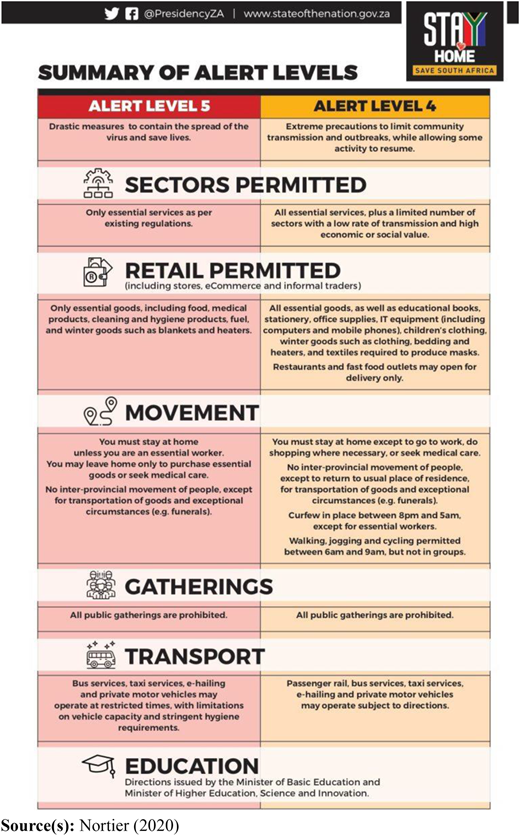
The Disaster Management Act (Act 57 of 2002) was the bases for the strict COVID-19 regulations in South Africa and not complying with the regulations thus resulted in prosecution (Viljoen, 2020). Since early 2020, many governments have had to introduce, and subsequently reintroduce, actions such as lockdowns and social distancing in response to the COVID-19 pandemic (Wang et al., 2021). The main strategies used to curb the spread of COVID-19, in South Africa and globally, are social distancing and social isolation, and South Africa's initial lockdown regulations were particularly stringent when compared to other developing countries (Gustafsson, 2020). These measures severely limited the daily activities of South Africans and restricted their movement. More specifically, during levels 5 and 4 of the South African National lockdown restrictions, no sale of alcohol and tobacco products was permitted, only essential service providers could go to work and only essential retailers were open. Individuals were not allowed to leave their homes, except to shop for essential items, unless they had a special permit. No visitors or social gatherings were allowed, no travel between the South African provinces was permitted and schools and day-care facilities closed. During level 4, some activity was allowed, for example, exercise in public was limited to 6–9 am daily in a 5-km radius from one's home (Friedman, 2020). Figure 1 below provides an example of the crisis communication from the Government to the public.
The UN Human Rights Office has raised fears about the unwarranted use of force employed in some countries to impose COVID-19-related lockdown regulations (Batohi, 2020). In addition, South Africans are facing the consequences of state capture under the previous President (Jacob Zuma) (Arun, 2019). The loss of trust in the local government is just one of the consequences of state capture (Alence and Pitcher, 2019). State capture and lack of trust reminisce alienation, which refers to the sense of segregation felt by people, based on their subjective state of mind (Seeman, 1959). Research confirms that a lack of trust corresponds with heightened feelings of alienation (David and Nită, 2014). In general, citizens comply with governmental COVID-19 restrictions for various reasons, such as concern about the crisis or because they believe the government is implementing appropriate regulations (Lalot et al., 2022). However, as a result of state capture and resulting alienation, many South Africans saw these regulations as threats to cause fear and political power abuse aimed at taking away South Africans' power instead of measures to protect the public in the fight against COVID-19. However, the health measures' (e.g. social isolation) effectiveness depends strongly on whether citizens comply (Islam et al., 2020), and low political trust is likely to result in lower compliance (Tyler, 2001). The beforementioned therefore highlights the important role that governments' communication strategies and policies play during a health crisis, amidst low levels of trust and high levels of alienation.
Although they were deemed necessary to control the spread of COVID-19, these lockdown regulations and the summary format of communication left many people confused (for example, the public was unsure about what an “essential service” is), undermined the public's social activities and relationships and, as a result, their impact on the public's mental health and overall well-being cannot be ignored (Loades et al., 2020; Nausheen et al., 2007). Without social connection and support, both of which are restricted by COVID-19 lockdown regulations, the impact of emotional and economic stressors on well-being is heightened (Cao et al., 2020). In addition, the public experiences vulnerability when they lack personal control and thus experience a state of powerlessness (Baker et al., 2005). The public often responds to vulnerability with coping strategies (Baker et al., 2005). Therefore, when the public experiences powerlessness due to lockdown restrictions imposed by governments (even if those restrictions are for the sake of survival), they may feel vulnerable and enact coping strategies.
Yet, while attention is increasingly being paid to the consequences of COVID-19 on mental health, the number of international studies on COVID-19's effects on quality of life (QoL) is still limited (Epifanio et al., 2021). The lockdown restrictions imposed by governments due to the coronavirus pandemic could impact the overall wellness and QoL of individuals (Epifanio et al., 2021) as the situational dynamics in a crisis situation influence people's emotional states (Wei and Kim, 2021). Furthermore, negative emotions are frequently found among people in a crisis (Zhu et al., 2021). These negative emotions, and their impact on the public's QoL, shape the public's communication behaviour outcomes (Harrison-Walker, 2019; Lubbe and De Meyer-Heydenrych, 2019), as various coping strategies are utilized. For example, help-seeking and providing help are typical reactions to a crisis that enable social connection to cushion the negative emotions of isolation (Van Bavel et al., 2020). This study responds to the call for more research to understand crises from the public stakeholder perspective, including social media interaction and content sharing (Smith et al., 2018). Therefore, this study examines crisis communication behaviour with specific reference to crisis coping strategies as operationalized in information-sharing, support-seeking and negative word-of-mouth (WOM) from a public stakeholder perspective.
Crisis communication is one of the most researched areas in the public relations domain (Kim and Jin, 2016). Although there is existing research on past pandemics and their likely effects, there is to our knowledge, a dearth of research on the loss of power experienced during a crisis of such magnitude as the COVID-19-related lockdown restrictions or on such restrictions' effects on QoL and resulting crisis coping strategies. The present study thus seeks to address this gap by contributing to (a) the sparse research on crisis communication management from a public perspective, (b) adding to the often neglected literature pertaining to the human and social aspects of a crisis and resulting crises communication coping strategies, (c) focussing on emotional states of citizens and specifically including a dual perspective adding to both adaptive and maladaptive coping literature and (d) stakeholders' own control over the situation (Diers-Lawson et al., 2021). Thus, by investigating the potential loss of power the public experience during a crisis we are contributing to both crisis communication and stakeholder control literature as well as extending the applicability of the alienation theory, especially the often overlooked area of powerlessness. Finally, on a practical level, our findings provide insights to governments on the public discourse surrounding health crisis communication, which is beneficial in developing future effective health communication strategies in times of crisis. Furthermore, these insights may better equip governments to deal with policies related to community engagement and citizen participation during a pandemic.
The next sections will highlight alienation, QoL and crisis coping literature, research methodology and results, then conclude with the discussion, implications and limitations of the study.
2. Literature review
Situational Crisis Communication Theory (SCCT) is often used as a framework in a crisis situation to assist firms in identifying the most effective crisis communication response strategy (e.g. rebuilding, diminishing, denying and/or bolstering), given a certain type of crisis (Coombs, 2007). However, given the complexity of the COVID-19 health crisis and the resulting unprecedented impact on all stakeholder groups, the COVID-19 pandemic and resulting government communications and regulations do not neatly fit into any of the existing categories or strategies, necessitating a novel approach.
The main premise of crisis communication is using response strategies in a way to appeal to the public, to ensure a positive effect on their perceptions (Benoit, 1995). Thus, by investigating the public's reaction in terms of crisis coping strategies, this study will enable corporates (such as governments or health agencies) to use a more appropriate crisis communication response strategy in the future. Since cooperative crisis communication provides explanations of the crisis and the action being taken, the public must first accept these, for communication efforts to be successful (Coombs, 2007).
The public's ability to interact with others and work impacts their household and personal life (QoL) during a crisis. Therefore, there is a desire to understand and predict how the crisis could affect them and how they need to adjust (Hyland-Wood et al., 2021). The Government is expected to facilitate and enable empowerment by providing people with the power to take control and manage their emotions and the resulting impact on their QoL through various crisis coping strategies.
However, enforcing very stringent lockdown regulations and not communicating effectively during the COVID-19 crisis, may cause feelings of alienation instead of the intended empowerment.
2.1 Alienation theory
The concept of alienation refers to a discrete kind of psychological ill relating to a challenging separation between the “self” and “others” that belong together (Leopold, 2018). An individual's feelings of alienation thus refer to a psychological state and are measured based on the presence of certain attitudes and feelings (Allison, 1978). Although alienation theory has mostly been applied to experiences of work, alienation can also shed light on the public's experiences of passivity and disconnection in their leisure time (Southerton, 2011).
Alienation has been conceptualized in various manners in the behavioural sciences and in marketing (Durand and Lambert, 1980). The societal domain's meaning of alienation is appropriate for this research as it refers to an individual's sense of separation from other beings. Two main schools of thought on alienation are notable. The first views alienation as “an objective social condition” with an objective set of societal processes with subjective repercussions for the individual. The second considers alienation as “a subjective individual condition” – thus a subjective phenomenon with objective causes in the societal macrostructure (Geyer and Schweitzer, 1976; Johnson, 1973). The latter viewpoint is applicable to this study, as well as, more specifically, the point of view of Seeman (1959). Seeman's social-psychological view on alienation entails a subjective sense of exclusion triggered by an external social cause (1959). In this sense, alienation refers to the sense of segregation felt by an individual, based on their subjective state of mind with various dimensions: social isolation, powerlessness, meaninglessness, self-estrangement and normlessness (Seeman, 1959).
Powerlessness, derived from alienation theory, can be defined as “expectance or probability held by the individual that his own behaviour cannot determine the occurrence of outcomes or reinforcements, he seeks” (Seeman, 1959, p. 784). Given the global scale of the COVID-19 crisis and the government-imposed lockdown regulations as a result thereof, we argue that the public was ultimately left with the feeling that they could not do anything about the outcome – a feeling of powerlessness.
When the public feels alienated, they are more likely to feel powerless (Allison, 1978). Individuals' feelings as a result of a lack of control and powerlessness, are well documented, especially when it comes to working, but these feelings also affect individuals' lives and well-being more generally (Sashkin, 1984). Thus, applying alienation theory, one could argue that, when the public feels separated from others and their environment due to COVID-19 lockdown restrictions, this undesirable separation leads to negative emotions such as feeling powerless, which could in turn lead to reduced levels of QoL. In addition, these negative effects on QoL could then result in various crisis coping strategies such as information-sharing, negative WOM, or support-seeking, in an attempt to deal with the alienation.
Powerlessness as a conceptualization of alienation is therefore the focus of this study and discussed in more detail in the next section.
2.2 Powerlessness
Bandura (2018) argues that self-efficacy theory, where self-efficacy refers to an individual's personal belief in the capabilities to “realise given challenges”, is entrenched in social cognitive theory. Agency is one of the main tenets of social cognitive theory (Bandura, 2006, 2012, 2018). Hereby, humans operate autonomously within the reciprocal parameters imposed by intrapersonal, behavioural and environmental determinants (Bandura, 2006). While self-efficacy is thus associated with empowerment, which could result in positive word-of-mouth (Park and Kim, Ahead-of-print) and social media efficacy (Snyder and Cistulli, 2020), which in turn may thus result in online information-sharing, there must be an opportunity for agentic and autonomous behaviour to allow for perceived self-efficacy. Research concerning stakeholders' perceptions of crisis communication marks the importance of considering stakeholders' own control over the situation (Diers-Lawson et al., 2021). Accordingly, the volition and agency an individual has in response to crisis communication should be noted to develop effective crisis communication strategies. Terms such as powerlessness and alienation are often used to reflect the absence of empowerment (Zimmerman, 2000) and perceived self-efficacy. For this study perceived powerlessness is defined in a similar fashion to Lim et al. (2020), whereby it refers to the public's behaviour including their sense of lack of control over internal feelings and external events or outcomes.
Power and powerlessness figure prominently in alienation theory (Maly et al., 2013). While much emphasis has been placed on power, powerlessness has received little attention (TenHouten, 2016). Lukes (1974) distinguishes between various levels of powerlessness: powerlessness in the context of making decisions, a lack of power to decide what is to be decided and powerlessness in the setting of being dominated. A crisis situation such as COVID-19, where governments imposed mandatory lockdown restrictions with limited communication, is a perfect example of all three levels of powerlessness.
Williams et al. (2020) found that the “loss” pertaining to various aspects of the public's lives was a recurring theme during COVID-19 restrictions, resulting in a feeling of loss of power, as the public had no power over the type, length and enforcement of these restrictions. Emotions such as pessimism and fear are embedded in the experience of powerlessness (Scott, 2000; TenHouten, 2016) and could therefore impact an individual's QoL. This was confirmed by Al Dhaheri et al. (2021), who reported that individuals felt helpless and reported a decrease in QoL due to COVID-19. Furthermore, research suggests that social distancing restrictions impacted on individuals' mental health due to the feeling of alienation (Zhu et al., 2021) and could therefore impact the public's QoL negatively.
2.3 Quality of life (QoL)
The psychological effect of the COVID-19 pandemic on the public (Chen et al., 2020; Li et al., 2020), also affecting QoL (Al Dhaheri et al., 2021) has been researched. Also, studies have suggested that public health emergencies can have many psychological effects on humans (Mei et al., 2011). Conceptually, the differentiation between well-being and QoL may become difficult to disentangle (Malhotra, 2006). This is due in part because QoL is widely investigated across disciplines on human existence (Barcaccia et al., 2013) and therefore to this day “means different things to different people”, as stated in the seminal paper by Sirgy et al. (1982).
A cross-disciplinary review of QoL revealed the necessity to consider psychological, spiritual, social and physical health as domains in QoL (Barcaccia et al., 2013). For this study, we are thus considering QoL across domains as an overall indicator of general well-being (Epifanio et al., 2021), defined as “an individual's perception of their position in life in the context of the culture and value systems in which they live and in relation to their goals, expectations, standards, and concerns” (World Health Organization, 2021). From this definition, it is evident that QoL is a complex construct. Gatersleben (2001) used sixteen variables across domains to measure QoL: leisure time, social relations, education and development, pleasure, material beauty, work, health, privacy, income, social recognition, comfort, safety, social justice, environmental resources, freedom/control and nature. These domains in terms of the aforementioned variables were deemed comprehensive enough for use in this study.
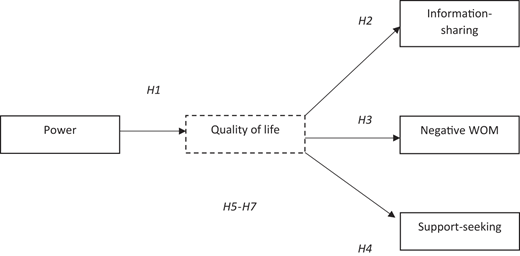
Scott et al. (2004) found that loss of control could lead to feeling powerless and have a negative influence on QoL. An individual's perceived sense of control (power) has the potential to impact their physical QoL and overall mental well-being (Cheng et al., 2013; Kennedy et al., 1998). For example, a sense of powerlessness leads to a decreased QoL and increased anxiety (Brown et al., 2015). Therefore, it is hypothesized that:
There is a direct association between power and QoL during government-imposed lockdown restrictions.
In addition, the impact of the loss of power on the public's QoL could result in various crisis coping strategies in an attempt to deal with the crisis and its consequences.
2.4 Crisis communication coping strategies
Baumstarck et al. (2018) reported a link between the QoL of caregivers and patients and their use of coping strategies. Consequently, in times of crisis, QoL can be associated with coping strategies. Crises and disasters inevitably occur, and these events impact the public's overall well-being as they are often characterized by change, uncertainty and complications (Minihan et al., 2020). Individuals' information-processing, sense-making and response to information are different during a crisis, and individuals may even exhibit exaggerated communication behaviour (Glik, 2007).
Although communication behaviour types abound (Zhang et al., 2018), the communication behaviour of the public during a crisis is often reflective of the coping strategies they utilize. In order to cope in a time of crisis, individuals follow either a problem-oriented, emotion-oriented, or perception-oriented coping strategy, reflective of Pearlin and Schooler's (1978) understanding of coping. An example of each type of crisis coping strategy was included for investigation: information-sharing (problem-oriented), negative WOM (emotion-oriented) and support-seeking (perception-oriented). These three were chosen given the limited scope of a single study and all three could be viewed as attempts to cope with feeling powerless and will be highlighted as such.
2.4.1 Information-sharing coping
The flow of information considerably impacts the situation during a pandemic (Yasir et al., 2020). The general popularity of social media, in addition to the heightened use of online communication during the COVID-19 pandemic (Li et al., 2020) and the lack of research explaining how social media is used to communicate during a public health crisis (Wang et al., 2021), influenced the decision to focus on online information-sharing in this study. Social media and online communication were even more prominent during the COVID-19 pandemic than before, as people were unable to leave their houses for non-essential purposes and were prohibited from gathering in person (Lisitsa et al., 2020).
During a crisis, there are often a large number of communication channels with sometimes conflicting information (Glik, 2007), such as was evident during the COVID-19 pandemic, and individuals have to make sense of this surfeit of information. Information-sharing empowers the public to make sense of information from a multitude of sources (Yang et al., 2013). In addition, information-sharing such as reposting could be regarded as a type of prosocial behaviour, which means the intent of the information-sharing is to help others (Lee et al., 2015). It could be argued that, in order to cope with the alienation felt as a result of lockdown restrictions, helping others, but also trying to make sense of the information is an active problem-orientated coping strategy. An association between QoL and problem-oriented coping strategies such as information-sharing was previously uncovered (Gattino et al., 2015). Therefore, it is hypothesized that:
There is a direct association between QoL and information-sharing during government-imposed lockdown restrictions.
2.4.2 Negative WOM coping
WOM involves communicating information about a brand, a product, or a company with other people in a non-commercial way (Taghizadeh et al., 2013), while negative WOM involves communicating undesirable and unflattering messages. It is significantly influenced by the public's emotions. A consumer who has negative emotions owing to dissatisfaction, for instance, is more inclined to share negative rather than positive messages (Teng et al., 2014). Several factors could contribute to negative WOM toward the government during a pandemic or crisis. For example, Government guidance on social distancing and isolation might be perceived as unclear at the start of a crisis or the Government might be seen to be “politicizing” the crisis, leading to a lack of trust in the Government (Williams et al., 2020). All of these factors impact the public's emotions, which may result in negative WOM as a form of venting. The relationship between QoL and venting is confirmed, as individuals with lower QoL made more use of venting as a coping strategy (Harju and Bolen, 1998). Furthermore, in a health setting, avoidant coping (of which negative WOM is an example) is related to lower QoL (Kershaw et al., 2004). Therefore, it is hypothesized that:
There is a direct association between QoL and negative WOM during government-imposed lockdown restrictions.
2.4.3 Support-seeking coping
Different motivations for crisis support-seeking exist, such as connecting with a community and nurturing emotional support (Fraustino et al., 2017). Social support also serves as a “buffer” for individuals in times of stress (Cohen and Willis, 1985), especially from loneliness and isolation (Lee and Goldstein, 2015). Support-seeking is a way of looking for social support through interactions and communication with other people (Albrecht and Adelman, 1984). Various frameworks exist to classify social support, but we used a simplified classification as proposed by Luo et al. (2020): emotional support (e.g. empathy) and instrumental support (e.g. practical help and resources). Given the emotional impact of feeling powerless on an individual's QoL during a crisis, emotional support-seeking was the focus of the study.
Social media provides an outlet to express emotions and a way to try and make sense of and cope with, crises (Smith et al., 2018). It has also been found that online help-seeking assists individuals in reducing anxiety and harnessing collective power to cope with risks during a disaster (Mukkamala and Beck, 2018). Wu et al. (2020) found that students' mental health was impacted by COVID-19 and that they required social support as a result. Social support could act as a buffer that offers a safety net against the negative effect of a crisis on mental health (Fernandez et al., 2015). Furthermore, QoL and social support are related (Leung and Lee, 2005). Therefore, it is hypothesized that:
There is a direct association between QoL and support-seeking during government-imposed lockdown restrictions.
Table 1 presents an overview of how we operationalize the different types of coping strategies related to crisis communication behaviour in this study as discussed in sections 2.4.1 to 2.4.3. In addition, coping strategies can either be categorized as active adaptive or avoidant maladaptive. Active adaptive coping refers to all strategies where individuals accept and dynamically attempt to deal with their problem, such as active problem-solving and seeking support. Avoidant maladaptive coping refers to avoiding dealing with problems, such as denial, emotion-oriented coping and behavioural disengagement (Kershaw et al., 2004).
As evident in the previous discussions there are connections between power, QoL and crisis coping strategies.
2.5 Interrelationships between power, QoL and crisis coping strategies
Based on alienation theory's underpinnings of a relationship between an individual and the environment where separation occurs which is undesirable and has negative consequences (Geyer and Schweitzer, 1976), the nationally instituted lockdown in South Africa as a result of COVID-19 which restricted movement, behaviour and interaction in order to reinforce social distancing should result in lower levels of power among the public, who lose volition over daily activities, to a large extent. In South Africa, similar detrimental effects on QoL as found in other countries (Van Ballegooijen et al., 2021; White and Van Der Boor, 2020) are to be expected, as illness and pandemics impair QoL (Kwek et al., 2006). In addition, the powerlessness associated with alienation impairs the public's well-being (Sashkin, 1984). A sense of powerlessness decreases QoL (Brown et al., 2015) which, in turn, is associated with coping strategies (Baumstarck et al., 2018). Following the alienation theory, one could argue that feeling powerless impacts the public's QoL and, in order to manage the stress associated with COVID-19 lockdown regulations that affect their QoL, the public devises strategies to cope with the alienation and the effects thereof. With regard to lockdown restrictions due to COVID-19, QoL may thus be a mediator through which power is associated with coping strategies such as information-sharing, negative WOM and support-seeking. It is therefore hypothesized that:
QoL mediates the association between power and information-sharing during government-imposed lockdown restrictions.
QoL mediates the association between power and negative WOM during government-imposed lockdown restrictions.
QoL mediates the association between power and support-seeking during government-imposed lockdown restrictions.
The conceptual framework based on the hypothesized relationships are presented in Figure 2 below.
3. Methodology
3.1 Sample
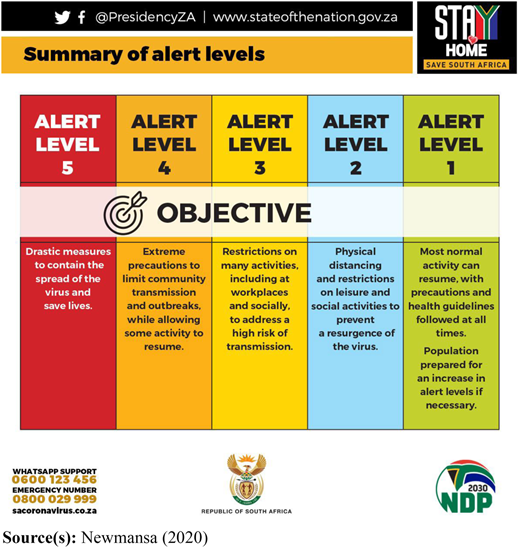
Using a positivist research philosophy, the study employed an exploratory, quantitative research design with a study population consisting of South Africans over the age of 18 years who experienced levels 4 and 5 (Level 5 - the highest levels of lockdown measures with the strictest regulations, with level 1 being the lowest level) of the South African national lockdown restrictions during 2020. Figure 3 illustrates the Government's communication with regard to the five COVID-19 lockdown restriction alert levels imposed on South Africans.
3.2 Data collection
The online questionnaire was distributed using convenience sampling to a public panel via Qualtrics after obtaining ethical clearance and when pre-testing did not reveal significant problems. Given that COVID-19 was categorized as a global pandemic, coupled with the fact that the data collection happened just as South Africa moved out of level 4 in 2020, one could argue that the experience was salient and recent enough, supporting a retrospective experience approach (Harrison-Walker, 2019).
3.3 Measurement instrument
The questionnaire included questions pertaining to demographics and specifically measured power, QoL and crisis communication coping strategies (information-sharing, negative WOM and support-seeking). Seven-point Likert scales were used for all scales adapted from existing studies to reflect COVID-19 lockdown restrictions. Power was measured with the three-item scale from Roseman et al. (1990). QoL was measured with sixteen items adapted from Gatersleben (2001) using a seven-point Likert scale where respondents indicated whether their life had improved or got worse, with scale points ranging from “Extremely improved” (7) to “Extremely worsened” (1). Crisis communication coping strategies scales were adapted from Hilverda and Kuttschreuter (2018).
3.4 Data analysis
Descriptive statistics were calculated in SPSS Version 27. The reliability and validity of the measures were analyzed through confirmatory factor analysis in AMOS Version 27. To test the hypotheses, structural equation modeling (SEM in AMOS Version 27) was done. Bootstrapping with the bias-corrected confidence interval was used owing to non-normal data to correct for the possible inflation of results (Enders, 2005).
The model fit indices included the normed Chi-square, with guidelines ranging between a 2:1 and 3:1 ratio (Kline, 2011), the comparative fit index (CFI) and Tucker–Lewis index (TLI), where a value of 0.90 or higher is satisfactory (Bagozzi and Yi, 1988). Finally, the root mean square error of approximation (RMSEA) with values ranging up to 0.08 was considered appropriate (Van de Schoot et al., 2012).
4. Results
4.1 Sample profile
A sample size of 371 was realized, which comprised an almost equal number of males (50.1%) and females (49.9%). The youngest respondent was 20 years old and the oldest respondent was 75 years old. Just more than half of the respondents (53.6%) believed that they were at high risk to contract COVID-19, and the majority of respondents (86%) indicated that their personal health is very important to them. Due to the lockdown restrictions in South Africa at Levels 5 and 4, the majority of respondents incurred financial losses (89.4%).
4.2 Reliability, validity and measurement model
The convergent and discriminant validity of the scales was assessed using confirmatory factor analysis. Five items from the quality-of-life scale and three items from the information-sharing scale with low standardized weights negatively affecting reliability were removed from further analyses. The average variance extracted (AVE) for all factors was above 0.5. The standardized weights (S.W.) and AVE for all factors are presented in Table 2.
From Table 2 it is evident that all values for scale reliability, that is Cronbach's alpha and Jöreskog's rho, were above 0.7, indicating good reliability (Bagozzi and Yi, 1988). Furthermore, the AVE for all factors was above 0.5, an acceptable amount of variance explained (Fornell and Larcker, 1981), indicating the convergence in measurement (Bagozzi, 1981). The mean, SD, square root of the AVE and correlations for the constructs of our study are provided in Table 3.
As the square root of the AVE was higher than the correlation between two factors for all constructs presented in Table 3, discriminant validity is evident (Fornell and Larcker, 1981). The measurement model was found to fit the data acceptably. The relative Chi-square (CMIN/df = 503.257/242 = 2.080) was below 3. The CFI (0.940), TLI (0.932) and RMSEA (0.054, [LO90 = 0.047; HI90 = 0.061]) indicated a good model fit.
4.3 Structural model
After adding structural paths to the model, the structural model was found to fit the data acceptably. The relative Chi-square (CMIN/df = 418.780/243 = 1.723) was below 3. The CFI (0.960), TLI (0.954) and RMSEA (0.044, [LO90 = 0.037; HI90 = 0.051]) indicated a good model fit.
4.4 Results of hypothesis testing
The direct hypothesized relationships (H1 to H4) as examined using the structural equation model are presented in Table 4.
From Table 4 it is evident that the strongest relationship is the direct positive relationship between power and QoL. Furthermore, a direct positive relationship between QoL and information-sharing is evident. A direct negative relationship exists between QoL and negative WOM. A direct positive relationship between quality of life and support-seeking is also evident. Hereby H1 to H4 can thus be accepted. Table 5 presents the results of the mediation analyses for H5 to H7.
From Table 5 it is evident that QoL is a mediator between power and crisis coping strategies. Specifically, power has a significant positive indirect association with information-sharing through QoL, albeit a very small effect (0.063). Similarly, a significant albeit small (−0.076) indirect association between power and negative WOM is evident, although this indirect relationship is negative. QoL also mediates the association between power and support-seeking (0.113). H5 to H7 can thus be accepted. This study suggests that, for some, the isolation accompanying COVID-19 lockdown restrictions may have had negative impacts on their power and QoL, resulting in various forms of crisis strategies in an attempt to cope.
5. Discussion and implications
The Government-imposed lockdown restrictions as a result of the COVID-19 pandemic provide a unique opportunity to explore the public's crisis communication coping behaviour. QoL signifies an important gauge of global well-being, especially at this particular point in time when nearly all aspects of life have been disrupted (Epifanio et al., 2021). This study specifically considered how the alienation experienced as a result of lockdown restrictions affects the public's power, QoL and crisis coping strategies.
The practical and theoretical implications of the study offer insights into understanding crisis coping strategies from a public perspective which may benefit health crisis communication policies. It is evident that the alienation theory is an applicable theoretical underpinning to investigate public stakeholders' crisis coping strategies. Our findings underline the importance that pandemic risk communication requires continuous engagement with the public (Hyland-Wood et al., 2021) and adds to the limited risk and communication literature from a stakeholder perspective. Using stakeholder crisis coping strategies as input to corporate crisis communication management adds an additional layer of understanding to existing literature.
Theoretically, this study explores possible crisis coping strategies in the relationship between the Government and the public when a public health crisis arises. This advances research pertaining to crisis coping strategies where power inequality results in one party (the public) experiencing alienation and consequently powerlessness because of government-imposed lockdown restrictions. In addition, the lockdown restrictions resulted in financial losses for most of our respondents which may have further affected their feeling of powerlessness and QoL. For governments faced with tough decisions as public health crises may occur amidst ongoing inquiries of State Capture, as under the previous South African President (Arun, 2019), the study shows how managing the public's experience of having power may benefit their QoL, which in turn could result in active adaptive crises coping strategies (information-sharing and support-seeking), given the significant associations found between QoL and information-sharing, as well as QoL and support-seeking. Moreover, using the assumptions embedded in alienation theory (Geyer, 1976) combined with coping strategies (Pearlin and Schooler, 1978), we provide evidence that information-sharing could be a public problem-oriented crisis communication strategy used to assist others (Friedland et al., 1996) in understanding a crisis, while support-seeking could be a public perception-oriented coping strategy that aided in comforting the public. Thankfully the use of the Internet and social media allowed the public to interact via electronic means instead of face-to-face.
Furthermore, a view on public maladaptive (Rabkin et al., 1993) emotion-oriented crisis coping was also provided by considering whether the public would engage in negative WOM about the Government during the lockdown restrictions, as the restrictions were beyond the control of the public. Although the Government was fast to address the physical concerns they negated the psychological impact as evident in the public feeling powerless and engaging in negative WOM as underscored in the significant negative association between QoL and negative WOM about the Government. For this reason, the findings provide policy implications as discussed below.
This study provides a novel perspective on the public as a stakeholder in government health crisis communication. During crises where a state of emergency is declared forcing public compliance, governments need public support and should prevent uprisings. The public can become an influential credible and vocal partner to support and share information regarding the health crisis, more so in situations where the public lacks trust in the Government as was the case in South Africa. Public discourse should thus support Government health crisis communication, liaising with the Government instead of spreading negative WOM about the Government. Findings of the positive association between power and QoL suggest that governments should ensure that the public feels empowered and emphasize the benefits to QoL of necessary temporary sacrifices (i.e. alienation due to imposed lockdown restrictions) during a health crisis. Given that the results support the mediating role of QoL between power and crisis communication coping strategies (information-sharing, negative WOM and support-seeking), QoL could be the vehicle through which governments can enhance and more effectively use various crisis coping strategies that the public is already employing, to their advantage. For example, by designing health crisis communication policies to empower the public and to communicate benefits to QoL, governments thereby ensure community engagement necessary to let the public feel empowered and may create citizen participation in support of the Government policies, consequently minimizing negative WOM about the Government.
Feeling powerless is a negative emotion that impacts not only QoL directly, but also various coping strategies indirectly, highlighting the importance of addressing this emotion of the public during a crisis. This could be accomplished by ensuring that the Government communicates health crisis communication restrictions with compassion based on a real understanding of the cause and impact of the public's crisis emotions (Kim and Jin, 2016) including feelings of powerlessness and overall QoL. Therefore, the findings from this study could assist in ensuring that governments' health communication crisis policies are not only compassionate but based on a real understanding of how the public feels about the crisis and more importantly governments' actions. Effectively addressing the public coping strategies in a cohesive Government health crisis communication strategy, instead of depending on the public to find or create their own communication outlets, could improve compliance with crisis health restrictions and ultimately improve the success rate of addressing the health crisis at hand. More specifically, empowering the public to act is important during a health crisis. However, guidance on how to act is only one part of the equation as people also need to be able to act as requested. In the context of self-efficacy (power), messages that focus on the public's capacity to act (For example, “Your safety is in your hands-remember to wash your hands”, “You can help curb the spread of the virus/pandemic), are preferred to messages that imply that the public is only a recipient of instructions, over which they have no control (For example, “You must adhere to government health regulations”). The public experiences vulnerability when they lack personal control and thus experience a state of powerlessness (Baker et al., 2005); thus, messages such as #youareincontrol or #withyourhelpwecanbeatthis could assist in limiting this vulnerability. To curb the alienation felt during a crisis, messages focused on restoring perceptions of separation such as “We are in this together” could prove to be useful. Such community engagement strategies should result in sustainable outcomes and deepen relationships and trust between the public and governments.
Second, citizen participation may be created using gain and loss frames, commonly used to encourage perceptual and behavioral change (Krishna and Kim, 2019), which could also be effective in the Government's communication with the public (Zhou and Moy, 2007). While gain framing emphasizes the benefits of compliance, loss framing emphasizes the disadvantages of noncompliance (O'Keefe and Jensen, 2007). Specifically, findings in the South African context with low trust in the Government, as well as public feelings of alienation and powerlessness due to lockdown restrictions, would necessitate policies and communication messages using gain framing in health crisis communication. For example: “Protect yourself and the ones you love by following these three easy steps: wash your hands, wear a mask and keep your distance” instead of “Not wearing a mask or adhering to social distancing will result in prosecution”. Steering away from over-emphasizing the negative repercussions in health crisis communication campaigns, such as being prosecuted if non-compliant, which feeds the public negative emotions and further erodes trust, will also benefit policy stakeholders.
The public has been an important part of the collective response to the COVID-19 pandemic (Levy, 2020). Facing a common threat can elicit a sense of togetherness as seen in the information-sharing and support-seeking coping strategies confirmed in our findings. A critical role of government during a crisis is to appeal and to harness public solidarity and resilience, as this has a positive impact on well-being (Selvanathan and Jetten, 2020). Hereby government can utilize such active adaptive public crisis coping strategies as further vehicles for information-sharing and social support during a crisis. It also reveals further possibilities for harnessing the power of the public's communication behaviour via social media as a response to a global crisis to disseminate information and restore balance. Given the growing popularity of social media and the extensive use thereof during COVID-19 (Huang et al., 2020) consideration must be given to policy pertaining to how these platforms can be better utilized in times of crisis.
The Government could also attempt to show the long-term benefits for QoL which short-term imposed lockdown restrictions would have, in an attempt to reap the benefits of adaptive coping strategies (Kershaw et al., 2004), such as information-sharing and support-seeking, while avoiding negative WOM about the Government. Should QoL decrease, the public who feel powerless would likely engage in negative WOM about the Government, which could lead to political unrest. For the development of crisis preparedness programs for the future, it is therefore of utmost importance that governments manage the public's QoL during a crisis, as well as perceptions around QoL. The COVID-19 crisis has severely tested governments on their ability to formulate clear, consistent messages and communicate in an empathetic way during the crisis (McGuire, 2020). Findings suggest that the South African Government was not very successful in this regard as the public sample engaged in negative word-of-mouth (regarding the Government) as a crisis coping strategy. COVID-19 does not only challenge a government's decision-making but also how they communicate with the public during a health crisis (McGuire, 2020). The Government could use communication explicitly linked to multiple domains of QoL as operationalized by Gatersleben (2001). For example, a message from the government could be: “WhatsApp your BFF in lockdown #stayconnected.”
Crises, emergencies and disasters happen. In summary, government communication aimed at the alleviation of the perception of perceived alienation and providing some power to citizens could minimize the impact of a crisis on the public's QoL and ensure that the fragile trust between government and society does not deteriorate further in time of a crisis. Consequently, the public may adhere to government-imposed regulations for self-protection instead of fear of prosecution. For governments, in especially developing countries, using more effective crisis communication strategies could also prevent further crises during a health crisis such as social strife and civil unrest.
6. Limitations and direction for future research
Despite this study's contributions to the field of public crisis-coping communication strategies, it also has a number of limitations. Given the time sensitivity of the outbreak, a convenience sample was used at a single point in time with a limited number of variables. As the COVID-19 crisis continues, its long-term effects also need to be investigated. Future research could investigate other crisis types and other coping strategies and their effect on power, QoL and crisis communication. We hope that our study provides insight into communication during COVID-19, and as suggested by Jong (2020), that it may help to improve our learning from this crisis and support preparation for future crises.
This work is based on research supported by the University of Pretoria's Capacity Development Programme (UCDP) by the Department of Higher Education and Training (DHET) in South Africa, as well as by the National Research Foundation (NRF) of South Africa (Grant holder: Dr. J Verbeek; Number: 117764). The opinions, findings, and conclusions or recommendations presented in this study are those of the authors, and the DHET and the NRF accept no liability whatsoever in this regard. Dr. Verbeek is acknowledged for her funding contribution.