As project management develops in the twenty-first century, new competencies are increasingly vital for project managers. This study investigates the evolution of project manager competencies from 2000 to 2024, emphasising shifts beyond traditional models. It also seeks to propose a theoretical framework to explain these changes.
A systematic literature review (SLR) was conducted in accordance with PRISMA guidelines, analysing 90 scientific publications. The study addressed three research questions that explore the development of project managers' competencies over time. A critical and comparative analysis was employed to assess the content.
The analysis indicates a rise in publications on competence, increasing from 18 in 2000–2009 to 46 in 2020–2024. The most notable change was observed in the People domain, where fundamental transformational and digital approaches have emerged. In the Practice, competencies shifted from highly standardised methods to more flexible and adaptable ones. The Perspective area experienced a redefinition of professional identity and responsibilities. Furthermore, project managers have gained competencies that extend beyond the traditionally recognised set.
The findings suggest that certification standards and curricula should be revised to include transformational competencies aligned with the complexity of modern projects. The International Project Management Association (IPMA)-VUCA-dynamic capabilities view (DCV) model was introduced to explain observed shifts in the desirable competencies of project managers.
The project manager's competencies developed in a nonlinear manner, surpassing the standard IPMA ICB 4.0 framework. They were influenced by an unpredictable environment. This process is best explained through the DCV, which operates within the VUCA context and supports ongoing reconfiguration of competencies aligned with the IPMA framework
Introduction
As globalisation, digitalisation and stakeholder demands increase amid growing environmental uncertainty (Bennett & Lemoine, 2014), the role of the project manager (PM) constantly evolves. Modern project managers must not only manage traditional elements such as budgets, schedules and scope but also develop soft competencies, strategic thinking and digital expertise. These shifting circumstances present considerable challenges for both project management practice and theory.
Despite increasing interest in PM competencies, few researchers adopt a systematic approach to their development over time. Project manager competence profiles are usually analysed within sectoral (Ribeiro, Amaral, & Barros, 2021), regional (Li, Sun, Shou, & Sun, 2020) or methodological frameworks (Amaro & Domingues, 2023). Furthermore, some studies focus more on organisational capabilities than personal competencies, rarely examining how these competencies evolve (Helfat & Peteraf, 2015; Cristofaro & Lovallo, 2022). The importance of this gap has increased amid rapid technological and organisational shifts, including the spread of agile methodologies, the growing role of artificial intelligence (AI) and the challenges introduced by the COVID-19 pandemic. Understanding how project manager competency frameworks develop is therefore essential for improving project management education, refining certification systems and increasing project delivery success.
This study aims to map the development of project managers' competencies from 2000 to 2024, highlighting the most significant changes. Using a multi-stage systematic literature review (SLR), the research identifies project manager competencies outlined in the literature during this period. This timeframe was selected to capture the intensification of globalisation processes at the turn of the century. It also encompasses the evolution from traditional through agile and hybrid methodologies, as well as emerging challenges of remote work and virtual team management.
The research explores three questions:
How has the project manager competency framework evolved from 2000 to 2024?
Which competencies have experienced the most significant changes in the twenty-first century?
What theoretical framework can account for the observed development of competencies?
Addressing these research questions, this study contributes to the literature in three main ways. First, it investigates the competencies of project managers from a temporal perspective (RQ1), moving beyond traditional cross-sectional methods to trace evolutionary patterns over two decades. Second, it identifies and analyses the most transformed competencies (RQ2), particularly incorporating the digital transformation process to observe evolving dynamics. This temporal approach enables an examination of how competencies develop in response to increasing environmental complexity and unpredictability. Third, it aims to explain the observed changes through a theoretical framework (RQ3). As a result, the analysis provides a basis for practical recommendations for management, educational institutions and certification organisations. Additionally, the paper introduces an analytical framework for future empirical research to update the competency profile of project managers, taking into account current strategic events and challenges.
This paper follows a standard structure, consisting of seven sections: an introduction to the project manager's competencies, a review of existing achievements in competencies research, a description of the systematic literature review methodology, presentation of the results and a discussion with conclusions and recommendations for future studies. A multi-stage literature review has been used, with the selection criteria and research phases outlined in the method chapter.
Theoretical considerations
Modern project management originated in the 1950s and 1960s, mainly within the defence and space sectors (Seymour & Hussein, 2014). Linear models as Waterfall and tools like PERT (Program Evaluation and Review Technique) and CPM (Critical Path Method), sought to optimise resources and schedules (Seymour & Hussein, 2014; Sirisha, Ramesh, Ramakrishna, Bisen, & Haralayya, 2024). These methods faced challenges with uncertainty, complexity and often overlooked interpersonal competencies, leadership, organisational context and stakeholder risks (Kerzner, 2017). Projects like Apollo contributed to a simplified view of project managers, primarily engineers without formal design backgrounds (Seymour & Hussein, 2014). Crawford (2005) observed that the paradigm assumed stable environments, limited communication and rigid hierarchies. Despite criticism (Koskela & Howell, 2002), competency models and management approaches remain influenced by technocratic and rationalist thinking (Pollac, 2007).
Over the years, broader thinking has led to new insights, such as viewing project management as a holistic discipline focused on efficiency, effectiveness and innovation (Jugdev & Thomas, 2002). Research shows an evolution from “hard” management systems to “soft” approaches that consider human and organisational factors. This shift influences perceptions of competencies, emphasising behavioural and strategic competencies while reducing the focus on technical and process competencies (Crawford, 2005). Pollac (2007) distinguishes between the “hard” paradigm, based on planning and control, and the “soft” paradigm, which addresses complexity and uncertainty. Kerzner (2017) identifies five levels of organisational maturity in project management, highlighting three development phases: pioneer (1960s-80s), growth (1980s-2000) and maturity (since 2000).
Perception of the role of the project manager
In today's organisations, project management is crucial for implementing strategies and encouraging innovation (IPMA, 2015). There's increasing demand for professionals who can manage stakeholder interests, cultural differences and communication challenges (De Moura et al., 2020). Project management institute (PMI, 2017) describes a project manager as responsible for achieving goals. In PRINCE2, they oversee product delivery (Bentley, 2010); in Agile, roles like Scrum Master or Product Owner support teams or shape the project's vision (Sverrisdottir, Ingason, & Jónasson, 2014).
The rise of agile and Scrum has transformed the traditional project manager's role, introducing new roles such as Scrum Master and Product Owner. The Scrum Master removes obstacles, while the Product Owner manages vision and priorities (Schwaber & Sutherland, 2020). This shift signifies a move from a single project manager to specialised roles.
In the 1990s, the project manager's role was mainly defined by a mechanistic approach, focusing on planning, organising and controlling tasks to meet goals within time and budget (Cleland & Ireland, 2002). This traditional view evolved as the discipline matured. Early twenty-first-century research highlighted the shift from “project administrator” to “team leader”, emphasising the growing importance of interpersonal competencies, leadership and acting as a “reflective practitioner” (Thamhain, 2004; Blomquist & Müller, 2006).
More recently, the role has broadened to include a strategic integration of organisational, technological and social subsystems. This indicates the project manager's role evolving into that of a digital transformer (Liu, Zeng, Papadonikolaki, Maritshane, & Chan, 2024). The COVID-19 pandemic hastened this transition, forcing project managers to adapt to remote teams and digital tools (Kulović, Kuzman, & Šakić, 2023). Increasingly, competencies related to AI and automation are becoming essential (Liu et al., 2024).
The increasing focus on sustainability and social responsibility (ESG – environmental, social and governance) has further broadened the competencies required of project managers. Now, PMs must consider sustainability standards during project planning and execution, including ESG factors (Silvius & Schipper, 2014). The literature highlights the evolution of the project manager's role from a specialist prioritising budgeting to a strategic leader managing change, coordinating teams and engaging stakeholders (Kerzner, 2017). This shift reflects rising project complexity and the need for visionary leadership.
A project manager oversees the entire project, requiring a blend of technical and interpersonal competencies that adapt to multicultural and changing environments (Müller & Turner, 2007). The development of project management theory has established standards of competence, with models outlining key competencies for effective management.
The concept of competency in project management
The theoretical roots of the competency movement can be traced back to McClelland (1973), who described competencies as underlying individual characteristics that differentiate high performers from average ones. Building on this foundation, Spencer and Spencer (1993) introduced the “iceberg model”, distinguishing between visible competencies (such as skills and knowledge) and deeper attributes (including traits, motives and self-concept) that drive superior performance. It means that skills are discrete abilities that form competency components. Later, Crawford (2005) adapted this perspective to the field of project management, proposing a three-dimensional model encompassing input (knowledge, skills and attitudes), behaviour (the practical application of these attributes) and output (performance results). Cheng, Dainty, and Moore (2005) expanded this by including organisational and environmental factors, emphasising adaptability in dynamic project contexts. Their model underpins modern competency frameworks, recognising project unpredictability and change.
Over the past 20 years, the idea of competencies in project management has shifted from a focus on technical skills to a broader understanding that includes adaptive, emotional and contextual skills (Crawford, 2005; Bourn, 2018). Today's definition, therefore, emphasises competencies as a combination of knowledge, skills, attitudes and behaviours essential for effective project delivery (Dzulkarnaen, Taksiah, & Ruhizal, 2014). This shift has emphasised emotional and cultural intelligence, which are vital for managing diverse and global teams (Clarke, 2010).
Contemporary research emphasises the influence of digital transformation and global events such as the COVID-19 pandemic on competency demands. As a result, project managers must cultivate competencies in human–AI collaboration, AI literacy and ethical AI decision-making (Kalina & Lohana, 2023), understanding when to rely on AI and when to trust human intuition (Brynjolfsson & McAfee, 2017).
Generational differences in project teams add complexity that demands new competencies. Project managers must understand the varying communication styles, motivations and job expectations of Baby Boomers, Generation X, Millennials and Generation Z (Zabel, Biermeier‐Hanson, Baltes, Early, & Shepard, 2017). Developing generational intelligence is increasingly essential for creating cohesive, multigenerational project teams (Urick, Hollensbe, Masterson, & Lyons, 2017).
The literature indicates that design competencies are diverse and dependent on context. A project manager's effectiveness relies on both their qualifications and their ability to adapt these to project challenges. Competence development is a continuous process that considers evolving organisational, environmental and technological needs (Moradi, Kähkönen, Klakegg, & Aaltonen, 2020).
Standards of competence
In the specific context of project management, it is crucial to distinguish between scientific constructs and professional standards. While scientific models (e.g. McClelland, 1973) focus on describing the psychological and behavioural mechanisms of effectiveness, professional bodies such as IPMA (International Project Management Association) and PMI have codified these into normative frameworks. These standards (IPMA Competence Baseline – IPMA ICB; Guide to the Project Management Body of Knowledge – PMBoK Guide) are not scientific theories per se, but rather practical taxonomies designed to standardise industry requirements (Crawford, 2005). They define key competencies, which support certification, performance assessment and professional growth planning.
PMBoK guide, a key PMI standard, has transitioned from processes and knowledge areas to a more integrated management approach. PMI's Talent Triangle emphasises Ways of Working, Power competencies and Business Acumen, highlighting the significance of Power competencies over Soft ones. The 7th Edition (2021) employs a domain-based approach, integrating competencies into practical project management areas.
PRINCE2 7th edition (2023) introduces a significant update by placing the people aspect alongside the traditional processes and themes at the core of the methodology. This emphasises the increasing importance of interpersonal and leadership competencies, recognising that a project's success depends as much on people management as on applying processes and techniques. At the same time, it highlights the value of servant leadership and coaching approaches in project management (AXELOS, 2023).
IPMA ICB is a comprehensive model that considers the multidimensional role of project managers. Caupin and co-authors (2006) emphasise that the IPMA approach includes knowledge, competencies, attitudes and experience, illustrating the complexity of project management. IPMA ICB 4.0 (2015) introduced the Competence Eye model − 29 competencies across three areas: People, Practice and Perspective. The People area includes ten competencies related to engaging with others and oneself. The Practice covers 14 competencies essential for projects, programmes and portfolios. The Perspective involves five competencies linked to the project context.
Due to the unclear classification of competencies and the challenges of defining them systematically (Nijhuis, Vrijhoef, & Kessels, 2018), the study describes the project manager's competencies as a broad set of knowledge, skills and attitudes that enable the effective delivery of projects in a constantly changing social, technological and regulatory environment. In this context, competencies are divided into three main categories based on IPMA ICB 4.0 (IPMA, 2015).
Theoretical framework for the evolution of competencies in project management
The initial literature review identified multiple theoretical perspectives underpinning PM competency research, including resource-based view, organisational learning theory, human capital theory, social network theory, institutional theory, complexity theory and theories related to digital transformation and technological change (Table 1).
However, to address analytical depth, the dynamic capabilities view (DCV) was selected as the primary framework for this study. It was based on its capacity to explain the core phenomenon under investigation: competency evolution over time in response to environmental change. DCV posits that sustainable advantage stems from the ability to “integrate, build and reconfigure internal and external competences to address rapidly changing environments” (Eisenhardt & Martin, 2000; Teece, 2007). Unlike theories that describe competency content (human capital theory), competency distribution (social network theory) or competency outcomes (resource-based view), DCV specifically theorises the adaptation process using three key mechanisms (Teece, 2007):
Sensing: identifying and assessing opportunities and threats in the environment;
Seizing: mobilising resources to capture value from opportunities;
Reconfiguring: continuously transforming and realigning capabilities.
The choice of DCV stems from its ability to explain how a project manager's competencies evolve in response to changing and complex working conditions.
VUCA was retained as a complementary framework because it offers a structured vocabulary for characterising the environmental conditions (volatility, uncertainty, complexity, ambiguity) (Bennett & Lemoine, 2014). The literature shows that this require PM to adopt adaptive, flexible and continuously evolving competency sets (Kostalová, Tetřevová, & Paták, 2024). Additionally, in a VUCA environment, traditional, stable competencies of a project manager prove insufficient.
Together, VUCA and DCV offer a parsimonious yet comprehensive framework: VUCA describes existing environmental pressures PM can face, while DCV explains how responses are created through mechanisms (Teece, 2007). Consequently, DCV emerges as the most adequate theoretical framework for the research.
The analysis integrated three complementary perspectives. The IPMA ICB 4.0 structure defines what is being analysed (classification of competencies). The VUCA concept explains why these competencies are subject to change under certain conditions. The DCV describes how competencies evolve through sensing, seizing and transforming. This integration allows for both structural mapping (IPMA ICB 4.0) and dynamic interpretation (VUCA + DCV) of competency evolution.
Method
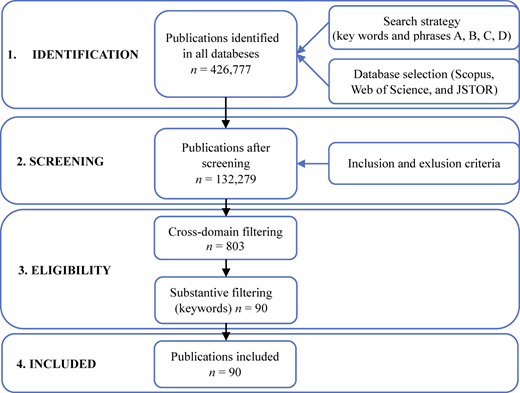
The study was designed as an empirical-theoretical analysis based on a SLR. The aim was to identify, analyse and synthesise scientific publications on the evolution of project managers' competencies. To ensure methodological rigour and reproducibility, this study follows the SLR guidelines proposed by Tranfield, Denyer and Smart (2003) for management research. Furthermore, the reporting of the selection process adheres to the PRISMA 2020 (Preferred Reporting Items for Systematic Reviews and Meta-Analyses) statement (Page et al., 2021). The protocol was designed to minimise bias and ensure a comprehensive synthesis of project manager competencies (Figure 1).
In the first phase, data collection utilised a structured search across Scopus, Web of Science (WoS) and JSTOR databases. Complex logical operators were implemented using predefined keywords, such as: (A) – “project manager” AND “project management”; (B) – “project manager competencies” OR “project manager skills”; (C) – “project leadership”; (D) – “design competencies” OR “design skills” OR “design abilities”. It resulted in a broad set of 426,777 publications (Table 2). The key phrases were chosen based on the subject of the analysis, which focuses on project manager competencies often used interchangeably with skills. He is also named a “leader” and a co-designer of solutions within a project management setting.
Specific inclusion criteria were applied to each of the selected phrases (A, B, C, D) in the second phase. Only peer-reviewed publications in English, published between 2000 and 2024, whether empirical, conceptual or reviews, and available via open access, were considered. Non-peer-reviewed publications, those limited to a single sector of the economy, duplicates and secondary works were excluded.
This process identified scholarly publications on project manager competencies. Scopus recorded the highest number of publications for the general query “principal investigator” AND “project management” (8,345 results). After applying the selection criteria, 831 articles remained. JSTOR yielded 1,696 results, with only 874 meeting the criteria. WoS recorded 1,392 primary results and 170 after filtering. This same process was repeated for each of the predefined phrases (A, B, C, D) across all three databases.
Due to poor precision and low reduction rates despite high initial results, JSTOR was excluded from further analysis (only 38.1% reduction for “project competencies” OR “project skills” OR “project capabilities”). The furthest part of the research was based exclusively on two databases: WoS and Scopus. This decision improved the analysis's credibility and accuracy.
After the screening phase, a cross-domain filtering was applied. Only publications in the Business, Management and Accounting, and Social Sciences were retained to focus on organisational aspects rather than purely technical engineering descriptions (Table 3).
This deep filtering of the Scopus database showed the highest content saturation in Business, Management and Accounting (215 publications for the query “project manager” AND “project management”), followed by Engineering (232 publications) and Social Science (153 publications). Conversely, WoS yielded more publications for “project leadership” in Business, Management and Accounting (219), but fewer results for other queries “design competencies” OR “design skills” OR “design abilities” (two publications). Fields such as Energy and Decision Science were largely absent. This criterion yielded 469 publications in Scopus and 334 in Web of Science, resulting in a total of 803 records.
Subsequently, a requirement was introduced for publications to contain a combination of at least two of the four predefined key phrases (A, B, C, D). It was established to filter out incidental mentions of competencies and retain only studies where the intersection of these domains was a core focus of the research. This stringent selection process resulted in 90 publications representing 11.2% of the thematic pool (90 out of 803), which were included in the analysis. In included publications, a three-step qualitative coding process was used in order to extract and synthesise data: extraction, standardisation and mapping. In the first step, the raw competency terms were extracted. In the second step, linguistic variants (e.g. “communication” and “communication skills”) were standardised and redundant synonyms were eliminated, thus maintaining semantic coherence. Furthermore, the unique competencies were mapped onto the IPMA ICB 4.0 framework. Hybrid competencies (those bridging two areas) were assigned based on their predominant functional utility described in the source text. Competencies that could not be meaningfully assigned to any category were classified as emergent competencies. The dataset underwent qualitative, critical and comparative analysis to construct a developmental model of project manager competencies (2000–2024).
Results
Identification of competencies
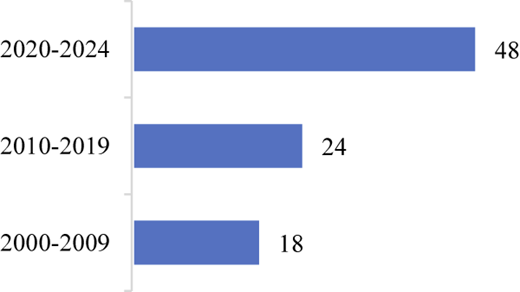
In 90 publications temporal distribution reflects increasing scholarly attention: 18 publications (2000–2009), 24 publications (2010–2019) and 48 publications (2020–2024) (Figure 2). Through these publications, 244 competencies for PMs were identified. After removing duplicates and standardising terms, 83 unique competencies remained. These were classified into three groups using the IPMA ICB 4.0 model. For example, “leadership skills”, “leadership” and “empowerment” were consolidated into unified leadership competencies.
The People area was the most prominent focus, covering frequently mentioned competencies such as leadership, communication, stakeholder management and self-awareness (Ahmed & Philbin, 2022; Ahmed, Philbin, & Cheema, 2021; Ahmad, Abduhamid, Wahab, & Nazir, 2023; Wu, Zhang, & Zhou, 2022; Zhu, Wang, Wang, & Yu, 2022). Specifically, transformational leadership and team motivation are particularly highlighted (Fareed, Su, & Aslam, 2023; Drouin, Muller, Sankaran, & Vaagaasar, 2023; Olugboyega, Ejohwomu, Omopariola, & Omoregie, 2022).
In the Practice area, competencies related to risk management are particularly emphasised (Varajão & Cruz-Cunha, 2013), along with planning and organisation (Omidvar, Jaryani, Zafarghandi, Salehi Nasab, & Jamshidi, 2011), change management (Urton & Murray, 2022) and quality and resource control.
The Perspectives area had the smallest share of publications. Strategic thinking (Fareed et al., 2023; Al-Nimer, Khattak, Wu, & Ullah, 2024), project management (Müller, Zhai, Wang, & Shao, 2016) and sustainability orientation are becoming increasingly significant in the face of contemporary challenges.
Identification of extensions of traditional IPMA ICB 4.0 competencies
The temporal analysis revealed a clear progression in research activity: 18 publications from 2000–2009 (approximately 1.8 publications per year), 24 publications from 2010–2019 (approximately 2.4 publications per year) and 48 publications from 2020–2024 (approximately 9.6 publications per year). The analysis also identified three categories of competence extensions regarded as updates to the IPMA ICB 4.0 competency groups.
Extensions within the People group account for the largest share, where traditional leadership competencies have been expanded to include transformational (Rehan, Thorpe, & Heravi, 2021) and inclusive leadership (Zaman, Siddiquei, Badar, & Qureshi, 2023). Communication ones have been enhanced by storytelling (Khdour, Fenech, Baguant, & Wahid, 2023) and cross-cultural communication (Li et al., 2020).
In the Practice domain, competence extensions are driven by AI and the Internet of Things, broadening skills in technology management (Davahli, 2020; Ribeiro et al., 2021). Management in the VUCA environment expands traditional risk management (Ahmed & Philbin, 2022).
Finally, in the Perspective domain, new competencies related to cybersecurity and ESG emerged. Systems thinking and life cycle analysis enhance strategic competence (Al-Nimer et al., 2024). Stakeholder management within complex ecosystems builds competencies related to power and influence (Ahmed & Philbin, 2022).
Discussion
Evolution patterns across time periods (RQ1)
The analysis shows a non-linear development of PM competencies, occurring in three distinct phases, each characterised by different drivers and focus areas (Table 4).
Between 2000 and 2009 (Period 1), the traditional project management approach was predominant (Cleland & Ireland, 2002). Rather than replacing existing competencies, new capabilities were built on foundational ones. Operational competencies such as time, cost and scope management remained central (Frame, 2003; Meredith & Mantel, 2003; Müller & Turner, 2007). The low research activity (1.8 publications per year) probably reflects stable environmental conditions, limited interdisciplinary research and conservative paradigms dominating the field. Nonetheless, awareness of environmental complexity began to surface even in this early stage. Jacob, Young and Kwak (2003) highlighted the need for managers to shift from “doing projects right” to “doing the right projects”, underscoring the increasing importance of strategic decision-making and flexibility. This early awareness of complexity management preceded the broader competency evolution. It also demonstrates that the seeds of transformation were present even in the traditional phase.
The period from 2010 to 2019 (Period 2) represented a significant shift, with clear recognition of behavioural and contextual competencies. The rise to 2.4 publications annually shows increased academic interest. This phase was defined by adaptation to globalisation and multicultural team management (Silvius & Schipper, 2014). Topics such as managing complexity, methodological flexibility and early aspects of sustainable development became prominent (Svejvig & Andersen, 2015). Changes in competencies during crises such as the 2008 financial crisis may indicate fast sensing and reconfiguring response to rapid, unpredictable shifts (volatility).
The period from 2020 to 2024 (Period 3) represents a transformative phase, with research activity reaching a peak of 9.6 publications per year. The COVID-19 pandemic likely accelerated this trend, highlighting the importance of competencies needed to handle unprecedented challenges. Nearly all publications during this period focus on building experience in digital, technological and ESG fields (Marnewick & Marnewick, 2023). Key competencies such as resilience, empathy and remote collaboration became essential (Urton & Murray, 2022; Avenca, Domingues, & Carvalho, 2024), with digital thinking and AI integration (Cheng et al., 2005; Alam et al., 2025). Competencies in AI (Fridgeirsson, Ingason, Jonasson, & Jonsdottir, 2020; Alam et al., 2025), sustainable thinking (Al-Nimer et al., 2024) and transformational leadership (Ahmad et al., 2023) also gained increased attention.
The analysis identifies three key patterns in the evolution of PM competencies. Initially, the pattern emphasised the importance of technical and traditional competencies. In that time, the project environment was stable and predictable. Next, this competency pattern systematically evolved and broadened. At that point, the project manager's role changed from tasks to a strategic actor. Finally, the acceleration pattern showed that the lag between environmental changes and competence adjustments drastically shortened. The project manager had to transform and develop competencies not gradually (Period 1–2), but quickly (Period 3), which was related to an unpredictable environment (COVID-19).
Transformation dynamics by competency areas (RQ2)
The IPMA ICB 4.0 People, Practice and Perspective areas exhibited distinct transformation dynamics driven by specific VUCA dimensions and enacted through particular DCV mechanisms (Table 5).
The People group underwent the most significant transformation driven by VUCA uncertainty and volatility. The pandemic's sudden shift to remote work (volatility) and unpredictable team dynamics (uncertainty) triggered sensing mechanisms, which helped to detect that traditional communication methods were insufficient. PM had to evolve to virtual, omnichannel and AI-assisted platforms, which also reflected in remote team management and new perceptions of interpersonal relationships across team members (Sergeeva & Kortantamer, 2022). Furthermore, universal leadership models changed into highly contextual and transformational approaches (Sergeeva & Kortantamer, 2022; Ahmad et al., 2023). This shift mirrors a broader paradigmatic change in project management approaches. Nerur, Mahapatra and Mangalaraj (2005) provided early evidence of this transformation within the agile context, noting a move from “command-and-control” to “leadership-and-collaboration” styles, aligning with today's emphasis on authentic and transformational leadership (Nerur et al., 2005). It shows a reconfiguring mechanism in which a leadership philosophy is transformed to fit actual needs. Project managers had to incorporate in their routine work competencies such as inclusive leadership, intercultural skills, mental resilience and emotional self-regulation (Sergeeva & Kortantamer, 2022). Negotiation techniques also evolved from argumentation-based to intercultural and remote formats, focusing on cultural awareness and digital competencies. It marked substantial shifts in relationship-building and team management. In the People area, transformation dynamics rather than gradual evolution have been compressed into a few years. To manage complex projects, project managers' competencies transform to fulfil team members' well-being.
The Practice area has transitioned from rigid, standardised methods to more flexible and adaptable strategies. This change was driven by the need to address the VUCA complexity and technological disruptions impacting project settings. Multidisciplinary teams and hybrid work models have activated sensing mechanisms, as linear planning approaches proved insufficient. Technological advancements – such as AI-assisted decision-making, predictive risk management and real-time data analytics – have created new opportunities. Consequently, project managers have evolved from mere tool users to active participants leveraging AI–human collaboration in areas such as resources, decisions, risk and tasks. Consequently, project managers have evolved from mere tool users to active participants leveraging AI–human collaboration in areas such as resources, decisions, risk and tasks. They move from fixed models to wholly flexible approaches, which signifies a change from reactive to proactive project management. The transformation dynamic follows a technology-mediated pattern: external technological capabilities (AI, digital platforms) enabled internal competency reconfiguration.
The Perspective area has expanded to incorporate ESG principles, ethics and sustainable development considerations, which was the answer to the VUCA ambiguity and complexity. A challenge remained in the standardised assessment frameworks, measurable indicators which are insufficient for the complex regulatory landscapes. It led to the reconfiguration of project managers' competencies. They were facing a challenge to balance between neutral implementers and ethical agents making judgment calls on the sustainability of project decisions and outcomes. The rise of “ethical judgment” (in the VUCA context) does not constitute an additive enhancement of existing competencies. Rather, it marks a substantive redefinition of the project manager's professional identity and responsibilities. On the other hand, “sustainable project thinking” risks devolving into a buzzword in the absence of clear implementation guidance, which increases the likelihood of superficial uptake rather than meaningful integration into project practice.
The transformation dynamic reflects a values-driven trajectory: evolving societal norms and institutional expectations within the VUCA environment necessitated a fundamental reconfiguration of professional identity and purpose. Competencies in digital literacy, adaptability to the VUCA world and climate awareness are gaining importance. Few of them (digital literacy) rely on specific tools and measurable abilities (Alam et al., 2025), while cybersecurity awareness is often only addressed superficially (Marnewick and Marnewick, 2023). It is also important to recognise that some competencies develop reactively based on technological availability rather than actual project requirements. The concept of the VUCA adaptability is not clearly distinguished from traditional flexibility. Bennett and Lemoine (2014) showed that treating its elements as interchangeable leads to failures in strategic planning. Each VUCA component requires a unique response, implying that the VUCA leadership competencies are more of a generic phrase than a well-defined, actionable set of competencies.
Emergent competencies beyond the IPMA ICB 4.0 framework
The most striking transformation dynamic emerged in competencies that transcend traditional IPMA ICB 4.0 categories. AI literacy, a digital mindset, diversity and inclusion, and the VUCA adaptability arise as a response to environmental pressure. Technological complexity required new digital and AI-related competencies (Ribeiro et al., 2021; Wu et al., 2022). Pandemic volatility accelerated the need for adaptability and inclusive leadership (Rehan et al., 2021; Zaman et al., 2023). Climate uncertainty pushed PMs towards ecological awareness and cross-disciplinary collaboration (Wang, Li, Li, & Liu, 2021; Urton & Murray, 2022). Finally, geopolitical ambiguity reinforced the need for strategic adaptability in complex environments (San Cristóbal, 2017; Sergeeva & Kortantamer, 2022). In this environment, sensing mechanisms operated continuously rather than episodically. PMs engaged in ongoing environmental scanning across technological, social and ecological domains simultaneously (Wang et al., 2021; Wu et al., 2022). Seizing mechanisms became experimental and iterative. PMs tested AI tools, participated in cross-functional innovation teams and engaged in peer learning networks (communities of practice). Using reconfiguring mechanisms, PMs reconstructed their entire competency architecture – developing competencies for learning (e.g. AI literacy, data reasoning) (Ribeiro et al., 2021; Zhu et al., 2022), unlearning (e.g. control-centric planning, human-only decision-making) (Thamhain, 2004; Rehan et al., 2021) and relearning in an AI-augmented form (e.g. risk management, communication) (Urton & Murray, 2022; Zaman et al., 2023). The transformation dynamic follows a systemic reconfiguration pattern. Rather than adding competencies to existing frameworks, PMs developed entirely new competency logics organised around adaptability, integration and ongoing transformation, including those reflected in the diversity and inclusion perspective.
Theoretical framework integration (RQ3)
Competence development occurs during periods characterised by critical turning points, such as the financial crisis (2008) and the COVID-19 pandemic (2020), leading to revolutionary rather than gradual changes (Fridgeirsson et al., 2020; Liu et al., 2024). The analysis mapped to the IPMA ICB 4.0 framework shows that the largest shifts concern areas related to leadership, communication and strategic competencies. Sudden shifts – technological, economic crises, sustainability pressures – (volatility) could primarily activate sensing environmental changes, and uncertainty drives seizing emerging opportunities (digital tools, agile methodologies, stakeholder engagement approaches). Project managers must not only identify signals of environmental change but also translate them into effective decisions and actions, including the rapid adoption of new digital tools and practices (Nerur et al., 2005; Ahmed et al., 2021). At the same time, the environmental complexity necessitates reconfiguring – fundamental restructuring of approaches and the ability to redesign processes and structures in response to new challenges. All it makes the environment ambiguity what requires prolonged sensing and deep reconfiguring (values clarification before adaptation) (Table 6).
For example, the empathy and resilience (IPMA ICB 4.0: People domain) gain importance as an answer for volatility (pandemic disruptions) and uncertainty (unpredictable team dynamics). Project managers sensed inadequacy of traditional leadership (reading team stress signals, recognising remote work challenges), seized training opportunities and peer learning (adopting empathy-building practices, resilience frameworks) and reconfigured their leadership philosophy (from task-focused to human-centred). Similarly, the gradual integration of sustainability competencies reflects incremental reconfiguration as organisations sensed and responded to evolving stakeholder expectations around environmental and social responsibility (Silvius & Schipper, 2014). The accelerating emergence of digital competencies can illustrates the seizing mechanism, where PM professionals capture value from technological opportunities.
The results also suggest that the traditional model of PM competencies, focusing on control, planning and execution, is gradually giving way to a more dynamic model in which soft, cognitive and strategic competencies become crucial. This is in line with the observations of the literature, which emphasises that in the VUCA conditions, project managers capable of systemic thinking, building relationships and managing ambiguity gain an advantage. Interpreting the results in the light of DCV, it can be concluded that the competencies of the project manager evolve towards dynamic abilities at the individual level. This means that the project manager not only carries out tasks but also acts as a “micro-strategist” who, through his competencies, influences the organisation's ability to adapt (Silvius & Schipper, 2014).
Thus, rather than representing separate explanations, these patterns collectively demonstrate the versatility and explanatory power of DCV across different types of environmental pressures within the VUCA contexts. The ability to sense, seize and transform ways of doing things is becoming the foundation of a project manager's professionalism in today's complexity. Koskela and Howell (2002) argued that conventional project management is based on outdated transformation theory and mechanistic management models. Modern competencies such as systems thinking and adaptive leadership directly respond to these theoretical imperfections.
The identification of competencies beyond People, Practice, Perspective shows that they don't fit neatly into existing categories because they represent meta-competencies: capabilities for managing other capabilities in conditions of radical uncertainty. It suggests IPMA ICB 4.0 and similar frameworks might require expansion beyond established categories.
Alternative explanations and critical perspectives
While the results suggest significant evolution in the project manager competencies, several alternative explanations merit consideration.
The identified competencies might reflect terminological fragmentation rather than genuine diversity. The lack of standardised vocabulary in project management results in authors using different terms for similar concepts, potentially inflating the perceived variety of new competencies (Cheng et al., 2005). This challenge is confirmed by Ahmed and co-authors (2021), who found that “leadership competencies” and “leadership styles” are frequently used interchangeably, creating classification ambiguity. Their research revealed a lack of a consistent categorisation system, suggesting methodological inconsistencies contribute to apparent competency proliferation.
Additionally, many “emerging” competencies seem to be technological adaptations of existing ones. Traditional behavioural competencies remain strong predictors of project success, regardless of technological progress (Joslin & Müller, 2016). This suggests that core interpersonal and managerial competencies continue to be vital. Ahmed et al.’ (2021) identification of high-priority competencies, such as communication and strategic perspective, demonstrates the enduring relevance of fundamental capabilities. Cheng et al. (2005) identified 12 key behavioural competencies, many of which remain highly relevant and consistent with contemporary managerial expectations. This supports the view that digital competencies are primarily technological adaptations, not entirely “new” categories of competencies. “AI-based management” could be viewed as a technological adaptation of traditional information management, whilst “remote leadership” might be an application of existing leadership competencies in a digital context (Hartmann & Lussier, 2020).
The rapid growth in publications from 2020 to 2024 may partly reflect academic responses to the crisis rather than a fundamental shift in professional requirements. The COVID-19 pandemic created immediate research opportunities and funding priorities that may have disproportionately emphasised certain competency themes.
These considerations do not diminish the importance of the trends but highlight the need for careful interpretation. The new requirements are likely to intersect with, rather than replace, traditional competencies (Svejvig & Andersen, 2015).
Implications for practice and theory
The findings indicate that project managers' education programmes need substantial updates to meet current demands. Firstly, traditional curricula that concentrate on technical tools should be expanded to include digital literacy, sustainability and adaptive leadership skills. Similarly, educational institutions should adopt integrated approaches that combine technical, behavioural and contextual competencies instead of treating them as separate areas. They also must invest in developing competencies in leadership, communication, stakeholder management, systems thinking and adaptability. What is important, all engaged groups in project management should understand that competency requirements vary depending on project environments and conditions. That is the reason why a one-size-fits-all method for selecting and training project managers is likely inadequate for today's complex projects. Instead, organisations should create competency portfolios tailored to specific project needs.
It is worth highlighting the role of the project manager as a micro-strategist, suggesting that project management systems (PMS) should be involved in strategic processes, not just in operational ones. With appropriate authority and support, project managers can serve as vital agents of organisational change. Lastly, these insights can guide the development of professional growth paths that reflect the increasing complexity of the project manager's role, focusing on flexible, personalised competency development that includes both technical and strategic competencies.
Conclusion
The study aimed to understand how the project manager's competencies evolved between 2000 and 2024 and what theoretical mechanisms explain the observed changes. In the context of the VUCA environment, the competences of the project manager become not only a set of operational competencies, but above all the ability to continuously learn, anticipate changes and respond flexibly to them (Cheng et al., 2005; Bennett & Lemoine, 2014). Through the lens of DCV, it could be seen that competencies are evolving towards dynamic capacity at the individual level. It includes the ability to identify changes (sensing), seize emerging opportunities (seizing) and initiate and support transformation (transforming). A project manager requires continuous learning and proactive adaptation to increasingly complex environments rather than a reactive response to change.
The IPMA – VUCA – DCV model addresses various analytical questions (what, why, how) that need to be considered together. Fully explaining observed patterns in competency development is possible only through the integration of all three components. Without IPMA ICB 4.0, the classification of competencies would not be possible; without VUCA, there would be no explanation of why this competency emerged at that particular moment; without DCV, the mechanism of competency transformation would not be described. Additionally, this combined model provides mutual insight into past development and the ability to forecast future competency requirements as an explanation for a changing environment.
Limitations and future research directions
The study has several key limitations that should be reflected on when interpreting the results. First, the analysis is based on available secondary sources, which means that its scope and depth depend on the quality and completeness of the source materials. Not all changes in competencies could be documented, which may affect the completeness of the picture. Second, mapping competency changes attributed to the IPMA framework is subjective, which means that there is a risk of oversimplification or over-categorisation of competencies. Fourth, relying on a specific theoretical framework introduces a particular interpretive perspective, and it may lead to alternative conclusions. Fifth, the study does not include empirical research, which limits the ability to capture the actual use of individual competencies and their possible transformation. Sixth, the application of specific inclusion/exclusion criteria may limit the capture of actual use of individual competencies and their possible transformation. There may be a selection bias towards English-language publications, academic sources and open-access materials, which could overlook practitioner perspectives and non-Western competency models.
Future research should also be considered, such as:
In-depth empirical research to assess the effectiveness of the identified competency extensions in practice. Additionally, it could also shed light on how PMs adapt and transform their competencies in real work settings.
Comparative analysis of different competency standards to understand whether the evolution of PM competencies is similar across different approaches or unique to specific standards.
Application of an alternative theoretical lens which would allow for capturing additional mechanisms explaining the evolution of PM competencies (e.g. power dynamics, cultural and temporal stability patterns).
The IPMA-VUCA-DCV model used in this research assumes universal VUCA-DCV dynamics, but competency evolution may differ across cultures, industries or project types.
Analyse which competencies of the PM profile are gaining or losing importance in the context of technological transformation.
Analyse organisations' support (or hindrance) in the development of dynamic abilities in project managers (e.g. through organisational culture, structures, learning processes or motivational systems).