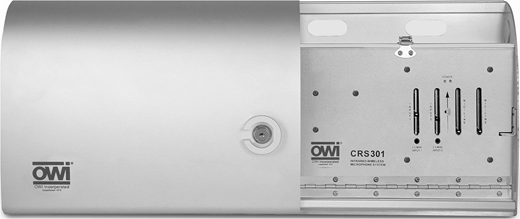
Joe Martinez is vice president at OWI Inc., a California-based designer and manufacturer of advanced audio systems. The company’s CRS-301 unit provides wireless amplification of the teacher’s voice to the students’ ears, both in class or remotely at home.
With COVID-19 having disrupted K–12 and college education for more than a year now, President Biden has prioritized reopening the majority of K–8 schools within his first 100 days. In addition, the President’s American Rescue Plan would provide $170 billion for K–12 schools, colleges, and universities, which could be used for a wide array of mitigation measures.
While most of this focus will be on ensuring the safety of teachers, students, administrators and other support staff, one key piece of the puzzle may be the wireless pendant-style microphone systems used for decades to amplify teachers’ voices in the classroom.
Now, with the increase in “hybrid” classrooms, where students in class are simultaneously taught with others attending on Zoom, Skype, or Google Meet, this educator’s tool may be even more important today. Such wireless microphone systems can help to save teachers’ voices even if they are wearing masks, while keeping students more effectively engaged and focused to improve academic performance.
Recently, researchers for the Centers for Disease Control and Prevention (CDC) advised that schools can reopen safely, as long as mitigation measures are in place including the wearing of face masks, preventing crowding, increased social distance in classrooms, improved ventilation, and testing to identify and isolate coronavirus cases.
However, with the slower than expected national vaccine rollout, the key to reopening schools in many cases is reducing the number of students in the physical classroom to accommodate social distancing with some students attending remotely in a hybrid approach.
According to a recent case study at edweek.org (Lieberman, 2000, para. 6), however, “Hybrid learning can be a best of both worlds, or a worst of both worlds reality,” according to Bree Dusseault, practitioner-in-residence at the University of Washington’s Center for Reinventing Public Education, which has been surveying schools throughout the pandemic.
Many schools also have struggled to balance investments in personal protective equipment and other safety precautions for in-person instruction with the technology and professional development necessary to reach students who will be learning at home part- or full-time, Dusseault said.
For a growing number of educators concerned about teaching students more effectively in such a hybrid learning environment, one solution is wireless audio amplification that enhances both in-class and online learning while enabling teacher mobility. In fact, this technology has already proven itself in many pre-COVID-19, crowded classrooms, beset with distracting background noise.
With such audio assistance, students inclass and online can hear the teacher with greater clarity. Just as important, questions from online students can be heard through speakers mounted in the classroom. This aids student comprehension and attention, making for a more seamless learning environment.
The challenges of concurrently teaching both in-class and online students are significant. Left unaddressed, teachers may struggle and students are even more likely to lose focus or become distracted.
Given the CDC recommendations, teachers are almost certain to be wearing one or even two masks. Some may prefer face shields. The physical barrier of material or plexiglass may be critical to preventing the spread of the virus, but it also serves to muffle the teacher’s voice. Teachers will have no choice but to repeat statements often and may have to project their voice more than usual, leading to vocal strain.
Teachers with online students are also essentially tethered to their computer to remain in front of the microphone. This means that the teachers cannot be heard by remote students when at a whiteboard or chalkboard.
Keeping remote students focused is another challenge. Students that work remotely are exposed to more distractions, which impacts academic performance. In the comfort of the home, online students are more likely to send texts, answer emails, log onto social media, play video games or listen to music while taking an online course, compared to a teacher-supervised class.
Furthermore, if a student at home is engaged and asks a question or responds to the teacher, the students in class may not be able to hear anything but the teacher’s answer. This can lead to confusion and make a classroom group discussion much more difficult.
Fortunately, many of these challenges can be resolved by implementing wireless audio amplification systems. Such systems have been successfully used in classrooms for many years, but have even more advantages for hybrid classrooms.
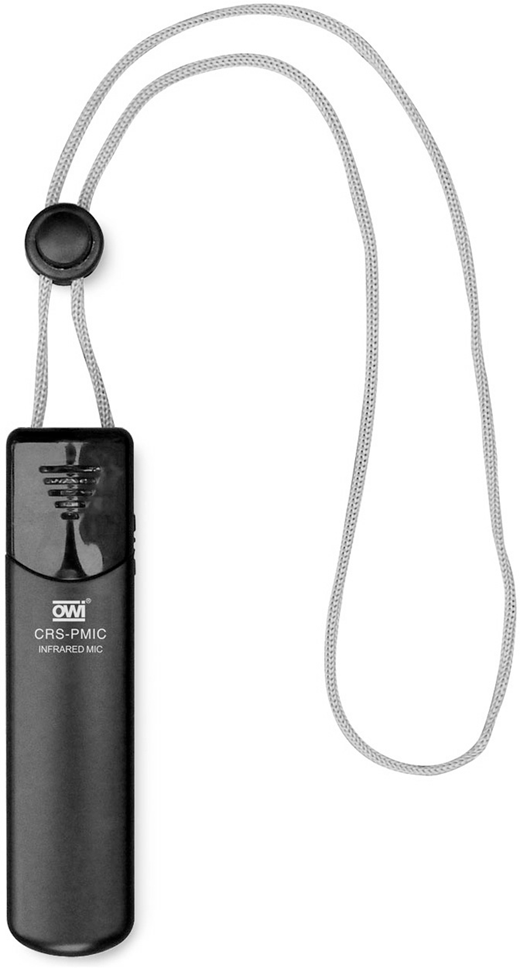
One such system provides wireless amplification of the teacher’s voice to the students’ ears, both in class or at home. The wireless audio amplification system can simultaneously control two infrared wireless microphones and comes with a wall-mounted infrared receiver/amplifier/ mixer, chargers and speakers.
The teacher simply wears a wireless pendant microphone like a necklace. The teacher’s voice is amplified so it reaches all students through four speakers in the room. The teacher’s voice is also transmitted to the students learning remotely, ensuring that all students are taught evenly.
With the system, students can engage and focus more on the teacher and the lesson being taught without the obstacle of not being able to clearly hear what the teacher said. If a student is on an application like Zoom, Google Meet and Skype, the four speakers allow the class to hear the question clearly.
The amplification system also means teachers will not have to raise their voices to be heard through a mask or face shields. This reduces vocal strain. In addition, more time is spent teaching and explaining, and less time repeating.
Not insignificantly, this approach also helps the students in the physical classroom in the same way. Regardless of how focused in-class students may be, there will inevitably be some movement, coughing, paper shuffling or other noise that interferes with their ability to hear and learn. Amplifying the teachers voice ensures students can hear from the back of the room.
In good classroom acoustic environments, students with normal hearing recognize only 71% of the speech they hear. In poor listening environments, perception can fall to less than 30%.
With any COVID-19 mitigation strategies needing to implemented as soon as possible in order to reopen schools, any equipment added should ideally be easy to install. In this regard, such a wireless audio amplification system can be quickly installed at a reasonable cost, due to a secure, plug-and-play design and laborsaving, infrared wireless technology. Unlike freestanding or rack-mounted systems that can be tampered with, the classroom audio system’s console is wall mounted in a secure, lockable enclosure where it will not take up closet space and there is no tangle of wires.
When it comes to school and classroom safety compliance, the system is also ready for integration with a mass notification emergency system. This is essential for immediate, effective, campuswide communication, such as dealing with the omnipresent threat of school shooters. In such an event, the system shuts off classroom sound systems and gives priority to the emergency broadcast in order to keep students, staff, and faculty safe.
Although much of the focus will be on keeping schools safe during the pandemic, giving educators the tools they need to fully engage with both in-class and online students—and save their voices while wearing masks—will ensure that no learner is left behind.