Introduction
In the second decade of 21st century teaching and learning, it is not a surprise to educators and students that classrooms come equipped with Internet enabled devices. Students in schools are either provided with or asked to bring some type of technology, whether it be a laptop, tablet, iPod, or similar device. According to a recent survey of 500 students in the United States, “some 90% of college students say they save time studying with technology such as mobile devices, digital textbooks, eReaders, and tablets” (Violino, 2012, p. 40). The author goes on to say that “nearly all college students (98%) who own a device have used it for school, and a majority of those students (53%) read e-textbooks frequently” (p. 40).
Everyone is connected within this environment. Learning does not stop when the student leaves the classroom or campus, and teachers do not stop teaching at the end of the school day. A change has taken place over the past decade and students, parents, and educators, are pushing education to a new level.
Virtual Schools
Research in best practices continues to reveal that students learn at different rates and in different ways. This has brought on new challenges not only for educators, but for parents and students as well. These challenges were recognized by many states throughout the United States and addressed through developments of distance education programs.
As early as 1992, states across America saw the need to begin connecting their schools, libraries, and universities together in an effort to create synchronous video distance learning classes. With this, came the push for new developments of online “virtual” schools. Florida, Missouri, Kansas, Iowa, South Dakota, and Arkansas were just a few of the early adopters of statewide virtual and connected schools (Simonson, 2013). According to Barth (2013), “more than one half of U.S. school districts (55%) have some students enrolled in online distance education courses” (p. 34). Best practices in education support the adoption of virtual schools and online courses for students. A recent study comparing the performance of students in the Arkansas Virtual Academy School with that of their counterparts has astounding results. According to Barth (2013), the “[Arkansas Virtual Academy School] students in Grades 3-8 produced higher gains over 2 years than did their traditionally schooled peers: an average of 9.6 percentile points in math and 3.6 points in literacy” (p. 35).
Best Practices
In the case of a recent distance education adoption in Kansas City Missouri School District, it was suggested that “distance learning should enable students to achieve their educational goals by delivering academically sound courses and educational support services that are flexible, responsive and innovative” (Cooper, 2013, p. 111). Given this suggestion of what distance learning should look like for a student, it has been changed and developed into other forms that support best practices in the classroom. Educators are beginning to merge the best of virtual school learning with “traditional” classroom learning and infusing them into the classroom.
Blended Learning
While online learning meets the needs of some students, research in best practices also supports the need for blended or hybrid learning courses for students. According to McGee and Reis (2012), “a blended course is the integration of online with face-to-face instruction in a planned, pedagogically valuable manner; and not just a combination of online with face-to-face but a trade-off of face-to-face time with online activity” (p. 9). The authors go on to say, “a blended course integrates the best of face-to-face and online learning while significantly reducing traditional class contact hours. When the strengths of each approach are integrated in an appropriate and creative manner, the possibility to become fully engaged in a sustained manner is increased exponentially” (p. 9).
Design
Blended learning is not an all or nothing component to education. It can take on different forms and look different ways to various educators. Tucker (2013) advocates for “a teacher-designed blended learning model, in which teachers determine the combination that's right for them and their students” (p. 57). There is not one way to incorporate blended learning. Teachers must find what works for the entire class-room.
Misconceptions
Hesitations and misconceptions often arise when the concept of blended learning comes into play. Teachers often believe they will have to give up their home and social lives to be available 24/7 for students. If a blended learning model is prepared correctly, the online environment will be set up to welcome comments and connections from peers. Students will begin to enjoy and value one another as a resource for learning. Teachers also hesitate and shy away from blended learning due to a lack of technological skills. If online resources are not enough to jump start a blended classroom, there is usually another teacher or administrator in the school or district that can help teachers begin. Once the class is set up and organized online, it then becomes a matter of content, maintenance, monitoring, and participating. Tucker (2013) recommends, “when you first attempt to weave tradition and technology into a practical, durable education fabric, take small steps” (p. 59). Often teachers get scared of the bigger picture of blended learning rather than taking it piece by piece. As blended learning took shape over the past decade, teachers began asking more questions about how to reach their students. While blended learning supported best practices, educators were looking on to new ways to enhance the model.
Flipping Blended Learning
The term “flipped classroom” was coined in 2007 when teachers Jonathan Bergmann and Aaron Sams (Figure 1) at Woodland Park High School in Woodland Park, CO, discovered software to record PowerPoint presentations. They recorded and posted their live lectures online for students who missed class. The online lectures began to spread student to student and school to school. Flipped learning was born and so began a new way of thinking about teaching and learning.

According to Gore (2013), “the flipped classroom inverts traditional teaching methods delivering instruction online outside of class and moving ‘homework’ into the classroom” (para. 3). In simpler terms, a flipped classroom model allows students to watch lectures at home at their own pace, communicating with peers and teachers via online discussions, and also allows for concept engagement to take place in the classroom with the help of the instructor.
According to Bergmann and Sams (2012),
When you walk into our classrooms, you will see students engaged in a variety of activities using different digital devices. Students are working on our (obsolete) class computers, they are using their Ipods, they are working together, they are experimenting, and they are interacting with their teacher. We encourage our students to bring in their own electronic equipment because, frankly, it is better than our school's antiquated technology. (p. 21)
Misconceptions and Truths
Parents often ask teachers how a flipped classroom is any different than having their child sit home and watch videos. Bergman and Sams support the model by looking at positive ways to address questions from parents, students, teachers, and administrators.
Flipping helps busy students. Students can choose to work ahead.
Flipping helps struggling students. The teacher's role becomes one of a facilitator enabling educators with more time for students in need.
Flipping helps students of all abilities to excel. All notes, concepts, and class materials are online for students who need extra time or help
Flipping allows students to pause and rewind their teacher. Those students who understand the material can move on but those students who need to rewatch material can rewind or pause videos for deeper understanding
Flipping increases student-teacher interaction. Educators become facilitators, which allows for one on one time with students. Students also see their teacher in an online “virtual” format as well as in person.
Flipping allows teachers to know their students better. Relationships are built in person and online.
Flipping increases student-to-student interaction. In the online world of flipping, students have access to peers through discussion boards. Material can be discussed prior to the next school day and upon return to the classroom, student have an in depth understanding of the material.
Flipping allows for real differentiation. In a flipped classroom, the teacher's time is not spent lecturing and using classroom time on teaching; rather the teacher becomes the facilitator allowing for differentiation of material for students.
Flipping changes classroom management. Learning becomes small group based and students therefore feel less threatened by classroom participation.
Flipping changes conversations with parents. The focus is no longer on behavior in the classroom. Instruction is focused therefore lessening or eliminating the “behavior” conversations with parents.
Flipping educates parents. Parents begin getting involved in their child's education as videos are viewed together. Parents can learn the content along with their child.
Flipping makes your classroom transparent. Parents, students, and teachers can see online what is being taught. No longer are there questions about what is expected of a student or what is in the curriculum.
Various Forms
Flipping a classroom can take on many different forms. Videos do not always need to be produced by the instructor. Many teachers use videos made by other teachers or even students as part of the online component to their classroom. According to Bergmann and Sams (2013), “if you're truly overwhelmed by the idea of creating videos, you can use videos that other teachers have created, search for good ones online, or pair up with a teacher to do a video together in a conversational format” (p. 20). For an extra challenge, teachers can make their own videos using screen capture apps such as Camtasia, Explain Everything, and Educreations to draw and explain lessons. These videos can then be uploaded to a learning management system such as Edmodo, Schoology, Haiku, or Blackboard. According to Strayer (2009),
it might be preferable for some teachers to structure a less radical flipped classroom that gives students an opportunity to view course content outside the classroom in a number of different formats, but still include regular lectures followed by a learning activity with homework from a book. (p. 129)
The author goes on to say, “other teachers might envision a radical flipped classroom that includes only learning activities in class and the introduction to course content only outside class” (Strayer, 2009, p. 192). Regardless the form that the flipped classroom takes on, the goal is to bring a blended learning model of instruction to the students that allows for differentiated instruction for students.
Khan Academy
Khan Academy (Figure 2) has struck a chord with many schools with their informative and interactive online lessons. Founded by Salman Khan (Figure 3) in 2006, Khan academy has reached over 6 million students and is growing in popularity. In 2004, Khan began teaching his cousin, Nadia, remotely in order for her to understand math. Once Nadia began to excel in math using these lessons, Khan began teaching his brothers online as well. More and more requests came in for tutoring and when time became an issue, Khan turned to recording videos to tutor his family and friends. After posting these instructional videos on YouTube, thousands of people tuned in to the instruction and began requesting more. Schools enjoy Khan Academy for its support in student led instruction and learning. According to Schaffhauser (2013),
It may also be one of the reasons why Khan is so intent on helping students discover their own motivations. “We want them to take ownership of their learning,” he says. “A lot of schools are focused on almost spoon-feeding students so that they can get to college. And then they pat themselves on their back: ‘Look! All of our students went to college,’ or ‘We have a really high graduation rate,’ or whatever it might be. But then the students go to college and they struggle because college is very self-directed.” A big part of that struggle, he says, is that they didn't have ownership of their own learning. (p. 20)

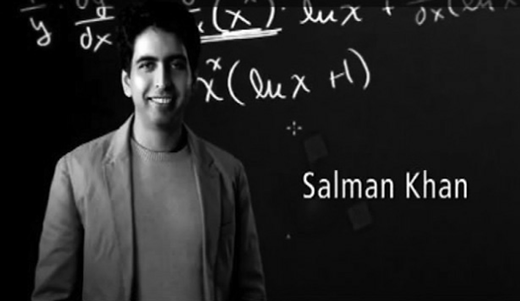
And thus, Khan Academy was born. According to Parslow (2012), “Khan does not use a script for his lectures and spontaneity is part of what makes them so effective.” The author goes on to say, “a student can hear Khan thinking things through aloud, using intuition and solving the problem with his viewers rather than for them” (p. 337).
Khan In The Flipped Classroom
In a flipped classroom, the educator can use resources such as Khan academy to support and give students an insight to what they will be learning. After watching the videos and using the interactive portions of them, they can then use a learning management system to talk to other classmates and answer questions about the topic at hand. Through the chosen learning management system, educators and students alike can collaborate through the discussion boards and further discuss and educate one another on the topic. Both the educator and the student can then post additional information such as videos, podcasts, or supporting documents. When students return to class, the teacher is there to help facilitate further instruction or questions about the lesson. This allows for a deeper, more differentiated model of facilitation and instruction. According to Parslow (2012), “in Khan's view, there is no need for students to be divided into grades by age but instead learn at their own page, moving on to the next lesson only when they have mastered the concept before it” (p. 337).
In support of the flipped classroom, Khan Academy does not stop at simple videos. They also house a workspace for practice as well as class data for teachers.
The Los Altos school district found that “Khan Academy fits nicely with the blended model of instruction” (Schaffhauser, 2013, p. 25). The district recognized that Khan Academy was one piece to the puzzle of blended learning as they also have textbooks, projects, and different tools to use.
Conclusion
As technology grows, distance education is taking on new roles in schools and is moving forward to support best practices. From virtual schools, online classes, blended learning and now to flipped learning, distance education remains prevalent in schools today. How a school or district chooses to go about adopting online classes depends on the needs of the school, teachers, parents, and students. If the school wants to remain current, differentiate instruction, support best practices, and increase student achievement, blended learning in the form of a flipped model may be a good option. Resources such as Khan Academy allow teachers who lack the necessary tools to create their own instructional videos and access a bank of thousands of instructional videos for students. Students who interact with Khan's online activities along with the LMS discussion boards will be primed and ready to return to school the next day for further facilitation of instruction with the teacher.
About the author