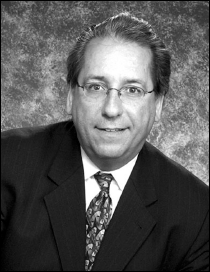
Beginning in this month’s Executive Director column, I have invited members of the United States Distance Learning Association Board of Directors to become guest writers. Throughout the continuing volume series, USDLA Board members will share their experience and expertise reflective of distance learning best practices and excellence. In this edition, I’m pleased to introduce Michael Baker, Vice President of VBrick Systems Inc. and Chair Emeritus/Board Member of USDLA, as he writes about VBrick’s “Always-On” distance learning application. VBrick solutions are designed to support mission-critical video applications for the many distance learning constituencies of USDLA. Key to VBrick’s success is their ability to satisfy the critical elements and requirements for quality video delivery. Real-time performance, reliability, ubiquitous access, and user simplicity are just a few of the embedded features found in this state of the art distance learning application.
—John Flores
VBrick is a 7-year-old ISO-9001 company that provides complete solutions of live real-time video, then stores and manages its delivery over local area networks and the Internet. In simple English, we can schedule and deliver live or stored video directly to any desktop or TV using an existing school network. We call our solution EtherneTV. Ether-neTV is an award-winning video system designed to deliver DVD-quality video, on-demand, over any network topology and under any network conditions. At VBrick, we call this ability “Always-On Uninterrupted.” We believe Always-On is a prerequisite to successful deployment of mission-critical video applications.
Nation-wide, No Child Left Behind programs are driving educators to consider new methods and technologies for enhancing the educational experience. Video is emerging as a mission-critical solution to help schools and their teachers improve the educational experience of their students. To highlight this groundbreaking use of video, let’s walk through a day in the life of a school and how VBrick technology may be used. Keep in mind that this scenario can be accomplished with today’s VBrick technology, except where noted.
It’s 6:00 a.m., and the principal arrives at the school. Rather than walking through the school for a security check, EtherneTV can deliver real-time, live video of all doors and parking lots to verify a secure school. (In the future, technology will be developed called “domain awareness” that will tell the observer if something new has been added to an environment. For example, a package or car that is not supposed to be in that area.)
7:00 a.m. The principal activates the VBrick to broadcast information to teachers across the school network or the superintendent can speak to every principal or teacher to discuss a new curriculum requirement.
7:15 a.m. Student announcements are delivered to TVs and desktops throughout the network and can be provided from multiple schools in the district.
8:00 a.m. The political science class launches a traditional videoconference call to an dignitary in Belfast to discuss issues facing Northern Ireland. In this case, the call is made using Polycom/Tand-berg/Sony videoconferencing systems. The difference is that VBrick will allow the video to be streamed to students not in the same building or classroom. In addition, the videoconference will be recorded and stored on a video-on-demand server for later use by students who missed the call.
9:00 a.m. EtherneTV delivers the Spanish language class taught at one school and shared with three other high schools or remote campuses of universities.
10:00 a.m. A “virtual field trip” visits the Mystic Aquarium using VBrick video streams delivered over the Internet or Internet2 connections. Students visit Mystic, Monterey Bay, or the wreck of the Titantic, as well as access stored video from previous Robert Ballard expeditions.
10:45 a.m. ETV allows for an emergency notification test throughout the school district or statewide. All PCs and television monitors display a test message concerning weather/fire/earthquake events in their area. This announcement can be coordinated with traditional alarm systems and audio announcements. Preparedness training can be viewed in each classroom using VBrick EtherneTV video-on-demand systems prior to the actual drill.
11:00 a.m. Lunchroom and Student Union monitoring. This can be shown in the teacher’s lounge, Campus Security office, or the main office.
12:00 p.m. The school might wish to stream live video to the monitors throughout the district or campus to view election coverage or a major catastrophe in Southeast Asia. This event can be shown on TVs or at the desktop, and can be accompanied by closed-captioning provided by VBrick, allowing teachers in the classroom to turn off the audio to discuss the events.
12:20 p.m. A student is injured in the gym and taken to the nurse’s office for evaluation. This medical emergency can be further evaluated immediately with a local hospital ER using “always-on” technology from VBrick.
1:00 p.m. Teachers in the classroom can study volcanoes using approved on-demand video delivered on our EtherneTV solutions.
2:00 p.m. A student teacher is evaluated from the classroom in the district by a professor at the university using streaming technology through the Internet or Internet2.
2:30 p.m. All students are moved to the auditorium for a guest lecturer from NASA. This presentation is captured by the wireless “roll-about” cart and streamed to all schools in the district or to a university hundreds of miles away. It can also be recorded and stored on the EtherneTV video-on-demand server for future use.
3:00 p.m. ETV addresses a critical issue in schools across the nation: students understanding and properly writing down homework assignments. Using the VBrick technologies, teachers can prepare daily homework assignment files with reminders/hints regarding their assignments and post them to a Website for retrieval by parents at home. This can also be used as a means to communicate parent/ teacher meetings and, in some cases, discipline issues.
4:00 p.m. Teachers connect statewide to the state school superintendent for a presentation concerning new state curriculum requirements; or the president of a university can address all of the deans and professors at one time. This technology can be used for all “in-service” requirements and can integrate live video, PowerPoint presentations, and Web pages, all using the VBrick’s EtherneTV video solution. In addition, all such meetings can be streamed to our video-on-demand server for storage and future use by teachers/professors unable to attend the conference call.
Let’s not forget the sports and special events at the schools and universities. Many parents travel a great deal for work, and it would be great if they could see their son’s wrestling match or their daughter’s fast-pitch softball game from a computer in their hotel room.
6:00 p.m. As the last person leaves the building at night, there is a final visual security check of the building and it’s good night for that day.
As you can see, there are many opportunities for schools, colleges, and universities to integrate network-delivered video into the classroom. I marvel at how the capabilities of video technology have grown in recent years, and can’t help but compare it to my school days and college experiences when the use of video was very complex and time-consuming. Now, it’s as easy as selecting a file and showing it. It’s this ease of use, combined with our ability to deliver
“Always-On” that allows VBrick to enhance the educational experience of K-12 schools and universities nation-wide.
I hope this column inspires you to look for new ways to embed video in your schools and universities, and I hope you will think of VBrick Systems as you design your solutions. To learn more about VBrick, visit our Website: www. Vbrick.com
About the authors