The Digital Learning Network
The National Aeronautics and Space Administration’s (NASA) Digital Learning Network (DLN) connects K-16 students, educators, and families to NASA scientists, engineers, and education specialists through videoconferencing and webcasts. The DLN consists of all 10 NASA Centers across the country: Ames Research Center, Dryden Flight Research Center, Glenn Research Center, Goddard Space Flight Center, Jet Propulsion Laboratory, Johnson Space Center, Langley Research Center, Marshall Spaceflight Center, and Stennis Space Center. Each center has a unique and important role in NASA’s mission.
Luckily one does not have to search across 10 different centers to find content of interest. The content catalog and webcast schedule can be found at: http://dln.nasa.gov/dln. Registration and scheduling of “events” or modules is free. Events in the catalog range from asteroids to robotics and users determine the date and time of the connection. Event descriptions include pre-/postactivities, a teacher lesson plan, and the corresponding national standards. DLN coordinators at each center facilitate scheduling, test connections, and presentation of events. DLN coordinators are highly trained in NASA content and bring diverse teaching backgrounds to the DLN.
The DLiNfo Channel section of the DLN website serves as a calendar of upcoming webcasts and provides the webcast stream. DLiNfo Channel webcasts can reach large audiences but still maintain interactivity through a chat room or questions submitted via e-mail. Webcasts include guest speakers, educational product showcases, and special events such as NASA launches.
America’S Spaceport: John F. Kennedy Space Center
NASA’s John F. Kennedy Space Center is the launch site for all U.S. human spaceflight and many of NASA’s unpiloted vehicles. One of the most popular events on the DLN is an award-winning interactive virtual field trip to America’s Spaceport. This author (Talley) grew up near Kennedy Space Center and is happy to share my excitement for it every single time I connect with students. Stunning aerospace imagery and enthusiasm is important in videoconferencing because “ultimately it is the photogenic nature of these displays, together with the affability and openendedness of the student presenter dialog, which determines the level of meaningful engagement” (Sumption, 2006, p. 931).
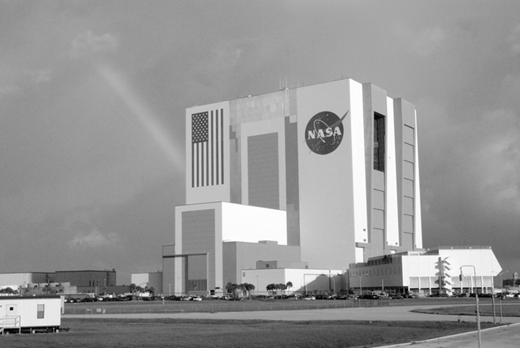
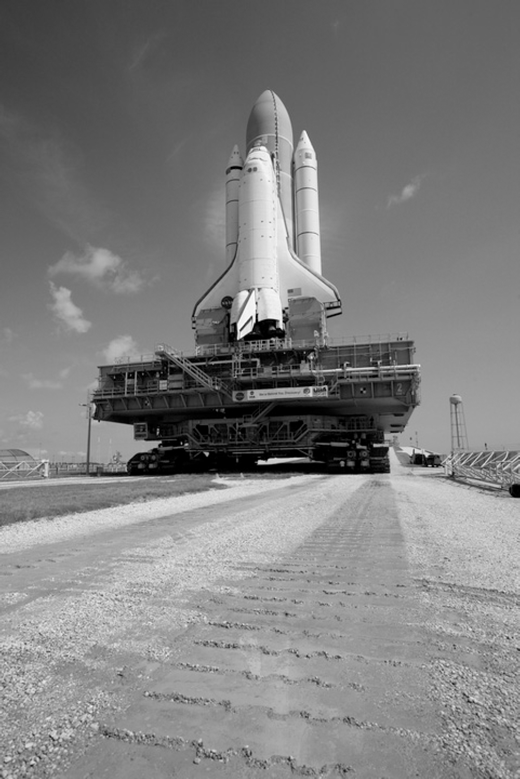
Participants in America’s Spaceport explore the Vehicle Assembly Building (VAB), which was the largest building by volume at the time it was constructed. Originally designed to stack the Saturn V Moon Rocket in the vertical position, the VAB’s high bay doors could accommodate the Statue of Liberty. The journey continues aboard the largest tracked vehicle in the entire world, the Crawler-Transporter. Capable of moving 12 million pounds worth of rocket and launcher, the Crawler gets 42 fpg (that’s feet per gallon) and traverses the 4-mile journey to the launch pad in only 8 hours. Finally, students experience a Space Shuttle launch—sometimes live!
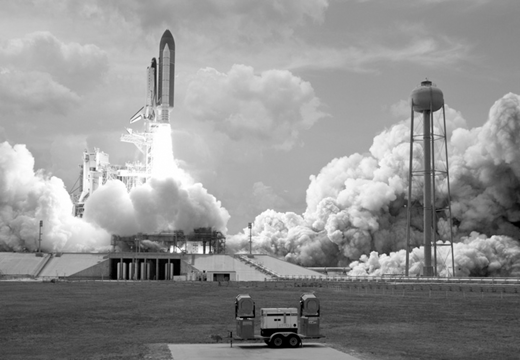
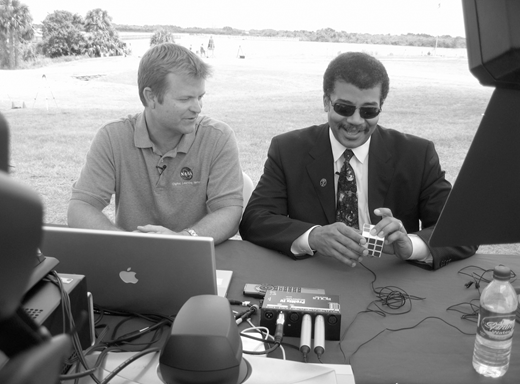
DLN “launchcasts” countdown launches live via a webstream on the DLiNfo Channel. Launchcasts usually begin streaming live at T-minus 60 minutes to launch and include content on: vehicle, payload, crew, and the mission. Participants can submit questions and get answers during the program live via e-mail. The prelaunch program includes special guests such as NASA engineers, scientists, program managers, and celebrity guests. Our biggest “get” was Neil deGrasse Tyson, director of the Hayden Planetarium in New York and host of Nova scienceNOW. Tyson braved a very hot day in May to help countdown the STS-125 Space Shuttle mission to service the Hubble Space Telescope.
Interest in Science
NASA (2006) Category 2.4 regarding student involvement K-12, is to Engage: Provide K-12 students with authentic firsthand opportunities to participate in NASA mission activities, thus inspiring interest in STEM (Science, Technology, Engineering and Mathematics) disciplines. America’s Spaceport transports students to NASA’s Kennedy Space Center, providing just such an opportunity. Jarvis and Pell (2002) noted that after a visit to UK Challenger Learning Center “it is remarkable that a 2-to-3 hour experience should have been such a lasting positive experience for nearly a quarter of the children with regard to raising their career aspirations to become scientists” (p. 997).
Student feedback and teacher testimonials submitted via the online evaluation system evidence positive results in student interest in STEM after participating in NASA DLN sessions.
This author sees the evidence first hand every time I connect with a group of students on the DLN by watching the looks on their faces.
Interpretations of Inquiry-Based Instruction
Educators frequently have various interpretations of what inquiry learning is along with how they should practice inquiry-based instruction (Camins, 2001). The U.S. Department of Education has noted attention to inquiry-based science curricula since the late 1950s. Discussions of inquiry generally fall into two broad classes of inquiry: describing what scientists do professionally, and as a teaching and learning process. Evaluators from the National Research Council (1996) expressed this dichotomy in the following way:
A scientific inquiry refers to the diverse ways in which scientists study the natural world and propose explanations based on the evidence derived from their work. Inquiry also refers to the activities of students in which they develop knowledge and understanding of scientific ideas, as well as an understanding of how scientists study the natural world. (p. 23)
Inquiry also refers to the actions of students in the classroom. Students should view themselves as scientists by recognizing science as a process, engaging in activities that reflect the work of scientists, designing investigations, revising knowledge, and understanding how scientists examine and make explanations about natural phenomena (NRC, 2000). Students are often encouraged to use prior knowledge to raise questions about the world around them and predict or formulate hypotheses about explanations and solutions to their questions. They are also asked to design and complete simple investigations, use observations to collect data, develop explanations based on collected data, consider alternative explanations, and communicate findings to other classmates (Biological Sciences Curriculum Study [BSCS], 1994; Layman, 1996; NRC, 1996). Applying an inquiry-based approach can pose challenges when presented with the constraints of a videoconferencing environment. However, using a learning cycle approach to instruction allows teachers to have flexibility when teaching science.
The Learning Cycle
The learning cycle approach to inquiry-based instruction is a widely used inquiry-based format for science instruction providing a structured way to implement inquiry in the classroom (Marek, 2008). This type of inquiry-based instructional methodology engages users in hands-on and minds-on activities throughout instruction providing learners with several opportunities to explore new concepts. Nuthall (1999) supported this approach, suggesting that elementary students need three or four experiences with a topic before they commit the information to long-term memory. These findings indicate that students should have the opportunity to use their prior knowledge and their experiences in an attempt to create new knowledge and understanding. Further research suggested that student achievement, retention, and comprehension improve as a result of using the learn-ing-cycle approach to instruction (Cavallo, 2005). One example of the learning cycle, the 5E model of instruction, draws from prior research in student learning.
Summary of the BSCS 5E Instructional Model and Teacher Roles
| Phase | Summary |
|---|---|
| Engagement | Prior learning is assessed and accessed to encourage problem solving, engagement, or the exploration of a new concept. Teacher role: facilitator, lecturer |
| Exploration | Activities in current topics are provided to encourage and facilitate conceptual change. Teacher role: facilitator |
| Explanation | Students’ attention is focused on explaining their conceptual understanding of the new concept, process, or skill. Teacher role: facilitator, lecturer |
| Elaboration | Teachers challenge opinions and explanations to encourage a deeper understanding and cognitive engagement of the students. Teacher role: facilitator |
| Evaluation | Students evaluate their own understanding of their new abilities. Teacher role: facilitator |
Note: Adapted from Bybee et al. (2006).
5E-Instructional Model
A more widely adopted learning cycle is the 5-E instructional model: engage, explore, explain, elaborate, evaluate (Bybee, 1997). This model was developed in the mid-1980s in part from the previous success of the Science Curriculum Improvement Study model by the Biological Science Curriculum Study and International Business Machines (1989). This model incorporates the three core learn-ing-cycle phases of the Science Curriculum Improvement Study model as its core, but adds engagement and evaluation components to facilitate change.
Pulling it all Together
Adjusting both content and presentation style to incorporate a 5E approach in a regular videoconferencing setting presents a few challenges. The instructor at the far end site is faced with the dilemma of how to adjust the 5E model on the fly. Originally, the 5E model was rooted in the science classrooms that depended on labs for instructional purposes, so some customization of the model is needed in order to achieve learning outcomes. The cyclical nature of the 5E instructional model allows instructors to build on what they have in a classroom, as opposed to trying to shoehorn an approach. For instance, Digital Learning Network presentations are developed to cover approximately 60 min of instructional time. The propensity for not completing a full learning cycle approach in a 50-60 minute block of instruction is very high. Thus, DLN presenters rely on teachers for pre- and post-activities that will make the experience more meaningful for the students when using a 5E approach. Despite evidence that points to using an inquiry-based approach to teach science, the amount of research examining instructional strategies used via videoconferencing suggests room for a closer look.
About the authors