


The study examines the hotel industry’s digital transformation, emphasizing its impact on customer interaction, operational efficiency, and competitive advantage. It highlights the vital role of Artificial Intelligence, digital technologies, and digital platforms in maintaining relevance, enhancing service delivery, and increasing profitability.
The study utilized the Scopus database to identify 239 articles related to the keywords “Digital Transformation,” “digital technology,” “digitalization,” and “hotel,” or “Hospitality.” It used VOS viewer and R studio biblioshiny software to analyze publication and citation patterns, integrating bibliometric factors and bibliographic coupling.
Findings reveal a significant increase in research on digital transformation since 2018, with prominent contributors like Buhalis D and Dwivedi YK. Key research hubs include the UK, US, and India, but collaboration with developing countries remains limited and needs more. The study highlights the integration of digital technologies in fostering sustainable development in the hotel sector. Six main research clusters focus on future study topics Virtual Avatar, Digital platform and sharing economy, Artificial Intelligence and Big Data, Digital travelers and hospitality, IoTs in travel, and Hospitality and Tourism education.
This review paper lacks primary data advantage, highlighting limitations in methodology and generalizability. Future research should consider primary data studies to address these limitations.
This research offers insights into digital transformation in the hotel industry, which can enhance pricing, guest experiences, and operational efficiency by optimizing pricing, personalizing experiences, and enhancing digital customer engagement through mobile apps, chatbots, and social media platforms highlighting key trends and strategies for improving service delivery and growth, thereby guiding industry stakeholders to stay competitive.
Digital transformation in hotels can improve service but raises concerns like privacy breaches and environmental impacts. To foster trust, equity, and sustainability, hotels must promote balanced technology use and preserve cultural authenticity, enhancing guest and employee satisfaction.
The examination of research from the Scopus database from 2004 to 2024 bibliometric analysis was conducted to highlight the study’s contribution. Through a comprehensive assessment of the research clusters in this study, essential trends concerning digital transformation in the hotel sector are revealed. Additionally, recommendations for prospective research avenues are put forth.
1. Introduction
Digital transformation involves leveraging new technologies to revolutionize business processes, enhance customer experiences, and develop innovative business models (Aras & Büyüközkan, 2023). The rise of digital technologies has revolutionized research and marketing strategies, making their use more critical than ever before (Kumar, Kumar, Kumari Bhatt, Kumar, & Attri, 2023). This transformation is particularly evident in the hotel sector (Yawised, Apasrawirote, Chatrangsan, & Muneesawang, 2023; Jayawardena, Ahmad, Valeri, & Jaharadak, 2023). Digital technologies such as the internet, Artificial Intelligence, and big data have propelled the shift from traditional digital innovation towards sustainable business practices (Casais & Ferreira, 2023). Digital technologies can significantly enhance organizational performance, encourage creative solutions, and enhance the consumer experience through quick adoption (Nguyen, Dang-Van, Vo-Thanh, Do, & Pervan, 2024).
In many cases, hotel guests increasingly prefer self-service options such as robotics (Ivanov, Gretzel, Berezina, Sigala, & Webster, 2019), Artificial Intelligence, contactless payments, intelligent room sensors, mobile technology (Law, Chan, & Wang, 2018), internet marketing, Internet of Things which are prompting hotels to adopt technology and change business models. Therefore, hotel owners are also seeking innovative approaches and experiments with emerging technologies such as various extended realities (XR) like virtual reality (VR) and augmented reality(AR) (Yung & Khoo-Lattimore, 2017), to maximize revenue and achieve long-term financial success (Yawised et al., 2023).
Technology is not the only aspect of digital transformation. People require adoption, skills, and a shift in perspective. Processes are important, as they require data management, performance monitoring, and integration (Kandampully, Bilgihan, Van Riel, & Sharma, 2022). For example, to obtain deeper insights into aspects of digital transformation, entrepreneurs in hotel businesses must understand why and how such transformations occur. What are their consequences for different hotels? While the literature on digital transformation in hospitality is growing, with some excellent reviews published, its scope remains limited due to the rapid evolution of the field.
The research gap of digital transformation specifically within the hotel industry is still lacking. Thus, further research is necessary to yield more information and understanding that will enable academic researchers, stakeholders, and hotel managers to make wiser choices. A comprehensive bibliometric analysis of how these technologies have influenced competitive advantage over two decades remains unexplored (Block & Fisch, 2020).
Research Questions:
Specifically, this paper attempts to address the following research questions (RQs) about digital transformation:
What publication trends exist in this field?
What major themes emerge from earlier research?
Which new directions are most likely to influence this field’s future research?
The study addresses the gap by identifying the main themes and developments in the digital transformation of hotels from 2004 to 2024 are examined in this paper, opening up new directions for investigation. It looks at publication trends, identifies significant journals and authors, national productivity, and helps researchers (Kumar et al., 2023) and stakeholders find important literature (Pencarelli, 2019). The hotel industry’s digital transformation offers theoretical and practical insights for improving operational efficiency, customer satisfaction, and competitive advantage. Sustainable practices through digital tools reduce resource consumption and promote eco-friendly operations, enabling informed decision-making.
The sections of the manuscript are organized as follows. Section 2 Literature Review and background of the study; Section 3 offers a summary of the research methodology and analysis of the data is presented. Section 4 deliberates on potential directions for further research. Finally, Section 5 encapsulates the discussion and practical implications, and Section 6 conclusions and limitations drawn from the study.
2. Literature review
Digital transformation has significantly impacted hotel business operations (Sarfraz, Khawaja, Han, Ariza-Montes, & Arjona-Fuentes, 2023). To enhance customer satisfaction, and improve operational effectiveness (Farías & Cancino, 2021).Resource Based View theory helps to obtain a competitive edge for hotels (Degirmen et al., 2024; Peng et al., 2024; Lam & Law, 2019). The adoption of digital tools has automated labor-intensive tasks, leading to a transformation from guest service delivery to customer engagement strategies. The Technology Acceptance Model (TAM), Unified Theory of Acceptance and Use of Technology (UTAUT) framework (Jayawardena et al., 2023) helps to understand employee and customer adoption better (Ozdemir, Dogru, Kizildag, & Erkmen, 2023). The Unified Theory of Acceptance and Use of Technology (UTAUT) is a framework used in digital transformation to understand user intentions and usage behaviors in information systems, aiming to improve hotel performance by understanding the interrelations, dependencies, and vision of technology adoption (Jayawardena et al., 2023).Even hotels now prioritize digital literacy and competence from staff, highlighting the rising demand for digitally competent employees to meet growing requirements (Pshenichnykh & Novi, 2023). However, hotels must address the intertwined challenges of technology adoption and workforce development to implement digital transformation effectively by using innovation theory (Omol, 2024).
This phenomenon arises due to the rapid evolution of technology on the one hand (Sreenivasan & Suresh, 2023), and the necessity for hotels to undergo digital transformation to stay competitive on the other hand. Hence, this complex situation has resulted in a proliferation of research efforts focused on comprehending and implementing the current body of knowledge (Nadkarni & Prügl, 2020).
Robotics and Artificial Intelligence are rapidly changing hotel industries and place a high value on human interaction and experience in digital integration (Wynn & Jones, 2022). The hotels adopting such technologies also receive more revenue and bookings because of reservation assistance (Dwivedi et al., 2023).
Similarly, blockchain technology also helps hotels book products through decentralized reservation systems such as Airbnb. It offers dual advantages, such as low cost for guests and elimination of middlemen (Puri, Mondal, Das, & Vrana, 2023). For example, Airbnb has disrupted traditional stay services. The metaverse is transforming tourism by creating immersive virtual experiences and facilitating new forms of travel engagement. In short, technology enhances the welfare of tourists, which subsequently encourages digitally driven behaviors (Ferreri & Sanyal, 2018). Research efforts need to be made to help hotels design a strategic roadmap to improve employees’ digital skills and foster a culture of continuous innovation (Chaudhuri, Chatterjee, Vrontis, Galati, & Siachou, 2023).
2.1 Artificial intelligence (AI) ethics and data privacy
As Artificial Intelligence (AI) becomes increasingly integrated into hospitality operations, concerns surrounding AI ethics and data privacy gain prominence. While AI enhances service personalization, efficiency, and guest engagement through tools like chatbots and automated check-ins, it simultaneously raises issues related to algorithmic bias, data security, and ethical governance. For instance, AI algorithms trained on biased data may inadvertently reinforce stereotypes or exclude certain user groups, compromising fairness in guest (Yallop, Gică, Moisescu, Coroş, & Séraphin, 2021). Moreover, extensive data collection through smart devices and automated systems intensifies the need for robust data protection protocols.
Regulatory frameworks such as the General Data Protection Regulation (GDPR) emphasize the importance of transparency, user consent, and accountability in data processing (Samara, Magnisalis, & Peristeras, 2020). To navigate these complexities, the hospitality sector must prioritize ethical AI design and implement standardized privacy measures. This includes adopting United Nations Educational, Scientific and Cultural Organization (UNESCO) AI ethics principles fairness, transparency, accountability and fostering a culture of digital responsibility that aligns with guest expectations and legal mandates. Addressing these issues is essential for fostering trust, ensuring inclusive digital experiences, and sustaining innovation within the hotel industry. (Kazim & Koshiyama, 2021).
2.2 Theoretical background
This section establishes a theoretical framework for an investigation into the phenomenon of digital transformation within the hospitality sector. It includes various theoretical constructs, including the Technology Acceptance Model (TAM) and the Unified Theory of Acceptance and Use of Technology (UTAUT), which are employed to examine the determinants influencing the adoption and utilization of digital technologies in the hotel industry (Yawised et al., 2023; Jayawardena et al., 2023), Moreover, innovation theory (Zaragoza-Sáez, Marco-Lajara, Úbeda-García, & Manresa-Marhuenda, 2024), within the context of the hotel industry, pertains to the creation of novel services and processes designed to satisfy customer requirements and bolster competitive positioning (Wynn & Lam, 2023). The Resource-Based View (RBV) theory emphasizes the significance of digital transformation as a means to achieve competitive advantage (Degirmen et al., 2024), while stakeholder theory (Nguyen et al., 2024) further contextualizes these dynamics. These theoretical frameworks collectively aim to elucidate the mechanisms by which digital transformation enhances operational efficiency and customer value, as well as their alignment with stakeholder and customer expectations. Ultimately, these theories aspire to augment the comprehension of digital transformation within the hotel sector.
3. Research methodology
Bibliometric analysis was carried out to acquire understanding, scrutinize, and assess the published scholarly works on digital transformation in the hospitality industry (Kumar et al., 2023; Donthu, Kumar, Mukherjee, Pandey, & Lim, 2021). Bibliometric analysis analyzes citation, coauthorship, country, co-occurrence, and bibliometric coupling (Fauzi, 2022). This study used the Scopus database because it has the world’s largest abstract and citation database for peer-reviewed literature Scopus, which provides a comprehensive summary of research output in the arts, humanities, sciences, and engineering (Kumar et al., 2023). Advanced tools for monitoring, evaluating, and visualizing research are also included, and a wider range of publications than the Web of Science.
Through the combination of various Digital transformation keywords “Digital Transformation,” “Digital Technology,” or “Digitalization*” AND key words for hospitality context “Hospitality” or “Hotel*” were utilized in the search engine to identify relevant documents in titles, abstracts, and keywords, resulting in the retrieval of 626 documents. Moreover, the scope was narrowed down to 456 documents focusing on business management, accounting, economics, econometrics, finance, and social sciences. Finally, the sources were limited to 259 articles, and the language chosen was English; 253 studies were found.
Finally, 239 high-quality publications from 2004 to 2024 were selected, with 14 duplicates being carefully eliminated manually for being beyond the scope of the subject matter. Our review investigation started in 2004 to account for recent advancements in the hospitality digital transformation sector and the rise of digital technologies. The search date was October 2024, as explained in the Prisma framework Figure 1. Prisma is a Systematic Literature Review (SLR) protocol that involves determining eligibility criteria, selecting articles, extracting data, and assessing article quality (Wirani, Eitiveni, & Sucahyo, 2024). Table 1 illustrates inclusion and exclusion criteria for bibliometric analysis, we chose R Studio and VOS Viewer as our two software programs.
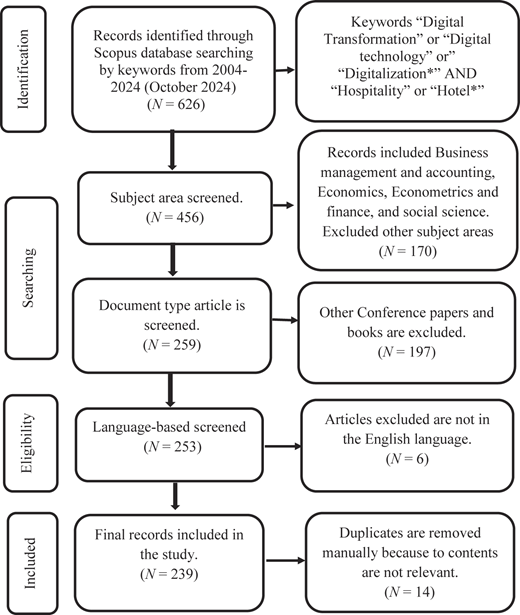
The process of obtaining articles from the Scopus database. Source(s): Prisma framework adapted from Kumar et al. (2023)
The process of obtaining articles from the Scopus database. Source(s): Prisma framework adapted from Kumar et al. (2023)
Inclusion and exclusion criteria for article selection
| Criteria | Exclude | Include |
|---|---|---|
| Search: 2004 to October 2024 | – | 626 |
| Source: Scopus Database | ||
| Search Term: (“Digital Transformation” or “Digital technology” or “Digitalization*” AND “Hospitality” or “Hotel*”) | ||
| Subject Area: Business management and accounting, Economics, Econometrics and finance, social science | 170 | 456 |
| Document Type: Articles | 197 | 259 |
| Language: English | 6 | 253 |
| Content Screening: Articles included relevant to the study only | 14 | 239 |
Source(s): Table by authors
3.1 Analysis and findings
3.1.1 Publication trends in digital transformation
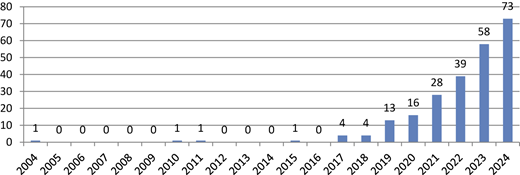
Figure 2 visually depicts the publication trend for research on digital transformation within the hotel industry. The figure reveals a clear and significant upward trajectory over the past two decades. While research on digital transformation in the hospitality industry emerged in approximately 2004, it was not until after 2017 that a significant increase in scholarly publications began. This initial growth was followed by a period of rapid acceleration between 2018 and 2023. Today, the concept has permeated the global business landscape, fundamentally impacting how hotel businesses operate and market themselves. Notably, the number of published articles increased from approximately four in 2017 and 2018 with 28 published in 2021 to a high of 58 in 2023, and a peak of 73 in 2024. This exponential growth underscores the burgeoning interest in digital transformation within the hotel industry, despite the relative novelty of the research topic.
3.1.2 Significant contributors, institutions, and countries of digital transformation
Table A1 (see Table A1 in the supplementary materials) highlights the leading authors in the field of digital transformation in hotel industries and their affiliations. Buhalis, Dimitrios is the most cited author, with 1,534 citations from the University of Surrey, United Kingdom. Dwivedi, Yogesh K. follows closely with 1,532 citations, from Swansea University, United Kingdom, and the author found that tourists are increasingly relying on digital tools throughout their travel journey. Digital technologies should be used to improve the overall tourism experience, and social well-being (Dwivedi et al., 2023). These two authors have three and two publications each.
The University of Warsaw, Poland emerged as the leading institution with two publications and 130 citations, followed by the Swinburne University of Technology, Australia with two publications and 80 citations. Interestingly, despite most universities having just two articles each, they contribute significantly in terms of overall publications. The UK and Italy have made the most substantial contributions to digital transformation research in hospitality, with 28 and 15 publications, respectively, and the highest total citations (2,397 and 2014, respectively).
3.1.3 Prominent journals for digital transformation research
The current study has sought to investigate the most influential academic journals for digital transformation research in the hospitality sector, considering total publications, SJR Rank for the year 2022, and the h-index (2022). Table A2 (see Table A2 in the supplementary materials) outlines the name of the journal, its quartile ranks, SJR rank, and h index. The Sustainability Journal emerged as the leader with the highest number of publications (18). While its SJR Rank (0.66) and h-index (136) are lower than those of other journals, the sheer volume of published research positions it as a significant contributor to sustainable development. The International Journal of Hospitality Management (United Kingdom) takes second place with a respectable SJR Rank (2.93) and h-index (151), despite having only seven publications published by Elsevier Ltd. The finding reveals a diverse range of topics covered by journals, indicating regular contributions and draws from various fields. The field is growing, with more journals focusing on digital transformation and hospitality and tourism themes, such as the International Journal of Contemporary Hospitality Management and the Worldwide Hospitality and Tourism Themes.
3.1.4 Most influential articles on digital transformation
Table A3 (see Table A3 in the supplementary materials) lists the most cited articles on digital transformation in hotel industries, with Dwivedi et al.’s (2023) paper being the most cited with 1,403 citations. It highlights the importance of digital technologies in the hospitality industry, including marketing materials, descriptions, extensive sharing, and role in innovative culinary products. Pencarelli’s paper titled “The Digital Revolution in the Travel and Tourism Industry is a highly cited paper with 363 citations. The author argues that technology in “Tourism 4.0” should focus on improving tourism practices and promoting sustainability to enhance the quality of life and social value for both tourists and residents. Another well-referenced publication (175 citations) by Ferreri and Sanyal (2018) explored how digital technologies are used by businesses to create online platforms connecting people with underutilized assets.
Building on these insights, propose that the entire tourism sector, including travel, tourists, hospitality, and catering, is undergoing digitalization. This digital transformation significantly affects the industry’s value chain, presenting both exciting opportunities and challenges that need to be addressed. Further research by Gaur, Afaq, Singh, and Dwivedi (2021), Filimonau and Naumova (2020), Lau (2020), Buhalis and Deimezi (2004), Jimenez-Marquez, Gonzalez-Carrasco, Lopez-Cuadrado, and Ruiz-Mezcua (2019), Mariani (2019), has significantly contributed to our understanding of digital transformation in the hotel industry.
3.1.5 Country-wise collaboration network analysis
Figure A1 (see Figure A1 in the supplementary materials) depicts the “cross-country collaboration” among researchers across 67 countries, revealing 21 nations with notably strong partnerships in coauthored publications. The United Kingdom, United States, Italy, Spain, India, and Australia stand out as having the highest levels of international author collaboration. Notably, the United Kingdom’s circle exhibits the most connections, with thicker lines connecting it to other countries, signifying a significant number of joint research papers.
These findings reveal a trend toward increased focus on international collaboration in hospitality research, particularly regarding the digital revolution within the industry. Interestingly, the analysis also suggested that collaboration remains less frequent in countries such as Taiwan and Vietnam. Challenges of digital technologies in developing countries (Díaz-Arancibia et al., 2024) like Egypt and Africa (Ndemo & Weiss, 2017) require innovation, widespread adoption, reconfiguration of social structures, resources, and need increased awareness among stakeholders about digital transformation in hotels to improve customer satisfaction (Nadkarni & Prügl, 2020; Wynn & Jones, 2022). Developing nations confront significant disparities in digital transformation, thereby necessitating consistent policy measures to bridge the gap between the envisioned use and impacts of digital technologies (Matthess & Kunkel, 2020).
In developed economies, digitization enhances productivity and stimulates economic growth; however, it may adversely influence employment prospects within emerging markets (Aly, 2022). Countries designated as developing within the Global South, including South Africa, encounter significant barriers to the adoption of digital technologies, resulting from inadequate access, digital illiteracy, insufficient government assistance, challenges in research and development, constrained resources, corruption, legal issues, taxation difficulties, and high-cost barriers (Mateko, 2024).
3.1.6 Collaboration of author network analysis
This section employs Biblioshiny to scrutinize collaboration patterns among authors focusing on digital transformation in the hospitality industry, building on the research of this analysis aims to enhance our understanding of collaboration networks by considering factors such as authors themselves, their nationalities, regions, and affiliations. Figure A2 presents the author’s collaboration network. Interestingly, the analysis reveals a potential lack of engagement and collaboration among researchers from developing and underdeveloped countries. This observation can be seen in the clustering of authors.
The first cluster comprises the nine authors including prominent figures such as Buhalis D, Dwivedi YK, Jones P, Mariani M, Afaq A, Ahuja M, Al-Busaidi As, Albanna H, and Ülker et al. (2022). Albashrawi Ma. The following cluster consists of four authors: Boiko M, Bovsh I, Melnychenko S, and Romanchuk I. A third cluster comprises authors Duda J, Kusa R, and Suder M. Additional authors Singh A and Munjal S constitute the subsequent cluster. This is succeeded by other authors depicted in Figure A2 (see Figure A2 in the supplementary materials). It is important to support collaboration among academics to foster creative research findings and the sharing of knowledge on digital transformation in the hotel industry.
3.1.7 Co-occurrence and author keyword network analysis
Figure A3 (see Figure A3 in the supplementary materials) shows the results of the keyword co-occurrence network analysis, which identified four clusters encompassing topics such as hospitality (43 occurrences, with a link strength of 59) as the largest node; digitalization (30 occurrences, with a link strength of 37); and digital transformation (26 occurrences, with a link strength of 29), followed by digital technology, tourism, hotels, artificial intelligence, the digital economy, social media, sustainability, Airbnb, digital marketing, and innovation. When similar colored keywords are present, it suggests that certain groups are associated with them. The term “hospitality” appears in different contexts, indicating that different angles have been used when examining the digital transformation aspects of different industries. The report shows how artificial intelligence and digital technology are used in hotels. Digitalization has been seen for social media, an innovation in digital marketing.
3.1.8 Thematic analysis of digital transformation
Figure 3 shows the thematic map of keywords related to digital transformation and categorizes themes into four quadrants based on their development (density) and relevance (centrality). Motor themes (top-right) are highly developed and centrality, requiring further exploration, and include topics like Artificial Intelligence, sustainability, blockchain, big data, digital platforms, and elements of COVID-19. Niche themes (top-left) are specialized, with high density but low centrality, covering areas such as the digital economy, infrastructure, hotel business, efficiency, and performance.
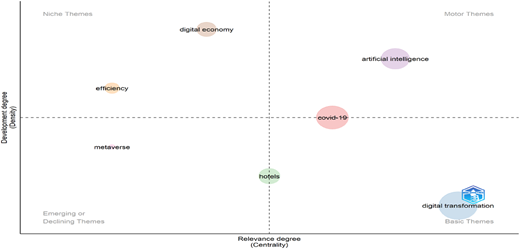
Emerging or declining themes (bottom-left) have low density and centrality, highlighting underexplored areas like the metaverse, service innovation, customer satisfaction, service robots, and online reviews. Finally, basic themes (bottom-right) are foundational, with high relevance but low development, encompassing digital transformation, digitalization, digital technology, tourism, hospitality, Airbnb, social media, Virtual Reality, and service quality. These basic themes serve as essential pillars for further research on digital transformation, reflecting widely discussed earlier and critical topics in the field.
3.2 Bibliographic coupling analysis
Bibliographic coupling is a technique used to identify related research by analyzing the cited references of scholarly articles. To delve deeper into the connections between research papers, the study employed a bibliographic content analysis of 239 publications using Vos viewer software. The coupling strength between articles was calculated based on references, and clusters were identified using an algorithm. Focusing on highly cited works (those with citation counts exceeding 8), 27 articles were identified and grouped into six distinct clusters within the bibliographic coupling network in Figure 4. Every cluster symbolizes a distinct theme and color.
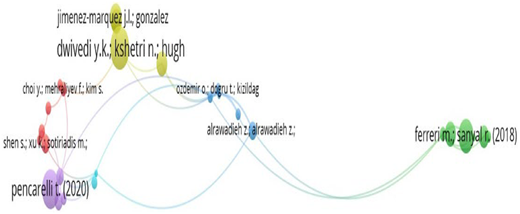
Each cluster was analyzed for thematic coherence by examining the titles, abstracts, and research focus of the articles. The themes were then aligned with ongoing trends in digital transformation research. Table A4 (see Table A4 in the supplementary materials) below provides a detailed explanation of each theme concerning the top-cited articles. Table A4 further details these six theme clusters, which form the foundation for the knowledge architecture of research. This analysis sheds light on crucial research themes and ongoing developments within the field.
The first cluster consists of six articles published between 2018 and 2022 that explore the impact of virtual avatars on hospitality. Shen, Xu, Sotiriadis, and Wang (2022) and Choi, Mehraliyev, and Kim (2020) have the most cited articles, with Shen et al. (2022) revealing that students’ adoption of learning apps depends on perceived usefulness, ease of use, and cost. Choi et al. (2020) found that virtual avatars in digital hotel services increase user interest, influenced by design elements like gender and social position. This research aims to analyze avatars in hotel settings for better interfaces.
The second cluster of publications focuses on digital platforms and the sharing economy from 2018–2022. Ferreri and Sanyal (2018) and Gyódi (2019) have the most cited articles, with 141 and 78 citations respectively. They found that Airbnb increased demand and encouraged government regulation changes. Gyódi (2019) found that Airbnb competes with hotels but also complements them in certain areas. Despite challenges, platforms like Airbnb can create new opportunities, sustainability, and positive outcomes for stakeholders through responsible implementation and regulatory reforms.
The third cluster of articles on digital travelers and hospitality from 2021–2023 highlights the benefits of digital transformation and revenue management in the hotel industry. They highlight efficiency gains, time savings, and improved decision-making (Alrawadieh et al., 2020). Yallop et al. (2021) propose a framework for ethical data management in tourism and hospitality, focusing on trust-building and fair exchange of traveler data. The cluster highlights challenges and opportunities for growth in digital travelers and hospitality.
The fourth cluster of publications on artificial intelligence and big data from 2019 to 2023 highlights the potential of Chat GPTs in hospitality and tourism; Dwivedi et al. (2023) highlight challenges such as disruptions, privacy risks, bias, and misinformation. Jimenez-Marquez et al. (2019) digitalizing goods and services and understanding clients through social media content evaluations are crucial for success in the big data space. The cluster suggests responsible approaches to harness the benefits of AI and big data while mitigating risks, focusing on understanding customer sentiment and effectively managing data.
The fifth cluster of articles on decision-making and IoTs in travel from 2019 to 2024, authored by Pencarelli (2019), Pappas, Caputo, Pellegrini, Marzi, and Michopoulou (2021), and Buhalis, Efthymiou, Uzunboylu, and Thrassou (2024) highlights the importance of sustainability, intelligence, and social value in the digital revolution. They emphasize the use of IoT in hotels to personalize guest experiences and identify four types of decision-makers: rational, enthusiast, cautious, and futurist. The cluster highlights the need for careful consideration of social, economic, and environmental factors for sustainable and inclusive growth.
Cluster six consists of publications on tourism education from 2020 to 2023 highlighting the importance of employability skills and digital literacy in developing the digital economy. The three publications, (Adeyinka-Ojo, Lee, Abdullah, & Teo, 2020) and Fauzi (2022) highlight the disruptions in the hotel and tourism industries and the need for upskilling in digital literacy and employability. The Cluster summaries of Knowledge management and digital technology education offer solutions for innovation and sustainability in tourism (Casais & Ferreira, 2023).
4. Future research directions
A review of digital transformation research identified six thematic clusters. Concerning future directions based on thematic clusters, thematic trends, and past literature, the authors propose new areas for future research in the Table 2.
Cluster/context-based future research directions
| Cluster/context | Future research directions | Method |
|---|---|---|
| Virtual avatar | Investigating the impact of Virtual Reality and Augmented Reality technologies such as appearance and behavior on guest engagement within digital hotel services, analyzing both auditory and visual components Incorporating Resilience and Readiness for Changes into adoption models such as TAM (Technology Acceptance Model) and UTAUT2 (Unified Theory of Acceptance and Use of Technology 2) to enhance the prediction of AR adoption in the hospitality sector, on the adaptability of employees Creating VR and AR training programs to improve workforce competencies in the hospitality industry, which may include simulations, role-playing scenarios, and real-time guidance for staff members | Quantitative method using surveys, interviews, and focus group |
| Digital platform and sharing economy | Examine how financial incentives and platform regulations affect the behavior of hosts in Airbnb, revealing crucial insights into collaborative consumption Delve into the impact of digital technologies on the sharing economies, on simplifying regulations, and bridging the digital divide to maximize benefits How hotels can adjust to guest preferences by platform Airbnb, effects on operations, staffing, revenue, and creative utilization of underutilized spaces while addressing concerns regarding data privacy? | Experimental method Quantitative method |
| Digital travelers and hospitality | Designing tools for safeguarding data privacy and security within the hospitality sector, considering feedback from both travelers and businesses Investigating innovative technologies such as virtual reality in tourism and the shared economy on the sustainability and protection of data in the hospitality industry Analyzing technology and evolving traveler behaviors are restructuring conventional frameworks in the hospitality sector, including changes in workforce dynamics and guest expectations | Qualitative and Quantitative method Cross-cultural surveys |
| Artificial Intelligence and big data | Employing text mining & visual analysis for sanitation initiatives, and data privacy while personalizing guest experiences based on culture, emotional intelligence, and individual needs Evaluate digital transformation frameworks in fast food via cross-cultural analyses, focusing on customer satisfaction & operational efficiency impacts Address ethical concerns of AI in hospitality, ensuring regulatory compliance, guest satisfaction, and industry sustainability | Quantitative Method using sales data and customer feedback Case study Cross-cultural surveys |
| IoT in travel | Explore strategies for strengthening security measures in IoT systems to safeguard sensitive data, address cyber threats, and ensure the confidentiality and security of travelers’ information Examine the scalability and interoperability of IoT devices and platforms in various industries to promote adoption and integration into travel experiences IoT optimizes resource usage and reduces environmental impact in travel, promoting sustainability while shaping future travel technology with smarter, efficient solutions | Quantitative analysis in surveys Case studies Experimental design Qualitative research |
| Hospitality and tourism education | Examine the digital competencies essential in hospitality and tourism encompassing VR, AR, data-driven decision-making, and service excellence to enhance the overall visitor experience Devise educational programs that concentrate on AI, robotics, AR, VR, and big data for employees in the tourism field to enhance operational effectiveness and communication protocols Explore methodologies for incorporating computer-based learning into the academic curricula of the tourism industry to bolster the digital proficiency of both students and professionals | Experimental method Mixed method for survey and qualitative interview Comparative analysis |
Source(s): Table by authors
4.1 Virtual avatar
Future research in the domain of virtual reality (VR) and augmented reality (AR) in the hospitality industry is anticipated to include investigating tailored guest experiences, offering virtual tours to support informed decision-making, and designing immersive interactions to enhance guest engagement (Shen et al., 2022). Field surveys are imperative for guests’ interactions with digital hotel services featuring avatars, with a focus on the influence of diverse avatar characteristics and the interplay between auditory and visual elements. Future research on the integration of variables such as Resilience or Readiness for Changes into established adoption models such as TAM (Technology Acceptance Model) and UTAUT2 (Unified Theory of Acceptance and Use of Technology 2) to enhance the accuracy of AR adoption within the realm of hospitality (Yawised et al., 2023).
4.2 Digital platform and sharing economy
Controlled experiments in the hospitality sector could reveal guest profiles and evaluations’ impact on hosting decisions. Future research on digital platforms and the sharing economy could explore financial motivations and platform regulations influence on host behavior. In-depth studies on Airbnb host decision-making could enrich the collaborative consumption industry. (Hong & Kim, 2024). Digitalization boosts sharing economies, especially in telework-friendly regions. Policymakers must simplify regulations and focus on digital technologies for maximum benefits. Future research should explore global trends (Burinskienė, Grybaitė, & Lingaitienė, 2024). Future, hotels should explore using platforms to rent out underutilized spaces and address data privacy concerns.
4.3 Digital travellers and hospitality
Tech-savvy individuals with proficiency in digital technologies are propelling a transformative shift within the hospitality sector. Investigations should delve into their demographic characteristics, travel patterns, and favored technological tools and data privacy. (Yallop et al., 2021). Upcoming Research on the hospitality industry is evolving with the integration of artificial intelligence, customization, and touchless amenities, emerging technologies like virtual reality tourism and the collaborative economy present opportunities and challenges. Sustainability and data protection are crucial factors. Future developments will disrupt traditional frameworks and change the composition of the hospitality workforce (Alrawadieh, Alrawadieh, & Cetin, 2020).
4.4 Artificial intelligence and big data
Future advancements in artificial intelligence offer practical solutions to the issues surrounding security and privacy. Potential research endeavors could leverage extensive datasets using techniques such as text mining and visual analysis. Combining this information with hospitality holds the promise of advancing sanitation and healthcare protocols an important domain that requires additional scholarly exploration (Gaur et al., 2021). Future inquiries in digital transformation for fast-food establishments should emphasize the quantitative validation of frameworks through surveys or checklists. Extending research beyond regional settings to encompass worldwide, cross-cultural analyses may provide extensive perspectives on digital hurdles and potentials (Daradkeh et al., 2023).
4.5 IOTs in travel
The Internet of Things (IoT) transforms the travel industry by utilizing real-time information sourced from navigation devices, providing tailored suggestions and safety improvements. Future investigations should focus on enhancing IoT technology to enable seamless, secure, and satisfying travel experiences (Pencarelli, 2019). Furthermore, research is directed towards enhancing the security protocols of the IoT to safeguard sensitive data and mitigate potential cyber threats. The scalability and compatibility of IoT devices across various sectors are crucial for widespread adoption. Research should explore IoT’s sustainability impact, optimizing resource utilization and reducing environmental impact. Novel applications like edge computing and artificial intelligence integration are expected to shape the future of IoT technology (Pappas et al., 2021).
4.6 Hospitality and tourism education
Disruptive technologies are altering the landscape of the hospitality and tourism industry (HTI). The future disparity exists between the demand for digital competencies and the availability of suitably equipped graduates possessing these skills. Researchers should delve into digital proficiencies to grasp concepts such as blockchain, virtual and augmented reality, artificial intelligence, big data data-driven decision-making, and the digital facets of service excellence to deliver outstanding experiences for visitors and travelers (Adeyinka-Ojo et al., 2020; Mariani, 2019). To address the changing needs of the workforce, it is imperative to enhance the training of staff in digital technologies, with a focus on digital skills. Integrating computer education for students in the tourism sector and enhancing the overall digital literacy of professionals in the industry (Fauzi, 2022).
5. Discussion
The research on digital transformation in the hospitality industry from 2004 to 2024 is summarized in this study’s discussion. The descriptive analysis indicates a notable surge in publishing production since 2018, along with a growing emphasis on the substantial rise in digital transformation within the hotel industry in recent years. Moreover, renowned authors such as Buhalis D and Dwivedi YK, in conjunction with esteemed publications like Sustainability (Switzerland) and the International Journal of Hospitality Management, were acknowledged in the analysis, highlighting their substantial contributions to the field. The United Kingdom, the United States, and India lead the way in research, yet there exists a gap in collaboration with numerous other nations. Developing countries including South Africa face significant barriers to digital technology adoption due to inadequate access, digital illiteracy, insufficient government assistance, research and development challenges, constrained resources, legal issues, and high cost barriers.
The research also spotlights the most frequently used keywords such as “Hospitality”, “Digitalization”, “Digital transformation”, “Digital Technology”, “Tourism”, “Hotel”, and “Artificial intelligence”. These keywords reflect the primary themes and concerns expressed in the literature, emphasizing the crucial role of digital transformation in fostering sustainable development and the economic as well as social implications for the hotel sector.
The Unified Theory of Acceptance and Use of Technology (UTAUT) serves as a framework for the examination of determinants influencing the adoption and utilization of digital technologies within the hotel sector. It also discusses innovation theory, resource-based view, and stakeholder theory to understand how digital transformation enhances operational efficiency, and customer value, and aligns with stakeholder expectations. These theories aim to enhance understanding of digital transformation in the hotel industry.
The co-authorship network reveals collaborative areas, featuring prominent authors and limited involvement from developing countries. The thematic analysis found that future researchers should prioritize motor themes like Artificial Intelligence, blockchain, and sustainability while addressing emerging areas such as the metaverse, service robots, and innovation. Foundational themes like digital transformation and Virtual Reality remain crucial for understanding the broader impact of digitalization. Through bibliographic coupling network analysis, the study delves into research groups focusing on digital transformation in the hospitality sector. Six main clusters emerge, showcasing significant themes in related research on future study topics Virtual Avatars, Digital platforms and sharing economy, Artificial Intelligence and Big Data, Digital travelers and hospitality, IoTs in travel, and Hospitality and Tourism education.
5.1 Theoretical implications
The study employs bibliometric analysis to conduct a comprehensive evaluation of research regarding digital transformation and the implications of digital technologies within the hotel sector, to boost competitive advantage and service delivery growth. Hotels should leverage predictive analytics and Artificial Intelligence to optimize pricing, personalize guest experiences, and streamline operations. Enhancing digital customer engagement through mobile apps, chatbots, and social media platforms can boost brand loyalty and guest satisfaction. Finally, the research offers a substantial theoretical contribution to the comprehension of digital transformation within the hotel domain.
5.2 Practical implications
This study meaningfully contributes to digital transformation and practical implications to provide immersive Virtual Reality tours of hotel facilities or Augmented Reality enhanced experiences for local attractions, enhancing customer engagement with the brand. Investing in workforce digital upskilling is crucial for adapting to emerging technologies and maintaining service quality. Internet of Things solutions such as smart rooms and energy management systems can improve operational efficiency and support sustainability goals. By embracing these strategies, hotels can drive innovation, adapt to industry disruptions, and deliver value to customers.
Furthermore, the article emphasizes the significance of digital transformation for hotels, as digital technologies increasingly become essential. These findings are particularly valuable for hotel operators to look at the implementation of digital transformation strategies that should focus on advancing motor themes like artificial intelligence, blockchain, and sustainability, while also addressing emerging areas like metaverse, service robots, and service innovation. This will help industry stakeholders drive innovation, improve customer experiences, and enhance operational efficiency. The current research by delivering a detailed review of existing literature and key themes and trends, the study not only bridges a knowledge gap but also directs future inquiries in this area.
5.3 Research implications and societal implications
Research on ethical Artificial Intelligence design and algorithmic bias is crucial for fair decision-making in guest management (Gaur et al., 2021). The hotel industry should focus on privacy and data security to ensure customer trust. Sustainable practices, such as energy-efficient systems and minimizing digital waste, can enhance eco-friendly operations (Sharma, Taheri, Cichon, Parihar, & Kharbanda, 2024). Digital transformation in hotels can improve service but raises concerns like privacy breaches and environmental impacts. To foster trust, equity, and sustainability, hotels must promote balanced technology use and preserve cultural authenticity, enhancing guest and employee satisfaction (Gaur et al., 2021).
6. Conclusion
The study highlights the transformative impact of digital technologies in the hotel industry, emphasizing the importance of rapid adoption for staying competitive in a digital-driven market. Digital transformation, including artificial intelligence, digitalization, and enhanced data analytics, has become crucial for operational efficiency, customer experience enhancement, and growth. However, a collaboration gap, particularly with developing nations, suggests potential for cross-border insights and innovations. Competitors like Airbnb have redefined consumer expectations and industry standards, forcing traditional hotels to rethink their service models and invest more in digital transformation. The study provides insights into digital strategy development, customer-focused technology, data-driven personalization, automation in service delivery, and advanced digital platforms for booking and engagement. Future researchers should prioritize the six thematic clusters and advancing motor themes like artificial intelligence, blockchain, and sustainability while addressing emerging areas like the metaverse, service robots, and innovation. Foundational themes like digital transformation and virtual reality remain crucial for understanding the broader impact of digitalization.
6.1 Limitations and future directions
The study on digital transformation in the hospitality industry has limitations, including a scarcity of historical data between 2005 and 2015, which coincided with the nascent stages of digital transformation limits the ability to analyze long-term trends and developments. Research studies from 2018–2024 expand the scope to include literature and provide richer insights. Research on digital transformation in the hospitality sector is concentrated in developed countries like the UK and developing countries like Africa, potentially due to unequal access to funding and resources. The 2024 findings may not accurately represent the total number of publications, and potential biases in citation counts favor established authors, older works, and English-language publications may overlook emerging contributions. Future research could include follow-up analysis using multi-language datasets and alternative metrics in qualitative approaches to address these issues and should also consider first-hand data-based studies to address these limitations.
References
The supplementary material for this article can be found online.

