Manufacturing is critical to sovereign capability and global economic competitiveness in any country. This paper analyses the current state of workforce diversity across various sub-sectors of Australian manufacturing. The findings enhance the understanding of diversity at the sub-sector level and highlight the complexities among sub-sectors, providing insights for future researchers, policy makers and HR strategy developers.
This study analyses Australian census data from 2006 to 2021 for a comparative analysis of workforce trends in gender, generation, ethnicity, disability and educational qualifications in Australian manufacturing and manufacturing sub-sectors.
The study highlights significant differences in workforce diversity across manufacturing sub-sectors, emphasising the need for targeted, sub-sector-specific Diversity, Equity and Inclusion (DEI) policies and strategies under Industry 4.0. It argues that sector-wide strategies are insufficient, advocating for tailored interventions to address unique DEI challenges in sub-sectors and the importance of addressing specific skill challenges associated with technological advancements in each sub-sector.
The study findings underscore the importance of diversity strategies for retaining the older workforce in certain sub-sectors, attracting younger generations to specific industries, achieving gender balance beyond merely increasing women’s participation in manufacturing and ensuring meaningful ethnic representation across sub-sectors.
Introduction
The adoption of Industry 4.0 technologies is transforming manufacturing globally, integrating physical objects, people, machines and processes through advanced digital technologies (Mason et al., 2022). In Australia, government investment in manufacturing has risen, underscoring its essential role in enhancing sovereign capability, fostering innovation, boosting productivity and promoting future job growth (Albanese, 2024; Australian Senate, 2022; Australian House of Representatives, 2023). However, the manufacturing sector is experiencing more significant labour shortages compared to other Australian industries (ABS, 2024). These shortages are compounded by evolving skill requirements driven by the increasing adoption of Industry 4.0 technologies, such as collaborative robotics, artificial intelligence (AI) and digitalisation (Hearn et al., 2023).
The Australian manufacturing workforce (AMWF) is increasingly composed of older employees, remains heavily male-dominated and depends significantly on migrant labour (D’Netto et al., 2014; Akay and Karatas, 2019; ABS, 2021). This lack of diversity in the workforce stems from several factors, including the limited appeal of manufacturing jobs, the need for specialised business-specific skills and high labour turnover, which reached 8% in 2023 (Ai Group Research and Economics, 2024). Addressing these workforce challenges requires a deeper focus on Diversity, Equity and Inclusion (DEI) strategies, which not only contribute to a more socially just society but also expand the talent pool available to meet manufacturing’s growing labour demands (Calderon, 2023). Previous research has shown that DEI enhances an organisation’s competitive advantage by boosting employee satisfaction and engagement while also fostering innovation, improving well-being, strengthening decision-making and driving overall firm performance (Jabbour et al., 2011; Ali, 2016; Fine et al., 2020; Sung and Choi, 2021). Despite these advantages, diversity efforts in Australian manufacturing remain inconsistent. This may be because of ineffective DEI strategies, due to a lack of awareness of the benefits of diversity among non-HR managers (Davis et al., 2016). Previous studies have primarily examined DEI at the industry-wide level (see Ferrary and Déo, 2023; Sung and Choi, 2021; Arya et al., 2019), or explored diversity within a discrete manufacturing sub-sector such as textiles or food (Bryant and Jaworski, 2011; Tejani and Kucera, 2021). Australian manufacturing, however, comprises very different types of manufacturing, from textiles to steel to chemical manufacturing. Manufacturers in each sub-sector apply different production processes and technologies, requiring distinct skills and hence, the workforce composition and DEI profile within each sub-sector is varied. However, the complexity of diversity at the subsector level has not yet been studied. To enhance diversity in manufacturing, it is crucial to understand the specific diversity profiles within the subsectors and consider how DEI policies and strategies may be more effectively targeted. This is particularly important in the face of persistent labour shortages, changing skill sets and projected growth in manufacturing in Australia.
Diversity research typically examines differences within workgroups, with key dimensions including age, gender and race (Fenwick et al., 2011; Yadav and Lenka, 2020). These dimensions are consistent with Australian Bureau of Statistics (ABS) labour force reporting and consequently are the focus of this study, which explores differences across manufacturing sub-sectors in generational (age), ethnicity (race) and gender (males and females) as captured in the Australian Census (ABS, 2023).
By shifting from a broad, industry-wide perspective to a sub-sector-focused analysis, this paper contributes a more nuanced understanding of the complexity of diversity in Australian manufacturing, arguing that DEI initiatives can be more effectively tailored to address labour shortages, evolving skill requirements and projected industry growth under Industry 4.0 at the sub-sector level. This paper begins with an overview of the Australian manufacturing sector and the current workforce profile. After summarising the methods, the diversity compositions at the sub-sector level are analysed to examine the unique diversity challenges each sub-sector faces. The implications of the sub-sector analysis are then discussed, pointing to specific areas where targeted DEI strategies are needed and providing recommendations for future research in this area.
Manufacturing in Australia
Manufacturing holds strategic significance for overall national prosperity and security (Australian Senate, 2022). Playing a crucial role in major economies globally, the industry faces numerous challenges, including declining employment in regions like the USA and Western Europe, heightened competition from Asia and Africa and the potential relocation of manufacturing facilities to cost-effective locations such as East Asia, where rising industrialisation is coupled with low labour costs (Dean et al., 2021). These factors contributed to the gradual shift away from manufacturing in the Australian economy, with an increasing reliance on natural resource extraction and export replacing manufactured goods as the primary form of participation in global trade (Stanford, 2020). More recently, however, the Australian government set out clear goals to enhance the contribution of the manufacturing industry to GDP, launching the Future Made in Australia initiative (Albanese, 2024), which repositions the importance of manufacturing growth within the global economic context and aims to stimulate increased investment, innovation, output and employment in the sector. However, the planned increased job opportunities will exacerbate existing labour shortages and require the manufacturing sector to attract workers from currently under-represented groups.
Global manufacturing transformation has been driven by rapid technological developments, including the Internet of Things (IoT), digitisation, automation and AI. These advancements are capable of vastly improving resource utilisation and efficiency in the manufacturing process (Mason et al., 2022). Referred to as Industry 4.0, these rapid changes pose strategic, technical and human challenges for Australian manufacturers, including new skills needs within the workforce (Laundon et al., 2023; Mason et al., 2022).
Industry 4.0, however, demands a workforce with higher levels of education, digital literacy and new skills in areas such as mechatronics, computer science, data analysis and electrical or industrial engineering (Hearn et al., 2023; Laundon et al., 2023). How these changes might shape the workforce profile of manufacturing and the opportunities or challenges presented for diversity and inclusion has not yet been determined. Furthermore, the labour shortage in the manufacturing industry can only be addressed by accessing a broader range of talent from the labour force (D’souza and Tapas, 2024). An in-depth understanding of the composition of diversity at the sub-sector level and the specific challenges faced by each sub-sector may help the manufacturing industry overcome the existing stagnation in its diversity profiles. First, we will examine the profile of the manufacturing workforce in relation to the total Australian workforce (AWF) to gain insights into the current diversity composition within the manufacturing industry.
Australian manufacturing – the current workforce profile
Reflecting the decline in Australian manufacturing over time, the sector currently comprises only 6% of the AWF (both full-time and part-time), compared to 30% in 1960 (House Standing Committee on Industry, 2023). Despite this decline, manufacturing is the eighth-largest employer in Australia (Parliament of Australia, 2024) and generated (in 2021–2022) 5.2% of gross domestic product (House Standing Committee on Industry, 2023). It is currently projected to grow by around 120,000 additional workers (16.8%) by 2033 (Manufacturing Industry Skills Alliance, 2024).
Table 1 provides a snapshot of the demographics of the AMWF compared to the AWF and shows that manufacturing remains a male-dominated industry with comparatively higher levels of ethnic diversity. Manufacturing currently employs more older workers (Baby Boomers and Gen X) than younger workers, particularly when compared to the AWF. People with disability are also underrepresented in Australian manufacturing, albeit by a small margin (1.05% of the AWF compared to 0.87% of the AMWF) (ABS, 2021).
Gender diversity in manufacturing
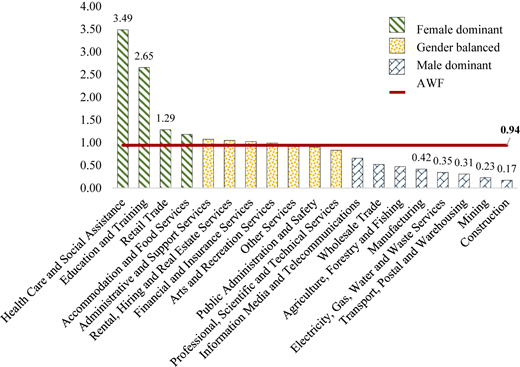
When compared to other Australian industries (Figure 1), manufacturing ranks as the 5th lowest in terms of Female to Male Ratio (FMR), among a total of 19 industries. Only construction, mining, transport and electricity, gas and water service industries have a lower proportion of female workers. It is important to recognise that, despite growing awareness and efforts to promote gender diversity, there has been little significant structural change in gender representation across Australian industries over the past decade. Women continue to be underrepresented in many sectors, particularly in traditionally male-dominated fields such as manufacturing. Perceptions and stereotypes surrounding gender roles and capabilities in the workplace remain a significant barrier to female participation in male-dominated trades (Bridges et al., 2020; Queensland government, 2022).
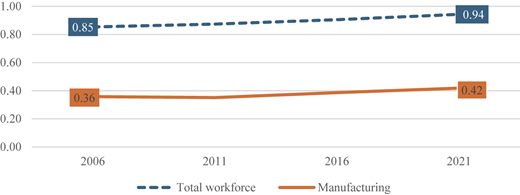
Figure 2 illustrates that between 2006 and 2021, the FMR in the overall AWF increased from 0.85 to 0.94, indicating a gradual but steady improvement in gender balance across most industries. However, when focusing specifically on the manufacturing sector, the growth rate in FMR was noticeably slower, reflecting the persistent challenges this industry faces in achieving gender diversity. In response to these persistent disparities, various government initiatives have been introduced to increase female participation in the manufacturing workforce. These initiatives include funding for skills development, gender diversity targets and support for inclusive workplace practices (Department of Regional Development of Manufacturing and Water, 2023; How, 2023). However, despite these efforts, the overall impact has been limited, and substantial progress in closing the gender gap within the sector has not been made. This slow advancement underscores the deeply entrenched gender disparities within the sector and suggests that more targeted, sector-specific strategies may be required to address the structural and cultural barriers that continue to hinder women’s full participation in manufacturing roles.
Generation diversity in manufacturing
The workforce in Australia is ageing, and manufacturing has a higher average age than most other industry sectors (Richter, 2014; Rahamani, 2023). As the workforce ages, safety strategies and ergonomic requirements may need to be adjusted (Stedmon et al., 2012), and various tools and policies have been developed to support workforce ageing. The New South Wales (NSW) Government has introduced a Healthy Older Workforce Toolkit aimed at reducing risks and increasing the longevity of the ageing workforce (Centre for Work Health and Safety, 2023). Studies have also highlighted how technology interventions may benefit the participation of both women and older workers by automating or improving the safety of strenuous manual tasks (Rabl and Triana, 2014; Stedmon et al., 2012).
Generational diversity facilitates the effective transfer of specific know-how and cultural values from older to younger workers (Lyons and Kuron, 2014; Rabl and Triana, 2014). Consequently, there are many benefits in having a workforce that is generationally diverse, and both retains the skills and knowledge of older workers while also attracting the new talent and skills through a pipeline of apprentices, workers with emerging skills and through succession planning.
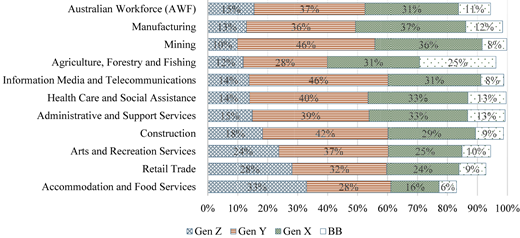
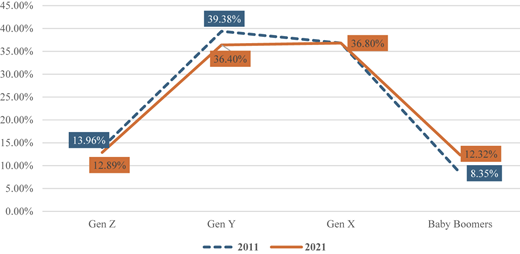
In terms of generational diversity, Figure 3 shows that the representation of Gen Z in the manufacturing industry is lower compared to the accommodation and food services and retail sectors. Additionally, the older workforce (Gen X (1965–1980) and Baby Boomers (1946–1964) make up nearly half of the workforce. Between 2011 and 2021, the percentage of Gen Z (1997–2012) employees in manufacturing declined (Figure 4), while the proportion of Baby Boomers has increased, reflecting a relatively stable but ageing workforce. This raises concerns about exacerbating labour shortages as older workers retire and presents a challenge to meeting the new skill requirements of Industry 4.0. Over the last decade, the ageing workforce profile has been compounded by declining apprenticeship completions. Apprenticeship and traineeship completions declined from a high of 214,600 completions in 2013 to 102,000 completions in 2024 (NCVER, 2024) representing risks to the skills pipeline as older trades-qualified workers retire.
Ethnic diversity in manufacturing
Census data indicate that Australia’s labour force is becoming increasingly ethnically diverse, a trend expected to continue (Hays-Thomas, 2016). The AWF demonstrates higher ethnic diversity compared to other industries, with 33% of manufacturing workers born outside Australia compared to the AWF average of 29% (ABS, 2021). Prior research has demonstrated that the Australian manufacturing sector has improved policies and processes for managing cultural diversity, largely because of the high proportion of migrant employees in the sector (Fenwick et al., 2011). Key HR functions, such as recruitment and selection, training and development, performance appraisal and remuneration, are vital in fostering cultural inclusivity (Fenwick et al., 2011; D’Netto et al., 2014). In manufacturing, these functions have evolved over time to include specific strategies to manage an ethnically diverse workforce and recognise the benefits of ethnic diversity, including creativity and problem-solving that arise from different perspectives (Nguyen, 2019). Despite these advantages,. Fenwick et al. (2011) suggest that the Australian manufacturing sector has not fully leveraged the benefits of diversity, urging employers to move beyond compliance and adopt strategic HR practices that maximise workforce diversity’s potential.
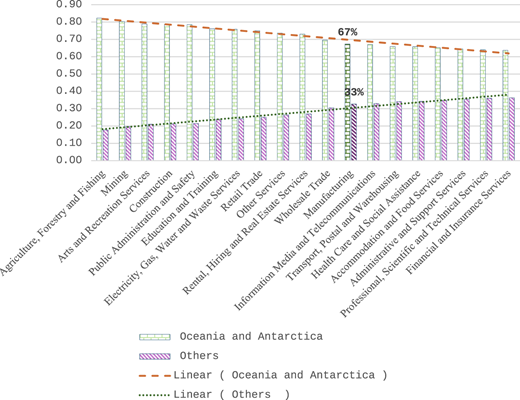
It is vital to examine ethnic diversity within the various sub-sectors to understand the specific challenges and behaviours associated with each one. Figure 5 shows that the ethnic composition of the manufacturing industry is more diverse than many other industries, with 33% of other ethnicities (non-Australian) representation in the industry compared to 18% in the agriculture, forestry and fisheries sector and 21% in the construction sector.
Educational attainment of the manufacturing workforce
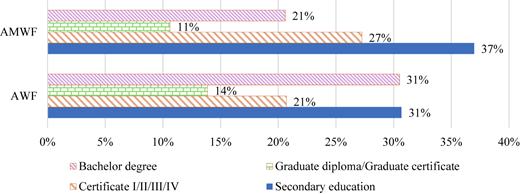
The manufacturing workforce has traditionally consisted of unskilled and trades-based labor, as evidenced by lower-than-average levels of educational attainment (ABS, 2023). This is significant in the context of facing global competition and adapting to Industry 4.0 technology developments. Figure 6 shows that manufacturing employs a lower percentage of university graduates and above (21%) compared to the AWF (31%) and a higher proportion of workers with certificate-level qualifications (37%) compared with 21% in the total AWF (ABS, 2021).
A diverse range of education qualifications and skills within the workforce positively affects innovative climate, employee competence and employee satisfaction, thus increasing the innovation and operational efficiency of an organisation (Choi et al., 2017). Compared to traditional manufacturing, the adoption of advanced technologies in Industry 4.0 demands a different set of skills (Veile et al., 2020). The current composition of educational qualifications suggests a lack of degree-qualified and above employees and an overrepresentation of secondary and certificate-level employees. Manufacturing has among the lowest-qualified workforce. Nearly 68% of manufacturing employees have qualifications at the certificate level or below. In comparison, the mining, healthcare, electricity, gas, water and wholesale sectors have a higher percentage of employees with tertiary qualifications (ABS, 2021). Rana and Sharma (2019) emphasised that Industry 4.0 will significantly change employee skills, requiring organisations to adjust their recruitment and training strategies. As a result, the new Industry 4.0 model will prompt further transformations within firms and their workforces, including through upskilling and the recruitment of new workers. To address these challenges, HR leaders must seek talent with relevant capabilities, such as IT skills and advanced technology-focused qualifications, to prepare for the future.
Manufacturing industry sub-sector composition
Unlike other industries, the Australian manufacturing sector comprises 16 subsectors (ABS, 2021), which is the highest number among all industries defined by the Australian and New Zealand Standard Industry Classification (ANZSIC). This indicates a complex array of unique businesses, each facing distinct challenges. Prior studies have not considered diversity at the sub-sector level, focusing only on manufacturing as a single industry or specific sub-sectors such as food and beverage and textiles (Bryant and Jaworski, 2011). Similarly, many current diversity strategies are aimed at generic solutions based on broad research. For example, state government strategies to attract women to manufacturing usually replicate approaches taken to try to attract women to other male-dominated industries such as construction or mining, without considering differences such as the mining industry’s ability to attract workers based on higher salaries. Such strategies are also aimed at the sector level without consideration of sub-sector nuances.
As such, a more detailed analysis of sub-sector-level diversity is required to understand and address persistent DEI challenges and the impact of sub-sector diversity profiles on the adequacy of the current workforce to meet labour and skill requirements in the context of Industry 4.0. This study conducts a detailed analysis of Australian census data to address the research question:
What are the key differences in diversity representation across manufacturing sub-sectors, and why is this important for the advancement of Industry 4.0?
Data and methods
This study utilised four datasets from the ABS Census of Population and Housing. The census is essential for estimating and analysing trends in workforce diversity, particularly among hard-to-reach and minority populations (Allen, 2021). The ABS datasets from the years 2006, 2011, 2016 and 2021 were used to conduct a comparative analysis of the diversity status of the AMWF, alongside other industries, and to further identify variations within manufacturing sub-sectors and consider these variations within the context of Industry 4.0 technology adoption.
Selected diversity categories and ABS definitions
The definition of each category was crucial for determining exclusions and inclusions in the data, and to validly analyse the data according to gender, generation, disability, ethnicity, and education. Gender was categorised as male and female, with non-binary and other gender categories excluded from the analysis due to low numbers at the sub-sector level in the ABS census dataset. The ABS dataset categorised and reported age in single years, five-year groups and ten-year groups for convenience. These data were extracted and grouped into generational sets for comparison (see analysis process below). Generations were defined by birth years, according to Lyons and Kuron (2014), as Baby Boomers, Generation X, Generation Y and Generation Z (Table 2).
The ABS defines disability as “individuals with a profound or severe core activity limitation who require assistance in their day-to-day lives in one or more of the three core activity areas of self-care, mobility and communication because of a long-term health condition (lasting six months or more), a disability (lasting six months or more) or old age” (ABS, 2021). While differences between the representation of workers with disabilities in the AWF and AMWF are reported earlier in the text, these differences are small (0.18%), and participation rates were too low to allow for further sub-sector level analysis. Disability was therefore excluded from further analysis and discussion in this study.
“Ethnic identity is defined as a sense of belonging, based on ones’ ancestry, cultural heritage, values, traditions, rituals, and often language and religion” (Allen, 2021, p. 56). The Australian national population and housing census includes a range of questions designed to capture data on cultural background and diversity. These cover areas such as indigenous status, citizenship, country of birth, year of arrival for overseas-born individuals, parents’ country of birth, language spoken at home, English proficiency, etc. The ABS data categories are based on the geographical location of birth. Specifically used in this analysis, “Oceania” refers to individuals born in Australia, New Zealand and Pacific Island nations, while “Other” encompasses those born in all other countries.
Educational qualifications were categorised by the ABS across 14 different levels. To simplify the analysis, we focused on four broader categories: Bachelor’s degrees and higher, graduate diplomas and certificates, Certificates I/II/III/IV and secondary education.
The analysis focused on key diversity characteristics within the manufacturing workforce, specifically gender, generation, education and ethnicity. This is because previous research has highlighted significant challenges related to gender and generational diversity in the sector (Choi et al., 2017) and, given the manufacturing industry’s heavy reliance on migrant labour, ethnicity warranted further investigation, particularly at the sub-sector level. Furthermore, as Industry 4.0 continues to reshape skill requirements, this study also examined the current educational qualification mix within the manufacturing workforce. Census population and housing datasets were accessed through the ABS website in April 2024, and the relevant data were extracted using the Census Table Builder Basic tool.
Data aligning and comparison
One of the key challenges encountered was inconsistency in data labelling across different census years. For instance, in 2006, the data were classified under “labour force,” whereas in 2011, it was categorised as “employment, income, and unpaid work.” From 2016 onward, it was labelled as “employment and education.” To ensure consistency in analysis, similar datasets under different subheadings were identified, extracted and realigned before proceeding with data analysis.
Ensuring proper data alignment is a crucial step before conducting any analysis, as inconsistencies can lead to misinterpretations of findings (Wilson, 2017). To achieve this, the data extracted through Table Builder was first converted into an Excel file, enabling realignment according to specific diversity groups, time periods, industries and manufacturing sub-sectors. Since the primary ABS datasets were provided in absolute figures, minor adjustments were made to ensure consistency across different time periods, aligning with best practices in longitudinal data analysis (Lusa et al., 2024).
The data were systematically organised and summarised under each diversity category in Excel, incorporating factors such as years, industries and sub-sectors to align with the study’s analytical objectives. Prior research emphasises the importance of structuring workforce data in a way that facilitates trend analysis and policy development. To enhance the clarity and comparability of the findings, all summarised tables were converted from absolute numbers into percentages, offering a more meaningful representation of diversity trends, which is a standard approach in labour market analysis (Florek, 2022).
Drawing from the data organised in Excel, the analysis and interpretation began with an industry-level comparison between the AMWF (whole-of-sector) and the AWF, to reflect on how the composition has changed over time and in light of existing literature. A more detailed analysis of the manufacturing sector was then carried out at the sub-sector level to gain deeper insights into diversity compositions and variations within the sector. Graphical representations of the results were generated to highlight differences and because visual representation of data is widely recognised as an effective method for enhancing the comprehension of statistical findings (Balan, 2024). The analysis was guided by the research question to consider, within the context of Industry 4.0, the differences between sub-sectors as well as how diversity profiles might intersect within some sub-sectors, creating unique DEI challenges. The findings are discussed further in the text.
Findings
Gender diversity within manufacturing sub-sectors
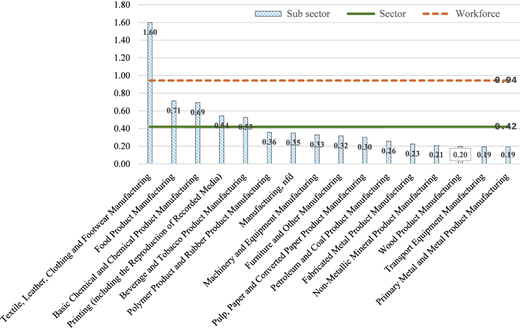
As noted earlier, manufacturing consists of 16 different sub-sectors, and an analysis of the gender composition by sub-sectors uncovers a more nuanced picture of gender in manufacturing. Within manufacturing, there are five sectors that have higher FMRs than the total AMWF (Figure 7). Across the remaining sub-sectors, the majority (66%) have FMR ratios below the AMWF benchmark (FMR <0.42) (Figure 7). Excluding the textile sector (which is exceptional in high female representation), there is a stark lack of gender diversity within the remaining manufacturing industry and this is exacerbated by clear gendered occupational segregation (Borrowman and Stephan, 2020) at the sub-sector level. Manufacturing jobs are traditionally considered male-dominated (Department of Regional Development Manufacturing and Water, 2022), Strategies at the industry level have been targeted to attract more women (Farrell, 2023). However, if sector-wide strategies only serve to attract women to the already female-dominated sub-sectors, the underlying issue of gender diversity in manufacturing is not addressed. Differential strategies targeted at the sub-sector level, which account for gendered occupational segregation, are required.
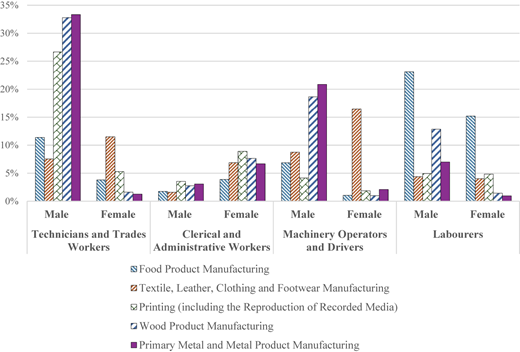
Figure 8 illustrates how, within sub-sectors, occupational segregation occurs. Figure 8 compares technical, clerical, machinery operators and labourer occupations by gender across five key sub-sectors with distinct gender compositions. It shows that even within female-dominated industries such as food manufacturing, technical trade workers and machine operators are predominantly male-dominated roles, with the exception of the textile sub-sector, where the gender distribution is more balanced. In all sectors, women are more likely to occupy clerical and administrative positions. This finding suggests that the underrepresentation of women in various sub-sectors is intensified by gender-based occupational segregation. Therefore, the variations among sub-sectors indicate a need for more focused efforts on gender diversity in specific job roles, along with tailored training strategies and initiatives to improve the gender composition within these occupations.
Generational diversity within manufacturing sub-sectors
Generational diversity is an important part of DEI strategies, as both young and older workers are important for the success of an organisation (Rahamani, 2023). Compared to other key Australian industries, the manufacturing industry is one of the six oldest workforces, with more than 12% of the workforce being Baby Boomers (over 60 years of age) (Figure 2). In contrast, only 13% of the manufacturing workforce are younger workers, Gen Z, who are more evenly represented across other industries (Figure 2). A greater percentage of younger workers (Gen Z) are employed in the retail (22%) and accommodation sectors (36%). These sectors also offer more part-time and casual work opportunities. Part-time or casual work is likely to appeal to younger workers who may be studying while working (Lamb et al., 2020). More than 75% of positions in manufacturing are full-time jobs (ABS, 2021). While full-time jobs provide stability, the lack of part-time or casual positions may limit the industry’s ability to attract younger workers who are developing the skills needed in Industry 4.0 and who may stay on as full-time permanent workers after completing their educational qualifications. In addition, the limited availability of part-time or flexible positions may limit the participation of women with caring responsibilities. Therefore, fostering more flexible and inclusive employment structures could play a crucial role in improving both gender and generational diversity within the manufacturing sector (Lamb et al., 2020). This rigidity underscores a critical barrier to enhancing gender and generational diversity in the sector. Addressing these constraints through more flexible and inclusive employment arrangements is therefore essential for building a workforce that can both meet future skills demands and support broader participation.
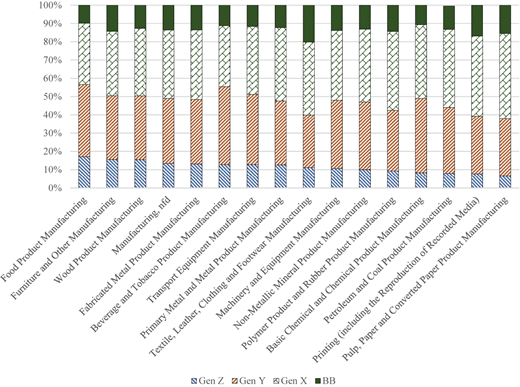
The manufacturing industry has an overall representation of 12% Baby Boomers and 13% Gen Z. However, a more detailed analysis reveals a significant disparity in the representation of Gen Z and Baby Boomers at the sub-sector level, ranging from 6 to 17% and 10–20%, respectively (Figure 9). The textile industry employs a higher percentage of Baby Boomers, at 20%, compared to the industry average of 12%. The printing sector also has a notable representation of older workers, with nearly 17% of its workforce being Baby Boomers (see Figure 9). In contrast, the food production industry has the lowest employment rate for Baby Boomers, at just 9.9%.
Education qualifications within the manufacturing sub-sectors
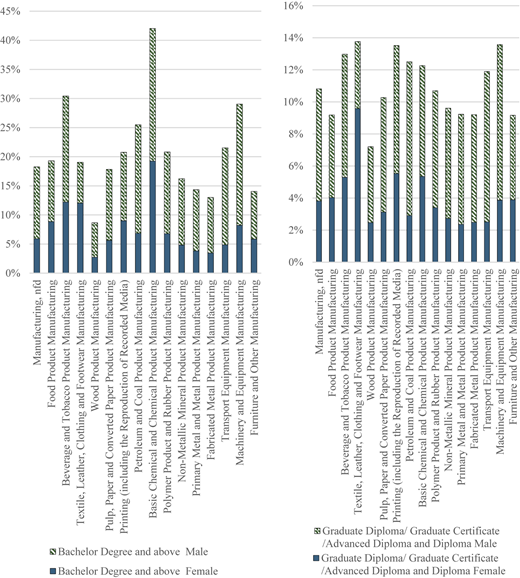
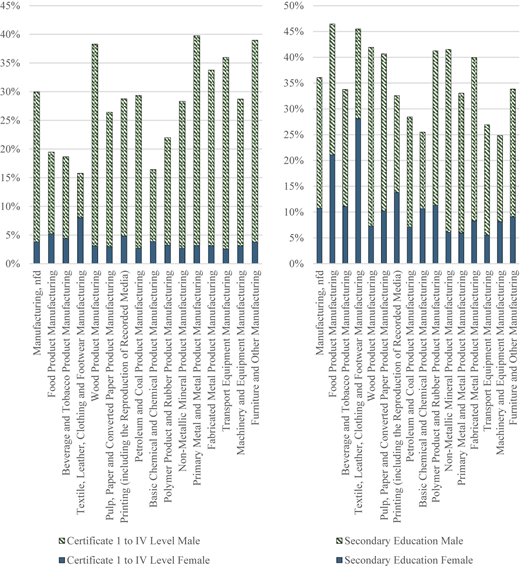
Compared to the AWF, the overall manufacturing workforce has fewer university graduates and a higher proportion of certificate-qualified workers or workers whose highest level of education is secondary schooling. Figure 10 presents a sub-sector-level analysis of qualifications, indicating that both male and female workers exhibit overall lower levels of education across each sub-sector. Higher levels of digital literacy and advanced technological skills are required in Industry 4.0 (Hearn et al., 2023), which suggests that higher proportions of the manufacturing workforce will require university qualifications in the future.
Ethnicity within the manufacturing sub-sectors
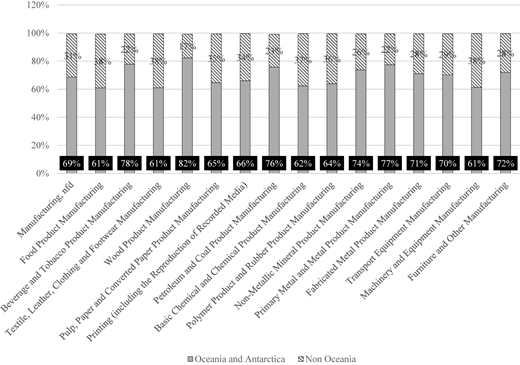
As shown earlier in Figure 5, the manufacturing sector demonstrates a significant level of ethnic diversity, with a higher reliance on migrant labour than other Australian industries. However, the non-Oceania groups (i.e. born outside Australia, New Zealand or the Pacific Islands) within the sub-sectors varied from 17% to 38% (Figure 11). Four sub-sectors, food products, textiles, leather and clothing, basic chemicals and machinery and equipment, show a slightly higher representation of non-Oceania employees, close to 40% (Figure 11). Other than wood products, all sub sectors show more than 20% non-Oceania born employees which is a relatively high level of ethnic diversity when compared to other industries. This has important implications for the management of workforces within manufacturing sub-sectors, suggesting that strategies that support the careers and continued participation of non-English speaking workers, migrants and ethnically diverse workers are critical across all sub-sectors, particularly as new technologies are introduced. Within manufacturing organisations strategies to encourage inclusiveness and an understanding of diverse cultures will be important; however, these strategies will need to also consider intersectional issues. The textile industry, for example, has both a higher proportion of women and higher levels of ethnic diversity, but also a higher proportion of workers with a secondary education only. In this sector, DEI strategies need to account for the unique needs of a workforce dominated by ethnic women with lower levels of education, rather than address only one of these issues (such as gender, or ethnicity) in isolation. In the context of Industry 4.0 changes, should new technologies displace or further marginalise these workers, the gender diversity of manufacturing at the whole of the sector level may be affected.
Discussion
This paper argues that it is essential to understand the specific diversity profiles within various subsectors to improve diversity in manufacturing amid ongoing labour shortages, evolving skill sets due to Industry 4.0 and anticipated growth in the sector. By doing so, DEI policies and strategies can be more effectively targeted. The paper highlights the significance of recognising differences at the subsector level when developing policies and strategies at the state, industry and organisational levels, suggesting that this approach may yield better results than broad, overall policy development for the manufacturing industry. Our analysis underscores the need for an in-depth examination of the manufacturing industry, given the complexity and unique needs of its 16 distinct sub-sectors. The findings reveal significant differences in gender composition and challenges at the sub-sector level, while industry-wide policies primarily focus on attracting more women to the manufacturing sector. Additionally, ensuring a skilled and knowledgeable workforce is retained while attracting new generations depends on the nature of jobs and the specific skill requirements within each sub-sector. Prior research suggests that Industry 4.0 may influence attraction and retention factors such as salary expectations, job engagement and perceptions of job security (Arora and Garg, 2025; Sony et al., 2021), though there is a need for further research into how these dimensions of technological change influence workforce diversity. For instance, the level of technological integration and process development varies across sub-sectors, influenced by the availability of investment in new technologies. Very little research, however, has considered how DEI varies or needs to vary, across the quite heterogeneous sub-sectors that make up the Australian manufacturing industry. This is particularly important to consider as sub-sectors are variously affected by global competition and Industry 4.0 technologies that change both skill and labour requirements. For example, there is growth in food and beverage and metals production, while petrochemicals, machinery and other manufacturing sectors have experienced a decline (Ai Group Research and Economics, 2024). We discuss the implications of and strategies needed to address three critical issues within manufacturing sub-sectors: (1) the effects of generational differences and an ageing workforce on Industry 4.0 advancements; (2) the importance of achieving gender balance to support Industry 4.0 progress and (3) the role of ethnic diversity in building agile and innovative teams.
The impact of aging workforce on industry 4.0 advancements
The analysis reveals significant generational disparities across Australian manufacturing sub-sectors. Sectors such as food products, furniture and wood products have a higher proportion of older workers, while textile, leather, clothing, printing, pulp, paper and converted paper products subsectors demonstrate a stronger representation of Gen Z. These generational differences present both challenges and opportunities, as each sub-sector requires a blend of upskilling and future-focused digital skills to thrive in the era of Industry 4.0 (D’souza and Tapas, 2024). Emerging technologies, especially cobots and other forms of human–robot collaboration, can enhance workplace inclusivity, improve job appeal and reduce physical demands, helping to shift negative perceptions of manufacturing, and provide greater opportunity for both younger and older workers (Javaid et al., 2022; Rahamani, 2023). Adoption of such technologies will, however, vary by sub-sector, requiring further research into their role in advancing DEI.
Industry 4.0 is reshaping job skill requirements, increasing the demand for both technical and soft skills (Hearn et al., 2023). The World Economic Forum estimates that 50% of employees will need to reskill due to the adoption of new technologies (Li, 2022) and closing the digital skills gap is critical for organisational growth. This shift offers an opportunity to attract younger talent, particularly Gen Z, who are likely to be interested in high-tech, innovative roles. Such a strategy may offset the rising average age in Australian manufacturing and counteract concerns about a lack of innovation and fresh talent in the sector as younger workers may bring new perspectives and a readiness for technological environments (Gerhardt et al., 2023; Turban et al., 2019). It also highlights the need for a more educated workforce and targeted reskilling particularly in sub-sectors at risk of falling behind and emphasises the importance of integrating new skill sets provided younger workers with the established craft knowledge of older workers to meet future manufacturing needs. In this context, continuous training for older workers is essential, given their vulnerability in an environment where technological change is rapid and to maximise the opportunity for technology to reduce physical demands (Gerhardt et al., 2023). As noted by Sung and Choi (2021), environmental factors such as technological advancements and market shifts significantly influence the success of diversity and innovation initiatives. As such, further research is needed to explore sub-sector-specific technology and market demands to consider how DEI strategies may support the attraction and/or retention of workers with the skills needed for the specific changes occurring within that sub-sector.
The importance of achieving gender balance to support industry 4.0 progress
The analysis revealed significant differences in the Female-to-Male Ratio (FMR) across the 16 sub-sectors. The textile, leather and clothing industries have higher female representation, whereas the food products and basic chemicals sectors exhibit FMR above the overall manufacturing industry average (FMR = 0.42), indicating greater gender balance than the overall manufacturing industry average. In contrast, all other sub-sectors are male dominated (FMR<0.5). These findings indicate that while the overall representation of women in manufacturing is low, this pattern does not hold uniformly across all sub-sectors. Gender balance varies, presenting distinct challenges at the sub-sector level. Notably, the food products and basic chemicals industries have a relative gender balance, whereas the textile, leather and clothing sectors may require targeted initiatives to attract more male employees and achieve a greater gender balance.
Industry-wide challenges and government diversity guidelines continue to shape workforce composition across the manufacturing sector. Tejani and Kucera (2021) argue that industry-level consideration of gender dynamics is crucial for the reallocation of women across various sectors through technological advancements, enabling them to secure better jobs within the industry. However, our analysis highlights substantial differences in diversity across sub-sectors, driven by distinct business challenges. Most prior research has examined isolated aspects of diversity, such as culture or gender, often treating the manufacturing industry as a homogeneous entity (Peretz et al., 2015; Ferrary and Déo, 2023; Rahamani, 2023). Our findings suggest that broad, one-size-fits-all strategies have yielded only modest progress in diversity over the past decade. To drive meaningful change, diversity initiatives such as the “Women in Manufacturing Strategy” (Department of Regional Development Manufacturing and Water, 2022) must be further tailored to address the unique challenges faced by each sub-sector and also specific occupational groups.
Our findings revealed that, other than in textile manufacturing, women dominate in clerical and administrative positions and are under-represented in technical jobs and professional roles, suggesting that particular attention needs to be paid to where women in manufacturing are being employed. These trends highlight how occupational segregation exacerbates the underrepresentation of women across various sub-sectors. Further research into the textile industry may shed light on strategies to address occupational segregation barriers. Moving beyond generic strategies to increase women’s participation, customised training programs and initiatives focused on increasing female participation in specific job roles within each sub-sector, with consideration of new technology developments occurring within that sector, are now needed.
The role of ethnic diversity in building inclusive and innovative teams
Ethnic diversity in Australian manufacturing has evolved over time, providing numerous benefits, including enhanced creativity and problem-solving through diverse perspectives (Nguyen, 2019). However, Fenwick et al. (2011) argue that the sector has yet to fully capitalise on this potential. Our findings emphasise the necessity for sub-sector-specific policies to unlock the advantages of ethnic diversity, particularly in industries such as beverages and tobacco, primary metals and metal products and wood products. These sectors can experience lower absenteeism and employee turnover, while high performance and innovation can provide a competitive advantage through improved ethnic diversity (Peretz et al., 2015).
A primary concern is that current diversity policies or government driven sector wide strategies often emphasise compliance or financial incentives, such as tax benefits or corporate image, rather than fostering meaningful cultural change and operational agility (D’Netto and Sohal, 1999). Ethnic diversity, however, provides a crucial competitive advantage, and as Tilo (2023) notes, Australia is emerging as a global leader in this area. To sustain this progress, organisations must implement culturally informed diversity strategies that foster innovation. Peretz et al. (2015) further highlight that national cultural values influence the success of diversity initiatives, and Australian manufacturing across all sub-sectors can leverage these values to enhance inclusion efforts. While some sectors, like food and machinery and equipment, already demonstrate significant ethnic diversity, others can benefit from supportive national, state and organisation-level policies to achieve similar outcomes. Targeted, sub-sector-specific diversity strategies would provide greater opportunity to promote genuine representation within a workplace and have a lasting impact on the performance of Australian manufacturers. Future research should focus on ethnic diversity at the sub-sector level, enabling tailored approaches that align with specific operational demands and workforce demographics. This will allow manufacturing organisations to build truly inclusive, agile and innovative teams – moving beyond mere diversity metrics toward genuine business transformation.
Conclusion
In this context, this study examines the complexities of gender and ethnic diversity within the Australian manufacturing sector, with a focus on sub-sector level analysis. Despite ongoing government policies promoting Industry 4.0 and workforce diversity, progress remains uneven, with varied diversity challenges within sub-sectors and also within occupational roles in sub-sectors. Many existing diversity strategies and policies overlook the intersectional issues that are unique within sub-sector manufacturing workforces, instead focusing on one aspect of the workforce profile, such as gender or ethnicity. Research, too, has narrowly focused on either sector-wide initiatives or one aspect of diversity. Our findings demonstrate how addressing diversity in Australian manufacturing requires a targeted bottom-up approach that considers the unique, often intersecting, DEI challenges within sub-sectors. The study offers a novel contribution by linking sub-sector diversity patterns to Industry 4.0 challenges, providing valuable insights for developing targeted DEI strategies that support both inclusion and future skills development.