


Existing studies confirm that larger-sized (versus smaller-sized) female consumers prefer online fashion shopping, yet the impact of this preference on attitudes and behaviours once online remains unclear. This study aims to examine the relationship between consumer body size, product attributes (e.g. garment colour) and psychological states (e.g. perceived weight stigma), and how these factors influence consumer gratitude, which ultimately affects seller ratings and sales.
This research comprised three Prolific-administered studies and one field data analysis. Study 1 (n = 313) examined the effects of body size and garment colour on gratitude, while Study 2 (n = 180) focused on the perceived weight stigma moderation. Study 3 (n = 393) tested the link between gratitude and seller ratings, along with the earlier relationships. Lastly, Wish.com data (6,509,133 transactions) confirmed the seller ratings–sales association.
The findings suggest a link between larger-sized female consumers who choose black garments and/or perceive greater weight stigma, and the gratitude expressed towards online fashion retailers. These factors likely trigger a sense of psychological safety, which aligns with the benefits of online shopping for larger-sized female consumers. Lastly, this study found support that gratitude is associated with the proposed positive downstream effects for retailers.
Amid debates on inclusive sizing versus cost in fashion retail, this research demonstrates that targeting larger-sized female consumers offers significant downstream benefits for online retailers. From a positive psychology perspective, inclusive online experiences can enhance consumers’ well-being by fostering gratitude.
In practical terms, online fashion retailers can increase their ratings by including larger-sized female consumers in their segmentation strategies, implementing tactics to reduce body-image threat and activating feelings of gratitude.
This study contributes valuable insights to the limited body of research in the marketing literature that regards consumer body size as the variable of interest. This is particularly significant, given that body sizes among consumers are consistently increasing.
Introduction
For the global fashion retail industry, valued at US$1.7tn (Smith, 2023a), sizing is a pertinent issue because body sizes have increased worldwide. In 2022, 43% of adults aged 18 years and over were overweight and 16% were living with obesity (WHO, 2024). The larger-size apparel market, commonly known as “plus-size”, accounted for 19% of the total US fashion market in 2020–2021 (Statista, 2022). While there is no universally agreed-upon threshold for determining where plus size begins, it is generally considered to start at US size 14 or larger (Smith, 2023b). At the same time, the fashion retail industry is also digitising at a rapid pace, with online representing around 30% of overall fashion retail sales in Europe, Oceania and the Americas (Statista, 2023). Online fashion retailers and platforms like Macy’s, Amazon and GAP generated e-commerce net sales of US$4.1bn, US$2.9bn [1] and US$2.6bn in 2019, respectively (Peters, 2021), with apparel making up most what consumers are purchasing online when compared to accessories and footwear (Statista, 2023). While many larger-sized female consumers prefer to shop online for fashion to avoid the unpleasant experience of shopping in a physical store (Anthony, 2017), we know little about their thoughts, emotions and behaviour once online (Zhang et al., 2024). Accordingly, this research focuses on female fashion shoppers, reflecting both the commercial prominence of plus-size women’s fashion and existing evidence that men typically report lower concern with body image (Lijbaart, 2024).
Larger-sized female consumers are partly motivated to shop online due to negative experiences and emotions arising from their size (Krems and Neuberg, 2021). This is due to a vast array of reasons including the design of the store, stock inadequacies, the inability to locate representative mannequins or models and treatment from sales staff (Anthony, 2017; Bickle et al., 2015). While the body positivity and inclusivity movement remain strong, larger-sized female consumers still face the ongoing challenge of maintaining resilience against enduring beauty ideals (Widdows, 2019). For example, a survey of XL to 4XL shirt size consumers found the layout and design of plus-sized sections of physical fashion stores particularly symbolic: “Forcing fat people to retreat to the rear of a store speaks volumes: Store owners don’t want to wait on fat people” (Anthony, 2017). Recent interview data reveals that even some plus-sized stores are not regarded as body-positive spaces for these consumers (Pospisil, 2023). As fashion retailers provide inadequate in-store experiences, the non-physical nature of online shopping mitigates some of the negative experiences for these consumers (Ospina, 2020; Scaraboto and Fischer, 2013). Our research suggests that online fashion shopping can alleviate the humiliation and negative body image often experienced by larger-sized female consumers, igniting a sense of gratitude toward online retailers when certain attributes are present.
Gratitude is an emotion that arises when an individual (beneficiary) appreciates benefits received from others, including organisations (benefactor). It is a complex state that involves feelings of thankfulness and appreciation but has a behavioural component whereby the beneficiary desires to reciprocate the favour to the benefactor (Emmons and McCullough, 2003). We argue that gratitude is at play because of the presence of two factors. Firstly, there is the perceived cost to the benefactor, which, in this context, refers to the consumer’s perception of the seller’s financial and non-financial costs to be size-inclusive. Despite the societal movement to be more size-diverse (Chen, 2022), online fashion retailers are still questioning the benefits of servicing this segment. Producing and stocking larger-sized garments involves greater cost and resources, primarily due to greater use of materials (Binkley, 2019; Florsheim, 2022), and some designers and retailers fear an association with “big bodies” (Dion and Tachet, 2019; Volonté, 2019). This has led many larger-sized consumers to feel like “outsiders” in the fashion industry, acutely aware of both the financial and, at times, image-related costs imposed on online retailers that cater to them (Mackiewicz, 2024). Secondly, gratitude is ignited when there is perceived value to the beneficiary, which in this context is the larger-sized female consumer (Raggio et al., 2014). For many of these consumers, the value of shopping online goes beyond the typical benefits of saved time and effort but provides a defensive coping mechanism for their experienced vulnerability (Hill and Sharma, 2020) by providing a “safe” space.
Based on this rationale, we propose that two moderators interact with consumer body size, which is associated with gratitude in an online fashion environment. First, we suggest that selecting a black garment – due to its visually slimming properties that promote a positive body image – may maintain or enhance the feeling of safety which comes from shopping online, thereby allowing for an increased sense of gratitude. Second, we hypothesise that larger-sized female consumers that harbour greater concern about weight stigma may experience heightened gratitude, as the psychological benefit of shopping online is greater for them than those who are not as affected by their size. In other words, these product and personal factors can either threaten or enhance the psychological benefit that larger female shoppers feel when shopping for fashion online. Our research examines the positive downstream consequences for online retailers, stemming from consumer gratitude in the form of seller ratings. The emphasis on seller ratings is driven by their substantial impact on online retailers, acting as a prominent gauge of quality for prospective consumers, of all body sizes. These ratings are instrumental in influencing sales, repeat business and the overall profitability of the firm (De Langhe et al., 2016; Zhao et al., 2013).
In summary, our research addresses the following questions: First, does selecting a black garment, often associated with slimming and camouflaging properties, correspond with greater gratitude for larger-sized female consumers when shopping for fashion online? Second, is there a link between larger-sized female consumers experiencing weight stigma and heightened gratitude? Third, is consumer gratitude in this context associated with higher seller ratings? Finally, do higher seller ratings correlate with increased sales?
Our research adopts a mixed-methods design. The first study examined the relationship between body size (garment size), garment colour and consumer gratitude in a controlled online setting using a fictional brand. The second study replicated the first, but operationalised body size using body mass index (BMI) and introduced perceived weight stigma as an additional moderator. The third controlled study builds on the previous by exploring the combined effects of body size (garment size), the two moderators, and their relationship with consumer gratitude, as well as the link between gratitude and seller ratings. Finally, we analysed field data from Wish.com, comprising 6,509,133 transactions (with 1,491 products as the unit of observation), to investigate the association between seller ratings and sales.
Our findings make several important contributions. Academic research on consumer bodies has heavily focused on the effects of vanity sizing, the slim ideal (Huang et al., 2021), and the impact of salesperson body size (Otterbring et al., 2018), models and endorsers (Naidu et al., 2023), with less focus on consumer’s own body characteristics. We demonstrate the importance for marketing scholars and retailers to consider consumers’ body characteristics as a key variable in understanding responses once interacting within a marketplace, as opposed to simply preferring a type of marketplace, e.g. online (Parkinson et al., 2017). In doing so, we extend on recent work by Yang and co-author’s (2023), which showed that consumers’ body size can influence their response to virtual fitting rooms (VFR). Our findings reveal that consumer body size interacts with both product characteristics and consumer psychological states (e.g. product colour and perceived weight stigma), with stronger evidence for the latter, in activating gratitude during online fashion shopping. Importantly, we propose (and test) that this gratitude does not arise from finding a suitable size or having a large product assortment to shop from, aligning with our theoretical perspective that it stems from the psychological value of shopping in a “safe” space (Parkinson et al., 2017). By highlighting the role of gratitude – a state linked to consumer well-being (Kashdan et al., 2006) and positive buyer–seller relationships through reciprocity (Pelser et al., 2015) – we demonstrate its downstream benefits in enhancing seller ratings and sales. As seller ratings are visible to all consumers of all sizes, the advantages of size inclusivity for online fashion sellers are likely to be wider than their share of the female plus-size market.
Theoretical background and hypothesis development
Body size and the thin ideal
Thinness, a small waist and little body fat is encouraged and praised by societal norms instilling a desire to be skinny in the general population (Tiggemann and Slater, 2013; Volonté, 2019). Existing literature converges on the notion that most consumers have a strong desire to appear thinner than they are (Aydinoğlu and Krishna, 2012; Ketron and Spears, 2017). This is supported in both, research on vanity sizing, i.e. labelling a garment smaller than it actually is, such as sizing it as small when in fact it is medium (Aydinoğlu and Krishna, 2012; Ketron, 2016; Ketron and Spears, 2017; Ketron and Williams, 2018) and research on the bodies consumers are exposed to (e.g. endorsers in advertising and body size and attractiveness of salespeople in retailing; Ferguson et al., 2021; Naidu et al., 2023; Otterbring et al., 2018; Wongkitrungrueng et al., 2020). What has received less attention, however, is the effect of consumer body characteristics, such as size, which we define in terms of consumers’ standard clothing size (e.g. small, medium and large).
Consumers commonly refer to garment sizes to make claims about their own bodies and the bodies of others. To best explain it; American comedian and actress Amy Schumer protested to her inclusion in Glamour magazine’s inaugural plus-size issue, leading to an abundance of stories and comments on Instagram based on determining Schumer’s “true” size (Bishop et al., 2018). Thus, it is not surprising, that vanity sizing in clothing enhances consumers’ self-image, which in turn enhances their attitudes towards the product (Aydinoğlu and Krishna, 2012). Other than self-esteem benefits, consumers’ desire to be thin also comes from a more negatively held attitude toward overweight people (Aagerup, 2011).
In line with vanity sizing, it has been well-documented that the fashion industry promotes a thinness culture via its use of exceptionally thin endorsers and models (Kinley, 2010; Zhang et al., 2024). Research has demonstrated that exposure to the “thin ideal” results in a greater state of self-objectification, weight-related appearance anxiety, negative mood and dissatisfaction with consumers’ own body size (Harper and Tiggemann, 2007), as well as an expectation of discrimination from others (Blodorn et al., 2016; Major et al., 2014).
Because of the thin ideal, women, in particular, have body image discrepancies between their desired body size, versus their perceived body size (Vartanian, 2009). The greater the perceived body image discrepancy the more likely a woman will experience agitation, low self-esteem and depression (Bessenoff, 2006). This emotional impact is magnified after watching an ideal body being portrayed by media or in a retail environment (Bessenoff, 2006). Along with this, larger-sized consumers are commonly battling preconceived negative beliefs about their size and appearance from others, as well as defending their right to be treated equally to smaller-size consumers (Greenleaf et al., 2020). We argue that because larger-sized female consumers experience a diminished sense of social stigma and negative body image feelings within the online shopping environment, consumer gratitude emerges.
Body size and in-store fashion retailers
Historically, larger-sized female consumers have had limited clothing options, with retailers once believing that these consumers preferred apparel that avoided attention being drawn to their body (Bickle et al., 2015). This restriction eroded the power of larger-sized females to express their identity through fashion, making them less autonomous (Scaraboto and Fischer, 2013). While clothing options have improved, with more brands now catering to larger-sized female consumers such as Macy’s, ASOS, Abercrombie and Fitch (Giardina, 2003) and luxury brands such as Dolce and Gabbana (Schuster, 2019), frustration with the physical store environment remains. This includes store attributes such as fitting rooms, mannequins, in-store signage and human attributes such as sales associates and other consumers (Bickle et al., 2015), which contribute to creating an anxiety-inducing environment (Tali, 2016).
Fitting rooms play an important role in fashion retail and enable one of the primary benefits of shopping in person (i.e. the ability to physically try on the garment prior to purchasing). Many larger-sized female consumers avoid fitting rooms due to their level of intimacy and physical closeness, and because they feel negatively about themselves after trying on clothes (i.e. due to poor fit and body-image issues) (Bickle et al., 2015). Seo and Fiore (2016) propose that the fitting rooms’ lighting and mirrors may also cause consumers dissatisfaction. For larger-sized female consumers, even VFRs that use avatars that resemble their own body size led to negative responses as they feel a threat to their self-image (Yang et al., 2023). Mannequins and in-store signage often fail to represent the average consumer and negative interactions with sales associates are more common for larger-sized female consumers (Argo and Dahl, 2018). All of this contributes to feelings of shame related to body weight, which negatively affects the shopping experience for larger-sized female consumers in fashion stores. Larger-sized individuals, in comparison to other vulnerable groups, may be particularly conscious in physical fashion shopping environments as they are often held responsible for their size due to assumptions of ‘overeating’ (Trainer et al., 2022; Rodhain and Gourmelen, 2018) as well as the contextual congruity between weight and garment size.
Body size and online fashion retailers
While earlier research argues that offline shopping offers advantages such as immediate possession, sensory stimulation (e.g. from store surroundings) (Biswas, 2019; Duong et al., 2022), and social interactions (Rohm and Swaminathan, 2004; Bustamante and Rubio, 2017), the latter two benefits are not uniformly experienced by individuals with larger bodies. The online environment has been well-documented as being a “safe space” for larger-sized female consumers, with benefits for promoting healthcare services, fitness memberships, social support groups, as well as other contexts which larger-sized individuals typically find daunting (Parkinson et al., 2017). Similarly, online shopping allows for a more private, accessible and non-judgemental environment when it comes to shopping. Thus, it is not surprising that larger-sized consumers have noted their preference to shop online (Ospina, 2020; Otieno et al., 2005). While convenience is a primary motivator for consumers to switch from offline to online shopping (Childers et al., 2001), enjoyment has been acknowledged to be a key motivator for larger-sized female consumers to switch (Haswell and Vazquez, 2010).
The reduced social stigma and enhanced psychological comfort in the online shopping environment likely foster positive emotions, such as gratitude, among larger-sized female consumers. Gratitude can enhance overall satisfaction with the shopping experience (Emmons and McCullough, 2003).
Consumer gratitude
Gratitude is an important construct in understanding the effectiveness of many marketing strategies including that of relationship marketing and retailing, where exerting extra effort, adapting policies for certain consumers or providing small considerations such as gifts generate feelings of gratitude (Huang, 2015; Palmatier et al., 2009). Gratitude is as a combination of affect, behaviour, and cognition dimensions (Buck, 2004; Emmons and McCullough, 2003). While thankfulness and appreciation relate to the affective components of gratitude, gratitude goes further by including a cognitive element – recognition that the benefactor, i.e. the seller has provided a benefit, and a behavioural element – a desire to reciprocate. The latter differs from indebtedness, which is often related to perceived obligation (Pelser et al., 2015). Some scholars propose that the cognitive aspect of gratitude includes perceived benevolence, where the benefactor is viewed as genuine, caring and altruistic in their motives (Bock et al., 2016). However, in online contexts where human interaction is limited, the benefactor’s motivation may be harder to gauge. We take the perspective that gratitude is more influenced by the perceived value of the benefit and the cost incurred by the seller to provide it. This influence is considered more significant than the seller’s genuine intention to assist the “plus-size” segment. In fact, research has shown that buyers experience gratitude even when the seller’s actions benefit them as well (Raggio et al., 2014). This is important as these consumers may perceive that even with increased costs, online fashion stores are still benefiting financially from extending their target segment to include larger-sized female consumers. Therefore, in this research, consumer gratitude is defined as both an emotion and an expression. What makes gratitude particularly powerful is that, unlike enjoyment or happiness, gratitude involves a deeper emotional appraisal process that is marked by a desire to respond favourably. Thus, gratitude is less self-focused and more likely to result in better outcomes for the retailer when compared to many other positive emotions or states (Wood et al., 2010).
Furthermore, gratitude can be categorised into two types: dispositional gratitude which refers to a natural tendency to experience gratitude across various aspects of life (McCullough et al., 2002) and state gratitude which refers to gratitude, that arises from specific experiences (Wood et al., 2008). There is no basis to suggest that larger-sized female consumers exhibit dispositional gratitude. Instead, we propose that these consumers display situational gratitude specifically in the context of online fashion shopping. Furthermore, not all larger-sized female consumers may experience the same level of gratitude. We propose that product choices, such as colour, along with personal psychological states like perceived weight stigma, play a significant role in shaping gratitude.
The unique effect of black garment
Colour has a wide range of impacts on human psychological functioning including emotions, cognition and behaviour (Elliot and Maier, 2014). For example, bright colours tend to be associative with positive emotions, whereas darker colours with negative emotions (Boyatzis and Varghese, 1994). Equally, the impact of colour can be extended to the world of fashion. A large body of work has shown that the choice of certain clothing colours can improve a consumer’s self-image and physical attractiveness to others (Durrani and Niinimäki, 2021; Tiggemann and Lacey, 2009; Adam and Galinsky, 2012; Shim et al., 1991. For example, women wearing red are rated as more sexually desirable and attractive, due to associations to love and passion (Pazda et al., 2014). Black can carry negative connotations when it comes to clothing, such as sports teams wearing black being perceived as more aggressive, or its associations with mourning in certain cultures. On the contrary, in fashion, black is almost universally regarded as having positive associations (Girman et al., 2014). We are particularly interested in the colour black in this research because fashion researchers have shown that black offers a unique “slimming effect” due to its ability to absorb light, thus giving it a smaller appearance (Elliot and Maier, 2014; Finney, 2006), and secondly due to its ability to camouflage the wearer (Durrani and Niinimäki, 2021).
Research has revealed that consumers, regardless of their own body size, attribute a slimmer body size and higher attractiveness to individuals wearing black clothing (Sidhu et al., 2021). In other words, individuals exhibit an “improved” body image perception when wearing the colour black (Girman et al., 2014). This finding is in line with evidence supporting that clothing choices, in general, can affect emotional states and self-perception (Adam and Galinsky, 2012). A qualitative study conducted in 2021 involving 32 female consumers (and one male) explored the role of garment colour irrespective of body size (Durrani and Niinimäki, 2021). The findings revealed that emotions play a crucial role in colour selection and their subsequent impact on consumers’ emotional states. One participant expressed the emotional significance of colour by stating, “For me, colour is very important. I have to say I go by emotions and feelings with (colour) a lot.” Another participant highlighted the camouflaging effect of black, noting, “There are days when I feel like wearing black because […] I don’t want to be recognised maybe or paid attention to.” These insights suggest that garment colour can significantly influence a consumer’s self-perception and conviction. Choosing a “wrong” colour was reported to negatively affect self-regard, while selecting a “right” colour enhanced emotions. Among the various factors shaping garment colour preferences, internal forces relating to identity, mood and body emerged as more influential when compared to external factors such as ease of matching with one’s existing wardrobe or social acceptance (Durrani and Niinimäki, 2021).
While previous research in clothing colour has examined perceptions of individuals of all sizes, there is strong evidence suggesting that larger-sized female consumers may particularly desire black clothing due to its potential slimming effect. While many larger-sized consumers have expressed a desire for the ability to choose from a variety of garment attributes, including colour to avoid limiting their sense of choice (Tullio-Pow et al., 2021), the selection of black clothing is often regarded as a “safe” option for individuals (Girman et al., 2014). In fact, this reason drives many individuals to choose black when going on their first date (Kramer and Mulgrew, 2018). Thus, it appears logical that this sense of safety would be enhanced for larger-sized females as many of these consumers often report feelings of worthlessness, inferiority and unattractiveness (Gilbert and Miles, 2014). For example, larger-sized females report using clothing for camouflage to a higher degree than their smaller-sized peers (Tiggemann and Lacey, 2009), with black being an enabling colour that helps them blend in, rather than stand out.
Aside from body image, research indicates that clothing choices can significantly trigger emotional and behavioural changes (Tiggemann and Lacey, 2009). Building on the proven link between garment colour and body perception (Durrani and Niinimäki, 2021), and the principles of positive psychology, which suggest that positive emotions foster further positive emotions (Chou et al., 2023), we propose the following perspective. Selecting colours like black that positively support self-perception can maintain or even amplify the psychological benefits of shopping in a body-positive environment. Conversely, a garment colour that challenges body perception may undermine the sense of safety and reduced size-related humiliation that larger-sized female consumers experience when shopping online. Importantly, these effects are distinct from product attributes such as assortment size, which, although are likely to be appealing to larger-sized female consumers, are unlikely to evoke the same sense of safety, positive self-image and psychological processes like gratitude:
When a black garment is chosen over other colours, larger-sized female consumers experience a heightened sense of gratitude during online fashion shopping.
The role of perceived weight stigma
In addition to product attributes, we argue that the consumer’s personal attributes such as their mental state, also plays a role in igniting gratitude for the larger-sized online shopper. Given that perceived weight stigma is a primary motivation for larger-sized consumers to go online (Krems and Neuberg, 2021), we argue that larger-sized female consumers who are more conscious of being treated unfairly or not being respected by others will likely feel a greater sense of gratitude, due to the perceived psychological benefit of reduced human interaction online. Extant research has also determined a stronger association between weight stigma and diminished mental health with increasing BMI (Emmer et al., 2020), and that weight stigma significantly affects the experiences of larger-sized females in retail settings (Krems and Neuberg, 2021). In fact, individuals who perceive that they have been discriminated against based on weight are roughly 2.5 times as likely to experience mood or anxiety disorders as those that do not (Tomiyama et al., 2018).
In retail environments, consumers of larger sizes may interpret unfavourable store conditions as manifestations of weight stigma, which can significantly impact their emotional and cognitive responses. Given that gratitude is based on the benefits received by the beneficiary, these consumers, who are sensitive to weight stigma are likely to place greater emphasis on the psychological benefits received from an online fashion shopping experience. Prior research indicates that perceptions of stigma can heighten sensitivity and lead to defensive responses (Major and O'Brien, 2005). Thus, it is reasonable to posit that larger-sized female consumers who are more apprehensive about negative reactions from others, would experience a greater sense of gratitude when shopping in an environment that mitigates such situations:
When perceived weight stigma is heightened, larger-sized female consumers experience an increased state of gratitude during online fashion shopping.
Seller ratings
The consequences of gratitude on the benefactor have been well-established in many fields, including marketing (Fazal-e-Hasan et al., 2017; Palmatier et al., 2009). Gratitude has been shown to have a positive impact on consumer satisfaction with the organisation (Fazal-e-Hasan et al., 2017), behavioural loyalty (Huang, 2015) and purchase intention (Mishra, 2016), among other consumer outcomes. Specifically for the research at hand, there is evidence to suggest that gratitude results in a greater intention to rate retailers more positively. Morales (2005), for example, manipulated the effort made by a fictitious service provider when exhibiting their products. This effort boosted the service provider’s positive ratings, with the link being mediated by feelings of gratitude and indebtedness. Likewise, Soscia (2007) showed that gratitude results when the seller is perceived to be responsible for goal-congruent consumption, which consequently predicts favourable WOM and repurchase intention. Furthermore, Madrigal (2020) empirically demonstrated a gratitude–WOM relationship in a higher education context.
To understand the benefits of gratitude on the beneficiary, we draw on the theory of positive psychology, which states that positive emotions such as gratitude lead to other positive emotions such as happiness, pride, hope and even greater overall well-being and life satisfaction (Chou et al., 2023; Kashdan et al., 2006). The literature stipulates that pleasant emotions broaden thought-action repertoires such as attention, openness to information and working memory (Fredrickson, 2004). This consequently builds enduring personal resources such as increased resilience and better learning strategies (Fredrickson, 2004). Based on this, the link between gratitude and higher-order emotions, e.g. improved mental health (Froh et al., 2011), and satisfaction with life (Fredrickson, 2001) is not automatic but is rather mediated by the individual’s ability to build positive resources. By exploring gratitude through the lens of positive psychology, this study aims to elucidate how fostering a sense of gratitude among larger-sized consumers can contribute to enhanced retailer–consumer relationships and positive outcomes such as increased seller ratings, but also greater well-being for larger-sized consumers.
Based on the above insight, we argue that larger-sized consumers may experience gratitude towards online fashion retailers due to perceived efforts to accommodate their needs in terms of extra cost and possible image concerns and provide a benefit that goes beyond the tangible clothing garment purchased – a positive shopping experience. To summarise, larger-sized female consumers tend to experience a psychologically safer shopping environment online compared to brick-and-mortar stores (Scaraboto and Fischer, 2013). This enhanced sense of safety may lead to feelings of gratitude towards the seller, potentially explaining the positive relationship between consumer body size, the proposed moderators and favourable seller ratings:
There is a positive relationship between a state of consumer gratitude and seller ratings in the context of online fashion retail.
Sales
The leap from positive online seller ratings to sales is minor from a theoretical perspective, but important for managers. Seller ratings are an important part of electronic word of mouth (e-WOM) which are interpreted as the valence metric of e-WOM (Babić Rosario et al., 2016). Although there are some conflicting findings (e.g. Hartmann et al., 2021; Hu et al., 2014), research largely converges on the notion that ratings significantly increase sales across many product categories, including beauty products (Moe and Trusov, 2011; Chevalier and Mayzlin, 2006). Most consumers refer to online reviews in their purchase decision-making process (Babić Rosario et al., 2016), largely due to the credibility attached to anonymous ratings and reviews (Donthu et al., 2021). Li et al. (2019) argued that a high numerical rating reflected a higher level of quality and value of products, which in turn results in increased sales.
Due to the link between consumer satisfaction and seller ratings (Engler et al., 2015), we suggest that the absence of social stigma in the online shopping environment fosters a positive experience for larger-sized female fashion consumers, ultimately contributing to improved seller ratings. Thus, we predict:
There is a positive relationship between seller ratings and sales in the context of online fashion retail.
Research overview
We test our hypotheses across four studies. Figure 1 presents our conceptual framework and provides a visual summary of the studies. Study 1 examines the interaction between consumer body size (measured by garment size) and garment colour on consumer gratitude, H1, through a controlled online study using a fictional online fashion retailer. Study 2 investigates H2, focusing on the interplay between consumer body size (measured by BMI) and perceived weight stigma on gratitude via another controlled online study with the same fictional retailer. Study 3 explores the impact of consumer gratitude on seller ratings, H3, through a similar research design, also testing for H1 and H2. Finally, Study 4 analyses secondary data from the large e-commerce platform Wish.com to test H4, the relationship between seller ratings and sales.
 The flowchart shows consumer body size and perceived weight stigma influencing gratitude, which links to seller ratings and sales. Garment colour also affects gratitude. The table outlines four studies: Study 1 examines body size, garment colour, and gratitude. Study 2 investigates body size, perceived weight stigma, and garment colour on gratitude. Study 3 tests body size, perceived stigma, and garment colour with gratitude and seller ratings. Study 4 analyses field data on seller ratings and sales.
Conceptual model and overview of studies
Source: Authors’ own work
The flowchart shows consumer body size and perceived weight stigma influencing gratitude, which links to seller ratings and sales. Garment colour also affects gratitude. The table outlines four studies: Study 1 examines body size, garment colour, and gratitude. Study 2 investigates body size, perceived weight stigma, and garment colour on gratitude. Study 3 tests body size, perceived stigma, and garment colour with gratitude and seller ratings. Study 4 analyses field data on seller ratings and sales.Conceptual model and overview of studies
Source: Authors’ own work
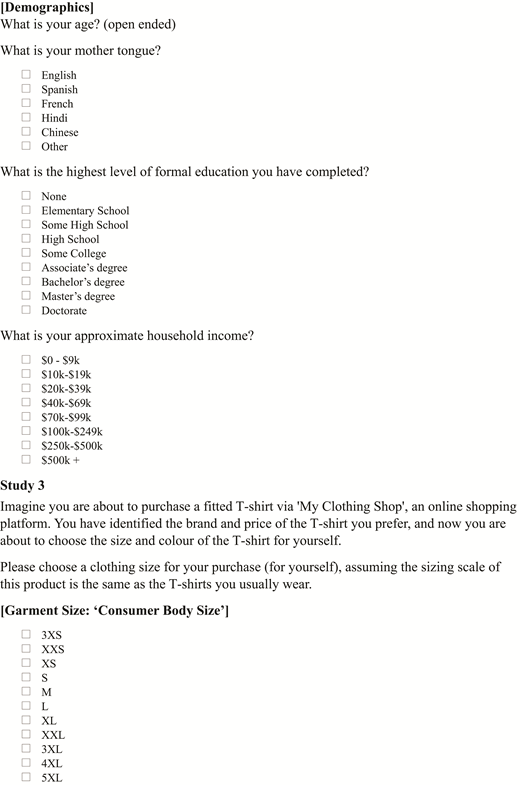
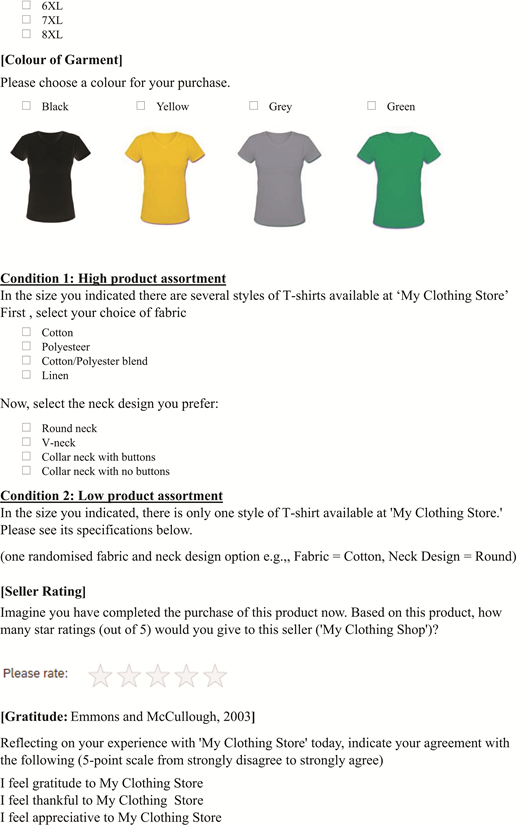
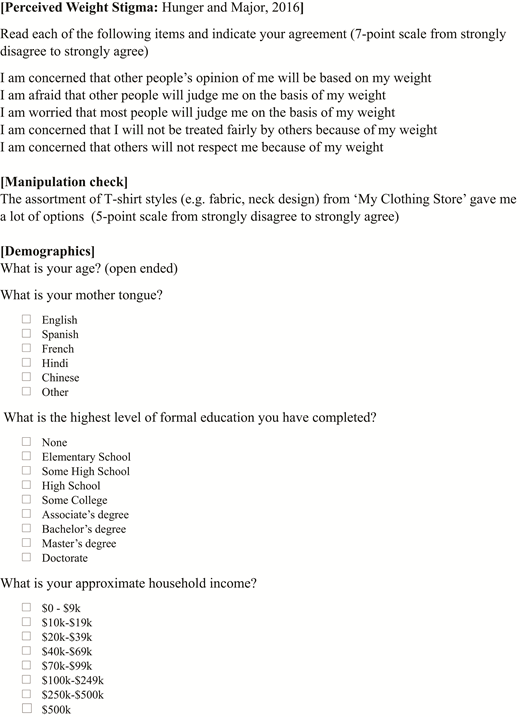
The reported measures across the controlled studies (Studies 1–3) are summarised in the Appendix. To assess the reliability and validity of all multi-item constructs included in hypothesis testing, we conducted construct validation procedures, with detailed statistics reported in AppendixTable A1. Confirmatory factor analysis was conducted using Smart PLS4. Construct reliability and validity were examined following previous researchers (e.g. Hair et al., 2006; Mortimer and Wang, 2022), considering composite reliability (CR > 0.80) for construct reliability; path coefficient (PC > 0.60; also referred to as factor loading) for measurement items and average variance extracted (AVE > 0.50) for convergent validity, and heterotrait-monotrait ratio for discriminant validity (HTMT < 0.90). All constructs met the recommended benchmarks for adequate reliability and validity.
Study 1
Method
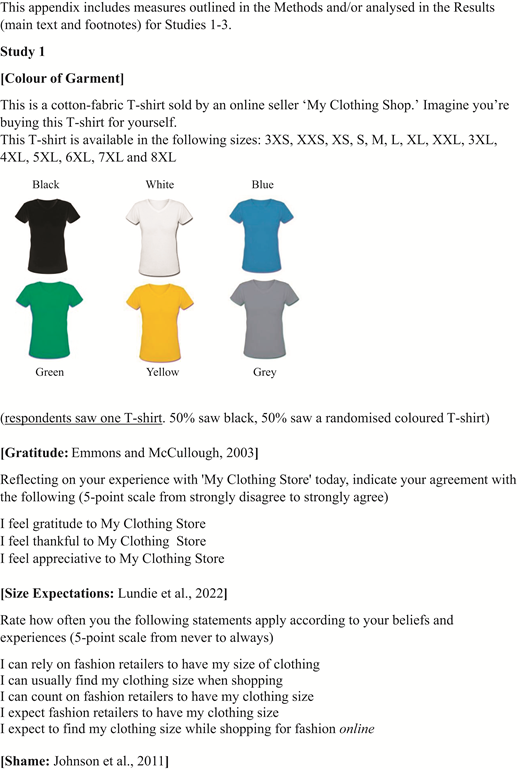
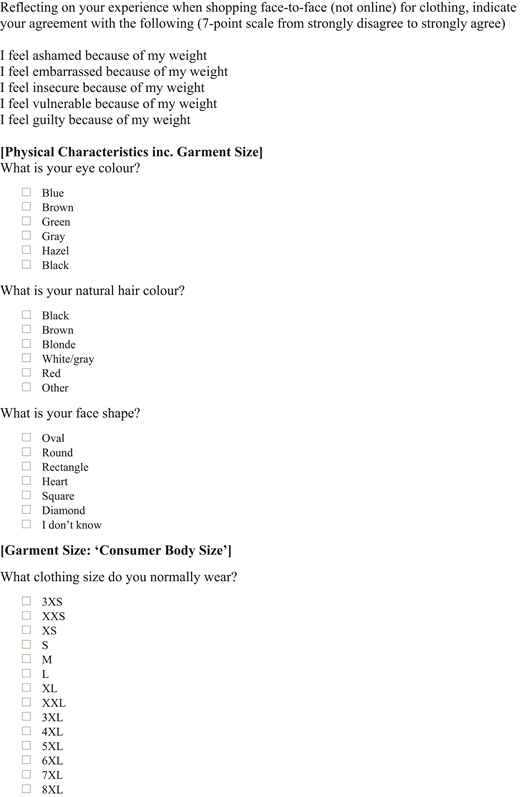
The first study was administered online to female UK consumers via Prolific (n = 313; MAge = 38.23; SD = 12.16). Respondents were presented with a scenario that described an opportunity to bid for a T-shirt for themselves to go in the draw for a cash prize (Fuchs et al., 2015; Wertenbroch and Skiera, 2002). They were told that the T-shirt was sold by a fictional online seller, “My Clothing Shop”, and an image of the T-shirt was shown. 50% of the sample were shown a black T-shirt and 50% were shown a coloured T-shirt randomised across five colours, white, blue, green, yellow and grey, to minimise possible confounding effects from colour preference. Importantly, the T-shirt was available in the following sizes: 3XS, XXS, XS, S, M, L, XL, XXL, 3XL, 4XL, 5XL, 6XL, 7XL and 8XL. Respondents were then asked several questions regarding their gratitude towards the online seller measured with three items on a five-point scale by Emmons and McCullough (2003): grateful, thankful and appreciative (α = 0.971; M = 2.85, SD = 0.96). To determine participant body size, the questionnaire asked respondents what clothing size they normally wear (measured from 3XS to 8XL). This follows conventions in the existing literature where garment size is considered as a proxy for consumer body size (Simmons et al., 2013; Moy et al., 2018). Additional questions about other physical features were included (e.g. face shape) to help reduce potential discomfort from solely targeting body size.
To account for the possibility that gratitude effects may be merely due to the satisfaction felt from the presence of larger garment sizes (Harju and Huovinen, 2015), we measured consumers expectancy to find their garment size when shopping for fashion online, measured with five items on a five-point scale (Lundie et al., 2022): I can rely on fashion retailers to have my size in clothing/I can usually find my size when shopping/I can count on fashion retailers to have my clothing size/I expect to find my clothing size while shopping for fashion online (α = 0.920, M = 3.8, SD = 0.90).
We also measured the degree of shame respondents felt when shopping for fashion in a brick-and-mortar retail store, to explore whether it is more pronounced for larger-sized female consumers. While shame is not a construct in our formal framework – unlike perceived weight stigma, which is more cognitive in nature – shame is an emotional response. Thus, we seek to support our theoretical argument that larger-sized consumers are more likely to find in-store shopping experiences emotionally distressing, reinforcing the notion that online shopping may serve as a psychological safe haven. This addition was particularly important given that our research was conducted exclusively in an online environment. Shame experienced during face-to-face shopping was measured using five items on a seven-point scale adapted from Johnson et al. (2011): I feel ashamed/embarrassed/insecure/vulnerable/guilty because of my weight (α = 0.97; M = 3.9, SD = 1.9). The questionnaire concluded with sociodemographic questions.
Results
The sample was distributed across the independent variable of garment sizing, with 36% of the sample being L or larger. Using Hayes PROCESS macro Model 1 (Hayes, 2013), we tested for the interplay of consumer body size and T-shirt colour selected on consumer gratitude (H1). The results in Table 1 show that the interaction of body size and garment colour positively predicts gratitude (β = 0.17, t = 2.48, p < 0.05). Moreover, the conditional effect of body size on gratitude is significant for black garment colour (effect = 0.18, t = 3.78, p < 0.01) but not for non-black garment colour (effect = 0.01, t = 0.21, p > 0.05). Figure 2 presents a visual representation of the results. Importantly, this moderated effect remained significant and did not change direction when controlling for consumer expectancy to find their garment size. In fact, size expectancy was not significant on consumer gratitude (β = −0.05, t = −0.68, p > 0.05). Finally, results of a linear regression supported that larger-sized consumers are likely to have more negative experiences in a brick-and-mortar fashion retail environment (β = 0.54, t = 8.74, p < 0.01). Hence, we provide empirical support that brick-and-mortar shopping can elicit shame for larger-sized consumers, validating previous evidence (Nittle, 2020; Tali, 2016).
Study 1: garment colour moderation (body size = garment size)
| DV = Gratitude | Model | |||
|---|---|---|---|---|
| β | SE | t | p | |
| Constant | 2.795 | 0.221 | 12.662 | <0.001 |
| Body size | 0.010 | 0.048 | 0.214 | 0.831 |
| Garment colour | −0.756 | 0.319 | −2.371 | 0.019 |
| Body size * Garment colour | 0.165 | 0.067 | 2.476 | 0.014 |
| Tests of highest order unconditional interaction | |||||
|---|---|---|---|---|---|
| R2-chng | F | Df1 | Df2 | p | |
| Body size * Garment colour | 0.019 | 6.132 | 1.000 | 309.000 | 0.014 |
| Conditional effects of the focal predictor at values of the moderator | |||||
|---|---|---|---|---|---|
| Effect | SE | t | L95 | U95 | |
| Non-black garment | 0.010 | 0.048 | 0.214 | −0.084 | 0.105 |
| Black garment | 0.178 | 0.047 | 3.778 | 0.084 | 0.267 |
 The graph plots gratitude against garment size, showing two lines: one for black garments and one for non black garments. Gratitude for black garments is lower in small and middle sizes but rises sharply with large sizes. Gratitude for non black garments remains higher and relatively steady across sizes. This suggests garment colour moderates the relationship between body size and gratitude.
Moderation results from Study 1 – Consumer body (garment) size and garment colour
Source: Authors’ own work
The graph plots gratitude against garment size, showing two lines: one for black garments and one for non black garments. Gratitude for black garments is lower in small and middle sizes but rises sharply with large sizes. Gratitude for non black garments remains higher and relatively steady across sizes. This suggests garment colour moderates the relationship between body size and gratitude.Moderation results from Study 1 – Consumer body (garment) size and garment colour
Source: Authors’ own work
Study 2
The objective of this study is to test H2 – the interplay between body size and perceived weight stigma on consumer gratitude, as well as provide further validation for H1 – the garment colour moderation. As a larger garment size may be required due to height rather than body fat percentage, body size was conceptualised as BMI in Study 2 to ensure the robustness of the interpretation of results.
Method
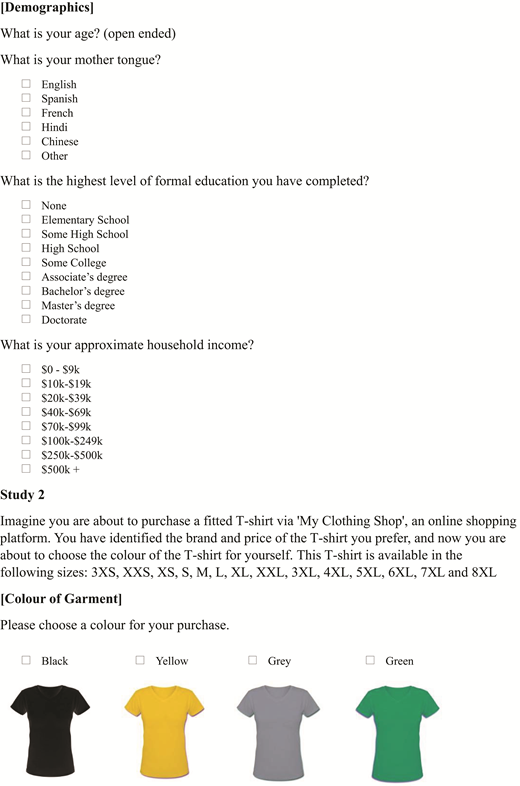
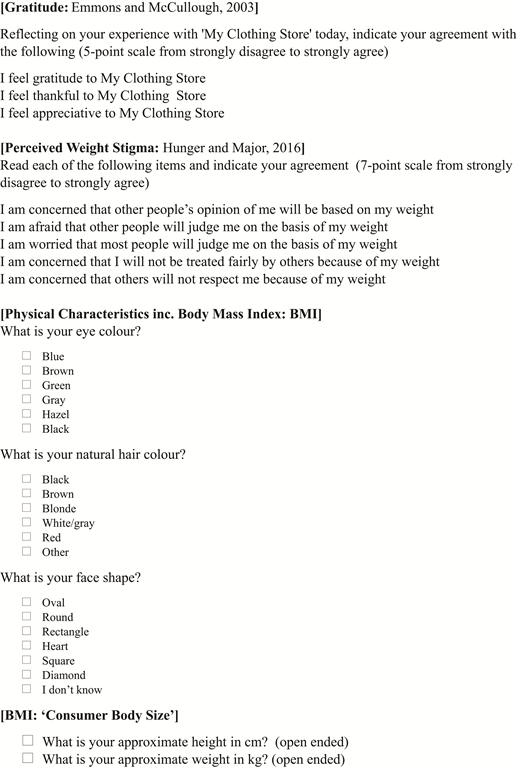
The second study was administered online to US female consumers via Prolific (n = 180; MAge = 44.28; SD = 13.76) and mimicked the design of Study 1. However, to replicate the real-world e-commerce platform shopping experience, the participants were asked to choose the colour of the T-shirt, rather than being allocated a randomised colour. They were shown four colour options of the same T-shirt (the same T-shirt as Study 1), including black, green, grey and yellow. The colours white and blue, which were included in Study 1, were excluded due to their likely popularity as a choice. This decision was made to ensure a more balanced distribution of participants between the non-black garment colours. More consumers (n = 102, 57%) chose the black T-shirt rather than the other colours (i.e. yellow, 9%; grey, 18%; and green 16%). Following Yang et al. (2023), respondents were asked about their weight (in kilograms) and height (in metres) to gauge BMI. BMI (M = 32.89, SD = 17.32) was calculated as weight divided by the square of height (Yang et al., 2023). 64% of the sample were regarded as overweight or obese based on the National Health Service classification of BMI (NHS Inform, 2024). Perceived weight stigma was measured using the five items, on a seven-point scale, from Hunger and Major (2016): I am concerned that other people’s opinion of me will be based on my weight/I am afraid that other people will reject me because of my weight/I am worried that most people will judge me on the basis of my weight/I am concerned that I will be treated fairly because of my weight/I am concerned that others will not respect me because of my weight (α = 0.981; M = 4.22, SD = 1.94). Gratitude towards the online seller was measured with the same items as Study 1, on a five-point scale, adopted from Emmons and McCullough (2003) (α = 0.975; M = 3.39, SD = 1.02).
Results
Using Hayes’ PROCESS macro Model 2 (Hayes, 2013), we tested how garment colour choice and perceived weight stigma might influence the relationship between body size and gratitude. This analysis allowed us to test our hypotheses (H1 and H2) regarding the parallel moderating roles of these variables. The results in Table 2 showed the choice of a black colour T-shirt did moderate the relationship between BMI and gratitude (β = 0.03, t = 2.10, p < 0.05), providing further support for H1. Furthermore, perceived weight stigma moderated the relationship between BMI and gratitude (β = 0.01, t = 2.00, p < 0.05), in support of H2. Specifically, there were no significant effects at a low level of perceived weight stigma [p > 0.05, Figure 3(a)]. The choice of black colour T-shirt leads to a positive relationship between BMI and gratitude at a middle level of perceived weight stigma [effect = 0.02, t = 2.95, p < 0.01, Figure 3(b)], and a high level of perceived weight stigma [effect = 0.03, t = 2.915, p < 0.01, Figure 3(c)].
Study 2: perceived weight stigma and garment colour moderation (body size = BMI)
| DV = Gratitude | Model | |||
|---|---|---|---|---|
| β | SE | t | p | |
| Constant | 4.679 | 0.595 | 7.866 | 0.000 |
| BMI | −0.034 | 0.018 | −1.960 | 0.052 |
| Perceived weight stigma | −0.254 | 0.110 | −2.304 | 0.022 |
| BMI * Perceived weight stigma | 0.006 | 0.003 | 1.997 | 0.047 |
| Garment colour | −1.024 | 0.432 | −2.369 | 0.019 |
| BMI * Garment colour | 0.027 | 0.013 | 2.101 | 0.037 |
| Tests of highest order unconditional interaction(s) | |||||
|---|---|---|---|---|---|
| R2-chng | F | Df1 | Df2 | p | |
| BMI * Perceived weight stigma | 0.021 | 3.988 | 1.000 | 174.000 | 0.047 |
| BMI * Garment colour | 0.024 | 4.415 | 1.000 | 174.000 | 0.037 |
| Both | 0.036 | 3.382 | 2.000 | 174.000 | 0.036 |
 The graph indicates that when perceived stigma is low, gratitude for non black garments declines as body mass index increases, while gratitude for black garments increases slightly. At low body mass index, non black garments elicit higher gratitude, but at high body mass index, black garments elicit more gratitude.
Moderation results from Study 2
Note(s): Interaction between consumer body size (BMI) and garment colour at a (a) low level of perceived weight stigma; (b) middle level of perceived weight stigma; (c) high level of perceived weight stigma
Source: Authors’ own work
The graph indicates that when perceived stigma is low, gratitude for non black garments declines as body mass index increases, while gratitude for black garments increases slightly. At low body mass index, non black garments elicit higher gratitude, but at high body mass index, black garments elicit more gratitude.Moderation results from Study 2
Note(s): Interaction between consumer body size (BMI) and garment colour at a (a) low level of perceived weight stigma; (b) middle level of perceived weight stigma; (c) high level of perceived weight stigma
Source: Authors’ own work
 The chart presents how gratitude varies among individuals of different body sizes when experiencing different levels of stigma. The vertical axis represents gratitude scores, and the horizontal axis lists small, medium, and large body sizes. Each size group includes three bars representing low, medium, and high stigma levels. Gratitude scores rise gradually as stigma levels increase for all body size groups. The highest gratitude value appears among individuals with large body sizes under high stigma, suggesting that stronger perceived stigma may correspond to higher gratitude responses.
Moderation results from Study 3 – consumer body (garment) size and perceived weight stigma
Source: Authors’ own work
The chart presents how gratitude varies among individuals of different body sizes when experiencing different levels of stigma. The vertical axis represents gratitude scores, and the horizontal axis lists small, medium, and large body sizes. Each size group includes three bars representing low, medium, and high stigma levels. Gratitude scores rise gradually as stigma levels increase for all body size groups. The highest gratitude value appears among individuals with large body sizes under high stigma, suggesting that stronger perceived stigma may correspond to higher gratitude responses.Moderation results from Study 3 – consumer body (garment) size and perceived weight stigma
Source: Authors’ own work
Study 3
In this study, we test the proposed parallel moderation of garment colour and perceived weight stigma on the relationship between consumer body size on gratitude, introducing the link between consumer gratitude and seller ratings. While BMI is arguably a more accurate measure of body shape (Yang et al., 2023; Vazquez et al., 2024), given that garment size is more tangible for retailers, we resume to conceptualising consumer body size as garment size.
Method
The third study was administered online to US female consumers via Prolific (n = 393; MAge = 40.22; SD = 12.53). The study design followed that of Study 2. Similarly, more consumers (n = 230, 58%) chose the black T-shirt rather than the other colours (i.e. yellow, 8%; grey, 15%; and green 19%). Measures were identical to those used in Study 2, except for consumer body size. For this variable, respondents were asked to indicate the size of t-shirt they required (ranging from 3XS to 8XL). Furthermore, participants were asked to rate the seller by giving My Clothing Shop a star rating from 1-star to 5-stars (M = 4.04; SD = 0.85). This is a common dependent variable in marketing and consumer research (Kronrod and Danziger, 2013; Ludwig et al., 2013; Ordenes et al., 2017) and reflects satisfaction with the seller (Zhao et al., 2013).
Results
The sample was distributed across the independent variable of garment sizing, with 51% of the sample being L or larger. Using Hayes PROCESS macro Model 9 (Hayes, 2013), we tested for the moderating role of perceived weight stigma (H3) and consumers’ choice of colour (H4) on the relationship between consumer body size on seller ratings via gratitude. The results in Table 3 showed that perceived weight stigma moderated the relationship between body size and gratitude (β = 0.05, t = 2.51, p < 0.05), finding further evidence for H2. However, the choice of a black colour T-shirt did not significantly moderate the relationship between body size and gratitude (β = −0.01, t = −0.064, p > 0.05). At low levels of weight stigma (−1SD), the effect of body size on gratitude, and then on seller ratings, is not significant (effect = 0.01, CI = −0.03–0.05). The effect becomes significant at mean levels of perceived weight stigma (effect = 0.04, CI = 0.01–0.07), with the effect becoming stronger at a high level of perceived weight stigma (effect = 0.07, CI = 0.03–0.12) [2]. A Johnson Neyman analysis showed that the zone of significance started at a perceived weight stigma of 3.25 out of 7, equating to 61.83% of respondents. Furthermore, the index of partial moderated mediation is significant for perceived weight stigma (Index = 0.02, CI = 0.01–0.03). The direct effect is not significant (β = 0.01, t = 0.142, p > 0.05), indicating a full mediation (Zhao, Lynch and Chen, 2010). Figure 4 shows the moderation of weight stigma on the relationship between body size and gratitude [3].
Study 3: gratitude mediation (body size = garment size)
| DV = Gratitude | Model 1 | |||
|---|---|---|---|---|
| β | SE | t | p | |
| Constant | 4.353 | 1.059 | 4.110 | 0.001 |
| Body size | −0.079 | 0.097 | −0.820 | 0.413 |
| Perceived weight stigma | −0.489 | 0.201 | −2.430 | 0.016 |
| Body size * Perceived weight stigma | 0.047 | 0.019 | 2.505 | 0.013 |
| Garment colour | −0.212 | 0.771 | −0.275 | 0.783 |
| Body size * Garment colour | −0.005 | 0.071 | −0.064 | 0.949 |
| Tests of highest order unconditional interaction(s) | |||||
|---|---|---|---|---|---|
| R2-chng | F | Df1 | Df2 | p | |
| Body size * Perceived weight stigma | 0.015 | 6.274 | 1.000 | 378.000 | 0.013 |
| Body size * Garment colour | 0.001 | 0.004 | 1.000 | 378.000 | 0.949 |
| Both | 0.015 | 3.184 | 2.000 | 378.000 | 0.042 |
| DV = seller ratings | Model 2 | |||
|---|---|---|---|---|
| β | SE | t | p | |
| Constant tt | 2.833 | 0.302 | 9.382 | 0.001 |
| Body size | 0.004 | 0.027 | 0.142 | 0.887 |
| Gratitude | 0.342 | 0.039 | 8.761 | 0.001 |
| Perceived weight stigma/garment colour | Bootstrapping indirect effects: Body size → Gratitude → Seller ratings | |||
|---|---|---|---|---|
| Effect | SE | L95 | U95 | |
| Low/Non-black | 0.009 | 0.024 | −0.039 | 0.056 |
| Low/Black | 0.008 | 0.019 | −0.032 | 0.045 |
| Medium/Non-black | 0.040 | 0.020 | 0.002 | 0.080 |
| Medium/Black | 0.039 | 0.018 | 0.006 | 0.075 |
| High/Non-black | 0.072 | 0.024 | 0.026 | 0.122 |
| High/Black | 0.070 | 0.025 | 0.023 | 0.121 |
| Indices of partial moderated mediation | ||||
|---|---|---|---|---|
| Effect | BootSE | BootLLCI | BootULCI | |
| Perceived weight stigma | 0.016 | 0.007 | 0.003 | 0.031 |
| Garment colour | −0.002 | 0.026 | −0.053 | 0.051 |
As a robustness check to rule out late responder bias, we reran the models for Studies 1–3 after removing the latest 5% of response submissions. The findings remained consistent, with no impact on hypothesis test conclusions (results available on request).
Study 4
This study investigates the relationship between seller ratings and sales in the online fashion context, leveraging a field data set to test H4. In addition, post hoc analyses were conducted to explore the connections between consumer body size, seller ratings and sales. While our theoretical framework outlines boundary conditions involving both product and personal attributes, this study aims to provide real-world evidence of the independent variable’s impact and the downstream effects of gratitude.
Method
This study considered sales data for summer clothes from Wish.com. In total, our data set contained data from 6,509,133 sales transactions across 1,575 products. We only considered data for products for which data on dress size (XXXS–XXXXXXL) was available (n = 1,491). The unit of observation was 1,491 products (rather than individual consumers). We analysed the size associated with each product, consumer-generated seller ratings, along with sales data.
For each product, we had information regarding the ratings consumers had assigned to the seller from one to five, analogous to a star rating (Ordenes et al., 2017), consistent with the approach used in Study 3. Seller ratings are a variable that required no further processing (Ordenes et al., 2017). Importantly, Wish.com acts like a digital platform, a digital intermediary that enables economic transactions between two sets of agents, such as sellers and consumers (Sriram et al., 2014), thus the rated seller is not Wish.com, but a third party who performs transactions on Wish.com. To measure sales, we also had information on how often each product had sold (Jasmand et al., 2012), which also required no further processing.
Results
A Pearson correlation analysis showed the positive relationship between seller ratings and sales (r = 0.123, p < 0.001). Therefore, H4 is supported. A post hoc analysis was conducted to explore the role of body size on seller ratings and sales. Using Hayes PROCESS macro Model 4 (Hayes, 2013), we tested the relationship between body size and sales via seller ratings. The results showed a significant positive relationship between body size and seller ratings (XXXS was coded as 1 and XXXXXXL was coded as 12; M = 3.98 – Medium; SD = 1.29; β = 0.01, t = 2.66, p < 0.01), and importantly, between seller ratings and sales (β = 5631.25, t = 4.69, p = <0.001). Moreover, the indirect relationship between body size and sales via seller ratings is significant (effect = 60.40, 95% CI = 10.79–117.77), as shown in Table 4. We suggest a full mediation scenario, where the mediator fully explains this relationship in the absence of direct effects (Zhao et al., 2010).
Study 4: effect of body size and seller ratings on sales (body size = garment size)
| DV = seller ratings | Model 1 | |||
|---|---|---|---|---|
| β | SE | t | p | |
| Constant | 3.983 | 0.017 | 235.839 | 0.000 |
| Body size | 0.011 | 0.004 | 2.655 | 0.008 |
| DV = sales | Model 2 | |||
| Constant | −21064.280 | 4845.560 | −4.347 | 0.000 |
| Seller ratings | 5631.250 | 1200.720 | 4.690 | 0.000 |
| Body size | 694.894 | 187.600 | 3.704 | 0.000 |
| Effect | SE | L95 | U95 | |
|---|---|---|---|---|
| Body size > Seller ratings > Sales | 60.402 | 26.991 | 10.793 | 117.770 |
As a robustness check, we reran our hypotheses tests selecting products that are unambiguously for females only (n = 1,307). The direction of effects and significance levels were unchanged. Our sample for male-only products was too small to allow for significance testing (n = 61). As a second robustness check, we also reran the PROCESS (Model 4) analysis by considering sales as the mediator and seller ratings as the dependent variable. The 95% confidence interval for the conditional indirect effect through sales did not include zero, but the effect was much weaker (effect: 0.0002; 95% confidence interval: 0.001–0.003), providing support for our proposed model.
General discussion
The novelty of our research in the online retailing literature lies in our exploration of how consumer body size, product attributes and consumer perceptions interact to influence seller ratings through the mediating role of consumer gratitude, specifically within the context of online fashion shopping. Across two out of three studies, we also provide evidence that larger-sized female consumers who chose a black coloured garment are more likely to experience a sense of gratitude towards the online fashion retailer. In addition, two studies show that weight stigma concern also influences the relationship between body size and gratitude. Finally, we showed the downstream effects of consumer gratitude by showing the link between consumer gratitude and seller ratings, and consequently seller ratings and sales.
Theoretical implications
Sizing is a major issue for the global retail apparel business since body sizes have grown globally. Consumer research on body features has been largely restricted to the physical attributes of salespersons (Otterbring et al., 2018), models and endorsers, (Martin and Xavier, 2010), often overlooking consumers’ own body size, except when examining their reactions to these stimuli (Zhang et al., 2024). Interactions with brick-and-mortar fashion stores are reportedly unfavourable for larger-sized female consumers due to both store design and human attributes, resulting in a preference to shop online (Ospina, 2020; Otieno et al., 2005). However, the literature provides little insight into how consumer body size may affect attitudes and behaviours once online. Thus, the first contribution is establishing consumer body size as an important variable of interest, extending upon the very limited literature that focussed on it so far (Yang et al., 2023).
Secondly, this research establishes the mediating role of consumer gratitude. It expands our understanding of gratitude as a key determinant of consumer behaviour by noting how it affects consumer behaviour for a new segment, i.e. larger-sized female consumers, and a new context, i.e. online fashion shopping. Gratitude is unique compared to other feelings such as happiness or enjoyment as it not only fosters stronger consumer–retailer relationships (Palmatier et al., 2009) but also leads to positive well-being outcomes for consumers, according to positive psychology theory (Emmons and Shelton, 2002). Our findings support and build on recent research by Yang and co-authors (2023) who examined the importance of perceived self-image for larger-sized consumers in the evaluation of VFRs. Our research shows that lowering self-image threats can also elicit the consumer emotion of gratitude and lead to impactful benefits that go beyond the psychological well-being of the consumer, in the form of positive reviews and overall sales for the seller. We also extend the literature on vulnerable consumers that stipulates the importance of defensive coping mechanisms in “rising above day-to-day restrictions, purposefully exerting control” (Hill and Sharma, 2020, p. 561), by demonstrating that a psychologically safe marketplace environment can act as an enabler for larger-sized female consumers. Specifically, such an environment evokes gratitude, which we empirically demonstrate is linked to downstream benefits for sellers. Theoretically, this gratitude is also critically important for consumers, contributing to their overall quality of life (Emmons and McCullough, 2003).
Thirdly, we show how product attributes and consumer psychological states need to be considered in conjunction with consumer body size. As many larger-sized female consumers find online retailing and other safe environments to provide significant psychological benefits, we demonstrate that factors influencing this sense of safety can have an impact. By exploring the influence of garment colour choices, particularly black, extends knowledge of colour psychology in consumer contexts and retail strategy. It is well-established that black clothing can create a positive self-image in consumers of all body shapes (Girman et al., 2014; Sidhu et al., 2021). However, we extend this knowledge by providing some evidence that the psychological benefits are particularly pronounced for larger-sized female consumers given the insecurities they may face, heightening their sense of gratitude towards the provider. While the role of weight stigma is well-established in the health and psychology literature (Tomiyama et al., 2018), we bring it into consumer behaviour research by elucidating its impact on emotional responses and consumer decision-making processes. The findings highlight how self-perceptions of perceived stigma can influence consumer gratitude and subsequent behaviours. This insight is important because research on how personal characteristics influence gratitude has been focused on dispositional gratitude rather than state gratitude (Quach et al., 2020).
Finally, our finding based on field data in Study 4, showing a positive relationship between seller ratings and sales is noteworthy because of the ongoing debate in the WOM literature. Recent findings highlight that the relationship may not be as straightforward as previously suggested. For instance, Hartmann et al. (2021), found a negative correlation between social media likes and purchase intentions, which showcases the importance of our contribution.
Managerial implications
In addition to theoretical advancements, our findings provide significant implications for fashion retailers. Firstly, we recommend for online retailers to include larger-sized female consumers in their targeting strategies by including larger sizes within their product ranges. Our findings suggest that while the relationship between larger-sized consumers and higher seller ratings is moderated and mediated by other factors, it ultimately contributes to increased sales through indirect pathways. Positive ratings impact the behaviour of potential consumers, irrespective of their body size, who use ratings as a cue for quality. Thus, the impact of targeting larger-sized female consumers is broader than retailers may recognise and should be considered to outweigh the higher cost to serve this segment (Binkley, 2019).
Secondly, we have emphasised a sense of gratitude among larger-sized female consumers when they shop for fashion online. Thus, online retailers could proactively activate feelings of gratitude. For instance, online retailers could do this by showing grateful consumers in their advertisements, asking consumers to remember what they are grateful for (without suggesting it should be the retailer), using language to prime gratitude when asking for a review (e.g. “tell us if you are grateful/thankful/appreciative for your experience today”) or highlighting how grateful they are to their consumers. Our findings offer insight to online retailers on the attitudes, emotions and behaviours of the larger-sized female online fashion shopper, which can help e-tailers improve their offering to their consumers. For example, while we advocate for a diverse range of styles and colours (Scaraboto and Fischer, 2013), our research provides some evidence that incorporating black-coloured garment options is advisable. In two out of three studies, our findings indicate that the positive self-perception associated with the properties of black clothing does not compromise or diminish the psychological safety experienced during online shopping. In contrast, choosing a less safe colour can undermine this sense of psychological safety.
Thirdly, brick-and-mortar retailers can learn from their online counterparts in terms of providing positive experiences for all consumers of varying body shapes. For instance, they could create a layout that enhances privacy and thereby reduces stigma (e.g. individual versus communal mirrors in change rooms). Advertising with confident, fuller-bodied celebrities and incorporating larger-sized mannequins may yield additional benefits. Furthermore, new technologies like VFRs may offer alternatives to reduce weight-based stigma if implemented thoughtfully. For example, using mannequin-like avatars instead of directly replicating the consumer’s face and body can create a more psychologically safe experience (Riegger et al., 2021; Yang et al., 2023). Finally, analogous to what many retailers are doing to discourage violence and abuse of frontline employees, brick-and-mortar retailers could highlight through in store advertisements that consumers of all shapes and sizes are welcome and that bullying, or shaming is strongly discouraged (e.g. Planet fitness’ “no critics” in-gym signage) (Kelly, 2014).
Limitations and further research
While our findings offer significant implications for retailers and contribute to the literature in retailing, consumer psychology and consumer vulnerability, there are some limitations. Firstly, the causal nature of the relationship between seller ratings and sales is not conclusively testable using our field data. It is also important to note that randomised manipulation is highly impractical when it comes to consumers’ body size. Longitudinal research may be conducted in the future with changes in individual consumer sizes to help test the causal nature of the effect.
Secondly, as our focal relationships are correlational, there is a possibility that other factors are at play. For example, demographics or culture could influence the positive role of black garment colour. Other variables such as enjoyment and convenience could influence the connection between body size and gratitude in an online shopping context. However, a hypothetical scenario may not effectively capture their role, making it more suitable for follow-up studies that use different methodologies, particularly those that involve real-world experiences with the user interface.
Thirdly, although there are no theoretical or practical reasons to expect common method bias (CMB) in Studies 1–3, future research designs should consider incorporating marker variables, as recommended by Podsakoff et al. (2003), along with subsequent CMB analyses to strengthen methodological rigour.
Fourthly, our sample focused on female consumers from the USA and UK. Our field data sample for male-only products was too small to allow for significance testing (n = 61). Furthermore, much of the existing literature and media reports focused on female larger-sized consumers (Zhang et al., 2024). Future research could consider whether our findings generalise across genders as well as different ethnicities, as both perceived stigma and the manifestation of gratitude may differ across cultures (Brewis and Wutich, 2014). Moreover, future research may consider other individual consumer differences (e.g. shopping motivation, shopping frequency) or different product characteristics (e.g. product types such as footwear and accessories) to test whether these have any effect on the relationships found. Similarly, other vulnerable communities, such as First Nations consumers, elderly and disabled consumers, may also perceive stigma in physical fashion shopping environments, prompting them to retreat to the “safer” option of online shopping. It is important to acknowledge that these groups may face unique challenges and psychological barriers that shape their experiences. For example, these consumer groups are unlikely to be held responsible for their experienced vulnerability, whereas larger-sized consumers are often blamed for their size (Trainer et al., 2022). Thus, this necessitates dedicated research that falls outside the scope of our current study.
Finally, we hope that our findings open the door for scholars to explore the potential relationships between body size and other aspects of the online and offline shopping experience. Specifically, researchers might investigate whether consumer body size influences attitudes towards return policies, size recommendation algorithms, fit consistency across brands and retailers, and personalised service. This could be approached by examining body size as the primary variable of interest, or at the very least, by including it as a control variable to more accurately assess its influence on marketplace attitudes and behaviours.
Notes
This value is only for Amazon’s fashion business.
These results represent the black T-shirt condition; however, the results for the colour T-shirt condition are virtually identical. Full results are reported in Table 3.
In this study, we tested an additional moderator – product assortment size – on the relationship between body size and consumer gratitude, as suggested during the review process. Two conditions were used: large assortment (64 T-shirt designs) and small assortment (4 T-shirt designs). Hayes Process Model 8 revealed no significant interaction between body size and product assortment size on gratitude (β = 0.014, p = 0.837). Alternate models, including parallel or three-way interactions with garment colour and perceived weight stigma, yielded the same result. Due to the lack of significance, the conditions were collapsed in the reporting of Study 3 results.
References
Further reading
Appendix. Measures
Construct reliability and validity
| Construct | Items | Study 1 | Study 2 | Study 3 | ||||||
|---|---|---|---|---|---|---|---|---|---|---|
| PC | CR | AVE | PC | CR | AVE | PC | CR | AVE | ||
| Gratitude (Studies 1–3) | 0.974 | 0.945 | 0.987 | 0.951 | 0.982 | 0.947 | ||||
| G1 | I feel gratitude to my clothing store | 0.974 | 0.972 | 0.977 | ||||||
| G2 | I feel thankful to my clothing store | 0.977 | 0.982 | 0.977 | ||||||
| G3 | I feel appreciative to my clothing store | 0.965 | 0.972 | 0.966 | ||||||
| Perceived weight stigma (Studies 2 and 3) | 0.987 | 0.928 | 0.844 | 0.526 | ||||||
| WS1 | I am concerned that other people’s opinion of me will be based on my weight | 0.946 | 0.910 | |||||||
| WS2 | I am afraid that other people will reject me because of my weight | 0.967 | 0.652 | |||||||
| WS3 | I am worried that most people will judge me on the basis of my weight | 0.957 | 0.780 | |||||||
| WS4 | I am concerned that I will not be treated fairly by others because of my weight | 0.972 | 0.613 | |||||||
| WS5 | I am concerned that others will not respect me because of my weight | 0.974 | 0.629 | |||||||
| Heterotrait-monotrait ratio (HTMT) matrix | ||||||||||||||
|---|---|---|---|---|---|---|---|---|---|---|---|---|---|---|
| Study 1 | Study 2 | Study 3 | ||||||||||||
| (2) | (3) | (4) | (2) | (3) | (4) | (5) | (6) | (2) | (3) | (4) | (5) | (6) | (7) | |
| (1) Gratitude | 0.014 | 0.161 | 0.213 | 0.095 | 0.124 | 0.171 | 0.124 | 0.068 | 0.124 | 0.166 | 0.014 | 0.030 | 0.107 | 0.419 |
| (2) Body size or BMIa | 0.102 | 0.717 | 0.129 | 0.874 | 0.129 | 0.395 | 0.083 | 0.054 | 0.201 | 0.053 | 0.076 | |||
| (3) Garment colour | 0.071 | 0.063 | 0.038 | 0.109 | 0.063 | 0.071 | 0.056 | 0.063 | ||||||
| (4) Body size or BMI × Garment colour | 0.141 | 0.449 | 0.045 | 0.083 | 0.022 | |||||||||
| (5) Perceived weight stigma | 0.013 | 0.054 | 0.028 | |||||||||||
| (6) Body size BMI × Perceived weight stigma | 0.025 | |||||||||||||
| (7) Seller ratings | ||||||||||||||
PC = Path coefficient or factor loading; CR = composite reliability; AVE = average variance extracted; a = Body size was tested in Studies 1 and 3, BMI was tested in Study 2

