Tourism on wellness is a rapidly expanding segment of the travel industry; nevertheless, it is still in its infancy, and more study research is needed to develop a scientific foundation for health and wellness tourism. The study uses bibliometric indicators like as citations to determine the field structure on wellness tourism from 1998 to 2021, and the VOSviewer software to map the significant trends in wellness tourism (WT) area, to examine the present situation.
To reach this objective, the theme of “wellness tourism” was searched in the “Scopus” database, and bibliometrics data on the publications were obtained. In total, 414 papers were found during the initial search, which was then narrowed according to the criteria. Using this strategy, the author discovered 386 records, and after removing 4 duplicates and 1 irrelevant document, the refining produced 381 related documents. The most-cited papers, significant authors, co-citation of references, sources and authors were all investigated for the publications related to WT.
According to this report, research into wellness tourism has increased in recent years. The authors discovered two papers with over 238 “Scopus” citations and a total of 10 studies with 1414 citations. According to Scopus, the document Napier et al. receives 36.5% of citations each year. There were a total of 804 authors who published about WT between 1998 and 2021, with Smith, M, Voigt, c, and Puczkó, L being the most-cited reference authors in the subject. Han h. has the highest index of 56 of all the authors.
The “Scopus” database was used for bibliometric analysis, although the VOSviewer was used exclusively. This considered as a first study to utilize a bibliometric method to address this research gap, identifying the tools, journals, and, most crucially, conceptual subdomains like spa, yoga, therapy, spirituality and trekking that will be significant in future research.
Using a bibliometric analytic approach, this article looked at papers on wellness tourism published between 1998 and 2021. Thus, its goal is to learn more about wellness tourism and to enlighten wellness tourism scholars on the field's structure.
1. Introduction
The term tourism refers to the activity of people visiting locations and attractions for pleasure, business, health or other reasons (Sotiriadis et al., 2016), and distinct among businesses in that various firms work together to create experiences for guests to enjoy in a specific geographic location (Baloglu et al., 2019; Cain et al., 2020; DiPietro et al., 2020; Pan et al., 2021a, b,c; Remington and Kitterlin-Lynch, 2018). Health, well-being, is a broad concept that includes both disease prevention and treatment (Hartwell et al., 2016). According to Dunn (1959), pleasure in work and play, purpose in life, a healthy physique, pleasant relationships, the presence of happiness and a nice environment are all factors that contribute to excellent health. Wellness is described as a state of being healthy in all aspects of one's life, including body, mind, soul and surroundings (Dunn, 1959), and refers to a growing tourism niche that comprises group or individual travel to specialized resorts and places with the purpose of promoting mental and mental health (Kazakov and Oyner, 2021). Many researchers and organizations have associated it to the prevention of disease and good health (Dillette et al., 2021) and moves beyond the absence of sickness or disability to stress proactive well-being and health maintenance and enhancement (Chen et al., 2014). Wellness has evolved into “a form of self-discovery lifestyle in an era of rising stress,” and well-being is viewed as a comprehensive concept that promotes both short-term enjoyment and long-term fulfillment (Chen et al., 2013a, b). It combines physical activity with mental rest and intellectual stimulation to improve well-being through a body–mind–spirit balance (Rodrigues et al., 2010). Wellness customers want to reduce weight, feel better, manage stress, decrease the effects of aging, enhance health and manage stress (Stănciulescu et al., 2015), and good natural surroundings, alternative wellness services, specific cultures are typically what attracts people here (Gonzales et al., 2001; Sayili et al., 2007; Smith and Kelly, 2006a; Smith and Puczkó, 2008). The global tourism sector has benefited from the increased demand for wellness by encouraging individuals to go overseas to enhance their well-being and health (Bushell, 2009; Bushell and Sheldon, 2009; Chen et al., 2014; Sheldon and Bushell, 2009). Spirit, environment, body, quality of life and the human mind are all balanced in wellness research paradigms (Hartwell et al., 2016; Voigt and Pforr, 2013). The destinations related to ayurveda, naturopathy, alternative treatments, spas, yoga, energy therapy and other health-related activities, as well as spirituality, are in high demand (Karn and Swain, 2017). On a national and global scale, health and wellness travel is gaining popularity (Sopha et al., 2019) and a well-established global trend for health-conscious people trying to enhance their well-being (Stara and Peterson, 2017). The wellness tourism business has become more competitive, especially among Asian locales (Chen et al., 2013a, b, 2014, ; Damijanić, 2020; Feng et al., 2021; Han et al., 2018; Huang and Xu, 2014; Medina-Muñoz and Medina-Muñoz, 2013; Pan et al., 2019; Telej and Gamble, 2019; Wang et al., 2020). It is expected to expand at a rate of 5–10% every year (Rodrigues et al., 2020), because of globalization (Voigt and Pforr, 2013) where foreign tourists travel for treatment incorporates tourism and wellness idea. The sector was valued at $639bn in 2017, and by 2022, it is anticipated to be worth $919bn (Global Wellness Institute, 2021). Visitors, goods and locations in the wellness tourism business are diverse (Kelly, 2012). The rapidly expanding wellness industry focuses on sickness prevention and health maintenance, and it appeals to people of all ages who are in good health (Brown, 2006). Wellness tourism is booming, and it is an appealing niche product that is increasingly popular when combined with other more typical vacation options (Kulczycki and Lück, 2009; Rodrigues et al., 2010). Although most experts feel that wellness tourism is beneficial, there is still a lack of unanimity in the literature on the subject, like medical tourism (MT), which falls under wealth tourism (Joppe, 2010; Mueller and Kaufmann, 2001; Smith and Puczkó, 2008). As per the following studies (Bushell, 2009; Bushell and Sheldon, 2009; Sheldon and Bushell, 2009), “wellness and tourism” encompasses “mind, body, spirit and place”. It is clear that it incorporates tourism resources, wellness culture and the natural environment (Pan et al., 2019) and is considered as a complete form of travel that incorporates the desire for attractiveness, physical health, spiritual sensitivity and links with the environment (Lim et al., 2016; Steiner and Reisinger, 2006). It is aimed at healthy persons who are interested in preserving or improving their health (Stara and Peterson, 2017). Treatments in wellness tourism are focused on assets or resources peculiar to the location or region (Meera and Vinodan, 2019). Spas and health centers have long been connected with wellness tourism and recreation (Kulczycki and Lück, 2009). In the previous two decades, the wellness tourism business has grown, paralleling the rising health and wellness items (Magdalini and Paris, 2009).
In terms of studies on wellness tourism and shifting demand, the progression of visitors' need for well-being has resulted in an evolution and expansion of the notion, as opposed to the traditional viewpoint. In fact, people looking for happiness and a high quality of life (Joseph Sirgy, 2019) are also on the lookout for places that will meet their wellness needs in a variety of ways, from the physical to the mental, spiritual to cultural. The entire perspective of this industry has shifted. It has progressed from a restricted focus on physical health and well-being to a more holistic approach to wellness. This comprehensive approach in the tourism industry has resulted in a wider range of services and experiences that make up value propositions that can favorably impact people's well-being. Culture and art, nature, wellness, yoga, spirituality, hot springs, spas, sports and other areas that were not previously linked with wellness tourism are increasingly being explored. As a result of this tendency, an increasing number of research are focused on a holistic approach to well-being (Dillette et al., 2021; Romão et al., 2018) pointing to the growing importance of wellness tourism in the tourist industry (Kazakov and Oyner, 2021).
Despite the rising popularity of wellness tourism, research on its current state is limited (Meera and Vinodan, 2019), also although this tourism is a significant component of travel, it is still relatively young, and more study is needed to build a scientific foundation for it (Tuzunkan, 2018). As a result, an academic study on the growth of wellness tourism is required (Budiawan et al., 2020). However, much work has to be done in terms of identifying the factors that influence and produce effective wellness destinations (Hartwell et al., 2016).
This research seeks to analyze the current state of the field by reviewing global literature using a bibliometric approach based on citation analysis, as well as to guide prospective scholars interested in the field for all of the publications published between 1998 and September 6th, 2021. In this sense, there is no study that uses a bibliometric technique to assess wellness publications. The following research questions (RQs) are addressed in this study:
What is the citation structure, impact and productivity from 1998 to 2021?
Which are the most-cited documents in wellness tourism from 1995 to 2021?
Who are the main contributors to wellness tourism (WT), and what nations and affiliations do they frequently have?
What social structure is evident in WT articles?
The examination of scientific output is anticipated to aid future research planning. Besides, it is anticipated that the study's findings will aid in the generation of academic knowledge by identifying and analyzing publications and trends in this sector.
2. Review of literature
2.1 Wellness tourism
A restricted perspective of individual well-being is to equate health with well-being while disregarding mental, psychological and social factors (Karn and Swain, 2017). Good natural surroundings frequently attract them (Bushell, 2009; Chen et al., 2014, 2015; Csapó and Marton, 2017; Daleva and Stoyanova, 2017; Dillette et al., 2021; Majeed and Ramkissoon, 2020; Page et al., 2017; Pan et al., 2019), Wellness is more personal and relates to a person's healthy lifestyle and self-reliance (Grénman and Räikkönen, 2015). Tourist motives and attitudes toward tourism are based on wellness, quality of life, quality of life in tourism and growth of thinking about health (Hartwell et al., 2016). Fashion and spiritual health were shown to be important determinants of wellness related to behavioral intention (Tuzunkan, 2018).
Tri Hita Karana's implications, which highlight life's harmony, can soothe patients and thereby enhance their physical health (Budiawan et al., 2020). Health tourism of Thailand focuses on both wellness and MT, and the country's top private hospitals are crucial in bringing health and wellness tourism up to worldwide values (Sopha et al., 2019; Stara and Peterson, 2017). Spa, yoga, meditation, healthy eating and sports activities are just a few of the wellness activities available in a hotel (Bhumiwat and Ashton, 2020). Health and well-being in the countryside tourism may assist individuals in entering nature and seeing rural landscapes and natural beauty, therefore lowering their stress levels and improving their health (Feng et al., 2021). Tourists suffering from life-threatening illnesses, terminal illnesses or contagious infections are only a few of the significant challenges associated with the consequences of wellness tourism (Wang et al., 2020). Alternative medicine methods such as Kalarichikilsa are popular among wellness travelers because they suit their social, emotional, physical, personal and psychological well-being expectations (Meera and Vinodan, 2019). The study conducted by Hudson et al. (2017) has revealed that a key antecedent to behavioral intention is interesting in health and well-being. Body massages, yoga, acupuncture, thermal swimming pool, cosmetic treatments and baths are among the many wellness tourism products and activities available (Mueller and Kaufmann, 2001; Page et al., 2017). Another reason for the growing interest in this study field is the benefits of wellness tourism on social and economic well-being (Kazakov and Oyner, 2021). People have tried to go to places with a range of therapeutic landscapes to improve their well-being and health, and the current coronavirus disease 2019 (COVID-19) pandemic crisis has affected pre-established wellness beliefs and health (Majeed and Ramkissoon, 2020). Adventurous activities and outdoor, as well as tourism, can help people stay happy and healthy (Kulczycki and Lück, 2009). The essential activities for wellness tourism in Bama include doing mild exercise in nature, eating healthy food and being in nature (Huang and Xu, 2014). Tourist motivations and intents, particularly when it comes to visiting spa tourism locations (Hashim et al., 2019), luxury and prestige, information, relaxation and self-development were the four criteria used to assess it (Kim et al., 2017). Bathers at hot springs are motivated by understanding, escape, connection with nature, taking time off and relaxation, and the great majority of bathers believe that bathing has health advantages (Clark-Kennedy and Cohen, 2017). Basic well-being, extra wellness and intangible wellness were used to categorize motivation aspects associated with a wellness tourism product (Damijanić, 2020).
The stigmatization of cancer tourists may be seen in wellness travel, mainly concerning the stigmatization of visitors with deadly conditions (Wang et al., 2020). Research undertaken by Chen et al. (2008) has identified the top four reasons for visiting a wellness location as relaxation, numerous activities, leisure and appreciating nature. Environments, good-eating habits, relaxation, health-promoting therapies, exposure to unique tourist resources, mental learning and social activities are in wellness tourism (Chen et al., 2013a, b). Wellness is linked to cognitive connections and ideas and the idea of tourism was to relax and improve one's health (Within, 2019). Tourists may participate in a variety of wellness activities while on vacation (Bhumiwat and Ashton, 2020), for example, spa (Rodrigues et al., 2020), yoga (Telej and Gamble, 2019), therapy (Clark-Kennedy and Cohen, 2017; Huang and Xu, 2018), stress (Hudson et al., 2017), spirituality (Nicolaides and Grobler, 2017) and hiking (Rodrigues et al., 2010).
Many Asian countries, including India, Thailand, Singapore, Hong Kong and Malaysia, have quickly increased wellness spa tourism (Han et al., 2018). Spa consumers' loyalty was substantially influenced by memorable experiences and emotional well-being (Pan et al., 2021a, b, c). An article by Han et al. (2018) revealed that product performance, emotional experiences and satisfaction were all shown to be substantially associated with destination loyalty and spa experience (Sotiriadis et al., 2016), the attributes of satisfaction and dissatisfaction of thermal and mineral spas (Rodrigues et al., 2020), elements that influence the inclination to return to a spa (Hashemi et al., 2015). Relevant students on spa tourism related to developing experience innovations in spas (Sotiriadis et al., 2016), satisfaction and dissatisfaction attributes of thermal and mineral spas (Rodrigues et al., 2020), influencing factors of spa on revisit intention (Hashemi et al., 2015) and the following similar studies (Csapó and Marton, 2017; Daleva and Stoyanova, 2017; Hashim et al., 2019; Joppe, 2010; Stănciulescu et al., 2015; Wang et al., 2020). Yoga tourism refers to the adaptation of yoga into tourism (Cheer et al., 2017a, b). Understanding the emotional reactions evoked by visitors visiting a yoga tourism site is critical due to the specific emotional responses elicited by such a location (Sharma and Nayak, 2018). Yoga is widely believed to provide an avenue to reduce stress, improve breathing, build strength and gain flexibility (Lehto et al., 2006). Incorporation of wellness-related concepts into all current marketing approaches used by India can be regarded as an ultimate goal to attract a wide range of yoga tourists (Telej and Gamble, 2019).
Spiritual tourism aspires to go beyond religious tourism to promote inner serenity, love and wisdom (Kaur, 2016). The concept of spirituality encompasses not just mystical or heavenly experiences, but also the active quest for self-actualization and the desire for a greater appreciation of life (Huang et al., 2020; Parsons et al., 2019; Singleton, 2017). Religious and spiritual tourism research is being conducted in many religions, for instance (Alipour et al., 2017; Buzinde, 2020; Gill et al., 2019; Kim et al., 2020; Lochrie et al., 2019; Luz, 2020; Terzidou, 2020; Terzidou et al., 2017; Tkaczynski and Arli, 2018). Religious tourism has been studied in several settings, including halal, Islamic and sharia tourism (Al-Hammadi et al., 2019; Battour et al., 2010, 2011, 2018; Battour and Ismail, 2016; Boğan, 2020; Boğan et al., 2020; Boğan and Sarıışık, 2019; Cuesta-Valiño et al., 2020; Haleem et al., 2020; Henderson, 2009, 2016a, b; Ismail et al., 2019; Leong et al., 2020; Prayag, 2020; Rusby and Arif, 2020; Usman et al., 2019; Vargas-Sánchez and Moral-Moral, 2019a, b, 2022; Zamani-Farahani and Henderson, 2010), pilgrimage tourism (Amaro et al., 2018; Di Giovine and Choe, 2019), Buddhist tourism(Wong, 2019). Wellness tourism includes a variety of non-traditional elements, “nature” (Kim et al., 2015; Romão et al., 2018) and “environment” (Plzáková and Crespo Stupková, 2019) can play a critical role in meeting the demands represented by the wellness demand. In this category, some scholars refer to “therapeutic landscapes” (Huang and Xu, 2018) and also included are destinations that offer “coastal areas” (Page et al., 2017). Sports tourism (Malyshev et al., 2016) tourists are encouraged to participate in events designed to persuade them to do so. They range from “sports and recovery” (Pan et al., 2019) to “horse riding” (Sigurðardóttir, 2018) and “golf” (Kazakov and Oyner, 2021). In the field of food and beverage businesses, enogastronomic experiences are becoming an increasingly important component of wellness tourism goods (Dillette et al., 2021), and this specially refers to “nutritional foods” (Luo et al., 2018). Rural locations are attractive to Chinese senior citizens for their unpolluted state and that attractiveness would be enhanced by the provision of greater numbers of care home facilities (Pan et al., 2021a, b, c). The following are few similar studies on rural tourism (Chi et al., 2020; Kastenholz et al., 2020; Liu et al., 2020).
2.2 Tourism bibliometric analysis
In the tourism literature, bibliometrics is most commonly used to assess journals and those who publish for them (Michael Hall, 2011). The first research in this field is to provide critical analysis and recommendations for the development of theory by Koseoglu et al. (2016). Bibliometric methods have been used to provide light on methodologies, intellectual structure, prolific and prominent academics and/or institutions, the geographic region of various disciplines, the knowledge domain by year, particular study subjects within disciplines and the level of maturity of issues in a variety of studies (Cheng et al., 2018; Della Corte et al., 2019; Evren and Kozak, 2014; Garrigos-Simon et al., 2019; Güzeller and Çeli̇Ker, 2018; Johnson and Samakovlis, 2019; Koseoglu et al., 2016; Leong et al., 2020; Li et al., 2020; López-Bonilla and López-Bonilla, 2021; Mavric et al., 2021; Merigó et al., 2020; Mulet-Forteza et al., 2018; Nusair et al., 2019; Ruhanen et al., 2015; Santos et al., 2020; Sharma et al., 2021; Sigala et al., 2021). The research on halal and Islamic tourism conducted by Suban et al. (2021) has used Scopus data for descriptive and science mapping analysis. Tourism recreation research was the most prolific contributor to the field's literature (Mavric et al., 2021; Sharma et al., 2021). A bibliometric study is being conducted to enhance sustainable tourism and its linkages with marketing operations (Della Corte et al., 2019) and similar studies (Cavalcante et al., 2021; Della Corte et al., 2019; Moyle et al., 2020; Niñerola et al., 2019; Ruhanen et al., 2015; Santos et al., 2020). Through bibliometric analysis, interesting study themes are identified and the research deficit in gastronomical social entrepreneurship applications are investigated (Celebi et al., 2020). Between 2002 and 2016, there were 439 scholarly social media publications published in 51 tourism and hospitality journals (Nusair et al., 2019). Bibliometric study reveals the current top 100 cited papers in health tourism based on evidence-based and cumulative information (Çoban et al., 2020). A paper by de la Hoz-Correa et al. (2018) has evaluated the MT research between 1931 and 2016 from the longitudinal viewpoint, an analysis on the evolution of policy thinking in health tourism (Virani et al., 2019).
3. Methodology
3.1 Bibliometric analysis
Bibliometrics is a technique for examining how disciplines change through time based on their social, conceptual and intellectual structures (Zupic and Čater, 2015). It uses representative summaries of the existing literature to analyze and classify bibliographic material (Donthu et al., 2020a, b, 2021a–j; Suban et al., 2021). New researchers might use bibliometric analysis to influence their future research (Mavric et al., 2021). Researchers use this analysis for recognizing evolving trends in the journal, intellectual structure, research features and delving deeper into the collaboration patterns of a particular field in the current literature (Donthu et al., 2021a–j; Khan et al., 2021; Kumar et al., 2021; Sigala et al., 2021). The ongoing rise in tourist literature makes bibliometric analysis beneficial in tourism studies for accumulating information, evaluating research performance and providing evidence-based insight by analyzing prior study publications (Michael Hall, 2011).
Two types of bibliometric methods have been identified by researchers: performance analysis and science mapping (Cobo et al., 2011). The former is concerned with the output of research in any scientific subject, whereas the latter is concerned with the interaction between various parts of a research activity (Ramos-Rodrígue and Ruíz-Navarro, 2004). This study employs both sets of methods to provide a thorough examination of the WT.
Our performance analysis (descriptive) includes the total number of publications, annual structure, total citation, most-cited documents, productive authors, countries and universities. We show productivity and influence as an h-index, which is defined as the number of articles with at least h citations divided by the number of publications with at least h citations (Donthu et al., 2020a). The h-index, which evaluates an author's scientific research output by comparing publications and citations, is also available (Lu and Nepal, 2009).
Using the VOSviewer, we examine the co-occurrence of author keywords, co-citation of source, author and documents using science mapping (network analysis) (Bastidas-Manzano et al., 2021; Cavalcante et al., 2021; Donthu et al., 2020b; Donthu et al., 2021b; Evren and Kozak, 2014; Garrigos-Simon et al., 2019; Leong et al., 2020; Nusair et al., 2019; Santos et al., 2020; Sharma et al., 2021; Suban et al., 2021). VOSviewer, a network visualization programme, is widely used in conjunction with bibliometric analysis (Donthu et al., 2021a).
3.2 Identification of keywords
The following Boolean string was used in the initial search to find articles that included wellness tourism in their titles or keywords: “Wellness tourism” OR “Wellness” AND “Tourism” OR “Spa” AND “Wellness” OR “Yoga” AND “Wellness” OR “Spa tourism” OR “Wellness traveler” OR “Wellness tourist” OR “Spirituality” AND “Tourism” OR “Therapy” AND “Tourism” in Scopus database. These keywords were used as a search item in the title section of articles to find more accurate articles to meet the research's objectives.
3.3 Initial search
Only publications published between 1998 and September 6th, 2021, were taken into consideration when we searched the Scopus database for bibliographic data on wellness tourism on September 6th, 2021, at 07.30 PM. During the first search, 414 papers were retrieved, which were subsequently narrowed using the criteria specified in the sections below. Our Scopus searches were limited to the English language. Scopus is the largest, most structured and well-organized database, and it is commonly used for quantitative studies (Donthu et al., 2021b; Johnson and Samakovlis, 2019; Niñerola et al., 2019; Santos et al., 2020; Sharma et al., 2021). Scopus found 386 English documents as a result of this.
3.4 Inclusion and exclusion
There are 283 articles, 47 book chapters, 27 conference papers, 17 reviews and 12 books in all, with 375 final papers and 11 articles under production. Editorials, letters, notes and papers written in German, Polish, Russian, Chinese, Greek, Croatian, Hungarian, Italian, Japanese, Moldavian, Moldovan, Romanian, Slovenian and Turkish are all excluded from the initial results. This technique revealed 381 linked documents published between 1998 and 2021 after removing four duplicates and one irrelevant document. These papers are referred to as publications, works, documents or simply articles throughout our later discussion.
4. Results and discussion
This article's findings were based on three different analyses. To begin, the study examines the structure of document citations. Second, it looked at the most widely cited articles and authors in the field of WT. Finally, the paper looked into the co-citation of authors, references and journals in the context of WT.
4.1 Performance analysis
4.1.1 Citation analysis
Citation is the most frequent method for assessing the influence of an author, journal or publication since it allows for quick identification of major works in the chosen area. The citation structure of the field under investigation is examined in Table 1. One may observe whether publications have earned a lot of citations, or if a large percentage of them have little academic exposure and so on. However, it also enables us to compare citations across various literature studies. In this case, the literature on WT has a structure in which a small number of publications account for a substantial majority of the citations. Table 2 lists the most-cited publications, according to the Scopus database, One paper by Napier et al. (2014) has 292 citations, the second paper by Mueller and Kaufmann (2001) has received 238 citations, with 7 publications receiving more than 100 citations by Chen and Petrick (2013), Hall (2011), Mak et al. (2009), Smith and Puczkó (2008), Voigt et al. (2011), Wen et al., (2021) and the article with 78 citations written by Chen et al. (2013a, b). We anticipate that citations will increase shortly, given the field's rapid growth.
Many researchers have made substantial contributions to the subject of wellness tourism research since its beginning. We discovered 804 authors who published publications about WT between 1998 and 2021 in our database. We produced a ranking list of the top fifteen authors with the highest citation numbers across all of their Scopus articles to find the most relevant authors (Table 3). According to the table, the most influential reference authors in the discipline in terms of citations are smith m (189 citations), Voigt c (183 citations) and puczkó l (164 citations).
We added the total publications of each author on the topic in addition to the number of citations to see if wellness travel is indeed an appropriate study topic in their profession. As a result, we can distinguish writers like Demicco, F.J., who have a lot of citations but only a few publications on the issue, from those who have a wide range of literature but only 7 citations.
The h-index, which compares papers and citations to assess an authors' scientific research output, is also accessible (Lu and Nepal, 2009). A higher h-index suggests that a study's impact is significant. Han h. has the highest index of any author (56), followed by Lehto X (35) and Hudson S (30).
4.1.2 Publication by year
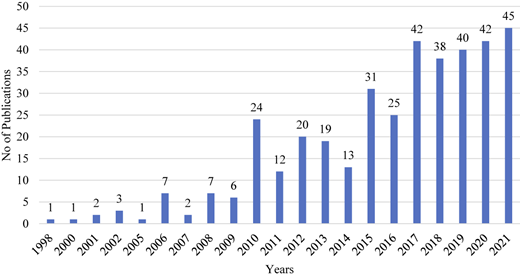
Figure 1 portrays the publication status on wellness tourism between 1998 and September 06, 2021. The first publications were published in 1998, and they were authored by Spivack (1998). In the years 1999, 2003 and 2004, no papers were published. In 2006, researchers began to pay attention to wellness tourism, and by 2010, there were 24 publications. In 2015, there were 31 articles, and in 2017, there were 42 publications. From 2019 onwards, we noticed a clear rising trend in a number of articles. As per the findings of the study, the quantity of publications relating to wellness tourism has risen dramatically over time. We are optimistic that the number of publications in 2021 will approach 50, since there are already 45 as of September 6, 2021.
4.1.3 Document by author
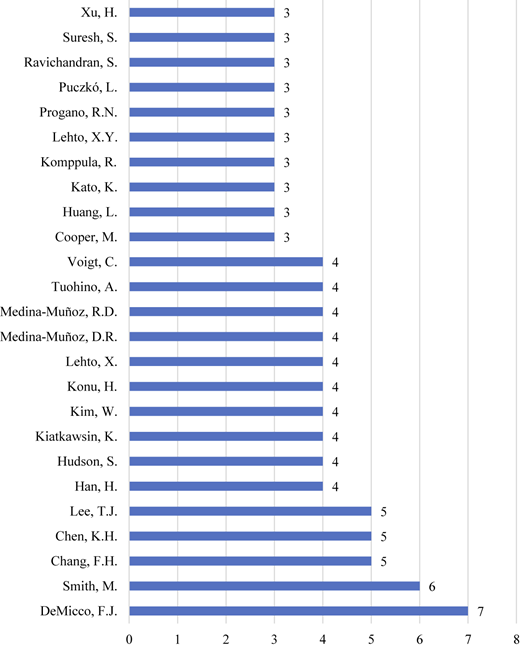
Figure 2 shows a list of authors who have published at least three publications on wellness tourism. In total, 804 authors contributed 301 papers to the published collection. 64 authors published 1 paper, 70 authors had written 2 articles, 10 authors published 3 articles and 10 authors authored 4 articles. DeMicco, F.J. published 7 articles, Smith, M. (6 articles), and Chang, F.H., Chen, K.H. and Lee, T.J. have published 5 articles on wellness tourism.
4.1.4 Document by country
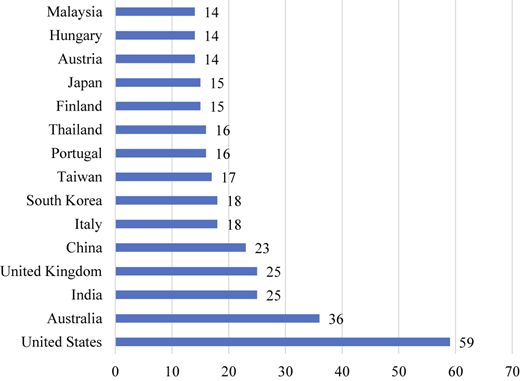
The most prolific nations in respect of WT articles are revealed in Figure 3. For this aspect, only articles written in English (381) were examined. The United States, being one of the world's main industrialized nations, came in first with 59 appearances, followed by Australia (36), India (25), the United Kingdom (25), China (23), South Korea (18) and Italy (18).
4.1.5 Author affiliation
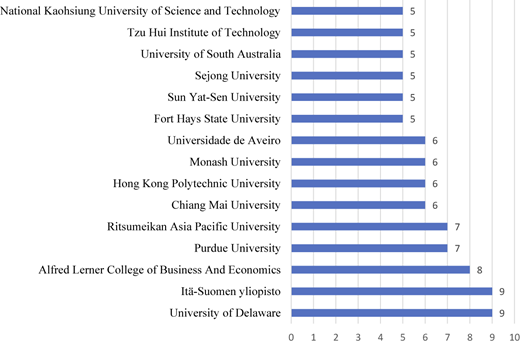
Figure 4 shows studies on wellness tourism from various colleges and institutes throughout the world. Our sample of 381 publications was written by researchers from 160 universities throughout the world, and the contributions of the first 15 institutions to wellness tourism are shown below. Researchers from the University of Delaware and Itä-Suomen yliopisto published nine papers each, followed by Alfred Lerner College of Business and Economics with eight documents, Purdue University and Ritsumeikan Asia Pacific University with seven publications each, and Ching Mai University, The Hong Kong Polytechnic University, Monash University and Universidade de Aveiro with six articles each.
4.2 Science mapping
4.2.1 Reference co-citations
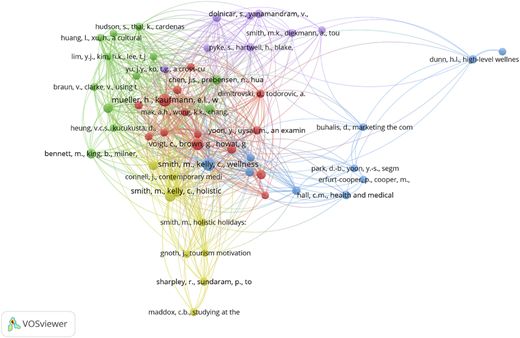
This investigation begins with an examination at the co-citations of references. The nodes of the study indicate the associations between the many publications as well as the different research themes in WT. The findings, as shown in Figure 5, show that the ranking was dominated by Mueller and Kaufmann (2001) and Smith and Kelly (2006a) were cited 34 times in the reference list of the 381 papers associated to wellness tourism. These articles also ranked first and second in the link strength categories, with scores of 136 and 142, respectively. The paper by Mueller and Kaufmann (2001) led the red cluster and the blue cluster on the paper by Smith and Kelly (2006a). The paper with light red color cluster by Voigt et al. (2011) with 24 citations and 133 total link strength, the document with dark yellow color cluster (Smith and Kelly, 2006b) has 20 citations (Lehto et al., 2006), with 19 citations. The articles with 12 co-citations are Bennett et al. (2004), Chen, Joseph S; Prebensen, Nina; Huan (2008), Steiner and Reisinger (2006).
4.2.2 Co-citation of source
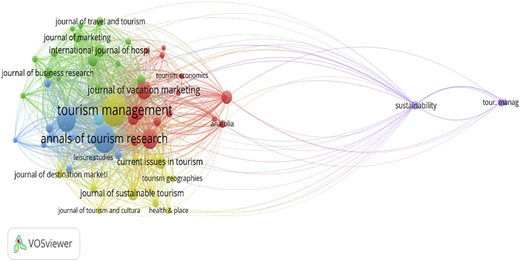
After analyzing the reference's co-citation, this study concentrated on the journal co-citation link on WT (Figure 6). The activity and quantity of published papers are represented by the nodes in this study. According to the findings, there are five major clusters and one minor cluster. It consists of 15 items in the first yellow cluster, 15 items in the second sky blue cluster, 12 sources in the third red cluster, 11 items in the fourth green cluster, 5 items in the fifth purple cluster and a single item in the sixth green cluster. For this study, the author only examined sources with more than 200 citations, and the results of the top five journals are as follows: tourism management (654 citations, 16,966 link strength), “Annals of Tourism Research” (476 citations, 11,588 link strength), “Journal of Travel Research” (349 citations, 10,976 link strength), Tourism Recreation Research (244 citations, 5694 links) and “Journal of Vacation Marketing” (208 citations, 4673 link strength). “International Journal of Tourism Research, Journal of Travel & Tourism Marketing, Tourism Review, Health and Wellness Tourism, Current Issues in Tourism, Journal of Sustainable Tourism, International Journal of Hospitality Management and International Journal of Contemporary Hospitality Management” are some of the most popular sources for our research area.
4.2.3 Co-citation of authors
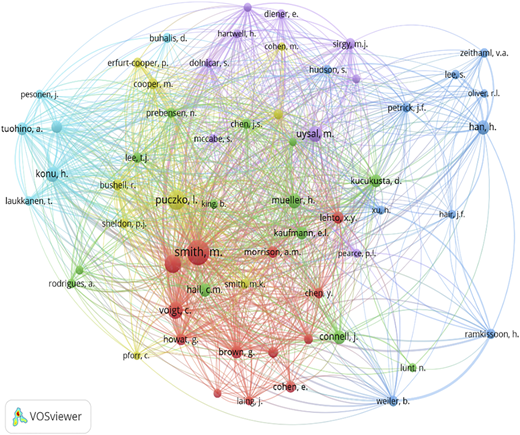
The analysis of the key contributors was carried on in this co-citation study. This study, as shown in Figure 7, confirms the existence of six clusters with a total of 60 authors. The top ten co-cited authors are Smith, M. (249 citations, 4372 link strength), Puczko, l. (147 citations and 2559 links), Kelly, C. (132 citations and 2806 strength links), Voigt, C. (110 citation, 2549 links), Uysal, M. (100), Konu, H. (85), Mueller, H. (84), Han, H. (78), Connell, J. (74) and Hall, C.M. (69).
5. Conclusion
The present research aids in a better understanding of the current status of WT research. This research was conducted over 24 years (from 1998 to September 06, 2021), which covers the whole period of publication in this field and allows for the compilation of a comprehensive overview. There have been no earlier bibliometric studies on wellness tourism research; therefore, this is an essential contribution of the article. We discovered a recent period of effective scholarly publications related to this issue by searching the Scopus database for papers, namely from 1998 to the date, and the first article with this title was published in 1998 by Spivack S.E. However, since 2010, when the subject began drawing researchers' interest, there has been a major improvement in the publication of scholarly papers connected to this topic. In 2006, researchers began to pay attention to wellness tourism, and by 2010, there were 24 publications. In 2015, there were 31 articles, and in 2017, there were 42 publications. From 2019 onwards, we noticed a clear rising trend in a number of articles. Wellness tourism research has not received equal attention around the world, even though several countries have published papers on the subject. The United States is the most producing country, with 59 papers, followed by Australia, India and the United Kingdom. We discovered two papers with over 238 “Scopus” citations, with a total of 1414 citations from 10 publications. The document (Napier et al., 2014) has 36.5% citations per year according to Scopus. There were a total of 804 authors who published publications about WT between 1998 and 2021, with smith m, Voigt c, and puczkó l being the most-cited reference authors in the subject. Han h. is the author with the highest index of 56. Researchers from the University of Delaware and Itä-Suomen yliopisto published nine papers each, followed by Alfred Lerner College of Business and Economics with eight documents, Purdue University and Ritsumeikan Asia Pacific University with seven publications each, and Ching Mai University, Hong Kong Polytechnic University, Monash University, and Universidade de Aveiro with six articles each. As per the co-citation of reference (Mueller and Kaufmann, 2001), Smith and Kelly (2006a) were cited 34 times in the reference list of the 381 papers. “Tourism Management, Annals of Tourism Research, Journal of Travel Research, Tourism Recreation Research and Journal of Vacation Marketing” are the top five journals with over 200 citations. According to the Scopus co-citation count, Smith, M. Puczko, L, Kelly, C, Voigt, C and Uysal, M. are the most often co-cited authors. This conclusion indicates a number of promising research directions. We believe that the discipline of wellness tourism research will mature as more renowned international academics from top universities throughout the world exhibit a track record of publishing WT studies in top-tier publications. Currently, the field's study themes are extremely specialized.
5.1 Theoretical implications
From an academic standpoint, the bibliometric analysis performed helps to provide some answers to critical questions that academics should consider when researching wellness and tourism. This study can benefit researchers in identifying and understanding new trends in this discipline, as well as the terminology employed, publications that primarily handle these investigations and field reference studies. It provides an understanding of the significance of the subject and, as a result, can be used to build future tourism products. This is the first study to use a bibliometric method to fill this knowledge gap, as it identifies the tools, journals, and, most crucially, conceptual subdomains such as spa, yoga, therapy, spirituality and trekking that will be significant in future research. As a result, tourism researchers and professionals should take the current findings as a starting point for future wellness tourism studies.
5.2 Managerial implications
Health and wellness tourism has been made possible by globalization, and it is still growing. This industry generates billions of dollars in revenue for participating countries each year. There is a critical and urgent need to develop collaboration and connectivity among Association of Southeast Asian Nations (ASEAN) member nations to boost the wellness tourism industry in the ASEAN region. Furthermore, the findings are of particular importance to scientists, as well as academics and policymakers, as well as individuals in research centers and governments. We encourage tourism enterprises to target travelers who are interested in health and well-being. Managers should carefully craft their marketing strategies to attract global tourists by offering opportunities for them to try new things, relax emotionally and physically, and foster social growth. In their discussions with overseas tourists, tourism managers might be able to emphasize the excellence of their health and wellness products or services. Healing treatments and practitioners should be granted accreditation based on their experience and skill. The package that makes up the value proposition of wellness destinations must be tailored to the resources available in each location, the type of demand that is prioritized (single or multiple wellness demands) and market trends. The key problem facing public and private territorial stakeholders in the context of the wellness value system is coordinating and integrating their offerings with those of others. The ultimate goal is to create a unified set of components that fulfill the definition and expectations of holistic wellness and may be used to create a value proposition for well-being. Individual touristic firms are thus encouraged, at the micro level, to network and engage with other players in the territory in order to improve the content of their own unique value proposition. Another recommended practise is for tour operators and incoming travel agents to provide integrated tourism packages that are wellness-focused and holistic in nature.
5.3 Limitations and future research
Despite the paper's contributions, some drawbacks must be addressed, such as the usage of a single database rather than multiple sources to retrieve data. Although we feel Scopus has a large number of publications that are reflective of the whole, we believe that utilizing various databases will provide additional coverage of the subject. The usage of the search algorithm simply in the title, on the other hand, limits the search. In the WT literature, we did not include conference proceedings, doctorate theses, textbooks or unpublished working papers. Furthermore, we only examined documents published in English, which means that research conducted in other languages was undervalued. Only the VOSviewer was used to analyze this study. Other tools, such as Gephi, CiteSpace II, Bibexcel and Tableau, can be utilized in future research in addition to the VOSviewer. Additional wellness and health-related keywords may be included in future investigations. Advanced bibliometric analysis, such as co-word analysis, co-authorship, bibliographic coupling and clustering, can be used by the researchers. Another research topic that will garner attention in future studies is sustainable wellness tourism (Wolf et al., 2017). On the demand side, future research paths should be explored to evaluate consumer preferences for supplementary wellness tourism items, and on the supply side, to analyze the unique qualities of wellness locations (Dini and Pencarelli, 2021). Future research could look into developments in territorial brandings, such as Nordic Wellbeing and Alpine Wellness regional initiatives. The “smart” wellness destinations that arise will be capable of achieving high-tech potential while also adding social value and protecting the environment. The findings may also help future researchers in identifying research topics that may become popular in the next years in the field of wellness research. As a result, for professionals and academics interested in implementing WT, this bibliometric study can serve as a starting point.