This study aims to contribute to the body of knowledge on the role of information and communication technologies (ICT) adoption in advancing agricultural modernization by examining the effects of digitalization and climate change on food security in Vietnam from 1996 to 2022.
The ARDL approach, the DOLS method and FMOLS regression approach are applied for the empirical estimation.
The results of this study reveal that ICT technologies such as mobile phone and internet technology use impressively promote food security in the long and short run. In contrast, it is observed that temperature change negatively affected food security in the long and short run estimation. The widespread adoption of mobile phone and internet-based technologies has the potential to dramatically increase sustainable food production and mitigating climate change effects, thereby supporting the achievement of sustainable development goals (SDGs).
The results of this study reveal that ICT technologies such as Mobile phone and the Internet technology use impressively promote food security in the long and short run. In contrast, it is observed that temperature change negatively affected food security in the long- and short-run estimation. The widespread adoption of Mobile phone and the Internet-based technologies has the potential to dramatically increase sustainable food production and mitigating climate change effects, thereby supporting the achievement of sustainable development goals (SDGs).
This study contributes to the literature by integrating climate change and ICT adoption with production factors to assess their combined influence on food security. This research applies dual-model approach (ARDL and FMOLS), enhances the reliability of the findings and offers policy insights on achieving of SDGs.
1. Introduction
Information and communication technologies (ICTs) adoption includes computers, mobile phones, television, radio and internet connectivity systems that help with receiving, processing, transmitting and sending information in the forms of spoken language, text and images (Ma et al., 2020a; Ndimbo et al., 2023; Oyelami et al., 2022). The proliferation of ICT is expanding rapidly, making it increasingly accessible and affordable to a growing proportion of the global population. ICT has expanded its reach to regions where industrialization is still in its early stages and where people’s livelihoods mostly depend on agriculture (Glendenning and Ficarelli, 2011; Kaila and Tarp, 2019; Ma et al., 2023; Rehman et al., 2024). The mobile phone usage and the Internet connectivity play a critical role in advancing the agricultural industry. Studies have demonstrated the advantages that farmers may gain from using the Internet (Jamshidi et al., 2025). Primarily, mobile phone usage and the Internet access allow farmers to discover resolutions for their predicaments related to climate conditions, agricultural resources and technology innovations (Chandio et al., 2023; Ma and Wang, 2020b). The use of Mobile phones and the Internet connectivity offers a cost-effective and interactive platform for farmers to connect with each other, agricultural organizations and academics, expanding beyond traditional communication channels (Zhu et al., 2021). In addition, mobile phone usage expands farmers’ marketing options by linking them to potential markets that may offer higher prices for their agricultural yields (Owusu et al., 2018; Zheng et al., 2022). For example, the Internet use has facilitated increased sales for fruits producers in the case of Uganda (Muto and Yamano, 2009). The Internet has the potential to stimulate the expansion of the farming industry. As a result, academics have studied the influence of ICT on agricultural products across various regions worldwide.
Lio and Liu (2006), for instance, examined the connection between ICT and the efficiency of agricultural production; their results show that ICT use significantly increases agricultural output. Oyelami et al. (2022) recently used the ARDL method to study the relationship between ICT and agricultural productivity in SSA. The results show that ICT significantly and favourably affects the agriculture industry’s long-term performance. In a more thorough analysis, Chandio et al. (2023) looked at the connection between the Internet use and rice yields using the feasible generalized least squares technique. They concluded that the use of Internet technology positively and significantly affects China’s rice production. Similarly, Onyeneke et al. (2023) used the panel ARDL method to evaluate the effect of ICT on livestock and crop production in Africa. They discovered that the Internet use significantly increases agricultural output, but mobile phone use has the opposite effect. Furthermore, they discovered that the mobile phone use has a substantial positive effect on cattle output. Ma et al. (2020c) revealed that the utilization of Internet technology by farmers enables them to adopt environmentally friendly agricultural methods. These activities include the utilization of organic fertilizer, insecticides, modern cereal crops varieties and integrated pest control. According to survey data analysed by Siaw et al. (2020), a notable and statistically significant correlation exists between the availability of Internet technology and farmers’ well-being in terms of household and agricultural earnings. Ma et al. (2020d) and Zhang et al. (2021) contended that increased agricultural revenues are closely associated with the use of Internet technology. Zheng et al. (2021) looked into cross-sectional data from a Chinese study and found that farmers’ technical efficiency increases when they use Internet technology. Zheng et al. (2022) also investigated the effect of Internet use on grain yields in China using a propensity score matching technique and a linear regression model. According to the results, internet use significantly benefits grain yields. Domguia and Asongu (2021) examined the interconnection between ICT and agricultural productivity across 18 countries nestled within the confines of the SSA. The observed inquiry encompassed the timeframe spanning from 1990 to 2014 and the outcomes show that the advent of ICT, inclusive of internet accessibility as well as the utilization of mobile and fixed-line telephony, yielded a favourable and advantageous impact on agricultural output.
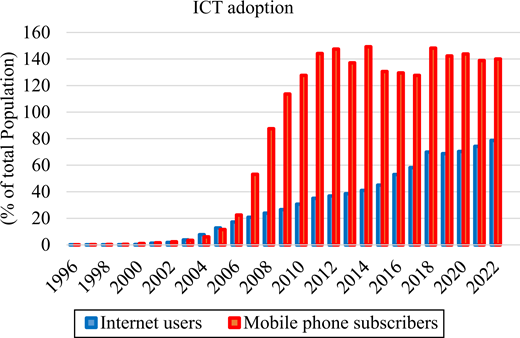
This study contributes to the existing literature that addresses the potential of mobile phone usage and the Internet connectivity in improving food production. It specifically looks at how mobile phone usage and the Internet connectivity can help farmers grow cereal crops. The outcomes of our study provide practical policy recommendations and addresses the research inquiries outlined below. Since 2000, Vietnam has witnessed a substantial surge in the number of internet users, similar to many other developing and developed economies worldwide. According to the World Bank’s 2022 report, the proportion of the Vietnamese population using the Internet increased from 0.25% in 2000 to 78% in 2022. Likewise, the mobile phone usage is also substantially increased from 1.56% in 2001 to 138% in 2022. Figure 1 illustrates the trend of ICT technologies adoption in Vietnam from 1996 to 2022.
Improving agricultural efficiency and output is essential for ensuring food supply and helping farming societies escape poverty by accumulative their income level. However, smallholder farmers in developing countries often face significant challenges that avert them from benefiting from agricultural advancements and digitalization. These challenges contain limited access to vital information about markets and suppliers, high transaction costs, a lack of farming expertise, low rate of adoption of CSA technologies and difficulties securing agricultural credit. Because of these information gaps, especially in rural areas, smallholder farmers struggle to adopt new technologies like improved seeds, new fertilizers and pesticides, or to make efficient use of their resources. This results in low crop yields and incomes, negatively affecting their livelihoods and hindering rural development. Therefore, addressing these information gaps through modern technologies is crucial to enhancing farm productivity (Chandio et al., 2023).
Agriculture has been globally recognized as a crucial driver of economic development (Kitole et al., 2024). Vietnam’s agricultural sector is vital for the country’s food security, as it uses a large portion of the population. Vietnam is a major producer of rice, coffee and several fruits and vegetables. Rice is particularly vital, with Vietnam being one of the largest rice exporters in the world. Most Vietnamese farmers primarily earn revenue through agricultural activities, with a particular focus on rice farming. Despite various causes of food insecurity, climate change is often highlighted as a primary factor. According to the Intergovernmental Panel on Climate Change (IPCC), climate change is recognized as a significant threat to agricultural productivity, particularly in low-latitude regions. It is expected to negatively impact crop yields and the stability of agricultural production. The Food and Agriculture Organization (FAO) also highlights that climate change has become a major challenge to global food security. It is anticipated to increase the frequency and intensity of extreme weather events, reduce agricultural production capacity and exacerbate pest and disease outbreaks. These changes are likely to further disrupt food availability and supply stability. In Asia, the consequences of climate change are particularly concerning, as its agricultural system is predominantly affected (Ozdemir, 2022). Many studies revealed that climate change negatively affected agricultural products (Ahsan et al., 2020; Anh et al., 2023; Baig et al., 2023; Behera et al., 2024; Kyire et al., 2025; Pickson et al., 2023; Rehman et al., 2024; Sharma et al., 2023). For example, Ozdemir (2022) revealed that CO2 emissions and temperature have a negative impact on agricultural productivity in Asian regions. Sharma et al. (2023) also confirmed that maximum temperature has a negative effect on maize yields, while minimum temperature and CO2 emissions significantly enhances maize yields in Mississippi. Behera et al. (2024) highlighted that precipitation patterns coupled with increasing temperature, along with the rising level of CO2 are found to impede food security in South Asian economies. Rehman et al. (2024) examined the nexus between climate change and food security in selected South Asian countries and reported that climate change negatively deteriorated food security. Pickson et al. (2023) also studied the nexus between climate change and food security in South Asian region, South-East Asian region, Western Asian region and Eastern Asian region. The study revealed that average temperature negatively declined food security in all Asian regions excepting South- Eastern Asian region, while level of precipitation enhances food security in South Asian region, South-East Asian region and Western Asian region.
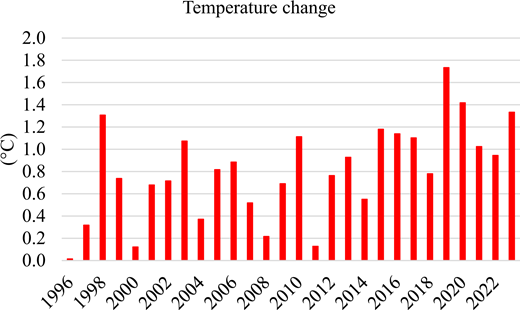
Climatic variations have increased the frequency and intensity of natural disasters in recent years, resulting in considerable negative environmental impacts as well as substantial losses of life, property, infrastructure, economy, culture and society (Nguyen and Yen, 2021). One of the most significant threats to food security in Vietnam is climate change. Rising sea levels, extreme weather events and changing rainfall patterns are increasingly affecting agricultural productivity. Figure 2 shows the trend of temperature change in Vietnam. The Mekong Delta, a key area for rice and aquaculture production, is particularly vulnerable to flooding and saltwater intrusion. These environmental changes could reduce crop yields, affect food quality and disrupt the supply chain, further threatening food availability and accessibility. Moreover, a significant level of poverty persists in rural regions of Vietnam. Emerging technologies have the potential to enhance the well-being of the rural populace and mitigate rural poverty. Presently, several websites operated by the Vietnam authorities and commercial enterprises offer essential knowledge to farmers regarding climate changes, agricultural resources, market prices and technological advancements.
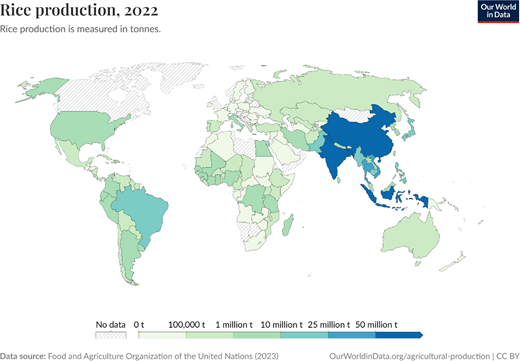
Vietnam ranks among the top rice producers in Asia, following China, India and Indonesia (Figure 3). According to the USDA (2021), Vietnam was the world’s second-largest rice exporter in 2021. It exported 6.2 metric tons of rice in 2020, accounting for 14% of the global rice export volume. However, rice cultivators in Vietnam face various challenges, including climate change, reduced cultivation areas, ineffective resource utilization and underdeveloped ICT infrastructure (Vo et al., 2021). Although cereal crops, including rice, cover a substantial 94% of the land dedicated to intensive cultivation (Tien Thanh and Bao Duong, 2021), their contribution to the overall agricultural production of the nation is a mere 25% (Nguyen and Yen, 2021). To enhance food security, augment rice exports and attain the sustainable development goals (SDGs), Vietnam must expand its rice cultivation land and optimize production efficiency.
Several survey-based studies in Vietnam have examined the adoption of ICT applications for cereal and vegetable production (Doanh, 2024; Hoang and Nguyen, 2023; Kaila and Tarp, 2019; Lampach et al., 2021). Other research has focused on the elements that influence farmers’ decisions to adapt to climate change and its effect on rice output (Huynh et al., 2020; Nguyen and Yen, 2021; Thi Lan Huong et al., 2017; Vo et al., 2021). However, in light of above discussion, this work contributes to the present literature by answering the following questions:
Does mobile phone usage promote food security in Vietnam?
Does internet access enhances food security in Vietnam?
How does climate change affect food security in Vietnam?
The main purpose of this study is to examine the the effects of ICT adoption and climate change on food security in Vietnam. In addition, using the ARDL bounds technique, we show co-integration among the variables. Our study uses the ARDL approach to estimate the time series data set from 1996 to 2022, allowing us to examine the nexus between mobile phone usage, Internet connectivity, climate change and food security. Based on the empirical investigation, this research reports robust results and implications to enhance food security and accomplish SDG-2 for Vietnam.
The rest of the research work is organized as follows. Section 2 discusses the data and research methodology, while Section 3 gives the study’s findings and discussion. Section 4 presents the conclusion and policy implications.
2. Methodology
2.1 Data
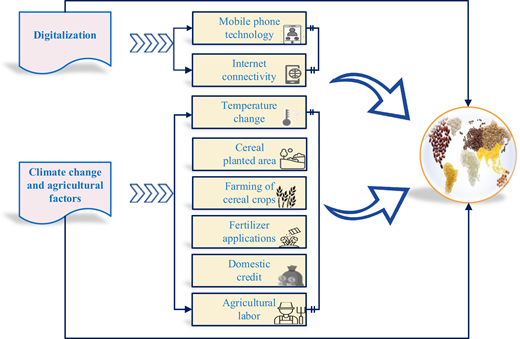
We use annual data spanning over 27 years from 1996 to 2022 on the food production index (2014–2016 = 100), mobile phone technology users (% of population), internet technology users (% of population), cultivation area (hectares), cereal farming output (tons per hectare), fertilizer use (% of fertilizer production), domestic credit to private sector (% of GDP), temperature change (°C) and employment (% of total employment). Data for food production, mobile phone technology users, internet technology users, cultivation area, cereal farming output, fertilizer use, financial development and employment are collected from WDI database, while data for temperature change is collected from FAO. The choice of all studied variables is based on preceding empirical literature. Figure S1 in Supplementary material shows the trends of studied variables. Figure 4 also displays the determinants of food security.
2.2 Model construction
Based on the previously cited literature (Behera et al., 2024; Kyire et al., 2025; Onyeneke et al., 2023; Oyelami et al., 2022; Pickson et al., 2023), we establish the following specification for the econometric model to investigate the influence of ICT adoption, cultivation area, cereal farming output, fertilizer use, financial development, temperature change and employment on food security in Vietnam:
where FS represents the food security, MPT stands for mobile phone technology, INT stands for internet use, CL represents cultivation area, CF indicates cereal farming output, FER denotes fertilizer use, DCR signifies domestic credit and EMP shows agricultural employment. Furthermore, we convert our basic model for empirical estimation into log-linear form as follows:
represents the natural logarithm, and denotes the error term. to are the coefficient estimates of LnMPT, LnINT, LnCL, LnCF, LnFER, LnDCR, TEMP and LnEMP.
2.3 ARDL co-integration methodology
We use the ARDL technique developed by Pesaran et al. (2001) to investigate the long- and short-term correlations between the food production and their drivers. The ARDL methodology has considerable advantages over competing methodologies, as noted by Engle and Granger (1987), Johansen and Juselius (1990) and Johansen (1995). The ARDL technique is appropriate for use when the variables are either I (0) or I (1) stationary. This approach is robust and produces effective results for large and small sample sizes (Pesaran et al., 2001). The ARDL technique comprises three distinct stages, contingent upon the determination of cointegration among the variables in the initial step. In the context of co-integration, the second and third phases yield short- and long-run estimates, respectively (Pesaran et al., 2001). In the context of co-integration, the second and third phases yield short- and long-run estimates, respectively. For the model specified in equation (2), the ARDL framework for the food security model is delineated as follows:
represents the constant term, and Δ signifies the first difference operator. indicates the long-run coefficients, whereas designates the short-run coefficients of the explanatory variable to be evaluated. We use the OLS method to estimate equation (3). Afterward, we use the Wald test (F-statistic) to ascertain whether a sustained relationship exists between the variables under investigation. Establishing co-integration between the variables entails testing the null hypothesis, which postulates that co-integration is not present. It is contrasted with the alternative hypothesis:
Once we ascertain the long-run co-integration using the bounds test, we estimate the long-run model. The subsequent model is designated to estimate the coefficients in the long-term:
The final stage entails the estimation of the short-run error correction model (ECM). The ECM model is used to reconcile short-term variations observed in the food security with their long-term patterns. The specifications of the short-run ECM for food security model is as follows:
where ,, and signify the short-run dynamics coefficients while represents the coefficient of the ECM, which quantifies the speed at which the system reverts back to its long-term equilibrium. The DOLS, FMOLS and CCR estimators are also used to verify the consistency of the long-run results of the ARDL model. Both DOLS and FMOLS estimators are designed to address key issues like autocorrelation and endogeneity by incorporating leads and lags of differenced variables. These methods are particularly useful for estimating long-run relationships among co-integrated variables, offering significant advantages over traditional OLS and maximum likelihood methods, as they account for both the dynamic adjustments and serial correlation in the residuals.
3. Results and discussion
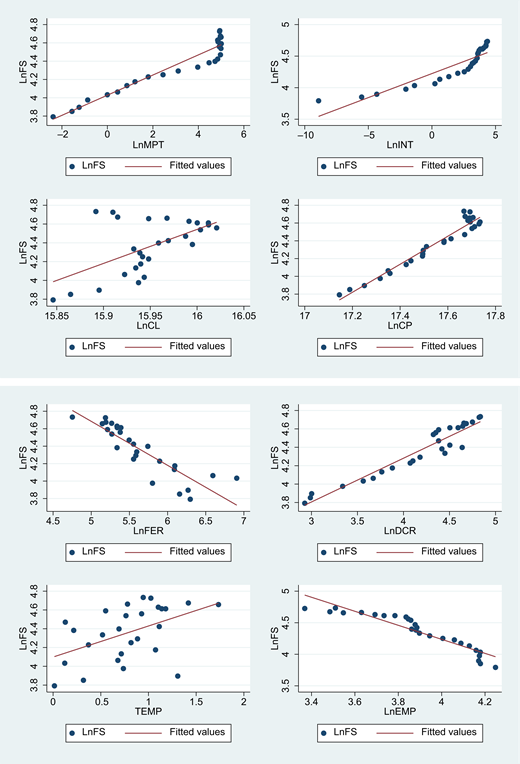
Before going through the estimation of the main ARDL model, we run different preliminary checks to ensure the data’s reliability, accuracy and efficiency, such as the descriptive statistics, correlation test, unit root test-ADF and for cointegration estimation we used ARDL bounds co-integration test. The variables’ descriptive statistics are displayed in Table A1 in Supplementary material. The food security had an average value of 4.3%, with a maximum of 4.7% and a minimum of 4%. The mean percentage of mobile phone technology use was 3.0%, with a maximum of 5.0% and a minimum of −2.3%, while the mean percentage of internet use was 1.7%, with a maximum of 4.3% and a minimum of −8.9%. Statistical data also indicates that between 1998 and 2019, output of cereal farming in Vietnam averaged 1.5% while averaged cultivated area was 15.9 recorded. Regarding fertilizer use, statistical data from 1998 to 2019 indicates an average rate of 5.6%, with a peak of 6.9% and a trough of 4.7%. During the same period, the mean of domestic credit, temperature change and employment rate were 4.1%, 0.7% and 3.8%, respectively. Correlation outcomes are presented in Figure 5, reveal that mobile phone technology use, internet use, cultivation area, cereal farming output, domestic credit and temperature change are positively and considerably linked with food security, while fertilizer use and employment are negatively correlated. Furthermore, we assess the multicollinearity using the variance inflation factor (VIF) test, and the outcomes show that there are no multicollinearity issues among the studied main variables (Table A2 in Supplementary material).
In time series data estimation, the test of unit root is essential for establishing the stationarity of variables. For various econometric procedures, stationarity is a crucial assumption because it assurances that the statistical characteristics of variables (Chandio et al., 2023), including variance and mean, will not change with time. Regression findings may be erroneous or misleading if the variables exhibit a stochastic trend, indicating that they are not stationary. The ADF and PP tests are used to address this by ensuring stationarity. Internet use, fertilizer application and temperature change are all stationary at the level, as shown in Table 1. On the contrary, the levels of the food production index, mobile phone technology, cultivation area, cereal farming, domestic credit and employment exhibit variability. The variables attain stationarity subsequent to their initial difference. The both unit root tests such as the ADF and PP reveal same stationary order of the studied variables. These findings are in line with the earlier study that checked the stationary of these variables (Chandio et al., 2023). Given the results from the ADF and PP tests, it is advisable to proceed with the co-integration test.
The outcomes of the bounds test method used in the co-integration analysis between food security along with their explanatory variables, are displayed in Table 2. The estimated f-stat is 3.70, which surpasses the upper bound critical values of 3.68 at (5%) significance level, respectively, as shown in Table 2. This result indicates that food security and the explanatory variables such as Mobile phone technology, Internet connectivity, cultivation area, cereal farming, fertilizer use, domestic credit, temperature change and employment are significantly correlated over the long-term, respectively. The outcomes of other estimated models are also displayed in Table 2 and confirmed that there is a long-term co-integration relationship among studied variables. In addition, Table A3 in Supplementary material reveals the outcomes of diagnostic tests for estimated models. The findings confirmed that all the estimated models are stable. Besides, to confirm that the outcomes from the ARDL bounds co-integration test are reliable, consistent and efficient, the econometric model should undergo robustness assessments. Moreover, the Johansen co-integration tests are used to check the robustness and the findings are reported in Table A4 in Supplementary material, indicating that there is a long-term relationship between the variables in our study.
This research examines that how ICT technologies and climate change as well as agricultural factors affect food security in Vietnam. Table 3 displays the results of the long- and short-term estimations based on the ARDL method. It is very interesting to report that the usage of mobile phone has a positive impact on food security in the long- and short-run analysis. More specifically, a 1% increase in the usage of mobile phone will enhance food security by 0.014% and 0.010%. Using mobile phone, farmers are more aware of new agricultural techniques, fertilizer use and pest control methods and can access agricultural training resources online (Ma et al., 2022). Furthermore, Mobile phone use allows farmers to monitor and manage their farmland remotely. With sensors and other smart agricultural technologies, processes such as water use, fertilization and harvesting can be managed effectively (Ma et al., 2020d). The ICT facilitates communication between farmers, allowing them to share experiences, solve problems and learn from one another through various platforms in the agricultural field. For these reasons, the use of the ICT can increase productivity in the agricultural sector, provide farmers with more information and resources and generally make farming processes sustainable (ZHENG et al., 2022). Ma et al. (2020c) emphasized that the internet can be considered an important input in increasing the welfare of agricultural producers. However, Oyelami et al. (2022) discovered that infrastructure investment in ICT is insufficient on its own to raise agricultural output in Sub-Saharan nations.
Similarly, it is also observed that the long- and short-term Internet use has a positive effect on food security in Vietnam; this effect is statistically significant at 5% level. In particular, a 1% increase in Internet use will result in a 0.015% and 0.012% long- and short-term increases in food security, respectively. The findings presented here align with those of Yu and Bai (2022), Oyelami et al. (2022) and Chandio et al. (2023). Internet connectivity is very important for the agricultural farming because these technologies give farmers instant access to pertinent information about weather, soil data, farming techniques and market trends (Ma et al., 2020a). This information can help them adopt effective farming practices. In addition, the internet gives agricultural producers the opportunity to connect and sell their products to a wide market (Ma and Wang, 2020b). On online platforms, farmers can display their products, reach customers and make price comparisons. Zhang et al. (2023) emphasized that the internet is definitely beneficial for agricultural producers, especially regarding sustainable agriculture. Van Campenhout et al. (2021) also emphasized that the use of ICTs gives extremely promising results in ensuring efficiency in agricultural production. Therefore, the effective use of internet helps creating a chain reaction staring from cultivation to final use (Bhat et al., 2025). With increased digitization, this positive impact can be observed at small-scale as well. The weather predictions play crucial role at various stages and also provide useful information about suitable selling points and create helpful environment for demand and supply based price determination. Thus, it leads to increased income and improved living for farmers.
In contrast, it is revealed that temperature change has a negative impact on food security in the long- and short-run analysis. More precisely, a 1% increase in temperature change will deteriorate food security by 0.028% and 0.011%. Our results are in line with those of preceding studies (Ahsan et al., 2020; Anh et al., 2023; Baig et al., 2023; Behera et al., 2024; Kyire et al., 2025; Pickson et al., 2023; Rehman et al., 2024; Sharma et al., 2023). These studies also reported that climate change conditions such as average temperature and CO2 emissions negatively affected food security in Asian region.
Besides the main variables of interest, the control variables such as cultivated area, output of cereal farming, fertilizer consumption and employment positively affect food security both in the long- and short-run estimation. The estimated empirical findings inferred that a 1% expansion in cultivated land would result in a 0.03% and 0.44% increase in long and short-term food security, respectively. Likewise, more specifically a 1% increase in output of cereal farming will enhance food security by 0.47% and 0.37% in the long- and short-run estimation. Vietnam’s food production is positively affected by fertilizer use. As farmers in Vietnam implement suitable fertilizer applications, the quantity of food produced is anticipated to rise. Preceding works have also underscored the statistically significant effects of fertilizer use and cultivated land on cereal production (Ahsan et al., 2020; Anh et al., 2023; Baig et al., 2023; Ozdemir, 2022). Fertilizer is important for plant growth and development because it provides the necessary nutrients. Plants produce energy through photosynthesis, but they also need nutrients, such as nitrogen, phosphorus, potassium and other minerals, as well as essential components used in this process, like water and carbon dioxide. A lack of nutrients in the soil can limit the growth and development of plants (Ozdemir, 2022). Kaila and Tarp (2019) revealed that efficient use of fertilizer because of internet use increases agricultural production in Vietnam by 6.8%. On the other hand, excess use of these chemicals leading to several environmental, health and soil quality degradation issues. To minimize these impacts, farmers should be provided with less toxic alternatives including bio wastes and organic fertilizers (Yang and Zhang, 2023). In this ways, the dilemma between productivity and its associated costs can be reduced to a significant level.
Domestic credit has a negative association with food security in the long run while in the short run, it has positive impact on food security. If farmers have easy access to agricultural credit, they can purchase input materials, apply modern farming methods and increase productivity. Agricultural credit allows farmers to purchase input materials such as better-quality seeds, fertilizers and pesticides and apply these modern farming methods. As a result, they achieve higher yields and profits. They can also invest in sustainable farming practices, such as saving water and energy by using modern farming techniques. This investment can contribute to the development of the farmers and the overall agricultural sector (Zakaria et al., 2019). This result means that a 1% increase in domestic credit supply causes food security to increase by 0.03% in the short run. Our result is in line with those of previous studies (Shahbaz et al., 2013; Zakaria et al., 2019). Funds are the backbone of business whether agriculture or industrial sectors both need sufficient backup to run operations. Farmers can only apply modern technologies if required funds are available and the main source to these funds is personal saving (Fikadu et al., 2024). It is essential that a fair price should be provided to agriculture products and easy access to market is key player in this process. Consequently, income and productivity positive relation can only work in presence of required factors, and role of government is crucial in this association at various stages.
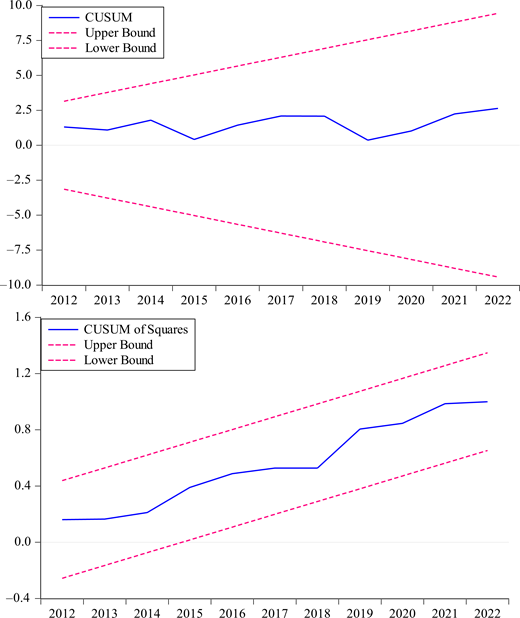
This research reveals a positive correlation exists between employment and food security in the short- and long-term. We use the CUSUM and CUSUMSQ to assess the stability of the estimated Model. The CUSUM and CUSUMSQ indicate no structural break in the food security data over the analysed period, as shown in Figure 6. Stable lines reject any issue of results inaccuracy in the long run. Thus, results are reliable and stable. Table A5 in Supplementary material and Figure S2 in Supplementary material show the lag order selection criteria for the ARDL model.
The diagnostic test outcomes estimated for both models are presented in Table A6 in Supplementary material. The stability of the estimated models is verified through the successful completion of all diagnostic tests, including serial correlation LM, heteroskedasticity, ARCH, CUSUM and CUSUMSQ.
This study further explores the long-run impact of agricultural factors on food security after excluding main explanatory variables such as mobile phone technology, Internet connectivity and climate change. The estimated outcomes of FMOLS, DOLS and CCR estimators are presented in Table 4. As anticipated, food security positively and significantly enhanced by cereal harvested area and output of cereal farming in the long run. The estimated results indicate that a 1% increase in the cereal harvested area and output of cereal farming leads to promote food security by 0.57% and 0.65% in the long run. These results are consistent with that of Gul et al. (2022). Contrary to predictions, the findings show that fertilizer use negatively affects food security in Vietnam in the long-term. Farmers require education and training from agricultural officials on the proper application of fertilizers, including when and how much to use. Overusing fertilizer inputs can lead to soil salinization, acidification and loss of organic matter, ultimately reducing soil structure and fertility. Fertilizers containing important elements such as nitrogen, phosphorus and potassium promote root development, encourage flowering and increase fruit yields. They can also increase plant resistance to disease by balancing nutrients in the soil. As a result, fertilizers can improve agricultural productivity by ensuring that plants have optimal growth conditions; they also play an important role in plant breeding (Baig et al., 2023; Chandio et al., 2023). Domestic credit positively and significantly enhances food security in the long-term. At a significance level of 1%, a 1% increase in domestic credit supply results in a 0.05% increase in long-run food security. Agricultural employment has a positive impact on food security in the long run. The DOLS and CCR methods produce similar findings and endorse that agricultural factors significantly promote food security in Vietnam.
The empirical results of this study show that the diffusion of mobile phones and the Internet improves food security, while rising temperatures reduce it. Expanding ICT access in rural areas can increase food availability and help farmers obtain timely weather and market information. This reduces the impact of climate shocks on vulnerable households. At the same time, the risks of global warming underline the need to combine digital technologies with climate-smart agriculture. Such integration is essential to safeguard nutrition, stabilize food supply and support progress towards SDG 2.
4. Conclusion, policy implications and limitations
Vietnam is a prominent Asian country with a population of around 97 million people as of 2021. Throughout its history, Vietnam’s economy has been largely based on agriculture, especially rice cultivation. This study analyses the effects of ICT adoption and climate change on food security in Vietnam. The findings from the ARDL procedure validate that mobile phone technology and Internet connectivity substantially enhances food security. Thus, Vietnamese producers derive substantial advantages from the implementation of ICT technologies. Vietnam, situated in the Asia-Pacific region, ranks among the nations with the most mobile phone technology and Internet consumers. Based on data from 2021, the proportion of individuals using the internet has grown to around 69 million out of a population, representing approximately 71% of the population. The widespread use of mobile internet in Vietnam can be attributed to the country’s high smartphone penetration rate. For many Vietnamese, using the internet on a daily basis for work, education, amusement and other purposes has become second nature. Given that, agricultural producers are also accounted for in the above statistics, agricultural productivity in Vietnam is enhanced by knowledge of modern production techniques and implementation of more conscientious agricultural practices facilitated by information technologies.
On the other hand, rising temperatures have a significant negative effect on food security. For Vietnam, this challenge is particularly severe, as major food-producing regions such as the Mekong Delta have frequently faced floods, salinization and heat stress, further threatening farmers’ livelihoods and national food security. This highlights the importance of policies for climate change adaptation. The government should invest more in the agricultural sector and provide agricultural loans at low interest rates so that farmers can benefit more and adopt CSA technologies to deal with climate change. The control variables such as cereal cultivation area, output of cereal farming, fertilizer utilization and agricultural employment positively contribute to food security in Vietnam. Based on the findings, this study suggests several policy recommendations as:
First, the diffusion of mobile phones and the internet improves food security in both the long and short run. The widespread adoption of ICT technologies has the potential to dramatically increase sustainable food production and help achieve SDGs. Thus, internet-based technologies should be promoted and steps should be taken to increase the availability of internet to small-scale farmers for better production. Moreover, the positive link between food security and internet technology indicates that awareness about climate factors via internet improves the ability of farmers to better understand the weather change and adopt protective measures to safeguard the crop against adverse weather conditions. Timely information can increase final production, so authorities should focus on increasing internet access to farmers in remote areas.
Second, the results also show that land availability and appropriate fertilizer use strongly promote food security. The government should protect farmland and promote balanced growth, while avoiding the conversion of agricultural areas for real estate purposes. Farmers should be guided to apply fertilizers scientifically. Organic fertilizers and ecological farming practices should be gradually encouraged to increase production while ensuring environmental sustainability.
Third, in addition, government should support small farmers to inhabit more area and provides finances to maintain environmental balance. Furthermore, organic biomass and fertilizers should be delivered to maintain the high quality yield. Targeted efforts are needed to minimize biodiversity loss and maintain high yield for food and environment security.
Finally, in the short-term, credit support has a positive impact on food security. The government should therefore improve farmers’ access to agricultural loans and credit resources. Better infrastructure and fair product pricing should be provided to help farmers purchase quality seeds, fertilizers and modern agricultural equipment. These measures would enhance production levels and strengthen the capacity for organic agriculture. Our findings can be used to conduct further investigations in other developing countries in Asia and Africa, considering their unique domestic factors.
This study has several limitations. The ICT indicators mainly reflect the penetration of mobile phones and the Internet. They show the potential role of digitalization in agriculture but do not capture how these technologies are actually applied in farming. Temperature change is used as the main proxy for climate change. It was chosen for its data continuity and direct impact on agricultural production. Other indicators, such as precipitation, were excluded because of data limitations. Future studies can consider other climate indicators (e.g. precipitation and extreme weather events) and education-related factors. The study also does not distinguish between producers of different scales, and heterogeneous patterns may exist in ICT adoption and responses to climate risks. Future research could incorporate more comprehensive climate indicators, examine the role of digital literacy in agricultural practices and differentiate among producers of varying scales to enhance the explanatory power and generalizability of the findings.
References
Further reading
Supplementary material
The supplementary material for this article can be found online.