This paper aims at assessing the vulnerability of local communities in the Congo basin forests of Cameroon; to help them identify their specific needs for adaptation, and to facilitate knowledge sharing with the aim of enhancing adaptive capacity.
Using participatory‐action research approach, research was carried out in two project sites in Nkol‐evodo and in Yokadouma in the Center and South‐East Regions of Cameroon, respectively. The authors shared participatory‐research (PAR) steps and processes to assist other researchers and local stakeholders to jointly assess, monitor and adapt to climatic and other changes.
This study shows that the adverse effects of climate conditions to which study communities are exposed are already being felt and exerting considerable stress on most of the important activities to their livelihoods such as agriculture and exploitation of national resources. PAR tools and processes led to participatory diagnosis, conceptualizing of change, participatory identification, prioritization and implementation of specific strategies for climate change adaptation in the study sites. However, further studies are needed to investigate the effectiveness of these strategies.
The PAR experiences show that stakeholders' involvement throughout the project needs to be considered by researchers who wish to enhance the adaptive capacity of the communities they work with.
This paper contributes to the description of the process for enhancing adaptive capacity of forest living communities. Findings in this research may provide a crucial foundation for community‐based adaptation measures and complement broader‐scale scientific research with local precision.
1 Introduction
Worldwide, the reality of climate change has been proven with considerable effects on all sectors of development throughout the world (IPCC, 2001, 2007; MEA, 2005; Stern et al., 2006; Richardson, 2010; FAO, 2011a, b). There are also strong indications that, developing countries will bear the brunt of the adverse consequences from climate change. This is largely because poverty levels are high, and developing‐country capacity to adapt to global change is weak (IPCC, 2007). In sub‐Saharan Africa, climate change may undermine many years of development efforts (IPCC, 2007; MEA, 2005; Stern et al., 2006; Shewmake, 2008). However, a study commissioned by the United Nations Institute for Training and Research (UNITAR) revealed that many African countries do not take climate change as a key priority in their decision‐making processes (Denton et al., 2001).
In Cameroon and elsewhere in the Congo basin, forests are at the forefront of any debate on climate change. The analysis of climate change impacts in Cameroon (UNEP, 2000; NC1, 2005), though not systematic, reveals that Cameroon has been impacted in almost all the sectors of development. Scientific understanding of climate change indicates that Cameroon has already experienced significant shifts in weather patterns over the period of a single generation, a trend that will likely continue for several centuries (Molua and Lambi, 2007; Molua, 2008). Statistics show that in Cameroon, rainfall has already decreased by over 2 percent per decade since 1960 (Molua and Lambi, 2007). Crop yields have been poor; in particular the cash crop has been affected by unsteady rains. Climatic impacts on food productions and its costs are projected to be exacerbated in Cameroon and beyond the Central African sub‐region. Current climate variation is already altering the types, frequencies, and intensities of crop and livestock pests and diseases, the availability and timing of irrigation water supplies, and the severity of soil erosion. The low lying coastal region will be at risk from rising sea levels (Asangwe, 2006). The impacts on humans will be certain and in places drastic especially local communities that depend on the forest for subsistence and commercial agriculture as well as the harvesting of non‐timber forest products (NTFPs). However, the role of forest is not well understood in the policy area, especially in its twin role of climate change adaptation and for resilient development. Therefore, the challenge is to develop livelihood adaptation strategies on a framework of forests goods and services that should not jeopardize in any case the integrity of such forests to future climate impacts, in order to ensure the continuity in the provisioning of forest ecosystem goods and services that contribute to food security and poverty alleviation. It is within this backdrop that the Center for International Forestry Research (CIFOR) launched in 2008 the Congo Basin Forests and Climate Adaptation project (CoFCCA) that focused on enabling communities to enhance their own adaptive capacity, and empowering vulnerable communities to increase their own resilience to the impacts of climate change.
The objective of this paper was to document local adaptive strategies to climate change in the Congo basin forest of Cameroon using participatory action research (PAR) approach. This helped derive broader lessons for climate change adaptation that can be of use to the global community, particularly those working in humid forest areas.
2 Adaptation on the march
In recent years, adaptation has increasingly become a key focus of the scientific and policymaking communities and is now a major area of discussion in the multilateral climate change process. The UNFCCC (UN, 1992) provides the basis for concerted international action to mitigate climate change and to adapt to its impacts (e.g. Article 4.1(b), Article 4.1(e)). In the context of Africa, adaptation is implicitly and explicitly linked with development focused action. It entails changes in processes, practices or structures, either automatic or planned, to minimize potential damage or to take advantage of opportunities associated with climate change. These changes should reduce present and future vulnerability and may include action taken by various actors; coping strategies, changes in institutional or individual practices in response to perceived changes (DfID, 2004). However, much of the early work on adaptation consisted of suggested response options in association with climate impact scenarios in various sectors, for example constructing seawalls in low‐lying areas, or shifting cropping patterns in response to changes in rainfall. IPCC (2007) summarizes the use of a major explanatory variable “adaptive capacity” underlying adaptation to climate change and determining its efficacy. “Adaptive capacity is the potential or ability of a system, region, or community to adapt to the effects or impacts of climate change” (Smit and Pilifosova, 2001).
In African communities, adaptation is not a new concept. Since time immemorial, these communities have acquired details knowledge and skills by developing many approaches to effectively deal with the extremely variable climate and extreme climatic events of the past. However, the amount and rate of future climate change will pose some new challenges. The more intense and frequent occurrence of extreme climatic events, together with population increase and mobility, is already rendering some of these adaptive strategies inadequate. There is hence a need to strengthen these strategies and support the development of better ways of managing the anticipated impacts of climate change. The fact that science now allows communities to anticipate a range of potential climate conditions, and therefore take action before the worst impacts are incurred, makes adaptation to future climate change different from how people have adapted historically. Therefore, strengthening adaptive capacity is particularly important especially for developing countries (German, 2010). In Africa, vulnerability results from high levels of exposure (a highly variable climate), high sensitivity (from heavy reliance on rain‐fed agriculture, limited access to information on climate predictions, lack of secure access to resources and social disruptions of various causes[1]) and limited adaptive capacity. Adaptive capacity is in turn compromised by limited economic resources, low levels of technological and infrastructure development, erosion of local knowledge systems, limited incentives to invest in (long‐term returns from) land, poor governance and mismanagement of resources.
Although the climate change community is guiding and encouraging analysis and assessment of adaptation to climate change, its work remains largely scientific and theoretical, and does not yet involve practical, ground level action. In fact, researchers and policy makers in this arena have yet to make concrete and specific recommendations for how adaptation ought to be undertaken, and have not actively engaged in responses to specific instances of human vulnerability. Furthermore, the concrete recommendations that have been made have tended to involve large‐scale structural adjustments (Abramovitz et al., 2002).
Within the framework of CoFCCA project therefore, PAR was used to enable local forest‐living communities in the project countries to identify and implement actions that will alleviate or respond to the negative impacts of increasing climate variability and change in order to maintain human security and enhance levels of social and economic development. These actions should not contribute to climate change and should conserve the ecological, social and cultural sustainability of the community.
3 Participatory action research
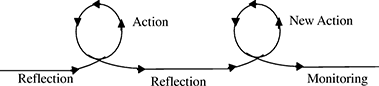
PAR is a reflective process of progressive problem solving led by individuals working with others to improve the way they address issues and solve problems (German et al., 2010). It is an eclectic and dynamic field with deep, multidisciplinary roots but with new, evolving developments (Sithole, 2002). PAR is generally applied within social learning contexts, where multiple actors collectively construct meanings (problem definition, objectives) and work collectively toward solutions (Maarleveld and Dangbégnon, 1999; Pretty and Buck, 2002). It is based on a continuous cycle of systematic planning, taking action, observing, evaluating, including self‐evaluation, and reflecting prior to commencing the next cycle (Greenwood and Morten, 1998; Wadsworth, 1998) (Figure 1). Iterative cycles of organizational or community‐level action and reflection makes change processes more robust and effective by ensuring that systematic learning and sharing take place, by fostering continuous adjustment of actions to align them with agreed upon objectives, and by empowering the actors themselves to learn and adapt. It is a collaborative method to test new ideas and implement action for change and involves direct participation in a dynamic research process, while monitoring and evaluating the effects of the researcher's actions with the aim of improving practice. PAR is about “getting change to work” (German and Stroud, 2007), contrary to AR which is about understanding the nature of change processes and distillation of lessons of use to a wider audience striving to solve similar problems elsewhere.
3.1 Why using PAR for climate change adaptation
There are many advantages using PAR for climate change adaptation:
PAR has been widely and successfully used in the past to solve problems in complex socio‐ecological systems (Colfer, 2005; Hagmann and Chuma, 2002) and to facilitate institutional change (Elliott, 1991; Hagmann, 1999). With this regards, many of the lessons and approaches derived from the past make PAR readily applicable to climate change adaptation (German et al., 2010).
PAR is the ongoing and capacity building nature of AR processes that make it appropriate in the context of ongoing climatic change and variability.
It is an effective mechanism for enhancing involvement of beneficiary communities in social change processes, spreading benefits to include commonly disadvantaged social groups under local settings (Fals‐Borda, 1987).
As a tool for fostering sustained learning and adaptation over time through partnerships between at‐risk communities, government institutions and other actors, PAR becomes a tool which (together with its corollary, adaptive management) is uniquely suitable to climate change adaptation.
PAR can strengthen understanding for the limited predictability of climate change and limitations in local and scientific knowledge by building upon the complementarities of local and scientific knowledge and fostering a more nuanced understanding of systems. These complementarities may cover aspects such as what is observed (content), what matters (motivation), and time and space dimensions (scale) (DeWalt, 1994).
While scientific knowledge tends to be stronger at deriving understanding at larger spatial scales, local knowledge is often stronger at understanding the particularities of a given location. Regarding temporal dimensions, local and scientific knowledge each have their strengths in observing change over longer time frames. However, scientists may be able to predict future climatic change better, while communities tend to be more versed in historical change and how to deal with uncertainty based on their own experience with past climatic changes and related adaptive strategies, as well as their understanding of what worked and did not work, and why.
PAR allows inculcating a common understanding that all knowledge is partial and in part subjective, and that it is through partnership, social learning and active monitoring that the unknowns will diminish relative to what is known (German et al., 2010).
4 Methods
4.1 Selection and description of the study sites
Nkol‐evodo and Yokadouma were selected for this study. They were selected based on accessibility, existence of community forests, number of villages in the community forest, dependency of the community on forest resources, and ecological and social diversity. In addition, Nkol‐evodo was selected for his proximity to the city meanwhile Yokadouma was considered for its remoteness. As a matter of fact, the two sites are about 700 km apart from each other. Both sites fall within the bi‐modal humid forest agro‐ecological zone with an annual rainfall ranging from 1,500 to 3,000 mm and mean temperature of 23°C. They both have a four‐season climate, with a maximum of two dry months. Both Nkol‐evodo and Yokadouma are situated roughly between 2°N and 4°N and for the most part below an altitude of 800 m (UNEP, 2000).
Nkol‐evodo is located in the Lekié Division of the Center Region of Cameroon. It has a community forest (Coopérative des Paysans de la Lekié – COPAL) of 4,800 ha and comprises ten villages with a population of more than 5,000 inhabitants. It is found in the transition zone between Northwestern Congolian lowland forests and Northern Congolian forest‐savanna mosaic (Olson et al., 2001). Key vegetation types include: primary and secondary forests, swampy forest along Sanaga and Afamba rivers, savanna, fresh water ecosystems, rocky areas with a mighty rock of more than a kilometer, agricultural plantations dominated by cocoa, as well as cash crop farms and fallows (Akoa, 2007). Key treats to this forest are bush fire, slash and burned agriculture, long dry seasons, etc. In Nkol‐evodo, agriculture remains the principal activity of most households. This agriculture is made up of cash crops farmland and perennial plantations (mostly cocoa). It is also the main source of revenues and for food for most households. On the other hand, Yokadouma is in the Eastern Region of Cameroon, in the Boumba and Ngoko Division. It is located in the transition between Northwestern Congolian lowland forests (Olson et al., 2001). Here, three community forests were part of this study: ASMIMI, ESSAYONS VOIR and MORIKOUA‐LIYE. All together, these forests represent more than 13,000 hectares. Population is estimated around 9,000 inhabitants (Betti, 2004). The vegetation is made up of mixed semi‐deciduous forests more or less degraded by anthropic activities such as forest exploitation and agriculture. In this site, key threats to forest include poaching and trade of protected species, forest exploitation and tree felling, bush fire, prolonged dry seasons and slash and burn agriculture (Betti, 2004). Agriculture also remains the principal activity of most of the households. Other activities include collection of NTFPs, hunting, livestock rearing, and fishing.
4.2 Steps and processes
Before conducting the fieldtrip, a preparatory process that involved literature review of documents and data relevant to the sites. As a matter of fact, while searching literature on impacts of climate change in particularly study areas, a dearth of literature compelled to rely on ground data, rather than scientifically tested evidence. This limitation created a window of opportunity of considering this study as important contribution for the project as well as country's climate change research profile.
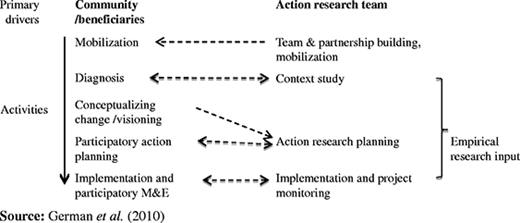
Figure 2 shows the different steps as well as the main nexus where each takes place whether among the intended beneficiaries (e.g. communities) or among the AR team. Dotted lines suggest information flow between actors.
Team‐building, partnership‐building and mobilization were largely done by the research team to establish the necessary conditions for effective project implementation. It consisted of establishing rapport among various actors; reaching common objectives; making the necessary linkages with individuals, groups or institutions who have a role in enabling change; calling together intended beneficiaries and other partners to initiate dialogue; and verifying that diverse sets of stakeholders are interested in participating.
Considering that PAR is research oriented toward problem solving or overcoming obstacles to achieving a goal, participatory diagnosis was conducted to enable communities or beneficiaries to identify the superficial and underlying, direct and indirect, proximate and remote causes of climate variability and change problems in their communities.
The conceptualization of change enabled collective definition of the activities which participants would like to see brought about through PAR. It helped clarify how “improved adaptive capacity” is conceptualized by local stakeholders.
Participatory action planning aimed at supporting communities and other stakeholders to develop a concrete strategy for moving from the visioning process to actions that will enable them to achieve the vision. This plan included key actions, how these actions were to be carried out, by whom and when. The resources required to support change were also negotiated and agreed upon with development partners, with emphasis first on local resources (in the form of specialized knowledge, local materials, labor or financial contributions) with external resources aiming only to fill gaps and complement local inputs. Great care was taken to ensure that the poorest and most vulnerable are not further marginalized in the process.
Finally the implementation of planned actions was carried out together with development partners and communities themselves under the research team supervision.
4.3 Tools and focus
Tools used in the PAR included brainstorming, focus group discussions, historical trend analysis, diagnosis, visioning, process documentation, etc. The focus was to put emphasis on climate variability (what people have already experienced) rather than climate change, defining and prioritizing adaptation options (relevance for communities, feasibility, short to long term […]) and implementation on those adaptation options.
4.4 Participants
Participants included local people (men, women, and different ethnic groups), community leaders, local or national development non‐governmental organizations (NGOs), and local administration representatives.
4.5 Facilitation and process documentation
Facilitation helped the communities to jointly identify problems and opportunities related to climate change; discuss and negotiate desired future states; jointly plan; frequently monitor performance, reflect on progress made towards agreed goals and adjust action plans; perceive and respond to emerging challenges and opportunities. The facilitator had the responsibility of managing group dynamics, including power imbalances that threaten the “voice” of certain actors. He had the analytical capacity to integrate and synthesize diverse views to distill an emerging consensus or key points of difference.
Process documentation was designed to facilitate systematic learning on development or change processes as they are implemented. It focused on the documentation of process (the “how”) during the planning of each development intervention or innovation, during implementation (how the plan changed during implementation, successes and challenges, lessons learnt) and prior to subsequent actions (re‐planning to overcome barriers, better align actions with objectives) at project level (German and Stroud, 2007).
5 Results and discussion
5.1 Climatic risks and their effects in the study sites
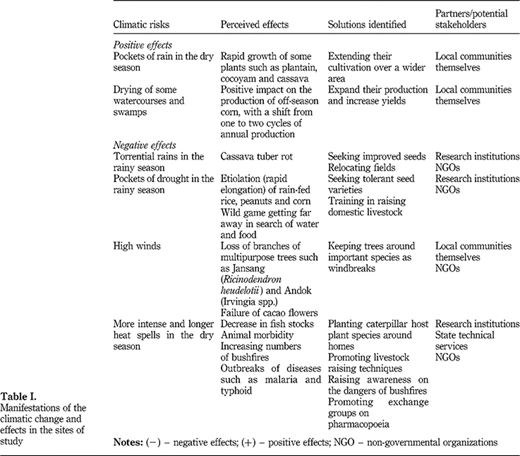
Climatic risks and manifestations were similar in both Nkol‐evodo and Yokadouma. Identified during participatory diagnosis exercise, these risks and manifestation are summarized in Table I.
Climatic risks and their perceived effects by the communities in the study sites show that climate change is not only an environmental problem. It also has serious economic and social implications. Agriculture appeared to be the top first livelihood activity. However, this activity was found to be largely vulnerable to climate change. This agriculture is still highly dependent on climate, because temperature, light, and water are the main drivers of crop growth. Statistics show that in Cameroon, rainfall has already decreased by over 2 percent per decade since 1960 (Molua and Lambi, 2007). Crop yields have been poor; in particular the cash crop has been affected by unsteady rains. Climatic impacts on food productions and its costs are projected to be exacerbated. Current climate variation is already altering the types, frequencies, and intensities of crop and livestock pests and diseases, and the severity of soil erosion. This makes it imperative for climate change and climate variability measures to be taken seriously and for adaptation strategies to be integrated into project development planning both in the private and public sectors in the country.
5.2 Identification of adaptation strategies
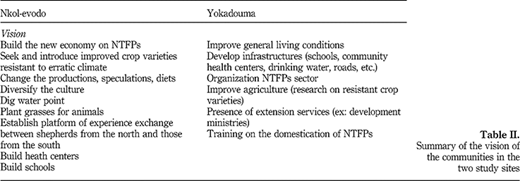
Conceptualization of change consisted in requiring the participants to dream of an ideal future for them where all the social groups which form the local communities developed powerful adaptation strategies to climate change, to draw up the list of the criteria and indicators of the change and to determine the approach to evaluate the state of reference; and to transform the vision into actions. Table II summarizes the vision of the communities in the sites.
However, some of the actions or strategies suggested were vague, unrealistic or unrealizable within the framework of the project (either because of the cost, duration or its focus). Most of these actions also had no relationship with climate change or with the mission of the project. Therefore, there was high need to help the communities focus on the identification of the strategies/actions related climate change and within the forest sector. Subsequent workshops helped the communities identified and prioritized adaptation options summarized in Table III.
5.3 Participatory implementation of prioritized adaptation strategies
Introduction of improved cassava varieties
In the two study sites, cassava was reported as one of the most important crop in terms of food and revenues. It has always been cultivated in the study sites mainly by small farmers who are generally women heads of households using traditional farming methods. The crop offers these farmers several major advantages. It is relatively tolerant of poor soils and seasonal drought. It can be safely left in the ground for seven months to two years after planting and then harvested as needed. It produces higher yields per unit of land than other crops such as yams, wheat, and maize (Alabi et al., 2011). For instance, under favorable experimental conditions, cassava as a monocrop can yield as much as 90 tons of fresh roots per hectare. Cassava is cultivated as a tuberous root crop and its roots are the major source of dietary starch. The tubers are eaten fresh and in various forms of processed food. Leaves are also consumed as a green vegetable to provide an important source of proteins, minerals, and vitamins (Nassar and Ortiz, 2010). With increased prospects of starch from cassava as a source of ethanol for biofuels, its cultivation is transforming from subsistence to a more commercially‐oriented farming enterprise (Nassar and Ortiz, 2010). Consequently, cassava acreage has been increasing throughout Africa. However, cassava is vulnerable to a broad range of diseases caused by viruses as also reported in the study sites. Among them, cassava mosaic disease (CMD) is the most severe and widespread, limiting production of the crop in sub‐Saharan Africa. CMD produces a variety of foliar symptoms that include mosaic, mottling, misshapen and twisted leaflets, and an overall reduction in size of leaves and plants. CMD‐affected cassava plants produce few or no tubers depending on the severity of the disease and the age of the plant at the time of infection (Alabi et al., 2011). Therefore, improved disease‐free cassava varieties, fast growing with high yield were sollicitated. With the assistance of the International Institute of Tropical Agriculture (ITITA), three cassava varieties were introduced for test in 35 individual farm plots in each study site. This pilot demonstration started in July 2010 and the first harvest was carried out in April 2011. Overall, farmers were very satisfied and recognized the high yield of the introduced varieties compared to their local ones. However, some farmers were of the opinion that the taste of the introduced varieties is a little different from their local one they are used to.
Training in “eru” farming
“Eru or Gnetum” (Gnetum africanum and G. bucchholzianum) is one of the important indigenous leafy vegetable consumed by the people living throughout the humid forested regions of Southern Cameroon, Southeast Nigeria, Equatorial Guinea and the Central African Republic (Ndam et al., 2000). Gnetum leaves are highly valued as a nutritious green vegetable across Centre and West Africa (Shiembo, 1994). They contain high nutritional values as both species contain eight essential amino acids in significant quantities (Mialoundama, 1993). This suggests the potential role of these species in the fight against malnutrition in poor rural areas with limited sources of meat. In areas where local population depends on a dwindling wildlife population as a source for protein intake, Gnetum provides an affordable alternative to maintain the nutritional values of their meals (Ndam et al., 2000). Economically, Gnetum leaves sustain an active cross‐border multimillion trade stretching from West and Centre Africa to Europe and America. This provides employment to a wide range of persons, most of who are women. Fundamentally, thousands of people depend on the harvesting and marketing of Gnetum leaves for their living (Nkefor, 2000). However, the intense economic crisis of the 1980s together with local and regional demand has resulted in economic depletion of the Gnetum in the Western part of Cameroon that formerly supplied the Nigerian and local markets. Harvesting pressure has now shifted to East Cameroon where the product is still available in commercial quantities. So this region is now responsible for meeting the increased demand from the local, regional and international markets. This increase in demand, coupled with the absence of a good management system, seriously threatens the resource base. This is mainly as a result of poor harvesting practices, over‐exploitation, and the gradual replacement of the habitat in which the species thrive. If nothing is done, Gnetum will not continue to be a source of livelihood to thousands of people, most of whom are women. In this regards, 32 farmers per site were trained in “eru” propagation, cultivation and farm management techniques as well as sustainable harvesting. A shade and two functional propagators (rooting and weaning) were established in each of the participating community in each study side.
However, to ensure sustainability of the species, the domestication programme needs to go along with the development of sustainable management systems for the wild population, and the enactment of an effective legal system to guide the harvesting and trading of the species. Certainly, experiences from the domestication process would inform this process. In this way Gnetum can continue to be a source of livelihood for the many people that depend on it.
Training in edible mushrooms farming in Nkol‐evodo division (Cameroon)
In the perspective of diversifying their income and reduce their vulnerability to climate change, members of the community in Nkol‐evodo chose mushroom farming as an adaptation strategy. To realize this activity, mushroom program of the Ministry of Agriculture and Rural Development was involved. The training centered on edibles mushrooms of the genus Pleurotus (Oyster mushrooms). This training focused on the production of the carpophores of mushrooms and on the multiplication of seeds (whites) of mushrooms. In addition to the training, all the equipment and input were provided to the community. A temporary mushroom bed was also built to allow the community autonomous production of mushrooms.
As a matter of fact, mushrooms are being used as food and medicine since time immemorial. Their cultivation on extensive scale can help solve many problems of global importance such as protein shortage, resource recovery and reuse as well as part of environmental management. Edible mushrooms contain a high percentage of protein, all indispensable amino acids, and vitamins B‐complex and other biochemical compounds (Alam and Raza, 2001). This vegetable is also a food source of dietary fibre and the quantity present is much higher than the crude fibre. The protein value of mushroom is double of cabbage, potatoes and asparagus, four times that of tomatoes and carrot and six times that of oranges. Cultivation of mushrooms has not been given due importance in Nkol‐evodo and in Cameroon. Mushrooms naturally grown in certain places in the country are utilized as food, where mushroom cultivation is lucrative business in many countries. Although mushroom cultivation has tremendous prospect in the study site and in the country as a whole, at present only some wild types of mushrooms are eaten by rural folk.
Training in beekeeping
In the two study sites, beekeeping was identified as a highly sustainable forest product with a ready‐market and good alternative income earning potential. It was seen as a valuable tool in climate change adaptation strategies, with good potential for expansion in these predominantly forested communities. With the assistance of the Center for Nursery Development and Propagation (CENDEP), 32 farmers and unemployed youth per site were trained in bee‐keeping business, and producing honey, hives and wax. Each participant received two improved hives and other beekeeping equipment including protective clothing, masks and gloves. In phase I of the training, participants were shown how to lay strips of beeswax into the hives to attract swarms. In March 2012, about three‐four hives out of five have been occupied (70 percent) in both study sites. The average yield of honey is about 20 kg with potential of up to 40 kg per hive. Phase II of training focused on honey harvesting and processing. Currently, participants harvest to sell, but are being encouraged to also include the product in their own diet.
As a matter of fact, in the study areas and elsewhere in Cameroon, honey is predominately used as a high energy food. It is valued as a treatment for coughs, skin infections, and burns, and if sold provides an important source of cash income (Ingram and Njikeu, 2011). It also has a cultural value in traditional ceremonies and as a gift in the West, Southwest, and Northwest regions, and the humid forest zone for the Baka ethnic group. Secondary products such as such as honey, wax, and propolis are all NTFPs of animal origin. Wax is used to manufacture candles and in cosmetics and pharmaceuticals, particularly for its hydrating and emulsifying properties. Traditional craftspeople and metalworkers also use wax to create moulds. Propolis has high medicinal value, is used in traditional medicines, and is increasingly in demand by European and American pharmaceutical companies. These multiple use hive products, both in their raw and processed state, are traded locally, nationally, and internationally with export and national markets opening up and changing dramatically in the last five years (Ingram and Njikeu, 2011). Beekeeping can contribute to environmental integrity because some beekeepers protect the forest to ensure their harvests, meaning that beekeeping can and has been used to support forest conservation initiatives. This has led to the promotion of bee farming as a conservation positive activity in Cameroon as elsewhere; it is supposed to inhibit forest clearance, protect and aid the management of forests, and provide vital pollination services for forest ecosystems and agriculture (Nurse et al., 1995; Hausser and Mpuya, 2004; Timmer and Juma, 2005; Brown, 2006; Russell, 2008).
6 Conclusions
In Cameroon and elsewhere in the Congo Basin, the importance of forests for livelihoods is certain. Forest foods contribute significantly to the diet of many rural and urban households. During periods of crop failures especially in agricultural communities, forest foods are most extensively used to help meet dietary shortfalls. For instance, Cameroon forest ecosystem services provide security portfolios for over 80 percent of particularly rural populations contributing to poverty alleviation and national development. However, the adverse effect of climate conditions to which the country is exposed overtly affects these resources thereby significantly affecting the economic, social and environmental dimensions of the national sustainable development. The development of adaptive capacity to reduce adverse impacts of global change in rural areas of developing countries is therefore a necessity. PAR played a key role in this. As a matter of fact, the physical spaces created to improve the interaction between researchers and stakeholders provided opportunities for stakeholders to discuss convergent and conflicting concerns, preferences and beliefs and to deconstruct the meanings, arguments and positions at stake. In fact, PAR appeared as a driver of effective partnerships among community members, extension, policy makers and researchers, in support of learning platforms that became a necessary tool to build adaptive capacity.
The approach helped to synthesize the information collected and provide insights that could not be gained by separate natural and social science disciplines. The integration of realist and more subjectivist, interpretative approaches and methods enabled the exploration of relevant and urgent questions about future change, whilst recognizing underlying epistemologies and values. Through PAR, participants developed a greater understanding of multidimensional and cross‐scale drivers of vulnerability and developed more creative ways to inform on adaptive strategies to climatic change. Beyond formal meetings and agreements, the research project provided informal platforms for new alliances. Despite the pre‐existing strong connectivity between stakeholders, new interactions and cross‐level linkages could be observed. However, although the study highlights the potential for PAR as a methodological space for learning, the approach itself presents a number of challenges, which further research will need to address. The explicit exploration of multiple motivations and objectives of participants as early as possible and throughout the process revealed divergent interests, but during the process participants adaptively changed perceptions and arguments to find convergences for dialogue. At the beginning of the process, reluctance of local administrations to participate and provide useful information was a key barrier for trust and learning improvement.
Funding for this study was provided by the IDRC and DFID under the Climate Change Adaptation in Africa program (CCAA) (Grant no. GF/DR/07/304/mjd). The authors specially thank all the respondents for their time and interest in the research. The authors are also very grateful to anonymous reviewers whose comments and suggestions have substantially improved the manuscript.
Notes
Including population growth, epidemics, forced and spontaneous migrations, and warfare and political violence.
References
Further Reading
About the authors
Mekou Youssoufa Bele is CIFOR Research Officer based at the Central Africa Regional Office in Yaoundé in Cameroon. He has gathered a lot of experience working with people and their forests to develop their lives and their community. He particularly relishes climate change adaptation ethos that combines adaptation for forests (reducing the impacts of climate change on forests and their ecosystem services) and forests for adaptation (using forests to help local people and society in general to adapt to inevitable changes). He is author and co‐author of many scientific papers. Mekou Youssoufa Bele is the corresponding author and can be contacted at: b.youssoufa@cgiar.org
Dr Denis Jean Sonwa is an environmental scientist researching climate change policy and development. His current research focuses on the potential of ecosystem services for adaptation and forest carbon (REDD+) to mitigate climate change and to contribute to both rural and national development, as well as on the ecological and social implications of large‐scale land‐use transformations for food and energy security purposes. He is based at the Central Africa Regional Office in Yaoundé in Cameroon.
Dr Anne Marie Tiani is a CIFOR senior scientist. She is the Coordinator of the COBAM project (climate change and forests in the Congo basin: synergies between adaptation and mitigation), at the Central Africa Regional office in Yaoundé in Cameroon. She has acquired extensive experience on designing and using methods and tools for monitoring and evaluation of socio‐environmental impacts. Her extensive field experience in the Congo basin and Madagascar allowed her to develop a good level of understanding of how institutions and incentives structure human behaviour and related ecological outcomes. Dr Tiani records numerous achievements, among others, publications on gender, decentralization and management of protected areas. She also co‐edited a book entitled Governing Africa's Forest in the Globalized World, published by Earthscan, London in December 2009 for its English version and by CIFOR in 2010 for the French version.