


This study aims to explore possible ways to promote uptake and integration of climate-smart agriculture (CSA)-Technologies, Innovations and Management Practices (TIMPS) into policy and practice in Nigeria through the development of actionable roadmaps to facilitate the process.
Two hundred and fifty-two stakeholders for the policy discourse and survey were purposively drawn from both government and private agencies, NGOs and community-based associations from the six geo-political zones of the country. Data collection was done using a mixed method comprising questionnaire administration, in-depth interviews and panel discussion. Data collected was summarised using descriptive statistics.
The major findings were lack of existing policies on CSA, lack of farmers’ awareness of CSA-TIMPs, neglect of extension programmes that can help to enlighten farmers on the importance of CSA and insufficient extension personnel to cater for farmers’ needs. Challenges to CSA-TIMPs uptake in Nigeria were: insufficient funding and support by government in programme planning and implementation, policy inconsistencies and poor farmers’ attitude and resistance to change.
This research will facilitate CSA uptake and integration through the provision of data for informed decision and action by the responsible agencies.
Suggested actionable roadmaps across the zones were robust awareness campaign and advocacy on uptake of CSA-TIMPs through e-extension, community TV/radio in local dialects; revitalisation of policy programmes such as monthly meetings should be reintroduced and creation of CSA Departments/Stations in each state; increased budget allocation to a minimum of 10% for agriculture, revitalisation of Researchers-Extension Agents-Farmers Linkage, employment of qualified extension agents and retraining of extension agents.
1. Introduction
1.1 Background to the study
The agricultural sector remains the backbone of Nigerian’s economy, employing approximately two-thirds of the entire labour force. Despite recent economic challenges and limitations, the value added through the agricultural sector remains relatively high at 21% GDP. Majority of the Nigerian farmers are smallholder farmers who live below the poverty line of US$1.9 a day (Food and Agriculture Organisation, 2018) and reside largely in the rural areas. Moreover, agriculture has continued to surface in political discussions, and it is perceived as a major driver of environmental change while contributing 10%–12% of the global emission of greenhouse gases (Terdoo and Adekola, 2014). Evidence has shown that there is a concerted effort globally by funders and governments to promote climate-smart agriculture (CSA) as a mitigation and adaptation strategy for climate change impact (Barasa et al., 2021). In the midst of the challenges posed by climate change, it is equally evident that there will be considerable impacts on global food security (Barasa et al., 2021). In addition, the population of the country keeps increasing with corresponding increase in demand for food while climate variables also continue to fluctuate; thereby heightening the already existing change in climate; while farmers’ capacity to adapt to these changes in climate still remain low. Sadly, the frequency and intensity of weather-related disaster will continue to increase in the country following the persistent climate variability. Climate change modifies agricultural production and food systems, introducing uncertainty and vulnerability risks within farmers and policy decision-makers. CSA, therefore, comes in handy to most rural African farmers, who are more vulnerable to extreme weather and climate conditions (Ologeh et al., 2018). Climate Smart Agriculture holds great potentials for increasing food production, building farmers’ resilience to climate change and reducing greenhouse gas (GHG) emissions (Terdoo and Adekola, 2014; Barasa et al., 2021).
1.2 Knowledge gap
Climate change has been a source of vulnerability to countries worldwide, and the agricultural sector suffers considerable loss as a result of the impact (Sebestyén et al., 2021). The climate change vulnerability index further showed that Nigeria is among the top ten countries affected adversely by climate change (Ologeh et al., 2018) and this suggests that there is an urgent need for a climate action in the country. In addition, food security in the country may not be realised without necessary policies and frameworks to guide action to mitigate the effects of climate change (Morton et al., 2017; National Agricultural Resilience Framework, 2020). Currently, policies promoting the uptake of climate smart agriculture have not been included in the national agricultural related policies in Nigeria. Even though the policy makers in Nigeria have realised the dire need to integrate CSA policies to reduce the impact of climate change, but it is unfortunate that there is still a dearth of knowledge on suggestions from the affected stakeholders on possible policies that could be integrated by the policy makers. It is based on this knowledge gap that this national survey was conducted through a policy discourse to develop an actionable roadmap that can facilitate the uptake and integration of CSA-Technologies, Innovations and Management Practices (TIMPS) into the national policy.
The main objective of this is to develop actionable roadmaps to facilitate the process to promote uptake and integration of CSA-TIMPS into policy and practice in Nigeria. The study specifically:
assessed stakeholders’ level of awareness of CSA-TIMPs in Nigeria;
ascertained whether or not CSA policy is available in the country;
identified CSA-TIMPs available in Nigeria;
identified the challenges to CSA-TIMPs’ uptake and integration of CSA into policy in Nigeria; and
developed actionable roadmaps that can increase the uptake and integration of CSA into policy in Nigeria.
2. Literature review
2.1 Concept of vulnerability, resilience and adaptation
Vulnerability, though a complex phenomenon which can be viewed from various perspectives, has generally been characterised by factors that expose people to harm and limit them from the capacity to cope, manage and recover from the harm or impact of hazards (Wisner, 2016). It is equally a measure of exposure as well as the capacity to respond to risks, dangers and hazards (Aderinoye-Abdulwahab and Chimgonda-Nkhoma, 2015). In other words, vulnerability involves a combination of factors that determine the degree to which a person’s livelihood is put at risk. Contextually, we would like to see vulnerability as the exposure to inadequate food, unfavourable climate, shortage of farm inputs occasioned by harsh weather, insufficient clean energy in the environment due to the impact of climate change among others. More recently, vulnerability discourse is imbued with concepts such as resilience, coping and adaptation, and this implies that vulnerability is closely linked with capacities and adaptation (Wisner et al., 2014; Aderinoye-Abdulwahab and Chimgonda-Nkhoma, 2015; Scott and Stuart, 2018).
Resilience, on the other hand, has been described as a shock absorber or buffer, which helps people to survive or swim through the ocean of vulnerabilities. Resilience, as perceived by psychologists, is a trait, reflecting a general ability to master challenges (Wong-Parodi et al., 2015; Wrigley and Dawson, 2016). Similarly, adaptation is a state, reflecting how individuals deal with specific stressors. While resilience is sometimes seen as the propensity to withstand to, rather than avoiding change; an attempt to avoid change in itself puts one in a state of vulnerability (Scott and Stuart, 2018). Adaptation has sometimes been regarded as the ability of an individual to succumb to the pressures and demands of the impact of the hazard or harm which they were hitherto vulnerable to (Wong-Parodi et al., 2015). Although, resilience and adaptation may appear to be similar, however they are two different concepts. Resilience includes the ability to acquire new capabilities, perhaps emerging stronger from the struggle, whereas adaptation entails preserving existing resources (Wrigley and Dawson, 2016). It has further been established that responses to climate change impact must involve the two concepts of resilience and adaptation (Wisner, 2016).
2.2 Climate change adaptation in Nigeria
Climate change is the phenomenon that identifies with inconsistencies in the mean and/or the variability of climate properties, which persists for some decades or longer (Biesbroek et al., 2013). In accordance with global observations, Nigeria has also recorded high changes in the climatic factors and these include: rainfall variability, increasing temperature, floods, droughts, desertification and land degradation, rising sea levels and loss of bio-diversity (Elisha et al., 2017; Ebele and Emodi, 2016). Evidence has further indicated that changes in climatic factors and the experience of unexpected extreme weather events will continue to have major global adverse impacts on all facets of human life and ecosystems development (Amanchukwu et al., 2015); and the negative effects is likewise expected to be felt more in developing economies such as Nigeria, given the country’s high dependence on rain-fed agriculture. The high level of poverty, mostly, prevalent among the farming communities in the country, low adaptive capacity, lack of adequate infrastructure and poor institutional framework further exacerbate farmers' vulnerability to change in climate and variability (Morton et al., 2017; FAO and ICRISAT, 2019). Climate change thus impacts Nigeria agriculture via difficulty in planning agricultural production operations, reduced crop production, food shortage and insecurity, loss of biodiversity and environmental degradation, as well as poor human health occasioned by heat waves, malnutrition, air pollution, spread of infectious food-borne and water-borne diseases (Anabaraonye et al., 2019 and Haider, 2019).
In sub-Saharan-Africa, quantum numbers of studies have investigated the responses of crop farmers, livestock farmers and rural households to climate change and variability (Ebele et al., 2017; Anabaraonye et al., 2019; Ibrahim et al., 2014; Ologeh et al., 2018). For instance, farmers in Malawi adapted to the vagaries of climate change by adopting strategies such as on-farm employment, reduced number of meals, begging and selling of livestock to deal with the effect of climate change (Ebele et al., 2017) while farming households in Kenya responded to the impact of climate change by changing crop varieties, changing planting dates and changing crop types (Anabaraonye et al., 2019). It has also been shown that some of the other responses which farmers have adopted and adapted to (change in planting trees, reduction in number of livestock, diversifying into other income generating activities, changing or supplementing livestock feeds and use of organic fertiliser (Ado et al., 2019) are indeed tending towards climate smart agriculture.
In Nigeria, Ibrahim et al. (2014) modelled the arable crop farmers’ decision-making process and adaptation strategies to climate change in Ogun State Nigeria. Their findings revealed that some of the respondents did not practice any climate change adaptation measures, while others targeted rains before they planted, adopted improved soil conservation strategies, and the practice of wetland farming. Interestingly, gender as a socio-economic characteristic has been found to influence the adoption of climate smart agricultural practices in tackling the effect of climate change among farmers (Ado et al., 2019). The author further affirmed that the farmers’ access to credit relates positively to the adoption of mulching, irrigation and tree planting while sensitisation and training through agricultural extension visits; positively influenced the farmers and this made them vary the time of planting and other tree planting practices (Owombo et al., 2014). Moreover, in the south-eastern part of Nigeria, education, income, credit, extension service, livestock ownership, farming experience, land area cultivated, distance to the market and water sources, leadership position, gender, land ownership and mass media exposure are among the determinants of adoption of climate smart agriculture (Ifeanyi-Obi et al., 2017).
Haider (2019) also reported that farmers in the semi-arid region of Nguru, Nigeria mitigated the impact of climate variability by using adaptation strategies such as planting of different crop varieties, soil and water conservation, diversification into non-farm activities and use of irrigation among others. Similarly, it was found that most farmers in Adamawa are well aware of climate change and have been responding to its effect by planting improved and extreme weather tolerant crop varieties as well as planting of early maturing crop varieties (FAO and ICRISAT, 2019; Fawole and Aderinoye-Abdulwahab, 2021). Sofoluwe et al. (2011) found that the farmers in Osun State perceived climate change through their experience of a surge in temperature and decrease in rainfall. It was additionally found that early and late planting, planting of trees, planting of different crop varieties and irrigation practices were the commonly practiced climate change adaptation practices in the study area. Moreover, the farmers’ adaptation to climate change was found to be significantly influenced by access to loan and livestock ownership, among other factors. It therefore becomes apparent that CSA methods can be able to transform agricultural systems to enhance food production and improve security under the changing climate if maximally adopted by farmers as a strategy to combat the impact of climate change.
2.3 Capacities and vulnerabilities approach
The capacities and vulnerabilities approach (CVA) is a framework that critically considers roles, responsibilities and power dynamics in a particular community and seeks to meet a social need of that particular community (Birks et al., 2017). The original intent of the CVA was to guide humanitarian intervention and disaster preparedness (Wisner, 2016); hence we adapted this framework to focus on identifying and addressing why people have failed to adopt the use of CSA-TIMPs and the rationale for the lack of inclusion of CSA issues in the national policy of the country of study. We also looked at social issues that affect the strengthening of CSA uptake and the difficulties in strengthening the uptake. We provided a CVA matrix to serve as an illustration and possibly shed more light on how we envisioned the strengthening of CSA uptake and its integration into the national policy among stakeholders.
One of the strengths of the CVA approach is that it encourages long-term perspectives while focusing on sustainability. It also examines social interaction and by analysing vulnerabilities, it will prevent the situation whereby the maintenance of status-quo ante is being promoted (Birks et al., 2017). In order words, CVA clamours for desired change, and it can be used for planning so as to assess change (from status-quo ante). Its weakness is that it has the tendency to exclude gender analysis, and this does not constitute a threat to the current study because our focus is not on gender roles; rather on how to facilitate the uptake of CSA-TIMPs among all stakeholders with less emphasis on the gender roles played in the society. The capacities and vulnerabilities approach distinguishes between four categories of capacities and vulnerabilities, using an analysis matrix. The four categories used and adapted are physical, social, motivational and political capacities and vulnerabilities (Table 1).
Capacities and vulnerabilities matrix
| Factors | Vulnerabilities | Capacities |
|---|---|---|
| Physical/Material | Climate change, environmental degradation, unsafe environment and inadequate technologies and inputs | Surplus of productive resources (land, water, manure) and skills (human, innovations, management practices) |
| Social/Organisational | Low level of education and vulnerable occupations such as traditional farming methods | Membership in professional and social organisations. Availability of extension agents and services |
| Motivational/Attitudinal | Lack of duty bearers/leaders who will guide community’s views and their perception on how to create change | Community’s views on how to create change and strengthen facilitation of CSA-TIMPs uptake |
| Political/Institutional | Structures and decision making processes that inhibit response (termination of extension programmes that can boost CSA-TIMPs uptake | Structures and decision making processes that promote response. Examples include revitalisation of monthly review meetings and increase in budgetary allocation for agriculture |
2.4 Integrating climate-smart agriculture issues into national policy
The review of the different adaptation strategies used by Nigerian farmers in responding to climate change in Nigeria gives an insight into the various efforts being made in climate change adaptation as well as the need to channel more resources and efforts at helping farmers to sustainably and holistically cope better with the impact of climate change. The seemingly scanty documentary evidence of proper integration of climate smart agriculture in Nigeria Policies thus become a source of concern, and it is for this reason, among others, that this study carried out a national policy discourse to investigate the state of CSA-TIMPs among farmers. Findings and the roadmap generated from this study can be developed into a policy brief which should steer the policy influencers in the desired direction so that CSA issues can be holistically integrated into the Nigeria policy.
Policies not only guide actions but also ensure effective and successful implementation. The Building Nigeria’s Response to Climate Change (BNRCC, 2011) Project and the Federal Ministry of Environment (2011) noted that integrating climate change adaptation into development policies and projects is an effective strategy for managing the threats and potentials occasioned by climate change while enhancing sustainable development. The National Agricultural Resilience Framework (NARF) offers a broad agenda on short and long-term strategies to reduce food and nutrition vulnerability, while enhancing environmental resilience (UNFCC, 2011). Though it covers a good proportion of CSA components, but does not fully address the three pillars of CSA. With the increasing influence of climate change on agriculture, it is important to realise that food security agenda cannot be realised without an all-inclusive integrated approach like CSA.
3. Methodology
3.1 Study area
The country of study, Nigeria, is located in the western part of Africa between latitudes 4°-14° North and longitudes 2°2’ and 14° 30’ East. The country is bounded by the Federal Republic of Niger and Chad to the north; the Benin Republic west; Cameroon Republic in the East and the Atlantic Ocean lays Southwards of Nigeria (Eroarome, 2015). Nigeria is the most populous country in Africa with an estimated population of 193 million (National Population Commission, 2016 Estimate). It has 48.7% of its population as rural dwellers while 50.3% live in the urban areas (FAO and ECOWAS Commission, 2018). The annual population growth rate is 3.2% (Nigeria Bureau of Statistics, 2017). According to the UN World Population Prospects (2017), the country’s population could reach 410 million by 2050. About 29.4 million of the Nigerian population are undernourished (3-year average, 2018–2020), and there exists 10.7% prevalence of undernourishment (2017–2019) (FAOStat, Nigeria).
Nigeria Meteorological Agency report (NIMET) (2010) described Nigeria as a nation lying wholly within the tropical zone with wide variability in climate across different parts of the country. Near the coast, the seasons are not sharply defined. Temperatures rarely exceed 32°C (90 °F), the humidity is very high and the nights are hot. In the inland, there are two distinct seasons: a wet season from April to October, with generally lower temperature, and a dry season from November to March, with midday temperatures that surpass 38°C (100 °F) and relatively cool nights. As in most parts of West Africa, Nigeria's climate is characterised by strong latitudinal zones, becoming progressively drier as one moves north from the coast (Mbakwe et al., 2004). Rainfall, with patterns varying across the zones, is the key climatic variable with a marked alternation of wet and dry seasons in most areas. Temperatures throughout Nigeria are generally high, reaching as high as 44°C (111 °F) in the northeast before the onset of rains, and it can drop as low as 6°C (42 °F) during an intrusion of cool air from the northeast trade winds from December to February.
Agriculture remains the mainstay of Nigeria economy contributing significantly to the country’s Gross Domestic Product (GDP) with over 70% of its citizenry engaging in the sector, albeit, at subsistence level (FAO and ECOWAS Commission, 2018). The five major sub sectors in the agricultural system include crop production, animal husbandry (livestock production), Fisheries, Forestry and agricultural economics and extension service delivery. The country has 70.8 million hectares of agriculture land area with maize, cassava, guinea corn, yam, beans, millet and rice being the major crops. Animal production in the country is yet to be maximally harnessed hence domestic demand outweighs production. The major livestock reared by farm families in Nigeria are the small ruminants like goats (76 million), sheep (43.4million) and cattle (18.4 million) (FAO Stat). The climatic condition of the northern part of the country is favourable for livestock keeping which stands at 180 million poultry (FMARD, 2017). Nigeria is the largest consumer of fish in Africa; consuming about 3.2 million metric tons of fish annually but producing approximately 1 million metric tons annually (FAO Stat). The rapid population growth and economic activities continue to threaten the forest ecosystems in the country militating against her maximal contribution to agriculture. Annual deforestation rate ranges between 0.72% and 2.38% (FAO, 2018 report) further heightening the vulnerability of the country to climate risks and threats.
3.2 Research methods
This study was carried out in all the six geopolitical zones of Nigeria while using a mixed method of data collection to ensure holistic data for the study. The design of a research using the mixed methods approach helps to facilitate the understanding of the complex phenomena; as well as explain research through numbers, charts and basic statistical analyses (Creswell, 1999). Further, a multi-method approach to research holds potential for understanding the complex phenomena of social world, as this is seen through multiple lenses as well as using methodologies that better respond to the multiple stakeholders on policy issues than a single method or approach to research (Rossman and Wilson, 1991). Hence, policy discourse, questionnaire administration and in-depth interview were used to explore and elicit information for this study.
The policy discourse was organised in each of the six geopolitical zones of the country and held in February 2021 across the zones. These discourses were held at Port-Harcourt (South South Zone), Umudike (South East Zone), Abeokuta (South West Zone), Gombe (North East Zone), Zaria (North West Zone) and Ilorin (North Central zone) on the 16th, 11th and 10th of February, 2021 respectively. Population for the policy discourse include all management staff of Agricultural Development Programme (ADPs), Ministries of Agriculture, Ministries of Environment, Research Institutes, Farmers associations; Community based Associations, Community leaders, Private agencies and Researchers at different institutions and NGOs in Nigeria. Random sampling technique was used to select participants across the zones. Total participants selected were 37 in South-south, 35 South-east, 48 in South-west, 44 in North-east, 52 in North-west and 38 in North-central, giving a gross total of 252 participants across Nigeria.
The policy discourse incorporated two presentations which educated participants on CSA while discussion centred on the state of CSA in the zones as well as challenges to the uptake and integration of CSA into policy and practice. Panel discussions were used to elicit and develop actionable roadmap for integration of CSA into policy and practice in the country. In-depth interview was conducted to provide more detailed knowledge on issues bordering on CSA uptake in the zones particularly challenges and way forward. It also gave the opportunity to triangulate information elicited during the policy discourse and panel discussions. Interview questions included:
socio-economic characteristics (sex, age and occupation);
questions on awareness of climate smart practices and policies that are operational in the zone;
questions on previous training on CSA if present;
questions on the need for inclusion of CSA in Nigeria Policies;
questions on role of stakeholders in integrating CSA-TIMPS into policy in the zone; and
suggestions for actionable roadmap to address the challenges as well as to strengthen the uptake and integration of CSA-TIMPs in the extension policy.
Reliability of the instrument was tested on 15 stakeholders. Data collected from the respondents was subjected to Cronbach’s alpha reliability analysis. Reliability coefficient of 0.73 was obtained. Thus, the instrument was considered reliable.
Only heads of organisations and project managers were part of the respondents for the in-depth interview. Questionnaire was administered to the 252 participants of the policy discourse. This helped to elicit both qualitative and quantitative data which included information on their socio-economic characteristics, awareness and knowledge of CSA-TIMPs as well as availability of CSA-TIMPs in the country. Qualitative data were transcribed and analysed using descriptive statistical tools, namely, frequency counts, mean and percentages. The quantitative data collected were coded and analysed using descriptive statistical tools namely percentages, mean, frequency counts. This was done using SPSS 23 software package for data analysis.
4. Results and discussion
4.1 Socioeconomic characteristics of stakeholders
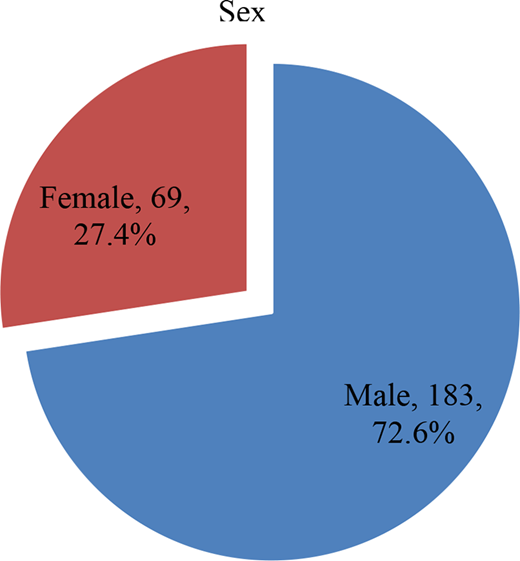
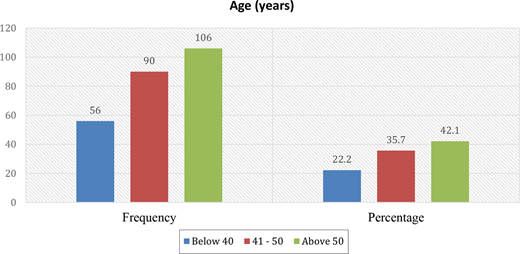
The distribution of the participants at the CSA-TIMPs policy discourse in Nigeria according to their sex in Figure 1 shows that 72.6% were male while the remaining 27.4% were female. This implies that the policy discourse was dominated by males and one could assume that climate smart practitioners in Nigeria are dominated by the males. This is not surprising as males dominate most agricultural activities in Nigeria (Ileka et al., 2020) except in few ventures that are considered to be feminine in nature (Obasi et al., 2021). The mean age of the participants was 54 years. This implies that participants were mature enough to have witnessed major effects of climate change over some decades. Hence, participants might have the experience and capacity to contribute to the discourse on CSA. The result also indicated that a considerable number youth were included in the CSA-TIMPs policy discourse across Nigeria (Figure 2).
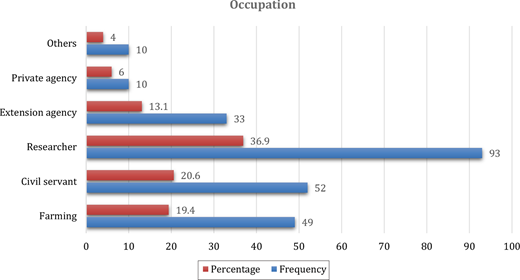
Percentage distribution of occupation illustrated in Figure 3 shows that participants were relevant stakeholders in the field of agriculture which included researchers (36.9%), civil servants from Ministries of Agriculture and Environment (20.6%), farmers (19.4%), extension agency (ADP) (13.1%) and others who were from related private agencies. Inclusion of diverse stakeholders in a policy discourse could enhance the robustness of discussion outputs. One major problem militating against the effort to adapt the Nigerian agricultural sector to climate change effects is the non-existence of a common front for stakeholders to dialogue. Various researches have been carried out in different areas of agriculture and climate change but most of the outcomes of these researches, in many cases, ended up in publications that policy makers hardly read. Hence, bringing together a multi-stakeholder (from both scientific and non-scientific background) group to engage in the policy discourse will complement effort of the government to develop climate change policies and framework that are well guided and informed by credible data from relevant sources.
4.2 Level of awareness of climate-smart agriculture technologies, innovations and management practices in Nigeria
The result presented in Table 2 indicates a low level of awareness on a holistic note (Mean =1.89) but awareness of irrigation practices (Mean = 2.40) as well as use of cover-crops and mulching (Mean = 2.22) was high among the stakeholders. These practices are traditional and have remained common among famers all over the country. However, the use of green house and flood resistant crop varieties recorded the lowest level of awareness (Mean = 1.44). This result may not be surprising as reports from literature already suggested that farmers are highly vulnerable to climate change impact (Wisner, 2016; ICRISAT, 2019; Fawole and Aderinoye-Abdulwahab, 2021) and it also suggests a low level of knowledge of CSA-TIMPs especially. This finding is in consonance with that of Tiamiyu et al. (2017) who found that large proportion of agricultural stakeholders were not aware of most CSA practices in Northern Nigeria and this has resulted in low uptake of the CSA practices in the region.
Stakeholders’ level of awareness of CSA-TIMPs) in Nigeria
| Level of awareness | ||||||
|---|---|---|---|---|---|---|
| CSA-TIMPs | Low | High | Very high | Weighted score | Weighted mean | Rank |
| Irrigation practices | 25 (10.2) | 97 (39.4) | 124 (50.4) | 591 | 2.40 | 1st |
| Cover-cropping and mulching | 49 (19.9) | 93 (37.8) | 104 (42.3) | 547 | 2.22 | 2nd |
| Crop rotation and mixed farming | 94 (38.2) | 85 (34.6) | 67 (27.2) | 465 | 1.89 | 3rd |
| Drought tolerant and flood resistant crop | 107 (43.5) | 74 (30.1) | 65 (26.4) | 450 | 1.83 | 4th |
| Afforestation, ban on deforestation and enforcement of law against deforestation | 142 (57.7) | 65 (26.4) | 39 (15.9) | 389 | 1.58 | 5th |
| Green house policy, flood resistant crop varieties | 156 (63.4) | 72 (29.3) | 18 (7.3) | 354 | 1.44 | 6th |
| Average | 1.89 | |||||
4.3 Availability of climate smart agriculture policy in the country
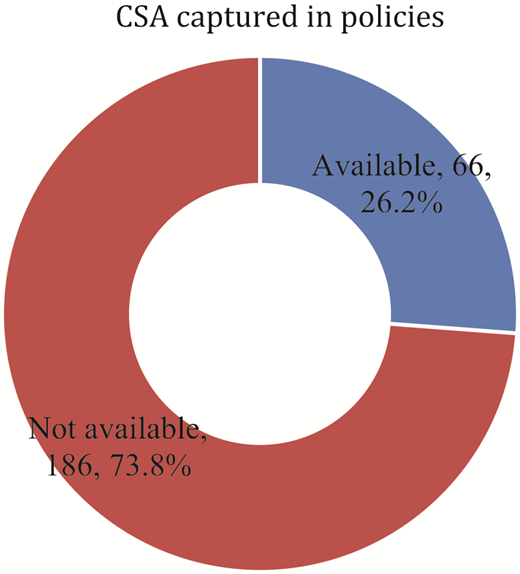
As shown in Figure 4, 73.8% of the participants were not aware of any CSA related matter captured in Nigeria policy. This is an indication of little or lack of availability of CSA-TIMPs in the agricultural policies of Nigeria. A similar report by FAO (2019) in the CSA country profiles for Africa series, had noted that there are no known policies on CSA in the Borno State of Nigeria. Though Nigeria has no policy specifically on CSA, it is important to note that some of the existing policies on agricultural adaptation to climate change have some components of CSA embedded in it. For instance, the National policy on climate change, Nigeria’s National Adaptation Plan Framework (2020), National Agricultural Resilience Framework (2014) had components of CSA but the major problem lies in the implementation of these policies; as some of them, up until now, have recorded low level of implementation, and this has been attributed to low level of fund as well as change in administration.
4.4 Available climate-smart agriculture technologies, innovations and management practices in Nigeria
Results in Table 3 indicate that most of the participants were already aware of the availability of some of the CSA-TIMPs, but very few participants further indicated the availability of agroforestry (32.1%), controlled grazing (26.6%), ranching (21.0%) and grassland intensification (14.3%) in the country (Table 3). It is note-worthy to mention that participants are more familiar with the crop-related CSA technologies while they are less acquainted with those bordering around livestock such as controlled grazing and ranching.
Distribution of CSA-TIMPs available in Nigeria
| CSA-TIMPs | Availability | |
|---|---|---|
| Frequency | (%) | |
| Use of improve crop varieties | 153 | 60.7 |
| Soil management practices | 139 | 55.2 |
| Crop management practices | 130 | 51.6 |
| Water conservation strategies | 119 | 47.2 |
| Mixed farming | 118 | 46.8 |
| Pest and diseases management practices | 114 | 45.2 |
| Weed management practices | 104 | 41.3 |
| Agroforestry | 81 | 32.1 |
| Controlled grazing | 67 | 26.6 |
| Ranching | 53 | 21.0 |
| Grassland intensification | 36 | 14.3 |
4.5 Challenges to climate-smart agriculture technologies, innovations and management practices uptake in Nigeria
As indicated in Table 4, the leading challenge to Climate Smart Agriculture (CSA) Technologies, Innovations and Management practices (TIMPs) uptake in Nigeria was inadequate funding and support by government to: implement policies, campaign and create awareness of CSA-TIMPs, organise meetings, conduct research and render support to farmers (21.8%). Other problems that emanated from the discourse were: policy inconsistencies and lack of implementation by the government, lack of political will and support from relevant agencies, and difficulty in convincing both the policy makers and implementers given that they perceive CSA as not being a political issue (8.7%). Similarly, Onyeneke et al. (2021) in their study in Ebonyi State, Nigeria found that high cost of inputs, lack of access to inputs, insufficient land and capital, insufficient climate information and poor extension services were among the major barriers to uptake of climate-smart agriculture in rice production. Shittu et al. (2021) also noted that the low adoption of CSAs in sub-Saharan Africa may not be unconnected to the fact that CSA implementation requires upfront investments that take time to yield productivity gains.
Distribution of challenges to CSA TIMPs uptake in Nigeria
| Challenges to CSA TIMPs uptake | Frequency | (%) |
|---|---|---|
| Adulteration and shortage of improved seeds/seedlings | 5 | 2.0 |
| Lack of awareness and willingness of stakeholders’ involvement in CSA | 1 | 0.4 |
| Heavy bureaucratic process | 4 | 1.6 |
| Difficulty in convincing both the policy makers and implementers to key into CSA | 1 | 0.4 |
| Poor farmers' attitude and resistance to change | 19 | 7.5 |
| Lack of funding and support by government to implement, campaign and create awareness, organise meetings, conduct research and support to farmers | 55 | 21.8 |
| Lack of awareness and capacity building of stakeholders | 12 | 4.8 |
| Inadequate technology | 4 | 1.6 |
| Insecurity | 1 | 0.4 |
| Policy inconsistencies, lack of implementation by the government, lack of political will | 22 | 8.7 |
| Lack of infrastructure and utilities such as electricity supply and data issue to create awareness through internet/social media | 2 | 0.8 |
| Poor logistics/resources to interface | 3 | 1.2 |
| Low level of farmers’ education and adoption of the CSA practices | 8 | 3.2 |
| Difficulty in staging physical meeting due to problems of Covid-19 | 1 | 0.4 |
| Shortage of extension workers/specialists and their mobility | 4 | 1.6 |
| Lack of policy on CSA | 1 | 0.4 |
4.5.1 Actionable roadmaps to increasing climate-smart agriculture uptake and integration into policy in Nigeria.
Participants at the discourse in North-west, North-east, South-west and North-central zones commonly recommended a robust awareness campaign and advocacy that will highlight the effects of climate change as well as underscore the benefits CSA-TIMPs uptake. This can be achieved through e-extension, community TV/radio in local dialects and formation of Climate Vanguards. The Vanguards can consist of children volunteers and in-school pupils who can help to promote public awareness of CSA-TIMPs. In addition, the agricultural component of the secondary school curriculum can be strengthened by incorporating climate smart agriculture details.
In the North-central and South-south zones, it was suggested that revitalisation of ADPs and interventions such as monthly technical review meetings (MTRM) of the ADP should be reintroduced across all ADP offices; while there is a need for the creation of CSA Departments/Stations in each state. Participants in south-south, North-central and North-west zones also suggested an increased budgetary allocation of minimum of 10% for agriculture, while also advocating for direct funding and cost-sharing funding programmes where farmers can contribute to the funding of CSA-TIMPs. Suggestions from the South-south, North-central, North-east and South-west zones jointly agreed on revitalisation of Researchers-Extension-Farmers-Linkage (REFILs), employment of qualified extension agents, and training and retraining of extension agents. Participants from the North-central and North-west duly noted the compelling need to enforce the existing laws that support CSA-TIMPs and to prevent open grazing, control tree-cutting by making firewood/charcoal business legitimate through the introduction of licensing. They also stressed the need for adequate scaling down of weather forecast information through media. In the North-east and North-west zones, viable agro-climate cooperatives were recommended by participants.
The South west zone recommended that school curricula at all levels should be revised by the Federal and States Ministries of Education to create a greater consciously of the knowledge of CSA-TIMPs in students of science and its related fields. In this respect, the return of school farms in public and private schools, the introduction of tree planting and management (as a general studies unit course) in tertiary institutions, issues of conversion of common wastes to wealth and general emphasis of concerns for, and care for the environment is advocated to be part of these new curricula. Part of the resolve of the participants from the South-south and North-west zones is that government and private sector need to get involved in CSA issues; especially, in carbon credit and that there is a need to have a re-orientation to a mind-set that will see CSA as a profitable venture (Table 5).
Actionable roadmaps to increasing CSA uptake and integration into policy in Nigeria
| S/№ | Zone | Recommendations | Implementing body | Resources to be used | Timeline |
|---|---|---|---|---|---|
| 1 | NE SW NC NW | Robust awareness campaign and advocacy on effect of climate change and uptake of CSA TIMPs through e-extension, community tv/radio in local dialects and formation of Climate Vanguards consisting mostly of in-school pupils and children to promote public awareness of CSA-TIMPs | Ministry of Agriculture, Ministry of Environment, ADP, NAERLS, NIFAAS, NOA, NGOs, Radio stations | Human resources across the agencies. Media outlets, Extension agents Opinion leaders | 1 year |
| 2 | SS NC | Revitalisation of ADPs, and revitalisation of REFILS activities across all ADP zones and creation of CSA Departments/ Stations in each state | Federal and state ministries, Key professional associations and bodies in Agricultural advisory services including NIFAAS, APRNet, AESON, RUSAN | Staff in the Ministries Expertise from EA ICT, NIMET Government funding | 1 year |
| 3 | NC SS NW | Increase budget allocation of minimum of 10% for agriculture, direct funding and cost-sharing funding programme where farmers can contribute to the funding of CSA TIMPs | Policy makers and Legislators, Ministry of Environment, Agriculture Bank of Industry, CBN Farming groups Private Sectors | Government/ Private sector funding, Advisory committee, constituted by the funders, and Personnel of relevant institutions | 2 years |
| 4 | SS NC NE SW | Revitalisation of Researchers-Extension Agents- Farmers Linkage, employment of qualified extension agents, training and retraining of extension agents | Agric. research institutes ADPs, Government agencies, Leventis foundation. Academia Farming groups | Training manuals, materials, Media outlets, extension agents, Researchers Demo farms Improved varieties of inputs and ICT | Regularly |
| 5 | NW SW NC | National policies and action plan to encourage the farmers’ adoption of mitigation measures such as improved seeds/livestock, smart Ranching/Controlled grazing | Relevant Federal States and Local ministries and agencies | Legislatures, Data Enforcement agencies Act/ Constitution Media advocacy | Continuous |
| 6 | NC NW | Enforcement of existing laws that support CSA- TIMPs and to prevent open grazing, control tree-cutting and license of firewood/charcoal business owners | Ministry of Environment, Relevant law enforcement agencies, MOE, FR, MOA and AH | Personnel of the relevant Ministry and law enforcement agencies, Forest guards, NGO's, Special Task force | All year round |
| 7 | NE NC NW | Adequate scaling down of weather forecast information through media and viable agro-climate cooperative | NIMET, Media, ADPs | Media, commodity associations, EAs | Regularly |
| 8 | SW | Inclusion of CSA practices in curriculum of schools at all level | Federal and State Min. of Education | Academia | Regularly |
| 9 | SS, SW | Improvement on traditional CSA practices and the concept of Climate-Smart Villages already piloted at FUNAAB should be given wider coverage to serve major demonstration centres for CSA-TIMPs | Researchers ADP Farming groups | Researchers’ expertise Demo farms Government/ Private sector funding | 2 years |
| 10 | SS NW | Government and Private sector getting involved in CSA, especially in carbon credit, and having a mindset that it is a profitable venture | Private sectors Government agencies International development agencies | Climate Change experts Funds from Government, Private Sectors and International development agencies | 5 years |
5. Conclusion and recommendations
CSA-TIMPs has proved to hold great potentials for increasing food production and building farmers’ resilience to climate change impact. Meanwhile, there is a considerably low awareness of knowledge of CSA-TIMPs in Nigeria resulting in low uptake of the CSA practices across the regions. In the existing agricultural policies, there is also no indication of clear and defined CSA policy that can drive agricultural production in the country; although some components of CSA were embedded in existing country’s climate change adaptation framework. Adoption and adaptation of CSA-TIMPs is relatively low thereby incapacitating farmers’ level of innovation adoption as well as increasing heavy reliance on rain-fed agriculture; this tends to predispose them to a high level of vulnerability to climate change impacts.
These results call for greater stakeholders’ inputs to institute the actionable roadmaps for increasing uptake and integration of CSA into national policies in Nigeria. The need to have a strategic partnership among key stakeholders in CSA is paramount. This will facilitate development of policy frameworks as well as adoption of existing CSA practices. It will also serve as a spring board for ensuring the implementation and uptake of certified location-specific CSA practices across the regions. Going forward, it is critical to have a content analysis of existing agricultural policies that accommodate CSA issues. This will give a clear indication of the extent these policies address CSA-TIMPs issues and provide evidence for informed CSA policy development. Consequently, the following recommendations were made:
The National Orientation agency of Nigeria in collaboration with related agencies and ministries should organise regular and intense awareness campaigns, national orientation and capacity building of relevant stakeholders on CSA practices. This will contribute to building and broadening their knowledge of the CSA discourse.
Adequate provision of rural infrastructure and facilities to improve viability of e-extension by the responsible government parastatals as well as private agencies; is key in CSA awareness and uptake. Leveraging on existing projects like the FADAMA could facilitate implementation of this.
Developing collaboration between existing network providers and government agencies for instituting possible cheap data bundles to facilitate e-extension holds great potentials for increased awareness and subsequent uptake of CSA through the internet/social media. The Federal government of Nigeria can champion this dialogue.
Developing a stakeholders’ forum consisting of all key players in agriculture and climate change issues in the country is necessary. This will help to facilitate better coordination and review/reappraisal of the content as well as document the extent of progress made in CSA related policies and programmes by government. The Federal Department of Climate Change can champion this and ensure formal institutionalisation of this partnership.
5.1 Suggestion for further study
This study has developed actionable roadmaps to facilitate the process to promote uptake and integration of CSA-TIMPS into policy and practice in Nigeria. Further study can examine the willingness/attitude of policy makers to adopt/integrate agricultural stakeholders’ opinion in formulating policies to promote uptake of CSA-TIMPS in Nigeria.
This research project is supported and funded by the African Forum for Agricultural Advisory Services (AFAAS) under the Comprehensive African Agricultural Development Programme- Ex-pillar 4 (CAADP-XP4) and the Nigerian Forum for Agriculture Advisory Services (NIFAAS).

