


This paper aims to apply a socio-ecological systems framework to demonstrate that pastoral adaptation to climate change necessitates a comprehensive approach.
The authors evaluated the depth of knowledge regarding pastoral adaptation in Africa using bibliometric and content-based analyses.
The analysis of 40 eligible articles, conducted through R Studio, revealed a significant emphasis on climate change adaptation measures. However, there was a noticeable scarcity of research on the role of governance, policy and institutional interventions.
The scope of the research is limited to the African continent.
This research shed light on how inadequate governance structures and insufficient institutional support, particularly in terms of skills and capacity-building, hinder pastoral communities’ resilience. These limitations may potentially affect pastoral livelihoods adversely, with severe consequences for food security and poverty levels in Africa.
A comprehensive understanding of the challenges pastoralists face in Africa to adapt to climate change will assist in defining high-level policies and interventions to improve pastoral communities’ adaptation actions.
The study used the Preferred Reporting Items for Systematic Reviews and Meta-Analyses approach to ensure a thorough and systematic investigation. Furthermore, using an established framework and clearly defined methods will greatly aid in replicating the research.
1. Introduction
Climate change is one of the critical challenges faced by most governments in Africa and around the world, alongside other significant social, political and economic issues. The Intergovernmental Panel on Climate Change (IPCC) has revealed that the past four decades have seen warmer temperatures than the preceding decades since 1850 (Masson-Delmotte et al., 2021). For instance, the global surface temperature recorded during the first two decades of the 21st century (2001–2020) was 0.99°C higher than the temperature experienced in the past (1850–1900). By 2050, Sub-Saharan African countries are projected to experience an increase in average temperature between 1.5 and 3.0°C (Masson-Delmotte et al., 2021). There is also the likelihood of an increase in extreme weather events such as droughts, floods and dry spells (Field, 2014). The increase in atmospheric greenhouse gases (GHGs) and global warming affects various sectors, including agriculture and health. It is a well-known fact that Africa is one of the most vulnerable regions in the world, significantly impacted by climate change (Masson-Delmotte et al., 2021).
The vulnerability of African pastoral communities is due to their exposure and sensitivity to extreme weather conditions, as well as the lack of adaptive capacity to adjust their livelihoods to the effects of climate change (Veerbeek and Husson, 2013). For example, communities living around African rangelands engage in livelihood activities such as grazing, which is sensitive to extreme heat and has become more frequent (Coppock et al., 2017). Furthermore, the grassland, which serves as the livestock’s food source, has significantly degraded over the years as a result of the effects of climate change (Pricope et al., 2013). Moreover, the pastoral communities in Africa face multiple challenges, such as poverty, food insecurity, rapid land use changes and a decline in herder productivity due to insufficient forage and the spread of diseases. These challenges increase their sensitivity to climate change (Leal Filho et al., 2020; Cho et al., 2023). Although various pastoral communities across Africa have made strides to adjust to the impacts of climate change, they lack the capacity to make long-term adaptations and manage subsequent trade-offs. This will vary depending on factors such as gender, poverty level, household size, land size, age, knowledge of climate change and mixed farming systems (Kgosikoma et al., 2018).
Nevertheless, there is a lack of studies on the extent of climate change research in Africa, which is important to determine the success of pastoral adaptation efforts (Baninla et al., 2022). In this study, the Preferred Reporting Items for Systematic Reviews and Meta-Analyses (PRISMA) approach is used to ensure a rigorous investigation of the effectiveness of adaptation measures in addressing the impacts of climate change on pastoral systems in Africa. The PRISMA approach provides guidelines for conducting systematic research, outlining how the abstract, introduction, methods, results and conclusions should be framed in a manner that can be easily replicated (Page et al., 2021). Furthermore, this study uses the socio-ecological systems (SES) approach to emphasise the importance of interconnected social and ecological systems and their role in pastoral communities’ responses to the impacts of climate change. The SES approach is an interdisciplinary method used in environmental sciences to comprehensively assess the interactions and outcomes of human and ecological systems (Hruska et al., 2017).
Folke and Berkes used the SES conceptual framework to demonstrate the resilience of local resources in challenging situations (Folke and Berkes, 1998). Tolera and Senbeta (2020) also applied the SES framework to study the adaptation strategies of Borana rangeland communities facing the impacts of climate change. The ability of African pastoral communities to adapt to climate change challenges relies on various complex and interconnected human and natural factors. Therefore, it is crucial to consider these intertwined systems to make informed adaptation decisions. The analysis of nature, ecosystems and social interaction is still incomplete, hindering effective adaptation strategies (Qi et al., 2012).
When viewed through an SES lens, adaptation involves humans’ ability to learn, integrate knowledge and experiences and maintain stability in response to external stressors and internal processes (Berkes et al., 2008). Communities’ adaptation to climate change can take direct or indirect forms and may be actor-based or resilience-based (Hoffman and Vogel, 2008; Nelson et al., 2007). The actor-based approach focuses on interventions addressing climatic risks, while the resilience approach involves analysing how systems build adaptive capacity to cope with future climatic scenarios (Nelson et al., 2007). Thus, communities’ resilience to climate change depends on their adaptive capacity and the integration of knowledge systems, including indigenous knowledge (Granderson, 2017). Resilience research is a key aspect of the broader SES discourse, using the SES framework alongside components such as ecosystem services and environmental governance (Partelow, 2018). Resilience, a fundamental aspect of community adaptation, refers to a community’s ability to stabilise or transform its livelihoods in response to climate change challenges (Folke, 2016). Consequently, resilience in pastoral communities signifies the inherent factors enabling the maintenance of socio-economic activities amidst disturbances (Omolo and Mafongoya, 2019). Moreover, communities’ recovery from external risks hinges on time, resource access and control, financial capacity, technical expertise, political stability, education and governance practices (Cardona et al., 2012; Omolo and Mafongoya, 2019). Thus, communities with high adaptation capacities can recover or positively transform their livelihoods following a shock.
Climate change risks and frequent disasters worsen disruptions in pastoral activities (Leal Filho et al., 2020). The vulnerability of African pastoral communities arises from exposure to natural causes such as drought events, flooding, prolonged dry seasons and reduced rainfall. In addition, lack of social and management capabilities, such as poor grazing practices, policy and governance issues, poverty, social inequality, population growth and land-use changes, also increases pastoral communities’ vulnerability. The increasing impacts of climate change on pastoral activities threaten food security in Africa and the stability of rural economies reliant on agriculture (Godde et al., 2021). However, patterns and factors contributing to African pastoralists’ resilience to climate change remain insufficiently researched (Leal Filho et al., 2020). Regional studies on how pastoralists in Africa cope with climate risks are crucial for effectively managing and mitigating impacts. Common adaptation strategies adopted by African herders include herd mobility, diversification, enclosure, the purchase of forage, livelihood diversification, the use of crop residue as stock feed and improved water and herd management (Mogotsi et al., 2012; Tolera and Senbeta, 2020). Systematic reviews on climate change adaptation strategies in Sub-Saharan Africa highlight socio-economic factors and institutional support as key determinants for small-scale farmers and pastoralists’ decisions (Taqi et al., 2013; Menghistu et al., 2020). However, these studies do not critically assess the comprehensiveness and effectiveness of available opportunities enabling pastoral communities to adapt to climate change impacts. Additionally, while previous research has noted governance and institutional constraints as barriers to pastoral adaptation, such conclusions often lacked robust analytical underpinnings, a gap addressed by this paper.
The Malabo Declaration of 2014, championed by the African Union (AU), encourages the growth and transformation of the agricultural sector to achieve sustainable livelihoods and mitigate the negative impacts of climate change (AU, 2014). This necessitates adopting measures to enhance the agricultural sector’s resilience to climate change effects. A resilient agricultural sector contributes to alleviating poverty and hunger, addressing Sustainable Development Goals 1 and 2 and improving the well-being and health of local and broader communities, aligning with SDG 3. Overall, a resilient agricultural sector constitutes climate action in line with the Conference of Parties (COP 28) declaration. Under COP 28, member states commit to upscaling and accelerating collaborative efforts to adopt adaptation and resilience measures, reducing farmers’ vulnerability to climate change. In light of these policy frameworks, this research seeks to promote efficient climate interventions to alleviate hunger and poverty at the local level, thereby enhancing human and animal health and well-being.
Therefore, this research used the SES approach to investigate the effectiveness of existing adaptation measures in addressing the impacts of climate change (Figure 1). Like Ellis’s SES framework, which includes multiple complex variables, pastoral climate change adaptation variables are multi-faceted. The SES framework represents direct and indirect social and ecological variables depicted in solid and broken lines. According to Tolera and Senbeta (2020), adaptation actions operate within SES and can have positive or negative influences. Moreover, the framework illustrates different outcomes that may result from interactions between adaptation strategies and SES (Ellis, 2000). For example, a study found that government policies on rangeland tenure arrangements could restrict livestock mobility and access to rangeland (Basupi et al., 2017). Nevertheless, regardless of the complexity of the variables, the use of suitable indicators will facilitate their measurements (Partelow, 2018). This research addresses two objectives:

Modified conceptual framework for pastoral communities’ adaption to the impact of climate change courtesy of Ellis (2000) and Tolera and Senbeta (2020)
Modified conceptual framework for pastoral communities’ adaption to the impact of climate change courtesy of Ellis (2000) and Tolera and Senbeta (2020)
to examine the comprehensiveness of pastoral adaptation research in Africa using the SES adaptation framework; and
to investigate the socio-ecological issues constraining pastoral communities’ adaptation efforts in Africa.
2. Research methodology
2.1 Research design and data collection methods
A systematic research review approach was used to achieve the research objectives outlined above. According to Briner and Denyer (2012), a systematic review addresses a specific question, uses clear and transparent methods to conduct a thorough literature search, critically evaluates individual studies and determines what is known and unknown about a particular question or topic. The PRISMA approach was used to conduct the systematic literature review, guiding the review process rigorously (Figure 2). Furthermore, the PRISMA method instils confidence in the research outcome for the audience, such that readers can track the rigorous process that led to the research findings and conclusions (Papaioannou et al., 2016; Jesson et al., 2011). The systematic review approach necessitates the researcher to provide a detailed step-by-step explanation of how the sampling was conducted and how the results and conclusions were reached (Williams et al., 2020). The co-authors also contributed to the paper and reviewed the conceptual background, methods, results and conclusions to ensure alignment with the PRISMA guidelines.

For quantitative and qualitative information, secondary data were collected from various web sources, including Web of Science (WOS) and Scopus, for two main reasons. Firstly, WOS and Scopus are the most popular credible databases for peer-reviewed articles. Secondly, they are compatible with the R Studio tool used for qualitative analysis to minimise risks and bias in data analysis. All relevant articles were searched using concepts and themes as follows: (communal rangeland communities* OR pastoral communities*) AND (vulnerability* OR adaptation* OR resilience* OR pastoral community-based adaptation* OR coping mechanism*) AND (climate change*) AND (Africa OR Sub-Saharan Africa OR Southern Africa OR West Africa OR Northern Africa OR East Africa). An asterisk (*) was attached to the main concepts to broaden the search and ensure that all of the articles that fit within the search criteria were included. Although the research is focused on rangeland communities’ adaptation to climate change, the vulnerability concept was included in the search because some articles cover both vulnerability and adaptation, even if adaptation is not included in the paper’s title.
The articles were selected based on the themes presented in the title, abstract and author’s keywords. A total of 145 peer-reviewed articles downloaded from the WOS and Scopus were exported to EndNote 20 (Figure 2). EndNote 20 detected and filtered out 26 duplicate entries. Further screening involved applying exclusion and inclusion criteria based on language, publication year, geographical location and thematic area. This systematic process was essential to mitigating risks and biases in the selection process. The search criteria for articles included studies conducted in Africa in English and published between 2010 and 2023. Exclusion criteria included studies conducted outside Africa, articles not in English and studies conducted before 2010. Because the study focused on African pastoralists’ adaptation to climate change, articles that were not focused on Africa were excluded. The focus on Africa stemmed from the region’s status as a developing area, predominantly rural, with a significant portion of the population severely affected by climate change impacts on their livelihoods. The study excluded non-English studies due to difficulties accessing and evaluating relevant non-English studies from the consulted databases. Moreover, Dobrescu et al. (2021) found that excluding non-English articles in systematic reviews does not significantly affect the results or conclusion. The screening process using the inclusion and exclusion criteria led to the exclusion of 53 articles. Additionally, the complete text of the remaining 66 articles underwent scrutiny based on the Critical Appraisal Skills Programme (CASP) criteria to determine their eligibility and inclusion in the qualitative assessment, as detailed in the following section.
2.2 Data extraction and analysis
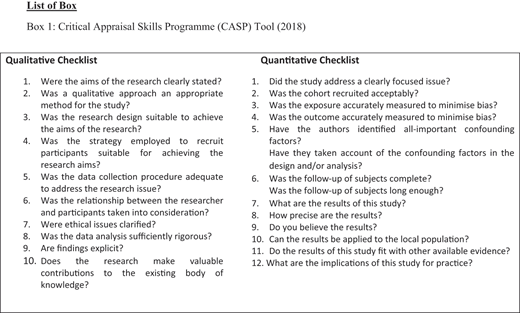
The CASP tool was used to guide the data extraction process. The tool includes a series of questions that help determine the quality of articles for selection (CASP, 2018; CASP, 2023). The tool is comprised of questions specifically designed for evaluating quantitative research (12 questions) and qualitative research articles (10 questions) (Box 1). Applying these questions during the article screening process minimised risks and bias. The CASP checklist allows for responses in three categories: yes, no or uncertain, to determine the eligibility of articles.
The 40 articles deemed eligible for the research were exported to the R Studio biblioshiny (Aria and Cuccurullo, 2017) for bibliometric analysis. Using R Studio software, the following analyses were conducted: word count, co-occurrence of themes, country-specific scientific production and word frequency over time. The bibliometric analysis enabled mapping trends in current and future research trajectories. The tool displays the current research focus, making it easier to identify knowledge gaps. The adaptation variables and indicators outlined in Table 1 played a significant role in assessing the effectiveness of pastoral adaptation strategies. The socio-ecological variables used for the analysis were proposed by Ellis (2000) and Tolera and Senbeta (2020). A content-based analysis was also used to determine the coverage of pastoral climate change adaptation publications in Africa. The content-based analysis helped provide insight into the types of adaptation strategies used across Africa and the challenges hindering their effectiveness.
Variables and indicators used to analyse the effectiveness of African pastoral communities’ responses to climate change
| Variables | Set of indicators |
|---|---|
| Adaptation strategies | • Physical capabilities – geographical location, access to good road networks; means of transportation• Financial capabilities – access to credit and alternative sources of income• Social capital – availability of social networks• Human capital – access to training opportunities, literacy level, access and control of information• Economic asset – access to market, stability in market values (Tolera and Senbeta, 2020) |
| Factors influencing pastoral communities’ adaptation to climate change | • Governance – partnership in identifying and implementing adaptation measures, decision-making, equity, respect for the rule of law, transparency, conflict resolution ability within and out of the system and legitimisation (Naimir, 1991; Flintan and Cullis, 2010; Reid et al., 2013; Nagabhatla et al., 2021; Falayi et al., 2022)• Institutional intervention – availability, forms and adequacy of institutional support, traditional and cultural influence (Tolera and Senbeta, 2020; Falayi et al., 2022)• Conflicts – types, duration and impacts on pastoral livelihoods (land use, political, etc.) (ACCORD, 2014)• Policy changes – land tenure, land reforms, settlement policies (Tolera and Senbeta, 2020)• Poverty – country and community level of poverty• Rules – types of rules, efficiency in implementations, outcomes (Naimir, 1991; Tolera and Senbeta, 2020) |
3. Results
This section presents the results of the systematic literature review analysis. The analysis focused on two themes:
the extent to which research has been conducted on pastoral adaptation to climate change; and
factors influencing pastoral adaptation responses.
3.1 Determining the comprehensiveness of existing pastoral adaptation to climate change research in Africa
The thematic growth analysis aimed to illustrate research interests in the thematic area determined by the frequency of terms. The authors keywords were used to ascertain the frequently used words (Figure 3), relationships between concepts and trends in the growth of key themes (Table 2). As depicted in the wordcloud (Figure 3), terms in bold print like climate change, pastoralism, resilience, adaptation, livestock and drought are the most frequently used. On the other hand, policy and gender have been under-researched, as observed in the smaller size of their representation in the wordcloud. The scarcity of literature on policy and gender, which are crosscutting elements in promoting fairness, may result in the designing and implementation of adaptation strategies with unequal benefits.

Trends in the growth of key themes
| Year | Drought | Adaptation | Impacts | Variability | Climate change | Management | Pastoralism | Livestock |
|---|---|---|---|---|---|---|---|---|
| 2011 | 0 | 0 | 0 | 0 | 1 | 0 | 0 | 0 |
| 2012 | 0 | 0 | 0 | 1 | 1 | 0 | 0 | 1 |
| 2013 | 1 | 0 | 0 | 1 | 2 | 0 | 0 | 1 |
| 2014 | 1 | 0 | 0 | 1 | 2 | 1 | 0 | 1 |
| 2015 | 1 | 1 | 0 | 1 | 2 | 1 | 0 | 1 |
| 2016 | 1 | 1 | 0 | 1 | 2 | 1 | 0 | 1 |
| 2017 | 2 | 1 | 0 | 1 | 3 | 1 | 1 | 1 |
| 2018 | 4 | 3 | 1 | 2 | 4 | 3 | 1 | 2 |
| 2019 | 4 | 3 | 1 | 2 | 4 | 3 | 1 | 2 |
| 2020 | 5 | 3 | 2 | 5 | 6 | 3 | 2 | 3 |
| 2021 | 6 | 4 | 3 | 6 | 7 | 4 | 2 | 3 |
| 2022 | 8 | 5 | 5 | 6 | 8 | 5 | 3 | 4 |
| 2023 | 9 | 6 | 6 | 6 | 9 | 5 | 5 | 4 |
| Total no. of articles | 42 | 27 | 18 | 33 | 51 | 27 | 15 | 24 |
Nevertheless, the key-occurrence network represents the interconnectedness of concepts for the generation of meaning and knowledge. The larger symbols and denser clusters imply stronger relationship between the concepts. For instance, adaptation is associated with climate change, pastoralism, resilience, livestock, perception, livelihood, gender and animal health (Figure 4). Additionally, the larger lines show stronger networks between concepts in the research. Gender and other socio-economic factors like conflicts have a thinner link, showing weaker integration of the concepts in pastoral adaptation research. Regarding the trend in the use of terms, the results in Table 2 shows that there has been growth in adaptation studies, with a particular focus on climate change vulnerability, resilience and drought. The word frequency over time shows the variation in discourse on pastoral climate change adaptation between 2010 and 2023.

Moreover, Figure 5 depicts a greater number of publications on pastoralists’ adaptation actions compared to governance, policy and conflict. While understanding pastoralists adaptation strategies is important, comprehending the enabling environment is crucial for enhancing adaptation decisions and actions. Therefore, the limited research on governance, policy and conflict provides a narrow assessment the efforts invested in these areas and further steps needed to improve the enabling environment to support pastoralists’ coping strategies.

3.2 Distribution of tangible and intangible adaptation strategies across different pastoral communities in Africa under the socio-ecological systems lens
Not all of the strategies identified in the research are included in the SES framework (Table 3). The strategies were analysed across sub-regions in Africa to illustrate the variation in adaptation strategies in the region. Additionally, tangible and intangible measures implemented by pastoral communities, governments, NGOs and civil society to promote the sustainability of pastoral livelihoods in response to climate change are explored.
Pastoral adaptation strategies practiced in Africa
| Adaptation strategies | Sub-regions with similar strategies |
|---|---|
| Adaptation strategies identified in the framework | |
| Stock mobility | East, North, West |
| Agro-pastoral farming | East, North, West, Central Africa |
| Herd diversification | East, West |
| Non-farm activities | East, North, West |
| Adaptation strategies not identified in the framework | |
| Purchase of supplementary feed | East, Southern Africa |
| Private rangeland enclosure | East |
| Sale of stock during dry spells and droughts when they are healthy | East, Southern Africa, West |
| Sedentary pastoralism | East |
| Destocking | East, Southern Africa |
| Herd splitting | East |
| Improved water management | East, Southern Africa, West Africa |
| Alternative cattle feed | East, Southern Africa |
| Using information technology to improve communication | East |
| Storage of animal feeds | Southern Africa |
| Fattening practice | Southern Africa |
| Subscribing to insurance | Southern Africa |
| Improved livestock variety | Central Africa |
| Creation of a common initiative group | Central Africa |
Pastoralists in various parts of Africa practice most of the strategies identified in the research. However, herd diversification only occurs in East and West Africa (Table 3). The scarcity of publications shown in Figure 3 indicates that some of the strategies applied in different regions of Africa are unaccounted for.
Furthermore, the results also revealed additional strategies applied by various African regions that are not included in the framework. This suggests an evolution of strategies to enhance the resilience of pastoral communities to climate change. The East Africa region has implemented more ways to adapt to climate change through improved stock management, water resources and information communication. Similarly, pastoralists in Southern Africa have made progress in enhancing stock and water management, as well as participating in insurance schemes to reduce climate risks. Additionally, adaptation through cattle fattening was only observed in Southern Africa (Table 3). Furthermore, East and West Africa have adopted improved livestock diversity that is drought-resistant. The formation of common initiative groups to support pastoralists in dealing with climate change was evident in research conducted in Cameroon, Central Africa.
Given Africa’s diverse landscape, culture, history and climate, adaptation strategies vary across sub-regions, as shown in Table 3. Overall, the most commonly used strategies include stock mobility and livelihood diversification, which are prevalent among the Masai in Kenya and Tanzania, the Fulani in West Africa and the Borana in Ethiopia. This finding is significant for promoting peer or social learning in African communities. However, the research findings show that most of the research is focused on adaptation actions, with less emphasis on the environment’s role in facilitating the successful implementation of these strategies. The implications of limited research on the supportive environment needed for effective strategy implementation are discussed in Section 4.
3.3 Geographical distribution of publications
Assessing the spread of publications on pastoral adaptation in Africa is necessary to identify sub-regions dominating the research narrative and reveal areas that have been under-researched. The geographic distribution analysis was essential in illustrating a possible reason why there is limited coverage of the research thematic areas revealed in Section 3.2. The spread of publications was analysed using country-specific scientific production functionality in biblioshiny. Figures 6 and 7 depict Ethiopia, followed by the USA, Kenya and Tanzania as the countries dominating the research on pastoral adaptation to climate change in Africa. Besides the East African countries dominating the research, countries in the west such as the USA, Australia, Canada, Germany and China are also largely involved in the research on African pastoral adaptation. The dominance of western nations in the research may change the narratives to represent western epistemology, which may not necessarily reflect local realities and needs. Furthermore, African countries’ low research productivity suggests the need for an expansion of research across the continent.


4. Discussion
Pastoralists in Africa are implementing various strategies in response to climate change and to build resilient resources. However, most research on adaptation focuses only on these strategies, without fully understanding the role of socio-economic and environmental factors in their successful implementation. This suggests that there is a dearth of research on pastoral adaptation in Africa within the context of the SES framework. Farmers’ adaptive capacity is significantly influenced by socio-economic and political factors, which vary across Africa (Ihemezie et al., 2018). Factors such as good governance, policies, effective conflict management mechanisms and institutional support are crucial for effective adaptation but have not been adequately researched. Additionally, the low participation of African-based scholars in the research relative to non-African scholars observed in the geographical spread of research productivity, may contribute to the skewness of the research towards adaptation strategies. This discussion therefore highlights the implications of the absence of these factors in promoting a resilient pastoral system in the face of climate change.
4.1 Governance arrangements and implications on pastoral adaptation to climate change
Governance plays a significant role in shaping adaptive decisions, actions and benefits. The governance components identified in this paper include partnership in identifying and implementing adaptation measures, decision-making, equity, respect for the rule of law, transparency, conflict resolution ability within and out of the system and legitimisation (Flintan and Cullis, 2010; Reid et al., 2013; Nagabhatla et al., 2021; Falayi et al., 2022; Niamir, 1991). Tenure systems and governance structures for communal rangelands may hinder local actors’ resilience and adaptation if poorly managed (Allsopp, 2013). Ostrom (1990) proposed a people-centred management approach that promotes social learning and adaptive governance, both of which are suitable for encouraging communities’ resilience. However, collaborative planning and management of rangeland risks have been of concern due to the partial involvement of the main users in the process (Cho et al., 2023). Rangeland conservation approach in Africa has been mostly a top-down strategy, with experts defining the issues and proposing solutions to the problem. Such an approach to conservation often identifies the grassroots resource users as the problem rather than involving them in articulating the problems and solutions (Coppock et al., 2017).
Adaptation programmes often take a top-down approach, excluding local resource users from programme design and implementation. For instance, the villagisation project in Ethiopia, which aimed to address population growth and land scarcity, failed due to a lack of inclusivity during planning and execution phases (Messay and Bekure, 2011; Degefu et al., 2020). The project that was meant to guide land use planning and provide basic services to pastoral communities struggled because it did not involve local actors in decision-making (Daie, 2012).
In response to climate change challenges in the early 2000s, the Ethiopian government adjusted the villagisation programme to be more participatory and inclusive. However, incomplete implementation of the programme has resulted in new challenges, such as resource scarcity, risks and vulnerabilities (Messay and Bekure, 2011). Moreover, decision-making at the local level is primarily controlled by traditional authorities, while at the macro level, government, non-governmental and international organisations dominate planning and management (Awgachew et al., 2015). This top-down governance approach run the risks of ignoring the specific adaptation needs of local rangeland communities.
However, the involvement of local resource users in adaptation decision-making varies across Africa due to different governance structures. For example, in South Africa, the ambiguous land tenure reform policy has led to the control and management of rangelands by traditional institutions, creating challenges for collective management (Bennett, 2013). In the case of Cameroon rangelands, they are classified as government land under Ordinance No. 74-1 of 1974 (Moritz et al., 2013). Although pastoralists have the right to use grazing fields as common pool resources, managing them becomes difficult. A lack of tenure is detrimental to pastoralists because rangelands are often converted to other land uses due to increasing population pressure for settlement and agricultural expansion (Moritz et al., 2013). Additionally, in Ethiopia, state control over land has fuelled corruption and inequality in land access, leading to tensions between the state and civil society (Soboka, 2022). Similar situations occur in South Africa, Zimbabwe and Namibia, where traditional authorities administer rangelands and sometimes distribute land without consulting livestock owners who depend on it for grazing (Poswa, 2019; Sato, 2022). Furthermore, in Ghana, chiefs, who are custodians of communal land, engage in illicit deals that facilitate the expropriation of land by wealthy elites (Amanor, 2022).
The review reveals that whether land is administered traditionally or by the state, primary land users (local communities) face disadvantages in accessing and controlling rangelands. The lack of inclusive, collaborative planning and management has implications for local resource users’ adherence to laws. Evidence shows non-compliance with regulations governing grazing activities, rotational grazing, resting and water resource management, which constitute significant measures to address climate change challenges (Falayi et al., 2022). Conservation rule implementation is hindered by a lack of a unified vision and purpose (Falayi et al., 2022). Similarly, unclear boundaries and negotiation terms lead to land use conflicts, especially during droughts or dry spells (Mairomi et al., 2017). Further exploration is needed to understand how these governance issues affect pastoral adaptation to climate change. Nonetheless, effective governance could help define appropriate management solutions, particularly in addressing the challenges posed by climate change (Rechcinski et al., 2019).
4.2 Conflict and implications on pastoral communities’ adaptation to climate change
Africa, like other regions globally, experiences various forms of conflict, including armed conflicts, land-use disputes and farmer–grazer conflicts. Regardless of the type, conflicts disrupt natural resource use and management, exacerbated by the impacts of climate change on livelihoods. Different nations handle conflicts differently based on governance structures, institutional arrangements and social and financial capacities. Conflict management and natural resource governance in Africa have been instituted to enhance pastoralists’ adaptive capacity [International Union for Conservation of Nature (IUCN), 2010]. Resource tenure rights and effective governance structures, both formal and informal, are critical for communities to adapt to climate change (Campbell, 2022). However, research in Kenya and Ethiopia reveals that policies based on the perception that pastoral activities are unproductive have failed to protect grazing land, enabling its exploitation by wealthy and influential investors (Milman and Arsano, 2014).
Conversely, climate change significantly exacerbates farmer–grazer conflicts in Africa, increasing pastoral vulnerability (Tarif, 2022). According to a case study in West Africa, the impacts of violent conflicts on pastoral resilience to climate change include altered migration patterns, heightened threats to local livelihoods, exploitation of instability by elites for self-interest, weakened governance structures and intensified farmer–grazer conflicts (Tarif, 2022). Similarly, pastoral livelihood vulnerability to climate change will likely be worsened by conflicts arising from competition over scarce resources (Schilling et al., 2014). Conflict can also sow disunity and erode trust, disrupting the collaborative efforts needed by pastoralists, governments and NGOs to jointly manage rangelands to address climate change impacts. Strengthening communal conflict resolution mechanisms could help mitigate pastoral conflicts (ACCORD, 2019).
4.3 Institutional interventions in promoting pastoral resilience in Africa
Efforts by institutions to enhance pastoral resilience through policies or practical measures can either result in successful adaptation or maladaptation. This section delves into the existence of such policies in Africa and their effects on pastoral livelihood adaptation. The argument suggest that while policies do exist, they often lack comprehensiveness and sufficient commitment. Some African countries have established policies to strengthen pastoral resilience to external shocks, but the absence of specific strategies for policy implementation is evident. For instance, a report from the Kenyan Ministry of Agriculture, Livestock, Fisheries and Cooperatives revealed that policies dating back to 1964 aimed at effectively managing rangelands and enhancing pastoral productivity lacked specific implementation strategies (Government of the Republic of Kenya, 2021). Even though the ministry outlined implementation strategies, they primarily focused on what should be done rather than the necessary approach for successful implementation. Similarly, while the South African National Adaptation Strategy recognises climate change impacts and outlines actions to be taken, it lacks comprehensive and operational measures to address specific climate-related challenges and their effects on agriculture (The Government of the Republic of South Africa, 2019).
In addition, research on policies aimed at sustaining pastoralist livelihoods amidst the effects of climate change in Kenya and Ethiopia found that resilience-based policies and programmes lack comprehensive content therefore failing to address broader pastoral challenges (Milman and Arsano, 2014). The government’s focus on addressing broader developmental issues, such as food security and promoting a green economy to meet donor demands, significantly contributes to the lack of comprehensive pastoral adaptation policies and programmes (Milman and Arsano, 2014). Moreover, the Kenyan Livestock Insurance Programme (KLIP), aimed at empowering pastoral communities to cope with climatic shocks like drought, is criticised for its limited coverage (The World Bank Group, 2017; Fava et al., 2021). Although the programme provides relief to pastoralists affected by drought, the impact is constrained in terms of the number of beneficiaries. An evaluation of the programme’s expansion after ten years in Kenya and Ethiopia revealed slow progress, with only 200,000 pastoralists benefiting by 2019 out of approximately 19 million (Lung, 2021). The programme’s centralised administration under the national government is cited as a reason for its sluggish expansion (Lung, 2021). Additionally, challenges such as financial and human resource constraints, generic policies that do not align with local realities and managing conflicting interests hinder the government’s implementation of adaptation strategies(Funder and Mweemba, 2019).
More proactive interventions are necessary, such as insurance schemes, early warning systems and diversification of livelihoods, to effectively minimise the impacts on livelihoods during shocks (Carter and Janzen, 2012). For example, the Egyptian National Adaptation Plan outlines comprehensive programmes to enhance socio-economic and ecological resilience to climate change effects [Food and Agricultural Organisation (FAO), 2011]. This plan includes operational measures, financial projections and monitoring strategies, demonstrating a commitment to achieving adaptation goals. However, similar to adaptation policies in Kenya and South Africa, the Egyptian National Adaptation Plan lacks specificity in addressing livestock sector issues, making it challenging to identify indicators for measuring successful implementation. Limited comprehensive and operational adaptation policies and strategies partly stem from inadequate research coverage on pastoral climate change adaptation strategies, challenges and local perspectives on potential solutions (Godde et al., 2020).
The African Development Bank (AFDB) (2018) introduced a comprehensive approach in 2018 to enhance the resilience of pastoralists to climate change impacts in the Horn of Africa. This approach focuses on improving water resources, biodiversity, soil enrichment, rangeland rehabilitation and livestock health [African Development Bank (AFDB), 2018]. Pilot programmes in the Horn of Africa have shown significant improvements in local community livelihoods as a result of this approach [African Development Bank (AFDB), 2018]. However, the United Nations Development Program (UNDP) (2018) identifies gaps that could hinder the implementation and scaling up of adaptation plans, such as inadequate institutional capacity and financial resources. The absence of clear and well-structured adaptation policies, programmes and strategies may exacerbate inequality and foster conflict. Essential strategies to facilitate optimal adaptation to climate change include participation, cooperation and bottom-up stakeholder engagement (Adrian et al., 2022).
At the level of research institutions, it is evident that non-African institutions largely dominate research on pastoral adaptation to climate change, reflecting limited contributions from African-based researchers. This imbalance could hinder the generation of local evidence necessary to shape adaptation policy, governance and practice in Africa. Scholars have identified various factors contributing to the slow growth of research in Africa, categorised into institutional (financial constraints, limited collaboration networks, low government investment in research, lack of mentorship) and individual factors (low self-motivation, limited research capacities and self-efficacy, heavy workloads) (Kumwenda et al., 2017; Ngongalah et al., 2018; Uwizeye et al., 2021). While some African-origin authors engaged in pastoral adaptation research may reside abroad, concerns about objectivity arise due to researchers aligning their work with institutional and funders’ agendas (Kigotho, 2021). Foreign donors play a significant role in shaping research agendas and policy formation through financial support, technical expertise and incentives (Khan et al., 2018). Consequently, research outcomes may prioritise funders’ expectations over local research priorities. This issue is central to the discourse on knowledge decolonisation, highlighting the dominance of western-centric knowledge systems and the marginalisation of African perspectives (Vargas, 2017; Afolabi, 2020). With western domination in pastoral adaptation research, there is a risk of overlooking African adaptation priorities and constraints. Addressing this knowledge gap requires more African-origin authors to engage in research on Africa and adopt an African-centric perspective. Accelerating research on pastoral adaptation has the potential to enhance understanding of adaptation strategies and factors influencing farmers’ ability to adapt.
5. Conclusions and recommendations
This systematic review paper aimed to assess the comprehensiveness and effectiveness of adaptation practices among African pastoral communities in response to climatic shocks, using a social-ecological systems approach. The qualitative and quantitative research conducted on pastoral climate change adaptation in Africa was examined. Furthermore, the research explored similarities and variations in adaptation strategies and analysed how governance and institutional interventions may either promote or hinder adaptation measures. The findings indicate limited growth in research on pastoral adaptation to climate change in Africa, with a predominant focus on adaptation strategies. Moreover, gaps persist in understanding the enabling environment necessary for implementing these strategies, highlighting the need for further research. The dominance of western researchers in this field raises concerns about promoting an African-centric perspective. Factors inhibiting pastoral adaptation to climate change underscore the importance of clear governance structures and institutional policies, programmes and strategies. Addressing these factors is crucial for meeting the specific needs of pastoral communities and enhancing their adaptive capacities. For instance, evidence-based policy is essential for promoting pastoral adaptation.
The research outcomes have demonstrated a gap in climate change adaptation research in Africa when situated within the broader spectrum of the SES approach to adaptation as explained in the introduction. Limited research on the role of the enabling environment in fostering climate change adaptation in Africa could hinder the availability of reliable evidence to inform policy, action and enhance good practices. The outcomes also suggest that poor governance, conflicts and lack of institutional support hinder the effective implementation of adaptation strategies. However, these challenges are not clearly understood due to limited research prompting further investigation to generate knowledge on the influence of governance, policy, conflict and institutional support in enhancing pastoral adaptation across Africa.
Furthermore, the research findings illustrate the need for commitment from both the government and communities to collaborate in building resilient pastoral livelihoods in response to climate change. It is also important to develop actionable policies that consider specific steps and resources needed to achieve successful pastoral adaptation. The research outcomes contribute to broader discussions on fostering stable livelihoods and resilient communities facing climate change challenges. By suggesting the relevance of policy, governance and institutional support in promoting communities’ adaptation, the study aligns with climate action discussions.
This work was funded by the National Research Foundation of South Africa (NRF) Research Chair in Land Use Planning and Management [Grant Number: 84157]. The Umngeni Resilience Project, which is funded by the Adaptation Fund, is also acknowledged for supporting part of the research.

