


– The purpose of this paper is to delve into an extensive analysis of different food crops, ranging from bananas, beans, brinjals, cabbages, chillies, creepers, groundnuts, mixed vegetables, pineapples and tomatoes, over three decades. To maintain an ever-increasing population level, much stress is exerted on the production of food crops. However, till date, very little is known about how climate change is influencing the production of food crops in Mauritius, an upper-income developing country found in the Indian Ocean and highly vulnerable to climate risks.
– Based on the interactions between production of crops, harvest area for crops and weather metrics, a vector autoregressive model (VAR) system is applied comprising production of each crop with their respective harvest area. Weather metrics are then entered into as exogeneous components of the model. The underlying rationale is that weather metrics are not caused by production or harvest area and should thereby be exogeneously treated. Should there be cointegration between the endogenous components, the vector error correction model (VECM) will be used. Diagnostic tests will also be entertained in terms of ensuring the endogeneity states of the presumed variables under investigation. The impact of harvest area on product is plain, as higher the harvest area, the higher is the production. However, a bi-directional causality can also manifest in the case that higher production leads towards lower harvest area in the next period as land is being made to rest to restore its nutrients to enable stable land productivity over time. Other dynamics could also be present. In case cointegration prevails, VECM will be used as the econometric model. The VAR/VECM approach is applied by virtue of the fact that traditional ordinary least squares (OLS) estimation approach will be biased and susceptible to trigger off unreliable results. Recourse is made towards the Johansen and Juselius (1990) technique. The Johansen and Juselius approach is based on the following VAR specification-bivariate VAR methodology. X1,t = A0 + A1,1X1,t – 1 + A1,2X1,t – 2+ […] .+ A1,p X1,t – p + A2,1X2,t – 1 + A2,2X2,t – 2+ […] .+ A2,pX2,t – p + ßjW + e1,t […] […]..(1) X2,t = B0 + B2,1X2,t – 1 + B2,2X2,t – 2+ […] .+ B2,p X2,t – p + B1,1X1,t – 1 + B1,2X2,t – 2+ […] .+ B1,pX2,t – p + ajW + e2,t […] […] […](2) X1,t is defined as the food crops production, while X2,t pertains to harvest area under cultivation for a given crop under consideration, both constituting the endogeneous components of the VAR. The exogeneous component is captured by W which consists of the nine aforementioned weather metrics, including the cyclone dummy. The subscript j under equation (1) and (2) captures these nine distinct weather metrics. In essence, the aim of this paper is to develop an econometric-based approach to sieve out the impacts of climate metrics on food crops production in Mauritius over three decades.
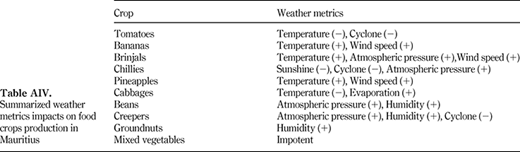
– Results show weather metrics do influence the production of crops in Mauritius, with cyclone being particularly harmful for tomatoes, chillies and creepers. Temperature is found to trail behind bearish impacts on tomatoes and cabbages production, but positive impacts in case of bananas, brinjals and pineapples productions, whereas humidity enhances production of beans, creepers and groundnuts. Evidence is found in favour of production being mainly governed by harvest area. Overall, the study points out the need of weather derivatives in view of hedging against crop damages, let alone initiation of adaptation strategies to undermine the adverse effects of climate change.
– To the best of the author’s knowledge, no study has been undertaken in Mauritius, let alone developing of an econometric model that properly integrates production, harvest area and weather metrics. Results show weather metrics do influence the production of crops in Mauritius, with cyclone being particularly harmful for tomatoes, chillies and creepers. Temperature is found to trail behind bearish impacts on tomatoes and cabbages production, but positive impacts in case of bananas, brinjals and pineapples productions, whereas humidity enhances production of beans, creepers and groundnuts. Evidence is found in favour of production being mainly governed by harvest area. Overall, the study points out the need of weather derivatives in view of hedging against crop damages, let alone initiation of adaptation strategies to undermine the adverse effects of climate change.
1. Introduction
Climate change is basically caused by the release of greenhouse gases in the atmosphere which then traps solar radiation so as to stimulate global warming (carbon dioxide, methane and nitrous oxide), with the most widely used variables being temperature, precipitation, soil moisture and sea level. The Intergovernmental Panel on Climate Change (IPCC) projects a rise in the average global surface temperatures by 2.8°C on average, with best-guess estimates of the increase hovering in the range of 1.8-4.0°C (IPCC, 2007). The natural ecosystem has been and will be altered in many ways by this increase. Climate change constitutes one of the trident crises (debt crisis and ageing population) that are currently looming large on any government’s agenda. Indeed, the very need to ensure ample food for the world’s rising population signifies mounting degradation of earth’s natural resources like land, water, pastures and other natural resources. Rosenzweig and Hillel (1998) pointed out that things will become more and more difficult as population undergoes massive growth while crops face the caprices of climate change. It is in this direction that the current study attempts to measure the magnitude effect of climate change onto food crops production in Mauritius for a period of 30 years.
Researchers and practitioners are much concerned about the effects of climate change on resource uses, trading policies and patterns and the latent risk posed on food security. In essence, climate change entails both direct and indirect impacts on crop growth and development. Direct effects are posited to manifest via higher atmospheric concentrations of carbon dioxide which cause direct impact on C3 crops by scaling up photosynthesis and efficiency in water use. On the other hand, indirect effects manifest principally from changes in weather, such as changes in temperature and rainfall. Besides, changes in temperature are widely known to spark off feasible evapotranspiration. As per IPCC’s regional assessments of climate change in Africa, adverse effects are expected to manifest in the form of falling grain yields, lower agricultural production and heightened level of food insecurity in sub-Saharan Africa. Impacts will also differ spatially. Africa is considered to be the prey to climate change effects especially when the continent relies heavily on agriculture. According to World Bank (2000), agriculture accounts for around 35 per cent of Africa’s Gross Domestic Product (GDP), with about 70 per cent of the population being employed in that sector. Sub-Saharan Africa is reputed to suffer from low productivity with considerable crop losses occurring on the back of droughts. Basically, agriculture is considered as the most vulnerable sector under the climate change agenda, with vital effects on human life via the food security medium. In 2007, Cyclone Sidr destroyed Bangladesh’s rice crop, and one year afterwards, Bangladesh became the first country to establish a multibillion dollar strategy in view of alleviating the effects of climate change on its agricultural production. This clearly shows that food security constitutes a major issue that influences nearly all economies in the world but in particular developing countries, as their GDP growth tends to be propelled mainly from the agricultural sector.
Though many studies have been undertaken as to assess the effects of climate change on crop production, little has been done in the case of Mauritius. Being a small island, Mauritius is most vulnerable to climate change risks under different aspects like coastal regions, water resources, ecosystem and agriculture. Mauritius is an island so that climate data collected for all regions are averaged to end up with the general data for investigation. The main motivation behind this study is to assess the extent to which climate change affects food crops production in Mauritius so that proper strategies and policies can be devised to mitigate the detrimental consequences. This study focuses specifically on the agriculture side with respect to climate change and consists of four objectives. First, the study directly models the impact of climate change on a variety of food crop production in Mauritius. This assists in quantifying the potential impact of weather metrics on the production of diverse crops like bananas, beans, brinjals, cabbages among others. Second, the study adopts a completely new approach to crop modelling by focusing on the three main forces: harvested area, production of the crop and weather metrics. We model the interactions between food crop production and area under harvest as endogeneous variables, while weather metrics enter the system of equations as exogeneous variables. Third, the study brings to light important policy implications for Mauritian agriculturists. For instance, without having a sound knowledge of how climate change is affecting local crops, it is not feasible to take sound policies. Indeed, as the world is subject to an ageing population and more and more mouths to feed, each country should basically know its strength in terms of production of crops and knowledge of climate change on food security now constitutes an issue of concern. Finally, the study is vital in terms of its results as to whether there is need for providing new insurance products to ensure proper agricultural risk management and recourse towards adaptation strategies. To the best of the author’s knowledge, this is the very first assessment of the effects of climate change of food crops production in Mauritius.
The remainder of the paper is structured as follows. The next section presents a brief literature review on climate change effects on agriculture. Section 3 then describes the Mauritian economy. Section 4 describes the data and methodology used in the study which is then followed by Section 5 that deals with the results obtained. Section 6 concludes.
2. Brief literature review
Many different concepts related to climate[1]/weather literature emerged in view of standardising the distinct approaches used. These concepts consisted mainly of vulnerability, exposure, sensitivity and adaptive capacity. McCarthy et al. (2001) pointed out in the IPCC’s Third Assessment Report that vulnerability was not an absolute concept in terms of reflecting the extent to which a system was likely to adapt or to fail with respect to adverse impacts of climate change. In that respect, climate change models have also factored in socioeconomic forces (Antwi-Agyei et al. (2012)). O’Brien et al. (2004) defined exposure as the extent to which a climatic stress impacted on a unit of analysis and climate variability as a composite of both the magnitude and frequency of extreme events. IPCC (2001) described sensitivity as the responsiveness of a system to a given climatic stimulus and which might also be affected by socioeconomic conditions and ecological states. Finally, IPCC (2007) dealt with the adaptive capacity to gauge the extent to which a system could be adversely affected by climate change. Poverty has often invoked with adaptive capacity because people endowed with greater wealth were less likely to be affected, as wealth acted as smooth shock absorbers (Moser, 1998). Crop yield and food security are inherently linked and have also been explored by Rowhani et al. (2011) for Tanzania.
Many studies have been conducted to gauge the impact on climate change on food crop production. Wheeler et al. (2000) found that temperature extremes during flowering could reduce grain or seed number. Sophisticated process-based crop models had also been used with climate models like that of Carbone et al. (2003) to cater for complex bio-physical processes associated with climate change. Large-area crop modelling had been widely used like that of Challinor et al. (2007), Wheeler et al. (2000), Bergamaschi et al. (2007), Chee-Kiat (2006) and Osborne et al. (2005). Laux et al. (2010) evaluated the impact of climate change on two main food products, namely, maize and groundnut in Cameroon under rain-fed conditions by having recourse towards fuzzy-logic–based algorithm. They found that carbon dioxide-positive effects were likely to offset the adverse impacts of precipitation and temperature change for the 2020s. Above all, they did find that the negative effects of precipitation and temperature change could be curbed via planting date adaptations.
Özdoğan (2011) investigated the impact of carbon dioxide on wheat yields in Turkey using global circulation models based on the employment of 36 climate change scenarios. Turkey, based on its large agricultural output, was anticipated to be largely affected by caprices of climate change, chiefly when it constituted world’s eighth largest producer of wheat. Antwi-Agyei et al. (2012) came out with methodological steps geared towards improving drought sensitivity and vulnerability assessments in dynamic dry-land farming systems subject to distinct drivers of climate change and risk. Miraglia et al. (2009) pointed out the adverse effects of climate change on food security via presence of residues of pesticides, heavy metals in plant products and pathogenic bacteria in food, among others. The adverse effects manifested from farm stage to fork stage via distinct stages or production, processing, transport and trading.
It is widely known that crop production worldwide is significantly affected by changes in climate and rising carbon dioxide emissions. Islam et al. (2012) investigated the impact of climate change on irrigated maize using the RZWQM2 model which consisted of the CERES crop module. Their findings showed a fall in crop yield due to the adverse effects of temperature rise offsetting the positive effects of increasing carbon dioxide emissions. Thornton et al. (2010) found that there are substantial uncertainties related with climate models. Funk et al. (2008) noted that climate models might have underestimated the warming impacts of the Indian Ocean. Rosegrant et al. (2009) pointed out the need to ensure specialisation of agricultural systems to ensure food security in East Africa which is buffeted by rising population. In the same vein, efficiency in resources used will be stressed on to maximise yields like crop improvement, technology development and genetic resources conservation. Otherwise, if things remain unchanged, climate change is anticipated to trail behind acute negative impacts on the poor segment of the population. Rowhani et al. (2011) found that increased exposure to extremes of climatic conditions generated crop damages. They argued for better climate records to improve the quality of analysis along with sound management practices and government policies. However, when it comes to the Mauritian context, as till date, no studies have been undertaken in view of assessing the effects of climate change on food crops production. Such a study is vital chiefly when Mauritius is highly vulnerable to changes in climatic conditions.
3. Mauritian economy
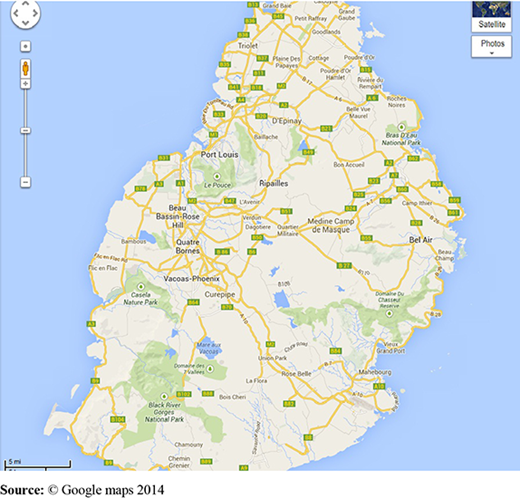
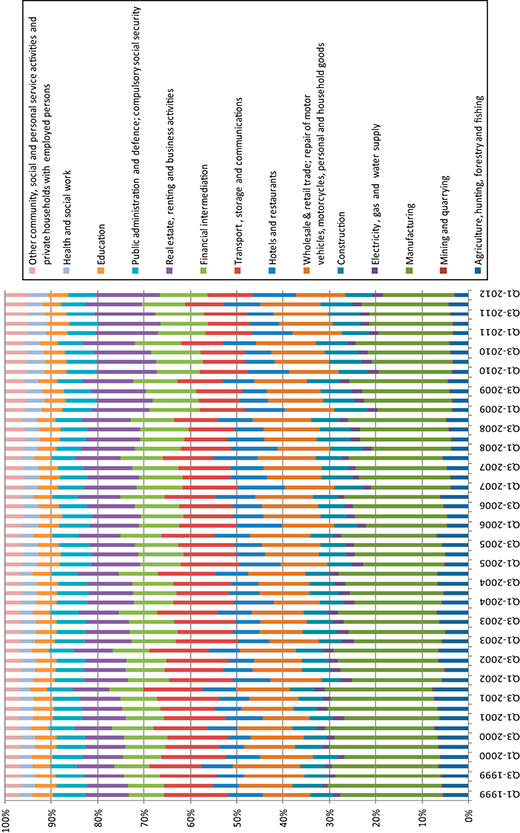
Found in the Indian Ocean with an area of around 2,040 m2, Mauritius is famous for its sun, sand and sea. The island has two main seasons, winters which basically run from May to October and summers which run from November to April. Endowed with a population of about 1.3 million, Mauritius has posted significant progress over decades since its independence in 1968. Indeed, the country has also witnessed significant changes in its production processes, drifting steadily from a monocrop economy (heavily based on sugar production) to services and tourism expansion. Indeed, the 1980s registered the most dramatic changes in terms of financial liberalisation and manufacturing sectors. The conspicuous feature of Mauritius is its considerable cultural diversity, with its inhabitants originating from distinct parts of the world like Africa, Asia and Europe. To further stimulate its economy, the government has made significant efforts to enshrine the services sector, tourism and the information technology and communication sector. Above all, Mauritius is now well-engaged with vigorous efforts in the development of the “Maurice Ile Durable” (MID) objectives in view of meeting the challenges posed by climate change. Figure 2 depicts the sectoral contribution to GDP growth in Mauritius. Agriculture, hunting, forestry and fishing contributed around 10 per cent of total GDP as of the first quarter of 2012. Such a finding[2] implies that climate change impacts via agricultural sector are susceptible to be low. However, it is important to bear in mind that agricultural sector does help to alleviate import costs of the country and hence indirectly assist in preserving the country’s level of international reserves. Indeed, around 75 per cent of Mauritius’s food needs are imported. Beyond that, the adverse effects of the crisis on the tourism sector imply the need to strategically rebuild the economy by stimulating more local food crops production to reduce reliance on food imports. In addition, the Government of Mauritius has identified four strategic crops, namely, potato, onion, garlic and banana, in view of having self-sufficiency for the country. In that respect, it becomes interesting to gauge how climate change affects food crops production in Mauritius (Figures 1 and 2).
4. Data and methodology
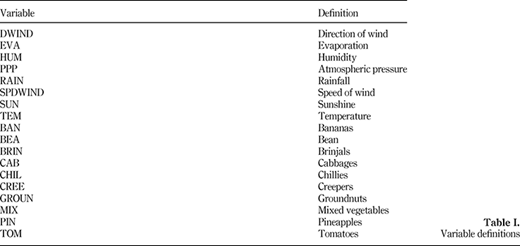
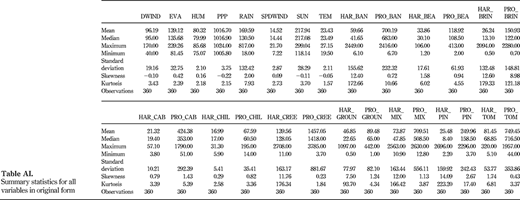
Data on food crops production and area under harvest for bananas, beans, brinjals, cabbages, chillies, creepers, groundnuts, mixed vegetables, pineapples and tomatoes have been gleaned from the Ministry of Agro Industry and Food Security. Climate data have been bought from the Mauritius Meteorological Services. Basically, weather metrics are captured by the following variables: monthly mean relative humidity, monthly total rainfall, monthly mean temperature, monthly bright sunshine hours, monthly mean evaporation, monthly mean wind speed, monthly mean wind direction and monthly atmospheric pressure. Cyclone dummies have been included as cyclones are notorious for significant crop damages and eventual price hikes. All data frequencies have been levelled meaning that they are all captured on a monthly basis. In fact, based on monthly data available on food crops, climate data have also been taken on a monthly basis, and the period spanned from January 1981 to December 2011. The climate data, provided by the Mauritius Meteorological Services, have been taken as the average for all regions in Mauritius. Table I below provides the acronyms used for the various variables which then appear in the results sections. Table AI in the Appendix section provides summary statistics for all the variables under scrutiny.
Based on the interactions between production of crops, harvested area and weather metrics, a vector autoregressive model (VAR) system is applied. To the best of the author’s knowledge, this is the very first study that resorts towards a VAR assessment of climate change on food crops production. The theoretical underpinnings behind the use of VAR emanates from the fact that VAR is particularly convenient in the case a model requires both endogeneous and exogeneous variables. Crop production and harvested area are likely to constitute endogeneous variables, whereas weather metrics are entered as exogeneous components of the model. The underlying rationale is that weather metrics are neither affected by production nor by harvested area and should thereby be exogeneously treated. Another inherent virtue of VAR is that it can provide possibility of analysing any feasible long-term relationship between the harvested area and crop production. Technically speaking, such long-term relationship is described as cointegration. Should the latter prevail, then a restricted VAR, known as vector error correction model (VECM) is used. Alternatively stated, in the case that cointegration prevails, VECM is used as the econometric model. VAR/VECM approach is applied by virtue of the fact that traditional OLS estimation approach will be biased and susceptible to trigger off unreliable results. In fact, non-stationary variables violate the assumption of a finite variance and lead to false identification of statistically significant relationships, particular as the sample size grows. Recourse is made towards the Johansen and Juselius (1990) technique.
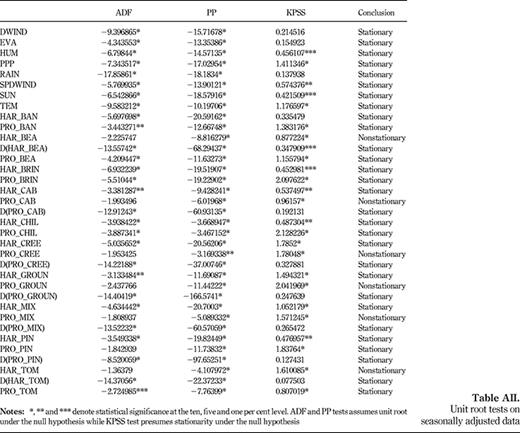
Otherwise, if cointegration is absent, the VAR model is used. All data have been cleaned for seasonality effects prior to applying the stationary tests and subsequently the VAR or VECM approach. Three versions of stationarity tests are implemented, namely, the Augmented–Dickey Fuller test, the Phillips–Perron test and the Kwiatowski, Phillips, Schmidt & Shin test[3]. Diagnostic tests have also been entertained in terms of ensuring endogeneity states of the presumed variables under investigation. The impact of harvested area on crop production is clear as larger the harvested area, the higher the crop production. However, a bi-directional causality can potentially manifest in the case that higher production leads towards lower harvested area in the next period, as land is kept idle to restore its nutrients to stabilise land productivity over time. Such a finding implies that climate change impacts via agricultural sector are likely to be of secondary nature or exogeneous drivers compared to harvested area which stands as the primary element in influencing the level of crop production.
The Johansen and Juselius approach is based on the following VAR specification–bivariate methodology. Equation 1,Equation 2X1,t is defined as the food crops production, while X2,t refers to harvested area in cultivation for a given crop under consideration, both constituting the endogenous components of the VAR. β and α present the impacts of climate change on crop production and harvested area, respectively. The exogeneous component is captured by W which consists of the nine aforementioned weather metrics, including the cyclone dummy. The subscript j under equations (1) and (2) captures these nine distinct weather metrics. In essence, the aim of this paper is to develop an econometric-based approach to sieve out the impacts of climate metrics on food crops production in Mauritius over a time period of 30 years. This is the very first study that uses a VAR/VECM econometric methodology on climate change data and food crops production. A final word of caution relates to the fact that climate data are highly seasonal in nature. Any econometric analysis done without accounting for such seasonality would be deemed as spurious regressions. Therefore, prior to implementing the unit root tests, all data on climate metrics and food crops production were adjusted for seasonality effects. This ensures that true interactions are being captured by the VAR/VECM model. Appendix 1 shows the different graphs for the various weather metrics under consideration.
Challinor and Wheeler (2008) used a perturbed-parameter crop modelling framework along with a regional climate model to analyse the impact of climate change on crop yield. They explicitly incorporated bio-physical processes. However, they used a single climate change scenario in their general large-area model for annual crops. They also factored in adaptation by fixing on the timing of development stages of the crops. Bio-physical processes have been overlooked in the current study due to absence of data. Nonetheless, this does not appear to be an issue of concern when the whole focus is to generalise the impact of climate change on food crops production in Mauritius. Indeed, by using monthly data for both food crop production and climate metrics, this provides direct impacts. Another reason for not being too concerned about bio-physical processes is that distinct crops are subject to distinct bio-physical processes so that this may eventually become a highly time-consuming process to collect such data. Above all, the crops data used is for all the regions of Mauritius so that climate dataset considered has been taken as average values of all regions to induce generality in terms of inputs. A final reason for also ignoring the bio-physical processes is that Mauritius is a small country and not so big as to have significant inter-regional changes so that a one-size-fits-all climate data become valid and realistic. Finally, Kandlikar and Risbey (2000) pointed out that the adaptations used in studies were basically hypothetical and thereby presumed either no adaptation or optimal adaptation by farmers.
The next part discusses the main crops used for this study.
4.1 Tomatoes
Tomatoes are grown throughout the year in Mauritius and are dominated by small farmers (accounting for > 90 per cent of total consumption), with the two predominating varieties comprising MST 32/1 and Sirius. Tomatoes are widely used in Mauritius in the form of curry “rougaille”, salads, ketchup and as a famous chutney (“satini pomme d’amour”) widely used in fried salty cakes. Tomatoes consumption is wholesome, as it helps to scale down risk of heart attack, stroke and cancers. Indeed, Fuhrman (2012) pointed out that lycopene, which is found in tomatoes, is particularly beneficial for cardiovascular effects. Tomatoes require at least eight hours of sunlight to be able to grow well and are deemed as warm-weather crops that also necessitate pH (a metric to gauge on level of acidity or alkalinity in the ground) hovering around 6.2 to 6.8 of balanced fertility. A rich soil is important for developing healthy tomatoes, like the use of vital nutrients in the form of a mixture of compost or manure. Tomatoes heavily rely on three-pronged nutrients like nitrogen to generate strong leaves and growth, phosphorus to ensure photosynthesis and potassium to improve plant growth and resilience to diseases. Distinct disease types also adversely influence yield on tomatoes like leaf spots, cankers, wilts, damping off and fruit rot problems. To shun off any feasible diseases susceptible to impact on tomatoes yield, stress should be laid on the growing practices like good soil preparation and sound watering.
Tomatoes do not thrive well under either too cold or too high temperatures like prolonged temperature well below 14°C or above 30°C. This befits the local context because Mauritius is well-tuned for the growth of tomatoes, and it is anticipated that temperature will unleash a strong impact on tomato production. However, to control for feasible impacts of other climate metrics, recourse is made towards other climate metrics. Besides, a dummy variable has been introduced to capture impacts of cyclones on tomatoes production. Such cyclone dummy variable has also been applied for the rest of the crops.
4.2 Bananas
Bananas are widely grown in Mauritius both on large- and small-scale, with many families usually having a banana tree in their yard. The annual production stands at 9,000 tonnes, with positive nutrients for good health like vitamin B6 and C and fibre. Bananas are mainly used in the form of fresh fruits consumption, curries, fried ones (usually when they are still green), for prayer (banana leaves also used) purposes in the form of offerings to God. Bananas are considered as tropical plants which thrive well when temperature hovers in the range of 31° to 32°C, which again is highly convenient in the case of Mauritius which is found in a tropical zone. Cold weather is particularly detrimental to the production of bananas. In addition, banana production could also be adversely affected by black leaf spot disease on the back from very warm or very cold weather. Among the distinct varieties of bananas that exist, Cavendish banana is the most widely cultivated variety in Mauritius. Soomary and Benimadhu (1997) found that high humidity fosters the development of Mycosphaerella Leaf Disease Complex in Mauritius. Such a variable is controlled in the econometric model along with the other weather metrics.
4.3 Beans
Velvet beans are the most widely grown beans which require warm temperature ranging from 20 to 30°C throughout the whole growing season and an average rainfall of between 1,200 and 1500 mm or more per year. These beans also require well-drained soil to prevent waterlogging which is dangerous for them. Ironically, in some cases, they are grown as an anti-erosion crop for other crops and intercropping with sugarcane is also a common practice in Mauritius.
4.4 Brinjals (Solanum melongena)
Considered as a perennial crop, brinjals are grown throughout the whole year in Mauritius and requires temperature in the range of 21 to 29°C. Should there prevail low temperature, this will make the eggplant subject to chilling injury that renders it either mouldy or rotten. The fruit set can be adversely affected by cool temperature and low-intensity light, let alone frost. Conducive soil for optimal growth should have a pH between 5.5 and 6.8. Brinjals production can also be adversely affected by leaf spot and wilt diseases.
4.5 Chillies
Chillies require warm frost-free weather and need full sun for proper growth. However, Chillies do not need watering on a daily basis. Despite the fact that chillies are ephemeral perennial plants, they are often grown as annuals. Chillies tolerate lots of heat and thrive well in hot temperature. Warm temperature in Mauritius highly befits the cultivation of chillies.
4.6 Pineapples (ananas in French)
Considered as herbaceous perennial, pineapples are drought-tolerant crops requiring soil which is endowed with pH hovering in the range of 4.5 to 6.5 along with good drainage. Pineapples are also deemed as tropical or near-tropical crops and grow best under warm temperatures. It is imperative to avoid any leaf damage because that would undermine pineapples growth. Bhugaloo (2001) pointed out that pineapples constituted the second main horticulture crops which are exported, with pineapples exports just trailing behind anthurium exports. Due to their good quality, the exports of pineapples have seen a rising trend. The crop cycle for pineapples in Mauritius is expected to vary between 143 and 186 days.
4.7 Cabbages (crucifers)
Cabbage constitutes a vegetable which is particularly sensitive to water, temperature and soil composition. Cabbages like full sun and grow in any well-drained fertile soil having pH within a range of 6.0 to 6.8. As far as the harvest of cabbages is concerned, this is done when the head is full and firm and care must be taken to properly sever the stalk at the base of the head. To thrive well, cabbages require a gradual supply of moisture. Plants spacing is also important to ensure that the plants get enough space as they become larger. Finally, crop rotation is considered important because cabbages consume lots of nutrients from the soil. Such crop rotation is factored in the VAR econometric model based on the endogenous interactions between crop production and harvested area.
4.8 Groundnuts (member of pea family)
Peanuts are widely consumed in Mauritius as boiled peanuts, cooked peanuts and even as chutney in curries. Peanuts thrive well in light sandy and well-drained soil endowed with lots of compost and manure. In the case of deficiency of compost and manure, the soil can be fortified with vital ingredients. Frost is the main hindrance to growth of peanuts in the world because this type of crop requires warm areas to flourish well. In a parallel manner, moist soil is also conducive for proper growth of peanuts. Adequate irrigation is also important to ensure sufficient availability of water to the plants.
5. Empirical results
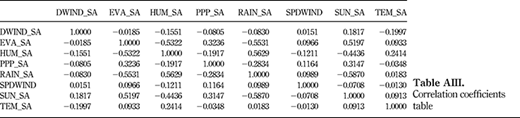
Before dealing with VAR, it is vital to ensure stationarity of each of the variable considered in the econometric model. Therefore, recourse is made towards robust unit root investigation based on the use of the Augmented–Dickey Fuller test, the Phillips–Perron test and the KPSS test. Table AIII in Appendix 2 shows the results of the various unit root tests. Stationarity is confirmed when at least two of the tests undertaken provide similar conclusions. In case of failures of nonstationarity, first difference systematically suffices to restore stationarity. To curb any feasible multicollinearity problem that may plague the econometric estimation, Table AIII shows the correlation coefficients values among the exogeneous variables. In no case evidence is found as to a correlation coefficient exhibiting a value > 0.70. Subsequently, the model does not suffer from multicollinearity. Due to space limitations, only results for tomatoes are shown in the Appendix section. The full set results for all the crops can be made available on request.
5.1 Tomatoes
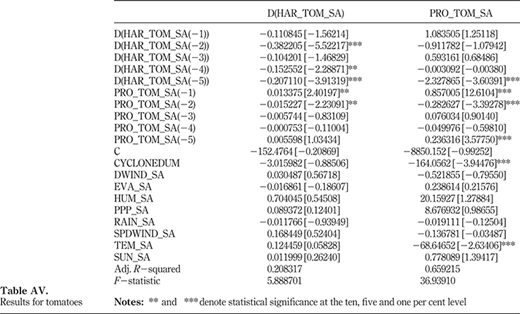
Under tomatoes, it transpires that the harvested area has a stochastic component and requires first difference to become stationary. In that respect, the VAR system considers production of tomatoes and harvested area of tomatoes in first differenced form. Harvested area lagged[4] by five periods entails an impact of −2.33 per cent on production, most likely attributable to some overutilisation of land. In the case of reverse causality, findings suggest that production of tomatoes, lagged by one and two periods, cause impacts of 0.01 per cent and −0.02 per cent, respectively. Hence, it can be concluded that for tomatoes, the causality runs strongly from the harvested area onto production based on low economic size effects for the reverse scenario.
Weather metrics show that temperature and cyclone dummy variable, all exert downward pressures on the production of tomatoes in Mauritius. Such a finding has also been noted in a study undertaken by Abdelmageed et al. (2003) for Sudan, whereby they record a shortage in tomatoes production when temperature rises > 31-35°C. The underlying rationale emanates from the fact that high temperature generates heat stress which gnaws at the vegetative and reproductive processes of tomatoes. In a parallel manner, the cyclone dummy exerts strong adverse impacts on tomatoes production by virtue of extreme weather conditions.
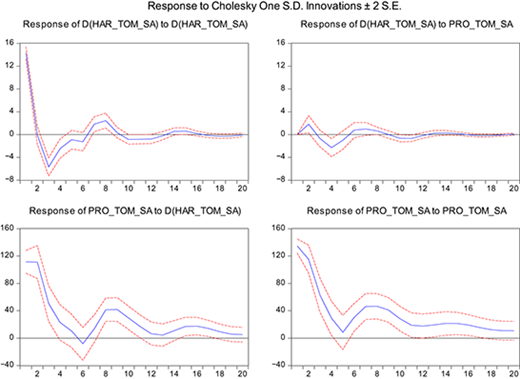
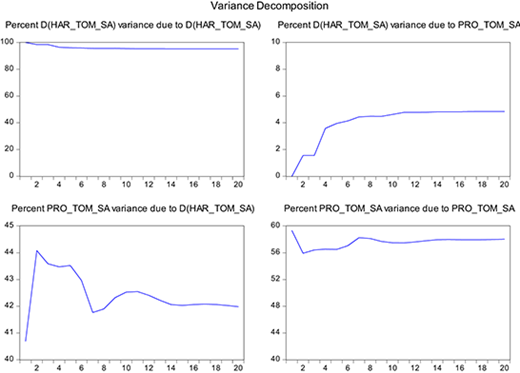
Variance decomposition analysis clearly shows that a shock in harvested area under tomatoes production has considerable variance impact on its production relative to the reverse. The former has a stable effect which hovers around 40 per cent post 8 months, while the latter causes an impact of merely 4.5 per cent after around 8 months. Impulse response functions are used to depict the impact that an unpredicted shock that manifests via one of the errors has on the current and future values. Besides, they also determine the time period required to restore equilibrium after an external shock has hit each of the endogenous variable. Results demonstrate that a shock running from tomatoes production to its harvested area is of an order of 4 per cent and which takes around 12 months to fade away. On the other hand, a shock from harvested area onto production of tomatoes is of a significantly higher order of around 120 per cent which then takes around 20 months to die away. This adds strength to the fact that the effect of harvested area is much higher on production rather than the reverse.
5.2 Bananas
Both harvested area and production of bananas are stationary in level. Based on an optimal lag order of six months, current findings show that harvested area lagged by one, two, four and five periods entail impacts of −0.90, 0.31, 0.91 and −0.94 per cent, respectively. Conversely, production of bananas lagged by one, two and three periods, trail behind effects of 0.81, 0.16 and −0.18, respectively, on its harvested area. In both cases, bouts of overshooting/undershooting effects are noted. All in all, these findings do corroborate strong interactions between production and land area under harvest.
Among all weather variables, temperature is found to exert a positive impact of 23.42 per cent. Such a finding is compatible with Agfacts (2006) report which pointed out that bananas are crops of tropical origin whereby its optimum temperature hovers around 31-32°C, and this befits Mauritius. Interestingly, the current findings also show that the speed of the wind unleash a positive impact on banana production. This could be feasibly explained by the fact that wind scales up the level of turbulence in the atmosphere as to thereby increase the supply of carbon dioxide to the plants and hence improving the photosynthesis rates.
Variance decomposition analysis depicts that a shock in harvested area under bananas production has steady positive impact on the variance of its production which tend to stabilise itself at 45 per cent after 20 months. On the other hand, a shock in production generates a gradually falling variance onto harvested area which moves asymptotically towards 20 per cent. Under impulse response analysis, findings reveal that a shock which emanates from bananas production to its harvested area is of an order of 70 per cent initially, but then dies out after 20 months. However, in the case that the shock originates from the harvested area onto production of bananas, the shock does not fade away even after 20 months. This demonstrates that production is highly dependent on harvested area.
5.3 Brinjals (eggplants)
Harvested area meant for brinjals lagged by one period, four periods and five periods, generate −0.85, 2.09 and −2.40 per cent, respectively, on its production. Conversely, production of brinjals lagged by four and five periods engenders −1.27 and 1.63 per cent effects on its harvested area. The above findings fully substantiate the econometric modelling structure adopted into the estimation framework.
Interesting weather effects on brinjals production are also noted. While atmospheric pressure sparks off a positive of 10.94 per cent at the 11 per cent significance level, wind speed and temperature, respectively, engender impacts of 7.63 and 39.22 per cent. The positive impact of wind speed can be attributed to modest wind speed which enhances plant growth because strong wind speed can be harmful to plants. Furthermore, temperature is found to be the variable having the highest positive impact on brinjal production. Such a finding is consistent with the fact that the optimum growth temperature for eggplants ranges between 25 and 28°C. Such a finding bodes well with the Mauritian environment.
Variance decomposition analysis discloses that 80 per cent of variance in the brinjal production is accounted by its harvested area. Under the impulse response analysis, it surfaces that a shock manifesting from brinjals production to its harvested area is originally of an order of −40 per cent to subsequently die out after 20 months. But, in the case that the shock originates from the harvested area onto production of bananas, the initial impact hovers around 120 per cent to thereafter fade away gradually post 20 months.
5.4 Chillies
Lagged effects at one and two periods of harvested area on production of chillies are noted (1.02 and −1.12 per cent) relative to that of production on harvested area which exhibits very low economic size impacts of 0.02 and −0.02 per cent, respectively, under 1 and 3 lagged periods. Among the considered weather metrics, findings show that cyclone dummy sparks off the highest negative impact of −12.80 per cent on chillies production. Such a finding consolidates the fact that cyclones are particularly detrimental on food crops production in Mauritius. Atmospheric pressure occasions a positive impact of 1.32 per cent, whereas sunshine triggers behind a negative effect of around −0.09 per cent. Hence, too much sunshine exposure is harmful for chillies production in Mauritius. Variance decomposition analysis shows similar findings whereby harvested area under cultivation generates pronounced variance impacts in the range of 30 per cent, while the reverse scenario entails slight variance effects in the range of 2.5 per cent. Similar results manifest under the impulse response analysis.
5.5 Pineapples
Harvested area under pineapples cultivation lagged by one period, two periods, four periods and seven periods, respectively, engender −0.95, 0.44, 0.63 and −0.32 per cent impacts on its production. On the other hand, production of pineapples lagged by 4, 5 and 7 periods, unleash −0.48, 0.36 and 0.15 per cent effects on its harvested area. Weather metrics show that wind speed and temperature lead towards 6.66 and 37.87 per cent impacts on the production of pineapples. Based on dual effects (physiological and mechanical) of winds on crops production, it can be deduced that wind speed induces positive impacts on pineapples in the form of higher supply of carbon dioxide to the plants. No major differences are noted with respect to both variance decomposition and impulse response analyses.
5.6 Cabbages
Results show very poor effect from production of cabbages onto its harvested area. On the other hand, harvested area of cabbages, lagged by one, two and three periods, cause −11.29, 5.79 and 5.96 per cent effects onto its production. As far as the effects of climate change are concerned, while evaporation does have a positive impact of 1.57 per cent, temperature generates a negative effect of 27.68[5] per cent on production of cabbages. The hindering effect of temperature on production of cabbages could most plausibly be attributed to black rot disease which develops very well between 26 and 30°C. Evaporation is expected to spark off a negative impact on crops production so that the positive impact could be attributed to well-planned proactive irrigation plans in anticipation of higher levels of evaporation.
5.7 Beans
Interestingly, in the case of beans, the VAR does not seem to work for the endogenous variables. In that respect, a simple OLS regression is run with all variables in their stationary forms. While harvested area positively impacts on its production with a regression coefficient of 1.31 per cent, under climate change impacts, atmospheric pressure and humidity, positively influence production. The former registers an impact of 17.59 per cent, while the latter posts an effect of 19.99 per cent. The positive impact of atmospheric pressure can be accounted by the fact that if such a weather metric is low in magnitude, a plant will not be able to survive on the back of deficiency in gas exchange. Above all, atmospheric pressure is particularly vital for the nutrition of growing plants. Cowan and Farquhar (1977) pointed out that humidity has potential effects on plant productivity and water-use efficiency. In essence, plants breathe via tiny openings called stomata, and the latter are closed/opened by plants depending on whether heat is excessive or not. In the current context, it appears that beans cultivations in Mauritius rejoice over a comfortable level of humidity which is conducive for their growth.
5.8 Creepers
Somewhat strong interactions are conspicuously noted in the case of creepers with respect to its production and harvested area. Harvested area meant for creepers production, lagged by one and four months, register effects of −0.99 and 0.38 per cent, respectively. Under reverse causality, systematically negative impacts are noted for the lagged periods of 4, 5, 6, 7, 8 and 10 months.
Under weather metrics, cyclones are found to generate adverse repercussions on creepers, while humidity and atmospheric pressure trigger effects of 59.07 per cent and 36.50 per cent[6], respectively, on the production of creepers. Compared to the previous plants, for creepers, the impulse response shows that the effect of a shock does not die out, but ironically continues over time. Nonetheless, variance decomposition also corroborates previous findings, whereby the variance impact of the harvested area onto production is significantly higher[7] relative to that of production onto the harvested area.
5.9 Groundnuts (Arachis hypogaea L.)
Harvested area under groundnuts cultivation lagged by 5, 6, 7 and 8 months unleash impacts of 0.11, −0.13, 0.28 and −0.15 per cent, respectively, on the production of groundnuts. Under reverse causality, systematically positive impacts are noted for many of the lagged effects considered. Impulse response indicates dying out shocks after 14 months, while variance decomposition adds momentum to previous findings whereby variance impact on production from harvested area is considerably higher compared to the reverse situation. Out of the different weather metrics under investigation, only humidity is found to be statistically significant, with a positive impact of 12.46 per cent. Such a finding fares up well with the fact that most groundnut cultivations are done in humid areas. Moreover, such a result indicates more or less optimal humidity states since rust (Puccinia arachidis) is a notorious disease that buffets groundnut cultivation in nearly all parts of the world.
5.10 Mixed vegetables
No weather effects are noted in the case of mixed vegetables which may be attributable to too much heterogeneity in its composition. Consequently, no further comments are made.
6. Conclusion
Till date, no research has been taken as to how climate change impacts on the production of food crops in Mauritius. This study fills in such vacuum by resorting towards a VAR econometric analysis of the interaction among production, harvested area and a set of weather metrics. The research can be useful in increasing productivity by understanding climate change and crop production as a result to increase production; the models can be adopted for teaching and helping researchers especially in environmental science improve the quality of life by addressing climate change-associated problems in the agricultural sector. A clear understanding of the model components has a positive implication on agricultural production.
Findings show that tomatoes production is negatively affected by both temperature and cyclones. Bananas and brinjals production are found to be positively influenced by both wind speed and temperature, with atmospheric pressure also positively affecting the production of brinjals. The study further shows that chillies production is impaired by cyclones, but positively supported by sunshine. As far as pineapples production is concerned, it is positively influenced by wind speed and temperature. Interestingly, Cabbages production bears negative influences of temperature while evaporation exerts positive effects on it. Beans and creepers productions are stimulated by both humidity and atmospheric pressure. Finally, humidity trails behind positive effects on groundnuts production.
Based on the findings of weather metrics impacting on food crops production in Mauritius, it can be deduced that climate risks can feasibly impact on income of farmers. This can also induce poverty chiefly when some farmers rely exclusively on income from agricultural activities to feed their families in Mauritius. The findings of the paper are important for these farmers, as they will better know the main weather metrics that adversely impact on a specific food crop production in Mauritius. In that respect, farmers can cushion any adverse effects on their income via proper plantation strategies or growing practices. For instance, to protect against a given weather metric, the farmer can adjust crop production during a time period when such weather metric is less likely to manifest with significant force like planting date adaptations suggested by Laux et al. (2010). Another avenue could be the use of crops that are resistant to certain weather metrics most likely to occur during a given period of time. Indeed, based on the impact of weather metrics of food crops production in Mauritius, it can be deduced that adaptation strategies should also be reinforced like planting of cyclone-resistant crops.
Another important contribution of this study is that the use of weather derivatives is warranted in Mauritius. Indeed, the United Nations (2007) clearly pointed out that the blessings associated with weather derivatives:
Their main benefits include creating income smoothing opportunities for farmers, and enabling access to credit and therefore investment in higher-yielding crops, advanced technologies and potentially access to more lucrative markets.
In addition, Barrett et al. (2007) stated that climate shocks trigger losses that affect exacerbate poverty level. This is most likely the case for developing countries because most farmers are found at the lower rank of the income ladder, and this is also likely to be the case in Mauritius. The next study envisaged by the author is to thereby focus on the development of weather derivatives in Mauritius, such as constructing of a weather insurance index. A cyclone-derivative product could also be envisaged in view of cushioning the income of the small farmers who tend to be found at the lower ranks of the ladder and thereby simultaneously mitigating climate risk and poverty. In terms of policy prescription, this implies that the authorities should set up a weather derivatives market in view of promoting sound weather risk management. This will have the added benefit of promoting the level of financial sophistication in Mauritius. Above all, this strategy will further consolidate on the vision of making Mauritius a greener country by fiscal incentives given to investments in weather derivatives. The reason is that any derivative market does not only require hedgers but also speculators and arbitrageurs.
Like any empirical study, this study does contain some limitations. For instance, there is no control for diseases or pests, susceptible to impact on food crops production. However, no such data are present, at least for the 30 years' period of analysis that has been considered in this study. Nonetheless, the econometric methodology developed is considered to be robust to sieving out the long-term impacts of climate change on food crops production in Mauritius.
Finally, this study has shown that VAR/VECM econometric methodology is particularly convenient when gauging on the impact of climate change on food crops production. Above all, the associated components of VAR/VECM, like variance decomposition and impulse response, all provide deeper insights with respect to the interactions between crop production and harvested area. Hence, the paper also contributes in terms of providing a new methodology application to climate change data.


References
Further reading
About the author
Indranarain Ramlall currently works at the Department of Economics and Statistics, University of Mauritius. His research interests include weather derivatives, economics of climate change and econometric modeling. He has published widely in international peer-reviewed journals and has participated in several international conferences like the International Conference on Earth Science and Climate Change. Prior to joining the University of Mauritius, Ramlall worked in the insurance and banking sectors.
Appendix 1
Appendix 2
Appendix 3
Notes
Despite the fact that weather and climate change will be used interchangeably, climate change pertains to a longer time concept, spreading throughout many years. In this study, a 30 year period is used so that the word “Climate Change” befits the current context. However, in terms of econometric modelling, it is more succinctly labelled as weather metrics for ease of understanding.
Source is the Central Statistics Office, Mauritius
Among the three versions of unit root tests mentioned, only KPSS assumes stationarity in its null hypothesis.
All lags are selected on the basis of the optimal lag order.
The statistical significance obtained is not far from the 10 per cent level.
These values have been obtained post running the VAR model in Eviews software.
The statistical significance level is used up to the 10 per cent level. To preserve space, results for tomatoes have only been reported. Results for the other crops can be made available to interested readers on request.

