


– This study aims to, using Grande Riviere, Trinidad, as a case study, determine levels of climate change knowledge and awareness in the community. Second, it seeks to provide new knowledge on appropriate techniques for developing climate change literacy. Third, it attempts to highlight action needed for messages to be widely communicated and policy implications for government agencies, non-governmental organisations, communication specialists and educators.
– A face-to-face questionnaire was administered to all households, focus group meetings were held and a training workshop was conducted.
– A key finding is that despite vulnerability to climate change, climate change literacy is low and is influenced by multiple variables such as household income, level of educational attainment, access to technology, governance structures and political commitment to communicating climate change. A major finding is that access to modern communication modes is limited and therefore verbal communication remains the most powerful means of transmitting messages on climate change. Moreover, opportunities exist for the use of participatory and indigenous communication techniques.
– A major policy conclusion is that a practical blend of traditional and modern technologies, which emphasises verbal communication and promotes innovative participatory communication technologies, including indigenous ones, would be effective in strengthening adaptive capacity.
– This paper is useful to policymakers, communication specialists, academia and civil society in understanding that there is no universally applicable technology for climate change communication; the type of technology adopted must be tailored to the economic, social and cultural peculiarities of a community.
1. Introduction
Historically, marginalised communities have been most at risk to economic dynamics, but they are also the most vulnerable to climate change impacts, especially those in coastal areas of small island developing states (SIDS). A growing concern among social scientists is that disadvantaged communities already struggle to cope with existing challenges of poverty and climate shocks, and climate change could push many beyond their ability to cope or even survive. The Intergovernmental Panel on Climate Change (IPCC) confirmed that climate change is having discernible impacts and these are disproportionately affecting poor communities–especially those in poor countries.
Adger et al. (2003) have argued that all societies are fundamentally adaptive and there are many situations in the past where societies have adapted to changes in climate and to similar risks. They recommend that societies need to enhance their adaptive capacity to face both present and future climate change outside their experienced coping range. Realistically, societies can only adapt if they are aware of the concept of climate change and have knowledge of potential climate change impacts (Reid et al., 2009). Among rural communities, increasing knowledge and raising awareness of climate change are essential starting points in building adaptive capacity. Without comprehending what to do, individuals are left feeling overwhelmed and frightened, or blissfully ignore the magnitude of the issue through denial (Moser and Dilling, 2004). The central challenge is to find the most relevant methods of knowledge transfer and awareness building in these communities where levels of income, educational attainment, access to information technology and adaptive capacity are low. So far, there is scarcely any research on this aspect of building adaptive capacity in SIDS where there are highly vulnerable rural coastal communities that are far removed from the centres of policy-making and decision-making.
1.1 Increasing climate change knowledge and awareness
Recent research on the history of climate change communication confirms that after more than 20 years of scientific debate over whether climate change is occurring, there is no longer a contestation on this issue (Whitmarsh and Lorenzoni, 2010). Furthermore, progress has been made in media practices and public awareness in many developed countries to the point of saturation (Whitmarsh and Lorenzoni, 2010). This, however, is not the case in the developing world especially in rural communities of SIDS.
Research on communicating climate change in SIDS is crucial. Unlike rural communities on continental landmasses, SIDS are coastal entities comprising many coastally located communities that are highly vulnerable to climate change including associated sea level rise, storm surges, hurricanes, flooding and coastal erosion. They comprise small landmasses and are located in regions prone to natural hazards. In tropical areas, they are characterized by high population growth rates and densities that are highest in the coastal zone (IPCC, 2007). SIDS populations, particularly in rural areas, are dependent on natural resource-based livelihoods, especially marine resources that support tourism and fisheries. These special characteristics of SIDS warrant adaptation to climate change vulnerability. A key aspect of building adaptive capacity is increasing community knowledge and awareness.
Research on perceptions, behaviour and communication on climate change is fairly recent in contrast to the natural science tradition of climate change research (Whitmarsh and Lorenzoni, 2010). Among critical questions raised by these researchers on communicating climate change that are relevant to this study are what are the sources, media, modes and messages of climate change communication, how do these differ around the world and how can climate change communication be tailored to different audiences? One main conclusion drawn from recent research by these authors is that the heterogeneity of audiences, messages, media and contexts of communication make communicating climate change a complex activity.
The challenge now is which message to communicate and the mode of communication that should be adopted. Hess et al. (2008), in their research, found that localising climate change was beneficial. They argued that a focus on place emphasised the local nature of both exposures and response, and brought attention to environmental changes where the motivation to address them was strongest. A very recent finding by Schweizer et al. (2013) is that creating place-based climate change engagement activities, located in a meaningful geophysical context, can inspire deeper public understanding of climate change and provide the forum for public discourse about its impacts. The survey they conducted revealed that messages about climate change complexity and impacts resonate when they are integrated with the cultural values and beliefs of the community and the experiential meaningfulness of place. Place-based education and experiential learning essentially links climate change with places and individuals or group-based experiences. These two paradigms are based on connecting people to the land through applied learning and experiences in the field.
Research on the modes and channels of communication for climate change that may be used is on-going. Moser (2010) differentiates between written (newspaper, report, letter) and verbal communication (lecture, storytelling and conversation) and between the communication channel which is face-to-face (lectures) versus mediated (in print such as leaflets, newspaper, pamphlets or electronically via email or the web). She further distinguishes whether communication is between two individuals, within a small group setting or mass communication. Lee et al. (2002) and Dunwoody (2007) found that face-to-face communication tends to be more persuasive and impactful on human behaviour than mass media communication. Regan (2007) argued that one-way, written or verbal communication is less effective in enabling learning and active engagement than dialogue and interactive forms of communication. These findings are useful in informing policymakers and decision-makers on the techniques of communication that may enhance knowledge transfer and awareness building of climate change. They are equally important in understanding how to modify behaviour at the individual or community level.
1.2 Communicating climate change in rural coastal communities
Climate change is an esoteric and initially confusing concept to many (Reid and Huq, 2007). In fact, in many communities, there is a tendency to link disaster images with climate change and therefore associate it as an act of God. This is even more so in rural coastal communities where access to information on this concept is limited. Reid and Huq (2007) suggest one way of overcoming this barrier is that communication on climate change must use a community’s indigenous language and terms it can understand. Furthermore, they argue that key messages using traditional means of communication such as art and theatre, or modern methods such as the video, should substitute the written word. Corbett et al. (2006) also suggest the use of non-verbal techniques of communicating climate change. Shanahan (2009) found that rural or non-literate people depend more on radio and television for information.
Other researchers have found that one of the best practices in raising community awareness and knowledge in rural communities is to educate children who can be very effective communicators of the causes and effects of climate change (Reid et al., 2009). They often have a better understanding of the science of climate change processes than adults in the community, through the school curriculum, and can draw out the implications for local livelihoods (Reid et al., 2009). Furthermore, it is argued that videos, produced in a participatory way by children, can be a powerful means of raising awareness of climate change and its impacts, especially where literacy rates in the community are low (Plush, 2009).
Communication is not restricted to formal communication. Although climate change discussions appear in the print, broadcast and new media, other researchers, such as Suarez et al. (2011), found that games are the medium of complex systems and can help people and organizations improve access, understanding, trust and utilization of information for climate change adaptation. Games are useful in communities with restricted access to digital technology. These researchers suggest that adaptation needs to go viral, and this requires innovative approaches for knowledge sharing such as games.
Digital media initiatives as ways of communicating climate change have become popular in some societies, particularly among affluent communities. For example, as a two-way avenue, the Internet has led to an explosion of blogs, “citizen-science” journalism, and other web-based vehicles that are competing with traditional information providers, including professional journalists and traditional news organizations (Brumfiel, 2009). Nisbet and Scheufele (2009) found, however, there are limits and trade-offs to the use of digital media initiatives; the chief limitation is that because of the selective interests of audiences, the availability of high-quality scientific information online does not mean that the public will be aware of, have access to and use it. Good information on which to base climate change adaptation is vital, but it is not always available, accessible or credible (Reid et al., 2009). For economically disadvantaged rural communities, access to digital media is limited.
From the mid-2000s onwards, the literature points to increases in science awareness and knowledge via entertainment media, such as primetime television series, popular films and new genres of documentaries (Flagg, 2005; Houck, 2006), as well as from emerging interactive media like educational video games and participation in virtual worlds (Neulight et al., 2007). An emerging trend is that modern society, in both developed and developing countries, has transitioned from offering relatively few media providers to numerous television and radio channels, print and online news publications and online social networking opportunities. Above and beyond any demographic background factors, each of these outlets serves as an important information context that can alter and/or reinforce the views of their respective audiences (Besley and Shanahan, 2005). Simply increasing public awareness of an environmental issue can enhance its perceived importance (Scheufele and Tewksbury, 2007).
The Food and Agriculture Organisation (FAO; 2013) has over 30 years’ experience in applying methods and tools for communication aimed at promoting rural development, which are relevant to rural communities in SIDS. It promotes a Communication for Development (ComDev) approach, which departs from information dissemination to passive audiences by facilitating active participation and stakeholder dialogue. Strategies and activities are based on an initial participatory communication needs assessment so that the right tools are used to address community needs. The agency prioritizes horizontal information sharing and dialogue among development actors, “giving a voice to those not always heard: farmers, community leaders and vulnerable communities in rural areas” (FAO, 2013, p. 1).
Communication technologies used by the FAO are community rural radio, videos and information communication technologies (ICTs). FAO (2013) found that the radio is one of the most widespread and popular communication tools used in developing countries because it overcomes barriers of illiteracy, language and access to information. The radio is particularly useful in isolated areas as it spreads critical information about emergencies and natural disasters; it encourages participatory communication because it involves a two-way process in which communities actively participate in planning and producing radio broadcasts; and it facilitates the exchange of views, helps build a sense of community and enhances the value of local knowledge.
The FAO is a pioneer in the use of the participatory video in development, having recognized from its extensive field experience with rural farmers that it is a powerful medium for reaching a mass audience. It is an appropriate tool for climate change communication, given its inherent advantages in attracting people’s curiosity, overcoming illiteracy barriers and fitting easily with narrative culture prevailing in most developing countries. FAO (2013) suggests that the video can be produced at a low cost and be used successfully in alerting, educating and entertaining communities in remote areas about ideas or issues impacting on their development. Additionally, it can be used to raise awareness and advocacy among decision-makers and can be embedded in a wider communication process to engage different stakeholders in sharing their views and engaging in meaningful dialogue (FAO, 2013).
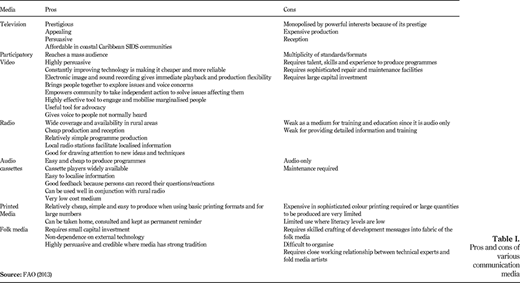
New ICTs, unlike other mass media, offer opportunities for two-way communication and opening-up new, non-traditional communication channels for rural communities. FAO (2013), for example, is experimenting with the use of Internet-based communication and cell phones. Additionally, it has established an on-line learning resource that has successfully attracted interactive participation from farmers in the Caribbean. Table I summarizes advantages and disadvantages of communication media based on the FAO’s experience.
Another innovative technology for building adaptive capacity to climate change is a Participatory Geographic Information System (PGIS). It facilitates the representation of local people’s spatial knowledge using two- and three-dimensional maps, which can be used to facilitate decision-making processes, as well as support communication and advocacy. Unlike traditional GIS applications, PGIS places control over access and use of spatial data in the hands of those communities that generated it (Corbett et al., 2006). It is a useful tool for group understanding and co-generation of climate change knowledge.
Leal Filho (2008) believes that a major challenge in communicating climate change is the lack of documentation on good, well-working initiatives. Documentation of these can help SIDS fast-track communication on climate change where action has been slow. However, one caveat is that although generalizations can be drawn from research being conducted around the globe, invariably approaches and techniques for knowledge transfer and awareness building differ depending on unique place-based characteristics. Furthermore, the advantages and disadvantages of different types of media for climate change communication need to be noted. These are summarized in Table I.
So far, this paper has reviewed findings on communication media by researchers and practitioners. The paper will now focus on the Grande Riviere case study. It seeks to firstly analyse the knowledge and awareness levels of climate change in the rural coastal community of Grande Riviere. Second, it examines the community’s views on which knowledge transfer techniques are appropriate to convey messages on climate change. Third, it explores innovative and relevant communication techniques that may be best suited to similar communities to inform policy and practice.
2. Method of investigation
The study conducted a survey of households to, inter alia, determine household awareness and knowledge of climate change and ways of building adaptive capacity to cope with potential climate change using communication techniques to influence behavioural change. A sample size of 101 of the 147 households was used, which represented 69 per cent of the total population that lived in Grande Riviere.
A questionnaire was designed to determine community awareness and knowledge of climate change and to explore ways of building adaptive capacity. The survey instrument was divided into five sections:
general information;
demographic and socio-economic characteristics;
ecosystem services;
eco-tourism and the leatherback turtles; and
awareness and knowledge of climate change.
Questions in Section 1 were aimed at determining the issues respondents considered important, their perception of what constituted climate change and the impact of possible climate change. Section 2 was designed to extract data on population cohorts, income, employment and livelihood practices of the community. Section 3 focussed on ecosystem services to extract data on coastal ecosystem-based livelihoods and potential livelihood threats stemming from climate change. Section 4 investigated the economic importance of eco-tourism and leatherback turtles to the community. Community awareness and knowledge of climate change were investigated in Section 5 of the questionnaire. This study focused on Sections 1, 2, 3 and 5.
Specifically, interviewees were asked questions on the amount of knowledge of climate change they possessed, awareness of the phenomenon, and if climate change posed a risk to the coastal community. Knowledge of climate change was measured by the respondents understanding of the causes and consequences of climate change and awareness was measured by whether they had heard of the concept of climate change. The questionnaire was also designed to elicit from respondents their interest and willingness to learn about climate change, and what they considered the most appropriate means of improving their knowledge on the subject.
The questionnaire was administered face-to-face because some of the questions were technical in construction and required some clarification. Bias was controlled by using open-ended questions which allowed respondents to speak freely. Another rationale for using the questionnaire method was that it was critical that a high level of response was obtained because of the limited amount of households, which comprised the coastal community. An intensive training session was held for the team of interviewers prior to the pilot survey. After the pilot survey, a debriefing session was held, which served to fine-tune questionnaire wording and administration.
Focus group meetings were conducted a year after the questionnaire was administered. These meetings updated the community on the on-going research. The university researchers used maps generated by a geographic information system to show scenarios of projected sea level rise.
Three years later, a communication specialist presented a training manual on climate change in two separate workshops targeted at adults and primary school children in the community. Several climate change learning tools were tested to determine if the community would respond positively to gaining knowledge via such communication media.
3. Background of study area
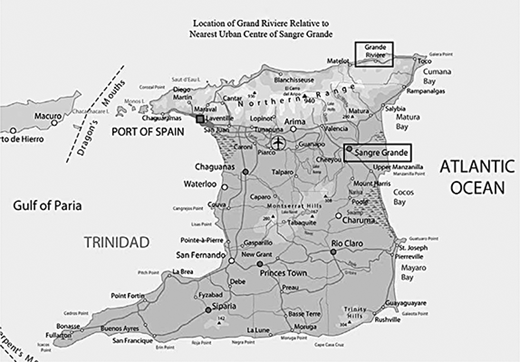
Grande Riviere is a small coastal village of approximately 5,117 ha and a total population of 298 persons according to the last census conducted in 2000. It is located on the north-eastern coastline of Trinidad, which is an oil- and natural gas-rich island. It is a remote community in relation to distance from the nearest urban centre of Sangre Grande (Figure 1). Grande Riviere is endowed with a rich biodiversity and is characterised by a sandy beach, rich fisheries, fertile agricultural hinterlands and tropical rainforest reserves that stretch several hectares from the coast to the interior of the island. Hiking along the nature trails to one of the country’s major national parks, bird watching and sea and river bathing, collectively contribute to its high national ranking as a tourist attraction. Grande Riviere beach is host to the highest density of leatherback turtle nesting in the world and is one of the sites which gives Trinidad and Tobago the distinction of being the second largest nesting assemblage of leatherback turtles in the Atlantic (Chu Cheong, 1990). Approximately 3,000 or more turtles nest on this small length of beach (personal communication Eckert, 2012).
As is common in many rural tropical coastal communities, the main economic activities are natural resource based. Almost half the working population is engaged in farming, but fishing is not a key livelihood. The tourism sector employed a small percentage (18 per cent) of households mainly as beach tour guides for leatherback turtle watching. Resorts and guesthouses employed 29 per cent of the population. Approximately 15,000 tourists visit this community annually to view leatherback turtle nesting (Ganase and Teelucksingh, 2011). Climate change, including inundation and sea level rise, can adversely impact on the community’s natural resource based livelihoods so that knowledge and awareness building are critical.
4. Survey results
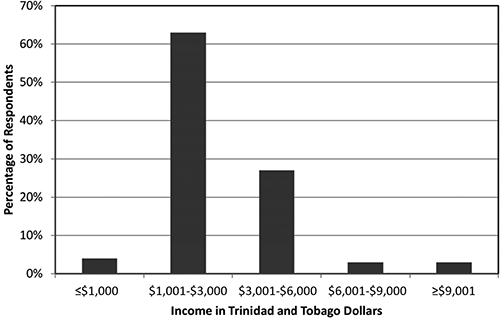
The survey results confirmed that the level of poverty in the community was high. The poverty indicators analysed were income, employment and land tenure. In contrast to other communities nationally, Grande Riviere’s population earned low amounts of income. The data confirmed that 68 per cent of individuals earned less than TT$3,000 (US$500) per month (Figure 2). Other proxy variables used to measure poverty such as land tenure and employment substantiated that poverty levels were high. Approximately a half of all households were landless. Unemployment was also significant, which was approximately 55 per cent or slightly over a half the population of working age.
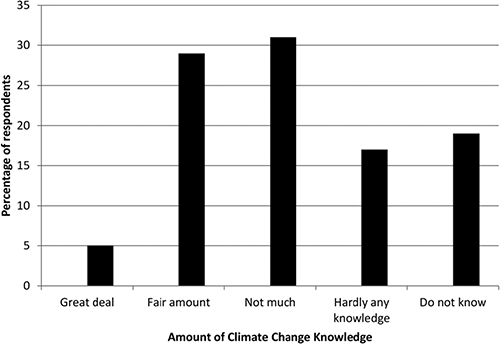
A major finding of the survey was that awareness and knowledge of climate change was low in this rural coastal community. Over a quarter (36 per cent) of the respondents had never heard the phrase “climate change”, while a half had interpreted the term to mean more intense hurricanes. A significant percentage (66 per cent) of the respondents did not know, did not have much knowledge or had limited knowledge of climate change, in contrast to only 5 per cent who had a great amount of climate change knowledge (Figure 3). The results showed that this 5 per cent of the population were highly educated, earned high levels of income and these persons constituted the resort owners. Among the 66 per cent of respondents whose knowledge of climate change was low, the level of educational attainment was not high. Approximately 30 per cent of the respondents had primary-level education and 36 per cent had not completed their secondary school education.
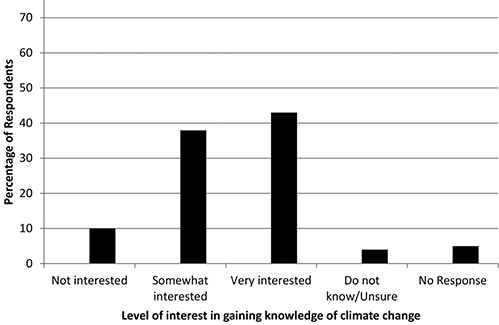
Community members were keen on learning more about climate change given their limited knowledge and awareness, and the potential risks to the community and their livelihoods. A high proportion (83 per cent) of the respondents were either “somewhat interested” or “very interested” in learning more about the impact of climate change on the coastal community (Figure 4). An overwhelming majority (80 per cent) of interviewees wanted more access to climate change information regardless of their age, income and education.
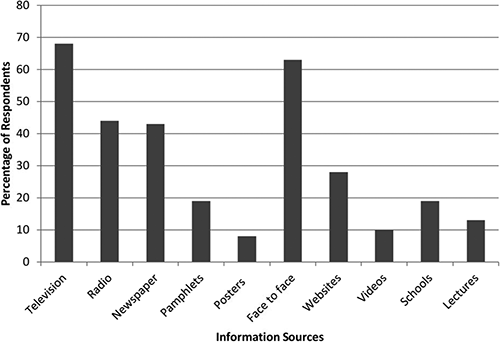
A salient finding distilled from the survey results was that the main source of climate change information was traditional media such as the television, radio, newspaper and face-to-face communication (Figure 5). Among respondents who had knowledge of climate change, 68 per cent had received information via the television and 63 per cent from face-to-face communication with community groups, faith-based organisations and friends. In contrast, nearly half the respondents had access to information from newspaper articles and radio broadcasts (Figure 5). Videos and websites were inaccessible to community members with only 10 and 28 per cent of respondents, respectively, obtaining information on climate change from these communication modes (Figure 5). An estimated 19 per cent of respondents received knowledge transfer from schools.
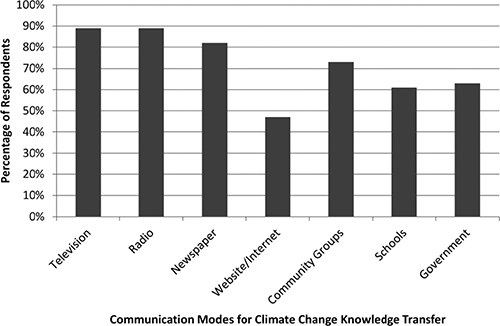
Respondents indicated that some techniques for knowledge transfer would be more effective in their community than others. Over three-quarters of the respondents indicated that traditional media should be used to disseminate climate change information to the community compared with less than half the respondents who selected modern technology. Moreover, written communication was not perceived as highly effective as verbal communication. Respondents indicated they were too busy to read printed material and culturally preferred messages transmitted via radio, television and videos. Only 27 per cent of the interviewees selected posters and pamphlets as tools and approaches for knowledge transfer. The results highlighted that respondents selected radio (89 per cent), television (89 per cent) and newspaper articles (81 per cent) as the main popular media for information dissemination, followed by face-to-face contact with community groups (72 per cent) (Figure 6). Additionally, less than half the respondents (47 per cent) selected modern technology such as the Internet as a technique for knowledge dissemination. In summary, the data showed that community members unequivocally considered traditional techniques for knowledge transfer more appropriate in contrast to higher costing, less accessible computer-based technology. Furthermore they preferred verbal communication over written communication.
The preference for verbal communication and face-to-face learning was confirmed in the focus group meetings and interactive training workshop conducted by a communication specialist who used an array of media such as music videos, power point slides and photographs. The music video on climate change was the most popular communication technique among the adults and primary school children. The university researchers participated in these sessions and witnessed a high level of receptivity to the messages and how well the audio-visual medium was embraced by the community as a tool for climate change communication.
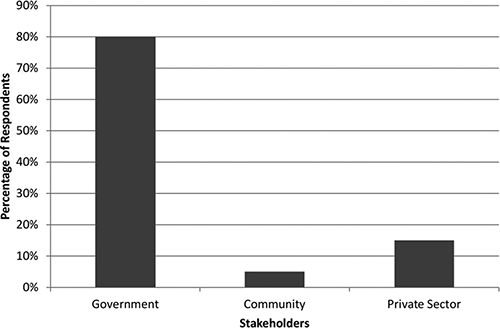
The majority (80 per cent) of respondents held the perception that climate change adaptation, including knowledge transfer, was the responsibility of central government (Figure 7). Only 5 per cent of the respondents identified community organisations as key stakeholders in responding to climate change challenges compared with 15 per cent who indicated they believed that there should be autonomous household adaptation (Figure 7).
5. Discussion of current practices and policy implications of findings
This section of the paper discusses the survey findings and current practices in communicating climate change in the selected case study and provides policy prescriptions which may remedy communication shortfalls. The policy implications have wider applicability to rural communities in developing countries and, in particular, SIDS.
5.1 Re-examination of institutional and governance structure of science communication
The level of awareness and knowledge of climate change is low among a significant percentage (66 per cent) of this rural coastal community. Trinidad’s economy is petroleum and petrochemical driven so that policymakers and decision-makers have neglected other natural resource-based economic sectors such as tourism, agriculture and fisheries. Furthermore, they have ignored the threat of climate change to the livelihoods of largely rural coastal communities that depend on these activities. In addition, Trinidad lies outside the hurricane belt so that historically coastal communities have not been considered vulnerable to this natural hazard. The level of risk and vulnerability of small rural coastal communities has not been considered high to warrant heightening climate change knowledge and awareness and therefore community knowledge on this subject is quite low.
Another explanation for low levels of knowledge and awareness is that there has been a macro-level (country-level) communication focus as opposed to a micro-level (community-level) emphasis. Furthermore, at the national scale, there was a slow start in commissioning the country study on climate change and its impacts; timing coincided with preparatory studies for the Rio + 20 United Nations Conference on Sustainable Development held in 2012. The National Climate Change Policy was published in 2011 as a technical report targeted at policymakers and required other measures to improve the flow of information to communities.
A key policy recommendation is that an institutional framework and governance structure of science communications should be developed to build adaptive capacity. One-way, top–down climate change communication is less effective in enabling learning and active engagement than two-way informational flows, dialogue and interactive forms of communication that allows horizontal information sharing. Furthermore, scientific data should be delivered in an accessible format that empowers recipients to become part of the climate change discourse. Systematic communication horizontally across vulnerable coastal communities and vertically across levels of governance and action is required.
5.2 A participatory rural climate change communication appraisal and design strategy
The data confirmed that more than three-quarters of the respondents were interested in knowing more about projected climate change trends and were cognisant of the most practical approach to knowledge transfer within their community. Traditional media were identified by respondents as techniques for dissemination of climate change information that would be applicable to their community. Focus group meetings and the workshops also confirmed that verbal communication remains popular in this rural community.
In this study, over 60 per cent of the survey respondents had heard of climate change via face-to-face communication. Many other field projects in the Caribbean implemented by the FAO confirmed that this technique is more persuasive and impactful on human behaviour than mass media communication.
Indigenous communication modes are also powerful ways of communicating climate change knowledge and awareness. Studies on SIDS have found that listening and dancing to the words of a song often have a lasting impact on people. PANOS Caribbean, for example, found that indigenous forms of communication such as music concerts have significant potential for improving community education on climate change. The training workshop conducted by PANOS at Grande Riviere, which incorporated music videos and other visual techniques, revealed that adults and school children embraced this technique as a climate change communication mode. The organisation’s field experience in SIDS such as Jamaica is that people rarely read flyers and posters or retained much information from workshops or community meetings.
Receptivity to messages on climate change adaptation is enhanced by using traditional and folk media that are an integral part of rural life. Face-to face communication, including folk theatre, dance, music concerts and community radio combined, may be effective channels for sharing climate change information and stimulating community mobilization in rural coastal communities located in SIDS. Traditional media require limited capital investments, can be used “live” and have high impact when the communities can interact with performers and artists and even participate themselves. Incorporating local artists to communicate messages on climate change is recommended to policymakers and decision-makers because the impact is significant in SIDS where the culture of expression and information transfer is rooted in music, dance and visual arts.
Although the video is a powerful form of communicating knowledge and raising awareness in remote coastal communities, not many respondents considered this an appropriate communication technique. Only 10 per cent of respondents had accessed information by viewing videos. Nevertheless, FAO’s field experience confirms that participatory videos provide many advantages as summarised in Table I. This communication tool is highly effective in engaging and mobilising marginalised people and giving a voice to people who are likely to be most impacted by climate change. Despite its past drawback of high capital investment, the technology is becoming more affordable and donor agencies can provide funding to support its adoption. Use of the participatory video as a tool for awareness-raising and people-centred advocacy should be embedded in a climate change communication strategy to strengthen links between scientific climate change data exchange and building local knowledge for more meaningful adaptation debates.
Many communication media exist, including conventional written communication, participatory tools and social photography. For SIDS policymakers, a participatory rural communication appraisal and design strategy is recommended as a first step in selecting the mix of communication modes appropriate for rural coastal communities.
5.3 Education and training for climate change awareness and knowledge
The International Community-University Research Alliance (ICURA)-funded research project is developing knowledge products for use at the community level, which includes a training of trainers manual. The tool has been pilot tested in Grande Riviere among community members as a technique for building adaptive capacity through knowledge transfer on climate change. Lectures to secondary school students on this thematic area are an additional approach suggested by the community to educate their members on the subject of climate change. The university research team recommended a modification of the secondary school curriculum for Geography, Biology and Agricultural Science to incorporate climate change as a topic to be covered. This has policy implications for curriculum reform at the national level.
5.4 Exploring online learning and participatory mapping as communication tool
From the empirical findings, this rural coastal community currently has limited capacity to access modern communication technology, particularly digital media and computer-based techniques for knowledge transfer and awareness building. Only a very small percentage of respondents selected modern technology such as the Internet as a technique for knowledge dissemination. Although, Internet-based information dissemination may be impractical in these communities given high poverty levels and extremely limited access to computers and Internet services, the work of FAO on making online learning resources available to rural farmers in the Caribbean should be further investigated in its applicability to climate change communication.
The application of PGIS as a tool for learning by doing and exchange of knowledge on climate change should be studied further, particularly developmental and management costs in addition to benefits that will redound to rural communities. It is a good tool to communicate sea level rise scenarios, spatial impacts and community adaptation. Donor agencies should consider funding PGIS initiatives aimed at strengthening community awareness and knowledge of climate change.
5.5 Interdisciplinary and interagency partnerships
Opportunities exist for communication to be effectively planned and implemented via interdisciplinary partnerships and initiatives at universities and other community-based institutions. The United Nations Development Programme (UNDP) through the Global Environmental Facility (GEF) provides funding via the Small Grants Programme (SGP) to support community based organizations (CBOs) that are seeking to improve knowledge transfer on climate change. Policymakers and decision-makers should embrace and promote opportunities for interdisciplinary and interagency partnership and collaboration with rural coastal communities.
5.6 Communication flows and community participation in climate change adaptation
The community views the climate change challenge as overwhelming, and over 80 per cent of its households perceive that it is the government’s responsibility to address climate change impacts. The Grande Riviere community sees a quite limited role for itself in developing strategies for climate change adaptation, which is consistent with the research findings of CANARI (2009). This perception may arise from low levels of educational attainment and a lack of climate change knowledge. It may also be the result of an entrenched dependency syndrome fostered by more than three decades of state subsidies to the population made possible by oil wealth. National governments should improve communication flows to dispel the perception of peripheral coastal communities that governments are entirely responsible for promoting measures for climate change adaptation.
5.7 Adopting community-based adaptation and identifying funding sources
Increasingly, community-based adaptation (CBA) is seen as a best practice and is recommended for vulnerable rural coastal communities. The CBA approach helps demystify the notion that only the scientific community has all the solutions to climate change adaptation. This approach is justifiable given that “community members are often the first to notice the changes that are happening and to develop strategies to adapt to them” (CANARI, 2009). Dispelling this perception can only be achieved by knowledge transfer and awareness building at the community level. Information access empowers vulnerable communities to make calculated and climate-informed decisions on livelihood and risk management choices, innovation and use of services and resources. Policymakers should promote the fact that climate communication and information services are essential components for enabling adaptive capacity and effective CBA.
Sources of available funding include international grants from UNDP, GEF, SGP and local grants from Trinidad’s Green Fund and Community Development Fund. Policymakers at the national level and donors should publicize funding availability to CBOs, non-governmental organisations (NGOs) and communities requiring financial assistance.
6. Conclusion
After a decade of debate over the uncertainty of climate change, there is now less ambiguity over vulnerability and climate change impacts. A major conclusion of this study is that despite the vulnerability of this rural coastal community to climate change impacts, the level of knowledge and awareness of climate change is low. Marginalised communities in many developing countries receive little or no information on this issue, although they are likely to suffer the greatest impacts without knowledge of climate change. In particular, SIDS are coastal entities that consist of many rural coastal communities that are highly vulnerable climate change hazards. Development of adaptive capacity, behavioural change and societal responses can occur if communities understand these vulnerabilities and adaptation options through knowledge transfer and awareness building. This process depends on improved access to information and an appropriate blend of modern and traditional technology that can empower human capital within the community, in addition to reformed governance structures and political will.
Verbal communication in developing climate change literacy is recommended for rural coastal communities, but particularly SIDS. Indigenous forms of communication such as music concerts, theatre, dance and visual arts are powerful in these areas and can be further supplemented with the use of participatory videos and mapping which allow people to visualize and hear key climate change messages. Moreover, place-based education and experiential learning which link climate change with places and individuals or group-based experiences should be given greater consideration in rural coastal communities where written communication is least effective.
Finally, there is no universally applicable mode of knowledge transfer and building awareness of climate change. The relevance of communication techniques is place-based. Adoption of these tools and techniques of communication depend on if they are economically affordable as well as socially, culturally and technologically relevant to that community.
Respondents’ selection of modes of communication for climate change knowledge transfer
Respondents’ selection of modes of communication for climate change knowledge transfer
Respondents’ perception of stakeholder responsibility for climate change adaptation
Respondents’ perception of stakeholder responsibility for climate change adaptation
References
Further reading
About the author
Dr Michelle Mycoo is a Senior Lecturer in the Department of Geomatics Engineering and Land Management at the University of the West Indies, St. Augustine, Trinidad and Tobago. She is an Urban Planner, and her current research focusses on climate change adaptation, natural hazard risk reduction, integrated coastal zone management and integrated water resources management. Michelle Mycoo can be contacted at: michelle.mycoo@sta.uwi.edu
Data for this paper were collected from a study funded under the Benefit-Sharing in Latin America and the International Community-University Research Alliance (ICURA). ICURA is a joint funding initiative of the International Development Research Centre (IDRC) and the Social Sciences and Humanities Research Council of Canada (SSHRC). The ICURA project is on Managing Adaptation to Environmental Change in Coastal Communities: Canada and the Caribbean. The Caribbean research team is from the University of the West Indies, St. Augustine, Trinidad and Tobago.

