Literature shows that a strong link between sustainability control systems and sustainability management (SM) fosters sustainability development (SD) and compliance with regulatory requirements and stakeholder expectations. Research on the integration of SM and its control mechanisms in corporate business remains scarce. This study aims to focus on Sustainability Management Control Systems (S)MCS applied in Electric Utility Companies (EUC), which experience close scrutiny by its stakeholders in as much as they play an important role in climate change agendas.
The methodological approach includes in-depth expert interviews within seven Austrian EUC followed by qualitative content analysis. This study builds on “MCS as a package” by Malmi and Brown (2008). Institutional logics (IL) are used for the theoretical approach.
Results show that several IL are involved in implementing strategic SMCS in EUC. Managers cope by integrating emerging hybrid logics, selectively coupled SMCS and making sense by building a communication bridge between the strategic and operative levels to create awareness.
Results show that managers in EUC have to acquire a new hybrid logic for SD. This implies the use of informal controls and a strong focus on administrative and cultural controls as the main control mechanisms for SM.
The paper contributes to MCS research by using the scarcely applied theoretical framework of IL. Findings facilitate a better understanding of the control mechanisms behind SM and the coping strategies of managers in applying SMCS.
1. Motivation and research questions
Sustainability along the triple-bottom-line (TBL), with an economic, ecological and social focus (Elkington, 1997), has become increasingly important for organizations and their stakeholders (KPMG, 2017; Maas et al., 2016). To stay competitive in their dynamic business environments, companies have to adjust and react to global climate change and environmental strain by adapting to sustainability targets. To secure organizational legitimacy and survival, companies are required to comply with national and supra-national regulations and societal expectations (Braam et al., 2016; Deegan, 2014; Higgins and Larrinaga, 2014). Stakeholder demands on sustainability agendas are exerting increasing pressure and require an organizational focus to meet stakeholder expectations and requirements (Alrazi et al., 2015).
In these terms, electric utility companies (EUC) operate in an environmentally sensitive sector and at the focus of critical stakeholders. European EUC are seen as playing an important role in climate change agendas. Environmental strains such as the exploitation of natural resources, high carbon emissions (Bahari et al., 2016) and environmental catastrophes such as nuclear accidents have pressured EUC into focusing on environmental and social issues as much as on economic sustainability and growth (Maas et al., 2016; Ioannou et al., 2015). For EUC, economic challenges, market deregulations and tightening regulatory requirements (Rothwell and Gomez, 2003; Atkinson and Halvorsen, 1986) have aligned with environmental and social challenges. EUC are expected to contribute to reducing negative environmental performance by adapting to renewable energy and carbon-neutral technologies (Bahari et al., 2016; Evans and Tucker, 2015). They face a challenge between securing electricity supply (González González, 2010) while also reducing environmental pollution and the exploitation of resources, e.g. via solar, water or wind energy. EUC are strongly urged to justify their sustainability performance and activities (Bahari et al., 2016; Moseñe et al., 2013). All of this makes EUC an interesting sector to investigate on how they manage their sustainability targets and compliance with various stakeholder demands.
The European Energy sector has undergone three regulations for liberalization (1997/1998, 2003–2005 and 2009). Central issues of these regulations are, namely, unbundling of vertically integrated companies, third party network access, cross-border trade and an institutional network of regulatory and supervisory bodies (E-Control, 2011). Since the Paris Agreement in 2015, regulations are coupled with the United Nations Sustainability Development (SD) Goals and the order of global decarbonization. These regulations have also had an impact on the Austrian energy market. In Austria, the Energy Liberalization Act 2000 (BGBl I 121/2000) facilitated the complete opening of the energy markets in Austria as of October 1, 2002. Hence, Austria implemented the opening of the energy market more quickly than envisaged by the European directives. In 2018, there existed 2,508 entities in the Austrian energy sector with 29,032 employees (Statista, 2020). The domestic primary energy production Austria in 2018 was as follows: biogenic energies 45.4%, hydropower 27.1%, gas 7.2%, oil 5.9%, combustible waste 5.2%, wind 4.3%, ambient heat 3.8%, photovoltaics 1% (Statistik Austria, 2020a, 2020b). A table with the largest energy entities in Austria can be found in Appendix 1. The table shows that, despite market liberalization that should increase competition and allows customers to choose their preferred supplier, the Austrian energy market is dominated by only a few entities; indeed, there is one major player that has sales nearly six times higher than that of the next competitor. The ownership structure of EUC in Austria is complex. Some of the EUC are 100% publicly owned entities and some of the EUC are mixed public-private with diverse shares. Public owners of the EUC are partially the state of Austria, federal institutions, as well as municipal shareholders. The private shares are partly national but also foreign entities. Parts of the private shares are in free float. Additionally, the individual EUC are linked through joint shares, each EUC owning shares of the other EUC. In most EUC, the public shares are dominant (E-Control, 2020).
However, the quick liberalization and privatization of the Austrian energy sector allowed the larger Austrian EUC to continue their traditional financially driven cash-cow market opportunities and to expand their oligopolistic status without having to focus on environmental and social agendas. Fossil oil is still predominantly used for energy generation and coal still remains a part of the sector. Due to market and investor demands, Austrian EUC, however, needs to learn and integrate a TBL-sustainability business focus, reducing environmental strain and exploitation while securing energy access. Investors increasingly take sustainability agendas into account. Nevertheless, sustainability reports of the large Austrian energy players indicate room for improvement. Control mechanisms applied for TBL sustainability agendas have not yet been institutionalized in the sector. This is an issue especially for Austrian EUC where managerial attitudes and the institutionalized logic behind their activities are still based on traditional settings regarding economic, and thus, financial value generation rather than the improvement of regional environmental and social conditions. How Austrian EUC will master this transition and how they use management control mechanisms to meet their sustainability targets remains unanswered.
For evaluating, strategically planning and implementing sustainability agendas, Burritt and Schaltegger (2010) address the need to implement a control system (Riccaboni and Luisa Leone, 2010). Gond et al. (2012) claim that (…) because management control systems (MCS) shape actors’ practices and support strategy, they can, if used appropriately, push the organization in the direction of sustainability. The literature argues that there is a strong link between the sustainability control systems and sustainability management (SM), addressing how MCS influences SM (Lueg and Radlach, 2016; Ditillo and Lisi, 2016). Sustainability management control systems (SMCS) are strategy supportive and configure organizational behavior (Ahrens and Chapman, 2007; Langfield-Smith, 1997), thus supporting SD, SM and its information processes (Garcia et al., 2016; Villiers et al., 2016; Lueg and Radlach, 2016; Bebbington and Thomson, 2013; Burritt and Schaltegger, 2010).
Previous work has scarcely researched “how” companies integrate SM with a specific sector focus, indicating a striking research gap (Maas et al., 2016; Lueg and Radlach, 2016; Ditillo and Lisi, 2016; Cintra and Carter, 2012; Gond et al., 2012). To date, empirical research on SMCS and its potentials remains limited and can be characterized as an emerging topic (Lueg and Radlach, 2016). So far, no implemented or applied SMCS have been identified to ensure SM in any organization in any sector. This is also the case for EUC, constituting a clear research gap.
To analyze the implementation of SMCS in EUC, this study will use the conceptual framework “MCS as a package” by Malmi and Brown (2008), drawing on the suggestions of Lueg and Radlach (2016). The framework assists by identifying parameters of formal and informal sustainability control mechanisms, guiding managerial behavior, e.g. through incentives and boundaries, to adopt patterns for active SD (Malmi and Granlund, 2009; Henri, 2006). Specifically, the five main controls of the proposed package – namely, cultural, planning, cybernetic and administrative controls, as well as reward and compensations, including formal and informal control mechanisms that influence employee (managerial) behavior (Malmi and Brown, 2008) – are used for investigating implemented SMCS in EUC.
Moreover, while prior research mainly used agency-, stakeholder-, contingency-, actor-network theory and the resource-based view to analyze MCS for sustainability agendas, the field has not been approached in terms of Institutional Logics (IL). Some studies, however, show the link between MCS and IL, justifying a comprehensive research model for analyzing the logics that govern applied SMCS for SM or in other words, the logics of managerial behavior for sustainability and its coping strategies (Boitier and Rivière, 2016; Herremans and Nazari, 2016; Burns et al., 2015; Ahrens and Khalifa, 2015). It would be beneficial to discover, which factors may inhibit, delay or hinder SM in EUC, e.g. conflicting IL and managerial attitudes, as Argento et al. (2016) and Boitier and Rivière (2016) point out. EUC are faced with a broad interrelationship between social entities (e.g. sector regulators, standard-setters and customers) (Thornton et al., 2012), which govern the behavior of EUC by different IL that influence strategic organizational patterns (Lounsbury, 2007; Thornton and Ocasio, 1999). However, Glover et al. (2014) argue that dominant logics may hinder adaption to new logics, and therefore, with respect to sustainability agendas, suggest the need of overarching regulatory guidance. Hence, the innovation of the empirical study at hand is to approach SMCS in EUC from a new theoretical perspective. The paper aims to address the research gap identified above by combining SMCS with the theory of IL. Although the use of IL as a theoretical framework as such is not new, the combination of both topics in studying EUC is innovative.
By interpreting the findings in light of IL, this study offers valuable contributions for practitioners and academics inasmuch as it identifies the current state, attitude and behavior of management in dealing with sustainability agendas in the energy sector. This could further help practitioners to break with their institutionalized managerial habits and traditional roles, adjusting to the increasing momentum of the sustainability transformation. Working with qualitative interviews, the study provides in-depth insights into Austrian EUC. The findings are especially relevant to countries with similar regulatory requirements in the European Union, i.e. undergoing market liberalization and facing a process of transformation.
The aim of this study is to identify applied SMCS in EUC and to extend previous research by drawing on IL to facilitate a deeper understanding of managerial behavior and coping strategies in implementing and applying SMCS for SM in EUC. Significantly, this constitutes the first empirical effort to study this phenomenon. Beyond the research gaps identified, this study is relevant to the social-political and environmental necessity for EUC to comply with sustainability demands to fully integrate SM, and therefore, by necessity, SMCS. This research contributes to the understanding of applied SMCS by using the conceptual framework developed by Malmi and Brown (2008) and IL as its theoretical approach. It provides practical insights into managerial attitudes and coping strategies. Addressing the research gaps, the following research questions (RQs) are pursued:
What are the governing IL in Austrian EUC?
Which SMCS are implemented in Austrian EUC and how are these intertwined as a package?
How do managers cope with competing logics when applying SMCS in Austrian EUC?
To address the research objectives, in-depth expert interviews within Austrian EUC are used to identify implemented strategic and operational SMCS, as well as the ways in which managers cope with governing IL. The remainder of the paper is structured as follows: Section 2 provides a literature review of prior empirical and conceptual studies, including the theoretical approach. Section 3 presents the research methods, followed by a presentation of the findings in Section 4. The discussion and contributions are found in Section 5, followed by practical implications, research limitations and directions for future research.
2. Conceptual framework, prior literature and theoretical background
2.1. “Management control systems as a package”
This study adopts the model of “MCS as a package” (Malmi and Brown, 2008), which proposes five types of controls, as its conceptual framework. Based on the literature review in Lueg and Radlach (2016),“MCS as a package” can be used for sustainability efforts suggesting SMCS. The framework helps identify the implemented control mechanisms, including formal and informal controls that influence employee (managerial) behavior toward SM in EUC. Malmi and Brown base their definition of formal and informal controls on Simons (1990, 1995). Hence, written documents, symbols, job descriptions, emails, etc., are regarded as formal controls, while any verbal communication and, e.g. role model behavior is seen as an informal control mechanism. Regarding cultural controls, organizations encounter various institutional pressures that are governed by IL, thereby influencing the organizational culture (Greenwood et al., 2011). Based on the literature review in Lueg and Radlach (2016) regarding SMCS and the framework developed by Malmi and Brown (2008), the coping strategies of management, their beliefs and attitudes, as well as cultural boundaries are addressed via cultural controls. Planning controls also address the implementation of sustainability strategies, including action planning on the operational and managerial level. Cybernetic controls are based on all results of identified sustainability key performance indicators (KPIs), which target the application of sustainability strategies and its actual financial and non-financial sustainability performance (e.g. carbon emissions, internal energy usage, diversity, compliance to regulations, etc.). Reward and compensation controls regard incentive systems for improved sustainability performances, while administrative controls target organizational and procedural boundaries, including organizational structure, internal channels of communication and corporate governance structures (Lueg and Radlach, 2016; Gond et al., 2012). These MCS, combined with the focus on sustainability, allow for analyzing the implementation and application of sustainability targets and managerial behavior toward sustainability performance in EUC.
2.2 Prior literature on sustainability management control systems
A literature review of articles published between 2012 and 2019 was undertaken to identify research on implementing and applying SMCS for SM in EUC and to understand managerial behavior and coping strategies. As Lueg and Radlach (2016) covered publications up to 2013 in their literature review, this study takes their findings as a starting point and identified an additional 28 studies. Only one conceptual study, i.e. Garcia et al. (2016), was found in the electricity sector. Since 2015, 22 studies have been published addressing SMCS or Environmental MCS (EMCS), showing increasing relevance of the topic. Four studies used the framework of Malmi and Brown (2008). Another six studies used the levers of control (Simons, 1990, 1995) as their conceptional framework. Altogether, seven clusters were identified (Table 1).
In summary, a core message with respect to the MCS by Malmi and Brown (2008) is to focus more on cultural controls for sustainability objectives and less on cybernetic and formal controls (Crutzen et al., 2017; Lueg and Radlach, 2016; Hansen and Schaltegger, 2016; Ditillo and Lisi, 2014). While SMCS are still scarcely researched the concepts of an sustainability balanced scorecard and EMCS are introduced (Hansen and Schaltegger, 2016; Guenther et al., 2016). Another important message is that enabling EMCS fosters sustainability strategies in comparison to controlling EMCS (Wijethilake et al., 2018; Wijethilake, 2017). These EMCS tend to be applied to merely single sustainability objectives (Sundin and Brown, 2017; Maas et al., 2016) because specific cognitive barriers hinder a full sustainability integration (George et al., 2016; Battaglia et al., 2016). Managerial sustainability orientation is key to the variation of applied SMCS or its dysfunctionality (Ditillo and Lisi, 2016). Both formal and informal controls are necessary to develop SM (Herremans and Nazari, 2016; Hosoda and Suzuki, 2015), which should not be decoupled from regular control practices (Cintra and Carter, 2012).
In summary, prior literature does not provide enough information to identify successfully implemented and applied SMCS. MCS are being used in organizations of various industries, but there is still a lack of research on SMCS implementation for SM (Ditillo and Lisi, 2016; Lueg and Radlach, 2016; Arjaliés and Mundy, 2013; Gond et al., 2012). There are no empirical studies on SMCS across sectors. This is also the case for the electricity sector. No SMCS have been empirically identified to support and ensure SM in EUC. Furthermore, the implementation of SMCS, the managerial impact on SM and its influence on sustainability performance have not been identified, representing several research gaps.
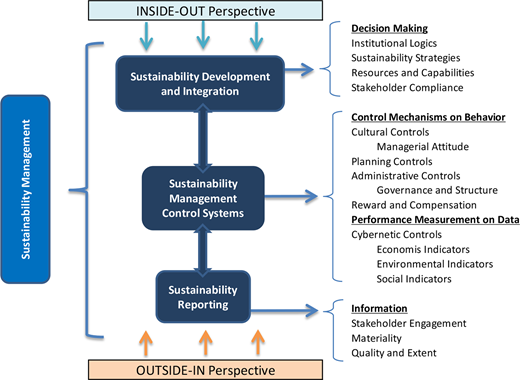
Based on the above literature review and the foundational literature on sustainability accounting, i.e. Bebbington et al. (2014) and Burritt and Schaltegger (2010), Figure 1 visualizes the dynamic of SM.
SM consists of “SD and integration” and is based on several known drivers (Table 1). This leads to managerial decision-making based on IL, sustainability strategies, available resources and capabilities and stakeholder compliance. Subsequently, integrated SD needs to be reviewed via implemented SMCS. The focus is on relevant TBL indicators to be measured and improved based on SMCS frameworks. The attitude of sustainability managers is crucial to the successful implementation and use of SMCS. Sustainability reports are part of SM and are designed to inform stakeholders of organizational SD. Attention is given to stakeholder engagement to evaluate material aspects, as well as the quality and coverage in sustainability reports. Burritt and Schaltegger (2010) refer to an intrinsically motivated SM that fosters voluntary SD as an “inside-out” perspective. Similar to a steward to society and stakeholders, the organization will intrinsically integrate TBL sustainability. This process has to begin at the top level. However, when stakeholders demand transparent information of organizations and sustainability reports are published to comply, Burritt and Schaltegger (2010) refer to this as the “outside-in perspective.”
2.3 Theoretical background
2.3.1 Institutional logics.
In terms of IL, organizations encounter a broad interrelationship between social institutions (sectors or industries), policymakers (government, commissions and regulators), standard-setters (Global Reporting Initiative, International Standards Organization, United Nation Global Compact and Eurelectric), organizations (e.g. public or private EUC), stakeholders and individuals (suppliers, customers, managers and employees and the media), as well as investors and/or shareholders (Thornton et al., 2012). This institutional system governing the behavior of organizations is ordered by different IL (Lounsbury, 2007), defined as the socially constructed, historical pattern of material practices, assumptions, values, beliefs and rules by which individuals produce and reproduce their material subsistence, organize time and space and provide meaning to their social reality (Thornton and Ocasio, 1999, p. 804). In other words, IL are the systems that give meaning to various organizational and individual activities (Friedland and Alford, 1991) between institutions and their actions of alignment. According to Ocasio (1997), IL are both material and symbolic – they provide the formal and informal rules of action, interaction and interpretation that guide and constrain decision-makers in accomplishing the organization’s tasks and in obtaining social status, credits, penalties and rewards in the process. These rules consciously or subconsciously frame the organizational reality of what constitutes appropriate behavior and how to succeed (Thornton and Ocasio, 1999, p. 804).
Argento et al. (2016) concluded that public utilities face multiple and competing logics in trying to serve different institutional demands in an industry. They found a community logic that guides public sector entities, similar to a stewardship attitude, to provide services for the community and its many stakeholders. This logic calls for adapting to the public business contract of serving the community. They further identified a politically driven compliance logic. This logic focuses on the need for public utilities to comply with regulations and laws set by its political superiors. Additionally, public utilities are also required to follow a business logic focusing on the profitability and economic sustainability of its organizations (McPherson and Sauder, 2013). Argento et al. (2016) argue that these three, competing logics are all practiced in public organizations. Furthermore, these logics are sensitive to an organization’s institutional field, consisting of field position, organizational structure, ownership and governance, as well as organizational identity (Greenwood et al., 2011; Argento et al., 2016). Following York et al. (2016), public utilities have to hybridize for organizational survival and keeping a competitive advantage; they are governed by hybrid logics. York et al. argue that these different logics should not only be combined into hybrid logics, but that management must build new frames and activities to integrate previously contradicting logics. To ensure a successful hybridization of IL, assimilated logics have to be embedded in their (sustainability) context. Emerging hybrid logics thus, have to run through the sequential phases of compromise, reframing, contestation, legitimation and embedding (York et al., 2016). To facilitate this process, a managerial discourse on integrating and incorporating elements of different logics is necessary. Otherwise, an existing dominant logic will prevail (Glover et al., 2014). Some studies claim, however, that hybrid logics shows weaknesses when implementing SMCS (George et al., 2016; Battaglia et al., 2016; Glover et al., 2014).
Public EUC encounters various IL that influence strategic organizational patterns during the transformation of implementing SM. Public EUC are required to achieve a regulatory compliance while securing financial stability and growth, as well as acting as public service facilities that aim for economic and community welfare. To cope with such pressing and conflicting ideals, a hybridization or combination of logics is a managerial solution to reach balance and organizational compromises (Oliver, 1991). Within a transforming sector, public EUC tend to stick to their traditional organizational forms, complying and adjusting to SM rather restrictively (Greiling and Slacik, 2019; Meyer and Pac, 2015; Mangia et al., 2013). Besides abiding by existing regulations, public EUC have their organizational script, know their boundaries and act upon those. For public EUC, SM is still not institutionalized within their hybrid logics (York et al., 2016). Following Dequech (2008), the question is whether the professional logic of public EUC is focused on their activities (business logic) or simply on justification to stakeholders (compliance and community logic). It is, thus, the sustainability intention or stewardship attitude of organizations that governs emerging hybrid logics of acting and operating sustainably (Garcia et al., 2016; Dumay et al., 2019). Dominant logics such as a business logic, however, may suppress emerging logics, which suggests governance by some overarching regulations (Glover et al., 2014). Garcia et al. (2016) and Villiers et al. (2016) suggested that it is a coping strategy for implementing SMCS to take a stakeholder view along with the dominant logic of public or private EUC. Another coping strategy is selective coupling, i.e. the alignment with selective management controls for SM, which organizations believe to be valuable for their legitimacy (Pache and Santos, 2013).
3. Sample description and methodology
Drawing on Yin (2013), this study conducted and analyzed qualitative interviews, i.e. 12 problem-centered semi-structured expert interviews in 7 state-owned and stock-exchange listed Austrian EUC. The interviews lasted for 90 to 150 min each and were conducted between November 2018 and January 2020. The Austrian electricity sector is tightly state-regulated and predominantly state-owned with an interrelated ownership mix between each of the EUC. This also makes the samples comparable. Furthermore, access to the seven largest Austrian EUC provides a comparable insight into almost the entire Austrian electricity sector, covering nearly all counties (see sample overview in Appendix 1).
Interviews were coded with interview partners IP1 to IP12. Experts included chief executive officers, sustainability managers or representatives, internal auditors and department heads. The interviews were analyzed via the open and interpretative method based on the guidelines and principles developed by Yin (2013). Moreover, as additional explication to verify data and facts, documents and reports were also analyzed, as these are produced regularly and provide comparable insights into processes, policies and developments across the organization. The method suggests using multiple sources to compare and generate detailed information to facilitate reasonable generalizations, collecting accurate evidence of the managerial implication of implemented SMCS for SM and its interdependencies (Yin, 2013; Guthrie et al., 2004).
All interviews were recorded and transcribed. Subsequently, a qualitative content analysis using MAXQDA was performed based on deductive (MCS), inductive (SMCS) category formation (Miles and Huberman, 1994; Yin, 2013). The information collected was then filtered according to organizational and managerial patterns and the theoretical framework (Thomas, 2006). Codification guidelines ( Appendix 2) was created to identify, first, IL (RQ1) and implemented SMCS in EUC (RQ2) and subsequently managerial implications (RQ3). The coding guidelines were deductively developed from theory and inductively from the interviews. Based on the coding guidelines, data were independently analyzed by two researchers, achieving an inter-coder reliability above 0.9 (Bryman and Bell, 2011). A mixed-method analysis (quantitative and qualitative) was then performed, including a code-relation analysis between factors of the coding guidelines. Finally, the theory of IL, specifically the framework of Argento et al. (2016), explains organizational and managerial perspectives, attitudes and compliance when applying SMCS in public EUC.
4. Findings
In connection with TBL sustainability agendas and based on 487 statements from 12 interviews collected in 7 Austrian public EUC, the social dimension was mentioned 199 times (40.8%), the ecological dimension 164 times (33.7%) and the economical dimension 124 times (25.45%). Based on the category system, 329 indications of IL governing managerial attitude and behavior toward sustainability agendas were found. In total, 139 indications (42.2%) concerned compliance logic, 121 indications (36.8%) targeted business logic, while only 69 indications (20.97%) referred to community logic.
4.1 Institutional logics (RQ1)
Three logics as defined by Argento et al. (2016) could be confirmed. Findings show that the compliance logic is most frequently identified in interviews. However, it is not the dominant logic and relates to the business logic rather than to the community logic. The business logic is the most dominant, while the community logic is least frequently identified. Furthermore, Table 2 shows that the economic dimension is predominantly guided by the business logic, as indicated by IP11: there were green-bonds for financing green projects, wind power and efficiency enhancements of hydroelectric power plants. One can see that it also matters for the finance division to show good sustainability performance, so they have an (reputational and financial) advantage. In addressing aspects of the social dimension, the community logic and to a lesser degree the compliance logic governs managerial attitudes, as indicated by IP7: sustainable local production ideally free of carbon emissions, an absolute key factor regarding customer acceptance. […] this is part of our local responsibility […] to watch out for local value-added. […] having a high degree of supply reliability. The compliance logic is more often found in addressing the ecological dimension, as by IP8: if external partners demand certificates, especially in environmental aspects, we do that via standards. […] Whether we call these sustainability goals or compliance to regulators is the same (see Table 2).
Sustainability drivers identified in the interviews match, to a large extent, the drivers found the literature review (Table 3). However, “increasing reputation and legitimacy” could not be confirmed as drivers for Austrian EUC. None of the interviewees mentioned even remotely image or gaining, maintaining or regaining legitimacy (Deegan, 2014) as their reason for implementing SD. This driver was never mentioned in accordance to SD and management by any of the 12 interviewees. The driver “shared sustainability values between organizations and top-management” is only present in two out of seven companies.
4.2 Implementation of sustainability management control systems (RQ2)
Table 4 shows that administrative controls are the most frequently applied controls for sustainability agendas, followed by cultural controls and planning controls. SMCS are, thus selectively implemented and applied. To a lesser degree, cybernetic controls are present as well. The analysis showed that administrative controls are mostly used in combination with cultural controls. They are also intertwined with planning and cybernetic controls. However, this is based on one interview partner who explained mostly classically applied operative MCS, which are explicitly not connected to sustainability objectives and control mechanisms: I believe the people (employees) are overwhelmed. […] If people are questioned, nobody thinks of sustainability. However, if you question them only in regard to goals, then you will hear sustainability goals. […] Because employees do not have to know that these are sustainability goals. […] They know the goals and do not know that these are sustainability goals.
In addition, the content analysis shows that mainly formal controls, especially in combination with administrative controls, are used for sustainability agendas. Based on findings regarding RQ1 and RQ2, it should further be noted that cultural and administrative controls are predominantly applied in the social dimension, being governed by the community logic and slightly less by the compliance logic. The ecological dimension is, however, mainly governed by the compliance logic, using to an equal extent planning and cybernetic controls, as well as cultural and administrative controls.
4.3 Managerial coping strategies (RQ3)
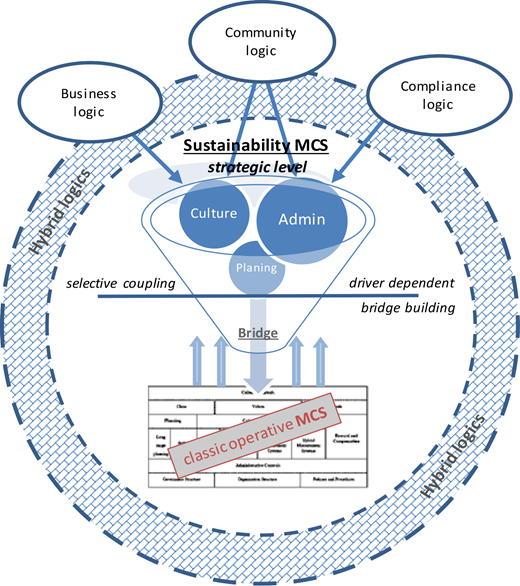
Figure 2 shows the governing hybrid logics in public EUC and their areas of influence regarding SD, presenting a conceptual frame inductively developed to help interpret results. Furthermore, no specific new logic was found. Neither was a special managerial logic for handling sustainability agendas identified. However, the three logics based on the study of Argento et al. (2016) were confirmed and do not remain in conflict, contradiction or competition to each other, but are rather lived as hybrid logics framing a hybridization of managerial thinking and acting. The frame of Figure 2 represents the institutional field of EUC outlined in the theoretical section (Greenwood et al., 2011; Argento et al., 2016).
Furthermore, Figure 2 shows only selectively implemented and applied strategic SMCS at the top-management level, leading to classic operative MCS on the operative level. This is mentioned by IP12, to give but one example: I audit all levels […] because it does not make sense if I have a sustainability policy above (on top-level) and no one knows what it is below (bottom-level). […] The problem is rather, that if you ask them [about sustainability goals] they have no idea where this is coming from. […] It is a matter of awareness. […] Nevertheless, goals are followed, like getting rid of coal (-energy production), that we have to increase wind and water (energy), that we have ISO-certifications. People (employees) know that, but do not know the [sustainability] direction. Top management uses mostly administrative and cultural controls in combination with planning controls for SM. These controls and managerial attitudes are driver-dependent. Based on the literature review for this study, drivers for SD could be confirmed and are listed in Table 5. However, SM and the implementation of SMCS also depend on the attitudes of sustainability representatives and actors in public EUC, who act as a communication bridge. These actors create awareness on the operative level. However, in evaluating SMCS, an iceberg effect was noted. While top management articulates sustainability agendas, strategies and management controls, the operative level is not aware of sustainability agendas and objectives and continues to use classic MCS.
Table 5 shows the coping strategies of the interviewed sustainability experts and bridging factors that are necessary for strategic sustainability agendas to be successfully implemented and executed. Sustainability managers, as well as internal and/or external auditors, have a critical position in implementing SMCS. Part of their duties is regarded as bridging strategic sustainability agendas on the top level of management to the operative level by creating awareness. Another part is seen as translating sustainability goals decided by top-level management into KPIs to be targeted by the workforce. Some EUC establishes a corporate responsibility department to formalize such bridging processes and to find reasonable KPIs for organizational SD. This is mentioned, for example, by IP10: yes, these goals are broken down for the first management level, below the board, which then make the goals for the second-level management. These are not always quantitative but rather qualitative goals. […] like […] data protection law, information security, cyber security, which interestingly also happen to be indicators of ONR (external Austrian norm quality certificate). […] these are defined agendas of the corporate responsibility department. These KPIs are, however, selectively coupled from the already selectively coupled SMCS, and tend to be governed by classic MCS, as indicated by IP10: goals are often differently formulized on an individual level. Internal and/or external auditors audit on the operative level and also ensure that awareness is created among the workforce regarding the sustainability aspect of these KPIs while auditing the achievement and results of (sustainability) goals.
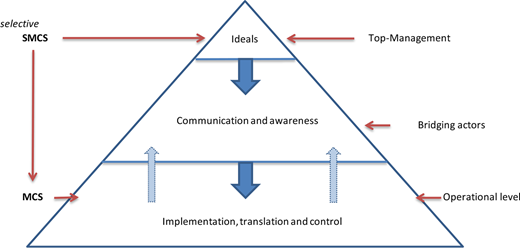
Figure 3 shows the hierarchical levels of SM applying selective SMCS that change to regular MCS on the operational level. Communication and the creation of awareness through bridging actors are keys for SD in public EUC.
5. Discussion
5.1 Institutional logics in Austrian electric utility companies
Sustainability agendas in Austrian EUC are governed by hybrid logics (RQ1) focusing on TBL issues. Contrary to Argento et al. (2016), as well as Herremans and Nazari (2016), the hybrid logics identified do not compete and are not in conflict with each other. Rather, they govern managerial attitudes differently, depending on the TBL-sustainability issues at stake, e.g. the community logic for social aspects, the business logic for economic aspects and the compliance logic for ecological aspects. Glover et al. (2014) argue that a dominant logic such as a business logic may suppress emerging logics, which cannot be supported by the present study. The social dimension was mentioned most frequently, followed by the ecological and the economical dimension, showing the emphasis on public management. However, it is misleading to assume that Austrian EUC focuses more on societal issues, when they clearly shift the focus away from regular economic importance and their many sensitive ecological issues. The assumption that Austrian state-owned EUC uses the community logic as the predominant logic, serving society as a steward, cannot be supported.
This study partly confirmed the drivers for SD found in the literature review. However, the lack of shared sustainability values between the board and top management as drivers for SM can be seen to indicate that a stewardship attitude, namely, to serve in the best interest of public needs and value, is not a common reality in the Austrian public electricity sector. Based on York et al. (2016), the different logics should not only be combined; rather, new frames (e.g. a sustainability business model (SBM)) and activities to integrate logics for sustainability agendas have to be built. In terms of York et al. (2016), Austrian EUC are still in the reframing phase of hybridization. A managerial discourse is necessary to fully integrate hybrid logics for sustainability agendas. With the integration of hybrid logic, “shared sustainability values” can be adopted as a driver for SD. Based on York et al. (2016), hybrid logics should be able to merge the inside-out perspective seeing the public EUC as a steward and the outside-in perspective reflecting stakeholder demands.
5.2 Applied sustainability management control systems in Austrian electric utility companies
Regarding RQ2 and despite the fact that recent strategic business focuses are on sustainability agendas and compliance with regulations and stakeholder demands, the implementation of SMCS is only selective. Malmi and Brown (2008) conclude that the contingency factors of an organization impact “MCS as a package.” The hierarchical structure of organizations such as EUC show that different organizational levels use different MCS, depending on the performed tasks and knowledge levels. The interrelation between the strategic and operative management level and their control system impact selectively applied SMCS.
Results of this study show that administrative-, cultural- and planning controls are found in combination and shape the applied SMCS sector-wide. As administrative controls are the most dominant sustainability controls, formal controls are also predominantly used for sustainability endeavors. This, however, goes against the suggestion of Lueg and Radlach (2016) and Herremans and Nazari (2016) to reduce formal controls and apply informal controls – ideally balanced – for sustainability objectives and SM development. Additionally, as hybrid logics in the Austrian EUC are in an early stage, the implementation of selective SMCS remains largely confined to the strategic top-management level. MCS are used at the operative level, but are only selectively coupled with SMCS. These findings match Maas et al.’s (2016) study and are similar to Sundin and Brown’s (2017) study, which found that MCS are used for multiple objectives, whereas SMCS are applied for single and isolated sustainability objectives only. This suggests a degree of decoupling from regular control practices, as shown by Cintra and Crater (2012). In fact, it is a selective coupling of strategic and operative SMCS. Pache and Santos (2013) called the alignment with selective management controls for SM a coping strategy, valuable for organizational legitimacy.
The results of the present study show, however, a lack of awareness of sustainability objectives at the operative level. Employees often do not link MCS and its KPIs to the overall sustainability objectives. George et al. (2016) and Battaglia et al. (2016) found that cognitive barriers, e.g. due to reduced economic performance, hinder full sustainability integration. This may be the case in Austrian EUC, as hybrid logics are not yet fully developed and integrated, hindering a full implementation of sustainability agendas. Hence, Austrian EUC are still in the reactive position in applying SMCS. The interviews showed that implemented cybernetic financial and non-financial KPIs at the operative level are framed as sustainability indicators at the top-management level. They are presented like new wine in old bottles.
The argument that variations of SMCS integration may be dysfunctional, based on four case studies by Ditillo and Lisi (2016), can be supported. However, Wijethilake et al. (2018) showed that the controlling use of MCS for sustainability agendas shows a negative relation to the operative performance as opposed to the enabling use of MCS. Sustainability control mechanisms used by top management therefore, show cognitive barriers in the case of EUC. Sustainability-KPIs are rephrased for the operational level to allow for institutionalized and standardized MCS to be applied. This suggests a gap in the MCS framework between strategic SMCS and operatively applied MCS, which should be investigated in further research.
5.3 Managerial coping strategies in Austrian electric utility companies
The innovative contribution of the study at hand lies in the analysis of SMCS combined with IL. Within the SMCS, the managerial coping strategies are examined. Being governed by emerging hybrid logics, sustainability managers in Austrian EUC use three coping strategies in applying SMCS (RQ3): creating awareness, using bridging actors and internal, as well as external auditors. First, awareness is an important factor for sustainability implementation and integration and is yet to be created at the operative level in the Austrian EUC. EUC who never mentioned “creation of awareness” as an important issue for implementing sustainability agendas and SMCS were identified with the weakest effort toward SD. To simply communicate sustainability goals to lower management and employees is obviously not sufficient. The operative level should be aware of the sustainability agendas and know its purpose to be capable of better sustainability performance. Sustainability has to be exemplified as a cultural value throughout the organization, creating awareness as emphasized in studies by Lueg and Radlach (2016), Maas et al. (2016) and Battaglia et al. (2016).
Second, matching the suggestions by Lueg and Radlach (2016), the success of implementing sustainability agendas rests on the mediating role of bridging actors who create awareness through communication. Evidently, this bridge turns both ways – top-down and bottom-up across the hierarchy levels – a connecting link in the governance structure of EUC. Hence, bridging actors should perform communicative balancing acts (which confirms Herremans and Nazari’s (2016) findings), by assisting to convey sustainability goals and transforming those into operative KPIs and vice versa, by creating awareness on the operative level. These bridging actors are often sustainability managers. Transformational leadership and affective commitment to change should be discussed, reflecting literature on public management that addresses organizational change management processes such as the adoption of SM and the implementation of SMCS, especially at the operative level, as indicated by Fernandez and Rainey (2006) and van der Voet (2015, 2016). Bridging actors support the process of communication and awareness creation throughout the hierarchical levels of integrating SMCS for SM, confirming the study by Jollands et al. (2015). This is supported by the study of Doeleman et al. (2012), who found that intensive management communication combined with MCS strengthens an organization during its transformation process. Nevertheless, based on Jollands et al. (2015), bridging actors need to gather collective support to fully integrate awareness and holistic SMCS. Top management in Austrian EUC is aware of the important mediating role of bridging actors. Nevertheless, there is more need for bridging actors in Austrian EUC to sufficiently translate SMCS and sustainability agendas to the operative level. The present study shows that the role of bridging actors in Austrian EUC is deficient and the operative level still lacks awareness.
Third, internal or even external auditors (for quality management certificates) support the role of bridging actors as they mediate between the managerial levels, demanding and ensuring sustainable quality performance. They help to communicate sustainability goals to the operational level and foster improved sustainability performance and SD through all levels of the organization. This study found that these three managerial coping strategies are governed by emerging hybrid logics and are used to implement SMCS for SD in Austrian EUC.
This study makes several contributions: first, to the best of our knowledge, it is the first empirical study to investigate SMCS for SD in the electricity sector identifying the use of selective SMCS. Second, the drivers for sustainability strategies, SM and the use of SMCS known from prior literature are partly confirmed. Third, the conceptual framework of Malmi and Brown was analyzed in light of IL, identifying emerging governing hybrid logics instead of competing logics (Argento et al., 2016) that influence the implementation of selective SMCS in EUC. The results of this study can also be relevant to EUC in other countries of the European Union inasmuch as they have comparable regulatory requirements in their energy markets. This empirical study provides extended knowledge on the theoretical paradigm of IL, which has, so far, only focused on two competing logics (Greenwood et al., 2011) instead of acknowledging the integration of multiple logics as hybrid logics. Fourth, the study shows that the entire electricity sector is still in a reframing phase. Fifth, it contributes the insight that strategic SMCS are only selectively coupled with operative MCS in the electricity sector. Finally, the identification of managerial coping strategies for sustainability transformation in EUC can be considered innovative. The importance of bridging actors as mediators between top-management and the operative level, as suggested by McPherson and Sauder (2013), was identified for coping with sustainability agendas. It shows the importance of informal controls for communication and raising awareness of sustainability agendas.
6. Conclusion, practical implications and future research
Emerging hybrid logics influence the implementation of selective SMCS. However, fully integrated hybrid logics are needed for a holistic implementation of SMCS. To increase and implement SD, managers in public EUC cope with two strategies in particular (which are not mutually exclusive), namely, on the one hand, they act as bridging actors for sustainability agendas between top management and the implementation of such objectives at the operative level. Therefore, SMCS are used. On the other hand, the bridging actors have to create awareness on the operative level about sustainability objectives. The position of bridging actors is thus, crucial to introducing awareness as a requirement for SD. However, the bridging actor should not simply wear a new nametag for an old position. To implement holistic SMCS, hybrid logics along with shared sustainability values have to be integrated into the organization. This will also increase awareness at the operative level. This allows integrating both “inside-out” and “outside-in” perspectives, as well as developing existing selective SMCS into holistic SMCS, filling new wine in new bottles.
Practical implications are especially relevant for EUC in countries that have undergone a transition because of market liberalization, growing competition and sustainability demands. Drawing on the insights of this study, EUC can better focus on integrating the hybridization of logics by integrating cultural sustainability control mechanisms, aligning implemented strategic and operative SMCS. Bridging actors can help to communicate between the different hierarchical levels. This should have a tremendous impact on the implementation of SD in EUC. They should realize the importance of cultural controls and the balance between formal and informal controls. For TBL-SD in EUC, it is furthermore necessary to recognize the importance of implementing SMCS and linking them throughout the organizational hierarchical levels rather than only communicating sustainability agendas with an “empty envelope.”
Although this study provides significant empirical and theoretical insights, including results for the Austrian electricity sector, the small number of expert interviews only allows limited generalization. Moreover, qualitative content analysis always has its limitations. Future research could investigate on the gap between strategic SMCS and operative MCS. Coping strategies for SM with respect to the role of bridging actors and auditors in EUC were identified. Furthermore, specific SBM for public EUC were identified, potentially facilitating better sustainability strategies and the implementation of SMCS. Such SBM might guide public EUC to adopt an inside-out approach as stewards to their respective society, serving the needs of their stakeholders.
The authors thank all the electric utilities who participated in our study. Despite the sensitivity of the research topic you have provided them with great insights.