The purpose of this study is to highlight the importance of advanced technologies in combating energy poverty.
The study focuses on a group of 99 developing countries spanning from 2000–2021. It applies different estimation methods such as OLS with fixed effects, Driscoll-Kraay with fixed effects and generalized least squares (GLS).
The main conclusion is that advanced technologies significantly reduce energy poverty in developing countries. Similarly, this effect remains robust by changing the estimation technique, including the generalized method of moments and Tobit models. Furthermore, the impact of advanced technologies on all alternative measures of energy poverty remains robust to the main result. By adding natural resources to the model, it is apparent that natural resources have an inverse impact on energy poverty. By taking into account the heterogeneity of income level, the effect is more important in low-income developing countries, followed by lower middle-income and higher middle-income countries. In high-income countries, there is an inverse impact of technological readiness on the consumption of energy. Policy suggestions are provided.
The paper complements the existing literature by examining how peak technology influences energy poverty in developing countries.
1. Introduction
Energy poverty is a major global challenge, with profound implications for the well-being and development of the most vulnerable populations. Moreover, rural and remote areas are particularly affected due to their distance from centralized electricity networks. Furthermore, energy poverty is a powerful driver of poverty and inequality, hampering the economic and human sustainable development of the poorest populations. Its eradication is therefore a priority issue for attaining sustainable development. Thus, in a context marked by an advance in globalization for many decades, many authors see technological innovation as a possible solution in the resolution of energy poverty (Djeunankan et al., 2024a, 2024b). Advanced technologies, which include information and communication technologies, artificial intelligence, biotechnology, renewable energies and sophisticated manufacturing, are at the forefront of modern technological development. Their adoption and adaptation can completely change the game for developing countries, allowing them to advance more quickly than they could have done with more conventional development methods. Hence, it is logical to posit that energy poverty responds to a number of factors, including advanced technologies.
Many studies in the literature on energy poverty have focused on the following topics: the determinants of energy poverty as critically discussed in Section 2, the relationship between financial inclusion and energy poverty reduction (Boutabba et al., 2020; Asongu et al., 2024), entrepreneurship and energy poverty (Cheng et al., 2021; Asongu and Odhiambo, 2024), energy poverty and economic development (Djeunankan et al., 2024a, 2024b) and leveraging on technology to address concerns related to energy poverty (Varo et al., 2022). However, within the remit of studies on the nexus between technology and energy poverty, research is sparse on how peak technology is linked to energy poverty, especially as it pertains to using the Advanced Technology Readiness Index as a measure of advanced technologies . Accordingly, the overall Advanced Technology Readiness Index as used in this study is generated through a principal component analysis (PCA) and thus, provides a more comprehensive perspective on how technology affect energy poverty, in the light of policy and scholarly technology readiness literature (UNCTAD, 2021; Bakouan and Sawadogo, 2024). At the crossroads of the abundant studies on the causes of energy povery and the ever-growing literature on the effects of advanced technologies, the objective of this article is to examine the impact of advanced technologies on energy poverty in developing countries. Therefore, this study has more than one interest. First, this work is of definite interest because it fills a gap in knowledge of studies in the field by examining, perhaps for the first time, the impact of advanced technologies in the broad sense on energy poverty. Second, this research has the particularity of taking into account alternative measures of advanced technologies on the one hand and energy poverty on the other hand. Taking into account these different dimensions makes it possible to grasp the complexity of the variables studied and to arrive at better economic policy recommendations. Third, this work takes into account possible transmission channels through which advanced technologies contribute to effectively reducing energy poverty.
The rest of the study is ordered in the ensuing way. Section 2 encompasses the relevant stylized facts, and related empirical literature while the data and methodology are presented in Section 3. The empirical results are shown in Section 4. The study concludes in Section 5 with policy recommendations and directions for future research.
2. Stylized facts, theoretical underpinnings and empirical literature
2.1 Stylized facts
2.1.1 Analysis of stylized facts on the evolution of energy consumption.
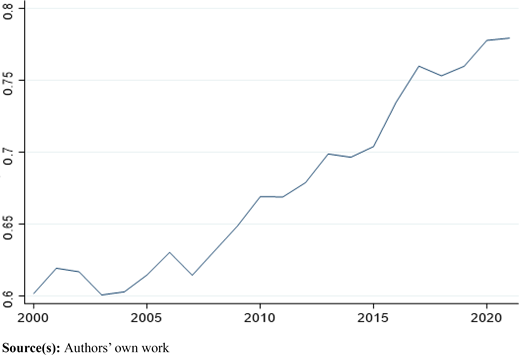
As apparent in Figure 1, in 2010, the World Bank report noted that around 1.2 billion people in developing countries had no access to electricity. This number fell to around 759 million in 2019, a drop of around 37% over the period (World Bank, 2021). This rise is due to increased investment in electricity networks. In 2010, some 2.8 billion people still used polluting fuels such as wood or charcoal for cooking. This number fell to around 2.6 billion in 2019. Despite this progress, energy poverty is constantly the principal problem in many developing countries, requiring ambitious investment and policies to ensure universal access to modern energy.
2.1.2 Joint evolution of the state of readiness for advanced technologies and level of production capacity in developing countries.
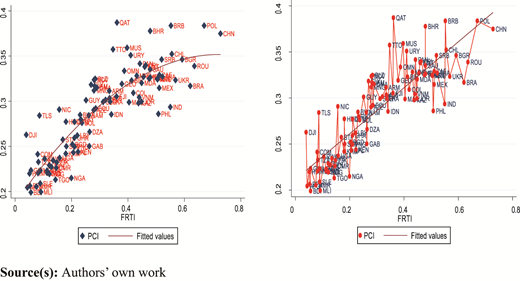
Figure 2, based on data from the World Bank and UNCTAD (2021), shows that in some countries, a low rate of energy poverty is a characteristic of a high level of advanced technology. This implies that countries with a high level of technological readiness and innovation also have a high energy capacity. On the other hand, in other countries, low energy capacity is correlated with a low level of high-tech readiness. Nevertheless, there are economies in which the level of advanced technology is high but the level of energy capacity is low.
2.2 Empirical literature
A vast literature questions the factors underlying energy poverty, as countries actively seek to mitigate the effects of energy poverty. Thus, a good number of determinants are identified in several empirical studies as the main drivers of energy poverty. Also, several factors in the literature have been highlighted to determine the link between advanced technologies and energy shortage. This part highlights a literature review of the determinants of energy poverty and the transmission mechanisms that explain how advanced technologies influence energy poverty. The corresponding literature is provided in three key strands, particularly as it pertains to:
economic determinants of energy poverty;
geographical and socio-cultural determinants of energy poverty; and
institutional drivers of energy poverty. The three main strands are extended chronologically as depicted above.
2.2.1 Economic determinants of energy poverty.
Economic determinants are discussed in terms of public expenditure, foreign direct investment (FDI), economic growth and financial development. First, with regard of public expenditure, logically, an increase in public expenditure can improve access to electricity. Guseh (1997) underlined the perspective that there is a non-linear relationship between the level of public expenditure and energy poverty. Indeed, public expenditure represents a policy aimed at redistributing income based on equity. The work of Lyubimov (2017) showed that the effect of public expenditure is not always effective in reducing income disparity in emerging markets. However, income inequality influences energy prosperity, which suggests that public tax expenditures can influence energy shortage through income disparity (Sarkodie and Adams, 2020).
Second, recent literature on FDI has largely focused on the impact of FDI on economic growth (Acquah and Ibrahim, 2020; Aluko et al., 2023), and also environmental degradation (Opoku and Boachie, 2020; Bokpin, 2017). Few studies give importance to access to electricity, including in the United Nations (UN) sustainable development goals (SDGs). However, the work of D’Amelio et al. (2016) showed us that multinationals have two main reasons that lead them to operate in developing countries, namely to:
address the lack of electricity infrastructure; and
improve access to electricity, thereby leading to the reduction of energy poverty.
Third, looking at economic growth, the level of economic performance of a country on the macroeconomic level via economic growth is a principal cause of energy poverty. Gafa and Egbendewe (2021) show in their empirical work that income increases household access to electricity and, therefore, plays an important role in reducing energy poverty. Similarly, many other authors have demonstrated that a rise in household income helps reduce energy shortages in emerging countries (Crentsil et al., 2019; Zhang et al., 2019). Indeed, households are more interested in their well-being, and therefore will opt for the use of clean energy as their income increases (Nguea et al., 2022).
Fourth, as concerns financial development, theoretical literature on financial development shows that it is a crucial element in the sphere of economic development (Blackburn et al., 2012). However, the impact of financial advancement on energy poverty can be observed on both the demand and supply sides (Capasso and Jappelli, 2013). On the demand side, the advancement of the monetary sector is an important feature in generating funds for residents to acquire and use electricity (Canh et al., 2020). Indeed, financial development helps increase household income, thus promoting the energy transformation process, toward clean energy and the effective utilization of biomass cooking and heating technology (Le et al., 2020).
On the energy supply side, financial development plays a critical role in developing the energy sector in developing countries (Hall et al., 2016). Similarly, financial development is a means to support electricity generation and transmission to provide electricity to citizens across large areas (Peng and Poudineh, 2017). In other words, financial development helps reduce energy poverty on both sides (Nguyen et al., 2021).
2.2.2 Geographical and socio-cultural determinants of energy poverty.
This section is discussed in three main strands, especially as it relates to natural resources, urbanization and education. These are extended chronologically as described. First, with respect to natural resources, the hypothesis of the resource endowment curse or abundance or paradox of plenty is discussed at length in the economic literature (Sachs and Warner, 1995). We speak of a resource curse if countries that originally possess abundant natural resources, also have economic, social and institutional underperformance (Sachs and Warner, 1995, 1999). The impact of natural resources on energy poverty is also observed through income disparity (Fum and Hodler, 2010). Indeed, an abundance of resources causes a rise in income disparity (Carmignani, 2013; Farzanegan and Krieger, 2019). This is explained by the fact that mining rents are often distributed inequitably such that only important political leaders benefit from them (Basedau and Lay, 2009). However, recent work by Nguyen and Nasir (2021) has shown that inequality reduces access to electricity in developing countries. Similarly, Sarkodie and Adams (2020) have found that in sub-Saharan Africa, income inequality increases poverty, thereby limiting access to electricity to households.
Second, with respect to urbanization, the relationship between urbanization and energy poverty is very ambiguous in the economic literature. Many studies on the effects of urbanization provide strong arguments that an increase in population density leads to local, national and global economic growth (Duranton, 2008). Similarly, studies on energy poverty in poor countries have shown that the level of energy poverty is relatively lower in urban areas than in rural areas (Adusah-Poku and Takeuchi, 2019).
Third, as concerns education, the percentage of literate generally determines the level of productivity of a country. The work of Apergis et al. (2022) analyzes the influence of education on electricity assessment, using a panel of 30 countries over a period from 2001 to 2016. The results revealed that an increase in education level also increases individuals access to electricity, which helps reduce energy poverty. Indeed, households that are not educated have less access to clean forms of energy, such as electricity, and mainly use traditional fuels such as wood and charcoal, which generates large quantities of emissions from carbon dioxide (CO2), which are very harmful to the environment. These results are also found in the work of Acharya and Sadath (2019) who, in their microeconomic study, examine the effect of education on energy poverty in China.
2.2.3 Institutional determinants of energy poverty.
The empirical literature on institutional factors that explain energy poverty is discussed from two main perspectives, namely: democracy and female parliamentarians. First, in terms of democracy, several theoretical studies showed that democratic regimes are far more promising to the creation of public goods than authoritarianism. Accordingly, when political authorities are held responsible by the masses through consistent and just elections, they are more motivated to provide public goods and services (Acemoglu and Robinson, 2006). The work of Ahlborg et al. (2015) indeed showed that democratic institutions improve access to electricity in emerging markets. Accordingly, in democratic systems, leaders are generally elected based on their ability to meet the population’s need for the creation of public services and goods just like electricity (Boräng and Grimes, 2021). Moreover, at the end of a democratic term, citizens examine whether political leaders have respected their commitment to renew their contract in the next election (Baskaran et al., 2015). Otherwise, they will simply be replaced (Schmitter and Karl, 1991; Acemoglu and Robinson, 2006).
Second, in relation to female parliamentarians, the literature on the effects of female parliamentarians on energy poverty is generally through the channel of corruption control (Swamy et al., 2001; Djeunankan et al., 2024a, 2024b). Indeed, theoretical analysis shows that female parliamentarians have a negative effect on energy poverty by improving the quality of institutions, through the reduction of corruption in a country (Hessami and da Fonseca, 2020). Unlike men, female politicians are socially known to be more honest and trustworthy (Barnes and Beaulieu, 2019). Thus, the probability of engaging in corrupt practices is lower among women than among male politicians (Eggers et al., 2018).
3. Data and methodology
3.1 Data, source and description of variables
The data for this study come from secondary sources, particularly for the measurement of advanced technologies by the United Nations Conference on Trade and Development (UNCTAD). In regards to the independent variables, we used data from the World Development Indicators (WDI) of the World Bank. These data cover the period 2000–2021. The start and end dates, as well as the number of countries are due to data availability. The frequency of the data is annual and the data set includes 99 countries with the list provided in the Appendix.
The main dependent variable of this study is energy poverty. Many attempts have been made to define energy poverty, but there is no universally accepted definition. From these different definitions, it emerges that energy shortages can be referred to as the scarcity of possibilities to access sufficient, cheap, dependable, safe, environmentally friendly and high-quality goods and services to assist both economic and human development (Djeunankan et al., 2024a, 2024b). In a bid to dissect the multidimensional concept of energy shortage, we must get inspiration from Nguyen and Nasir (2021) and we also consider three main indicators of energy shortage:
the percentage of the total population that has access to electricity (EPV1);
the percentage of the urban population that has access to electricity (EPV2); and
percentage of the rural population that has access to electricity (EPV3).
For the purpose of robustness, we use four other approaches of energy poverty:
the percentage of the total population that has access to hygienic cooking gas and technologies (EPV4);
the percentage of the urban population that has access to hygienic cooking gas and technologies (EPV5);
the percentage of the rural populace that has access to hygienic cooking gas and technologies (EPV6),
electricity consumption per capita (EPV7); and
energy consumption (EPV8).
Indeed, authors (Ochoa and Graizbord, 2016; Romero et al., 2018; Kyprianou et al., 2019) have used other measures of energy poverty for robustness purposes. They came to similar conclusions that these five alternative measures of energy poverty had a negative effect on economic development. The main independent variable is the index of the level of preparation for advanced technologies.
The study uses the Advanced Technology Readiness Index as a measure of advanced technologies for each country . The overall Advanced Technology Readiness Index is generated through principal component analysis (PCA). Thus, the value of the index close to 1 shows that a country is fully equipped for the implementation and utilization of advanced machineries. Conversely, the value of the index that is close to 0 shows that the country is not fully equipped. The Advanced Technology Readiness Index reflects the readiness for frontier technologies. As per UNCTAD (2021) and recently Bakouan and Sawadogo (2024), frontier technologies use digitization and connectivity. These technologies encompass artificial intelligence, the internet of things, blockchain, big data, 5G, 3D printing, robotics, gene editing, drones, nanotechnology and solar photovoltaic systems. The Advanced Technology Readiness Index is evaluated each year. It assesses countries based on their preparedness for advanced technologies using five key criteria: industrial activity, information and communication technology (ICT) deployment, research and development, skills and access to finance.
To account for variable omission bias, a number of factors are controlled for. Accordingly, income level, trade openness, financial development and income tax are considered as control variables. These variables are discussed in chronological order.
First, income is proxied with GDP per capita. This is a measure commonly used in the literature that captures the level of growth of the economy. Regarding its link with energy poverty, the literature suggests that its effect differs (Lawal et al., 2020). Specifically in developing countries, economic growth tends to lead to a sharp increase in energy consumption, especially for domestic uses and transport. However in developed countries, economic growth is accompanied by a smaller increase in consumption, thanks to technical progress and structural changes (Doğanalp et al., 2021). In other words, economic growth tends to increase energy demand, but the extent of this particular increase solely depends on the rate of advancement and the execution of appropriate energy policies and procedures.
Second, trade openness which is measured by the total of imports and exports as a proportion of GDP has complex effects on energy consumption, which can vary across countries and economic sectors. Indeed, trade openness generally stimulates economic growth, which tends to increase overall energy demand (Mignamissi and Nguekeng, 2022). Also, trade openness can change the structure of a country’s economy, favoring certain sectors that are more or less energy-intensive. Specifically, the rise of energy-intensive manufacturing sectors in some developing countries may have increased their energy consumption. From another angle, trade openness can stimulate innovation and energy efficiency gains in certain sectors (Oum, 2019). This can help reduce energy consumption per unit of production.
Third, financial development which is the deepening and sophistication of a country’s financial system, can have various effects on energy consumption. An advanced monetary system facilitates the availability of loans and funding, which can stimulate economic growth (Shahbaz et al., 2019). As mentioned earlier, economic growth usually comes with a higher increase in energy consumption. Also, a more developed financial system allows for better allocation of capital to the most productive sectors. This can promote the development of less energy-intensive sectors and stimulate technological innovation. Then, easier access to finance can permit families and businesses to capitalize on more effective energy devices (Kinda and Sawadogo, 2023). This can translate into a decrease in energy consumption per unit of production or consumption. Indeed, financial development can also facilitate investments in renewable energies, which tend to replace fossil fuels.
Fourth, with respect to income tax, tax pressure can have a significant impact on energy consumption in developing countries. Indeed, an increase in taxes on fuels and electricity tends to reduce energy consumption, by encouraging households and businesses to be more energy efficient or to turn to alternative energy sources (Nguyen et al., 2023). On the contrary, numerous emerging nations subsidize energy just to make it cheaper to afford. But these subsidies have a high tax cost and can encourage waste. Their reduction can therefore impact consumption. Conversely, tax incentives for investments in energy efficiency or renewable energy can stimulate the transition to more sustainable energy uses (Raghutla and Chittedi, 2022). At the household income level, a high tax pressure can reduce the purchasing power of households, forcing them to limit their basic energy consumption (heating, cooking, lighting). Thus, fiscal policy is an important lever to guide energy consumption behaviors, according to the sustainable development objectives of each country (Lee and Yuan, 2024).
3.2 Methodological strategy
The aim of this research paper is to examine the impact of advanced technology on energy poverty in developing countries. To do this, the corresponding equation (1) is as follows:
where, X represents the matrix of independent variables showcased above. Therefore, we use a multi-step econometric approach. Indeed, we employ some estimation approaches that are from the literature, such as the OLS with fixed effects, Driscoll-Kraay with fixed effects and generalized least squares (GLS) for the elementary estimator. A number of points are worth noting for these econometric approaches:
First, we apply the OLS absorbing multiple fixed effects developed by Correia (2016). This method enables the study to analyze the direct effect of the stability of the country on the size of the informal economy by absorbing several levels of fixed effects. This is a generalization of the fixed effects model; to allow multidirectional clustering of errors. Error clustering is a technique to control heteroscedasticity and autocorrelation. On the contrary, as regards models with traditional fixed effects, clustering is one-way, the model that will be analyzed is as follows in equation (2):
where D1 and D2 are representative of fixed effects in a panel but with different dimensions.
Second, it is important to note that while fixed effects account for country specific differences, and help correct this issue, working with panel data may lead to cross-sectional dependence. Therefore, to address the problem, we can apply the Discroll and Kraay (1980) estimation method. Third, both the OLS estimator with fixed effects and the Driscoll-Kraay with fixed effects assume a static correlation between the model’s distinct variables, but this is not usually true. The utilization of these two estimation methods does not always capture certain hidden differences between variables and it may still allow for endogeneity and autocorrelation which may arise when the observations in the model are not all completely independent.
In an attempt to solve the autocorrelation issue in our model, we use the GLS estimation first proposed by Aitken (1936). Undeniably, the GLS estimation ensures that there is a firm relationship between the residuals and this permits us to takeinto consideration the unknown parameters when analyzing the regression model. This approach is more effective than the OLS and the ordinary weighted least squares because considering connections of the residuals in their estimation methods can be statistically worthless. This estimator is used for the following model in equation (3):
where P_Energit corresponds to energy poverty in country i at period t. Techit is the level of cutting-edge technology in the country. Xit is the vector of the control variables: economic growth, trade openness, financial development and income taxes. ζit is the error term.
Fourth, fixed-effects OLS, fixed-effects Driscoll-Kraay and GLS help improve the model but they do not account for hidden differences in certain variables. This therefore suggests the possibility of heteroscedasticity and endogeneity in our model (Baum et al., 2003). Additionally, given the specification in equation (1), our model may be affected by Nickell (1981) bias and therefore, to address this bias, using the generalized method of momets (GMM) methods becomes pertinent as it helps to control the memory effect in the lagged dependent variable. As commonly discussed in the existing literature, there are two principal methods: the difference GMM and the system GMM (Roodman, 2009a; Arellano and Bond, 1991; Arellano and Bover, 1995; Blundell and Bond, 1998). Previously introduced by the pioneering work of Arellano and Bond (1991), the GMM estimator for dynamic panel data is designed to handle endogeneity problems effectively.
However, the GMM system estimator is accompanied with two key tests: the model overidentification test (i.e., the Hansen test), in which the soundness of the instruments applied is checked, in a way that they must be related to the variables but not to the error terms; and the Arellano and Bond (1991) error autocorrelation test, which checks for first order serial correlation of the residuals in level (AR1) and also checks the second-order serial correlation of the differenced errors (AR2). This is because in the GMM system estimator, the first differenced error terms are naturally correlated in the first order. Based on these criteria, the reliability of the GMM system estimator is based on two factors. One, the quality of the chosen instruments (Hansan test), and two, the absence of second-order autocorrelation in the differenced equation (AR2). The dynamic model to be estimated by this approach is as follows in equation (4):
where P_Energit-1 corresponds to the size of energy poverty delayed by one year. ηi is an unobserved country-specific effect, μXt is the time fixed effect.
4. Empirical results and discussion
4.1 Empirical results
Table 1 presents the basic results of OLS, Driscoll and Kraay and GLS estimations. Particularly, we showcased in Columns (1), (3) and (5) bivariate regressions. The results show that the estimated coefficients associated with advanced technologies has a direct relationship and are statistically significant at the 1% level. This argues that an increase in technological innovation improves energy consumption typically. A reasonable description for this result that energy is needed for the extraction of raw materials, processing and transport of finished products to distribution sites, which promotes technological innovation.
Concerning the independent variables, the results contained in Table 1 above suggest that all variables display a direct relationship and a significant impact on the energy capacity of developing economies regardless of the estimation technique used. In other words, GDP, trade openness, financial development and tax pressure all have a direct (positive) and significant impact on the demand for energy of the developing countries. This is consistent with the literature and the results obtained from several authors (Shahbaz et al., 2013; Rafindadi and Ozturk, 2016; Aydin and Turan, 2020). Specifically, the study argues that the rate of income is a lever for energy consumption (Amores et al., 2023). To this end, economic growth tends to lead to a sharp increase in energy consumption, especially for domestic uses and transport. This result is verified in developed countries where growth is sometimes accompanied by less increase in energy consumption, thanks to technical progress and structural changes (Doğanalp et al., 2021). In other words, economic growth tends to increase the demand for energy, but the extent of this increase depends on the level of development and the implementation of appropriate energy policies.
Regarding trade openness, Mignamissi and Nguekeng (2022) report that it generally stimulates economic growth, which tends to increase overall energy demand. It can therefore change the structure of a country’s economy, favoring more or less certain energy-intensive sectors. Specifically, the growth of energy-intensive manufacturing sectors in some developing countries may have increased their energy consumption (Oum, 2019).
Regarding financial development, the literature suggests that a developed financial system facilitates access to credit and investments, which can stimulate economic growth (Shahbaz et al., 2019). As stated previously, economic growth usually comes with an increase in energy consumption. Also, a more developed financial system allows for a better allocation of capital to the most productive sectors. This can promote the development of less energy-intensive sectors and stimulate technological innovation. Moreover, access to finance can permit businesses and families to capitalize more on effective energy devices (Kinda and Sawadogo, 2023). This can result in an increase in energy consumption per unit of production or consumption. Indeed, financial development can also facilitate investments in renewable energies, which tend to replace fossil fuels.
As for the tax burden, Nguyen et al. (2023) reported that a reduction in taxes on fuel and electricity tends to increase consumption, by encouraging households and businesses to be energy effective. On the contrary, numerous emerging nations fund energy to make it cheaper. But these subsidies have a high tax cost and can encourage waste. Their reduction can therefore impact consumption. Conversely, tax incentives for investments in energy efficiency or renewable energy can stimulate the transition to more sustainable energy uses (Raghutla and Chittedi, 2022). Thus, tax policy is an important lever for guiding energy consumption behaviors, according to each country’s sustainable development objectives (Lee and Yuan, 2024).
4.2 Controlling for endogeneity
One of the advantages of the fixed effects, Driscoll and Kraay and GLS is that they permit us to enhance our model but irrespective of this advantage, they fail to take into account the unnoticed heterogeneity of some of the variables, thereby leading to a belief that there is a presence of heteroscedasticity and perhaps, endogeneity in our model. Therefore, to these two issues mentioned above, we will use the GMM estimation technique instead of the OLS. However, the coefficients of the lagged endogenous variable are relatively huge at the 1% significance level as depicted in Table 2. This therefore argues that energy consumption has a solid tenacity over time, and also its former levels are robustly related with its present levels. More precisely, countries that enjoy higher energy consumption will tend to perform better economically in the future.
4.3 Robustness and sensitivity tests
Testing robustness and sensitivity are necessary to validate the validity of the results. Thus, the robustness analysis of this study is multiple. First, we use an alternative measure to control for endogeneity using the instrumental variables method and then we check whether our results remain robust using the alternative measure of energy consumption. Second, we test sensitivity by checking for regional effects.
4.3.1 Alternative approaches to control for endogeneity.
First and foremost, to confirm that our results are not subject to instrumentation issues, we use instrumental variables techniques as clearly shown in Table 3. Nevertheless, the problem of using the instrumental variables techniques is the search and discovery of an ideal exogenous and suitable instrument. According to Baum et al. (2012), an instrument can only be suitable if it is significantly related with the endogenous variable, and if it fulfills the orthogonality condition and also, if it is properly removed from the model so that its impact on the dependent variable can only be an indirect one. Consequently, the intricacies in implementing these conditions makes the search for an exogenous instrument challenging, even though the instrumental variables valuation approach of Lewbel (2012) provides an improved substitute when the search for an ideal exogenous instrument becomes difficult, just as it is in our case. This approach is crucial to discover structural parameters in regression models that have endogenous or weakly measured explanatory variables without conventional references. The heteroskedasticity-based instruments are integrated into the Lewbel 2SLS estimator. The remaining values of the auxiliary equation are multiplied by each external variable, adjusted to have a mean of zero, to create the internal instruments. This approach prevents the usual exclusion limitations and this is because the Lewbel’s 2SLS estimates without external instruments are very close to those obtained using external instruments (Lewbel, 2012). Many studies in the literature have applied this estimation techniques (Domguia et al., 2022). The key results remain consistent after addressing endogeneity with the Lewbel (2012) technique. The findings are also in line with IV-LIML and IV-GMM2S approaches.
4.3.2 Alternative measures of energy poverty.
The robustness analysis is crucial because it permits us to confirm if the observed association between advanced technology readiness and energy consumption is consistent when considering different types of energy consumption. Also, as mentioned above, the energy poverty literature measures is not unanimous. Therefore, several indicators could also be used to quantify energy poverty, such as the share of income spent on energy, the failure to sustain an adequate indoor temperature and the use of hazardous or inefficient energy sources. We examine how our results change using several measures of energy poverty, specifically, the proportion of the total urban and rural population that has access to clean cooking fuel and technologies (EPV4, EPV5 and EPV6, respectively). The variables, which replicate access to modernized energy services, quantify an essential dimension of energy poverty (Djeunankan et al., 2024a, 2024b).
Furthermore, recognizing that energy access does not essentially connote effective energy consumption, particularly in African countries where individuals, despite being connected to electricity grid, still experience power outages, we use electrical energy consumption to resolve this problem (EPV 7). Additionally, we also take into consideration a more universal measure of energy poverty, such as energy consumption (EPV8). The findings from this robustness analysis are presented in Table 4. These findings depict that the effect of advanced technologies on all other measures of energy poverty remains identical to the main result with a significance level of 1%. Based on the results, we could deduce that our results are robust to the utilization of other measures of energy poverty.
4.3.3 Control for the limited nature of the dependent variable.
Since the dependent variable is limited to a range of [0–100], therefore using the OLS or other related methods could be misleading . In fact, OLS results are also not suitable with limited dependent variables that have a huge number of variations. Sometimes, a dependent variable may be continuous within certain intervals but can also take specific fixed values with a certain probability. Models for restricted dependent variables are designed to handle cases where data is either cut off (truncated) or partially observed (censored samples).
To correct this issue, some specialized estimators are required. In this study, we use the Tobit model, censored poisson and truncated negative binomial estimators. These models are known as count models because they measure how often an event occurs. More specifically, they also account for the issues of data limitations due to censoring and truncation. It is pertinent to note that truncation happens when some data points that should be included are completely left out. On the contrary, censoring occurs when all data points are included but some information about them is missing. In essence, any of these situations could be applicable to the extreme values (0 and 100) in measuring energy poverty. The results in Table 5 remain consistent with the earlier findings.
4.3.4 Sensitivity analysis by adding control variables.
Inspired by the study conducted by Ongo Nkoa et al. (2023), we proceed to add other control variables. Indeed, the literature on the determinants of energy consumption is widely documented by studies on development economics. The determinants usually highlighted are relevant to each other. Therefore, to limit the potential biases linked to the arbitrary choice of control variables as well as the omission of certain variables relevant to the explanation of energy consumption, we resort to the addition of three control variables. More specifically, these are natural resource rents and their sub-dimensions, namely oil, mineral, gas, coal and forest rents. All the results are contained in Table 6. Table 6 shows firstly that the effect of natural resources measured by total natural resource rent on energy poverty is negative and significant at the 1% significance level. This result is the same when we take into account all four sub-dimensions of rents which corroborates our main result on the one hand and confirms the existence of the natural resource curse on the other hand.
4.3.5 Sensitivity analysis: heterogeneity by income level.
We also aim to confirm if the initial results of the estimation vary according to the income level of developing countries. To do this, we carry out an estimation by subgroup. The results are reported in Table 7 below. The analysis of Table 7 shows us that advanced technologies are positively associated with the energy consumption index in three (3) sub-regions of developing countries. In addition, the effect is greater in low-income developing countries, this is justified by the fact that these are countries with a low industrial level and lower existing levels of electricity access and thus, a higher propensity to benefit from advanced technologies for electricity access. Low income countries are followed by lower middle-income and higher middle income countries. In countries with high income, a negative effect of technological preparation on energy consumption is apparent.
5. Conclusion, implications and future research directions
5.1 Conclusion
This study analyzes the effect of advanced technologies on energy poverty in a panel of 99 developing countries between 2000 and 2021. It mobilizes for the study some estimation methods, such as; OLS with fixed effects, Driscoll-Kraay with fixed effects and GLS. The main conclusion is that advanced technologies significantly reduce energy poverty in developing countries. Similarly, this effect remains robust to changing estimation approaches, such as the system GMM and Tobit estimation techniques. In addition, we find that the effect of advanced technologies on all alternative measures of energy poverty remains consistent with the main result. Based on these findings, we can conclusively say that our results are strong to the usage of other methods of energy poverty.
Moreover, by adding natural resources measured by the sum of natural resource rents into the model, it is apparent that natural resources have an inverse impact on energy poverty. This result is robust when taking into account all four sub-dimensions of rents, which corroborates our main result on the one hand and confirms the existence of the natural resource curse on the other hand. Taking into consideration the heterogeneity of the countries per income level, we find that the effect of advanced technology on energy consumption is greatest in low-income developing countries. Low income countries are followed by countries with lower middle-income and upper middle-income. However, in countries with high income, technological readiness has a negative effect on energy consumption.
5.2 Policy implications
The findings from the study argue that governments in emerging countries should fund and capitalize on research and development (R&D) to foster technological innovation. This could include subsidies for technology companies and training programs to build local skills. Policies should encourage the implementation of developed-innovative technologies in the energy sector. This may involve tax incentives for companies that capitalize on sustainable and innovative energy outcomes. Given that natural resources have an inverse impact on energy consumption, it is crucial to put in place policies that promote sustainable resource management. This includes strictly regulating the misuse of natural resources to prevent the resource curse.
In addition, developing countries should attract FDI in the technology sector. FDI-friendly policies can stimulate job creation and improve energy infrastructure. Adopting advanced technologies can improve the competitiveness of developing countries in the global market by reducing energy costs and increasing the efficiency of industrial processes. By integrating advanced technologies, countries can minimize their reliance on traditional energy sources, which can cause a decline in energy costs for consumers and producers. The findings also highlight the need to address income inequality. Policies should ensure that the benefits of advanced technologies are accessible to all segments of the population, particularly in low-income countries.
5.3 Limitations and future research directions
The results of the present study allow space for future research, in particular to understand whether the established findings withstand empirical validity in country-specific contexts. In considering this suggested direction for future research, robust country-specific empirical strategies should be critically engaged. Furthermore, given the present study’s focus on energy poverty, revisiting the empirical analysis in the context of other United Nations (UN) Sustainable Development Goals (SDGs) is an interesting future research direction including assessing the effect of advanced technology on poverty, inequality and climate vulnerability.
The authors are indebted to the editor and reviewers for constructive comments.
Declaration.
Authors contribution: P.P.A contributed in the writing of the manuscript. S.A.A contributed in the writing of the manuscript. T.E.Z contributed in the editing and proofreading of the manuscript. T.E.Z revised the manuscript. All authors approved the final version of the manuscript.
Conflict of interest: No potential conflicts of interest are reported by the authors.
Ethical conduct: Not applicable because human beings and animals are not involved in the study.
Data availability statements: Data is available upon request.