This study examines the mediating role of upstream supply chain integration (internal, supplier process, and supplier product integration) in the relationship between innovation orientation and innovation performance under different levels of environmental dynamism.
This study utilized a survey questionnaire to collect data from 482 manufacturing firms in Vietnam. The proposed hypotheses were tested using Partial Least Squares Structural Equation Modeling (PLS-SEM).
The results advance the body of knowledge by demonstrating that supply chain integration is a crucial mechanism for translating innovation orientation into innovation performance. Environmental dynamism plays a crucial role in enhancing the indirect connection between supplier product integration and innovation performance.
Managers should adopt a differentiated approach to supply chain integration, tailoring integration strategies to the degree of environmental dynamism. Internal integration should be prioritized for consistent innovation performance, whereas supplier product integration becomes increasingly valuable under highly dynamic environments.
This study advances the supply chain literature by disentangling the distinct roles of upstream supply chain integration dimensions and empirically validating their effects in an emerging market context. This reveals how supplier product integration creates value under environmental dynamism, offering firms actionable strategies to enhance innovation through the supply chain.
1. Introduction
Manufacturing firms universally accept the imperative to innovate; however, most struggle with execution, failing to translate strategy and investment into realized innovation performance amid rapid technological and competitive changes (Asare et al., 2023; Hammad et al., 2025; Lii and Kuo, 2016). Researchers argue that innovation activities, such as product development, process improvement, and business model transformation, require firms to leverage not only internal creativity but also effective coordination with upstream supply chain partners (Azadegan et al., 2008; Guzmám and Castro, 2023; Lii and Kuo, 2016; Uwamahoro et al., 2025). Strategic integration with suppliers is crucial for enhancing firm performance in Industry 4.0, given the rapid pace of supply chain digitalization (Hammad et al., 2025; Muzamil et al., 2025) and AI advancements (Kumar et al., 2025).
Previous studies have revealed an inconsistent and often indirect relationship between innovation orientation and innovation performance, with outcomes highly dependent on the context (Farooq et al., 2021; Wilson et al., 2023; Zhang and Duan, 2010). Salomo et al. (2008) found that different dimensions of innovation orientation are positively associated with innovativeness in European and North American manufacturing firms. Similarly, Zhang and Duan (2010) reported a positive effect of innovation orientation on new product performance using data from 227 Chinese manufacturing firms. More recent studies suggest that the relationship between innovation orientation and performance is complex and context-dependent (Kocak et al., 2017; Stock and Zacharias, 2011; Wilson et al., 2023). For instance, Stock and Zacharias (2011) showed that different innovation orientation patterns lead to different performance results. Most recently, Wilson et al. (2023), drawing on data from 1,265 companies across nine countries, confirmed the performance effects of innovation orientation in a global context, although these effects varied by country.
To bridge the gap between innovation orientation and performance, researchers have argued that supply chain integration (SCI) is the crucial mechanism that transforms innovation orientation into firm performance (Asare et al., 2023; Guzmám and Castro, 2023; Jafari et al., 2022; Lii and Kuo, 2016; Uwamahoro et al., 2025), particularly in terms of innovation performance (Alyasein et al., 2025; Hu et al., 2024; Kumar et al., 2020). SCI refers to the strategic alignment of processes, information flows, and decision-making across internal functions and external partners (suppliers and customers) to enable seamless value delivery (Flynn et al., 2010; Kim and Schoenherr, 2018). In an early conceptual study, Azadegan et al. (2008) proposed that, in modern supply chains, manufacturers increasingly rely on their suppliers to foster innovation and sustain the competitive advantage of the entire supply chain. Lii and Kuo (2016) later validated that two dimensions of supply chain integration (internal integration and supplier integration) mediate the positive effect of innovation orientation on business performance. Similarly, Kumar et al. (2020) used data from UK manufacturing firms and found that SCI fully mediates the relationship between learning orientation and innovation performance.
However, recent empirical findings challenge the established link between supplier integration and innovation performance. For instance, in the context of green innovation, Wong et al. (2020) found that supplier integration had no significant effect on either green process or green product innovation. Recently, in a broader product innovation context, Hu et al. (2024) reported that supplier integration does not affect firm innovation performance, whether it is exploitative or explorative. These inconsistent findings highlight a critical gap in understanding how innovation orientation translates into innovation performance through supplier integration (Hu et al., 2024; Wong et al., 2020). The central question is why innovation orientation alone may not directly lead to improved innovation performance and what mechanisms, such as supplier integration, facilitate this transformation (Asare et al., 2023). Nevertheless, conceptual and empirical studies that jointly examine innovation orientation and supplier integration remain scarce (Asare et al., 2023; Hu et al., 2024; Jafari et al., 2022; Wong et al., 2020).
To address this theoretical gap, this study argues that three distinct dimensions of upstream SCI – supplier process integration, supplier product integration, and internal integration – serve as crucial mechanisms that translate innovation orientation into innovation performance. This focus is critical because prior research has often oversimplified supplier integration as a unidimensional construct, thereby overlooking the distinct roles of these specific upstream SCI dimensions (Asare et al., 2023; Kim and Schoenherr, 2018; Lii and Kuo, 2016). The central thesis is that by leveraging these forms of supplier collaboration, firms effectively access external expertise, new technologies, and greater operational efficiency to realize their innovation potential (Azadegan et al., 2008; Flynn et al., 2010). However, this process is not immune to the context. This study proposes that environmental dynamism, defined as the rate and unpredictability of change in the external environment (Dess and Beard, 1984; Rosenzweig, 2009), moderates this mediating relationship. By investigating this moderating effect within Vietnam's rapidly evolving landscape, this study delineates the critical boundary conditions for the successful execution of innovation orientation in emerging economies, where such dynamism creates unique challenges and opportunities (Pérez-Luño et al., 2019; Wiengarten et al., 2014).
Drawing on dynamic capability theory (Teece et al., 1997) and the relational view (Dyer and Singh, 1998), this study addresses the following key research questions:
How do internal integration, supplier process integration, and supplier product integration function as distinct mediating mechanisms that translate innovation orientation into innovation performance?;
To what extent does environmental dynamism differentially moderate the mediating roles of internal, supplier process, and supplier product integration in the innovation orientation – innovation performance relationship?
By addressing these research questions, this study contributes to the supply chain management literature in two ways: first, by unpacking the unique mediating roles of distinct upstream SCI dimensions (internal, supplier process, and supplier product integration) between innovation orientation and performance (e.g. Hu et al., 2024; Lii and Kuo, 2016); and second, by establishing how environmental dynamism acts as a critical boundary condition that alters these mediating effects (e.g. Farooq et al., 2021; Wilson et al., 2023). For managers, this study offers a straightforward prescription: to effectively translate innovation orientation into tangible performance outcomes, firms should prioritize investments in both supplier product and process integration. Crucially, firms must also adapt this focus, leaning more on product integration to navigate dynamic markets and process integration to maximize gains in stable environments.
The remainder of this paper is organized as follows: Section 2 presents the theoretical background, conceptual definition, and hypothesis development. Section 3 outlines the research methods. Section 4 presents the results. Section 5 discusses the findings, theoretical contributions, and practical implications. The conclusion is presented in Section 6.
2. Theoretical background and hypothesis development
2.1 Conceptual definition
2.1.1 Innovation orientation
Innovation orientation is conceptualized as a firm's proactive stance toward creativity, experimentation, and market adaptation (Manu, 1992; Siguaw et al., 2006). Its core conceptual attributes include: (1) strategic proactivity, anticipating market shifts and investing in future opportunities; (2) organizational learning, continuous knowledge renewal, and capability development; and (3) collaborative agility, orchestrating cross-functional and inter-organizational innovation processes (Asare et al., 2023). In supply chains, innovation orientation arguably drives firms to integrate external knowledge, collaborate with partners, and align their internal capabilities with dynamic market demands (Cheng et al., 2014; Goldberg and Schiele, 2018).
2.1.2 Supply chain integration
SCI is defined as the strategic alignment of processes, information flows, and decision-making across internal functions and external partners (suppliers and customers) to enable seamless value delivery (Flynn et al., 2010; Kim and Schoenherr, 2018). This study focuses on the upstream dimensions of SCI, specifically internal integration, supplier process integration, and supplier product integration (Goldberg and Schiele, 2018)).
First, internal integration refers to the cross-functional alignment of production, logistics, and R&D to eliminate redundancies (Flynn et al., 2010). It encompasses seamless information flows, alignment of departmental objectives, and efficient resource deployment throughout the organization (Flynn et al., 2010). Second, supplier process integration refers to joint planning and real-time information sharing, such as inventory levels and demand forecasts, to enhance responsiveness (Kim and Schoenherr, 2018). This integration facilitates sequential planning and scheduling, enables real-time information sharing, minimizes inventory through accurate supplier data (Zimmermann et al., 2016), and improves product quality while reducing errors through joint planning and information exchange (Petersen et al., 2005). Third, supplier product integration refers to collaborative design and co-development with suppliers to accelerate innovation (Koufteros et al., 2005). This integration promotes open communication and knowledge exchange, enabling firms to leverage supplier expertise and insights (Kim and Schoenherr, 2018).
2.1.3 Innovation performance
Innovation performance is commonly defined as the measurable outcome of a firm's ability to transform innovative inputs, such as R&D investments, creative ideas, and technological advancements into competitive outputs (Bagherzadeh et al., 2020; Damanpour, 1991). Its core conceptual attributes include: (1) novelty (degree of differentiation in products/processes), (2) market impact (customer adoption and revenue growth), and (3) operational efficiency (cost reduction and speed-to-market) (Bagherzadeh et al., 2020; Damanpour, 1991).
2.1.4 Environmental dynamism
Environmental dynamism is defined as the rate and unpredictability of change in a firm's external environment, which increases decision-making uncertainty (Dess and Beard, 1984; Rosenzweig, 2009). In the supply chain context, environmental dynamism is particularly salient because it amplifies the need for agile resource allocation, real-time information processing, and resilient network design (Zhang et al., 2020).
2.2 Hypothesis development
2.2.1 Innovation orientation and innovation performance: internal integration as a mediator
The relationship between innovation orientation, internal integration, and innovation performance can be understood through the lens of Dynamic Capability Theory (DCT) (Teece et al., 1997). From the DCT perspective, a firm's innovation orientation reflects its dynamic capability to sense and seize opportunities, whereas internal integration operationalizes these capabilities by facilitating cross-functional coordination, knowledge recombination, and rapid resource reconfiguration (Teece et al., 1997). Furthermore, dynamic capability theory explains why innovation orientation requires internal integration to translate strategic intent into actions (Teece et al., 1997).
Innovation orientation fosters a culture of continuous improvement, experimentation, and proactive opportunity seeking, which inherently demands strong internal integration (Siguaw et al., 2006). Thus, internal integration acts as the operational mechanism through which innovation-oriented firms leverage technology to enhance performance (Koufteros et al., 2005). For instance, cross-functional collaboration between R&D, production, marketing, and logistics requires breaking down silos and establishing robust communication channels (Azadegan et al., 2008).
Moreover, innovation-oriented firms prioritize agility to adapt to market shifts and competitive pressures (Bagherzadeh et al., 2020). Internal integration enables agility by fostering cross-functional coordination, allowing rapid resource reallocation and decision-making (Koufteros et al., 2005; Wong et al., 2011). It enhances information flow and collaborative problem-solving, enabling market intelligence, technical expertise, and customer insights to be shared across departments (Flynn et al., 2010; Koufteros et al., 2005). For example, cross-functional teams use real-time feedback to quickly pivot and refine their innovations, directly boosting performance. Simultaneously, this process reduces redundancies, accelerates time-to-market, and optimizes resource use (Azadegan et al., 2008; Goldberg and Schiele, 2018). Thus, the following hypothesis is proposed:
Internal integration mediates the indirect positive effect of innovation orientation on innovation performance.
2.2.2 Supplier process integration as a mediator between the innovation orientation and innovation performance relationship
In this study, the Relational View (RV) (Dyer and Singh, 1998) is employed to explain how innovation orientation improves performance by leveraging supplier integration in both processes and products. RV posits that inter-organizational processes, such as supplier integration, create competitive advantages by leveraging relationship-specific assets, knowledge sharing, and complementary capabilities (Dyer and Singh, 1998). To realize the benefits of close supplier relationships, firms integrate their processes with key suppliers. This is achieved by aligning information systems, engaging in joint planning, and synchronizing workflows (Azadegan et al., 2008; Faems et al., 2005). Furthermore, the effectiveness of this integration in driving innovation is strengthened by governance mechanisms, including formal contracts and relational trust (Azadegan et al., 2008; Goldberg and Schiele, 2018).
Although the literature increasingly debates how firms translate innovation orientation into superior performance, scholars have highlighted supplier integration as a critical yet contested mechanism (Farooq et al., 2021; Lii and Kuo, 2016). On the one hand, studies suggest that innovation orientation alone may not lead to performance gains unless firms actively involve suppliers in collaborative innovation processes (Bagherzadeh et al., 2020). Supplier process integration addresses this challenge by institutionalizing collaborative routines, such as joint planning, synchronized workflows, and co-specialized investments, which transform innovation-oriented behaviors into concrete outcomes (Wong et al., 2011). Specifically, supplier integration facilitates three mediation mechanisms. First, it accelerates knowledge transfer across organizational boundaries, reducing development cycle times and transaction costs (Chan et al., 2016). Second, it creates operational efficiencies that allow firms to reallocate resources toward exploratory innovation (Cheng et al., 2014). Third, it fosters joint problem-solving and iterative prototyping, which enhances product quality and shortens time-to-market (Goldberg and Schiele, 2018; Zimmermann et al., 2016). These mechanisms suggest that supplier process integration is not merely a support activity but a strategic mediator that operationalizes innovation orientation, thereby resolving the debate on whether innovation orientation directly or indirectly drives innovation performance. Thus, the following hypothesis is proposed:
Supplier process integration mediates the indirect positive effect of innovation orientation on innovation performance.
2.2.3 Innovation orientation and innovation performance: supplier product integration as a mediator
Researchers are increasingly debating whether innovation orientation alone drives performance or whether firms must strategically integrate suppliers into product development to unlock its full potential (Hermawan et al., 2024; Hu et al., 2024; Kumar et al., 2020). While some studies emphasize internal innovation capabilities, others argue that performance gains arise primarily when suppliers' technical expertise and manufacturing know-how are embedded early in the innovation process (Kim and Schoenherr, 2018; Petersen et al., 2005). Supplier product integration mediates this relationship by enabling three mechanisms. First, early supplier involvement enhances design feasibility and manufacturability, reduces development costs, and accelerates time-to-market (Chan et al., 2016). Second, collaborative design facilitates the transfer of knowledge about emerging technologies and materials, fostering innovative component development in technology-intensive industries (Asare et al., 2023; Goldberg and Schiele, 2018). Third, joint development helps firms build unique shared assets that create competitive barriers while simultaneously mitigating innovation risks by providing stable access to critical inputs (Bagherzadeh et al., 2020). Thus, supplier product integration acts as a strategic mediator that operationalizes innovation orientation into superior innovation performance by embedding external expertise and resources directly into product development processes. Therefore, this study hypothesizes that:
Supplier product integration mediates the indirect positive effect of innovation orientation on innovation performance.
2.2.4 Environmental dynamism as a moderator
Drawing from Contingency Theory (CT), which posits that firms must adapt their integration mechanisms to external uncertainties to enhance their performance (Donaldson, 2001). In highly dynamic environments characterized by rapid and unpredictable changes (Dess and Beard, 1984; Yu et al., 2022), firms experience heightened pressure to innovate as existing products and processes risk swift obsolescence (Pérez-Luño et al., 2019; Ranjan, 2024). Although innovation orientation motivates firms to pursue novel opportunities, the successful execution of innovation hinges on effective SCI (Flynn et al., 2010; Wong et al., 2011). This study argues that environmental dynamism strengthens the indirect effect of innovation orientation on performance by necessitating robust supply chain integration (SCI) to mitigate uncertainty and leverage innovation efforts effectively.
First, internal integration, the alignment of cross-functional processes, information sharing, and collaborative decision-making are critical in such dynamic contexts (Flynn et al., 2010; Wong et al., 2011). Internal integration enables firms to respond swiftly to changes by efficiently leveraging their existing knowledge and resources (Yu et al., 2022). Under high environmental dynamism, firms must rapidly sense and respond to external changes, and the alignment between external demands and internal capabilities enhances innovation performance by fostering learning and adaptability (Pérez-Luño et al., 2019). More importantly, environmental dynamism amplifies the indirect effect of innovation orientation on innovation performance through internal integration, as greater agility and coordination are essential for success (Chan et al., 2016; Pérez-Luño et al., 2019).
Second, under high environmental dynamism, supplier process integration becomes critical for sustaining innovation efforts, as closer synchronization with suppliers ensures that innovation activities are executed efficiently (Koufteros et al., 2005). Firms with a strong innovation orientation are more likely to engage suppliers in these processes, enhancing responsiveness through knowledge sharing, resource access, and collaborative problem-solving (Lii and Kuo, 2016). More importantly, environmental dynamism amplifies the indirect effect of innovation orientation on innovation performance via supplier process integration, as greater flexibility and rapid adaptation are required to succeed in turbulent environments (Lii and Kuo, 2016; Ranjan, 2024; Zhang et al., 2020).
Third, supplier product integration is essential for managing innovation risks and accelerating product development in the face of high environmental dynamism. CT posits that firms must closely align their product design processes with their suppliers to leverage external expertise and mitigate uncertainties in turbulent contexts (Rosenzweig, 2009). By tightly coupling with suppliers, innovation-oriented firms can co-develop solutions, adapt rapidly to new technologies and customer needs, and shorten their innovation cycles (Du et al., 2018; Hammad et al., 2025; Muzamil et al., 2025). Notably, environmental dynamism strengthens the indirect effect of innovation orientation on innovation performance through supplier product integration as the need for flexibility, speed, and external knowledge intensifies (Ranjan, 2024). Therefore, the following hypothesis is proposed:
Environmental dynamism positively moderates the indirect relationship between innovation orientation and innovation performance via (a) internal integration, (b) supplier process integration, and (c) supplier product integration.
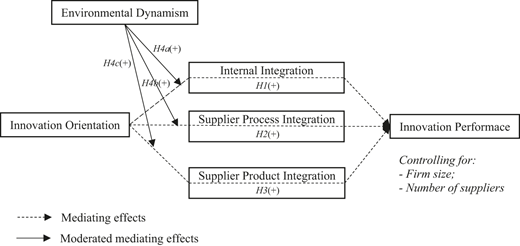
All hypotheses are illustrated in the conceptual model in Figure 1. The conceptual model highlights the mediating role of three SCI dimensions - internal (H1), supplier process (H2), and supplier product (H3) integration - in translating innovation orientation into performance, while also revealing how environmental dynamism moderates these specific indirect effects (H4a, H4b, and H4c).
3. Methods
3.1 Sampling and data collection
This study focuses on manufacturing and retail firms in Vietnam, an emerging market marked by trade shifts, increasing foreign direct investment (FDI), and evolving consumer demands. This dynamic context is particularly pertinent to this study, as both sectors are under immense pressure to embrace digital transformation (e.g. Industry 4.0 and e-commerce) to remain competitive (Akbari et al., 2023).
This study adopts snowball sampling to gather data from Vietnamese manufacturing and retail firms, leveraging professional networks to access supply chain and innovation managers, who are typically hard-to-reach due to organizational hierarchies and time constraints (Marcus et al., 2017). This approach is arguably suitable for collecting data from informants who are typically difficult to reach in emerging markets because of the limited availability of national firm information and databases. Despite its benefits, the key limitation of snowball sampling is that chain referrals within the homogenous social networks of researchers can lead to a non-diverse and less representative sample.
The online questionnaire (Google Form) was divided into two sections to collect participant/firm demographics and measure the study's constructs. All measurement items were translated into Vietnamese using a back-translation approach to ensure semantic equivalence to the original English items (Brislin, 1970).
To recruit participants, the study employed a multichannel approach to search for qualified professionals (informants) using a typical snowball sampling procedure (Marcus et al., 2017) that included academic networks, professional communities, and LinkedIn. First, seed respondents were identified through academic networks, industry communities (e.g. Vietnam Supply Chain Community), and LinkedIn outreach to supply chain and innovation managers in Vietnamese manufacturing and retail firms. They were then asked to refer to other qualified professionals by forwarding the questionnaire invitation. To promote engagement and response rates, confidentiality was assured, and respondents could opt to receive a summary of research findings (Clottey and Grawe, 2014). A total of 496 responses were received during the data collection period from September 2024 to January 2025. The final usable sample consisted of 482 firms after discarding several incomplete and “straight-line” responses. The demographic data are shown in Table 1.
3.2 Non-respose bias and common method bias
To mitigate the risk of non-response bias often associated with survey research (Wagner and Kemmerling, 2010), this study applied several strategies to encourage participation, including persuasive cover letters, follow-up reminders, and assurances of anonymity (Clottey and Grawe, 2014). Non-response bias was formally tested by comparing early respondents (the first 20%) with late respondents (the last 20%), who are often treated as proxies for non-respondents. The t-tests revealed no significant differences; thus, non-response bias is unlikely to affect the results.
To address potential Common Method Bias, both procedural and statistical techniques were implemented. Procedural mitigation techniques included ensuring anonymity by removing personally identifiable information and informing participants about the study's purpose in advance (Podsakoff et al., 2003). Additionally, a full collinearity test was conducted by introducing a randomly generated variable into the model (Kock and Lynn, 2012). In Table 2, all inner variance inflation factor (VIF) values were below the 3.3 threshold, suggesting that CMB does not pose a substantive threat to this study.
3.3 Measures
The measurement items in this study were adapted from established and validated scales for the supply chain context in previous studies (Cheng et al., 2014; Flynn et al., 2010; Kim and Schoenherr, 2018; Lii and Kuo, 2016; Yu et al., 2022). Each item was assessed using a 5-point Likert scale ranging from 1 (totally disagree) to 5 (totally agree). The following sections provide a detailed description of the construct measurements.
Innovation orientation. This reflective construct was measured using six questions adapted from Lii and Kuo (2016). The sample question items are as follows: IO1, Our company pays close attention to innovation; IO2, Our company emphasizes the need for innovation for development; IO3, Our company promotes the need for development and utilization of new resources.
Supply chain integration. This construct is conceptualized and operationalized as a multi-dimensional construct, particularly focusing on internal and upstream SCI, which encompasses internal integration, supplier process integration, and supplier product integration (Kim and Schoenherr, 2018).
Internal integration. This reflective construct was measured using six questions adapted from Flynn et al. (2010) and Kim and Schoenherr (2018). The sample question items are as follows: II1, Data integration among internal functions; II2, Enterprise application integration among internal functions; and II3, Integrative inventory management.
Supplier process integration. This reflective construct was measured using four questions adapted from Kim and Schoenherr (2018). The sample question items are as follows: SPrI1, Both parties share market - and customer - related information; SPrI2, Both parties share inventory information; and SPrI3, Both parties share production plans.
Supplier product integration. This reflective construct is measured using four questions adapted from Kim and Schoenherr (2018). The sample question items are as follows: SPdI1, Both parties jointly develop new products; SPdI2, Our company asks the key supplier to recommend technology updates for their products; and SPdI3, Our company involves the key supplier in problem-solving during our new product development.
Environmental Dynamism. This reflective construct was measured using five questions adapted from Yu et al. (2022). The sample question items are as follows: ED1, Rate at which products become outdated; ED2, Rate of innovation of new products; and ED3, Rate of innovation of new processes of production.
Innovation performance. This reflective construct was measured using five questions adapted from Cheng et al. (2014). The sample question items are as follows: IP1, Cooperative behaviors between you and your partner are efficient; IP2, It is value to promote and keep relationships with your partners; and IP3, The overall performance of your new product development program has met each other's objectives.
4. Results
4.1 Measurement model
To assess the validity and reliability of the study construct, this research employed Confirmatory Composite Analysis (CCA) following the procedure outlined by Hair et al. (2022). The analysis was conducted using SmartPLS 4.1.1. The results of the measurement assessment are shown in Table 3.
As shown in Table 3, the loadings of all constructs were greater than 0.70, and the average variance extracted (AVE) values of all constructs were greater than 0.5 (Hair et al., 2022), establishing the convergent validity of the constructs. Also, the Cronbach's alpha and composite reliability (rho_a) of all constructs exceeded the recommended threshold of 0.7, indicating high internal consistency (Hair et al., 2022). Discriminant validity among constructs was assessed using the Fornell and Larcker (1981) and Heterotrait-Monotrait ratio (HTMT) criteria (Henseler et al., 2015). The results are presented in Table 4.
As shown in Table 4, the square root of the Average Variance Extracted (AVE) for each construct (diagonal values) was greater than the construct's highest correlation with any other construct, satisfying the Fornell-Larcker criterion (Fornell and Larcker, 1981). Additionally, all HTMT values were below 0.85 or 0.90 for conceptually similar constructs, particularly the highest HTMT is 0.803 (II with IP) below 0.85, thus meeting the HTMT ratio criterion (Henseler et al., 2015). The results provide strong evidence of discriminant validity, indicating the unique nature of the constructs.
4.2 Structural model
To validate the proposed hypotheses, this study utilized Partial Least Squares Structural Equation Modeling (PLS-SEM) with 5,000 resample bootstrapping, conducted using SmartPLS 4.1.1. This study employs PLS-SEM rather than covariance-based SEM (CB-SEM) because the objective is prediction-oriented, focusing on explained variance rather than theory confirmation and model fit (Hair et al., 2019). PLS-SEM is also better suited for the complex conceptual model, which includes six reflective latent constructs with mediation and moderated mediation relationships. It effectively handles this complexity through robust bootstrapping procedures without requiring strict distributional assumptions (Hair et al., 2019). The results of the hypothesis testing are presented in Table 5.
Statistical control effects. The findings revealed that neither firm size nor the number of suppliers had a significant impact on innovation performance (firm size: β = −0.118, t = 0.842, p = 0.200, f2 = 0.001; supplier number: β = 0.111, t = 0.800, p = 0.212, f2 = 0.001).
Hypothesis 1. The results revealed that innovation orientation has an indirect positive effect on innovation performance through internal integration (β = 0.160, t = 4.912, p = 0.000); thus, H1 is supported.
Hypothesis 2. The results indicated that innovation orientation has an indirect positive effect on innovation performance through supplier process integration (β = 0.069, t = 2.478, p = 0.007); thus, H2 is supported.
Hypothesis 3. The results indicated that innovation orientation has an indirect positive effect on innovation performance through supplier product integration (β = 0.026, t = 1.754, p = 0.040); thus, H3 is supported.
Hypothesis 4a. The results indicated that environmental dynamism has no effect on the indirect positive impact of innovation orientation on innovation performance through internal integration (β = −0.012, t = 0.645, p = 0.260); thus, H4a is rejected.
Hypothesis 4b. The results indicated that environmental dynamism has no effect on the indirect positive impact of innovation orientation on innovation performance through supplier process integration (β = −0.010, t = 0.612, p = 0.054); thus, H4b is rejected.
Hypothesis 4c. The results indicated that environmental dynamism has a positive effect on the indirect positive impact of innovation orientation on innovation performance through supplier product integration (β = 0.047, t = 3.922, p = 0.000); thus, H4c is supported.
5. Discussions
5.1 Interpretation of empirical findings
This study aims to investigate the mediating role of three dimensions of upstream supply chain integration (SCI): internal integration (H1), supplier process integration (H2), and supplier product integration (H3), and the moderating role of environmental dynamism (H4a, H4b, and H4c). All empirical findings are summarized in Table 6.
The results support the positive mediating role of all three dimensions of SCI: internal integration (H1), supplier process integration (H2), and supplier product integration (H3). Our findings corroborate the research stream that views supply chain integration as a key mechanism for translating strategic efforts into performance (e.g. Huang and Huang, 2019; Kumar et al., 2020). This stream argues that firms pursue such integration to enhance performance when they invest in strategic initiatives, including digital technology (Cui et al., 2023; Muzamil et al., 2025), transaction-specific investments (Huang and Huang, 2019), and learning orientation (Kumar et al., 2020). Specifically, our findings confirm that innovation orientation does not enhance performance in a vacuum; instead, the positive impact is fully realized through the firm's ability to integrate internally and externally (with suppliers) (Guzmám and Castro, 2023). Our findings reveal that innovation orientation must be operationalized through concrete collaborative actions (Asare et al., 2023; Kumar et al., 2020; Lii and Kuo, 2016), along with the alignment of internal functions and engagement with suppliers in both production processes and product development.
Unexpectedly, the results show that environmental dynamism only positively moderates the indirect effect of innovation orientation on innovation performance through supplier product integration (H4c), but not through internal integration (H4a) or supplier process integration (H4b). The positive moderation suggests that the positive indirect effect of innovation orientation on innovation performance through supplier product integration is stronger when environmental dynamism is high. This suggests that collaboration with suppliers for product development is crucial in dynamic environments. In essence, this partnership helps firms translate their internal innovative capacity into market-ready solutions more efficiently, reducing risks in volatile environments and seizing emerging opportunities by leveraging suppliers' expertise to co-create new products.
Furthermore, the lack of support for H4a and H4b implies that the benefits of process integration, mainly operational efficiency and coordination (e.g. Flynn et al., 2010; Kim and Schoenherr, 2018), do not readily translate into enhanced innovation performance in conditions of high environmental dynamism. From the dynamic capability perspective, these insignificant effects can be explained by classifying internal and supplier integration as ordinary capabilities (e.g. Asare et al., 2023; Cui et al., 2023). While adept at optimizing efficiency and ensuring stability, they are inherently not well-suited for rapid reconfiguration in turbulent environments because they rely on substantial structural changes and significant resource commitments. These findings contradict previous studies (Lu et al., 2018; Wong et al., 2011) but align with others (Hendijani and Saeidi Saei, 2020; Kalyar et al., 2019).
5.2 Theoretical contributions
This study provides a novel explanation of how innovation orientation enhances innovation performance from a supply chain perspective, thereby helping to resolve the previously contradictory findings (Wilson et al., 2023). Specifically, this study makes three main contributions to the literature and research on innovation and supply chain management.
First, our study emphasizes the importance of managing both internal and external (supplier) dimensions of upstream SCI (Kim and Schoenherr, 2018). While previous research has often categorized SCI in general (Asare et al., 2023; Kumar et al., 2020; Petersen et al., 2005), this study further differentiates supplier integration by focusing on two critical aspects: supplier product and process integration. This nuanced approach highlights the distinct contributions of each supplier integration dimension to help firms translate innovation orientation into actual innovation performance. By demonstrating the interplay between internal integration and these specific facets of supplier integration, this study provides a more comprehensive understanding of the factors that drive successful upstream SCI and its impact on innovation performance, which has been largely overlooked in previous studies (Asare et al., 2023; Kumar et al., 2020).
Second, this study contributes to a deeper understanding of the mediating role of upstream SCI in the relationship between innovation orientation and innovation performance. The findings demonstrate that upstream SCI is a crucial intermediary that translates innovation orientation into tangible improvements in firm performance. This highlights the importance of strong and collaborative relationships with suppliers in effectively leveraging innovation orientation to achieve the desired outcomes (Flynn et al., 2010; Kim and Schoenherr, 2018). Furthermore, by identifying the specific contributions of different dimensions of upstream SCI, this study provides valuable guidance for firms on how to optimize their integration strategies by focusing on tightly integrating suppliers to maximize the impact of innovation and enhance overall performance (Kim and Schoenherr, 2018).
Third, this study contributes to the literature by examining the moderating role of environmental dynamism in the relationship between upstream SCI and innovation performance. A few studies have considered the contingency effects of the external business environment on the efficiency of upstream SCI on firm performance (Koufteros et al., 2005; Wong et al., 2011; Yu et al., 2022). This study extends the research stream by examining environmental dynamism as a moderating variable. The positive indirect effect of innovation orientation on innovation performance via supplier product integration is stronger under high dynamism, highlighting the need for flexible supply chains. In such contexts, firms with strong supplier product integration can better adapt to changes, manage disruptions, and leverage external knowledge for innovation (Yu et al., 2022).
5.3 Practical implications
This study has several implications for managers. First, this study emphasizes the critical role of upstream SCI in enhancing innovation performance in Vietnamese firms. Specifically, the findings highlight the importance of both internal and supplier integration, with particular emphasis on supplier product and process integration. For firms pursuing innovation orientation, actively involving suppliers in product development (supplier product integration) and aligning business processes with key suppliers (supplier process integration) are crucial for achieving the desired innovation performance.
Second, the findings regarding the moderating effect of environmental dynamism provide valuable insights for Vietnamese manufacturers. Our findings suggest that in highly dynamic environments characterized by rapid technological changes and market volatility, firms should prioritize supplier product integration. Conversely, in less dynamic environments, the impact of supplier process integration may be more pronounced. This emphasizes the need for Vietnamese manufacturers to continuously monitor and assess the level of environmental dynamism in their respective industries and adjust their upstream SCI strategies accordingly.
To achieve sustainable industrial growth, policymakers must move beyond supporting individual firms to fostering integrated ecosystems in Vietnam. This approach emphasizes collaborative innovation between manufacturers and suppliers, especially in adopting green technologies (Hermawan et al., 2024) and adapting to global market shifts through financial and technical support (Akbari et al., 2023). Strengthening these linkages enhances the resilience and value of domestic supply chains.
6. Conclusion
This study focuses on the mediating role of three dimensions of upstream supply chain integration (SCI) – internal integration, supplier process integration, and supplier product integration – in translating the positive indirect effect of innovation orientation on innovation performance. It also explores the moderating role of environmental dynamism in this process. The results indicate that all three dimensions of upstream supply chain integration partially mediate the positive impact of innovation orientation on innovation performance. More importantly, this study demonstrates that environmental dynamism enhances the positive indirect effect of innovation orientation on innovation performance through supplier product integration, but not through internal or supplier process integration.
Theoretically, this study contributes to the existing supply chain management literature by shedding light on the mechanism through which innovation orientation drives innovation performance in Vietnamese firms. Notably, it provides empirical evidence that the relationship between innovation orientation and innovation performance is context-dependent. Practically, this study suggests that firms gain more benefits from strategic integration with suppliers for new product development, especially in dynamic environments. This implies that while internal integration and supplier process integration are beneficial, they offer fewer competitive advantages in dynamic environments.
Despite its theoretical and practical contributions, this study has some limitations. This study focused on Vietnamese firms, which limits generalizability. Future research should examine the conceptual model across diverse countries and industries to assess its robustness and identify contextual variations. Second, the cross-sectional design of this study captured data at a single point in time, limiting the ability to establish causal relationships. This design may not fully reflect the evolving nature of innovation and supply chain integration or determine their influence. Therefore, longitudinal research is required to capture these interactions over time and provide stronger causal evidence for this relationship. Finally, future research should explore other internal factors (e.g. organizational learning, resource availability, and managerial capabilities) as potential mediators or moderators, as well as multi-dimensional environmental dynamism, including political, social, and competitive shifts, to better capture their impact on performance.
Ethics statement
All participants provided informed consent to participate in the study.
We sincerely thank all participants who contributed their time, insights, and expertise to this research.