This study aims to examine the effectiveness of sponsorship in terms of attitude and purchase intention at an unofficial event broadcast (Kings League) through streaming, considering attitude toward the streaming, streamer loyalty, subjective norms, congruence sponsor-event, congruence with the streaming platform and involvement.
A self-administered survey of 460 participants in Chile was conducted via Qualtrics. Partial least squares-structural equation modeling (PLS-SEM) was employed to examine the validity and reliability of the scales and to test the structural model.
Fan loyalty to streamer plays a crucial role in shaping positive attitudes toward sponsors in non-traditional sports formats, such as the Kings League. Findings confirm that attitudes toward the event and streaming positively influence attitudes toward the sponsor, aligning with the image transfer theory. Congruence with streaming platform significantly impacts brand perception, while congruence event/sponsor does not. Subjective norms toward streaming shape attitudes toward the event. Ultimately, attitude toward the sponsor strongly predicts purchase intention, emphasizing the importance of brand alignment with content creators and event formats for effective sponsorship strategies.
Managers should integrate brands naturally into the narrative of content creators, encourage audience interaction and use non-intrusive advertising formats to enhance sponsor perception. Specifically for the Chilean market, managers should consider the growing consumption of streamed events and the strong presence of digital communities in the country. Additionally, the high penetration of platforms like Twitch and YouTube in the country enables the design of interactive strategies, such as exclusive promotions or immersive experiences, to strengthen the relationship between the audience and brands. Adapting strategies to the Chilean digital context will ensure greater sponsorship impact.
This manuscript provides a novel perspective by analyzing the effectiveness of sponsorship in digital sports events, exploring for the first time the influence of streaming engagement on sponsor perception and the impact of congruence between the streaming platforms on sponsorship effectiveness.
1. Introduction
The rise of professional sports competitions and the expansion of streaming platforms such as Twitch and YouTube Live have transformed the consumption of sports content on a global scale, particularly driving the growth of e-sports (Gasparetto and Safronov, 2023; Lee et al., 2011). This evolution has redefined sports management, where not only athletes and spectators play a key role and sponsoring brands, which seek to directly impact consumer perception (Pizzo et al., 2018).
A representative example of this transformation is the Kings League, a soccer tournament not affiliated with federations or official governing bodies (hereafter referred to as a non-conventional format), driven by prominent content creators and streamers from Spain and Latin America (Dotras, 2022). Its success lies in the use of streaming platforms such as Twitch, which enable real-time interaction between viewers and content creators through chats and other engagement tools (Spilker et al., 2020). Since its inception, the Kings League has attracted massive audiences, reaching a record of 121,217 simultaneous viewers on Twitch and a monthly average of 42,618 viewers, with more than 1,171,990 h watched in live broadcasts (Streams Charts, 2024). The Kings League has surpassed the combined digital impact of the five major European leagues, with 238 million users, compared to LaLiga’s 34 million (Cyberclick, 2024).
In contrast, traditional competitions, such as the Champions League, have historically been broadcast through conventional media, such as television, and rely on distribution agreements with television networks and paid platforms (Otálora Gutiérrez et al., 2023). Although this tournament continues to attract a large number of viewers, averaging 400 million for its finals (May, 2024), the figures have shown a downward trend in recent years, reflecting changes in fan consumption habits (Deloitte, 2023). In the Chilean context, eSports on platforms like Twitch have gained great popularity, which is attributed to the availability and affordability of high-speed internet. The streaming market in Chile is expected to reach 3.9 million users by 2029, reflecting the interest of young people in competitive gaming (Statista, 2024).
This shift in sports content consumption highlights the transition from traditional media to digital platforms, forcing sports event organizers to reconsider their dissemination and audience engagement strategies (Spilker et al., 2020). The way in which sports content is consumed has been evolving with the different streaming platforms, which have changed viewer behaviors in terms of how, when, and where, meaning the ease and availability with which sports content can be consumed (Spilker et al., 2020). In this regard, the performance of soccer organizations on social media is influenced by variables such as content frequency and type, which, in turn, shape communication and sponsorship strategies (Otálora Gutiérrez et al., 2023).
For researchers and industry professionals, understanding the impact of these new digital media represents a fundamental challenge (Spilker et al., 2020). The transformation of consumption habits and the growing popularity of social media have changed how audiences interact with sports content.
In this context, this study aims to analyze consumer responses to sponsorship in nonconventional sports event formats, such as the Kings League. Despite the abundant literature on sports event sponsorship, no previous studies have addressed this phenomenon in the context of streaming (Gasparetto and Safronov, 2023). The research on streaming primarily focused on topics related to gaming and e-sports (Pagáč et al., 2025).
This study explores the influence of streaming engagement (attitude toward streaming, loyalty to the streamer, and subjective norms of streaming consumption), involvement with the sport, and congruence with streaming platform on consumer behavior. The lack of studies on sponsorship in nontraditional media allows this research to make two significant contributions: (1) no previous studies have examined the influence of streaming attitude and streamer loyalty on attitude toward the sponsor, and (2) no prior studies have explored how the congruence between the sponsor and streaming platform affects sponsorship effectiveness. These contributions will help address this research gap, develop a new line of inquiry into sponsorship effectiveness in exclusively online and unofficial broadcast formats and provide specific recommendations for corporate sponsorship managers looking to engage with this type of sports event.
2. Literature review
2.1 Sport involvement
Involvement pertains to an individual’s motivation, satisfaction, or interest in recreational activities or related matters that are not observable (Nassis et al., 2015). The notion of involvement in sports refers to an individual’s mental, physical, and emotional connection to sports activities, ranging from mere spectatorship to personal participation in sports (Mohammadii and Ghasemi, 2018). Recently, scholars have sought to comprehend the connection between customers’ emotions toward their preferred team or sport (e.g. soccer) and their reaction to supporting activities (Alexandris et al., 2007).
In the literature on sponsorship outcomes, sport involvement has been identified as a predictor variable. Although there are various classifications of sport involvement, two are given more weight: enduring involvement, which relates to an individual’s continued interest in a particular sport based on values and past experiences, and situational involvement, which pertains to temporary involvement in a specific sport or situation (Tsiotsou, 2013; Bachleda et al., 2016). The development of involvement can be influenced by cognitive and emotional factors. Cognitive factors refer to a person’s knowledge and beliefs about a particular sport, team, or event, while emotional factors result from witnessing a sporting event (Zaichkowsky, 1985). Enduring involvement is typically more associated with cognitive dimensions, whereas situational involvement is associated with emotional and affective states (Bachleda et al., 2016). It has been established that participating in sports enhances cognitive and emotional aspects and fosters a positive attitude toward the event (Ko et al., 2010).
The Elaboration Likelihood Model (ELM) (Petty et al., 1983) has been cited by several authors to understand the notion of involvement, its influence on attitude change, and image transfer in sponsorship. The ELM theory posits cognitive processes that may occur when attempting to alter an individual’s attitude through communication. Its significance to companies and advertising agencies is pivotal in developing marketing strategies and understanding people’s attitudes (Petty et al., 2004). The impact of sport involvement on attitudes toward sporting events (focused on the Kings League) has been the subject of research. Greater fan involvement positively influences the evaluation of the sponsoring brand, as well as the intention to purchase (Varea Calero et al., 2025). Previous studies have indicated that involvement affects attitudes, image transfer, congruence, and intention to purchase (Mazodier and Quester, 2014; Olson, 2010; Alonso-Dos-Santos et al., 2016; Navarro-Lucena et al., 2024). The connection between individuals’ involvement in sports and their attitudes toward sporting events is a multifaceted concept that has been explored in various studies.
For instance, Martensen et al. (2007) indicated that sports enthusiasts who are more involved in an event show a more favorable attitude toward the event and sponsor brand. Ko et al. (2008) conducted empirical research indicating that individuals who are highly invested in sporting events exhibit a more favorable disposition toward sponsorship awareness, corporate image perception, and purchasing intention for sponsor products. Active participation in sports and attending sporting events can alter people’s perceptions of these events. Active participation in sports can result in a more favorable perception of competitive sporting events like Kings League. Moreover, it may also play a crucial role in shaping attitudes toward sporting events. The following hypothesis was developed as a result:
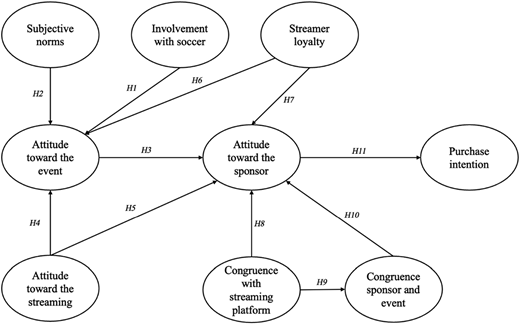
A higher level of involvement with soccer can positively influence the attitude toward the event.
2.2 Theory of Planned Behavior (TPB) (subjective norms)
The Theory of Planned Behavior (TPB), developed by Ajzen (1991), is an expansion of the Theory of Reasoned Action (TRA) and serves as a valuable model for comprehending various human behaviors (Fishbein and Ajzen, 1975). These theories anticipate an individual’s inclination to participate in an action (as a spectator of the Kings League event), which is affected by individual attitudes and subjective norms. Attitude refers to the evaluation of an action as desirable or undesirable. Hence, if an individual believes that engaging in the Kings League event leads to positive outcomes, their attitude toward the activity is likely to be positive. This attitude is influenced by subjective norms of streaming. Subjective norms refer to an individual’s comprehension of expected behavioral norms from those in their proximity within specific settings. Essentially, social pressures shape subjective norms toward streaming, causing individuals to adhere to specific expected behaviors. Sometimes, this results in a decision to participate in future activities.
Previous research has indicated a significant relationship between subjective norms and attitudes. Chang (1998) and Tarkiainen and Sundqvist (2005) discovered a significant link between subjective norms and attitudes toward behavior, specifically, attendance at an event. To examine the formation of individual attitudes, Chang (1998) and Al-Swidi et al. (2014) recommend studying the impact of the social environment in detail. For example, if individuals perceive that their peers have a positive attitude toward streaming a particular event, they are more likely to adopt a similar positive attitude. Cunningham and Kwon (2003) and Eddosary et al. (2015) also considered subjective norms and attitudes toward an event as one of the main influential factors in attending (spectator) a sports event. TPB has been used in various fields, including examining customer purchase intentions in live streaming. Xu et al. (2022a, b) created a model based on TPB to understand and predict virtual gifting behaviors in online live streaming. The results show that both offline and online subjective norms influence attitudes toward virtual gifts and intention to participate in the event. The results of Wang et al. (2022) and Hasim et al. (2023) also showed that subjective norms and attitudes have a positive effect on behavior when examining influential factors on the acceptance of livestreaming services. Subjective norms toward streaming refer to the influence of social pressure on fans’ decisions to attend a sports event (such as the Kings League event). Fans are more likely to participate in socially accepted or approved events by their family and friends. Consequently, fans who perceive these advantages as socially acceptable are more likely to have a positive attitude toward the event than fans with unfavorable subjective norms. Therefore, to further investigate this causal path, the following hypothesis is proposed:
Subjective norms toward streaming positively influence the attitude toward the event.
2.3 Image transfer theory
Attitude plays a vital role in estimating behavioral intentions and can influence behavioral responses toward the desired object (Ajzen, 2001). In most cases, attitude refers to a mental tendency to act in favor of or against a particular subject (Mohammadi and Isanejad, 2018). Attitudes can develop from direct experiences with an entity, exposure to knowledge and messages, or communication (Albarracín et al., 2014). Beliefs regarding an event, like Kings League, reflect the foundation of an individual’s attitude toward the event, and these beliefs are viewed as connections between the attributes, characteristics, outcome, goal, or value of the attitude-object (Fishbein and Ajzen, 1975). Image transfer theory explains how the attributes, attitudes, and associations of a sponsored event can be transferred to the sponsoring brand, influencing consumer perceptions (Gwinner, 1997; Grohs et al., 2004). In sports sponsorships, attitude toward the event plays a crucial role in shaping attitudes toward the sponsor, as the characteristics of the event become linked to the sponsor brand in consumers’ minds (Meenaghan, 1983; Keller, 1993). Empirical studies have confirmed that a positive attitude toward a sporting event increases positive perceptions of the sponsoring brand, thus reinforcing the effectiveness of sponsorship campaigns (Grohs and Reisinger, 2005; Levin et al., 2001; Roy and Cornwell, 2004; Szymkowiak et al., 2025).
Similarly, attitudes toward streaming platforms can influence attitudes toward both the event and the sponsor. As streaming becomes the primary media for sports consumption, audiences’ perceptions of the streaming experience shape their overall event evaluation (Spilker et al., 2020). Viewers accustomed to engaging with sports content through digital platforms may associate positive experiences—such as interactivity and accessibility—with the events they watch, leading to a favorable attitude toward the event (Cornwell and Maignan, 1998). Furthermore, the credibility and trustworthiness of the streaming platform or its content creators (e.g. streamers) can transfer to the event and its sponsors, enhancing sponsorship effectiveness (Rogers et al., 2020; Cheung et al., 2021).
Thus, attitudes toward the event and streaming influence attitudes toward the sponsor (Xu et al., 2022a, b). A positive event perception fosters a favorable evaluation of the sponsoring brand (Grohs et al., 2004; Meenaghan, 2001), while the audience’s familiarity and trust in streaming platforms reinforce the legitimacy and credibility of the sponsorship (Tabellion and Esch, 2019). Consequently, sponsorship strategies in sports events should prioritize both event engagement and streaming platform perception to maximize image transfer and sponsorship effectiveness. According to Keller (1993), the general attitude toward a sponsor function as an assessor of both the sponsor’s brand and event. Meenaghan (2001) constructed this design as a constructive inclination toward the event and the sponsor. Sports enthusiasts and consumers generally hold a favorable perception of an event and its monetary backers when they deem financial backing to be vital to the team (Biscaia et al., 2013; Madrigal, 2001). Consequently, for an organization aiming to establish a positive image, it is crucial to consider the emotional responses arising from financial sponsors and their associated brands (Boronczyk and Breuer, 2020). The management of the attitudes of both fans and consumers toward the event and its sponsors ultimately aims to influence the effectiveness of sponsorship (Stipp and Schiavone, 1996) and the response to sponsorship (Ajzen, 2001). Sponsors assume that sports enthusiasts and consumers will hold positive attitudes toward sponsored events and sponsors like their own teams (Rogers et al., 2020).
Additionally, if they perceive a sponsorship to be beneficial for the team, they will exhibit a favorable outlook toward the sponsor and event (Madrigal, 2001; Cornwell et al., 2006). Moreover, Alexandris et al. (2007) and Biscaia et al. (2013) propose that sponsorship activities affect the attitudes of fans and customers toward the sponsor’s popularity, performing charitable activities, and having positive attitudes toward the sponsor. Previous research indicates that attitudes toward the event and sponsor significantly predict purchase intention (Koo et al., 2006; Cuesta-Valiño et al., 2022a, b). However, most of the research has concentrated on abstract sponsors (Speed and Thompson, 2000), with a limited understanding of attitudes toward the event (such as Kings League) and sponsors and their impact on the purchase intention of sponsor products. Thus, the following hypotheses are developed in accordance with previous research proposals:
Attitude toward the event positively influences attitude toward the sponsor.
The attitude toward streaming positively influences the attitude toward the event.
The attitude toward streaming positively influences the attitude toward the sponsor.
2.4 Streamer loyalty
Loyalty is a psychological relationship that can enhance positive and sustainable attitudes and behaviors toward a subject (Heere and Dickson, 2008). As attitudes become more deeply ingrained, loyalty can become more resistant to change and promote cognitive biases that influence subsequent decision-making (Funk and James, 2001). For instance, an elevated degree of allegiance to a sports team may trigger illogical consumption patterns among sports enthusiasts due to cognitive biases resulting from team loyalty (Heere and Dickson, 2008).
Loyalty comprises three primary methods: behavioral, attitudinal, and combined (Bowen and Chen, 2001). Behavioral approaches address frequent and repetitive actions (e.g. regular interaction with Kings League events), while attitudinal approaches focus on psychological and emotional dependencies (e.g. favorable attitudes toward Kings League events) (Mahmoudian et al., 2021). Nonetheless, sports enthusiasts may exhibit positive attitudes toward an occasion such as Kings League, rather than displaying behavioral loyalty, and vice versa. Therefore, a combination of behavioral and attitudinal dimensions can enhance the predictive capability of the measurement criteria for loyalty (Pritchard and Howard, 1997).
Streamer loyalty refers to the extent of trust, identification, and support for a particular streamer. It encompasses several aspects such as the duration and intensity of viewership, level of interaction, emotional rapport, and alignment with the streamer’s values and content. Additionally, loyalty significantly influences the attitudes and behaviors associated with sponsors. Jyothi and Rajkumar (2005) conducted a study on the efficacy of celebrity endorsements in marketing and discovered that consumer loyalty toward celebrity endorsers is positively correlated with purchase intention. Biscaia et al. (2013) examined the influence of sports team loyalty on fans’ attitudes toward sponsors. Their research demonstrated that the intense emotional attachment claimed by sports supporters can foster a favorable attitude toward a sports team. In other words, customer loyalty to an endorser can improve a positive attitude toward the sponsor. Xu et al. (2022a, b) demonstrated the positive and significant impact of streamer loyalty on brand attitude. Then, loyalty and attachment to streamers can influence individuals’ attitudes toward sponsors. These findings indicate the importance of cultivating a loyal audience and developing connections between streamers and their followers for successful brand sponsorship. Developing close relationships with streamers and building loyalty can enhance a brand’s image and foster trust with customers. Therefore, it is crucial for brands to focus on streamers and create intimate and long-lasting connections with them to improve the audience’s perceptions of both the brand and its sponsor.
Loyalty toward the streamer positively influences the attitude toward the event.
Loyalty toward the streamer positively influences the attitude toward the sponsor.
2.5 Congruence
The notion of congruence has been established as a fundamental element of successful sponsorship, defined as the extent of likeness or harmony between the sponsor and the endorsed event. According to the theory of congruence, the similarity or linkage among certain images affects their memorability and ability to recollect information (Cornwell et al., 2005). Kahle and Homer (1985) proposed the match-up hypothesis, which illustrates how stronger match-up (i.e. congruence, adequacy) between individuals and products leads to greater effectiveness in acquiring customer approval.
From theoretical and empirical perspectives, various studies have scrutinized the influence of match-ups in brand, advertising, and sports marketing. For instance, Kahle and Homer (1985), Till and Busler (2000), and Koernig and Boyd (2009) found evidence that the congruence between products and endorsers affects individuals’ attitudes toward advertising, brand, and purchasing decisions. Additionally, Fink et al. (2004) and Koo and Lee (2019) illustrated that the suitability between an athlete and a product has a positive and significant influence on purchase decisions. The alignment between the sponsor and the event is linked to the sponsor’s credibility, attitude toward the sponsor, and purchase decisions. The expansion of the Match-up hypothesis in athletes and sporting events, including the Kings League event, has prompted sports marketing researchers to investigate the impact of sponsor-event congruence on attitudes and purchasing decisions. This model establishes a conceptual framework for endorsing sponsor-event congruence (McDaniel, 1999), which is often a driving factor for purchasing and the primary predictor of customer behavioral responses (Sirgy, 1986). We anticipate that congruence will be a significant determinant of attitudes toward sponsor, event, and purchase decisions. Nonetheless, due to the intricacy of the matter and its reliance on different factors, the impact of consistency may differ in certain circumstances concerning customer attitudes toward the sponsor and event.
Prior studies have revealed the positive influence of congruence on the event and sponsor, leading to a favorable attitude (Claiborne and Sirgy, 2014). Sirgy et al. (2008) posited that congruence between a game or event and a sponsor leads to more favorable evaluations. Congruency between the sponsor and event escalates sponsor recall (Johar and Pham, 1999; Rodgers, 2003); attitude toward the sponsor (Doyle et al., 2014; Lee and Cho, 2009; Rodgers, 2003; Speed and Thompson, 2000; Rifon et al., 2004); and ultimately buying decisions (Lee and Cho, 2009; Rodgers, 2003; Speed and Thompson, 2000; Koo and Lee, 2019). Some studies (Weeks et al., 2008; Wang, 2017; Alonso-Dos-Santos et al., 2023; Coppetti et al., 2009) have suggested that customer attitudes toward sponsorship and events can vary significantly based on the congruence between them. This congruence can improve all aspects of the sponsorship, including the attitude toward the event and image extension, and ultimately lead to purchase decisions.
Congruence between sponsor and the streaming platform positively influences the attitude toward the sponsor.
Congruence between sponsor and the streaming platform positively influences the congruence between the event and the sponsor.
The congruence between the event and the sponsor positively influences the attitude toward the sponsor.
2.6 Purchase intention
The evaluation of an object significantly predicts an individual’s behavioral intention and can influence their response toward it (Ajzen, 2001). Rodgers (2003) defined attitude as a “general evaluation of an object, issue, or person”, indicating the positive perception an individual has toward an object. Cornwell and Maignan (1998) claimed that one significant aim of sponsorship activities is to enhance the favorable attitude toward financial backing for brands among consumers or sports fans. Keller (1993) concurred with this concept that the evaluation of the sponsor’s brand name, which supports the sponsored event, displays the general perception of the consumer, and Meenaghan (2001) referred to this structure as an advantageous situation for financial sponsors. Recent studies frequently used the attitude toward the sponsor as a dependent variable to examine financial support. Researchers who analyzed the efficacy of sponsor-event congruence on consumer responses found a correlation between the attitude toward the financial sponsor and purchase intention (Gwinner and Bennett, 2008; Lee and Cho, 2009). Organizations that financially support events anticipate that the supporters of the sports team will have identical favorable sentiments toward their team and brand (Shaw and McDonald, 2006). If supporters believe that providing financial support is crucial for the team, they may hold a favorable attitude toward the sponsor (Madrigal, 2001; Cornwell et al., 2006). The ideas of attitude and behavior are intertwined with persuasion (Rodgers, 2003). Therefore, purchase intention is often linked to attitude toward the sponsor in financial support studies (Varea Calero et al., 2025; Dees et al., 2008) because past research evidences that the attitude toward the sponsor is a significant predictor of purchase intention (Koo et al., 2006; Speed and Thompson, 2000; Koo and Lee, 2019; Rai et al., 2024). However, most of the research has concentrated on generic sponsors (Speed and Thompson, 2000), with limited data available regarding the influence of customers’ attitudes toward financial sponsors on their purchase intentions. Consequently, H11 is posited. All the hypotheses are shown in Figure 1.
Attitude toward the sponsor positively influences purchase intention.
3. Method
This research employed a mixed quasi-experimental design. The general procedure involved creating images simulating the poster of a nontraditional sports event (Kings League) sponsored by congruent and incongruent brands, with its broadcast occurring through streaming platforms (Twitch). Participants completed a self-administered survey after viewing the advertisement. The analysis of scale validity and reliability, as well as hypothesis testing, was conducted using PLS-SEM.
3.1 Stimulus
First, Twitch was selected as the most popular streaming platform in 2023, where the Kings League was broadcast in Chile and worldwide. Then, both congruent and incongruent brands were chosen as sponsors of the Kings League. The selection process followed the following steps:
110 university students openly suggested the brands that they considered most congruent and incongruent to Kings League event. The brands with the highest frequency were selected as congruent (Adidas) and incongruent (Zara) sponsors.
A second test was conducted with 65 participants, who rated their perception of the congruence between the sponsor and the sporting event on a five-point Likert scale, using an item adapted from Speed and Thompson (2000), “The sponsor and Kings League are logically connected.” The pre-test revealed significant differences between Adidas and Zara at the p < 0.05 level [F(64, 384, 320) = 155, p = 0.001].
Subsequently, four sports posters were created by combining the streaming platforms and the type of congruence, resulting in a 2×2 between-subject quasi-experimental design. A third qualitative pretest was conducted to determine the required exposure time for participants to understand the image and assess the poster quality. The results indicated an optimal exposure time of 15 s, which is consistent with previous research. Additionally, all participants confirmed that the poster was comprehensible and realistic.
3.2 Sample
The survey was administered through the Qualtrics platform to a total of 489 participants selected through non-probabilistic convenience sampling. The questionnaire was administered in Concepción, a city with an excellent technological infrastructure and high-speed internet access. It also has a varied sports culture with a strong presence of sports clubs and events. Participants were students recruited online; a common practice in the field (Hedlund, 2014; Koo and Lee, 2019; Liu and Yu, 2024). The characteristics of the sample are appropriate for this research as they are the most frequent users of Twitch (Peng et al., 2024).
The final sample corresponds to 460 students after a filtering process. This process involved the elimination of respondents who were not familiar with the Kings League, those who provided incomplete responses and those who completed the survey outside the predetermined time range. Responses that are too quick are often an indicator of careless responses, which can compromise the accuracy and validity of the data collected (Greszki et al., 2014). The minimum and maximum time was qualitatively set during the pilot phase of the survey (3–7 min).
The average age of the participants was 21.7 years (SD = 2.8), and 44.8% of the sample were male. Regarding monthly household income, 26.7% of respondents chose not to disclose their earnings. Among the remaining respondents, 35.4% reported earning less than $600 USD, 19.1% up to $1,200 USD, and 17.6% reported an income of $1,800 USD or more.
3.3 Scales
The scales used in this study were adapted from relevant sources. The attitude toward the sponsor scale comprises three items and was previously employed by Cuesta-Valiño et al. (2022a, b). The scale of attitude toward the event was adapted from Alexandris et al. (2007). The purchase intention scale was adapted from Smith et al. (2008). The attitude toward the streaming scale originated from Shin (2009), while the involvement with soccer scale and the subjective norms toward the streaming scale, each consisting of three items, were taken from Ko et al. (2010). The streamer loyalty scale, which contains six items, was adapted from Xu et al. (2022a, b). Finally, the congruence scales were based on Speed and Thompson (2000). All the scales were measured using a seven-point Likert scale.
3.4 Manipulation check
The manipulation check was conducted using ANOVA to determine whether participants effectively understood the difference between congruent and incongruent advertisements.
The analysis revealed a significant effect p < 0.05 for the item “There is a logical connection between the Kings League tournaments and the sponsor” [F(1,1055) = 246.782, p < 0.001], “The reputation of the Kings League tournaments and the sponsor are similar” [F(1,1055) = 79.540, p < 0.001], “The sponsoring brand and the Kings League tournaments represent similar concepts” [F(1,1055) = 343.362, p < 0.001], “It makes sense to me that this brand sponsors the Kings League tournaments” [F(1,1055) = 483.362, p < 0.001].
4. Results
4.1 Measurement model evaluation
We evaluated the assessment of the measurement model by evaluating the validity and reliability of the scales. Following the guidelines of Benitez et al. (2020) and Hair et al. (2019), we verified that Cronbach’s alpha (α), the composite reliability coefficient (rho_a and rho_c), and average variance extracted (AVE) exceeded the thresholds established in the literature (AVE >0.05, α, and rho >0.7). Additionally, we confirmed that the indicator loadings were above 0.708 and statistically significant (Table 1).
Regarding discriminant validity, we applied the criteria of cross-loading analysis, the Fornell and Larcker (1981) criterion, and the heterotrait-monotrait correlation ratio (HTMT). Table 2 shows that the absolute value of the maximum cross-loadings did not exceed the primary loadings for any item, the square root of the AVE was greater than the corresponding correlation coefficient for each construct, and the HTMT correlation ratio was less than 0.90 (Henseler et al., 2016).
4.2 Structural model assessment
The results of the structural model analysis are presented in Table 3. All hypotheses except H10 are supported. To evaluate the model’s predictive power, we followed Shmueli et al. (2016). In-sample predictive power was assessed using R2 and f2 effect sizes (Rigdon, 2012), while out-of-sample predictive power was evaluated using cross-validated redundancy (Q2) and q2 effect sizes (Rigdon, 2016).
The coefficients of determination (R2) values indicate that attitude toward the event, attitude toward the sponsor, sponsor-event congruence, and purchase intention account for a significant proportion of variance, with attitude toward the event showing the highest explained variance (R2 = 0.688). According to Benitez et al. (2020), R2 values should be qualitatively compared with those of prior studies. Considering the findings of similar studies, these R2 values appear to be strong indicators of model performance.
The effect size (f2) values demonstrate varying levels of influence among the relationships. The relationships of involvement with soccer → Attitude toward the event (f2 = 0.866) and Attitude toward the sponsor → Purchase intention (f2 = 0.842) exhibit large effect sizes, suggesting that these variables significantly contribute to explaining their respective dependent constructs. Similarly, Congruence with the streaming platform → Attitude toward the sponsor (f2 = 0.214) and Congruence with the streaming platform → Sponsor-event congruence (f2 = 0.279) also showed strong effects. All Q2 values exceed zero, confirming predictive relevance (omission distance of 8). To further assess out-of-sample predictive performance, we used the PLS predict procedure (Shmueli et al., 2019). Predictive accuracy is confirmed because, per construct indicator, the PLS-SEM model yields lower prediction errors (e.g. RMSE or MAE) than the linear model benchmark (Shmueli et al., 2019).
Conversely, H10 (Congruence sponsor/event → Attitude sponsor) was not supported, showing a non-significant relationship (β = 0.066, f2 = 0.006). This suggests that contrary to expectations, the congruence between the sponsor and the event does not significantly influence the attitude toward the sponsor in this context. Additionally, Attitude toward streaming → Attitude toward the sponsor (f2 = 0.014) and Subjective norms → Attitude toward the event (f2 = 0.031) exhibited weak effect sizes, indicating that although these relationships are statistically significant, their practical influence is limited.
Overall, the model fits well, with a Standardized Root Mean Square Residual (SRMR) of 0.041, indicating an acceptable level of model fit. The complete path coefficients, effect sizes, and explained variances are presented in Table 3.
The study results indicate that involvement with soccer (H1) has a significant impact on the attitude toward the event (β = 0.607, p < 0.01). Those who are highly involved with soccer will develop a positive attitude toward the event, as stated by Petty et al. (1983). Additionally, subjective norms also positively influence the attitude toward the event (β = 0.171, p < 0.01), although with a smaller effect size. This suggests that when individuals perceive favorable social pressure to participate in broadcasted events, their attitude toward these events tends to be more positive, as stated by Wang et al. (2022) and Hasim et al. (2023), supporting H2.
Similarly, the attitude toward the event positively affects the attitude toward the sponsor (β = 0.290, p < 0.05), supporting H3, as stated by Szymkowiak et al. (2025), where the study mentions that attitudes toward the event positively influence attitudes toward the sponsor. The attitude toward streaming has a notable but smaller influence on both the attitude toward the event (β = 0.185, p < 0.01) and the attitude toward the sponsor (β = 0.121, p < 0.05), which supports H4 and H5. This aligns with the idea that positive experiences with sports content on digital platforms can lead to a favorable attitude toward the event (Cornwell and Maignan, 1998).
Loyalty toward streamer significantly contributes to both the attitude toward the event (β = 0.219, p < 0.01) and the attitude toward the sponsor (β = 0.194, p < 0.01), validating H6 and H7. As stated by Xu et al. (2022a, b), loyalty and identification with streaming can influence people’s attitudes toward sponsors. Additionally, the credibility and reliability of the streaming platform can transfer to the event and its sponsors, enhancing the effectiveness of the sponsorship (Rogers et al., 2020; Cheung et al., 2021).
Congruence between sponsor and streaming platform positively influences the attitude toward the sponsor (β = 0.409, p < 0.01), and the congruence between the sponsor and the event (fit between Kings League and sponsor) (β = 0.465, p < 0.01), supporting H8 and H9. This is consistent with the theory that congruence between the sponsor and the event increases sponsor the attitude toward the sponsor (Doyle et al., 2014; Lee and Cho, 2009; Rodgers, 2003; Speed and Thompson, 2000; Rifon et al., 2004). Additionally, congruence improves aspects of sponsorship, including the attitude toward the event and image extension, and ultimately leads to purchase decisions (Weeks et al., 2008; Wang, 2017; Alonso-Dos-Santos et al., 2023; Coppetti et al., 2009).
The congruence between the sponsor and the event does not have a significant impact on the attitude toward the sponsor (β = 0.066, p > 0.05), H10 is not supported, which may be explained by contextual differences, type of sponsors or event characteristics.
Regarding H11 (β = 0.465), where a positive attitude toward the sponsor of a sports event is a predictor of the intention to purchase the sponsor’s products, this result is closely linked to the image transfer theory (Koo et al., 2006; Speed and Thompson, 2000; Koo and Lee, 2019; Rai et al., 2024).
5. Conclusions
This study examined the relationship between attitude toward the streaming, streamer loyalty, and subjective norms toward streaming, as well as sports involvement and the influence of congruence with the streaming platform. This research addresses the need to analyze the effectiveness of sponsorship in sports events broadcast via streaming, as sports content consumption is transitioning from traditional media to digital platforms, requiring brands to adapt their strategies to engage with new audiences (Spilker et al., 2020). Given the lack of prior studies analyzing the influence of streaming engagement on sponsor perception and the effect of congruence with streaming platform on sponsorship effectiveness (Gasparetto and Safronov, 2023), this research fills a theoretical gap and provides key insights for brands to optimize their strategies in emerging digital environments.
The findings confirm that streamer loyalty plays a crucial role in shaping positive attitudes toward sponsors in digital sports events like the Kings League. This aligns with previous studies that indicated that viewers’ emotional connection and trust in content creators influence their perception of associated brands (Xu et al., 2022a, b). According to the literature, audiences not only consume content generated by streamers and tend to internalize and accept their recommendations, increasing the effectiveness of sponsorship in these settings (Jyothi and Rajkumar, 2005; Biscaia et al., 2013).
The impact of streamer loyalty on attitudes toward sponsors can be explained through image transfer theory, which posits that an individual’s credibility and image can influence brand perception when they are associated (Meenaghan, 2001; Keller, 1993). In the streaming context, this effect occurs when viewers who trust a streamer extend that trust to the brands sponsoring their content, leading to greater brand acceptance (Xu et al., 2022a, b). The findings of this study support this theory, demonstrating that loyal followers of a streamer develop significantly more favorable attitudes toward the brands.
In line with previous research, sports involvement has been confirmed to have a positive effect on the attitude toward an event (Alexandris et al., 2007; Ko et al., 2008). This suggests that sports fans with higher levels of involvement tend to develop more favorable attitudes toward events like the Kings League, which may partly explain its success among highly engaged young audiences.
H10 was not supported. The hypothesis postulates event-sponsor congruence positively influences sponsor brand attitude is not support. It is inconsistent with prior research in sports marketing (Speed and Thompson, 2000; Sirgy et al., 2008). Greater alignment between the event’s values and the sponsor enhances perceptions of authenticity and legitimacy in the sponsorship relationship (Kahle and Homer, 1985; Cornwell et al., 2005). A possible explanation may lie in the history of the Kings League: the sporting event was born with the current sponsors. Fans might be familiar with the sponsors. Another explanation could be the Simpson effect (1951): it is a statistical phenomenon in which a trend that appears in several groups disappears or reverses when the data are combined. Inconsistent and congruent sponsors could shape this phenomenon.
Subjective norms toward streaming have also been found to positively influence attitudes toward the event (Chang, 1998; Tarkiainen and Sundqvist, 2005). This highlights the importance of social influence and peer perceptions in shaping favorable attitudes toward new competition formats broadcast through digital platforms.
Attitude toward the event and toward streaming have a positive impact on the attitude toward the sponsor (Biscaia et al., 2013; Madrigal, 2001). This suggests that enhancing positive attitudes toward competition formats and their broadcasting media can indirectly benefit sponsors.
Streamer loyalty has also been found to positively influence attitude toward the sponsor (Xu et al., 2022a, b). This result underscores the key role of content creators and streamers in generating favorable attitudes toward sponsoring brands in these new sports formats. Finally, attitude toward the sponsor positively influences purchase intention (Koo et al., 2006; Speed and Thompson, 2000), reinforcing the importance of generating favorable attitudes toward sponsors to increase consumer purchase intentions.
5.1 Managerial implications
The findings of this study offer valuable key implications for sports sponsorship managers in the context of live streaming digital platforms, considering the impact of streamer loyalty, event attitude, social norms, and sponsorship strategies.
Sponsorship managers should prioritize collaborations with content creators who have highly engaged communities and a strong connection with their audience. The goal is to leverage streamer loyalty as a sponsorship strategy, given that streamer loyalty directly influences attitudes toward sponsors (Xu et al., 2022a, b). This implies that, instead of relying on traditional advertising mentions, brands should integrate themselves into the streamer’s content narrative to maximize sponsorship effectiveness. Actions such as co-creating exclusive content (Liu and Yu, 2024) or having the streamer participate in brand activations can enhance sponsor perception and strengthen audience connection (Meenaghan, 2001; Keller, 1993).
The results underscore the importance of event attitude in sponsor perception (Biscaia et al., 2013; Madrigal, 2001). This suggests that sports managers should design immersive experiences that foster audience identification to leverage positive attitudes toward the event and reinforce the sponsor’s image. This can be achieved through interactive strategies such as real-time voting, participation dynamics, and exclusive benefits for active viewers. The use of streaming platforms like Twitch and YouTube facilitates the implementation of these strategies, highlighting the need to leverage their interactive features.
Subjective norms toward streaming has a positively influences on attitudes toward the event (Chang, 1998; Tarkiainen and Sundqvist, 2005). In this context, it is essential that sponsors adapt their strategies to the expectations of the digital community. It is recommended to align sponsorship strategies with streaming consumption norms by using non-intrusive advertising formats such as segment sponsorships and collaborative events with streamers. This ensures alignment with the platform’s dynamics and fosters a more favorable audience perception.
5.2 Limitations and future research lines
The study faces limitations that should be considered. Congruence in relation to attitudes toward sponsors did not show a significant impact. Future research could delve into identifying conditions where it has a greater effect in other contexts and platforms. The study may have focused on specific platforms, so it is recommended to expand the analysis to multiple streaming platforms to identify if the results hold or vary depending on the platform and its audience. The study has focused on soccer sports events broadcast on digital platforms; applying these findings to other sports could broaden the scope of the study.
Furthermore, caution should be taken when extrapolating the results to other cultural contexts. Even when considering that the Kings League is an event born in Spain but followed throughout Latin America. Finally, the sample only includes students. Although the use of students has been common in the area of sport management, the demographic characteristics may differ from the characteristics of the total number of Twitch users and fans of the Kings League.