This article aims to develop a measure that assesses and maps the behaviors and traits of an individual with potential for innovation in the work context. To do so, it gathers evidence of factor validity and internal consistency.
In the work context, innovation is often linked with the idea of intrapreneurship. Some experts have pointed out that intrapreneurial activities are essential for promoting innovation. However, it is not just about the activities – the key is to create an environment that supports innovation, fostering a culture where new ideas can thrive. To achieve the objectives of this research, we conducted two studies. The first study involved the construction of the innovation potential scale (IPS). In a theoretical, empirical way, the second study involved the administration of the IPS and a sociodemographic questionnaire to a sample of 621 Brazilians from 25 different occupations.
The results introduce a nine-item measure for the innovative behavior assessment, along with its validity and psychometric properties. Furthermore, the results suggest that innovation potential is a unidimensional construct. Moreover, the study highlights the role of intrapreneurship as an explanatory axiom. This concept helps to understand the entrepreneurial behavior of various professionals and managers within their work context.
This study contribute with as instrument that serves as a new powerful tool for understanding of the mechanisms that lead to innovation in the work context and stimulate the innovative potential of professionals and organizations.
This study helps fill gaps in the literature on self-report assessment of innovative behavior. The traits linked with the construct have a contingent nature and are only potential.
1. Introduction
Innovation, often conceptualized from the productive aspect and social impacts within the economic and market setting. The evolutionary economic foundation of innovation systems emphasizes that the capability to develop new products, services, and technologies plays a social role grounded in consumption and meeting people’s needs. This results in improved ways of living and producing (Edwards-Schachter, 2018; Vargo, Akaka, & Wieland, 2020).
Commonly treated analogously, the term invention relates to innovation due to its productive characteristic, defined by an outcome or final product. From this perspective, the difference between invention and innovation arises when a creation (or invention) begins to present social and market value (innovation). Despite this conceptualization, the nature of innovation — i.e. the process by which it develops — is essentially behavioral, established by individual or collective characteristics such as creativity, ideation, and proactivity (Carayannis, 2020; Damanpour, 2018).
Although intrinsic specific knowledge and creativity (constructed through formal education and concrete experience) link to innovation capacity, a bold and proactive attitude also seems involved. When not translated within the scope of entrepreneurial behavior, the capacity for innovation tends to reflect in the work context — usually in managerial, academic, and artistic fields, for example.
As a behavior, its investigation through measurement becomes relevant as studies focus on innovation phenomena that go beyond the business sphere and appear evident in the work context (for an in-depth review of the key measures related to innovation, refer to: Lukes & Stephan, 2017; Paruzel, Schmidt, & Maier, 2023). Among the instruments that measure innovative behavior, some relate to entrepreneurship (e.g. Hornsby, Kuratko, & Montagno, 1999; Lau, Shaffer, Chan, & Man, 2012; Lukes & Stephan, 2017; Souza, Coelho, Esteves, Lima, & Santos, 2016). Other instruments are associated with creativity and development (e.g. Amabile, Conti, Coon, Lazenby, & Herron, 1996; de Jong & den Hartog, 2010; Janssen, 2000; Scott & Bruce, 1994; Zhou & George, 2001). Furthermore, other instruments are linked to the organizational aspects of innovation in companies such as infrastructure, support, and number of patents produced (e.g. Birdi, Leach & Magadley, 2016; Dorenbosch, van Engen, & Vergangen, 2005; He & Wong, 2004; Kim, Kim, & Koo, 2022; Jansen, Van Den Bosch, & Volberda, 2006; Lubatkin, Simsek, Ling, & Veiga, 2006; Patterson et al., 2005).
The Innovative Behavior Measure (Scott & Bruce, 1994), adapted by Janssen (2000) and Zhou and George (2001), for example, investigates innovative attitudes towards the promotion and implementation of ideas. It examines how innovative behavior is related to planning activities such as developing new technologies, turning ideas into products, and seeking investment in their ideas. For the authors (Janssen, 2000; Scott & Bruce, 1994; Zhou & George, 2001), innovative behavior presents essentially unidimensional in its theoretical and empirical structure; however, the climate for innovation promoted by the organization moderates it.
The Innovation subscale of the Inventory of Barriers and Facilitators to Entrepreneurship (Souza et al., 2016), for example, examines the individual’s interest in transforming ideas into products. It also uses creativity to create innovative products for the market. It is operationalized as a unidimensional construct. On the other hand, Lukes and Stephan (2017) proposed the Innovative Behavior Inventory (IBI) which has a structure operationalized into six factors focused on idea production for solving everyday problems. The authors attempt to map elements of the same dimension detailed into more specific elements, namely: (1) idea generation, (2) idea search, (3) idea communication, (4) implementation starting activities, (5) involving others, and (6) overcoming obstacles.
Nevertheless, gaps appear in the literature regarding the self-descriptive assessment of innovation. These gaps show that behaviors associated with the construct depend on particular circumstances and, therefore, can be a potential (latency of the characteristic necessary for its occurrence). Moreover, the causality and operationalization of innovative behavior still require additional empirical evidence (Paruzel et al., 2023). Some studies even highlight the need for new instruments that objectively map innovative behavior among professionals in various fields (e.g. Alghamdi, 2018; Miao, Newman, Schwarz, & Cooper, 2018; Wang, Meng, & Cai, 2019).
Thus, this study aims to construct an instrument that evaluates and maps the behaviors and characteristics of a potentially innovative person in a work context, gathering evidence of factor validity and internal consistency. Therefore, instead of analyzing the behavior directly, it seeks to map the latent attributes that can predict an individual’s potential for innovation. Although measuring the construct through self-report may be complex and may not encompass all external factors that lead to the materialization of innovation, this study starts from the fundamental premise that empirical evidence on phenomena needs collection and analysis under scientific rigor. The instrument proposed in this study acts as a complementary step in this direction.
2. Literature review
2.1 Innovative behavior in the work context
In the context of work, innovation is often linked to the concepts of intrapreneurship or corporate entrepreneurship (Gündoğdu, 2012; Kang, Sinha, Park, & Lee, 2021; Lau et al., 2012; Lukes & Stephan, 2017; Neessen, Caniëls, Vos, & de Jong, 2019). According to Hisrich, Peters, and Shepherd (2020), predictors of intrapreneurship — innovation as a behavior in the workplace — translate into the desire to take responsibility, express individuality, and have more freedom in the organizational environment. These individuals demonstrate a deep commitment to their unique belief in their ability to carry out activities differently and more effectively. This commitment, in turn, allows them to utilize their talents for higher productivity levels and excellence at work.
Innovative behavior, or innovativeness, has a direct association with individual attributes. It is moderated by leadership and teamwork, which empower those in these roles to foster a psychological climate for innovation. This constitutes an intuitive and systematic environment for problem-solving (Amabile, Burnside, & Gryskiewicz, 1995; Kim et al., 2022; Patterson et al., 2005; Scott & Bruce, 1994). As a result, innovative individuals also tend to demonstrate greater cognitive adaptability, which consequently facilitates learning new abilities and technological skills, as well as an interest in creatively producing (Uhl-Bien & Arena, 2018; Souza, Coelho, Lima, Silva, & Esteves, 2021).
Concurrently, organizations are dealing with intense competition due to social, cultural, and market pressures. This requires them to diversify their products, services, and processes, while reducing costs to boost productivity. As a result, there is a growing preference for proactive, creative, multifunctional, and autonomous employees (intrapreneurs), as a corporate trend (Hisrich et al., 2020; Martín-Rojas, Fernández-Pérez, & García-Sánchez, 2017). As innovative behavior in the work context is discretionary and subjective, it is often mistaken for high performance and is open to different interpretations (Janssen, 2000; Kim et al., 2022).
Therefore, some approaches consider that innovative behavior in organizations should be associated with activities such as the creation and implementation of ideas that generate new brands, software, patents, utility models, and solutions for the market in general. This connection to market solutions underscores the practical implications of innovative behavior within a perspective of originality and novelty (Birdi et al., 2016; Paruzel et al., 2023). In this sense, innovative behavior in the work context has shown that its foundation is related to organizational stimulus and intrapreneurship (Adams, Bessant, & Phelps, 2006; Felin, Foss, & Ployhart, 2015).
2.2 Intrapreneurship and corporate entrepreneurship
When defining entrepreneurship, the understanding articulated by Collins and Moore (1970), often considered mainstream, encompasses independent entrepreneurship (opening of new businesses) and corporate entrepreneurship, commonly associated with or synonymous with intrapreneurship (characterized as entrepreneurial behavior within an organizational environment). From the conceptual polarity between entrepreneurship and intrapreneurship, it is necessary to conceive an integrative view as inferred from organizational studies. In other words, to some extent, the understanding of the traditional definition of entrepreneur and intrapreneur is transmuted from economics. Economically, entrepreneurs and intrapreneurs are proactive creators and innovators (Gündoğdu, 2012).
When defining entrepreneurship, Collins and Moore (1970) provided a definition – widely accepted as mainstream – that encompasses independent entrepreneurship (opening of new businesses) and corporate entrepreneurship, commonly associated with or synonymous with intrapreneurship (characterized as entrepreneurial behavior within an organizational environment).
From the conceptual polarity between entrepreneurship and intrapreneurship, it is necessary to conceive an integrative view based on organizational studies. In other words, the traditional definitions of entrepreneur and intrapreneur, derived from economics, need to be understood in a broader sense. Economically, both entrepreneurs and intrapreneurs are proactive creators and innovators (Gündoğdu, 2012).
According to Antoncic and Hisrich (2001), intrapreneurship or corporate entrepreneurship is characterized by four distinctive traits that usually occur together as follows: (1) Interest in developing new products, services, or processes and creating businesses and projects within an organization; (2) Spirit of innovation or innovative mindset, expressed through an interest in new things, creative ideas, or the development (and implementation) of new technologies; (3) Capacity for self-renewal, involving the updating of modes of operation and the need to improve the organization’s fundamental assumptions; (4) Proactivity in way of being and acting, generally assuming the risk of leadership and demonstrating bold and aggressive initiative.
It is evident that innovation is shown through intrapreneurial endeavors that are influenced by competitive environmental circumstances. This observation is explored by Gündoğdu (2012), who associates the idea of intrapreneurship with innovation. In both, the author emphasizes the importance of creative talents (the innovators) as key players in proposing and adapting to the dynamic conditions of the environment. These talents can meet commercial and market expectations or introduce the market to new needs and uses, thereby gaining a sustainable competitive advantage.
It is evident that proactive, innovative, and risky actions, guided by a high sense of opportunity, are undertaken within organizations, inspiring employees from different areas to act in an entrepreneurial manner. This kind of environment encourages market growth and profitability, leading managers to develop environments that foster the creation and leadership of new businesses within the existing organizational structure (Kuratko, 2009; Morris, 1998).
In this regard, intrapreneurial behavior resembles what is defined as innovative behavior in organizational environments typically characterized by an entrepreneurial culture. The stimulus to innovation involves the means provided by the organization for creative and inventive activity. Hence, the concept of intrapreneurship is essential for understanding innovative behavior in the work context (Batmomolin, Supriatna, Hananto, Tanuwijaya, & Sadana, 2022; Lukes & Stephan, 2017; Neessen et al., 2019; Vassilakopoulou & Grisot, 2020).
Another characteristic that involves the production of innovations and relates to intrapreneurial traits is the interest in developing new technologies, notably through the continuous exploration of improvements or disruptive changes in products or services. From a behavioral perspective, the development of new technologies results from the coexistence of creativity stimulation and conditions conducive to idea generation (Giones & Brem, 2017).
Among the assumptions highlighted by Bogatyreva, Laskova, and Osiyevskyy (2022), organizational circumstances favor more robust business outcomes, which include exposing employees to an entrepreneurial environment based on knowledge and fertile ground for business opportunities and enhanced decision-making. This environment primarily emerges from the employees and their specific skills, experiences, and knowledge, which may or may not have been developed within the organization but are directed by it.
To fill this gap, some studies (e.g. Arabiyat, Mdanat, Haffar, Ghoneim, & Arabiyat, 2019; Mohsen, Saeed, Raza, Omar, & Muffatto, 2021; Schillo, Persaud, & Jin, 2016) defend the configuration of environments that encourage creativity and development as a core foundation for innovative behaviors within organizations. As an intrapreneurial action, this configuration should provide conditions for leveraging intellectual capital in integration with applied research and technological development projects through partnerships with universities and pursuing public and private investments.
3. Study 1: operationalization, construction and evaluation of the Instrument’s items
3.1 Methodological procedures
The instrument for this study was developed in several steps. The first step involved creating a functional theoretical and methodological framework that could offer enough empirical evidence. From a theoretical standpoint, there is a convergency in studies that innovation can be distinguished from a behavioral perspective and shares traits similar to academic or corporate entrepreneurship (intrapreneurship) (see Fischer, Moraes, & Schaeffer, 2019; Lukes & Stephan, 2017; Vassilakopoulou & Grisot, 2020). In this research, we used intrapreneurship as a central concept when considering innovation potential based on specific antecedent factors. These specific factors are (1) proximity to technology, (2) creativity, (3) productivity, (4) originality, and a (5) sense of development (see Table 1).
Main references underpinning the innovation potential
| Theoretical assumption | Example of items | References |
|---|---|---|
| Proximity to technology |
| Dorenbosch et al. (2005), Giones and Brem (2017), Uhl-Bien and Arena (2018), Hisrich et al. (2020) |
| Creativity |
| Zhou and George (2001), de Jong and den Hartog (2010), Uhl-Bien and Arena (2018), Souza et al. (2016) |
| Productivity |
| Scott and Bruce (1994), Patterson et al. (2005), Hisrich et al. (2020) |
| Originality |
| Joy (2012), Birdi et al. (2016), Carayannis (2020) |
| Sense of development |
| Robben (2019), Vargo et al. (2020), Saura et al. (2023) |
Source(s): Own authorship
Considering the nature of the construct, the instrument was methodologically designed to be a continuous measure to minimize potential bias effects (Souza, Esteves, & Coelho, 2021). We chose to create a scale to assess an individuals’ potential for innovation in the work context, i.e. within daily work activities. To this end, items related to self-concept, attitudes, interests, and traits were designed to compose a measure that more precisely and comprehensively identifies the expected profile. For instance, an individual interested in new technologies might not necessarily be innovative; however, such interest, when associated with other interests and characteristics, such as being creative, enjoying generating original ideas, and taking pleasure in activities requiring imagination, highlights a potential for behavior commonly associated with an innovative individual.
Based on the traits, attitudes, and behaviors identified in the literature (as shown in Table 1), we constructed (redacted) 15 items specifically for this study. These items were guided by the criteria recommended by Pasquali (2013), to create the first version of the instrument, called the Innovation Potential Scale (IPS). After creating the items, we subjected them to the initial evaluation stages: Content and Semantic Validity. Once these initial validation stages were completed, we developed an experimental version of the instrument. Subsequently, we proceed with the psychometric verification of factor validity and reliability.
3.2 Content and semantic validity
The content and semantic validation procedure involved analysis by eight judges. Among the judges, there were: three psychometricians (one with a Ph.D. in experimental psychology, one with a Ph.D. in social psychology, and one Ph.D. candidate in cognitive psychology, - three professors from the field of management with experience in innovation projects (two with master’s degrees in management, one with a master’s in psychology, and one with a master’s in educational institutions management), - one researcher in computer science (a Ph.D. candidate in computer science). Initially, the judges received a definition of innovation in the work context: (1) proximity to technology, (2) creativity, (3) productivity, (4) originality, and (5) sense of development). It was also included aspects related to intrapreneurship. Subsequently, the judges assessed the content and semantics of the items using a 5-point scale (ranging from 1 = Very Little to 5 = Completely), focusing on (1) theoretical relevance, (2) practical relevance, and (3) clarity of language. The content validity coefficients (CVC) were established based on the agreement among the judges, with CVC ≥0.8 (Hernández-Nieto, 2002). Items with a coefficient <0.8 in at least one of the two relevance criteria were excluded. For the clarity criterion, items with a coefficient <0.8 were rewritten. Six of the 15 items evaluated, did not meet the minimum established parameters and were excluded from the IPS, leaving nine items for subsequent analyses.
4. Study 2: procedures for factor validity and internal consistency of the measure
4.1 Methodological procedures
4.1.1 Type of research
The study is methodologically characterized as ex-post-facto and was designed as a theoretical-empirical investigation. It employed an exploratory research approach and quantitative analysis methods (see Hair, Black, Babin, Anderson, & Tatham, 2013). As stated by Malhotra (2011), the combination of exploratory research with quantitative analysis models allows for testing or exploring the relationships between variables in a sample to understand the structural aspects of a given phenomenon. In this study, the focus was on understanding innovation as a behavior in the work context.
4.1.2 Sample characterization
The study included 621 Brazilian participants from 25 varied professions, with the highest incidence being professors (63%). This sample profile aligns with the study’s interest, given that the academic environment is commonly associated with innovative behavior and intrapreneurship (Fischer et al., 2019). Of these participants, 55.7% were female, with an average age of 42 years (ranging from 18 to 81 years; SD = 15.02). Participants came from 24 Brazilian states, with the highest incidences from Minas Gerais (30.9%), São Paulo (18.1%), and Paraná (12.5%).
4.1.3 Instruments
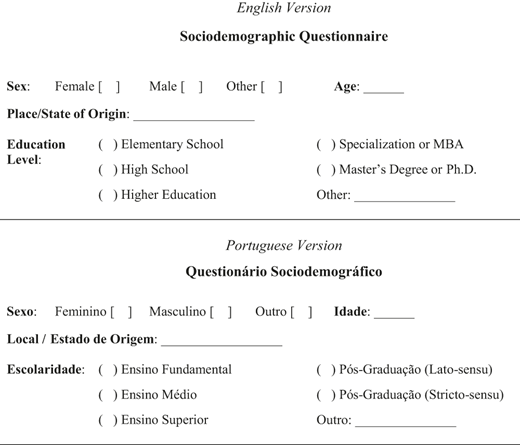
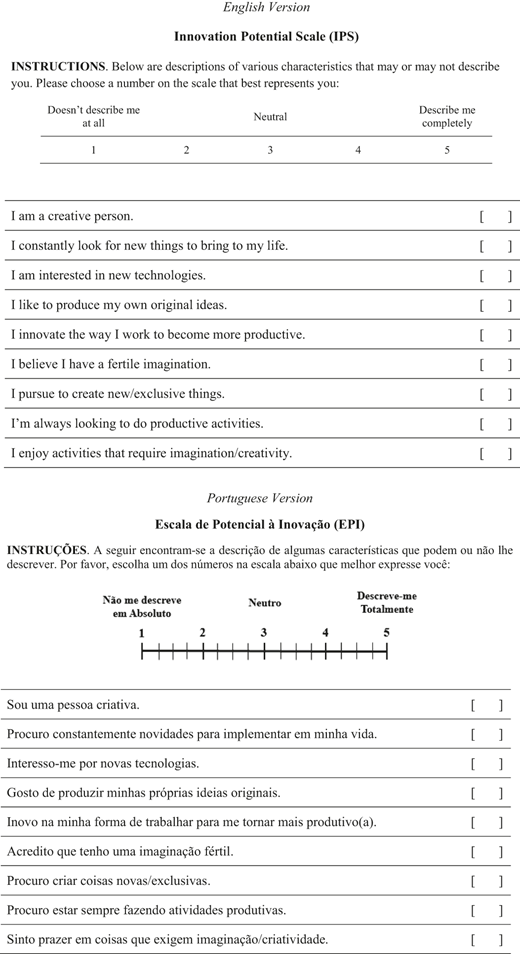
Participants were asked to complete two research instruments. The first instrument was the 9-item initial version of the Innovation Potential Scale (IPS), which they answered using a continuous 5-point scale, ranging from 1 = Does Not Describe Me at All to 5 = Describes Me Completely (see Appendix 1). The second instrument was a sociodemographic questionnaire (see Appendix 2).
4.1.4 Data collection
The IPS application comprised nine randomized items and was implemented using an accessibility-based non-probabilistic convenience sampling method. Each participant was personally contacted via email and provided with an invitation to complete the survey instruments through an online form, between June and August 2020. Participants in the study volunteered by agreeing to an informed consent form. They were guaranteed anonymity and confidentiality of responses. The research adhered to ethical guidelines – approved by the Human Research Ethics Committee of Faculdades Unificados of Teófilo Otoni (FUTO), Brazil, Protocol No. 31508720.8.0000.8747).
4.1.5 Data analysis
Using Factor v10.10.03, we conducted an Exploratory Factor Analysis (EFA) utilizing the polychoric correlation matrix with the Robust Diagonally Weighted Least Squares (RDWLS) extraction method (Asparouhov & Muthen, 2010). We also calculated the model fit indexes and examined indicators of unidimensionality, factor determination, and predictive efficiency (Ferrando & Lorenzo-Seva, 2018). Ferrando and Lorenzo-Seva (2018) recommended to have (1) factor determination indices above 0.90, (2) marginal reliability above 0.80, (3) sensitivity rates above 2, and (4) expected percentage of true differences above 90%. We interpreted the model fit indices based on established literature guidelines (Byrne, 2001; Hair et al., 2013; Hu & Bentler, 1999).
We employed Parallel Analysis (Timmerman & Lorenzo-Seva, 2011) to determine the number of factors to retain. For reliability analysis, we calculated Cronbach’s Alpha (α), Composite Reliability (CR), and McDonald’s Omega (ω). To assess the replicability of the factor solution in new samples, the H-latent index was computed, which is expected to be above 0.80 (Ferrando & Lorenzo-Seva, 2018).
4.2 Results and discussion
Initially, we confirmed the factorability of the matrix using the Kaiser-Meyer-Olkin (KMO) test (0.90) and Bartlett’s test of sphericity (χ2(36) = 4036.80; p = 0.00), which produced a satisfactory result. To ascertain the number of factors in the correlation matrix, we used Parallel Analysis (PA), which indicated a one-factor model (Real-data eigenvalue: 66.18) (Timmerman & Lorenzo-Seva, 2011). Based on these results, we conducted performed the Exploratory Factor Analysis (EFA) using the polychoric correlation matrix with the RDWLS extraction method (Asparouhov & Muthen, 2010), fixing the number of factors to one. Table 2 shows the factor loadings of the items on their respective factors, along with Cronbach’s Alpha values and the Composite Reliability and H-Latent indexes.
Factor loadings of items from the innovation potential scale (IPS)
| Items | Factor loading |
|---|---|
| 1. I am a creative person | 0.82 |
| 2. I constantly look for new things to bring to my life | 0.76 |
| 3. I am interested in new technologies | 0.55 |
| 4. I like to produce my own original ideas | 0.85 |
| 5. I innovate the way I work to become more productive | 0.68 |
| 6. I believe I have a fertile imagination | 0.79 |
| 7. I pursue to create new/exclusive things | 0.86 |
| 8. I’m always looking to do productive activities | 0.50 |
| 9. I enjoy activities that require imagination/creativity | 0.86 |
| Cronbach’s Alpha (standardized) | 0.91 |
| Composite reliability | 0.92 |
| McDonald’s Omega | 0.91 |
| H-Latent | 0.94 |
| Eigenvalue | 5.06 |
| Explained variance (%) | 60.46% |
Source(s): Research data
The IPS factor structure has been established as a one-factor model called “Innovation Potential in the Work Context”. This factor encompasses the main individual traits that indicate someone as potentially innovative, emphasizing attributes such as creativity, proactivity, bricolage, and interest in technologies and creating/developing new things. Based on reading the items, the IPS describes behaviors, traits, beliefs, and attitudes in a psychosocial disposition (a psychological path that considers social and contextual influences). This comprehensive approach plays a key role in collectively defining a stereotypically innovative individual.
The items with the highest factor loadings are related to a sense of development, such as “I pursue to create new/exclusive things” (factor loading = 0.86) and “I enjoy activities that require imagination/creativity” (factor loading = 0.86). This result suggests that innovative behavior may be focused on creating new things rather than other underlying characteristics that share covariance (see Saura, Palacios-Marqués, Correia, & Barbosa, 2023).
The one-factor solution consisted of nine items with factor loadings ranging from 0.50 to 0.86, indicating practical significance, and the internal consistency indicators were satisfactory (α = 0.91; CR = 0.92; ω = 0.91). Furthermore, the H-Latent index revealed a high replicability of the general factor (H = 0.94) (see Hancock & Mueller, 2000).
In Table 3 one will find additional analyses that provide evidence for the proposed factor structure for the IPS, along with the model fit indexes for the one-factor model. The one-factor structure showed acceptable model fit indexes (see Byrne, 2001; Hair et al., 2013), as well as indicators of sensitivity, reliability, and factor determination confirming the instrument’s psychometric quality and supporting its one-factor model. The unidimensionality coefficients and the factor determination index further support the one-dimensional structure.
Model fit of the one-factor model and indicators of unidimensionality and factor determination
| Indexes | One-factor model | |
|---|---|---|
| Comparative fit index (CFI) | 0.97 | |
| Goodness of fit index (GFI) | 1.00 | |
| Adjusted goodness of fit index (AGFI) | 1.00 | |
| Tucker-Lewis index (TLI) | 0.96 | |
| RMSEA (90% CI) | 0.12 (0.08–0.14) | |
| Chi-Square (χ2) | 185.97 | |
| Degrees of Freedom (df) | 27 | |
| p-value | 0.00 | |
| χ2/df ratio | 6.88 | |
| Unidimensionality coefficients | UniCo | 0.95 |
| ECV | 0.85 | |
| MIREAL | 0.29 | |
| Factor determinacy index (FDI) | 0.97 | |
| Marginal reliability (or EAP estimation) | 0.94 | |
| Sensitivity ratio (SR) | 3.95 | |
| Expected percentage of true differences (EPTD) | 94.7% | |
Source(s): Research data
The results suggest that the potential for innovation is a one-dimensional construct. Research by Scott and Bruce (1994), Janssen (2000), and Souza et al. (2016) also portray innovation as a one-dimensional factor. Although innovation can be seen as a multi-dimensional Although innovation can be demonstrated as a multidimensional construct (de Jong & den Hartog, 2010; Dorenbosch et al., 2005; Lau et al., 2012; Lukes & Stephan, 2017), the unidimensionality in the operationalization of innovative behavior indicates that individual characteristics such as creativity, technological inclination, imagination, originality, exclusivity, and the desire to create things appear commonly in innovators or potentially innovative individuals. Since these characteristics also tend to be recurrent among entrepreneurs, other entrepreneurial traits might also be found in these innovative individuals (see Souza et al., 2023). This implies that innovative behavior can stem from a combination of traits and behaviors that work together, allowing individuals to adjust to different workplace scenarios. Thus, the convergence of characteristics in potentially innovative individuals demonstrates that innovative behavior can form a conjunction of traits and behaviors that develop synergistically, allowing individuals to adapt to a variety of situations in the workplace.
The results presented here support the concept of intrapreneurship as an explanatory axiom for various professionals and managers who demonstrate entrepreneurial behavior in their work context. This suggests that these traits are predictors of broader professional profiles. Despite the potential for innovation being a predictor of more generic profiles applied to the work context, this research provides practical insights on how to apply these findings in real-world scenarios contingent on innovative behavior. Many studies perceive innovative behavior as closely related to intrapreneurial behavior, sometimes even inseparably. It occurs because the antecedents of innovative behavior (e.g. ideation, proactivity, interest in new technologies) are also individually generic. Here, the IPS compiles these antecedents into a unidimensional grouping to attempt to predict potential innovative behavior in the workplace, considering intrapreneurship as an underlying concept. So, people who exhibit the traits outlined in the IPS may display more consistent innovative behaviors or function as intrapreneurs.
This proposal is not new, as McGregor’s Theory Y already considered autonomy and creativity as central elements for engaging and enhancing proactivity and productivity at work. Assuming the entrepreneurial spirit as an intrinsic characteristic of organizational performance is a particular perspective resulting from the growth of the entrepreneurship theme. Such a perspective is in the managerial thinking used in some studies (e.g. Alghamdi, 2018; Busenitz, Gomez, & Spencer, 2017; Saura et al., 2023).
In this line of thought, studies (e.g. Garud, Gehman, & Tharchen, 2018; Vassilakopoulou & Grisot, 2020) highlights that as the culture of innovation becomes more ingrained in organizations, employees increasingly adopt intrapreneurial behaviors, resulting in changes over time – the diachronic phenomena. Diachrony refers to changes in the values and meanings attributed to various phenomena over time. Due to diachrony, employees can appropriate the outcomes of innovative initiatives; and specific aspects of the innovation culture may become significant to them, even if these initiatives do not generate tangible or intangible assets for the organization.
Thus, understanding that the potential for innovation manifests into individual aspects that can be fostered within an organizational setting and encouraged by a specific culture. As a result, the antecedents of innovative behavior are manageable at the level of training, education, and development. On the other hand, Stenholm, Acs, and Wuebker (2013) point out that although the entrepreneurial environment does not encompass all types of organizational activities, the growing competition and the drive for achievement can initially motivate managers and possibly employees to behave in an intrapreneurial way. Therefore, it is understood that the potential for innovation results from typically intrapreneurial behavior, innovative in essence, without necessarily leading to technological innovation or the development of utility models.
5. Final considerations
This article aimed to develop an instrument, the Innovation Potential Scale (IPS), to assess and map behaviors and traits of potentially innovative individuals within the work context, providing evidence of factor validity and internal consistency, achieved through a rigorous research process. The result is a psychometric instrument with validity and reliability evidence, comprising a 9-item unidimensional measure, suggesting an underlying latent dimension of potentially innovative behavior in the work context. The study addresses a gap in the existing literature and provides an empirical tool tailored to behaviors related to the capacity to innovate, create, and generate original solutions in the organizational setting, aligning with the concept of intrapreneurship.
The Innovation Potential Scale (IPS) shows its applicability, adaptability, and universality in both theoretical and empirical contexts. It can be used and tested for a wide range of research purposes and requirements. Practically, mapping the antecedents of innovative behavior based on potential characteristics, such as creativity, technological interest, originality, and productivity, can establish psychological patterns underlying the construct, enabling effortless and more precise identification of potentially innovative individuals and also provide a deeper understanding of the process of innovation. By treating it as a one-dimensional construct, this study offers a specific understanding of innovative behavior in work context. It is a behavior that synergistically combines bold characteristics actively engaged. Furthermore, once the IPS is validated and standardized, it can be employed to identify potential innovators, providing tangible guidelines to enhance organizational productivity and fostering a culture of continuous innovation, inspiring the organization to reach new heights.
In this way, the IPS can be used in specific situations and contexts, such as innovation leadership training, selection processes for managers involved in Research and Development (R&D) or entrepreneurs in tech-based incubators, evaluation for startup loan approvals, mapping innovation profiles among employees to implement practices encouraging intrapreneurship, fostering entrepreneurship based on identified characteristics (e.g. Business Schools, Incubators, Accelerators). Additionally, it can be utilized to conduct research on different occupations. This integrated perspective recognizes the influence of both internal and external factors on the manifestation of innovation. It provides valuable insights for professional and organizational development strategies.
This study also addresses filling gaps in the literature on assessing innovation through self-reporting measures, in which associated behaviors depend on individual traits, and external stimuli and are still situationally configured as potential and used to identify the antecedents of innovative behavior in different situations. The research advances theoretical comprehension and provides a solid empirical foundation, allowing for a holistic approach to identifying and encouraging innovative behaviors in the workplace.
However, there are limitations in the innovative behavior assessment through self-reporting One of these limitations is the impact of socially desirable response patterns (see Jordan & Troth, 2020). Social desirability can result in inflated IPS scores, especially since leaders and managers often highly value innovation characteristics (see Brunetto, Saheli, Dick, & Nelson, 2022; Dorow, Wilbert, Neto, & Dandolini, 2015). It is essential for future studies to acknowledge and address these limitations. One possible solution is to adjust the IPS by jointly applying the Marlowe-Crowne Social Desirability Scale (Gouveia, Guerra, Sousa, Santos, & Costa, 2009).
Another limitation relates to the sample profile used. Although the prevalence of professors in the sample aligns with the innovative behavior proposal, the IPS parameters might change when tested in other prevalent professions. This underscores the need to test the IPS in new samples and compare results across different occupations.
Finally, another limitation of this study is that the IPS was not tested against other instruments measuring innovation behavior (Janssen, 2000; Souza et al., 2016) or to potentially underlying constructs, such as entrepreneurial potential (Souza et al., 2017) and creativity (Alencar, 1999). This study presents construct validity evidence but does not explore convergent, divergent, or predictive validity indexes, which should be the focus of future studies.
The authors would like to acknowledge the support provided by the Instituto Federal do Norte de Minas Gerais (IFNMG), as per project registered under number 23791.000250/2020-38.
Contribution of authors: Every author should account for at least one component of the work. Paper approved for publication need to specify the contribution of every single author.
Gustavo Henrique Silva de Souza: Definition of research problem; Development of hypotheses or research questions (empirical studies); Theoretical foundation / Literature review; Definition of methodological procedures; Data collection; Statistical analysis; Analysis and interpretation of data; Manuscript writing.
Nilton Cesar Lima: Definition of research problem; Development of hypotheses or research questions (empirical studies); Development of theoretical propositions (theoretical work); Theoretical foundation / Literature review; Data collection; Statistical analysis; Critical revision of the manuscript; Manuscript writing.
Fernanda Cristina Barbosa Pereira Queiroz: Definition of research problem; Development of hypotheses or research questions (empirical studies); Data collection; Analysis and interpretation of data; Critical revision of the manuscript.
Rafael Farias Gonçalves: Definition of research problem; Data collection; Analysis and interpretation of data; Critical revision of the manuscript.
Jamerson Viegas Queiroz: Definition of research problem; Data collection; Analysis and interpretation of data; Critical revision of the manuscript.
References
Appendix 1
Appendix 2